

What do you think?

The Underground Village
Kang Kyeong-ae (1906-1944) was a Korean writer whose stories are remarkable for their rejection of colonialism, patriarchy, and ethnic nationalism during a period when such views were truly radical and dangerous. Born in what is now North Korea, Kang wrote all her fiction in Manchuria during the Japanese occupation and witnessed the violence and daily struggles experienced by ethnic Koreans living in the Japanese puppet state of Manchukuo. Kang’s riveting stories are full of sensitivity, defiance, and a deep understanding of the oppressed people she wrote about.
This collection, beautifully translated by Anton Hur, contains all the Korean-language short stories by Kang Kyeong-ae. Sang-kyung Lee’s excellent introduction provides deep insight into Kang’s achievements and the social and historical contexts in which she wrote.
This collection, beautifully translated by Anton Hur, contains all the Korean-language short stories by Kang Kyeong-ae. Sang-kyung Lee’s excellent introduction provides deep insight into Kang’s achievements and the social and historical contexts in which she wrote.
297 pages, Paperback
First published January 1, 1936
About the author
Kang Kyeong-ae
11 books10 followers강경애 (Kang Kyeong-ae) was a Korean writer, novelist and poet involved with the Feminist movement. She is also known by her penname Kang Gama.
She was a Korean writer whose stories are remarkable for their rejection of colonialism, patriarchy, and ethnic nationalism during a period when such views were truly radical and dangerous. Born in what is now North Korea, Kang wrote all her fiction in Manchuria during the Japanese occupation and witnessed the violence and daily struggles experienced by ethnic Koreans living in the Japanese puppet state of Manchukuo. Kang's riveting stories are full of sensitivity, defiance, and a deep understanding of the oppressed people she wrote about.
She was a Korean writer whose stories are remarkable for their rejection of colonialism, patriarchy, and ethnic nationalism during a period when such views were truly radical and dangerous. Born in what is now North Korea, Kang wrote all her fiction in Manchuria during the Japanese occupation and witnessed the violence and daily struggles experienced by ethnic Koreans living in the Japanese puppet state of Manchukuo. Kang's riveting stories are full of sensitivity, defiance, and a deep understanding of the oppressed people she wrote about.
Ratings & Reviews
Friends & Following
Create a free account to discover what your friends think of this book!
Community Reviews
Displaying 1 - 30 of 47 reviews

November 12, 2018
The white and red sails touching the sky beyond the watery horizon seemed lost and alone like a pine tree clinging to a windy cliff. The waves relentlessly crash against the rocks. Again and again ... like humanity’s very struggle for survival ...
But this crop that the farmer had devoted their life to would be stolen come autumn and there would be a spoonful of millet for the family. They were like cows at a ranch. Like sheep, like pigs. They lived to be exploited by the richer class. They lived to provide fur, milk and meat.
from the story Break the Strings
The recently founded publisher Honford Star's stated mission is to publish the best literature from East Asia, be it classic or contemporary. We believe there are many important East Asian authors and books yet to be read by English-language readers, so we aim to make these works as accessible as possible. By working with talented translators and exciting local artists (and paying everyone fairly), we hope to see more bookshelves containing beautiful editions of the East Asian literature we love.
The talented translator here is Anton Hur (https://antonhur.com/), an exciting new addition to the Korean-to-English translation scene, and who also translated Shin Kyung-Sook's The Court Dancer published this year. See https://booksandbao.com/2018/11/20/me... for an interview with him.
And as the publisher's mission statement implies, great care is also taken on the cover illustration, here a striking work commissioned from the exciting Korean artist Dal Sang (see https://www.behance.net/DalSang for more of her work.)
The book itself is a collection of short fiction by 강경애 (Kang Kyeong-ae), a Korean female author active in the 1930s. The title story The Underground Village was previously available in another translation - although Anton Hur's version breathes new life into the tale - but much of the work was previously unavailable to the English speaker.
The book comes with a helpful introduction from Lee Sang-Kyung and a passionate translator's commentary from Anton Hur which begins:
I came to translate Kang Kyeong-ae partly because she reminded me of my mother: fierce, independent, empathetic and descended from people in what is now North Korea.
The introduction explains the uniqueness of Kang's writing, as, unlike the main literary scene centered in Seoul, she lived in and wrote about the Jindao area in Manchuria, China, the nexus of an armed struggle to overthrow Japanese colonial rule.
However, her focus is not on politics at a national level, but much more the effect of the times on the poor, particularly (but certainly not exclusively) women, exploited as much by their fellow Korean landowners as by the colonial powers.
The language used by Kang and successfully conveyed by Anton Hur is highly tactile (although he notes the much richer variety of onomatopoeia in Korean and the inability of English to successfully render this) and she vividly portrays the sheer struggle for survival, the sacrifices made by those supporting the cause of independence but often simply trying to keep their families alive through another poor harvest, and, it must be said, stirs in some slightly didactic Marxist class consciousness. As Hur notes in his afterword:
Her stories are so simple in plot and her endings so perfunctory that the appeal for her in writing these sketches must have lain in characterization and description.
And, of course, in the constant urging to wake up, smell the class struggle and do something about it: Why do you let other people push you around.
Overall, a powerful and vividly rendered collection and an important addition to the canon of Korean literature available in English. As a reader, I am thankful to Anton Hur for his heart-felt translation, English Pen for their support and to Honford Star for making this book possible.
See also Books and Bao for another review: https://booksandbao.com/2018/11/21/re...
But this crop that the farmer had devoted their life to would be stolen come autumn and there would be a spoonful of millet for the family. They were like cows at a ranch. Like sheep, like pigs. They lived to be exploited by the richer class. They lived to provide fur, milk and meat.
from the story Break the Strings
The recently founded publisher Honford Star's stated mission is to publish the best literature from East Asia, be it classic or contemporary. We believe there are many important East Asian authors and books yet to be read by English-language readers, so we aim to make these works as accessible as possible. By working with talented translators and exciting local artists (and paying everyone fairly), we hope to see more bookshelves containing beautiful editions of the East Asian literature we love.
The talented translator here is Anton Hur (https://antonhur.com/), an exciting new addition to the Korean-to-English translation scene, and who also translated Shin Kyung-Sook's The Court Dancer published this year. See https://booksandbao.com/2018/11/20/me... for an interview with him.
And as the publisher's mission statement implies, great care is also taken on the cover illustration, here a striking work commissioned from the exciting Korean artist Dal Sang (see https://www.behance.net/DalSang for more of her work.)
The book itself is a collection of short fiction by 강경애 (Kang Kyeong-ae), a Korean female author active in the 1930s. The title story The Underground Village was previously available in another translation - although Anton Hur's version breathes new life into the tale - but much of the work was previously unavailable to the English speaker.
The book comes with a helpful introduction from Lee Sang-Kyung and a passionate translator's commentary from Anton Hur which begins:
I came to translate Kang Kyeong-ae partly because she reminded me of my mother: fierce, independent, empathetic and descended from people in what is now North Korea.
The introduction explains the uniqueness of Kang's writing, as, unlike the main literary scene centered in Seoul, she lived in and wrote about the Jindao area in Manchuria, China, the nexus of an armed struggle to overthrow Japanese colonial rule.
However, her focus is not on politics at a national level, but much more the effect of the times on the poor, particularly (but certainly not exclusively) women, exploited as much by their fellow Korean landowners as by the colonial powers.
The language used by Kang and successfully conveyed by Anton Hur is highly tactile (although he notes the much richer variety of onomatopoeia in Korean and the inability of English to successfully render this) and she vividly portrays the sheer struggle for survival, the sacrifices made by those supporting the cause of independence but often simply trying to keep their families alive through another poor harvest, and, it must be said, stirs in some slightly didactic Marxist class consciousness. As Hur notes in his afterword:
Her stories are so simple in plot and her endings so perfunctory that the appeal for her in writing these sketches must have lain in characterization and description.
And, of course, in the constant urging to wake up, smell the class struggle and do something about it: Why do you let other people push you around.
Overall, a powerful and vividly rendered collection and an important addition to the canon of Korean literature available in English. As a reader, I am thankful to Anton Hur for his heart-felt translation, English Pen for their support and to Honford Star for making this book possible.
See also Books and Bao for another review: https://booksandbao.com/2018/11/21/re...
November 7, 2021
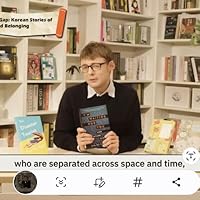
Watch my review on YouTube here - https://www.youtube.com/watch?v=vN2qC...
KBS Korea 24 @KBSKorea24
“For #KoreaBookClub, we have a #shortstory collection originally published in 1936. Called “The Underground Village” #지하촌 by Kang Kyeong-ae #강경애, the English translation by @AntonHur was published by @honfordstar in 2018. @BarryPWelsh helps take a look at this classic work.”
#KBSWORLDRadio #KBS월드라디오 #Korea24 #코리아24 #책추천 #책스타그램 #북스타그램 #bookstagram #book #reading #KoreanLiterature
19:10-20:00 KST, Mon-Fri on KBS WORLD Radio.
Download the KBS Kong / KBS WORLD Radio Mobile apps or subscribe to the Korea 24 podcast for your daily updates!
#KBSWORLDRadio #KBS월드라디오 #Korea24 #코리아24
http://world.kbs.co.kr/service/progra...
KBS Korea 24 @KBSKorea24
“For #KoreaBookClub, we have a #shortstory collection originally published in 1936. Called “The Underground Village” #지하촌 by Kang Kyeong-ae #강경애, the English translation by @AntonHur was published by @honfordstar in 2018. @BarryPWelsh helps take a look at this classic work.”
#KBSWORLDRadio #KBS월드라디오 #Korea24 #코리아24 #책추천 #책스타그램 #북스타그램 #bookstagram #book #reading #KoreanLiterature
19:10-20:00 KST, Mon-Fri on KBS WORLD Radio.
Download the KBS Kong / KBS WORLD Radio Mobile apps or subscribe to the Korea 24 podcast for your daily updates!
#KBSWORLDRadio #KBS월드라디오 #Korea24 #코리아24
http://world.kbs.co.kr/service/progra...

September 18, 2020
Let me start by quoting the much-appreciated introduction to the story collection: “Kang’s works are instead infused with the desolation in people’s lives caused by the creation of the Japanese puppet state of Manchukuo, the ruthless reality of being ruled by soldiers, and the strenuous efforts required to protect one’s individual and social life against such forces.”
Because she lived in the middle of it, Kang Kyeong-ae writes stories from a unique point of view. Her stories deal with the hardships of those without rank or property, the peasants so to say. This shows for example in the sad story of the mother in Fang Tong/Peasants. The story is set in Manchuria, but could have taken place anywhere around the world. Every single story is relevant and has great historical value.
The characters in the stories face hard choices, often dealing with the balance between the community and the individual. Will you buy something nice for yourself or buy medicine for a friend of a friend? Should you help people that are starving and risk starving yourself in the near future?
Classes are prominent in the stories and can even be seen in the difference between a peasant and a literary author. The narrators are mostly women, sometimes of means and sometimes poor, both dependent and independent. Through this, you experience different perspectives, but no matter who tells the story, life is harsh and people are suffering from starvation, loss, or heartbreak.
I often admire the ending paragraphs like in the story Darkness. Even though this story ended, another story is starting. The story Anguish nearly left me in anguish and I could feel the selfishness of people looking away in The Man on the Mountain. The author is skilled at transferring energy and feelings to the reader. You read the slow scenes slowly and in the fast scenes, you read faster as if someone is hurrying you along.
Feelings of anguish, regret, and hopelessness: you will recognize all of them and believe them completely. Even though The Underground Village was written almost a century ago, it doesn’t feel aged (also thanks to the good translation by Anton Hur) and is worth reading.
Because she lived in the middle of it, Kang Kyeong-ae writes stories from a unique point of view. Her stories deal with the hardships of those without rank or property, the peasants so to say. This shows for example in the sad story of the mother in Fang Tong/Peasants. The story is set in Manchuria, but could have taken place anywhere around the world. Every single story is relevant and has great historical value.
The characters in the stories face hard choices, often dealing with the balance between the community and the individual. Will you buy something nice for yourself or buy medicine for a friend of a friend? Should you help people that are starving and risk starving yourself in the near future?
Classes are prominent in the stories and can even be seen in the difference between a peasant and a literary author. The narrators are mostly women, sometimes of means and sometimes poor, both dependent and independent. Through this, you experience different perspectives, but no matter who tells the story, life is harsh and people are suffering from starvation, loss, or heartbreak.
I often admire the ending paragraphs like in the story Darkness. Even though this story ended, another story is starting. The story Anguish nearly left me in anguish and I could feel the selfishness of people looking away in The Man on the Mountain. The author is skilled at transferring energy and feelings to the reader. You read the slow scenes slowly and in the fast scenes, you read faster as if someone is hurrying you along.
Feelings of anguish, regret, and hopelessness: you will recognize all of them and believe them completely. Even though The Underground Village was written almost a century ago, it doesn’t feel aged (also thanks to the good translation by Anton Hur) and is worth reading.

January 18, 2025
This was a cover-buy for me and I didn't even realise it's a collection of short stories until I've actually started reading. But I've actually really enjoyed it!!!! The political commentary and feminist undertone is so strong, it makes every single story one about class consciousness and struggle, not shying for any of its worst aspects - and it's so painful that much of it remains so relevant (even if slightly changed) almost 90 years later.
If you want to dwelve into Korea's literary richness that goes beyond contemporary writers and Seoul's cultural circles, then Kang Kyeong-ae might be the place to start!
If you want to dwelve into Korea's literary richness that goes beyond contemporary writers and Seoul's cultural circles, then Kang Kyeong-ae might be the place to start!

October 25, 2022
Extremely gruelling but vivid pre-war Korean socialist realist stories.

August 21, 2025
i found this a tough read in places in a ‘once involved can’t look away’ sense. the stories so elegantly depict brutal conditions and the stark, often unfair reality of life. strong characters surviving persecution and oppression are very skilfully built with a clear yet not overpowering feminist underlay. the stories relate very well as a collection and feel so thoughtfully compiled.
May 20, 2020
Astoundingly grim, Manichaean stories about Koreans living in Manchuria in the 1920s and 1930s. Almost all told from the perspective of nameless women, who are identified only in relation to their husbands or children. They struggle against violence and poverty and usually don't win. A lot of the stories don't even really resolve, they just end, in a way that nevertheless manages to seem satisfying and appropriate.
Kang's communism comes through frequently in the open disgust the book has for wealthy people, but her view of the poor is not romantic (with one exception I can think of). Women whose relatives have become communist partisans tend not to approve, because it all seems so futile and unhelpful from their point of view.
The translation is pretty inelegant at times but the stories still manage to evoke a time and a place that I knew almost nothing about going in. And the clumsiest prose in the world couldn't obscure the darkness and pessimism of Kang Kyeong-ae's vision. As I finished the last story, I said, "Jesus Christ!" out loud and then put the book down with relief.
Still, it's really good.
Kang's communism comes through frequently in the open disgust the book has for wealthy people, but her view of the poor is not romantic (with one exception I can think of). Women whose relatives have become communist partisans tend not to approve, because it all seems so futile and unhelpful from their point of view.
The translation is pretty inelegant at times but the stories still manage to evoke a time and a place that I knew almost nothing about going in. And the clumsiest prose in the world couldn't obscure the darkness and pessimism of Kang Kyeong-ae's vision. As I finished the last story, I said, "Jesus Christ!" out loud and then put the book down with relief.
Still, it's really good.

Read
May 2, 2024In some cases, it might be an insult to say that I kept closing a book, but in this instance, it was a compliment: the cover illustrated by Dal Sang is so evocative! I really did want to keep looking at it.
Though, to be fair, I also kept closing this book because these stories are bleak. The stories are emotionally sensitive, socially and politically charged, and gorgeously written/translated--but given that they're about impoverished Koreans struggling to take control of their lives in Japanese-occupied Manchuria in the 1930s...I had to pace myself through them to handle the grimness. The writing is so vivid and immediate, and the emotional wells are so deep, though, that it was well worth reading slowly. The book's introduction was informative and laid the path for a deeper understanding of the text, and I appreciated the translator's ending notes as well.
Though, to be fair, I also kept closing this book because these stories are bleak. The stories are emotionally sensitive, socially and politically charged, and gorgeously written/translated--but given that they're about impoverished Koreans struggling to take control of their lives in Japanese-occupied Manchuria in the 1930s...I had to pace myself through them to handle the grimness. The writing is so vivid and immediate, and the emotional wells are so deep, though, that it was well worth reading slowly. The book's introduction was informative and laid the path for a deeper understanding of the text, and I appreciated the translator's ending notes as well.

July 28, 2021
A story collection from a heretofore unsung Korean literary pioneer. Kang (1906-1944) grew up in a country that is now North Korea, but at the time was part of an undivided, yet Japanese-occupied Korea. Her stories describe everyday life of the peasant class in visceral detail and wide-eyed honesty, particularly for women, whose lives were often overlooked in art at the time. It’s a gutting and defiantly hopeful collection, very worth checking out.

November 17, 2024
4.75
It is a very difficult book to reas but vivid, grim, and eerie pre-war korean socialist stories. Stories brought me back to uni history lectures about Koreas history.
What I found interesting is that all of the stories are told from the perspective of nameless women about them, their kids, and families. Stories are full of poverty, pain, violence, and fear. I enjoyed the writing and translation quite a lot, despite the book being written in the 1930s.
Honestly, this boon will leave an impact on anyone who will pick it up.
It is a very difficult book to reas but vivid, grim, and eerie pre-war korean socialist stories. Stories brought me back to uni history lectures about Koreas history.
What I found interesting is that all of the stories are told from the perspective of nameless women about them, their kids, and families. Stories are full of poverty, pain, violence, and fear. I enjoyed the writing and translation quite a lot, despite the book being written in the 1930s.
Honestly, this boon will leave an impact on anyone who will pick it up.

May 5, 2025
stories were fantastic — will go through and list my favorites later — first time i’ve been slightly disappointed by an Anton Hur translators note tho :/
Manuscript money has lived in my head rent free for the past months. Good story to read for young leftists. Written nearly a century ago but thinking about the issue of self-care, and when self-care becomes something else maybe, when it can get in the way of our responsibilities to others.
Manuscript money has lived in my head rent free for the past months. Good story to read for young leftists. Written nearly a century ago but thinking about the issue of self-care, and when self-care becomes something else maybe, when it can get in the way of our responsibilities to others.

March 14, 2024
This is such a rough book to read... There is a line in the section about the history of the explaining why the book makes such an impact: "Her [book] 'The Underground Village' depicts states of extreme poverty in exhausting detail, making it impossible for readers to disregard the harsh reality". This so very true, highly recommend the book, but do consider that is not an easy book to read.

Read
May 22, 2025extremely abject take on life in a Korean village during Japanese colonialism in hr 1030s… historically significant as a piece of working class lit written by a woman in Korea. Kang kyong-se seems like a bad bitch

February 11, 2020
Really great collection of Kang's work, so wonderfully translated into English by Anton Hur.
August 13, 2025
Historias que muestran distintos rostros del sufrimiento bajo la llegada del comunismo a Corea. Relatos de pérdida, hambre y opresión que, más allá del sistema político, reflejan cómo cualquier estructura de poder puede limitar libertades y vidas enteras.
December 5, 2025
Many spoilers.
When I first picked up this book back in May... June... can't recall, I distinctly remember struggling with "Salt," one of two longer stories that appears second in the book. Maybe it was the utter sadness of every moment, the complex and unforgiving poverty that marked every page. Perhaps it was also confusion about the setting - I didn't understand the political, social, and economic complexities of life in Northeast China (known by many of us by the Japanese puppet government/colony name of Manchuria) in the 1930s. Every page felt like I kept getting hit with dynamics and terms that challenged me a bit too much. So I put the book back down.
As I spent many months not reading, and this book sat on my bedside table, whenever I thought of picking it up, I thought of imagery from "Salt." I pictured Chinese warlords and landlords, ethnic Korean migrants struggling in the fields, sickly babies, births in barns in the middle of rainstorms. It felt sadistic when I picked up the book again last week and started re-reading. Still, because of Kyeong-ae Kang's prowess with prose and the plethora of perspectives and situations she crafted, I do not regret my decision to try again.
Below are my thoughts on each story, in chronological order:
1. Manuscript Money: a very realistic depiction of the internal struggle everyone faces when it comes to money. This story could be set at any time or place and still ring true.
2. Salt: I mostly said my piece about this one, so I won't drag on for too long about the profound depression I felt reading it. I found the story compelling because you feel so responsible for yet angry at the main character and those around her. The two most compelling scenes from this story are when she gives birth and when she is transporting the salt - both equally chilling.
3. The Authoress: Somehow, Kang Kyeong-ae knew this was the exact trope I love—a satirical take on the academy with a bit of magical realism.
4. Darkness: A well-done story on the plights of grief - especially when no one is willing to talk about it. This is the story of a woman working in a very poor hospital, in which she just received the possible news of her brother's execution for his participation in independence activities. No one is willing to talk to her about it, especially not the doctor, who is her former lover and the one who delivered the newspaper clipping to her desk. It is the next installment of pieces with very open-ended closings.
5. The Man on the Mountain: If these rankings were based on my favorites, this one would take first place. "The Man on the Mountain" is profoundly moving and devastating. You start off the chapter wondering what the narrator could be reflecting on. Ropes tied around a person? Blood everywhere? Fear in people's eyes? You do not suspect this story to be what it is. As for much of this book, but particularly this story, I had to get out a piece of paper to cover the other pages as I read, hoping not to spoil myself. This is another story that doesn't rely too heavily on the context of the book to convey the message. It reads like a classic tale or parable - you can't help but reflect on the poor actions of the characters involved and wish for it to end differently. A genuinely moving tale, so much so that I feel like I can still hear the rocks hitting the bus windows.
6. Anguish: Interesting, solid story. Not many notes besides, I liked the perspective switches between the main character and the guest.
7. Opium: I mean... just sad. Well told but sad.
8. Sympathy: The title is exactly what the story is about. I find it interesting in the same vein as "Manuscript Money" because it again covers internal, moral dilemmas many of us have about our want to help others, our proclamation to help others, and then the reality of what that means when faced with the results of our promises.
9. Father and Son: Objectively, the story of the father is more interesting and complex than the son's. The sons would've benefited from being a bit more fleshed out.
10. Mother and Son: Same as Opium.
11. Tuition: The shortest of the stories, and felt predictable.
12. Real and Unreal: As noted by Anton Hur in the Translator Note, another instance of a possible self-insert. Similar to "The Authoress" for this reason. An exploration of a man who has clearly lost it all.
13. Blackie: Not the most moving story, but an interesting perspective on the social and emotional impact of independent activity suppression under Japanese rule. Still confused by the dynamic between the main character and the principal, as there are many things alluded to that are unclear in the story, but I think the omission of it is purposeful/metaphorical.
14. Break the Strings: We see this same problem in "The Vegetable Patch," but the random afterword ending plagues the story. It would've been a more succinct story without it.
15. The Firing: It is only upon my quick glance back to this chapter that Kang begins to incorporate some unimportant side characters into her stories. I still do not know who Dog Poo is or what is up with his family, but he is mentioned in this story and "The Underground Village"!
16. Vegetable Patch: Another sad but profound story. Was disappointed with the ending for its odd afterword conclusion.
17. The Tournament: Maybe I just don't get it, but this one was a snoozefest for me. Really confusing, felt unfinished. I got the gist, but the ideas were not well-connected.
18. The Underground Village: This one is probably the hardest to talk about, mainly because of its explicit and graphic depictions of poverty. In this story, we explore the life of Chilsung, a child who is disabled because of a case of untreated measles and, as the oldest child, can only help the family by going out and collecting money and items by begging. As he feels like his life has no worth, he is often extremely self-deprecating and aggressive around others. His sole motivation in life is the blind girl who lives next door to him, whom he calls "Big Girl." He spends much of his free time thinking about her and how much he loves her, frequently neglecting care for his family. The crux of the story is when he heads to a larger village to try and get fabric for "Big Girl" as a gift - hopefully dissuading her from accepting a "marriage" proposal. Along the way home, he meets another man who is disabled in one leg and shelters with him from the rain. The man frequently mumbles about unintelligible things but also shows genuine care for Chilsung and guides him on how to care for a dog bite he received. Upon a discussion about how they both became disabled, the man rants to the boy about who is really at fault for how they ended up in their condition. While the conversation makes Chilsung excited, he then returns to his home in an even worse state than when he left. The excessive rain has flooded the millet fields, his mother is in despair over his leaving and the crops, and his younger siblings are in a terrible condition, health-wise. The story ends with a grotesque description of the youngest child's physical condition due to neglect and lack of medicine. It would be interesting to discuss this piece in a modern context. This story essentially sets the characters up from the beginning - they are impoverished, disabled, and ignorant of basic health and hygiene. In a modern context, it would almost feel like rage bait. In the context of Kang's writing, it is more of an exploration of what we can be at our worst, when there is no one to look out for us after we have been discarded, and there are no material resources to go around; a nihilistic perspective of what capitalism has led to. Hence, the "underground" village - a village of the unseen and discarded.
Using "The Underground Village" as the titular story, this collection is focused on just that - shedding light on the underbelly of the life that people, mainly ethnic Koreans, faced in Northeast China under Japanese rule. By examining mundane moments, such as visits from old friends or days at work, each story explores personal betrayals and complicated relationships that were exacerbated by the conditions people lived under.
A few stories in, I decided to flip to the end of the book and read the commentary provided by Dr. Sang-kyung Lee, a Professor of Modern Korean Literature at KAIST. For anyone considering reading this book, I highly recommend this section as pre-reading. It offers valuable perspectives on the dynamics within Northeast China in the 1930s and gives a glimpse into the author's life. The places and general events mentioned no longer become abstract ideas but tangible settings.
When I first picked up this book back in May... June... can't recall, I distinctly remember struggling with "Salt," one of two longer stories that appears second in the book. Maybe it was the utter sadness of every moment, the complex and unforgiving poverty that marked every page. Perhaps it was also confusion about the setting - I didn't understand the political, social, and economic complexities of life in Northeast China (known by many of us by the Japanese puppet government/colony name of Manchuria) in the 1930s. Every page felt like I kept getting hit with dynamics and terms that challenged me a bit too much. So I put the book back down.
As I spent many months not reading, and this book sat on my bedside table, whenever I thought of picking it up, I thought of imagery from "Salt." I pictured Chinese warlords and landlords, ethnic Korean migrants struggling in the fields, sickly babies, births in barns in the middle of rainstorms. It felt sadistic when I picked up the book again last week and started re-reading. Still, because of Kyeong-ae Kang's prowess with prose and the plethora of perspectives and situations she crafted, I do not regret my decision to try again.
Below are my thoughts on each story, in chronological order:
1. Manuscript Money: a very realistic depiction of the internal struggle everyone faces when it comes to money. This story could be set at any time or place and still ring true.
2. Salt: I mostly said my piece about this one, so I won't drag on for too long about the profound depression I felt reading it. I found the story compelling because you feel so responsible for yet angry at the main character and those around her. The two most compelling scenes from this story are when she gives birth and when she is transporting the salt - both equally chilling.
3. The Authoress: Somehow, Kang Kyeong-ae knew this was the exact trope I love—a satirical take on the academy with a bit of magical realism.
4. Darkness: A well-done story on the plights of grief - especially when no one is willing to talk about it. This is the story of a woman working in a very poor hospital, in which she just received the possible news of her brother's execution for his participation in independence activities. No one is willing to talk to her about it, especially not the doctor, who is her former lover and the one who delivered the newspaper clipping to her desk. It is the next installment of pieces with very open-ended closings.
5. The Man on the Mountain: If these rankings were based on my favorites, this one would take first place. "The Man on the Mountain" is profoundly moving and devastating. You start off the chapter wondering what the narrator could be reflecting on. Ropes tied around a person? Blood everywhere? Fear in people's eyes? You do not suspect this story to be what it is. As for much of this book, but particularly this story, I had to get out a piece of paper to cover the other pages as I read, hoping not to spoil myself. This is another story that doesn't rely too heavily on the context of the book to convey the message. It reads like a classic tale or parable - you can't help but reflect on the poor actions of the characters involved and wish for it to end differently. A genuinely moving tale, so much so that I feel like I can still hear the rocks hitting the bus windows.
6. Anguish: Interesting, solid story. Not many notes besides, I liked the perspective switches between the main character and the guest.
7. Opium: I mean... just sad. Well told but sad.
8. Sympathy: The title is exactly what the story is about. I find it interesting in the same vein as "Manuscript Money" because it again covers internal, moral dilemmas many of us have about our want to help others, our proclamation to help others, and then the reality of what that means when faced with the results of our promises.
9. Father and Son: Objectively, the story of the father is more interesting and complex than the son's. The sons would've benefited from being a bit more fleshed out.
10. Mother and Son: Same as Opium.
11. Tuition: The shortest of the stories, and felt predictable.
12. Real and Unreal: As noted by Anton Hur in the Translator Note, another instance of a possible self-insert. Similar to "The Authoress" for this reason. An exploration of a man who has clearly lost it all.
13. Blackie: Not the most moving story, but an interesting perspective on the social and emotional impact of independent activity suppression under Japanese rule. Still confused by the dynamic between the main character and the principal, as there are many things alluded to that are unclear in the story, but I think the omission of it is purposeful/metaphorical.
14. Break the Strings: We see this same problem in "The Vegetable Patch," but the random afterword ending plagues the story. It would've been a more succinct story without it.
15. The Firing: It is only upon my quick glance back to this chapter that Kang begins to incorporate some unimportant side characters into her stories. I still do not know who Dog Poo is or what is up with his family, but he is mentioned in this story and "The Underground Village"!
16. Vegetable Patch: Another sad but profound story. Was disappointed with the ending for its odd afterword conclusion.
17. The Tournament: Maybe I just don't get it, but this one was a snoozefest for me. Really confusing, felt unfinished. I got the gist, but the ideas were not well-connected.
18. The Underground Village: This one is probably the hardest to talk about, mainly because of its explicit and graphic depictions of poverty. In this story, we explore the life of Chilsung, a child who is disabled because of a case of untreated measles and, as the oldest child, can only help the family by going out and collecting money and items by begging. As he feels like his life has no worth, he is often extremely self-deprecating and aggressive around others. His sole motivation in life is the blind girl who lives next door to him, whom he calls "Big Girl." He spends much of his free time thinking about her and how much he loves her, frequently neglecting care for his family. The crux of the story is when he heads to a larger village to try and get fabric for "Big Girl" as a gift - hopefully dissuading her from accepting a "marriage" proposal. Along the way home, he meets another man who is disabled in one leg and shelters with him from the rain. The man frequently mumbles about unintelligible things but also shows genuine care for Chilsung and guides him on how to care for a dog bite he received. Upon a discussion about how they both became disabled, the man rants to the boy about who is really at fault for how they ended up in their condition. While the conversation makes Chilsung excited, he then returns to his home in an even worse state than when he left. The excessive rain has flooded the millet fields, his mother is in despair over his leaving and the crops, and his younger siblings are in a terrible condition, health-wise. The story ends with a grotesque description of the youngest child's physical condition due to neglect and lack of medicine. It would be interesting to discuss this piece in a modern context. This story essentially sets the characters up from the beginning - they are impoverished, disabled, and ignorant of basic health and hygiene. In a modern context, it would almost feel like rage bait. In the context of Kang's writing, it is more of an exploration of what we can be at our worst, when there is no one to look out for us after we have been discarded, and there are no material resources to go around; a nihilistic perspective of what capitalism has led to. Hence, the "underground" village - a village of the unseen and discarded.
Using "The Underground Village" as the titular story, this collection is focused on just that - shedding light on the underbelly of the life that people, mainly ethnic Koreans, faced in Northeast China under Japanese rule. By examining mundane moments, such as visits from old friends or days at work, each story explores personal betrayals and complicated relationships that were exacerbated by the conditions people lived under.
A few stories in, I decided to flip to the end of the book and read the commentary provided by Dr. Sang-kyung Lee, a Professor of Modern Korean Literature at KAIST. For anyone considering reading this book, I highly recommend this section as pre-reading. It offers valuable perspectives on the dynamics within Northeast China in the 1930s and gives a glimpse into the author's life. The places and general events mentioned no longer become abstract ideas but tangible settings.

May 15, 2019
3.5* - First of all I would like to thank the lovely people over at Honford Star for being so kind and sending me a copy of this book in exchange for a fair and honest review.
The Underground Village Short Stories was written by Kang Kyeong-ae and beautifully translated by Anton Hur. This edition was published in 2018 and the book centres on (official blurb): “Kang Kyeong-ae (1906-1944) was a Korean writer whose stories are remarkable for their rejection of colonialism, patriarchy, and ethnic nationalism during a period when such views were truly radical and dangerous. Born in what is now North Korea, Kang wrote all her fiction in Manchuria during the Japanese occupation and witnessed the violence and daily struggles experienced by ethnic Koreans living in the Japanese puppet state of Manchukuo. Kang’s riveting stories are full of sensitivity, defiance, and a deep understanding of the oppressed people she wrote about. This collection, beautifully translated by Anton Hur, contains all the Korean-language short stories by Kang Kyeong-ae. Sang-kyung Lee’s excellent introduction provides deep insight into Kang’s achievements and the social and historical contexts in which she wrote.”
This book is a collection of short fiction which was written by Kang Kyeong-ae who was a Korean female author who was very active during the 1930s. At the very beginning of this book an introduction is provided which explains the uniqueness of Kang’s writing style and this was extremely helpful especially if you are relatively new to Korean translated fiction.
Throughout this collection of short stories it is easy to see that Kang’s stories focus on the effects that the time period had on the poor especially when it came to women in particular. Each and every story within this book vividly portrays the sheer struggle that many individuals endured during this time period especially for there survival as well as the sacrifices that were made by many of these individuals especially the ones that supported the independence.
This collection in general was extremely powerful and the writing was beautiful. I feel personally that this collection is such an important addition to Korean literature. One of the things in particular that I loved about this collection is how Kang Kyeong-ae captures not only the brutality and rawness of this period of Korean history but also the strength of not only these stories but also the strength of each and every character that is portrayed throughout this book.
This collection alone completely show cases the stunning translation skills of Anton Hur and I whole heartedly believe that Anton Hur’s translation breathes new life into these stories in such a stunning and breath taking way. I would most definitely recommend this collection of short stories to anyone who wants to delve deeper into translated fiction especially Korean Literature.
The Underground Village Short Stories was written by Kang Kyeong-ae and beautifully translated by Anton Hur. This edition was published in 2018 and the book centres on (official blurb): “Kang Kyeong-ae (1906-1944) was a Korean writer whose stories are remarkable for their rejection of colonialism, patriarchy, and ethnic nationalism during a period when such views were truly radical and dangerous. Born in what is now North Korea, Kang wrote all her fiction in Manchuria during the Japanese occupation and witnessed the violence and daily struggles experienced by ethnic Koreans living in the Japanese puppet state of Manchukuo. Kang’s riveting stories are full of sensitivity, defiance, and a deep understanding of the oppressed people she wrote about. This collection, beautifully translated by Anton Hur, contains all the Korean-language short stories by Kang Kyeong-ae. Sang-kyung Lee’s excellent introduction provides deep insight into Kang’s achievements and the social and historical contexts in which she wrote.”
This book is a collection of short fiction which was written by Kang Kyeong-ae who was a Korean female author who was very active during the 1930s. At the very beginning of this book an introduction is provided which explains the uniqueness of Kang’s writing style and this was extremely helpful especially if you are relatively new to Korean translated fiction.
Throughout this collection of short stories it is easy to see that Kang’s stories focus on the effects that the time period had on the poor especially when it came to women in particular. Each and every story within this book vividly portrays the sheer struggle that many individuals endured during this time period especially for there survival as well as the sacrifices that were made by many of these individuals especially the ones that supported the independence.
This collection in general was extremely powerful and the writing was beautiful. I feel personally that this collection is such an important addition to Korean literature. One of the things in particular that I loved about this collection is how Kang Kyeong-ae captures not only the brutality and rawness of this period of Korean history but also the strength of not only these stories but also the strength of each and every character that is portrayed throughout this book.
This collection alone completely show cases the stunning translation skills of Anton Hur and I whole heartedly believe that Anton Hur’s translation breathes new life into these stories in such a stunning and breath taking way. I would most definitely recommend this collection of short stories to anyone who wants to delve deeper into translated fiction especially Korean Literature.
August 18, 2024
After a week, I take the courage to write about the second short story of this book, which left a strong impression on me.
I think these stories express their deepest potential some days later after the reading.
If on the moment I was almost overwhelmed by the almost infinite repetition of terrible and traumatic events which haunt the woman protagonist, after some days I feel I can see better what of the story is left in my body mind. I believe this short story is about the necessity of care. If this story happens in what we might consider extreme conditions of poverty, it doesn't mean that it won't touch contemporary chords. Kang touches the theme of violence, abortion, female body's materiality in a transparent, clear and powerful way. In this story, how the very materiality of the body made of hormones, uterus, breasts is the protagonist, and how this very flesh necessitates care. This story is about the necessity of care, starting from the very porosity and leaking character of the body. Leaking bodies suscitates sometimes disgust, menstrual blood, semen... But as many philosophers among which Serres and more recently Neimanis have underlined, it is this leaking porosity that challenges ideas of bounded individualism. It reminded me of The Argonauts, the autobiographical philosophical reflections of Maggie Nelson. And juxtaposing a poor violated Korean woman in the 20s Manchuria, and a bourgeois scholar in the 2010s feels odd, but till a certain extent. If Nelson is able to make the fleshy materiality of pregnancy odd, writing about it without censorship, and juxtaposing this hormonal process of the gender transition, the same effect is rendered by Kang. The female body is the protagonist and the relationship with birth, death appears in all its fleshy nature, without embellishment, or moralistic patriarchal censorship. It's a woman's body described by a woman, taken care of by other women. The scenes that left the strongest impression on me is when at the moment of giving birth the protagonist yells in Korean "aigo", which is one of the few explicit signs of the ethnic conflict in the story, and when the protagonist almost let herself die because she cannot see anymore the baby that she was wet nursing. Leaking and porous bodies in constant relationship. This story teaches that we are always intimately part of others' people destinies, we are never one and alone but in constant interdependent relationship of care.
I think these stories express their deepest potential some days later after the reading.
If on the moment I was almost overwhelmed by the almost infinite repetition of terrible and traumatic events which haunt the woman protagonist, after some days I feel I can see better what of the story is left in my body mind. I believe this short story is about the necessity of care. If this story happens in what we might consider extreme conditions of poverty, it doesn't mean that it won't touch contemporary chords. Kang touches the theme of violence, abortion, female body's materiality in a transparent, clear and powerful way. In this story, how the very materiality of the body made of hormones, uterus, breasts is the protagonist, and how this very flesh necessitates care. This story is about the necessity of care, starting from the very porosity and leaking character of the body. Leaking bodies suscitates sometimes disgust, menstrual blood, semen... But as many philosophers among which Serres and more recently Neimanis have underlined, it is this leaking porosity that challenges ideas of bounded individualism. It reminded me of The Argonauts, the autobiographical philosophical reflections of Maggie Nelson. And juxtaposing a poor violated Korean woman in the 20s Manchuria, and a bourgeois scholar in the 2010s feels odd, but till a certain extent. If Nelson is able to make the fleshy materiality of pregnancy odd, writing about it without censorship, and juxtaposing this hormonal process of the gender transition, the same effect is rendered by Kang. The female body is the protagonist and the relationship with birth, death appears in all its fleshy nature, without embellishment, or moralistic patriarchal censorship. It's a woman's body described by a woman, taken care of by other women. The scenes that left the strongest impression on me is when at the moment of giving birth the protagonist yells in Korean "aigo", which is one of the few explicit signs of the ethnic conflict in the story, and when the protagonist almost let herself die because she cannot see anymore the baby that she was wet nursing. Leaking and porous bodies in constant relationship. This story teaches that we are always intimately part of others' people destinies, we are never one and alone but in constant interdependent relationship of care.

October 25, 2022
Kang Kyong-ae is a truly special writer, both in terms of her historical and literary importance, but also her writing itself. I am glad that she is receiving more attention and Anton Hur is doing an excellent service by making more of her work accessible to Anglophone readers. His selection of her writing also allows us to see more sides to her style and her writing than have previously been seen.
My one reservation is comparing Hur's translation of Kang's iconic short story "Salt" with the previous translation, published in the collection Rat Fire: Korean Stories from the Japanese Empire. In this, either Hur or Honford Star have chosen to erase the strategic XXXXs in the key last scene and I really found that this affected one's inevitable interpretation of the story's denouement. By streamlining the translation, the reader is no longer aware of the hand of the censor and also there are words and actions that are indicated by these Xs even if the particulars cannot be known that are totally lost. Anyway, your opinion on this aside, and there may be a good reason that I am not aware of as this is not my area of expertise, it's really great that we have two English translations of this story to compare.
I hope to see more of Kang Kyong-ae's work translated in the future!
My one reservation is comparing Hur's translation of Kang's iconic short story "Salt" with the previous translation, published in the collection Rat Fire: Korean Stories from the Japanese Empire. In this, either Hur or Honford Star have chosen to erase the strategic XXXXs in the key last scene and I really found that this affected one's inevitable interpretation of the story's denouement. By streamlining the translation, the reader is no longer aware of the hand of the censor and also there are words and actions that are indicated by these Xs even if the particulars cannot be known that are totally lost. Anyway, your opinion on this aside, and there may be a good reason that I am not aware of as this is not my area of expertise, it's really great that we have two English translations of this story to compare.
I hope to see more of Kang Kyong-ae's work translated in the future!

September 18, 2024
short story collection by a korean woman during the japanese occupation of korea
the stories are mostly about women and written by a woman. they show a glimpse of what it was like to live as a peasant/lower class korean woman during those times
or even just what it's like to be a human in abject misery
all of the stories were 'hard to read' because of the conditions these characters live in and what happens to them
i thought the observations made in these texts were ahead of their time and very concisely put
the tales in these stories are way grimmer than in say, pachinko. there is absolutely nothing good happening to poor people and a lot of parts absolutely broke my heart
'why should poor people have children'
'they were like cows at a ranch. [...] they lived to be exploited by the richer class''
''it was hard to eat and drink merrily when we knew there was a family starving upstairs. from time to time, i'd bring up for them whatever rice and stew we had leftover. even as i did so, there always remained a selfish corner of my heart that wished they would just move away.''
the stories are mostly about women and written by a woman. they show a glimpse of what it was like to live as a peasant/lower class korean woman during those times
or even just what it's like to be a human in abject misery
all of the stories were 'hard to read' because of the conditions these characters live in and what happens to them
i thought the observations made in these texts were ahead of their time and very concisely put
the tales in these stories are way grimmer than in say, pachinko. there is absolutely nothing good happening to poor people and a lot of parts absolutely broke my heart
'why should poor people have children'
'they were like cows at a ranch. [...] they lived to be exploited by the richer class''
''it was hard to eat and drink merrily when we knew there was a family starving upstairs. from time to time, i'd bring up for them whatever rice and stew we had leftover. even as i did so, there always remained a selfish corner of my heart that wished they would just move away.''
This entire review has been hidden because of spoilers.
July 27, 2024
3.5
Absolutely beautiful and haunting imagery and language but still filled with a great anger and frustration. Is very intresting to hear stories from a working class perspective especially from Manchuria a region ive always found quite fascinating. Admittedly this is a very bleak book and some of the depictions of poverty and suffering were so extreme i found it difficult to read. I prefer stories with a little warmth as well which is lacking from this book. I preferred the short stories which had a kind of moral. My favourites were the authoress, darkness the main on the mountain sympathy father and son and of course break the strings. I didnt really enjoy salt, mother and son and the last story the underground village. The imagery of the last story although very haunting was also a little too horrific.
Absolutely beautiful and haunting imagery and language but still filled with a great anger and frustration. Is very intresting to hear stories from a working class perspective especially from Manchuria a region ive always found quite fascinating. Admittedly this is a very bleak book and some of the depictions of poverty and suffering were so extreme i found it difficult to read. I prefer stories with a little warmth as well which is lacking from this book. I preferred the short stories which had a kind of moral. My favourites were the authoress, darkness the main on the mountain sympathy father and son and of course break the strings. I didnt really enjoy salt, mother and son and the last story the underground village. The imagery of the last story although very haunting was also a little too horrific.

November 10, 2022
Shocking, horrific, graphic, and stunning. These stories each and all caused my body to physically tense, my fists to ball up, and I caught myself holding my breath too. This is some of the bleakest content I've ever encountered, and the language (and translation) is masterful in conveying a beauty and raw humanity even alongside the socialist realist obligation to depict capitalist greed as the root of all evils. I'll also echo the idea that these are disturbingly prescient - I bet stuff like this is happening now, on our planet, and could happen in our backyard given a few situational changes.
Hard to figure out who to recommend this to, but man if you're up for it, I think it's really good.
Hard to figure out who to recommend this to, but man if you're up for it, I think it's really good.

October 10, 2022
I got this book on a whim when I saw it as I was ordering a bunch of other secondhand books. I feel lucky: I don't know when or how else I would have come across it. These writer lived in the beginning of the twentieth century in what is now North Korea. The characters in these stories are mostly very, very poor farmers and laborers, and most stories work as communist allegories. I regret racing through the collection; reading a story every day or two would have given me time to digest each account.
January 3, 2025
I felt quite detached from these stories due to the writing style and/or translation. I feel like the characters were only vehicles for the tragedy and political narrative of the stories as opposed to feeling like individuals, which tainted my immersion. The collection was repetitive in theme, and while this is clearly to portray the shocking suffering historically, it did become less engaging of a read. There was some horrific imagery that wasn't forgettable, though, and I found the authors biography information interesting in itself.
2.5☆
2.5☆

October 31, 2023
It moves you to the bone, it makes you feel the cold rain drops on your back and the blisters on your feet, as if you were there. The reading experience makes you an integral part of these stories, whether you like it or not. It’s a really interesting read, scattered through characters but connected through Jiandao and misery.
May 13, 2024
2.5/5
Not a huge fan of the translation/writing style. Despite the historical relevance, I found most of the stories in here to be a miserable variation of 'the character suffered until the suffering got worse and then got worse again' which became quite a slog at the end. 'Break the Strings' was my favourite!
Not a huge fan of the translation/writing style. Despite the historical relevance, I found most of the stories in here to be a miserable variation of 'the character suffered until the suffering got worse and then got worse again' which became quite a slog at the end. 'Break the Strings' was my favourite!

April 22, 2025
it’s an antithesis to the Disney fairytale happily ever after trope. an interesting collection of short stories, very doom and gloom but it was written in the 1930s in Korea during the Japanese occupation so what did you expect. visceral and at times, hard to read, descriptions of the complete poverty and state of despair for the poor. i definitely did not love all of the chapters equally.
September 16, 2024
i want to reach across time and hold the authors hand. there is so much despair and sorrow and rage, but also tenderness and light in these stories, and there’s the same puncture by drumbeat over and over again “well, what will you do about it?”
Read
February 24, 2025⭐️⭐️⭐️⭐️⭐️
An extraordinary book. Very disturbing in parts. There are stories that I will never forget. Hard to stomach due to the fact that these stories are based on actual people and experiences being passed on by word of mouth or experiences from the authors life.
An extraordinary book. Very disturbing in parts. There are stories that I will never forget. Hard to stomach due to the fact that these stories are based on actual people and experiences being passed on by word of mouth or experiences from the authors life.

November 28, 2023
Bizar deprimerend
Displaying 1 - 30 of 47 reviews