

What do you think?

Randolph Carter #1
The Statement of Randolph Carter
What would you get if you mixed Edgar Allan Poe, Alfred Hitchcock and Stephen King? The answer might be something resembling Howard Phillips (H.P.) Lovecraft (1890-1937), an extremely influential poet and author who mixed science fiction, horror and fantasy into a subgenre known as weird fiction. Perhaps none encapsulates weird fiction like his creation of the monster Cthulhu, which has been used by other writers to spawn a fictional universe and mythology centered around Cthulhu.Growing up in New England, Lovecraft spun tales that mixed the sleepy history of places like Boston and Providence with legend and magical tales. Though he suffered an untimely death from cancer and wasnt widely read in his lifetime, his legacy skyrocketed in the subsequent decades, kept alive by outlets like the H.P. Lovecraft Society and the accolades credited to him by the likes of Stephen King, who called him the 20th centurys greatest practitioner of the classic horror tale.This edition of Lovecrafts The Statement of Randolph Carter is specially formatted with a Table of Contents and is illustrated with over a dozen pictures of Lovecraft, his life and work.
24 pages, Kindle Edition
First published January 1, 1920
About the author
H.P. Lovecraft
7,057 books19.9k followersHoward Phillips Lovecraft, of Providence, Rhode Island, was an American author of horror, fantasy and science fiction.
Lovecraft's major inspiration and invention was cosmic horror: life is incomprehensible to human minds and the universe is fundamentally alien. Those who genuinely reason, like his protagonists, gamble with sanity. Lovecraft has developed a cult following for his Cthulhu Mythos, a series of loosely interconnected fictions featuring a pantheon of human-nullifying entities, as well as the Necronomicon, a fictional grimoire of magical rites and forbidden lore. His works were deeply pessimistic and cynical, challenging the values of the Enlightenment, Romanticism and Christianity. Lovecraft's protagonists usually achieve the mirror-opposite of traditional gnosis and mysticism by momentarily glimpsing the horror of ultimate reality.
Although Lovecraft's readership was limited during his life, his reputation has grown over the decades. He is now commonly regarded as one of the most influential horror writers of the 20th Century, exerting widespread and indirect influence, and frequently compared to Edgar Allan Poe.
See also Howard Phillips Lovecraft.
— Wikipedia
Lovecraft's major inspiration and invention was cosmic horror: life is incomprehensible to human minds and the universe is fundamentally alien. Those who genuinely reason, like his protagonists, gamble with sanity. Lovecraft has developed a cult following for his Cthulhu Mythos, a series of loosely interconnected fictions featuring a pantheon of human-nullifying entities, as well as the Necronomicon, a fictional grimoire of magical rites and forbidden lore. His works were deeply pessimistic and cynical, challenging the values of the Enlightenment, Romanticism and Christianity. Lovecraft's protagonists usually achieve the mirror-opposite of traditional gnosis and mysticism by momentarily glimpsing the horror of ultimate reality.
Although Lovecraft's readership was limited during his life, his reputation has grown over the decades. He is now commonly regarded as one of the most influential horror writers of the 20th Century, exerting widespread and indirect influence, and frequently compared to Edgar Allan Poe.
See also Howard Phillips Lovecraft.
— Wikipedia
Ratings & Reviews
Friends & Following
Create a free account to discover what your friends think of this book!
Community Reviews
Displaying 1 - 30 of 380 reviews

February 3, 2017
This early story—written in 1919, published in the amateur journal The Vagrant in 1920—is a simple but thoroughly effective tale of terror, based on one of Lovecraft’s dreams. Technically it could be considered part of Lovecraft’s Dunsanian Dream Cycle, since its hero Randolph Carter appears here too, but it reminds me more of Monsieur Valdemar than of anything by Dunsany. Indeed, its whole atmosphere is redolent of Poe, from its narrator whose memory is scarred by trauma to its melodramatic—AND ITALICIZED AND CAPITALIZED—last line.
Our narrator Randolph Carter tells of a night he accompanied Harley Warren--his friend and fellow student of the occult—to the graveyard near Big Cypress Swamp. Harley, long been obsessed with discovering “why certain corpses never decay, but rest firm and fat in their tombs for a thousand years,” is now armed with a newly acquired “ancient book in undecipherable characters” and wishes to test his theories. In the graveyard, the two men pry up a stone slab, revealing a flight of stone stairs beneath, and then . . . but the rest you must discover for yourself.
Yes, this is a simple story, but it scared me the first time I read it, and it scares me now just thinking about it.
It would take Lovecraft ten years to discover how to localize, anticipate, and prolong a good shock of terror, but The Statement of Randolph Carter shows us that, even in his earliest stories, he had mastered the art of delivering the shock.

June 21, 2016
“I’m sorry to have to ask you to stay on the surface,” he said, “but it would be a crime to let anyone with your frail nerves go down there."
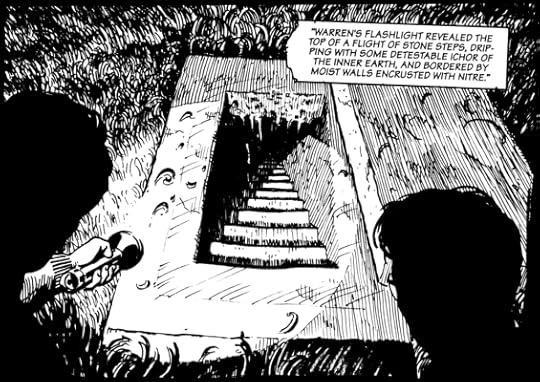
No need to apologize, Harley! We're good. You go right ahead into that black aperture, from which rushed an effluence of miasmal gases so nauseous that we started back in horror. You call and tell me all about it.
Carter's friend really is calling him from the unknown depths and telling him about that uncanny vault. He's taken a telephone on a really long wire. Unfortunately, Warren is the original vaguebooker and just relates in a shaky whisper more portentous than the loudest shriek
things like
“God! If you could see what I am seeing!”
“Carter, it’s terrible—monstrous—unbelievable!”
“I can’t tell you, Carter! It’s too utterly beyond thought!"
I'm reading Carter & Lovecraft, in which the main character is a descendent of the guy in this story, so I thought I should pause and read something about him, but this story doesn't add much to the recent novel. However, there are some references in C&L to the continuing Randolph Carter stories set in the Dreamlands, so I guess on to those. After the completely different Lovecraft-western pastiche of Weird Trails: The Magazine of Supernatural Cowboy Stories.
No need to apologize, Harley! We're good. You go right ahead into that black aperture, from which rushed an effluence of miasmal gases so nauseous that we started back in horror. You call and tell me all about it.
Carter's friend really is calling him from the unknown depths and telling him about that uncanny vault. He's taken a telephone on a really long wire. Unfortunately, Warren is the original vaguebooker and just relates in a shaky whisper more portentous than the loudest shriek
things like
“God! If you could see what I am seeing!”
“Carter, it’s terrible—monstrous—unbelievable!”
“I can’t tell you, Carter! It’s too utterly beyond thought!"
I'm reading Carter & Lovecraft, in which the main character is a descendent of the guy in this story, so I thought I should pause and read something about him, but this story doesn't add much to the recent novel. However, there are some references in C&L to the continuing Randolph Carter stories set in the Dreamlands, so I guess on to those. After the completely different Lovecraft-western pastiche of Weird Trails: The Magazine of Supernatural Cowboy Stories.

June 9, 2019
Randolph and his friend warren explore a deserted cemetery at a swamp. When Warren climbs down the steps of one of the mausoleums he finds something indescribable and urges Randolph to beat it and go away as fast as he can. His friends tries stays on the phone and heears an uncanny voice? What happened to Warren down in the basement of the grave? Eerie Lovecraft you will absolutely like. What a pageturning adventure. Highly recommended!
November 4, 2021
4.5 Stars
rounded up to 5 Stars.

June 1, 2015
The Statement of Randolph Carter is a short story where Carter speaks of his dreadful experience in Big Cypress Swamp. He went there with his friend. They found him wandering with no knowledge of Harley Warren's whereabouts. The last time he saw Harley was before he entered an underground crypt. He never came out.
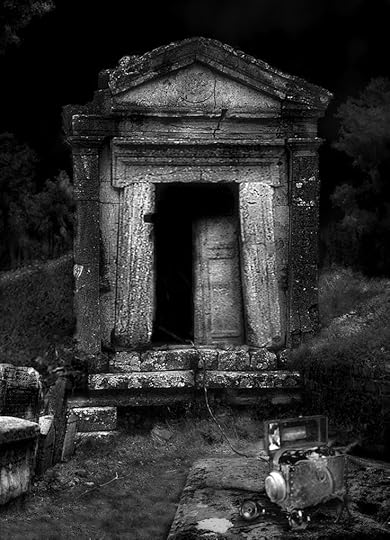
There is a reference to this event in The Silver Key too: 'Once he heard of a man in the South who was shunned and feared for the blasphemous things he read in prehistoric books and clay tablets smuggled from India and Arabia. Him he visited, living with him and sharing his studies for seven years, till horror overtook them one midnight in an unknown and archaic graveyard, and only one emerged where two had entered.'

July 10, 2025
I reccomend this short story for all the graveyard creeping, moonlight loving, pagan practicing goths out there

June 27, 2020
La leí/escuché en Audiolibro y fue buenísimo, hasta me dio miedo en algunas partes el relato. Y es lo primero que leo de Lovecraft, y dios, muy bueno.

April 8, 2026
Sometimes on cop shows they’ll interview a murder suspect who will be like “look I admit that I hated the guy, and I’m glad he’s dead, and I hope it was a slow, painful death and this weekend I’ll be throwing a party to celebrate his death which you and your partner are invited to but officer I swear it wasn’t me who killed that man.” Love whenever a person like this shows up, they make me laugh every time. If my greatest enemy is ever murdered by someone who isn’t me and I get asked about it I hope I have the courage to be this honest and this petty to a cop’s face myself.
This story has the Lovecraft equivalent of one those guys, as it starts out with the titular Randolph Carter being like “look I know I drove the victim out to the cemetery, helped him dig what would become his own grave, and when he begged me to abandon him to die I didn’t try at all to save him or even try particularly hard to talk him out of it but officer I swear I didn’t kill him” and on reading this I smiled because I knew we were in not-sure-if-this-Lovecraft-story-is-supposed-to-be-funny-but-it’s-pretty-funny-regardless territory, and that’s quickly becoming a place that I enjoy being with HP’s work.
Further amusement was found later when Carter’s friend was like “thanks for driving me out here and helping me dig up this underground chamber, however you have to wait outside and can’t actually go on this adventure with me because you simply suck shit.”
Even beyond the laughs I had a lot of fun with this one. This is in the mold of something like Lovecraft’s Dagon, in that its plot can be boiled down to “Guy goes someplace weird, sees (or in this case hears) something weird, immediately wishes for death.” This is the third one of these kind of Lovecraft stories I’ve read now (and not to keep overselling the humor here, but this sequence of plot beats makes me laugh every time) and the first one that I would say actually works. Adding an additional character, making the unknowable horror something you don’t actually get to see, fleshing out the world a little bit with real life things like cars and radios and cops, it all added up to making this feel like an actual story, as opposed to Dagon which very much felt like just a sketch or a rough idea. It’s also the first Lovecraft I’ve read that got some actual dread out of me. I was genuinely on the edge of my seat at the end of this one.
Definitely a hearty recommend. It’s quick and simple and there isn’t much to it but what you get is still a good time.
This story has the Lovecraft equivalent of one those guys, as it starts out with the titular Randolph Carter being like “look I know I drove the victim out to the cemetery, helped him dig what would become his own grave, and when he begged me to abandon him to die I didn’t try at all to save him or even try particularly hard to talk him out of it but officer I swear I didn’t kill him” and on reading this I smiled because I knew we were in not-sure-if-this-Lovecraft-story-is-supposed-to-be-funny-but-it’s-pretty-funny-regardless territory, and that’s quickly becoming a place that I enjoy being with HP’s work.
Further amusement was found later when Carter’s friend was like “thanks for driving me out here and helping me dig up this underground chamber, however you have to wait outside and can’t actually go on this adventure with me because you simply suck shit.”
Even beyond the laughs I had a lot of fun with this one. This is in the mold of something like Lovecraft’s Dagon, in that its plot can be boiled down to “Guy goes someplace weird, sees (or in this case hears) something weird, immediately wishes for death.” This is the third one of these kind of Lovecraft stories I’ve read now (and not to keep overselling the humor here, but this sequence of plot beats makes me laugh every time) and the first one that I would say actually works. Adding an additional character, making the unknowable horror something you don’t actually get to see, fleshing out the world a little bit with real life things like cars and radios and cops, it all added up to making this feel like an actual story, as opposed to Dagon which very much felt like just a sketch or a rough idea. It’s also the first Lovecraft I’ve read that got some actual dread out of me. I was genuinely on the edge of my seat at the end of this one.
Definitely a hearty recommend. It’s quick and simple and there isn’t much to it but what you get is still a good time.

January 13, 2025
Similar to other early Lovecraft stories. Dream like horror, someone recalling a traumatic event that involves the occult.



August 3, 2017
This story fed my hunger for horror drama. I loved it!
HP sets the scene in jagged cliffs into the underground with ancient runes. It reads like a Hitchcock or Twilight Zone show. A man's ambition leads him to walk toward the center of the earth while talking to the narrator through a telephone with a long wire. The narrator hears ghastly noises and Mr. Carter urges him to leave. The end will make you feel like bugs burrow into your pores.
I found a description of a voice powerful and terrifying. He used the word "gelatinous" which makes me think of a phlegm infested throat and the hearing of those vibrations.
Awesome read, and short, maybe twenty minutes. Highly recommended.
HP sets the scene in jagged cliffs into the underground with ancient runes. It reads like a Hitchcock or Twilight Zone show. A man's ambition leads him to walk toward the center of the earth while talking to the narrator through a telephone with a long wire. The narrator hears ghastly noises and Mr. Carter urges him to leave. The end will make you feel like bugs burrow into your pores.
I found a description of a voice powerful and terrifying. He used the word "gelatinous" which makes me think of a phlegm infested throat and the hearing of those vibrations.
Awesome read, and short, maybe twenty minutes. Highly recommended.

November 6, 2022
5/5 estrellas.
Alucinante.
Alucinante.

November 17, 2020
La buena narración del audiolibro lo ha hecho mas creíble y tenso.
Este relato corto nos muestra a un Carter temeroso, confuso de sus recuerdos que emprendió una aventura con su amigo Warren, un estudioso de lo oculto, quienes tras su incursión en el pantano Cypress en busca de las ruinas de un cementerio abandonado en una oscura noche, encuentran el sepulcro que creían que conectaba con otro mundo, una escalera a lo desconocido, por su parte Carter es testigo de como su amigo se sumerge en las profundidades de este sitio, donde el horror que le espera es incontable.
Este relato corto nos muestra a un Carter temeroso, confuso de sus recuerdos que emprendió una aventura con su amigo Warren, un estudioso de lo oculto, quienes tras su incursión en el pantano Cypress en busca de las ruinas de un cementerio abandonado en una oscura noche, encuentran el sepulcro que creían que conectaba con otro mundo, una escalera a lo desconocido, por su parte Carter es testigo de como su amigo se sumerge en las profundidades de este sitio, donde el horror que le espera es incontable.

March 4, 2018
Lo he escuchado a través de un audio libro gratuitamente en Google Libros y me ha gustado bastante.
La narración fue increíble y realmente sentía el pavor en su voz cuando narraba los hechos terroríficos que le habían pasado al compañero del narrador.
Y eso fue justamente lo que me transmitió. Terror, horror, se me palpitaba el corazón. Cosa que aveces leyendo no se siente esas emociones. Aunque el libro también te las da; sólo que el audio las incrementa.
Ha sido mi primer audiolibro y me ha encantado la experiencia.
La narración fue increíble y realmente sentía el pavor en su voz cuando narraba los hechos terroríficos que le habían pasado al compañero del narrador.
Y eso fue justamente lo que me transmitió. Terror, horror, se me palpitaba el corazón. Cosa que aveces leyendo no se siente esas emociones. Aunque el libro también te las da; sólo que el audio las incrementa.
Ha sido mi primer audiolibro y me ha encantado la experiencia.

March 20, 2022
3.5*
A story of deception or truth?
Randolph Carter has been asked to give account of the whereabouts of missing man Hayley Warren. If Carters statement is true, a monster demon of unspeakable terror and evil consumed the man who dared to venture into its sepulchre. A cemetary with its scene set perfect and, being honest, classic to most descriptions of its kind allows the reader to be slowly drawn in.
Alternatively, Carter has committed the biggest crime of all and disposed of his partner. The entire statement potentially being a cover-up for his own wrongdoings with Carter deciphering his inner most attributes to create the monster.
Enjoyable, creepy and eery read.
A story of deception or truth?
Randolph Carter has been asked to give account of the whereabouts of missing man Hayley Warren. If Carters statement is true, a monster demon of unspeakable terror and evil consumed the man who dared to venture into its sepulchre. A cemetary with its scene set perfect and, being honest, classic to most descriptions of its kind allows the reader to be slowly drawn in.
Alternatively, Carter has committed the biggest crime of all and disposed of his partner. The entire statement potentially being a cover-up for his own wrongdoings with Carter deciphering his inner most attributes to create the monster.
Enjoyable, creepy and eery read.

June 11, 2025
I don't know- what-
why this is just the most amazing thing to read under a blood moon Jesus-
I mean this has everything you need. a grave yard, maggots, a telephone poll, and Harley Warren.
Rest in many pieces Harley Warren.
I think I love you H.P Lovecraft
why this is just the most amazing thing to read under a blood moon Jesus-
I mean this has everything you need. a grave yard, maggots, a telephone poll, and Harley Warren.
Rest in many pieces Harley Warren.
I think I love you H.P Lovecraft

August 6, 2021
I wanted to read Lovecraft for his terror-inducing, descriptive prose, and this story was recommended as a starting point.
Though, it was not as descriptive as some his quotes that I have read, it was certainly enjoyable in the sense that it does what it intended to do--well, if not great.
Looking forward to read more of his work.
3.9/5
Though, it was not as descriptive as some his quotes that I have read, it was certainly enjoyable in the sense that it does what it intended to do--well, if not great.
Looking forward to read more of his work.
3.9/5

October 19, 2018
Un relato Magistral, más aun si tenemos en cuenta la brevedad del mismo, ya que son poco más de 2000 palabras, que todo admirador de lo fantástico, el terror y la ciencia ficción debería disfrutar.
Una genialidad más que surgió para el disfrute de todos de la privilegiada mente de H.P.Lovecraft, el maestro del terror y lo fantástico.
Sin duda un relato que nos pondrá los pelos de punta, más aun si tenemos en cuenta que fue escrito en el Siglo XVIII.
RESEÑA COMPLETA: https://entrelibrosytintas.blogspot.c...
Una genialidad más que surgió para el disfrute de todos de la privilegiada mente de H.P.Lovecraft, el maestro del terror y lo fantástico.
Sin duda un relato que nos pondrá los pelos de punta, más aun si tenemos en cuenta que fue escrito en el Siglo XVIII.
RESEÑA COMPLETA: https://entrelibrosytintas.blogspot.c...

January 2, 2017
Relato en los inicios de Lovecraft considerado parte de los Mitos de Cthulhu sin ser uno de los canónicos. Relato muy cortito pero no por ello menos inquietante. Está lejos de ser lo mejor del autor pero se le reconoce perfectamente. Cuenta la horrorosa desaparición de Harley Warren a través de la declaración de su acompañante Randolph Carter, que se encuentra absolutamente horrorizado por las extrañas circunstancias en las que escuchó desaparecer a su amigo. Y poco más se puede contar. Yo, al igual que el señor Carter, espero que Harley Warren "haya encontrado la paz y el olvido definitivos, si es que existen en alguna parte."

March 25, 2017
Pra que infernizar àqueles que estão quietos no inferno? ..Um conto cheio de horror e terror contado pelo mestre H.P Lovecraft

August 22, 2021
"Aunque pienso, y casi forma espero, que ya disfruta de la paz del olvido si es que semejante bendición existe en alguna parte".

January 8, 2022
Would have rated this higher if the last line wasn't so corny. A great story but the ending was lazy.
September 14, 2025
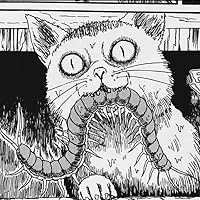
It's about two men going to Big Cypress Swamp where they walk into a tomb to prove that corpses never decay.
It's not really special in any way as there was never . While I like mysterious endings, I know the trope of going to abandoned places and disappearing or dying is something often used in horror films. That's why I wasn't able to enjoy this story.

January 15, 2021
There are better lovecraft stories but if this is the sort of thing you like
Just listen to the Magnus archives instead, you're welcome.
Just listen to the Magnus archives instead, you're welcome.
October 17, 2022
Mucking about with eldritch forces in deserted graveyards will get you DEAD! - Effective writing.
4 'Scary,' stars.
4 'Scary,' stars.

June 7, 2018
Quite a short tale of a man journeying into the depths of the earth and the horror he finds there.

September 6, 2023
Great short story— really enjoyed this student of the occult story.

March 29, 2017
So cool!! Good creepy fun! Listened on audible. Full review to follow.
Displaying 1 - 30 of 380 reviews