In a culture in which science is believed to hold the answers to every question, spiritual realities like the soul are often ignored or ridiculed. We are told that neuroscience holds the key to explaining every aspect of human behavior. Yet Christian philosopher J. P. Moreland argues that Scripture, sound philosophical reasoning, and everyday experience all point to the reality of an immaterial soul. Countering the arguments of both naturalists and Christian scholars who embrace a material-only view of humanity, Moreland demonstrates why it is both biblical and reasonable to believe humans are essentially spiritual beings. He also describes the various components of the soul and how Christians can nurture their souls as disciples of Christ. Moreland shows that neuroscience and the soul are not competing explanations of human activity, but that both coexist and influence one another.
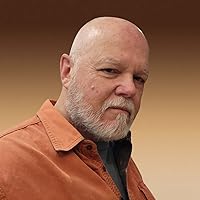
J.P. Moreland is the Distinguished Professor of Philosophy at Talbot School of Theology, Biola University in La Mirada, California. He has four earned degrees: a B.S. in chemistry from the University of Missouri, a Th.M. in theology from Dallas Theological Seminary, an M. A. in philosophy from the University of California-Riverside, and a Ph.D. in philosophy from the University of Southern California.
He has co-planted three churches, spoken and debated on over 175 college campuses around the country, and served with Campus Crusade for Christ for 10 years. For eight years, he served as a bioethicist for PersonaCare Nursing Homes, Inc. headquartered in Baltimore, Maryland.
His ideas have been covered by both popular religious and non-religious outlets, including the New Scientist and PBS’s “Closer to Truth,” Christianity Today and WORLD magazine. He has authored or co-authored 30 books, and published over 70 articles in journals, which include Philosophy and Phenomenological Research, American Philosophical Quarterly, Australasian Journal of Philosophy, Metaphilosophy, Philosophia Christi, and Faith and Philosophy.
We live in funny times. Everyone believes in ghosts, but no one believes they have a soul. J.P. Moreland sets out to correct this in what I found to be the most accessible book on the topic. That's not to say it isn't full of arguments. You'll need to have your thinking cap on. My favorite is the presuppositional one that says not believing in a soul is self-defeating. Beliefs come from souls, so saying that you don't believe in them is self-contradictory. (I get that there a number of materialistic explanations for things like thoughts and beliefs, but there is a serious burden of proof on their holders.)
The worst part of the "we are just our brains" perspective is it makes our thoughts and emotions phony. I don't really love my wife, my brain chemistry just makes me think I do. I didn't really have a good idea. Its just neurons firing off in response to some unseen stimuli. I don't really have free will. It's just an evolution trick to keep me alive. If you really love your spouse and are really a free thinker, there's only one game in town. It's consciousness or Casper, folks.
J.P. Moreland's book "The Soul" is a fantastic overview of the biblical, philosophical, and scientific reasons to believe in the human soul. Great read and recommended to anyone interested in the human soul
Un testo interessante di teologia naturale. Ovviamente non è una sorpresa, perché conoscevo già l'autore.
Alcuni argomenti sono veramente impellenti, come l'argomento antinaturalista sull'identità e l'argomento di Searle, che mi fa sempre piacere rileggere. Altri meno, in particolare sulle esperienze post-morte che trovo poco credibili in generale e soggette a difficoltà.
I've talked to spiritual directors, many priests, seminarians, people who experience God and "know" God, from Catholic to Protestant to New Age. I've read G.K. Chesterton's "The Everlasting Man" and I like his observation that man is a Revolution, not an Evolution, but even G.K. and others like him, even many years of daily Rosaries and other forms of prayer and meditation, even making myself a "capacity" (see Blessed Angelina of de Foligni) have not yet brought on the torrent. I am very willing to be convinced. Logic and Reason seem to have nothing to do with it. Science tells us some brains are "wired for belief," but mine must not be one of them.
Last night, I tried yet another book, The Soul: How We Know It's Real and Why It Matters by J. P. Moreland. Best he could tell us is that modern science cannot disprove the existence of the soul. He tries to prove it does exist, but most of his reasoning is based on what the Bible says, and a lot of it is complicated philosophy, even a page full of math equations that (to me) do absolutely nothing to convince a skeptic that there are logical, scientific reasons to believe every human has a soul that survive the death of the body.
His chapter on hell revived all the old, familiar, specious and horrible reasons to believe God has offered everyone all the information we need to choose between devotion to God or eternity in hell. I'm so weary of this line of thought, I won't even cite excerpts here. There is no way the Bible presents all that we need to know to make an informed decision on whether to "serve God" or to doubt that the promises of the Bible are anything but wishful thinking.
The Reverand Moreland's "logic" is based on untenable premises. And faulty syllogisms. This is not convincing: the idea that because the body is constantly changing due to cellular death and replenishment but the self remains the same, the soul must be different from the body. Moreland cites a few Out of Body experience (Near-Death, or briefly dead but revived by doctors), but these are anecdotal and cannot be factually verified. So I'm left with hope that we do live on somehow and reunite with lost loved ones in a next life, but hope is all I've got, not confidence, faith, or certainty.
And this book only underscores my uncertainty - and my revulsion at the "logic" that people freely choose eternal damnation over a loving Creator who cares about us the way any good parent loves his or her child.
I'd give it one star, but Moreland seems so sincere and earnest, I'll grant him a bonus point in spite of all the promised "proofs" that were not delivered.
As a philosopher Moreland is helpful... though when he wanders into theology I find him particularly uninsightful. Many of the arguments for the soul and its relationship to questions on naturalism, atheism etc. are good
Very good overall. What we have come to expect from Moreland. Well thought out arguments. The chapter on hell is a bit rushed and exegetically sloppy. Some of the arguments for ECT are not strong and require the acceptance of less than plausible premises.
Pretty accessible survey of Christian thinking on the soul, advocating for a dualist perspective. Relies heavily on Arminian assumptions in logical proofs.
Putting this down without finishing it. I got about 1/4 of the way through. I think that I am already pretty convinced by a form of substance dualism, and that it fits best with our experience of reality. I understand why Moreland doesn't discuss Idealism (which he also doesn't do in his Philosophical Foundations for a Christian Worldview), basically even fewer people are Idealists than are Physicalists. Nevertheless I would have enjoyed reading how he would respond to Idealism.
I was already pretty familiar with all the necessary arguments for dualism, but I skimmed through the book before deciding to stop reading it. If you aren't familiar with them and you would still tend towards some sort of materialism/physicalism based on something like modern science or neuroscience, I think this will be a good book to read.
A THEOLOGICAL APOLOGIST CONSIDERS THE SOUL, THE AFTERLIFE, AND MORE
James Porter Moreland is a philosopher and apologist, who teaches philosophy at Talbot School of Theology. He wrote in the Introduction to this 2014 book, “Throughout history, the vast majority of people, educated and uneducated alike, have been dualists (those who believe that the soul is an immaterial thing different from the body and brain), at least in the sense that they have taken a human to be the sort of thing that could enter life after death while his or her corpse was left behind… the idea that there is a soul has been the constant teaching of the Christian church since its beginning… Today, however, it is widely believed that science has rendered this commonsense and biblical view obsolete and implausible… Regardless of how often this mantra is recited, nothing could be further from the truth. In reality, a robust case can be offered for the view that consciousness and the soul are IMMATERIAL---not physical---realities.” (Pg. 9-11)
He continues, “Why is it worth spending time learning about the immaterial nature of consciousness and the soul?... I believe there are at least four reasons why this topic is worthy of our attention. First, the Bible seems to teach that consciousness and the soul are immaterial… Second… the reality of the soul is important to various ethical issues that crucially involve an understanding of human persons… Third, loss of belief in life after death is related to a commitment to the authority of science above theology, along with a conviction that belief in the soul is scientifically discredited… Finally… understanding the immaterial nature of the human spirit is crucial to grasping the essence of spiritual growth.” (Pg. 11-17)
He explains, “The term 'nephesh’ occurs 754 times in the Old Testament and is used primarily of human beings, though it is also used of animals (Gen 1:20, 9:10, 24:30) …the term has three basic meanings: various figurative uses, the life principle, and the soul of man that ‘departs at death and returns with life at the resurrection… It is sometimes said that ‘nephesh’ is simply a term that stands proxy for the personal pronouns ‘I’ and ‘me,’ and as such, it simply refers to the person as a totality… [But] when the Old Testament speaks of blood atonement to redeem the soul (Lev 17:11)… the soul cannot merely refer to physical breath of life alone… Finally, the term ‘nephesh’ is always translated ‘psyche ‘ and never ‘bios’ in the Septuagint… the term ‘bios’ is the Greek term for mere biological or physical life.” (Pg. 45-48)
He states, “In sum, the Old Testament teaches that the soul/spirit is an immaterial entity that grounds and unifies conscious, living functions; that constitutes personal identity; that can survive physical death in a diminished form in the intermediate state; and, eventually, be reunited with a resurrection body.” (Pg. 53)
He notes, “Naturalism is … a strictly physical story… There is no need or room for mind and consciousness to enter the picture. However, if you begin with God, then Mind is the fundamental reality (not matter) and its appearance in cosmic history is not the ontological problem it is for the scientific naturalist.” (Pg. 76)
He argues, “I defended property dualism and concluded that consciousness is, indeed, non-physical… I will argue for substance dualism, the view that the owner of consciousness---the soul or self---is immaterial… The soul and the brain can interact with each other, but they are different objects with different properties.” (Pg. 117)
He suggests, “In near-death experiences, people report themselves to have been disembodied. They are not aware of having bodies in any sense. Rather, they are aware of themselves as unified egos that have sensations, thoughts, and so forth… people can conceive of themselves as existing in a disembodied state, and they provide grounds for thinking that this is a real possibility… If such disembodiment is even possible, then one cannot be one’s body, nor is one’s body essential to him.” (Pg. 127-128)
He points out, “It is sometimes a surprise to people to learn that the Bible teaches that animals, no less than humans, have souls. In the Old Testament, nephesh (soul) and ruach (spirit) are used of animals in Genesis 1:30 and Ecclesiastes 3:21… In the New Testament psyche (soul) is used of animals in Revelation 8:9. Moreover, it is a matter of common sense that animals are not merely unconscious machines.” (Pg. 141) Later, he adds, “Animals are precious creatures of God and ought to be respected as such. But the animal soul is not as richly structured as the human soul, it does not bear the image of God, and it is far more dependent on the animal’s body and its sense organs than is the human soul.” (Pg. 145)
He summarizes, “If you think the afterlife is not real, it is not my purpose to provide evidence for it in this chapter. I have done that elsewhere [see his books ‘Beyond Death’ and ‘Immortality: The Other Side of Death’]. I only note that if Jesus was raised from the dead, he has been to the afterlife and is qualified to tell us about it…. Finally, while the Bible is our ultimate source of authoritative information about heaven and hell, there is a growing, quite substantial body of evidence for heaven and hell from near-death experiences…. The fact that they are real is, in my view, beyond question.” (Pg. 155-156)
He suggests, “the flames in hell are most likely metaphorical. If metaphors for hell are taken literally, contradictions result. Hell is called a place of fire and darkness, but how could there be darkness if the fire is literal? Hell is described as a bottomless pit and a dump. How can it be both?... Scripture calls God Himself a consuming fire … But God it not a physical object as is fire, and the flames surrounding the returning Christ are no more literal than is the sword out of His mouth (Rev 1:16). Flames are used as symbols for divine judgment.” (Pg. 163)
He rejects Annihilation: “if persons have the high degree of intrinsic value Christianity claims they have, then God… would be wrong to destroy something of such value just because it has chosen a life it was not intended to live. Thus, one way God can respect persons is to sustain them in existence and not annihilate them… Annihilation destroys creatures of very high intrinsic value.” (Pg. 166-167)
He argues, “while hell is in some sense a defeat to God (His DESIRE is that all men be saved),in another sense it is not a defeat. This is because hell is a quarantine that respects the freedom and dignity of God’s image-bearers while separating the lost from His special presence and the community of those who love Him (heaven).” (Pg. 171)
He asserts, “The Bible is clear that people do not get a second chance to go to heaven after death… But is this teaching really fair and just? Yes. At least three factors tell us why. For one thing, certain passages indicate that God gives people all the time they need to make a choice about eternity… Second, people most likely would not have the ability to choose heaven after death, even if it were possible… The longer one lives in opposition to God, the harder it is to turn toward God… And if God gives people a second chance after death, why did He create this world in the first place? Why not just go straight to a world in which everyone starts in the afterlife?” (Pg. 172-173)
He proposes, “What about those who don’t have a chance to hear the gospel? The Bible doesn’t address this question explicitly… We must distinguish between the MEANS of salvation and the BASIS of salvation… the MEANS of appropriating that basis has not always been a conscious knowledge of the content of the gospel. Saved individuals before Christ... did not know the content of the gospel… So I believe it is certainly possible that those who are responding to the light from nature that they have received will either have the message of the gospel sent to them… or else it may be that God will judge them based on what they would have done had they had a chance to hear the gospel.” (Pg. 176-177)
This book may interest Christians studying the afterlife, Hell, and related topics.
Overall, this book was difficult to get through, and I agreed with some but not all of the logic within it. Full disclosure for context of my review: I am a Christian, and I believe in the existence of the immortal soul as distinct from the body.
In my opinion, this book is best suited for people with a background in philosophy. I do not have such a background, so wrapping my head around this book required a lot of mental effort, and I still don't understand all of it.
The book starts off by explaining a lot of philosophical terms, which is, frankly, uninteresting to me as an outsider. This is a very dry read. Despite its short length, it took me years to finish this book, in large part because I wasn't excited about it and would therefore spend large periods of time avoiding picking it back up. When I renewed my resolve to finish it, I had to go back and re-read what I'd already read because I'd forgotten it. Even when actively reading, however, it was slow going because I had to repeatedly re-read paragraphs in order to understand what I was reading.
However, some parts of the book are worse than others in that regard. If you can get through all the introductory stuff, it gets easier to understand. Then there's a portion of the book in the middle that is complete gobbledegook to me, but to be fair, the author warns that this section is dense and advises that some readers might want to skip it. After that section, the book again becomes easier for the layperson to understand. So for people determined to finish the book, I would advise not to become discouraged if you hit a rough patch.
As for the arguments themselves, I feel they are a mixed bag. I feel that the author makes some compelling arguments that the mind/soul is distinct from the brain, or, at the very least, that modern science cannot disprove the existence of the soul. However, I did not agree with the logic of some parts (e.g., that because the body is constantly changing due to cellular death and replenishment but the self remains the same, the soul must be different from the body).
There are also multiple points where the author uses some variation of "due to space constraints I can't get into this further" when rebutting objections to his argument. This feels like an excuse to me, as the book is short in terms of page length, has small pages, and has relatively large print. In short, I feel like there is room to expand upon any points that needed it. The fact that the author doesn't feels like a cop-out to me. To be clear, it's not like the author does this for every objection; some objections are thoroughly addressed. But to an outsider, it's enough to make me wonder why every objection wasn't rebutted in this manner, and I feel like it makes easy targets for a disbeliever to pounce on.
Overall, although I'm very interested in this topic, this simply was not an enjoyable read. Perhaps that's inevitable given the subject matter; I don't know. I'm giving this one more star than I otherwise would out of sheer faith that perhaps the book is better than I think and I'm just incapable of following it.
This entire review has been hidden because of spoilers.
If we are to make a persuasive case for Christianity, and aspects of its teaching like the soul, we must learn to use reason and evidence to defend biblical doctrine.
This quote, from the end of the first chapter of his The Soul, is a perfect summary of what Dr. J.P. Moreland is all about, and what he (and others in his circle) has convinced me to be all about as well: our God doesn't need defending, but our beliefs in Him certainly do.
For whatever reason, in my years of amateur research into the various fields of apologetics, the area of the soul has always been... well, 'neglected' is maybe too strong of a word... just perhaps 'overlooked'. It's not that I've never heard Christian apologists make a defense for the existence of the soul, but, for a topic that one might think is highly important to the defense of the Christian worldview, I haven't heard it touched on in much detail... that is, until I came across Dr. Moreland's work.
From my (perhaps limited) experience with Dr. Moreland's books, it seems as though he values and enjoys a few choice topics as they relate to apologetics, the primary two I'm aware of being (1) the importance of the mind in the life of a Christian, and the other being (2) the soul, as he has written about here.
In short, The Soul is concise, accessible, and vital.
Concise In two other books I've read by Dr. Moreland he has touched on the topic of the soul. In one (Love Your God with All Your Mind: The Role of Reason in the Life of the SoulLove Your God with All Your Mind) he briefly exposed the lay reader to the most fundamental concepts of the soul, its existence, and the implication thereof - it is a popular-level book and Dr. Moreland superbly discusses the soul at a popular level. The other book, which I am currently (slowly) reading (Philosophical Foundations for a Christian WorldviewPhilosophical Foundations for a Christian Worldview) is a much more technical and academic work. Dr. Moreland (and Dr. Craig, his co-author) dives deep into the many perspectives and arguments and parts and pieces of the topic of the soul, and it's a reading experience that only a few will enjoy - not because of the quality, but because of the depth and intensity. The Soul is roughly in the middle, leaning slightly more towards the Love Your God with All Your Mind side of the scale. It is less than 200 pages, is mostly laser-focused on the specific topic of the soul, and excludes many 'unnecessary' tangents and arguments that Philosophical Foundations has room to not shy away from. This leads into the next point, honestly - the length and focused subject matter of the book make it very accessible.
Accessible The Soul is not quite bottom-shelf, but it's definitely below eye-level and should be readable for anyone willing to slow down and take a few deep breaths while reading to process what's going on. By its very nature, the philosophy-heavy subject of the soul requires a mind with a 'steady hand' to study, but I'm convinced this is not beyond almost anyone who would be willing to read this review. If you can follow the logic of sentences in front of you right now, you can follow Dr. Moreland into the moderately-deep end of the pool in The Soul. This is not a textbook (although I could see some introductory philosophy classes benefiting greatly from it use), but it has several great features that will reward any patient reader: each chapter has a concise summary and outline for quick reference if needed, and there is also an end-of-chapter glossary of new and potentially difficult words that came in handy during my read-through. Admittedly, even though I am somewhat familiar with most of this material (at least nominally), there were a few sections that I had to just wade through and pick up what I could as I went - that, however, doesn't tell me this book is a waste of time (just because I couldn't understand or yet grasp parts of it), but just the opposite: the parts that were barely beyond my comprehension show me that this book, upon re-reading and reflection, will be a great tool to grow me and help me expand my knowledge in this area. How can you learn new stuff without being exposed to things you don't know and don't yet understand?
Vital Finally, The Soul, in my estimation, is incredibly important, and is a book that every Christian serious about strengthening their faith intellectually needs to have (...and to read - books aren't made to just collect dust!). As I mentioned before, the soul is not quite an unknown topic among those interested in apologetics, but is it quite often overlooked in favor of the 'big boys' of God's existence, the resurrection, the problem of evil, etc. Dr. Moreland has, however, taken away any excuse for us to continue passing over this vital component of a Christian's apologetic arsenal. If most of humanity has truly historically believed that something like the soul can survive the death of the body, and we really do seem to have an immaterial 'I' that we can consciously introspect with, then those who claim this topic is important need to be ready to explain some simple concepts related to it. The Soul is the perfect place to start. It is essentially a crash-course in the basics of the mind/body problem and the related philosophical topics: substances, properties, physicalism, dualism, faculties, identity, knowledge, free will, and so much more. If you are a Christian that is not familiar with these subjects, get your hands on this book, grab a pencil, and start doggy-paddling through the reality of the soul.
The Verdict Dr. Moreland has produced a work that I have to add to my 'essentials of apologetics' list. It seems so obvious in hindsight how important it is to be ready to defend my belief in the soul, but I know that it isn't always so obviously like that until you're a little more familiar with certain topics. I can say confidently that if you know nothing or very little about the soul, this book was written with you in mind, and for you. Literally the subtitle of the book is 'How we know it's real and why it matters'. If you do not know how to explain either of those things, pick this book up. It has filled a hole in popular-level apologetics I wasn't even aware we had - and now I don't have to worry about it. Dr. Moreland has it covered.
Deep, Convincing Arguments for the Existence of the Soul
Moreland gives the Old Testament and New Testament evidence for the existence of the soul, which is the the inner person that exists independent of bodily existence and brain function.
He goes into some very complicated arguments for the existence of the soul on philosophical grounds. One point that resonated was that even though the cells in our bodies and our brains die and are replaced overtime so that it can be said that they are changed, our inner self or identity remains the same.
The last chapter is a discussion of the afterlife in heaven and hell. It’s a very good book. It rewards careful reading.
J. P. Moreland is a Christian scholar who tackles the hard issues of life. I was happy to pick up his book on the soul. He does an excellent job of giving you the lay of the land in education and presenting a solid case for the soul and why we have one.
Morland begins by talking about the soap and how Christian doctrine has talked about it, as well as other disciplines. Scientism has said that the solar is only a byproduct of the human brain. But that is not how most people see it. He gives for reason why talking about the serve is important.
In chapter 1, the author talks about physicalism and dualism as a way to understand the arguments represented by scholars about the soul. He identifies and defines substances, properties, and events.
Chapter 2 discusses the Bible and the soul. She surveys how the legends have interacted with Scientific evidence for the soul. He talks about the intermediate state. Ireland proceeds to Survey the Old Testament and New Testament teaching about the soul. Lines how the words were a soul or spirit are used in the Old Testament and the New Testament. He goes through several passages that teach and anthropological dualism of the soul.
In chapter 3, Moreland discusses the nature and reality of conscience. Conscience is, and his Moreland describes it, our personal ability to sense things around us. He outlines five possible arguments for dualism and conscience. This is a very detailed chapter.
Chapter 4 is about the reality of the soul. He argues for the position of a substance dualism and explains the differences between property duelists and substance duelists. He uses logical arguments to explain how the soul is different from the physical entity it dwells in. He provides evidence that we do have souls from a number of arguments.
In the last chapter of the book, Moreland discusses the future of the human person. He gives a couple of examples of near-death experiences that are credible. This chapter is all about what will happen to us as souls and people, and our bodies. He describes the afterlife as he talks about heaven and hell. He also includes a section on questions that he answers about hell.
The end of the book has an excerpt from one of Moreland’s other books, “Love the Lord Your God with Your Mind.” It also has a glossary of terms you can refer to if you forget a definition.
This is a great book that gives you an education in discussing the soul of humanity. I will say that it is almost like a textbook. It has chapter reminders at the end and formal terms to learn if you did not catch them in the reading. It is a very scholar-heavy book. If your style of reading is not to read through textbook, you will have trouble with this book.
I’m happy to have read the book because Moreland presents credible evidence for the soul of a person. He gives you all the educational point of view and then tells you where he thinks the right answers to the soul can be found. Although scholarly, it will help you to be well-versed on the issue of the human soul.
Most of it was good. Moreland takes the view of eternal conscious torment over conditional immortality or universalism, which is good. But most of his work presumed libertarian free will (LFW hereafter) and the Molinist view of middle knowledge, and had shockingly little interaction with Scripture in the places where he discussed LFW and Molinism (coincidentally). For instance, Moreland asserts that God respects people's wills and will not force them against their wills to be saved with no Scriptural substantiation whatsoever and also an assumption of LFW. He also does not acknowledge the Reformed view of effectual calling wherein God, through peoples' wills, turns them to Himself. Another part that was not helpful was Moreland quoting Craig on the notion of possible worlds. Perhaps it is logically impossible for God to create a world where everybody is saved, and instead God, through use of middle knowledge, actuates a world in which the maximum number of people can be saved. This reasoning seems to limit God's sovereignty via man's LFW, and any rejoinder that God in His sovereignty decided to give man LFW in the first place seems foreign to Scripture.
I really like J.P. Moreland and often recommend his other works to people; however, I was not a big fan of this book.
The benefit of this book is that it gives a pretty good and brief introduction to the topics of the soul, consciousness, free will, and immortality. The book helped me understand Moreland's view better on these topics, which is probably the traditional or majority Christian views on these issues.
The downside of this book is that it doesn't represent other views very favorably, and as a result, the arguments against these views are frustratingly weak or oversimplified. Even though I agree with Moreland on the existence of the soul, I think his arguments for it in this book fail. The arguments for the soul are too tied up with specific beliefs about consciousness and free will that are not necessary Christian beliefs.
If you only want to understand one side of these topics, this book would be a good place to start. If you want a broader view, I would not recommend it, and unfortunately, I don't know of a good book to read instead without reading several other books.
J.P. Moreland is a logician. So refreshing to see this trait on a theologian. How he makes sure to be very clear and precise in his argumentation is very cool to see. At some points he takes time to build a foundation of knowledge and definitions, and it is heavy stuff, but he applies it well and gives us neat summaries at the end of every chapter.
He uses all this framework of knowledge to go about showing why the soul does exist, and I think his arguments from consciousness in chapter 3 and free will on chapter 4 are dead on! So sad that most people today dismiss the evidence so offhandedly, claiming to trust science while in fact simply blindly trusting that science will one day corroborate their preconceptions.
He also speaks a bit about the soul from a New and Old Testament Christian viewpoint, and it is an interesting read.
The first four chapters gave me a helpful introduction to the topic, in line with what I hoped for, though I expected a richer and deeper presentation.
The weight Moreland gives to some NDEs seems odd to me. Nothing substantial to support his at least implied conclusion that some NDE reports haven been proven credible beyond by careful investigation. Hopefully we don't need NDEs to believe in the reality of the eternal soul!
The last of the 5 chapters struck me as off topic, like a rushed filler chapter. He presents rather narrowly accepted philosophical arguments to support positions related to free will, salvation, God's hypothetical "middle knowledge", etc, and non-convincingly.
The soul felt like stepping into a deep conversation about what actually makes us human. Moreland has a way of explaining complex ideas without making the book feel heavy or overly academic. I appreciated how he pushed back against the idea that science has all the answers, while still showing that faith and reason can work together. The discussions about consciousness, free will, and the connection between the brain and the soul were probably the strongest parts for me. It’s the kind of book that makes you pause and reflect on life, spirituality, and whether there’s more to us than just the physical world.
A brief but powerful introduction to philosophical arguments for the existence of the soul from the perspective of Christian theism. Most of the work is accessible to the lay person apart from one technical section, which may be skipped if necessary. JP Moreland navigates 3 major views of humanity: physicalism, mere property dualism, and his own perspective, substance dualism. Definitely worth a read if you're wanting to be an informed Christian or are interested in philosophy of religion from a secular viewpoint.
I listened to the audiobook version of this and will be purchasing the paperback-I want it on my shelf. This is a good exploration of the biblical and philosophical evidence (Moreland says the scientific evidence is non-determinative). He ends with a discussion on heaven and hell. While this book is popular level and he explains his terms, it is aimed at the thoughtful reader and will benefit from some familiarity with philosophy.
If you are curious about the soul, consciousness, self, and anything similar then that book is a great place to start.
Because of the context of the book it can be a very technical read, however it is still easy enough to understand and follow along with the arguments.
It is a short book, but it covers so much related to this topic. Jp Moreland did an excellent job and I think you will find a lot of helpful, and thought provoking information in this book.
Excellent and extrapolated thinking on The Soul. Thorough exploration into various aspects of what makes us…us. Why it is important and helpful to understand aspects of body, mind, and soul and how it relates to our existence and beyond.
I need to read a few (most) sections a few more times to grasp and solidify my understanding, but Moreland does a great job stringing his arguments together.
I would have given this 5 Stars if I hadn't read the final chapter. The book truly is so interesting and better than any philosophy class I've ever taken. However, JP Moreland gets it wrong (I believe) when it comes to God's sovereignty which he discusses in the last chapter. That's a theological difference and doesn't negate the fact that this book is worth reading - it really makes you contemplate our souls and their relation to our bodies, God, life, etc.
Morland not only does a good job of building a case for substance dualism, he also interacts with property dualism and various types of physicalism. He makes many thoughtful points on the practical outworking of holding one view of another. The material is complicated, but the writing is accessible. Finally, Moreland shows many reasons why such a traditionally dry topic is important in everyday life. Definitely a good book for the personal library.
Some of the arguments within are highly speculative and feel almost irreverent for pressing them. However, other parts of the book are brilliant and contain several of the best arguments I have heard for convincing honest skeptics of the reality of an immaterial soul.
Impossible to rate. I disagree with some of his theology, I find his arguments to be 'the existence of a soul extends from things we basically already know' to be not super compelling, and his views of nde's are over baked. On the other hand, the central premise and ideas are quite in line with what I belive, and I have not read any other books on the topic so fair enough for what it is.