Based on true events, a forgotten story of courage, conviction and love.
1917: Europe is on the cusp of seismic change. In the Alpine village of St Niklaus, the war seems far away. Yet everyone is fighting a personal battle.
In the shadow of a mountain, 14-year-old Seraphine helps Mama manage the farm while Papa defends Swiss borders. She dreams of seeing the world. After the war.
A young medical graduate arrives in the valley. Under the patronage of a local doctor, he puts his faith in a revolutionary idea. He is determined to influence the world. After the war.
Dr Bayard cannot wait until after the war. In the most beautiful place on earth, people still suffer from a centuries-old affliction. Armed with a theory, two sacks of salt and a mule, Bayard climbs a mountain, intent on treating one tiny village.
The paths of two unlikely young people cross in turbulent times – against the backdrop of one country doctor's fight against folklore, prejudice and false pride.
Salt of the Earth is a journey of bravery and broken hearts following their call. A quest for love and healing in the face of precarious destiny.
“Meticulously researched and beautifully written, this fascinating novel tells the little-known story of a life-changing medical breakthrough in the tumultuous times of WWI.” – Clare Flynn, author of The Pearl of Penang
“A powerful and heart-breaking tale of a cure for one of history's most devastating ailments.” – Liza Perrat, author of The Bone Angel trilogy
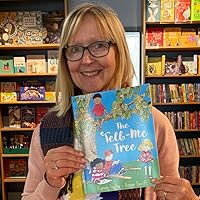
As a child, Jill read so obsessively she got kicked out of the school library. But her passion for words continued. She graduated in English Literature and Theatre Studies from the University of Wales and set up a theatre company. Since then, as an actor, director, teacher, writer and journalist, she’s worked in fifteen countries. She learnt something from each one. Now, with her husband and three dogs, Jill lives in Switzerland, a country with four languages and mountains of new words. She works as a language trainer all over Europe, collaborates with Nuance Words and Triskele Books, and contributes regularly to Words with JAM magazine. But most of the time, she writes. And reads.
Behind Closed Doors is the first Beatrice Stubbs novel, a European crime series set in compelling locations all over the Continent.
I went into this book totally clueless, just reading it to check of a category for a challenge I was doing, and I was so drawn in that I finished it in one night.
It's packed with information but reads like a lovely story of family and small town life during World War 1, not like a textbook.
Set in Switzerland in the era of WWI and up to the mid-1920s, we first meet Seraphine where she lives in the Alps. Her life is hard. She’s the illegitimate child of an unwed mother who has found a husband and given birth to two other children. The two children (sons) suffer from cretinism (congenital hypothyroidism) and the daughter (as well as the mother) has a goiter condition.
The daughter has the burden of caring for the family with her work tending the sheep as well caring for her brothers. The father is off patrolling the borders and the mother is clearly depressed and doesn’t do much other than sit at the house. The only break Seraphine gets is when she’s at school.
We’re then introduced to Bastian, a young man who was in medical school but conscripted into the army during the war. Eventually, he is mustered out and returns to school in Zurich. We meet his friends and learn about his life.
The chapters alternate with the two main characters and also include newspaper articles of the era detailing the Russian revolution and the Swiss workers’ strikes, as well as letters between a number of people that help move the story along.
Eventually, Bastian comes to the Alps to assist a doctor who is working on a cure for cretinism and goiters and the two main characters meet.
The book is called Salt of the Earth for a reason as this doctor, among others, believes these conditions are caused by a lack of iodine in the diet. It’s especially important to not have an iodine deficiency in the preconception stage. The doctors’ work focuses on helping the people of the Alps and concentrates as well on the pregnant population to try to stop these conditions from manifesting in the infants and children.
Intrigued by the story and the iodine component, I took a deep dive into the history of this disease and who started the research into a cure. The author used the real history in the story, even naming the doctor, H. Eggenberger, as a peripheral character, as well as using Otto Bayard as a mentor to the male protagonist.
She also used Anna Heer, a female doctor, who founded the first professional nursing school in Switzerland. The female protagonist also did some work with a real person, Lotte Volger, who specialized in moulaguese. I had never heard of moulages so did a look around online about them as well. They were wax models of how certain conditions manifested themselves on patients. Lot of great innovation happening in Zurich medically in that era and I love how it was woven into the tale without being boring.
I learned a lot reading this story. I love novels that use real events from the past as a jumping off point for the book. When such whets my appetite for more information, that’s even better. The author even worked in a famous murder that occurred in Santis, Switzerland in order to get the male protagonist out of a sticky situation he found himself in. It was quite a clever use of a historical event in the time period.
I’m also curious about the author and why this thyroid condition intrigued her enough to write this book. I guess I’ll never get the answer to that question. Haha.
Historically set with a lot of references to everything that was happening in this era, this is an enjoyable story with characters who speak to the reader with their kindness and concern, not only for their loved ones, but for humanity at large. I liked the characters and the setting as well as how the author wove all the elements together.
A lovely read and beautiful story that I very much enjoyed.
Reading in the 21st century, and from a country where iodinated salt is the standard, it is hard to imagine the devastation of pervasive iodine deficiency in isolated, alpine communities in the 19th and early 20th century. Symptoms ranging from unsightly goiters to birth defects that left children barely able to function past toddling age ran rampant in these communities, villages where every person who can work, needs to.
With all of this as a harsh reality in the lives of her characters, Marsh weaves a deft, and lovely tale about a young doctor who finds himself at the heart of some of the most dramatic medical research of the early 20th century, and an Alpine girl who wants nothing more than to help her afflicted brothers, and gain independence from her overbearing mother. On its surface, that sounds like a fairly basic set up for a historical romance: 1 lonely doctor + 1 girl needing escape = true love and riding off into the sunset. Sprinkle in chosen historical place and circumstantial details and you have a conventional, if uniquely set, story, but Marsh does not work on the conventional level. Both of these young people have personal goals and futures far beyond romance, and their personal stories, and this particular time and place they inhabit, and are far more interesting for it.
Written with so much research about a time and place, and a nearly miraculous medical cure, that we really all should know far more about than we do, Marsh has crafted a truly beautiful tale about people brave enough to try something new. This is a story about courage on the parts of doctors, patients, entire communities willing to address a pervasive need, all wrapped around a tender core. Unflinching, lovely, vital in a 21st century where too many people are still skeptical of their doctors’ motives, this is one novel that I can recommend for just about everyone.
JJ Marsh at her finest. No one gets murdered in this one, but it is a well written tale, based on facts, of medical experiments and breakthroughs along with a romance in the beautifully described mountains and valleys of Switzerland. The author has a gift for bringing characters to life with her brilliant descriptions.
Having read most of JJ Marsh’s books, including all of the DI Beatrice Stubbs series, I elected to read “Salt of the Earth”. I was so pleased I did so. It was a fascinating read - combining actual facts set in history (over 100 years ago) woven into a wonderful fictional story. The character development was very well done too. It was definitely a departure from her “DI Beatrice Stubbs” series and her “Run and Hide Thrillers” series. A great read!
Rounding up to 3.5. I was completely unaware of goiters and the doctors who found a treatment for them. I was interested in the historical fiction treatment of this affliction. The romance between the two leads - meh. A whole lot of will the ever get together when you knew the whole time they would. I read the book on a kindle and there was a random chapter that was completely out of the time line. That confused me.
Once again, JJ Marsh has created characters that become your friends and you feel at a loss when you finish the last page of the story. And what a story!!!! A topic that I hadn't thought about or knew anything about. This book needs to be read. Thank you for such a wonderful story and beautiful characters.
I wanted to like this book. It's historical fiction based on real events, plus it's about medical stuff. The first half or so is OK, but then it just collapses into a cheap romance novel. The end is really weird, there is something brought up, not resolved or expanded on, and then suddenly the book ends.
I enjoyed the historical side of the book, rejoicing in its factual base. However, towards the end, it was simply a love story and I don’t do books about ‘Romance.’
Set in Switzerland in the early 20th century as WW1 rages, Salt of the Earth tells the story of Seraphine, Bastian Favre and how a doctor’s dogged persistence changed lives. As the story begins Seraphine is fourteen, helping her mother on their farm in a small isolated Alpine village while her stepfather is fighting in the war. It was a hard life, particularly as many children in the area, including Seraphine’s two younger brothers who she cared for lovingly, were born with terrible disabilities, and adults suffered from a swelling in the neck area.
When the opportunity arose to listen to a talk by Dr Bayard about the health of the people in the valley, Seraphine was determined to attend. That decision changed the course of her life.
In 1916 Bastian Favre was released from military service to resume his medical training, firstly assisting Dr Eggenberger, the chief physician in a hospital just outside Zürich and eventually, after passing his final exams, working with Dr Bayard in his practice serving the valleys of the Swiss Alps.
Salt of the Earth is beautifully and sensitively written, bringing the likeable characters and beautiful setting vividly to life. It is also a fascinating introduction to a medical intervention I knew nothing about. Most of today’s medications are taken for granted without knowing the backstory of how they came about. This was quite eye opening, particularly as thyroid issues run in my family, with such a relatively simple fix, once tested, for the horrendous ailments afflicting the Alpine communities.
The author also gives a captivating insight into the Swiss mountain communities and how they lived, the determination of those in the medical profession who, although hampered by the doubts and dismissiveness of the people and those in authority, continued to fight for their beliefs which, in the end, were proved successful. And the lovely cover compliments the story perfectly.
This remarkable novel, set just after WW1, pays tribute to the Swiss doctors who transformed lives in remote farming communities with their treatment for ‘goitre’, a treatment as simple and cheap in administration as it was miraculous in impact. Although the history of thyroid treatment is in itself fascinating, it is the beautifully told story of Seraphine and her doctor, which won my heart.
These two main characters are so real that I felt gutted at every setback and cheered them on every time they got up again to fight their different battles for what was right and true. Dr Bayard brings the literal ‘salt of the earth’, in the form of iodised salt, not just to cure thyroid deficiency but also to prevent it.
As a girl, Seraphine fights not only the condition itself but her own lack of self-worth, while taking on gruelling responsibilities for her disabled family. Her daily heroism in her home and her hopes for something more from life are sensitively portrayed. As a woman, Seraphine gains ‘average’ in nursing examination results and the reader knows that average means exceptional, given the odds she fights against.
She and the doctor epitomise the ‘salt of the earth’ celebrated by the author throughout the novel: ordinary, hard-working, stubborn people who change the world despite the brilliant men in power. And of course those in power WERE men.
In her thrillers and murder mysteries, J J Marsh always shows a breadth of vision, an international perspective and an underlying appreciation of women’s achievements. In ‘Salt of the Earth’ these are taken to a new level. With world news ever more horrific, I so much appreciated the accurate historical reminder of true ‘humanity’ and humanitarian work in difficult times.
This is a must-read, not least for Barry the mountain dog – I love him!
We take modern medical advances for granted and yet we do well to remember those whose perseverance and skill led to some amazing breakthroughs in medical science. In this beautifully detailed novel we follow the story of Seraphine, a wise teenager, whose love and devotion towards her younger disabled half-siblings is as enlightening as it is endearing especially when her path crosses with that of Bastian Favre, who, released from the army, takes up a place at the University of Zürich. Whilst the long shadow of The Great War war still rages across Europe, Bastian embraces a new, and quite different, life as a medical undergraduate.
Without revealing too much, this intricately researched story looks at the emergence of a medical breakthrough concerning iodine deficiency and hypothyroidism, serious medical conditions which afflicted the population of the Alpine area where Seraphine lived. Bastion’s link with the area, and his connection to Seraphine, are beautifully explored by an author who knows how to keep the reader invested in place, time and characters. The author uses her words eloquently and with such lyrical quality that I found myself returning to re-read paragraphs and phrases, catching unexpected moments in the heart of the story and in the beautifully detailed reason d’etre of the book’s title. Salt of the Earth is a lovely story about loss, hardship and the advancement of a medical treatment which will have a profound effect on lives going forwards.
SALT OF THE EARTH by J.J. Marsh -- Having grown up in Western New York, I learned in school that when the last Ice Age receded and created the Finger Lakes, it also stripped the land of its deposits of iodine contained within salt. We learned how a lack of salt in our diets could cause growth of goiters and conditions of mental deficiency (cretinism) and we were told to always use iodized salt in our diets to prevent this. And that provides the heart of this wonderful story. Set in Switzerland at the end of World War I, Seraphine is a 14-year-old girl helping her mother on their farm and lovingly caring for her two mentally disabled younger brothers. Both Seraphine and her mother have goiters, as do so many adults in their mountain community. Bastian Favre is a young man just released from fighting the war for Swiss independence. Bastian attends medical training and comes under the tutelage of a doctor and researcher seeking a cure to the growth of goiters and cretinism. Traveling through the mountain community armed with salt, he meets and treats Seraphine while encountering resistance from the community. The story details the research carried out in Switzerland and the USA, the struggle to overcome resistance to treatment, the eventual success of the treatment, and the evolving relationship of Seraphine and Bastian. It is a beautifully written story, full of challenge and hope.
I’m so glad that publication of ‘Salt of the Earth’ coincided with my week-long holiday in Crete! Beautifully crafted, this is a real page-turner not just for revealing the history behind iodine deficiency in causing goitre (and knock on disability) in certain Alpine populations, and how local medical teams worked tirelessly to test and develop treatments to address this in the early 1900s, but also for a carefully woven fictional backdrop of real family hardship, loss and love — all set against the backdrop of the First World War and early 1920s. To be immersed in the Swiss Alps for the duration was a delight— and JJ Marsh did a superb job of evoking everyday life there 100+ years ago, with rich characters and evocative settings, the latter no doubt partly drawing on her own experience of living there. If you love historical fiction (with a sprinkling of romance) I highly recommend this! Beyond learning so much about the origins and treatment of hyperthyroidism— and the medical politics surrounding it — it was also fascinating to glimpse daily life in a neutral country during WW1.
Salt of the Earth is based on the true story of how Dr Bayard was determined to heal the people in his alpine village from goitre and other thyroid-affected illness and birth-defects, which he believed were caused by iodine lacking from their natural diet. The story is beautifully written in a way that truly captures the spirit of life in both rural Switzerland and city life in Zurich. The challenges Dr Bayard faced during and after WW1 and his determination to fight prejudice and influence the world for the greatest good leave a lasting impression.
I have read everything by this author and this book really gets you thinking. We take for granted having ionized salt. Who would have guessed it was such an issue in Switzerland in the early 1900s. This book is fiction, but does describe what several physicians did to protect their patients/family from Goiter and Cretinism. One of the remarkable young physicians in this book helps the two main physicians get rid of the main thyroid issues in their country and finds his true love along the way. Thanks to the author for telling this story!
J.J. Marsh is an incredibly excellent writer, now among my favourite authors. I started reading her work with the very entertaining DI Beatrice Stubbs series which I have yet to complete. However I made a change to this love story set against the backdrop of medical struggles to offset the physical damage of iodine insufficiency in the early 20th century in Switzerland. The characterisations are perfect, the situations compelling with writing so beautiful it brings tears. I never award 5 stars, this book deserves 10.
An interesting story set in Switzerland during the 10s and 20s of the last century, moving between mountain valleys and the city of Zurich and covering a wide variety of topics like WWI, medical research and women's advancements in society. While I really enjoyed the book (especially as someone living in Switzerland) the style of writing felt a bit mechanic. Some chapters also felt a bit unnecessary (especially the first one from Clothilde's perspective - could have been just a flashback or short mention in the following chapters)
I enjoyed learning about this medical problem; and I’m thankful for the doctors who figured out how to battle goiters and cretinism. The characters were interesting and the story had enough information to make the mundane medical information interesting and more personal al. My o my issue is the abrupt ending. Maybe I just wasn’t ready for it, but it feels like it just came to a screeching halt at the end. It’s not that there was a need for more, it was just unexpected. Otherwise, a great read.
I was surprised that this novel was so engrossing! My first thought was that it was an odd topic for a writer to tackle (that says more about me than about the book, I realize), and then my second was that I really enjoyed it, due to the courtly, almost prim, style of the narrative, including obsolete phrases and approaches to life, which were likely current during the time period in which this novel was set.
Despite some flaws and moments of confusion already mentioned, this is a solid story with sympathetic characters and unusual subject matters.
I love reading historical fiction that teaches about little-known and/or forgotten aspects of history. I had no idea about the history of goiters and related birth defects, or the struggle to fix it. The solution is so simple, easy, and taken-for-granted today. I appreciated the humanity of the story as it showed how people were affected, the struggle to prove that the solution worked and was necessary, and the way the book ended with a happy note.
A weave of historical facts and fiction highlighting the work of medics in the treatment of hypothyroidism and the congenital defects resulting from low iodine levels. Set in the Swiss alps the medical discoveries, environmental issues and treatment locally and worldwide are described through the characters. An interesting way to raise awareness and the work carried out in the field of medical science.
A well written historical novel with a love story thrown in. My favorite genre. There were a few scenes that seemed like transgressions—they either needed to be omitted or developed more. What happened to Bastian’s friendship with Walter? The chapter about American doctors iodine studies seemed out of place. Other than that, an interesting read.
Overall the book was pretty good. To know that it is all true - the iodine, the 2 doctors etc made a fascinating story. But we start with a pregnant teenager and jump to the daughter being 14 years old with no explanation. I also expected more from the ending - it just ended even with the wish for their children.
I enjoyed this bit of history that was unknown to me. I never understood the importance of iodine until reading this story. It goes to show how much we take for granted. these true events happened over 100 years ago, but still affect us today. it is so well written captivating the reader with each page. Be aware it does have an abrupt ending, but it is the first in a series
This historical fiction book set in Switzerland in the early 1900s taught so much about the country and their efforts to eradicate the effects of lack of iodine.
I enjoy books based on real people. I had no idea about this topic at all but having 3 daughters with Hashimoto’s Disease it has made me understand this topic even more. Very interesting and informative.
Very good story telling about an historical medical problem in parts of Switzerland, Austria and Germany over a hundred years ago of which I had never heard. The topic was interesting and sad, and the love story was sweet. Well written