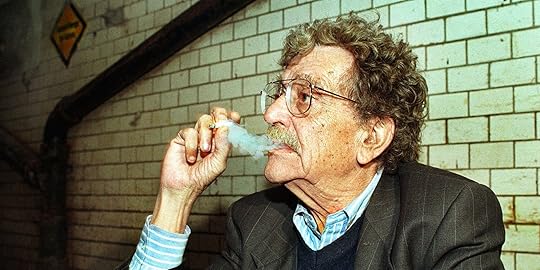
From Slapstick's "Turkey Farm" to Slaughterhouse-Five's eternity in a Tralfamadorean zoo cage with Montana Wildhack, the question of the afterlife never left Kurt Vonnegut's mind. In God Bless You, Dr. Kevorkian, Vonnegut skips back and forth between life and the Afterlife as if the difference between them were rather slight. In thirty odd "interviews," Vonnegut trips down "the blue tunnel to the pearly gates" in the guise of a roving reporter for public radio, conducting with Salvatore Biagini, a retired construction worker who died of a heart attack while rescuing his schnauzer from a pit bull, with John Brown, still smoldering 140 years after his death by hanging, with William Shakespeare, who rubs Vonnegut the wrong way, and with socialist and labor leader Eugene Victor Debs, one of Vonnegut's personal heroes.What began as a series of ninety-second radio interludes for WNYC, New York City's public radio station, evolved into this provocative collection of musings about who and what we live for, and how much it all matters in the end. From the original portrait by his friend Jules Feiffer that graces the cover, to a final entry from Kilgore Trout, God Bless You, Dr. Kevorkian remains a joy.
Kurt Vonnegut, Junior was an American novelist, satirist, and most recently, graphic artist. He was recognized as New York State Author for 2001-2003.
He was born in Indianapolis, later the setting for many of his novels. He attended Cornell University from 1941 to 1943, where he wrote a column for the student newspaper, the Cornell Daily Sun. Vonnegut trained as a chemist and worked as a journalist before joining the U.S. Army and serving in World War II.
After the war, he attended University of Chicago as a graduate student in anthropology and also worked as a police reporter at the City News Bureau of Chicago. He left Chicago to work in Schenectady, New York in public relations for General Electric. He attributed his unadorned writing style to his reporting work.
His experiences as an advance scout in the Battle of the Bulge, and in particular his witnessing of the bombing of Dresden, Germany whilst a prisoner of war, would inform much of his work. This event would also form the core of his most famous work, Slaughterhouse-Five, the book which would make him a millionaire. This acerbic 200-page book is what most people mean when they describe a work as "Vonnegutian" in scope.
Vonnegut was a self-proclaimed humanist and socialist (influenced by the style of Indiana's own Eugene V. Debs) and a lifelong supporter of the American Civil Liberties Union.
The novelist is known for works blending satire, black comedy and science fiction, such as Slaughterhouse-Five (1969), Cat's Cradle (1963), and Breakfast of Champions (1973)
I’ve always wanted to communicate with the dead, but here I am attempting in vain by applying ancient occult rituals and wearing my silly robe while Vonnegut accessed the tunnel by hitching a ride on the moribund fast-track at a lethal injection site.
He was a cheeky one, that Vonnegut. (Something I would know nothing about). As a self-proclaimed humanist—a term that seems to have fallen out of fashion in the religious/worldview discourse—he sought out a role as correspondent of the afterlife to encounter historical figures for snippet interviews about their time on earth, causing a ruckus at The Pearly Gates to Saint Peter’s consternation. Lacking belief in his destination, he was able to conduct casual and dispassionate shootings of the ethereal breeze.
I’ll see about succeeding his groundbreaking work by trying to get in touch with him. I’ll start by asking him if the afterlife is all he didn’t think it would be. Then, if everything is beautiful, and nothing hurts.
God Bless you, Dr. Kevorkian began as a series of radio spots narrated by Kurt Vonnegut and then compiled into this short but humorous collection.
The idea is that Vonnegut is a radio reporter to the Afterlife and he interviews several people in Heaven. Kevorkian assists him in near death experiences. Like all of Vonnegut’s work, it is funny and thought provoking at the same time.
"God Bless You, Dr. Kevorkian" is a fun, though short, book of "interviews" Kurt Vonnegut conducted. He had Dr. Kevorkian repeatedly kill him and then bring him back to life, so that he could travel down that blue tunnel to Heaven, talking with residents beyond the Pearly Gates.
Interviewees include William Shakespeare, Isaac Asimov, and Adolf Hitler. Some of the interviews had me smiling and some had me laughing out loud. No one can do satire quite like Kurt Vonnegut could!
At one point, Kurt Vonnegut was writing and recording short “interludes” for a Manhattan radio station that were “interviews” from the beyond with people who had passed on. It served as the basis for GOD BLESS YOU, DR. KEVORKIAN. In this text Vonnegut creates a scenario where Dr. Kevorkian creates near death experiences for Vonnegut which gives him the chance to interview deceased folks (real life folks, not characters, with the exception of his go to alter ego - Kilgore Trout) in the blue tunnel that leads to the Pearly Gates. Some of the “interviews” are with people everyone has heard of: Shakespeare, Newton, Hitler. Some with folks that most of us have never heard of. Most of the folks were decent human beings, some were not. Interesting concept.
Like much of Vonnegut’s late work, the quality varies, but in this slim volume the read is an enjoyable afternoon, and one I recommend for those who love Vonnegut.
Two moments that have stuck with me: 1. I loved Vonnegut’s explanation of where angels come from. I won’t spoil it, but it made me misty eyed. 2. While interviewing an amateur horticulturalist Vonnegut reveals that the man’s first act in Heaven was to pick a flower he had never seen before. I loved that!
Quotes: • “I wish one and all long and happy lives, no matter what may become of them afterward.” • “Like Roman games, justice systems are ways for unjust governments- and there is no other sort of government- to be enormously entertaining with real lives at stake.”
I enjoyed this quick collection. Most pieces are only a page or two. There are many nice moments, with that Vonnegut voice and dry wit and humor on full display. Occasionally, the bitterness that was to engulf Vonnegut’s later years raises its head for an instant. But in the main, Vonnegut’s idea of an afterlife-no Hell, a Heaven that seems to be a place where all people wind up with no regard to any religious connection - makes for a lighthearted, yet still thoughtful look at what the other side could be, at least in Vonnegut’s wishful imagination.
If you have read a lot of Vonnegut then you should pick up GOD BLESS YOU, DR. KEVORKIAN as well.
ایدههای کورت ونهگات، واقعن جذاب و خلاقانهان. توی این کتاب، گویندهرادیویی رو داریم که توی هرقسمت برنامهش نیمهجون میشه و میره از شخصیتای مرده مصاحبه تهیه میکنه و توسط دکتر به زندگی برمیگرده. طنز خوبی داره و حرفای درظاهرناجدیدرباطنجدی میزنه. زندگینامه خود ونهگات هم آخر کتاب هست که خوندنش خالی از لطف نیست!
This is one Vonnegut book that I could not connect with. There wasn't really anything that linked up and each conversation seemed to not matter to the others. There were parts that amused me but on the whole, it wasn't worth my time, even though it did not take much time to digest.
I love this excellent little book. I've been a fan of Kurt Vonnegut's since I first read Slaughterhouse-Five many years ago. This little book exceeded my expectations. I hope Mr Vonnegut is still writing now, down at the other end of the blue tunnel.
I'm on the fence about a lot of Vonnegut's work. Because on the one hand, I read Slaughterhouse 5 as a literature illiterate in Junior year of High School (it wasn't until after High School that I became a real fan of reading). So there's a lot to love about Vonnegut on a purely nostalgic basis, or at least on the basis that he is who introduced me to literature in the first place. It was he that warmed me up to the great works that were to come, and of all the books that I claim to love now. I wonder to what extent I would appreciate the works that I do know if it wasn't for writers like Vonnegut to sharpen my literary tastes. For that I am thankful for the guy and appreciate the impact he's had on me as a reader and fan of literature. BUT on the other hand, I have to admit you to all, my dearest goodreaders, that I have grown out of Vonnegut's work significantly. And as snobbish or condescending as that might sound, 'tis the truth of the matter. It's difficult, for me anyway, to read other authors who push the envelope of writing and flex their might prowess with prose, to return to my roots and read the plain-jane Vonnegut style and still enjoy it. The lengths to which other authors have brought me seems to overshadow the work that Vonnegut does. He is a writer (of his own admission) that is great in ideas but weak in actual writing ability. While I don't agree that his writing is weak (it is its own style and inhabits its own space as a style of writing), I do agree with the underlying sentiment. V. puts emphasis on the ideas and structure of the story much more than he does of his writing. And I'm at the point in my career as a reader that I will always want something from the writing itself, as a mode and avenue of expression. For me, the whole point of reading literature (what separates itself from any other medium of story-telling) are the things that writing can do in and of itself, hence my proclivity for post-modernism (that puts writing itself as the main focus of its story-telling aim) and prose that is effected poetically in some way, shape or form, Nabokov, Woolf, etc. This is the main issue that I take with all minimalist writing, which maximalist writing (loose categories here, nothing too specific in mind) provides and quenches what I seek to get from writing. If the writing is so transparent so as to allow a fully-clear view into the story itself, then what's the point of using words? Why not any other medium? Such writing yields the medium of writing arbitrary. Not all of this applies to Vonnegut however, because he has quite a few tricks up his sleeve (more than the other minimalist writers that use such style of stripped-down prose). It's interesting that Vonnegut is pomo in several ways—author inserted into the story, incredulity towards grand narratives and self-awareness of the medium itself—yet he presents it all in such a simple way. I think that if I were more inclined towards the stripped-down Hemingway style, that Vonnegut would be one of my favorite writers of all time, but alas, I'm not and alas he's not.
This story in particular is a great read: short, fun and intelligent. The ending sets up this ambiguity that resides at the heart of all of Vonnegut's novels. Without spoiling anything, there is a tension running throughout the whole novella between the secular and the religious, and in tandem, meaningless existence and meaningful existence. Despite being a proclaimed atheist and humanist, Vonnegut (the author and the narrative persona) writes a story about heaven and everyone inside it. The reason why this idea and conceit is so much fun in the book is that most of us find comfort in such things (no controversy here, right? assurance of a special place after you die is much more comforting than the unknown void after one dies). So Vonnegut plays with this propensity we have as human beings to keep us going through this playful story, wherein the main character travels back and forth between earth and the gates of heaven to speak to famous figures of history. Yet at the end, the credibility of the narrator is thrown into doubt (as well as the credibility of all such stories that give us hope). The question remains if Vonnegut is an optimist or a pessimist about the hope that people get from such fanciful stories. And that's where his genius shines because for a few sweet minutes after finishing the story, he is both at the same time: hopeful and hopeless.
Brevi interviste di un inviato speciale nell'aldilà nei cento metri circa di terreno libero tra la fine del Tunnel Celeste e le Porte del Paradiso...
God Bless you , Dr. Kevorkian : di che si tratta? E' un esperimento di giornalismo post-mortem :) Brevi interviste a tanti diversi personaggi (una specie di ibrido tra la Divina Commedia e L'Antologia di Spoon River) Tra i tanti, menzione speciale a un San Pietro molto arguto (e irascibile con gli intrusi - intervistatori ) che dice ad un tipo "Se sulla terra lei fosse stato un consumatore di crack, immagino che anche il paradiso sarebbe stata una delusione" (E l'inferno ? naaaa... l'inferno mica esiste ! o come diceva Sartre L'Inferno sono gli altri )
PS.mica male l'epitaffio di Kurt Vonnegut :
Tutto è stato bellissimo. Nulla mi ha ferito. ( e comunque sia, me la sarò svignata)
About twenty 2-to-3 page vignettes in which a fictional version of Vonnegut himself interviews all manner of deceased people, from the famous to the not so famous, in the tunneled entrance to what amounts to a Christian version of Heaven. There are gems of Vonnegutian (is that a word?) wisdom throughout, and lots of bits of high-brow humor (sometimes too high-brow, for my tastes), but there lacks any sort of overarching narrative or message to the book, an omission that would’ve catapulted this easy-reading novella from good to great. Still, this is Kurt Vonnegut we’re talking here, and I say these words in comparing him only to himself. Any lesser writer would have floundered with this material. Vonnegut nails the subject matter here with the dark levity it deserves, in the way that only he can.
Vonnegut was a big part of my early 20s, and I haven't read anything of his for a little while. I used to religiously wear a t-shirt that had the gravestone on it that read EVERYTHING WAS BEAUTIFUL AND NOTHING HURT. Slaughterhouse-Five shook up what I thought a novel could be or do. And I guess in a way, something of Vonnegut's humour and worldview helped me construct mine as adulthood became something I no longer looked at from afar but was a 'part' of.
After watching Hozier at Finsbury Park, I had some time in the city. I read this cross-legged in Foyles in London the other day. I have a bad habit of reading books in bookshops so I don't have to buy them. It's maybe unethical.
Vonnegut dies a lot in 'controlled near-death experience[s]'. When dead, he goes to the 'blue tunnel' and meets the other men and women who have gone to heaven. There is no hell. So he even meets Hitler up there. It's sometimes hard to know whether we should laugh or not. Hitler says to Vonnegut, "I paid my dues along with everybody else", and that he hopes a 'stone cross, since he was a Christian' be placed on the grounds of the United Nations headquarters in New York, dated '1889-1945', and read, '"Entschuldigen Sie." Roughly translated into English, this comes out, "I Beg Your Pardon," or "Excuse me."'
Mary Shelley, after Vonnegut tells her that people are always calling the monster 'Frankenstein', replies, "That's not so ignorant after all. There are two monsters in my story, not one. And one of them, the scientist, is indeed named Frankenstein."
I did laugh (as in, I didn't laugh at all, but my brain was tickled), when Vonnegut said he was asked to provide some filler and interview someone who is actually alive: 'He is science-fiction writer Kilgore Trout.'
But Vonnegut also chats to Isaac Asimov, Shakespeare, Sir Isaac Newton, and more.
Fun for those who already have a soft spot for old Kurt.
(2.5) Would we take that 3/4's dead and go through the blue tunnel with a round trip back to life journey if we could? To obtain information from the mind of some of the best known intellectuals to ever live, with the absence of the concept of time? Vonnegut posits this for a brief analysis through the mind of a reporter that is being assisted by the ever-so-loved Dr. Jack Kevorkian.
Witticisms a plenty and sarcasm, as usual, Vonnegut plays the intermediary interlocutor between the long dead (some famous, some banal) and the living.
A bit anti-war at times, yet always himself, Vonnegut doesn't touch any new territory with this short work than he already has, but entertains and makes us crack a smile at random thoughts...
"I asked this heroic pet lover how it felt to have died for a schnauzer named Teddy. He was philosophical. He said it sure as heck beat dying for absolutely nothing in the Viet Nam War."
If you're a novice when it comes to Vonnegut's work, bypass this for 'Slaughterhouse Five' or even 'Bluebeard'. You'll find better stuff from him elsewhere, so it goes...
I think, for once, the brevity of this book does the subject matter a disservice. The short pieces were originally presented as 90-second interludes on WNYC, Manhattan's public radio station through the material has been reworked prior to publication. It is easy, tempting even, to race through this book, and enjoy the fun part of it (guilty as charged), and it is funny throughout, and not get the message; he can be quite subtle.
Vonnegut presents these short pieces as if they were factual accounts of near-death experiences he has voluntarily allowed himself to go through, under the auspices of the titular Dr Kevorkian, in order for the author to interview the recently, and no so recently, deceased.
His choices are diverse – Isaac Asimov, John Brown, Adolf Hitler – if not inspired through many were unknown to me. The book has a decidedly American edge to it and that is where, as a Briton (and a Briton not particularly interested in British – let alone American – politics was at a disadvantage) but there is much more to the book than his musings on America’s gun policy or its history of slavery.
His writing is understated but he manages to make his words work which is doubly surprising when you see the rambling, chatty way in which it is written. It is only Vonnegut I’ve read to date so maybe its time I checked out Slaughterhouse Five or Cat’s Cradle, the two books he himself gave an A+ to.
İlk Kurt Vonnegut okumam ama bunu saymıyorum. Çünkü Vonnegut bu kitabı hümanist yayın yapan bir radyoya gelir sağlamak amacıyla yazdığını söylüyor kitabın başında. Başlangıçta bu bilgiyi görmek üzdü beni. Kitapta bu -para kazanmak için yazılmış olmak- fazlasıyla hissediliyor aslında, hele ki bu bilgiyi bildikten sonra. O yüzden kitap değil de, köşe yazıları okumuş gibi hissediyorum daha çok. Yıldız verseydim iki yıldız verecektim ama iki yıldız çok üzücü göründüğü için yıldız vermemeyi seçiyorum.
These are vignette interviews with an eclectic range of people in the afterlife. It's quirky and macabre and fun, but I also felt very meaningful. It's a quick read but a rewarding one.
Keşke kitapta geçen kişilerden hakkında bilgi sahibi olduğum insan sayısı daha fazla olsaydı ve keşke Türk tarihindeki önemli isimler için de böyle ölüm sonrası düşüncelerinin ne olduğu hakkında hayalî metinler olsaydı. Keyifliydi.
...what is a humanist? a humanist is a schmitt-heel who makes fun of the beliefs of others, at their expense, and offers nothing in exchange...
as cervantes wrote...friend to friend no more draws near and the jester's cane has become a spear.
read this one on my amazon kindle, second book i've read on it, both today...got to wondering...are all the pages here? how would i know? can't fan through them and sniff the cover...or is that against the law by now?
so kurt vonnegut as the narrator, making some money for public radio, or tv...has these near death experiences arranged by dr. jack kervorkian...dr. death as he has been called, never called that in this....story...(vonnegut is a humanist, dontcha know)...
...the only fair game are christians...americans, especially the founding fathers, like thomas jefferson, amazingly....wait not...he wasn't at the end of the blue tunnel in heaven...somehow jefferson is a topic though, as a slave owner, yeah, you've heard the spiel...blah de da, jefferson owned slaves...
....so you, gentle reader, american, deserve to feel guilt the rest of your natural life...cause, well vonnegut is a humanist and that's the intent.
meanwhile, let's all celebrate while barack obama makes fun of those folk in pennsylvania, clinging to their guns and religion....or the rev wright, damns america...no burning cross behind him....but where the fock was the outcry?
well, his face was exposed, there on the pulpit of the all-illinois-e church of the modern christ. no hood, but precious little outcry...maybe the rev is a humanist?
this one wasn't as bad as that other'n (a man w/o a country)...all that ranting...this one at least had a modicum of comedy, vonnegut, choking on his tongue.
two stars is probably being generous....and yeah, sure, okay, tongue in cheek, less of a spear, like that other'n i read by vonnegut, more of the jester's cane, but it's sharp...and hey, that's allowed...he's a humanist.
it's this mentality that allows some wit from one of the major networks to go on the national news and say something about "trailer parks" and paula jones in the same sentence and nobody bats a flocking eyelash. humanism? give me a freakin break.
oh, and hitler was a christian. gosh, who'd-a-thunk-it! "watch out for the christians!" vonneguts writes. hO hO hO! a real knee slapper there, kurt! funny thing is, i'd just completed a read of the brothers karamazov and i'm assuming russia's religions had some sway at the time and thereafter, but we all know about stalin's purges and the state of religion in that country, right? what? was uncle joe a christian?
no...it's not christians one need fear, it's the kind of mentality that thinks writing like this from vonnegut is a hoot. joking you say? okay, i'll buy that, but like i said, the jester's cane has been sharpened and he seems to delight in stabbing all with it and by the time "a man w/o a country" came out, he was a ranting fool.
vonnegut was out of his focking mind...hitler/christian?
what focking malarkey. hitler was first and foremost a darwinian!
this cock-smoking son-of-a--bitch thought he was the head of a superior race and vonnegut insults Christ and his followeres by suggesting this cock-sucker is one of them!!!!
and what is so fucking amazing is the number of shitheels who found this amusing.
Kurt Vonnegut Jr. (1922-2007) Amerikalı hümanist yazardır. II. Dünya Savaşı'nda Avrupa'da asker olarak hizmet vermiştir. Almanya'da savaş esiri olarak ele geçirilip, Dresden (Almanya) şehrinin bombalanmasına şahit olmuştur. Bu olayın etkisiyle, popüler ve başarılı olan "Mezbaha No 5" (Slaughterhouse-Five) kitabını yazmıştır. Ülkemizde "Kedi Beşiği", "Galapagos", "Titan'ın Sirenleri", "Şampiyonların Kahvaltısı", "Kör Nişancı", "Otomatik Piyano", "Allah Senden Razı Olsun Dr. Kevorkian", "Allah Senden Razı Olsun Bay Rosewater" ve yine "Mezhaba No 5" kitaplarıyla tanınıp, ölümsüzleşmiştir. İyi bir bilim-kurgu (özellikle de yazarlığının başlangıcında) ve hiciv yazma yeteneğine de sahiptir. Kitaplarında bu yeteneğinin etkileri fazlasıyla görülür.
Allah Senden Razı Olsun Dr. Kevorkian (God Bless You, Dr. Kevorkian / 1999), Vonnegut tarafından yazılan ve ilk olarak WYNC'de (Amerikan radyo kanalı) yayınlanan kısa süreli kurgusal röportajlar koleksiyonudur. Bu kurgu, Dr. Jack Kevorkian adlı doktor tarafından geliştirilen bir infaz tesisinde geçiyor. Kevorkian'ın geliştirdiği iğneyle Vonnegut'un "kontrollü ölüm" adı altında beyaz ışığı görmesi ve geri gelmesi amaçlanıyor. Bu şekilde, Vonnegut'un ahiret muhabiri olarak "Öteki Dünya" yolculuğu kayıt altına alınarak başlatılıyor. Bu "Öteki Dünya" yolculukları esnasında birçok ölü kişiyi ziyaret ediyor Vonnegut. Bu kişilerden bazıları William Shakespeare, Martin Luther King, Mary Shelley, Adolf Hitler gibi isimler. Bu isimlerle röportajlara katılıyor, sohbet ediyor ve Vonnegut'un sohbetinde kullandığı keskin mizahi yönünü görüyoruz. Kurgunun derinliğine çok güzel yedirdiği siyasi eleştirileri ve iğnelemeleri görmek de tuz biber oluyor, büyük keyif katıyor bizlere. Özellikle İncili Kapılar'da, (Pearly Gates / Bazı Hristiyan mezheplerine göre cennete açılan kapı anlamına gelmektedir.) Aziz Petrus (Katolik Kilisesi'ne göre ilk Papa ve İsa'nın varisidir.) ile yaptığımız komik, eğlenceli sohbetler çok güzeldi. Vonnegut'a hayran kaldım doğrusu, kendisini okumaya devam edeceğim.
[“This is one of my favorite part of this book: :)]
During my controlled near-death experiences, I’ve met Sir Isaac Newton, who died back in 1727, as often as I’ve met Saint Peter. They both hang out at the Heaven end of the blue tunnel of the Afterlife. Saint Peter is there because that’s his job. Sir Isaac is there of his insatiable curiosity about what the blue tunnel is, Low the blue tunnel works.
It isn’t enough for Newton that during his eighty-five years on Earth he invented calculus, codified and quantified the laws of gravity, motion, and optics, and designed the first reflecting telescope. He can’t forgive himself for having left it to Darwin to come up with the theory of evolution, to Pasteur to come up with the germ theory, and to Albert Einstein to come up with relativity.
“I must have been deaf, dumb, and blind not to have come up with those myself,” he said to me. “What could have been more obvious?”
My job is to interview dead people for WNYC, but the late Sir Isaac Newton interviewed me instead. He got to make only a single one-way trip down the tunnel. He wants to know what it seems to be made of, fabric or metal or wood or what. I tell him that it’s made of whatever dreams are made of, which leaves him monumentally unsatisfied.
Saint Peter quoted Shakespeare to him: There are more things in Heaven and Earth, Horatio, than are dreamt of in your philosophy.
این بار ونه گات به کمک دکتر که وارکیان، نیمه جان می شود، احتمالا با تزریق چیزی مرگبار، به آن دنیا می رود، دم در بهشت با آدم های مختلف مصاحبه می کند و برمی گردد. جهنمی وجود ندارد! همه به بهشت می روند و سنت پیتر ترتیب ملاقات ها را درست دم در بهشت می دهد! خود کتاب 65 صفحه بیشتر نیست، اما نشر افراز زندگی نامه ی کوتاه ونه گات را هم پیوست کرده است. بین این آدم ها، هیتلر هست که از ونه گات می خواهد روی بنای یادبودش! بنویسند ببخشید. آسیموف هست که در بهشت هم همچنان می نویسد. نیوتون هست که سعی دارد بفهمد این تونل آبی چیست و چگونه کار می کند و از همه بهتر مری شلی: «گفتم بسیاری از آدم های نادان فکر می کنند که فرانکن اشتاین نام هیولاست و نه نام دانشمند خالق آن. گفت به هر حال آن ها چندان احمق نیستند. توی داستان من دو تا هیولا وجود دارد، نه یکی، و یکی از آن ها، آن دانشمند، واقعا نامش فرانکن اشتاین است.» سه ستاره چون متن مصاحبه ها شدیدا کوتاه اند. انگار نویسنده عمدا فرصتی چنین استثنایی را به راحتی از دست داده. تورقش خالی از لطف نیست.
ریشخند ونه گات به همه نتایج پیشرفت بشری اینجا هم واقعا جذاب و عالی از کار درآمده. جزو آخرین کارهای دوران پیری نویسنده است و سایه مرگ کاملا روی نوشته ها احساس میشود. مدام در طول تونل آبی رنگ مرگ میرود و برمیگردد و با شخصیتهای سرشناس تاریخ غرب گفتگو میکند. در اکثر مواقع این که چطور میراث آدمهای بزرگ تاریخ غرب دستمایه تبعیض و سوءاستفاده از انسانهای دیگر شده است میگوید. یکی از فرازهایی که واقعا من را به خنده انداخت این ملاقاتش با ایساک نیوتن است:
با سر ايساک نیوتون، که قدیم ها در سال ۱۷۲۷ در گذشته است، تقریبا به اندازهی سنت پیتر دیدار داشته ام. هر دوی آنها آخرهای تونل آبی، در زندگی آن دنیا، ول بودند. سنت پیتر به خاطر شغل اش همان جاها بود. سر ایساک به خاطر کنجکاوی سیراب نشدنی اش در آنجا بود، که این تونل آبی آخر سر چیست، که این تونل آبی چه جوری کار می کند. برای نیوتن کافی نبود که در هشتاد و پنج سال زندگی اش بر روی زمین، توانسته بود حساب دیفرانسیل و انتگرال، رمز گشایی و تعیین کمیت قوانین جاذبه، حرکت، اپتیک و طراحی اولین تلسكوپهای انعکاسی را ابداع کند. نمی توانست خودش را ببخشد که رسیدن به تئوری تکامل را به داروین واگذار کرده بود، رسیدن به تئوری جرم را به پاستور، و رسیدن به نظریه ی نسبیت به انیشتین رسیده است.
نیمه دوم کتاب البته یک زندگینامه مختصر و مفید از زندگی ونه گات است که ظاهرا ناشر آن را به متن ملحق کرده تا حجم کتاب بیشتر شود. یک ستاره را به خاطر همین نیمه و ترجمه ضعیفش کم کردم
برای شروع کردن مطالعه درباره ونه گات اصلا کتاب خوبی نیست. من تابستان 86 یا 87 دو تا رمان گهواره گربه و سلاخ خانه شماره پنج را پشت سر هم خواندم و از برخورد با این نویسنده غول حیرت کردم. سلاخ خانه را بعدا اردیبهشت 95 دوباره مطالعه کردم و باز هم بیشتر با طنازی نویسنده حال کردم. اگر قبلا چیزی از ونه گات نخوانده باشید این کتاب به نظرتان یک سری شوخی بی نمک می آید و در نمی یابید این نویسنده جهان را چه جای مسخره ای میداند. زمین بازی دانشمندان دیوانه و سیاستمدارهای ابله
“I miei libri sono mosaici fatti di tante piccole tessere, e ogni tessera è una burla” (Kurt Vonnegut, pagina 5).
Questa di Vonnegut è una raccolta di brevi testi scritti per una rubrica radiofonica in cui l'autore immagina di prestarsi a delle sedute di morte temporanea, improvvisandosi, con l'aiuto del dottor Jack Kevorkian, famoso medico statunitense, promotore dell'eutanasia volontaria e sostenitore del suicidio assistito dei malati terminali, ad “inviato speciale nell'aldilà”. Il format di questi brevissimi testi, già di per sé spassoso ed originale, è, infatti, quello delle “interviste impossibili” a personaggi più o meno celebri, scomparsi più o meno recentemente.
Nel carcere di Huntsville, Texas, nell'edificio adibito all'esecuzione delle iniezioni letali ai condannati a morte, avvengono le esperienze di pre-morte di Vonnegut, dei veri e propri viaggi di andata e ritorno per il Paradiso (l'Inferno, si viene a scoprire, non esiste). Il celebre scrittore può così conoscere San Pietro in persona, ed intervistare ad ogni sua toccata e fuga un (più o meno) famoso ospite dell'aldilà, riportandoci a noi vivi le sue parole: ventuno interviste immaginarie a scrittori, scienziati, personaggi realmente vissuti, donne e uomini, tutti a loro modo straordinari (non sempre con accezione positiva), spesso anche semplicemente nella loro quotidianità. Da Mary D. Ainsworth a Salvatore Biagini, da Birnum Birnum a John Brown, da Roberta Gorsuch Burke a Clarence Darrow, da Eugene Victor Debs a Harold Epstein, da Vivian Hallinan ad Adolf Hitler, da John Wesley Joyce a Frances Keane, da Isaac Newton a Peter Pellegrino, da James Earl Ray a William Shakespeare, da Mary Wollstonecraft Shelley a Philip Strax, da Karla Faye Tucker all'amico e collega Isaac Asimov. Un campionario variegato e ben rappresentativo dell'umanità. Fino all'intervista ad un personaggio ancora vivo: lo scrittore Kilgore Trout, alter ego fittizio dello stesso Vonnegut, onnipresente nelle sue opere.
Tra le interviste più riuscite, segnalo quella a William Shakespeare:
“Mi sono congratulato con lui per tutti gli Oscar che aveva vinto il film Shakespeare in Love, il cui pezzo forte era la sua tragedia Giulietta e Romeo […]. Gli ho chiesto a bruciapelo se aveva scritto lui tutte le tragedie e le poesie che gli sono state attribuite. Quella che noi chiamiamo rosa manterrebbe lo stesso soave profumo anche se avesse un altro nome, ha detto lui […]. Gli ho chiesto se aveva avuto relazioni amorose con uomini oltre che con donne […]. Ma la sua risposta è stata un inno all'amore fra tutte le creature […]. Ciò che scambiammo fu innocenza contro innocenza. Questa dev'essere la pornografia più softcore che io abbia mai sentito” (pagine 58-59).
Quella a Mary Shelley:
“Le ho detto che oggi molte persone ignoranti credono che Frankenstein sia il nome del mostro, e non dello scienziato che lo ha creato. Non sono poi così ignoranti, dopotutto, ha detto lei. Nella mia storia ci sono due mostri, non uno. E uno di essi, lo scienziato, si chiama proprio Frankenstein” (pagina 63).
Infine, quella ad Isaac Asimov:
“Isaac, gli ho detto, tu dovresti essere nel Guinness dei primati. E lui mi ha detto: Per essere immortalato con un gallo di nome Balordo che pesa dieci chili e ha ucciso due gatti? Gli ho chiesto se scriveva ancora, e lui mi ha detto: Sempre! Se non potessi scrivere sempre, questo per me sarebbe l'inferno. La terra, per me, sarebbe stata un inferno, se non avessi potuto scrivere sempre. L'inferno stesso mi riuscirebbe sopportabile, se potessi scrivere sempre […]. Un'ultima domanda, l'ho pregato. A cosa attribuisci la tua incredibile produttività? Isaac Asimov ha risposto con una sola parola: Fuga. Poi ha aggiunto una celebre dichiarazione dell'altrettanto prolifico scrittore francese Jean-Paul Sartre: l'inferno sono gli altri” (pagine 72-73).
Già dall'introduzione dell'autore, dalla scelta dei personaggi intervistati e dalle dichiarazioni riportate, emerge tutta la potenza, la fantasia e l'immaginazione, la brillantezza e la capacità corrosiva della penna di Vonnegut, ma anche tutto il suo più sincero pensiero umanista e libertario.
“Sono un umanista, il che significa, in parte, che ho cercato di comportarmi decorosamente senza pretendere, dopo che sarò morto, né ricompense né castighi […]. Il mio bisnonno Clemens Vonnegut, per esempio, scrisse: se ciò che Gesù era buono, cosa può importare se era Dio o no? Quanto a me, ho scritto: se non fosse per il messaggio di misericordia e di pietà contenuto nel Discorso della Montagna di Gesù, non vorrei essere un essere umano. Preferirei essere un serpente a sonagli” (pagina 23).
Arricchiscono l'opera del sempre buffo e dissacrante Vonnegut, tradotta da Vincenzo Mantovani, una sentita prefazione di Francesco Piccolo ed una nota molto personale di Neil Gaiman. Nel complesso, un'opera minore, certo, ma pur sempre un'opera irresistibile per chi ama questo scrittore, la cui penna è sempre diretta, generosa, sincera, sfacciatamente spassosa e godibile. Un grande autore che sa essere allo stesso tempo divertente e commovente, un veicolo di messaggi importanti ed intelligenti, ben visibili anche quando vengono mascherati da stupidità, conditi qua e là con buone dosi di facezie e di trovate geniali. Dio la benedica, dottor Vonnegut!
“Il primo motivo irresistibile per cui non si può non amare Vonnegut è che lo senti vicino vicino. La prima pagina del primo libro che hai letto di Vonnegut è indimenticabile per questo, perché hai pensato: ma questo è un mio amico” (dalla prefazione di Francesco Piccolo, pagina 6).
I will never cease to be amazed and satisfied by Kurt Vonnegut’s writing. He will forever be my favorite author next to the ones who wrote down the Sermon on the Mount.
I didn’t really feel one way or another about this book but it had been stored in either a cedar chest or in a drawer with some sort of exquisite cologne so it smelled so fucking good. I made everyone in my house smell it for at least 10 seconds each and we all agreed
I love Kurt Vonnegut 😭 I need to buy a copy of this because I feel like I’ll want to keep referring to it for years and this library copy needs to be returned.
Kurt Vonnegut aiutato dal Dottor Kevorkian intervista alcune persone morte, famose o meno. Format nato per la radio, ne vengono fuori delle brevissime interviste ironiche e divertenti a modo suo.
Imagine Kurt Vonnegut visiting Dr. Kevorkian so that Kurt could take a trip through “the blue tunnel” on the other side, meet people like William Shakespeare and Sir Isaac Newton, and come back to report his findings. Ta Ta.
“I am a humanist, which means, in part, that I have tried to behave decently without any expectation of rewards or punishment after I’m dead.” -Kurt Vonnegut