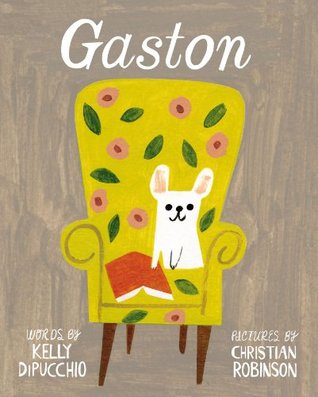
A bulldog and a poodle learn that family is about love, not appearances in this adorable doggy tale from New York Times bestselling author Kelly DiPucchio and illustrator Christian Robinson.This is the story of four Fi-Fi, Foo-Foo, Ooh-La-La, and Gaston. Gaston works the hardest at his lessons on how to be a proper pooch. He sips—never slobbers! He yips—never yaps! And he walks with grace—never races! Gaston fits right in with his poodle sisters. But a chance encounter with a bulldog family in the park—Rocky, Ricky, Bruno, and Antoinette—reveals there’s been a mix-up, and so Gaston and Antoinette switch places. The new families look right…but they don’t feel right. Can these puppies follow their noses—and their hearts—to find where they belong?
Kelly is the award-winning author of several children’s books, thousands of To-Do lists, and a few recipe cards. Two of her books, Grace For President and The Sandwich Swap, were New York Times bestsellers.
Like most kids who grew up in the 1970’s, Kelly had a pet goat and bought all her clothes from the Sears catalog. Like most teenagers who grew up in the 1980’s, Kelly had really big glasses and feathered hair.
Today, Kelly lives with her husband and three children in southeastern Michigan, where she enjoys writing just about everything except her own bio.
This was a nice book. It's about two families of dogs and two pups who feel like they don't fit in no matter how hard they try. The main themes were the grass isn't always greener on the other side and just because you are different doesn't mean you don't belong. The artwork was quirky and cute. I would recommend this for ages 6-10.
“Whatever the lesson, Gaston always worked the hardest, practiced the longest, and smiled the biggest.”
This is such an adorable book! It was recommended on Goodreads and was finally marked down as a Kindle book a couple of weeks ago so I bought it right away.
Gaston, a white little Frenchie, is raised in a family of poodles. Though he doesn’t exactly look like the other members of his family, or find it as easy to learn “poodle finesse,” he tries his hardest to be himself.
When the “mix-up” is discovered, two families realize that looking alike doesn’t necessarily make a family “a family.” Such a good book about being yourself, fitting in, blended families, and maybe even adopted children. Very versatile book! Will probably be purchasing the hardcopy edition for my library. The illustrations by Christian Robinson were so awesome!
This is a nice, fun read with lovely illustrations. Gaston feels different from the rest of his puppy siblings and one day a walk in the park reveals The resolution is a happy one and the book has some nice messages that you don't have to be like your family to be one of them and that you can be different and just as loved.
Still, I have mixed thoughts ... I'm not sure about the message it conveys to young kids. There are good lessons here, but something doesn't sit too well with me. Anyway ... cute.
So sweet! I loved this. It shows that family is those who love you and whom you love, not necessarily those who are "like" you. I could see this being used in adoptive families and many other situations. Loved it. Oh, and the dogs' names are great, too. My two year old loved the book even though the many layers of the message are beyond him right now.
How darn ADORABLE is this book? I can't. Gaston is about a bunch of puppies — that's probably all most of you need to know, but I'll go on. We have a family of little prim poodles, but one puppy looks... different. And they meet a family of rambunctious little bulldogs, in which, again, one puppy looks different. It's a story about found families and how sometimes, the family we belong to most has nothing to do with who birthed us, but also, it's just a really stinking cute book about puppies.
The illustrations are great but an underlying message of the story is problematic. On one level, it's a sweet story about belonging and family but on another level it seems to reinforce gender stereotypes with tenderness depicted as innately feminine and brutishness masculine. Maybe I'm reading too much into it but that's how it strikes me.
The art is AMAZEBALLS. After Josephine (HI MUST-BUY), Christian Robinson is quickly becoming one of my new fave illustrators. But I was troubled by the resonances of the story. I don't really think we're all nature or all nurture. I don't want kids to think that. This book basically does say NATURE WINS HANDS-DOWN BOOM. I also wonder what adopted kids would think of this book -- that they'll never truly belong with their adoptive family because there is a REAL family out there that's exactly like them that they should really be with? Yeah, I'm probably overthinking this. But I would totally give this to adult lovers of cool art and French bulldogs and poodles. Not to kids.
Gaston is the perfect poodle puppy. He never barks, slobbers, or any other messy thing. He fits in perfect with his proper poodle family. Until a trip to the park reveals a startling revelation. In Kelly DiPucchio’s adorable new picture book, Gaston learns the true meaning of family, love, and being who you truly are.
Seriously, this book is freakin’ adorable. It was recommended to me by a fellow librarian (therefore you know it will be amazing) and it completely warmed my heart! Go forth and read now!
I love this book. My son usually doesn't care for sweet books and just likes the tough, gross, or spooky ones. (I got it despite his objections.) But after listening to me read it once, he requested it again on the next two following nights before bed.
There are messages here, but they're only offered, not preached, and so the reader has a chance to choose which to explore and which to skip. Maybe it's about adoption. Maybe it's about just plain being happy with who you are. Maybe, even, it's about transexuals.
Or, if you'd rather, just plain enjoy it. It's funny, and cute, and clever. Highly recommended for all ages.
Dit prentenboek, Gaston, open het en je bent verkocht.
Het witte hondje van het omslag is een pup. Eén van de vier van mevrouw Poedel. De andere drie hebben de namen Fifi, Foefoe en Oe-la-la. En dus Gaston. Ze leren van hun water te nippen, blaffen is not done en je gaat trippelend door het hondenleven. Ze worden zo het poedeltjes betaamt, keurig opgevoed en als je uitgaat ben je netjes gekamd en gestrikt. Soms mislukt er wel eens iets bij één van de vier ook al doe je zo je best. Bij Gaston dus.
Wie deze hondenfamilie bekijkt, ziet in één oogopslag drie pups van dezelfde grootte en de vierde er duidelijk boven uitsteekt. De meer hoekige Gaston. De ontmoeting in het park met een andere hondenfamilie laat de bedoeling van dit prentenboek raden. Familie Poedel en Familie Boxer, met ook drie plus één pup, bekijken elkaar goed. Er is iets misgegaan is de conclusie. De moeders laten de kinderen rondjes-rennend beslissen. De uitslag is twee gelijksoortige families. Dat ziet er beter uit, maar vóelt het ook goed?
Op subtiele wijze wordt hier een psychologisch wetenschappelijk thema aangereikt en uitgewerkt. Aangeboren gedrag en eigenschappen genetisch bepaald versus aangeleerde leefwijze en gedrag door omgeving. Wat hoort er en wat past er? Er wordt geen oordeel geveld over nature-nurture, de nadruk ligt op wat goed voelt. De oplettende lezer ziet dat het lettertype van één naam in een opsomming anders is.
Het speelse karakter van de treffende illustraties is aansprekend en leuk voor alle leeftijden. Het getal vier wordt doorgetrokken in de illustraties op de achtergrond terwijl je ook drie plus één in decoratie en manier van zitten of staan tegenkomt. Eén dier blijft alleen terugkeren. Het voorstellen wordt in illustratie herhaald waardoor namen opnoemen zal volgen. De illustraties laten je denken aan de Bruna-omslagen van de Havank pockets of het recenter ‘Lig je samen dubbel?’ van Katrin Stangl terwijl Robinson duidelijk een eigen stijl en kleurgebruik heeft die verfrissend is.
De tekst leest soepel in korte zinnen of een enkel woord. Door het stellen van vragen ontstaat er automatisch interactie. Grote vragen als ‘wat is er mis als je er anders uitziet’ en ‘kun je ook samen spelen als je er anders uitziet’ kunnen interessante discussies laten ontstaan. De opdrachten m.b.t. gedrag staan schuingedrukt weergegeven en kunnen tegelijkertijd laten nadenken over de tegenstelling woest en voorzichtig of het stereotiepe roze voor meisjes. Wat betreft woordenschat valt er ook e.e.a. te leren, denk hierbij aan bepalen, trippelen, in stijl, oplossen, elegant of nippen.
In zowel illustratie als tekst zit aanstekelijke humor verwerkt waardoor de voorlezer dit boek met alle liefde meermaals zal willen oppakken. Hoe je er uitziet maakt niet uit, als het gevoel maar goed is en je mag zijn wie je bent, ook al ben je niet groter dan een ‘theekopje’. Voorlezen is door ‘Gaston’ een feest. Een warme tijdloze aanrader!
Gaston, a bulldog, and Antoinette, a poodle, are dogs who get "switched at birth". They're different from the others in their respective families but they love them very much. They meet at the park and realize there's something wrong. They attempt a switch back, but miss the families they left behind. They go back to the way things were before and become friends. Gaston and Antoinette later end up starting a family of their own. This is a very cute story that I'd highly recommend, especially to non-traditional families.
This entire review has been hidden because of spoilers.
A sweet book about family and finding where you belong!
I read this really fun and adorable book in Dutch but just HAD to write a review in English because that is the original language + I need more people to know about this one!
In this one we meet a cute adorable bulldog named Gaston, he is living with his mom and three sisters (who all have adorable names, Fi-Fi, Foo-Foo, and Ooh-La-La). That sounds cute right? Well, actually Gaston is a bulldog and the rest of the family are poodles. Yep. Either mom managed some magical feat, or there has been a mix-up. But despite being different from his family, Gaston tries and I just wanted to hug him for being so sweet and amazing and trying his best. Not slobbering like most dogs would do. Not stomping or ripping things. But elegance! Which haha, reminds me of SpyxFamily and that headmaster/teacher dude. I loved reading about this family and I love how close they are!
And then comes the thing mentioned in the blurb, which I didn’t read so it came as a surprise to me. On a day in the park they meet another family. A family of bulldogs. With one poodle. Yep. I wonder how the families were mixed up. I mean, with human babies that isn’t hard to do, but from the start it is clear that a bulldog isn’t the same as a poodle. XD Still I liked it and I was totally invested in the decision that the families, and then especially Gaston and Antoinette took. I was curious what would happen next. I won’t spoil it, but I did feel for both these two poodles. Both raised in a different way. With the right family. But is the right family really the right one?
The ending had me smiling, that was just perfect and I am happy that this was the end decision. And then came the last pages and I was just awwing and YES because that is absolutely wonderful that the author went for this one!
The illustrations were fantastic. The dogs were adorably done, but I also loved the backgrounds and other details. Such a sweet style and I need more!
Also I just found out there is also a book from Antoinette’s POV and I need it! Hopefully it gets translated in Dutch sometime. crosses fingers
All in all, a wonderful book about dogs, families, and belonging! Highly recommended.
This review was originally written for The Baby Bookworm. Visit us for new picture books reviews daily!
Hello, friends! Our book today is Gaston, written by Kelly DiPucchio and illustrated by Christian Robinson, the story of a little “poodle” and how he brings two families together.
Mrs. Poodle has four lovely poodle children, but Gaston is different: he’s bigger, and he must try harder than his sisters at being dainty, delicate and polite. Still, Gaston works hard to be a good poodle, and his family loves him. Then one day at the park, his family discovers another mother with four pups: three French Bulldogs and a miniature poodle! Mrs. Poodle and Mrs. Bulldog realize what must have happened, and agree to let the children decide what to do. So the adopted pups decide to switch back, but quickly realize that even though they are with dogs that look like them, they miss their families and their mothers (and their mothers miss them), so they choose to live with their adopted families, and both families decide spend every day together at the park.
This book was wonderful! First, the illustrations are absolutely charming, the length was great for Baby Bookworms, and the text is a lot of fun and very interactive for younger readers. But I loved the story, and its message about adoption and what makes a family, most of all. Not only did it impress that families need not always be related by blood, they also show that family comes in every shape and size. It was also great that the two dog families decided to maintain a close relationship after the pups switched back: it showed that it’s okay to have a relationship with both adoptive and birth families. These are wonderful messages when more and more kids are being raised in blended and non-traditional families, and we loved it! Baby Bookworm approved!
Gaston lives with his mother and his three siblings, Fi-Fi, Foo-Foo, and Ooh-La-La. They are all poodles, but Gaston is something else. He worked hard to be the best poodle puppy he could be, not slobbering, barking correctly and walking gracefully. When the poodle family went to the park, they met a bulldog family there that had its own unusual family member who looked like a poodle. There had clearly been a mix up! So Gaston switches places with Antoinette. Now the families look just the way they should, but neither Antoinette or Gaston seem to feel right in their “correct” families. What is a dog to do?
Right from the first pages, readers will know that there is something unusual about Gaston and how he fits into his family. It all becomes clear once the other dog family appears in the story and readers may think that fixing the mix up is the resolution of the story. Happily, it isn’t and the book becomes more about where you feel you fit in rather than where the world might place you. Gaston is a great mix of energetic bulldog puppy and also a prim poodle attitude. Antoinette is the reverse, a delicate poodle who plays like a bulldog.
Robinson’s illustrations are done in acrylic paint that gives texture to the images. The bold illustrations have bursts of color throughout and are done in a large format that will work well when shared with a group. All of the dogs have charm, though readers will immediate fall for the bright spunk of Gaston in particular.
A book about adoption and families that doesn’t hit too hard with the message of inclusiveness and diversity. Appropriate for ages 4-6.
Two little pups, as cute as can be, discover that family comes first, even when you must struggle to find your place in the litter. Kelly DiPucchio’s adorable GASTON doesn’t look like his poodle sisters Fi-Fi, Foo-Foo and Ooh-La-La but he works hard to master mama’s lessons in sipping, yipping and walking with grace. During a stroll through the park, Gaston encounters Antoinette, who doesn’t quite fit in with her rough-and-tumble bulldog brothers Rocky, Ricky and Bruno. Trading places makes the canine families look right, but they just don’t feel right. Can the mixed-up pups reconcile how they appear with who they really are?
DiPucchio’s clever, zippy text makes this a delightful book about families, belonging, and being true to oneself. The silly names and playful phrases (nibble their kibble/proper or precious or pink) will guarantee giggles through multiple readings. Robinson’s delightful acrylic illustrations capture the bouncy theme perfectly, wrapping the text around the energetic action of the pups and enhancing their distinctive personalities. Springy greens, mustard yellows, and mauve taupes give a retro feel to a fresh and fun story.
GASTON received a starred review from Kirkus, which proclaimed it “A perfect read aloud that will leave them begging for more—an absolute delight.” I couldn’t agree more. Whether tough or tender, precious or brutish, young book lovers will fall head over heels for the charm of Gaston.
First sentence: Mrs. Poodle admired her new puppies. Fi-fi, Foo-Foo, Ooh-La-La, and Gaston.
Premise/plot: Gaston is not like Fi-Fi, Foo-Foo, or Ooh-La-La. In fact he isn't like his mother, Mrs. Poodle, either. Oh, he tries really hard to excel in his lessons. "Whatever the lesson, Gaston always worked the hardest, practiced the longest, and smiled the biggest." One day in the park, Fi-Fi, Foo-Foo, Ooh-La-La, and Gaston meet Rocky, Ricky, Bruno, and Antoinette. By appearances, it looks like the puppies have been mixed up. Antoinette is a poodle, and Gaston is a bull-dog. Should the dogs trade places?
My thoughts: I really like this one very much. It's set in France, I believe. And it involves two very cute dog families. Mrs. Bulldog and her puppies plus Mrs. Poodle and her puppies. Readers get a chance to see both dog families at home and at the park. The narrative style is fun and playful though the subject is slightly serious: what makes family, FAMILY. Do you have to look the same? act the same? love the same? How much room is there for differences in family?
Text: 4 out of 5 Illustrations: 4 out of 5 Total: 8 out of 10
Summary: Gaston is a bulldog puppy living with a family of poodles. He doesn’t always fit in, but he always tries his hardest to follow rules and impress his mom. One day the poodles and Gaston head to the park. While at the park they notice a family of bulldogs with a poodle puppy, Antionette. It seems there was a mix-up at the puppy hospital. The families switch puppies only to discover that although Gaston and Antionette don’t look like their brothers and sisters, their family bonds go deeper than appearances. Will Gaston and Antionette switch back to their old families? This book is appropriate for ages preK to 2nd grade.
Activity: Have the students create a Venn diagram to compare and contrast the family of poodles and the family of bulldogs. Have students work on the Venn diagrams with their elbow partner. Then bring the group back together to make a shared/class Venn diagram.
Dipucchio, K. (2014). Gaston. New York, NY: Simon & Schuster Children’s Publishing Division.
We adopted our son and we read this book together. There are cute aspects of it, the illustrations, etc. But I am always bothered by the idea that mothers would see their children looking like someone else's family and think, "yeah, I'm gonna just let my kid go back to that family because it *looks* right. You know, this is awkward, but it's not going to rip my heart out." (I get that the puppies choose, but still. If it was a story about an adoptee seeking their birth family and needing to understand where they came from, that would be different and require a more complex treatment than a story like this is designed to do. But that also is not the storyline here).
The two mom dogs experience regret and see their mistake by that evening, although all the siblings seem to feel fine, which feels bad as well. I think the author means well, but I have felt compelled as I'm reading this story to say to my son I would never let him go like that and that the story is not realistic that way.
1) Alright class, we will be reading this heartwarming book titled “Gaston”, but first let’s look at the back cover of this book. [shows the children the back of the book, there is 1 dog and 4 puppies sitting in a row] Can anyone tell me what’s different about one of the puppies? {wait for a child to respond} That’s right! That puppy is bigger than the other puppies. Has anyone ever felt like they were the “odd” one in their own family? Like you truly believe you don’t belong in this family because you have nothing in common with these people? Well let’s find out if that is true for the puppy named Gaston.
2) The two openings I used: - Prompt hypothesizing based on the image - Clarify the writer’s point of view
3) I chose the first opening because I wanted to grab the children’s attention with showing them the back of the book, this way they can start to hypothesize on what the story might actually be about. I chose the second opening because I wanted the students to really grasp and understand the message within this delightful story right from the beginning.
Gaston has three sisters, but he doesn't look anything like them. They and his mother all look like poodles, but Gaston looks like a bull dog. Despite the way he looks, Gaston has been taught to mind his manners like any well-bred poodle would.
One day when Gaston's mother takes her brood to the park, they meet a mother with four children, all of which look like bull dogs, except for one, Antoinette. Antoinette looks like a poodle. But, she has been raised with her bull dog brothers so she has the manners of a bull dog, which are a far cry from those of the dainty poodles.
When the two mother dogs meet in the park, and they notice that each of them has a child that looks more like the other mother, they realize that some how the babies were switched: the poodle mom raised one of the bull dog pups and the bull dog mom raised one of the poodle pups. The moms decide to switch the pups so they can be with their real mothers. The decision looks like the right one, but is it?
Penso que, se calhar, não consegui perceber muito bem esta história... Gaston sente-te diferente das suas "irmãs" (é até dito que ele tem de se esforçar mais para ser como elas), mas quando tem a oportunidade de se juntar àqueles que se lhe assemelham, não se sente enquadrado... Para mim, não faz muito sentido que a autora nos queira passar a ideia de que nós somos o resultado "apenas" do meio em que estamos inseridos, quando na realidade, temos também uma influência genética que nos predispõe a certas características biológicas. Por outro lado, penso que a autora teve igualmente a intenção de passar uma ideia de tolerância para com aqueles que são diferentes de nós e que só temos a aprender com a diversidade que existe no mundo... No entanto, tenho pena que esta mensagem, a qual seria importante transmitir, se perca um pouco e não lhe seja dada mais ênfase. As ilustrações são queridinhas e servem bem o texto.