

What do you think?

China After Mao: The Rise of a Superpower
In China After Mao , award-winning author Frank Dikötter delves into the history of China under the communist party – from the death of Chairman Mao in 1976 up until the moment when Xi Jinping stepped to the fore in 2012.
It is a fascinating tale of contradictions and illusions; of shadow banking, repeated anti-corruption drives and the existence of extreme state wealth alongside everyday poverty. Dikötter explores the decades of so-called 'Reform and Opening Up' – a forty-year period that has left China with the lowest proportion of resident foreigners in any country – and the country's emergence into a post-industrial era. He examines China's navigation of the 2008 financial crash, its increasing hostility towards perceived Western interference and its development into a thoroughly entrenched dictatorship with a sprawling security apparatus and the most sophisticated surveillance system in the world.
Drawing on hundreds of previously unseen municipal and provincial archives, as well as unpublished memoirs, newspaper reports and the secret diaries of Mao's personal secretary, China After Mao is a brilliantly researched and mesmerizing account of a country in flux – and in crisis.
It is a fascinating tale of contradictions and illusions; of shadow banking, repeated anti-corruption drives and the existence of extreme state wealth alongside everyday poverty. Dikötter explores the decades of so-called 'Reform and Opening Up' – a forty-year period that has left China with the lowest proportion of resident foreigners in any country – and the country's emergence into a post-industrial era. He examines China's navigation of the 2008 financial crash, its increasing hostility towards perceived Western interference and its development into a thoroughly entrenched dictatorship with a sprawling security apparatus and the most sophisticated surveillance system in the world.
Drawing on hundreds of previously unseen municipal and provincial archives, as well as unpublished memoirs, newspaper reports and the secret diaries of Mao's personal secretary, China After Mao is a brilliantly researched and mesmerizing account of a country in flux – and in crisis.
390 pages, Paperback
First published September 22, 2022
About the author
Frank Dikötter
22 books599 followersFrank Dikötter (Chinese: 馮客; pinyin: Féng Kè) is the Chair Professor of Humanities at the University of Hong Kong and Professor of the Modern History of China on leave from the School of Oriental and African Studies, University of London.
Born in the Netherlands in 1961, he was educated in Switzerland and graduated from the University of Geneva with a Double Major in History and Russian. After two years in the People's Republic of China, he moved to London where he obtained his PhD in History from the School of Oriental and African Studies (SOAS) in 1990. He stayed at SOAS as British Academy Postdoctoral Fellow and as Wellcome Research Fellow before being promoted to a personal chair as Professor of the Modern History of China in 2002. His research and writing has been funded by over 1.5 US$ million in grants from various foundations, including, in Britain, the Wellcome Trust, the Arts and Humanities Research Council, The Economic and Social Research Council and, in Hong Kong, the Research Grants Council and the Chiang Ching-kuo Foundation.
He has published a dozen books that have changed the ways historians view modern China, from the classic The Discourse of Race in Modern China (1992) to China After Mao: The Rise of a Superpower (2022). His 2010 book Mao's Great Famine: The History of China's Most Devastating Catastrophe was selected as one of the Books of the Year in 2010 by The Economist, The Independent, The Sunday Times, the London Evening Standard (selected twice), The Telegraph, the New Statesman and the BBC History Magazine, and is on the longlist for the 2011 Samuel Johnson Prize for non-fiction.
Born in the Netherlands in 1961, he was educated in Switzerland and graduated from the University of Geneva with a Double Major in History and Russian. After two years in the People's Republic of China, he moved to London where he obtained his PhD in History from the School of Oriental and African Studies (SOAS) in 1990. He stayed at SOAS as British Academy Postdoctoral Fellow and as Wellcome Research Fellow before being promoted to a personal chair as Professor of the Modern History of China in 2002. His research and writing has been funded by over 1.5 US$ million in grants from various foundations, including, in Britain, the Wellcome Trust, the Arts and Humanities Research Council, The Economic and Social Research Council and, in Hong Kong, the Research Grants Council and the Chiang Ching-kuo Foundation.
He has published a dozen books that have changed the ways historians view modern China, from the classic The Discourse of Race in Modern China (1992) to China After Mao: The Rise of a Superpower (2022). His 2010 book Mao's Great Famine: The History of China's Most Devastating Catastrophe was selected as one of the Books of the Year in 2010 by The Economist, The Independent, The Sunday Times, the London Evening Standard (selected twice), The Telegraph, the New Statesman and the BBC History Magazine, and is on the longlist for the 2011 Samuel Johnson Prize for non-fiction.
Ratings & Reviews
Friends & Following
Create a free account to discover what your friends think of this book!
Community Reviews
Displaying 1 - 30 of 152 reviews

January 3, 2023
Frank Dikotter, long time Chair of Humanities at Hong Kong University, has continued to hold on to his faculty position despite his books being banned in the People’s Republic. He sees this as fortunate since he is unknown on the mainland and still has access to the archives. In the preface to this late 2022 work he notes that regional archives for the Mao years (1949-1976) were opened in 1996 under Jiang Zemin and then closed in 2012 under Xi Jinping, but post Mao era files (1977-2002) became available. By the period of ‘Reform and Opening Up’ begun by Deng Xiaoping in 1978 the Party had become a system where industry, large enterprises, land, natural and financial resources were all controlled by the state. Systemic corruption and inefficiency had made the fiscal deficits and their mounting debts unsustainable.
Using Tiananmen Square as backdrop Dikotter looks at past dissents in post imperial China from the May 4 1919 protests against cession of Shandong to Japan in the Versailles Treaty to the March 18 1926 massacre of protesters against the unequal treaties still in effect with western imperial powers. During the war period of 1937-1949 there wasn’t time for demonstrations. Planned economies during the Great Leap Forward and political chaos in the Cultural Revolution drew China to the brink of another revolution. On April 4 1976 pro-Zhou Enlai and Deng Xiaoping protests rallied against Madame Mao’s Gang of Four coup attempt. They propelled the Brezhnev christened ‘anti-Soviet dwarf’ back to power. Courting US favor Deng railed against the Russian threat and was rewarded with a Most Favored Nation trading status.
In the early ‘80s the Party began to turn a blind eye towards private enterprise in rural areas as farmers left to their own devices made a profit for themselves and the state. Reversion to a mercantile past asserted itself in cities, black markets multiplying beyond Beijing’s control, to the point where local industries competed for raw materials with the PCR. Independent businesses used the cover of state owned collectives to reap the benefits of easy loans and lax tax oversight. These developments were met by hand wringing and lip service denouncing the decay of socialist principles and spread of bourgeois liberalism. In practice the first steps toward capitalism were taken without central committee approval, exploiting a dual exchange rate that kept export prices competitive in foreign markets and imports costs low.
A special economic zone in Shenzhen, near Hong Kong, was blessed by Deng during a 1984 visit, becoming a center of foreign investment and technology. Cheap labor imported from the hinterland fled to the bright lights and higher pay across the bay. To counter the exodus free trade areas were established where local authorities made the decisions on foreign trade and provided better working conditions. While industry didn’t take hold import/export business did and opportunities in coming computer technology were taken. Sixteen new free zones were created with the provision they wouldn’t be run or funded by Beijing. Cases proliferated of stolen chemical and pharmaceutical formulas and led to the counterfeiting of household appliances, office equipment, industrial and agricultural machinery in a wild east of trade.
In the late eighties export trade to Japan and the US boomed. State subsidized industries like textiles crushed American mill owners and products flooding the markets were shipped through Hong Kong to conceal the identity of their origin. Factories produced goods for sale below cost and made up the difference with state loans that would never be repaid. Televisions and automobiles were imported to special zones using duty free status and currency manipulation for resale at three hundred percent markup as inflation rose between thirty to fifty percent. State subsidies of consumer staples were bankrupting the state and Deng abruptly ended price controls in 1988, causing a run on the banks. Students took to the streets in protest of the economic conditions, official corruption and a lack of democratic representation.
By early 1989 Deng reversed course, reinstating an austerity budget and price controls for household items as well as industrial materials. ‘Enemies of the Party’ and ‘Capitalist Reactionaries’ were arrested, some executed for moral examples and to divert attention from the state of the economy. As cancelled projects drove fifty million workers back to the countryside a young filmmaker broadcast the documentary ‘River Elegy’ portraying the Yellow River as a metaphor for the downfall of a kingdom through the folly of its king, its silt and sediment symbolic of corruption within the corridors of power. Proclamations followed that China ‘will never copy the separation of powers and multi-party systems of the West’. Student protests occupied Tiananmen for a month, ending in the massacre of June 4th 1989.
Crowds had grown in the square, 300,000 by Gorbachev’s state visit on May 15. CCP Secretary Zhao Ziyang urged a conciliation with the students and workers who had joined the protests but was opposed by Deng and the hardliners. Footage of the protests were broadcast around the world as demonstrations spread to cities in the south and west calling for Deng and Premier Li Peng to step down. Martial law was declared and the People’s Liberation Army shot and killed 3000 civilians. European leaders condemned the crackdown while Deng blamed the US for fomenting insurrection. GHW Bush offered little criticism and sent Kissinger to pucker up to the regime. Thousands arrested and summary trials held, punishment was meted out with prison time or a bullet in the back of the head, often orchestrated before large crowds.
Zhao was ousted and replaced with Jiang Zemin, who waged propaganda campaigns to root out the foreign collaborators plotting to defeat socialism and poison the body politic with western spiritual pollution. Lei Feng, fictional Mao era model soldier and socialist, was wheeled out of mothballs to appear on television, in movies, study groups and symposiums. The 150th anniversary of the Opium War provided an opportunity to denounce a ‘Century of Humiliation’ China endured at the hands of imperialists. United Front established a network of domestic and international celebrities and spokespersons to win over hearts and minds and to promote acceptance of the Chinese Communist Party. Thousands fled from Hong Kong, considered by Beijing a hotbed of foreign subversion, trying to escape the rapidly approaching return to the mainland.
Attempts by Margaret Thatcher to bolster the confidence of British subjects who would live in the colony after the 1997 handover were met with hostility and threats by Deng and Li. New security laws in the territory would ignite protests in the coming decades. The constitution rejected a democratic framework and separation of powers as ‘a Western system unsuitable for Hong Kong’, instead promising ‘a high degree of autonomy’. Lech Walesa’s Solidarity Party led Poland to a peaceful transition to democracy, following the Tiananmen debacle, increasing paranoia in the CCP that communism was failing on all fronts. 70,000 protesters took over the center of Leipzig demanding an end to the East German regime and a month later the Berlin Wall fell. Sensing the gig was up Beijing censors blacked out news of events.
As the statues of Lenin fell in Russia Mao’s little red book became required reading again in China. In response to the massacre the World Bank ended billions in interest free loans prompting Chinese cutbacks of imports from Japan, Korea and the US. The yuan was devalued by 20% ramping up exports to the US and EU by 60%. Taiwan ended a ban on mainland trade and tourism, increasing revenue by 250%. Despite the outrage over Tiananmen, China was open for business. Fang Lizhi, a leader of the protests was allowed to leave China in exchange for the resumption of US trade. The World Bank stipulated that there was no connection in its charter between financial assistance and human rights. The CCP learned the value of hostage diplomacy for one single dissident as Japan ramped up Chinese investments by 40%.
Further currency devaluations became the mainstay of the export trade but created inflation and raised interest rates. To cap prices in raw materials the CCP recentralized control of state monopolies. The strategy increased losses in the industries and required subsidies to keep them afloat. A mismatch between supply and demand created stockpiles of goods without buyers and rotating debt between government banks. In a socialist economy businesses aren’t allowed to go bankrupt creating a whole class of zombie companies. Bad debt equaled the total currency in circulation and 20% of all loans. Party elders who managed the planned economy were political theorists, not economists. When stymied by the old guard in the capital Deng resorted to former tactics of Mao, appealing directly to the people in tours of economic centers where he championed reforms and opening up to the West.
Deng’s plan was to exercise political control of the foreign owned companies, in effect to use capitalism against the capitalists, encouraging even greater foreign investment and economic development and demonstrating superiority of the socialist system. Pudong, a large area of marshes across the Huangpu River in Shanghai was promoted to become a new financial center to rival Hong Kong. Foreign investors soon found themselves mired in a sea of red tape as they began to take advantage of the concessions. Everyone from Siemens to Matsushita and Ford got on board including the former opium dealer Jardine Matheson. In a short time every major city on the coast was offering preferential policies to foreign firms. Real estate development leapfrogged each year prior as domestic investors registered foreign shell companies.
The great boom was predictably followed by a retrenchment and austerity as banks were left holding up to 40% bad debts lent out to all sorts of scam artists, often petty officials in the government, banks and military. Peasants fell victim to runaway inflation and became migrant construction and factory workers living in shanties on the edges of provincial capitals. Jiang conducted sweeping purges of party hacks who opposed his policies, replacing military leaders and stacking his allies in the security and propaganda apparatus. A strongman was needed to bring local leaders to heel, ‘an enlightened Mao’, but such a force was decades away in the person of Xi Jinping. Zhu Rongji, Li Peng’s Vice-Premier wrested tax collection from the provinces and modernized it with a newly centralized revenue service in Beijing.
The renminbi was further devalued by 33% and the dual currency exchange rate dismantled in 1994. Membership in the WTO required a transparent legal system, a convertible currency, removal of trade barriers, protection of intellectual property rights and other business practices foreign to the PRC. As moves were made to address the deficiencies many outside observers thought China was transitioning from a planned economy to a market economy and that democracy would follow, promoted by the Clinton administration. The weak renminbi created a trade imbalance that ballooned to trillions of dollars over the decade. The government pulled foreign currency out of circulation to maintain their trade advantage. Paper money had to be printed to absorb foreign cash and the rate of inflation skyrocketed to over 30%.
In a political system without an independent judiciary or a free press, where party leaders dole out loans and rights to trade, corruption is a constant condition. Mao and Deng had periodically purged the party in the name of eliminating graft, a convenient excuse to get rid of enemies. Jiang Zemin was no exception when he came to power, executing rivals and rolling back economic reforms in favor of centralized control. Taiwan democratized and grew wealthy from US and EU trade but Jiang had nothing to offer other than hardline policies of his predecessors. Reunification was a priority whether by peaceful means or war. Taiwan president Lee Teng-hui was allowed to speak at Cornell, where he asked for recognition and fighter jets, causing a diplomatic dust up and provoking mainland military exercises over the island.
Clinton sent aircraft carriers to international waters as China laid claim to the South China Sea and its islands, building bunkers and airstrips on coral reefs. Jiang led a propaganda campaign of ‘spiritual civilization’ to disparage material development and attack foreign culture. Everything from McDonald’s and Mickey Mouse to high heels and short skirts came under fire. Filmmakers and authors like Zhang Yimou and Mo Yan were castigated for their criticism of the rush to growth and favorable portrayals of foreigners. More to the point it was recognized socialized business couldn’t compete with capitalist companies on a level playing field. Dissidents were silenced for speaking out against corruption. Deng died in 1997 and his economic reforms were swept under the rug in favor of Jiang Zemin’s brand of socialist conservatism.
After the Hong Kong handover currencies across Southeast Asia began to collapse, starting in Thailand and spreading to Malaysia, Philippines, Indonesia. The Four Asian Tigers of Hong Kong, Singapore, Seoul and Taipei retreated in 1998. With a devalued currency that couldn’t be converted on open markets, restrictions on capital flight and a stock market off limits to foreigners China was insulated from the downturn. As the Federal Reserve raised interest rates China became the greatest holder of US debt after Japan. Its stability in the financial crisis hid underlying problems of insolvent banks and bankrupt factories. The solution was to merge the failing state enterprises and offer shares listed in Hong Kong and New York. Pollution, health and safety regulations didn’t exist, millions of workers were left to fend for themselves.
As Clinton visited Jiang in 1998 veteran dissidents of the Democracy Wall and Tiananmen were released from prison and exiled to the US as a gesture of goodwill. Activists tried to register a democracy party and were arrested. A wave of political repression and imprisonment continued into 1999 when 10,000 religious protesters known as the Falun Gong surrounded the walled Zhongnanhai compound of top CCP leaders, who were reminded of the White Lotus, Taiping and Boxer rebellions of the Qing Dynasty. The cult had grown to 70 million followers. A crackdown sent over 35,000 to jail, continuing through 2001 when 40 million Christians were persecuted, their leaders sent to labor camps. The next year thousands of outlawed temples, ancestral halls and churches were either torn down or blown apart in every province.
Hu Jintao took charge of an atheism program designed to weed out anyone with religious beliefs from the Party and populace, and became leader of the People’s Republic. The successors of the original revolutionaries were reactionary party hacks who rejected received wisdom of liberalization. The organizing principle was the CCP’s need to ensure that it remained in charge of every aspect of life. A new campaign gave Party membership to private business owners, eliciting admiration from Western liberals, but really only embedded leftist ideologues into enterprise. Joining the WTO in 2000 trade imbalances with the US ballooned to a quarter trillion dollars per year, putting factories in America and Mexico out of business. Huge energy and mineral resources were pulled out of Africa and South America to fuel production in China.
A year after China won its 2002 bid for the Olympics a virus began to spread from a market in Guangdong, mirroring the pandemic 17 years later in official obfuscation and a refusal to inform the WHO. Before the 2008 opening ceremonies protests in Tibet against human rights violations ended in thousands of arrests and dozens of deaths, sparking angry demonstrations around the world. By the late 2000’s China had linked Shanghai to Central Asia with a network of oil and gas pipelines and became the world’s largest cotton producer and purchaser. In 2012 Xi Jinping would become Chinese leader and inaugurate the Belt and Road Initiative connecting South and Southeast Asia, Africa and Mideast with maritime ports, interest deferred loans and graft to politicians playing key roles in securing long term leases.
In 2008 the subprime lending market collapsed major US banks and spread around the world. Interest rates had been slashed to 1.5% to counter deflation caused by the trade imbalance and cheap Chinese imports. The recession that followed caused widespread unemployment and factory closings in China. The US and EU lodged complaints about dumping of merchandise on their markets. Shortly later the Great Firewall went up, Google, YouTube, Facebook and Twitter banned and replaced with Chinese clones. An army of censors guarded the internet and flooded message boards with pro-government posts. In the wake of the 2008 Sichuan earthquake 69,000 had died and 4.8 million were homeless due to shoddy construction and lack of regulatory oversight. People from all over helped the rescue efforts and sent relief.
Celebrity dissidents, a Nobel Peace Prize winner, support for the Dalai Lama led to a vast network of surveillance cameras and police stretching from Shanghai to Xinjiang. Beijing was outraged about the Western powers attempting to subvert socialism. The Arab Spring of 2011 set off a campaign of soft power, international institutes, newspapers and television to promote the Chinese model. Military budgets doubled and quadrupled to protect cargo ships and oil tankers passing through the South China Sea. After Xi came to power cyber attacks ramped up. Shanghai’s market crashed in 2018, stock sales frozen and foreigners blamed. A crackdown on enemies of Xi began, journalists expelled, a million Uyghurs detained in labor camps. US sanctions began in 2019 and Hong Kong democracy protests collapsed during the 2020 pandemic.
Using Tiananmen Square as backdrop Dikotter looks at past dissents in post imperial China from the May 4 1919 protests against cession of Shandong to Japan in the Versailles Treaty to the March 18 1926 massacre of protesters against the unequal treaties still in effect with western imperial powers. During the war period of 1937-1949 there wasn’t time for demonstrations. Planned economies during the Great Leap Forward and political chaos in the Cultural Revolution drew China to the brink of another revolution. On April 4 1976 pro-Zhou Enlai and Deng Xiaoping protests rallied against Madame Mao’s Gang of Four coup attempt. They propelled the Brezhnev christened ‘anti-Soviet dwarf’ back to power. Courting US favor Deng railed against the Russian threat and was rewarded with a Most Favored Nation trading status.
In the early ‘80s the Party began to turn a blind eye towards private enterprise in rural areas as farmers left to their own devices made a profit for themselves and the state. Reversion to a mercantile past asserted itself in cities, black markets multiplying beyond Beijing’s control, to the point where local industries competed for raw materials with the PCR. Independent businesses used the cover of state owned collectives to reap the benefits of easy loans and lax tax oversight. These developments were met by hand wringing and lip service denouncing the decay of socialist principles and spread of bourgeois liberalism. In practice the first steps toward capitalism were taken without central committee approval, exploiting a dual exchange rate that kept export prices competitive in foreign markets and imports costs low.
A special economic zone in Shenzhen, near Hong Kong, was blessed by Deng during a 1984 visit, becoming a center of foreign investment and technology. Cheap labor imported from the hinterland fled to the bright lights and higher pay across the bay. To counter the exodus free trade areas were established where local authorities made the decisions on foreign trade and provided better working conditions. While industry didn’t take hold import/export business did and opportunities in coming computer technology were taken. Sixteen new free zones were created with the provision they wouldn’t be run or funded by Beijing. Cases proliferated of stolen chemical and pharmaceutical formulas and led to the counterfeiting of household appliances, office equipment, industrial and agricultural machinery in a wild east of trade.
In the late eighties export trade to Japan and the US boomed. State subsidized industries like textiles crushed American mill owners and products flooding the markets were shipped through Hong Kong to conceal the identity of their origin. Factories produced goods for sale below cost and made up the difference with state loans that would never be repaid. Televisions and automobiles were imported to special zones using duty free status and currency manipulation for resale at three hundred percent markup as inflation rose between thirty to fifty percent. State subsidies of consumer staples were bankrupting the state and Deng abruptly ended price controls in 1988, causing a run on the banks. Students took to the streets in protest of the economic conditions, official corruption and a lack of democratic representation.
By early 1989 Deng reversed course, reinstating an austerity budget and price controls for household items as well as industrial materials. ‘Enemies of the Party’ and ‘Capitalist Reactionaries’ were arrested, some executed for moral examples and to divert attention from the state of the economy. As cancelled projects drove fifty million workers back to the countryside a young filmmaker broadcast the documentary ‘River Elegy’ portraying the Yellow River as a metaphor for the downfall of a kingdom through the folly of its king, its silt and sediment symbolic of corruption within the corridors of power. Proclamations followed that China ‘will never copy the separation of powers and multi-party systems of the West’. Student protests occupied Tiananmen for a month, ending in the massacre of June 4th 1989.
Crowds had grown in the square, 300,000 by Gorbachev’s state visit on May 15. CCP Secretary Zhao Ziyang urged a conciliation with the students and workers who had joined the protests but was opposed by Deng and the hardliners. Footage of the protests were broadcast around the world as demonstrations spread to cities in the south and west calling for Deng and Premier Li Peng to step down. Martial law was declared and the People’s Liberation Army shot and killed 3000 civilians. European leaders condemned the crackdown while Deng blamed the US for fomenting insurrection. GHW Bush offered little criticism and sent Kissinger to pucker up to the regime. Thousands arrested and summary trials held, punishment was meted out with prison time or a bullet in the back of the head, often orchestrated before large crowds.
Zhao was ousted and replaced with Jiang Zemin, who waged propaganda campaigns to root out the foreign collaborators plotting to defeat socialism and poison the body politic with western spiritual pollution. Lei Feng, fictional Mao era model soldier and socialist, was wheeled out of mothballs to appear on television, in movies, study groups and symposiums. The 150th anniversary of the Opium War provided an opportunity to denounce a ‘Century of Humiliation’ China endured at the hands of imperialists. United Front established a network of domestic and international celebrities and spokespersons to win over hearts and minds and to promote acceptance of the Chinese Communist Party. Thousands fled from Hong Kong, considered by Beijing a hotbed of foreign subversion, trying to escape the rapidly approaching return to the mainland.
Attempts by Margaret Thatcher to bolster the confidence of British subjects who would live in the colony after the 1997 handover were met with hostility and threats by Deng and Li. New security laws in the territory would ignite protests in the coming decades. The constitution rejected a democratic framework and separation of powers as ‘a Western system unsuitable for Hong Kong’, instead promising ‘a high degree of autonomy’. Lech Walesa’s Solidarity Party led Poland to a peaceful transition to democracy, following the Tiananmen debacle, increasing paranoia in the CCP that communism was failing on all fronts. 70,000 protesters took over the center of Leipzig demanding an end to the East German regime and a month later the Berlin Wall fell. Sensing the gig was up Beijing censors blacked out news of events.
As the statues of Lenin fell in Russia Mao’s little red book became required reading again in China. In response to the massacre the World Bank ended billions in interest free loans prompting Chinese cutbacks of imports from Japan, Korea and the US. The yuan was devalued by 20% ramping up exports to the US and EU by 60%. Taiwan ended a ban on mainland trade and tourism, increasing revenue by 250%. Despite the outrage over Tiananmen, China was open for business. Fang Lizhi, a leader of the protests was allowed to leave China in exchange for the resumption of US trade. The World Bank stipulated that there was no connection in its charter between financial assistance and human rights. The CCP learned the value of hostage diplomacy for one single dissident as Japan ramped up Chinese investments by 40%.
Further currency devaluations became the mainstay of the export trade but created inflation and raised interest rates. To cap prices in raw materials the CCP recentralized control of state monopolies. The strategy increased losses in the industries and required subsidies to keep them afloat. A mismatch between supply and demand created stockpiles of goods without buyers and rotating debt between government banks. In a socialist economy businesses aren’t allowed to go bankrupt creating a whole class of zombie companies. Bad debt equaled the total currency in circulation and 20% of all loans. Party elders who managed the planned economy were political theorists, not economists. When stymied by the old guard in the capital Deng resorted to former tactics of Mao, appealing directly to the people in tours of economic centers where he championed reforms and opening up to the West.
Deng’s plan was to exercise political control of the foreign owned companies, in effect to use capitalism against the capitalists, encouraging even greater foreign investment and economic development and demonstrating superiority of the socialist system. Pudong, a large area of marshes across the Huangpu River in Shanghai was promoted to become a new financial center to rival Hong Kong. Foreign investors soon found themselves mired in a sea of red tape as they began to take advantage of the concessions. Everyone from Siemens to Matsushita and Ford got on board including the former opium dealer Jardine Matheson. In a short time every major city on the coast was offering preferential policies to foreign firms. Real estate development leapfrogged each year prior as domestic investors registered foreign shell companies.
The great boom was predictably followed by a retrenchment and austerity as banks were left holding up to 40% bad debts lent out to all sorts of scam artists, often petty officials in the government, banks and military. Peasants fell victim to runaway inflation and became migrant construction and factory workers living in shanties on the edges of provincial capitals. Jiang conducted sweeping purges of party hacks who opposed his policies, replacing military leaders and stacking his allies in the security and propaganda apparatus. A strongman was needed to bring local leaders to heel, ‘an enlightened Mao’, but such a force was decades away in the person of Xi Jinping. Zhu Rongji, Li Peng’s Vice-Premier wrested tax collection from the provinces and modernized it with a newly centralized revenue service in Beijing.
The renminbi was further devalued by 33% and the dual currency exchange rate dismantled in 1994. Membership in the WTO required a transparent legal system, a convertible currency, removal of trade barriers, protection of intellectual property rights and other business practices foreign to the PRC. As moves were made to address the deficiencies many outside observers thought China was transitioning from a planned economy to a market economy and that democracy would follow, promoted by the Clinton administration. The weak renminbi created a trade imbalance that ballooned to trillions of dollars over the decade. The government pulled foreign currency out of circulation to maintain their trade advantage. Paper money had to be printed to absorb foreign cash and the rate of inflation skyrocketed to over 30%.
In a political system without an independent judiciary or a free press, where party leaders dole out loans and rights to trade, corruption is a constant condition. Mao and Deng had periodically purged the party in the name of eliminating graft, a convenient excuse to get rid of enemies. Jiang Zemin was no exception when he came to power, executing rivals and rolling back economic reforms in favor of centralized control. Taiwan democratized and grew wealthy from US and EU trade but Jiang had nothing to offer other than hardline policies of his predecessors. Reunification was a priority whether by peaceful means or war. Taiwan president Lee Teng-hui was allowed to speak at Cornell, where he asked for recognition and fighter jets, causing a diplomatic dust up and provoking mainland military exercises over the island.
Clinton sent aircraft carriers to international waters as China laid claim to the South China Sea and its islands, building bunkers and airstrips on coral reefs. Jiang led a propaganda campaign of ‘spiritual civilization’ to disparage material development and attack foreign culture. Everything from McDonald’s and Mickey Mouse to high heels and short skirts came under fire. Filmmakers and authors like Zhang Yimou and Mo Yan were castigated for their criticism of the rush to growth and favorable portrayals of foreigners. More to the point it was recognized socialized business couldn’t compete with capitalist companies on a level playing field. Dissidents were silenced for speaking out against corruption. Deng died in 1997 and his economic reforms were swept under the rug in favor of Jiang Zemin’s brand of socialist conservatism.
After the Hong Kong handover currencies across Southeast Asia began to collapse, starting in Thailand and spreading to Malaysia, Philippines, Indonesia. The Four Asian Tigers of Hong Kong, Singapore, Seoul and Taipei retreated in 1998. With a devalued currency that couldn’t be converted on open markets, restrictions on capital flight and a stock market off limits to foreigners China was insulated from the downturn. As the Federal Reserve raised interest rates China became the greatest holder of US debt after Japan. Its stability in the financial crisis hid underlying problems of insolvent banks and bankrupt factories. The solution was to merge the failing state enterprises and offer shares listed in Hong Kong and New York. Pollution, health and safety regulations didn’t exist, millions of workers were left to fend for themselves.
As Clinton visited Jiang in 1998 veteran dissidents of the Democracy Wall and Tiananmen were released from prison and exiled to the US as a gesture of goodwill. Activists tried to register a democracy party and were arrested. A wave of political repression and imprisonment continued into 1999 when 10,000 religious protesters known as the Falun Gong surrounded the walled Zhongnanhai compound of top CCP leaders, who were reminded of the White Lotus, Taiping and Boxer rebellions of the Qing Dynasty. The cult had grown to 70 million followers. A crackdown sent over 35,000 to jail, continuing through 2001 when 40 million Christians were persecuted, their leaders sent to labor camps. The next year thousands of outlawed temples, ancestral halls and churches were either torn down or blown apart in every province.
Hu Jintao took charge of an atheism program designed to weed out anyone with religious beliefs from the Party and populace, and became leader of the People’s Republic. The successors of the original revolutionaries were reactionary party hacks who rejected received wisdom of liberalization. The organizing principle was the CCP’s need to ensure that it remained in charge of every aspect of life. A new campaign gave Party membership to private business owners, eliciting admiration from Western liberals, but really only embedded leftist ideologues into enterprise. Joining the WTO in 2000 trade imbalances with the US ballooned to a quarter trillion dollars per year, putting factories in America and Mexico out of business. Huge energy and mineral resources were pulled out of Africa and South America to fuel production in China.
A year after China won its 2002 bid for the Olympics a virus began to spread from a market in Guangdong, mirroring the pandemic 17 years later in official obfuscation and a refusal to inform the WHO. Before the 2008 opening ceremonies protests in Tibet against human rights violations ended in thousands of arrests and dozens of deaths, sparking angry demonstrations around the world. By the late 2000’s China had linked Shanghai to Central Asia with a network of oil and gas pipelines and became the world’s largest cotton producer and purchaser. In 2012 Xi Jinping would become Chinese leader and inaugurate the Belt and Road Initiative connecting South and Southeast Asia, Africa and Mideast with maritime ports, interest deferred loans and graft to politicians playing key roles in securing long term leases.
In 2008 the subprime lending market collapsed major US banks and spread around the world. Interest rates had been slashed to 1.5% to counter deflation caused by the trade imbalance and cheap Chinese imports. The recession that followed caused widespread unemployment and factory closings in China. The US and EU lodged complaints about dumping of merchandise on their markets. Shortly later the Great Firewall went up, Google, YouTube, Facebook and Twitter banned and replaced with Chinese clones. An army of censors guarded the internet and flooded message boards with pro-government posts. In the wake of the 2008 Sichuan earthquake 69,000 had died and 4.8 million were homeless due to shoddy construction and lack of regulatory oversight. People from all over helped the rescue efforts and sent relief.
Celebrity dissidents, a Nobel Peace Prize winner, support for the Dalai Lama led to a vast network of surveillance cameras and police stretching from Shanghai to Xinjiang. Beijing was outraged about the Western powers attempting to subvert socialism. The Arab Spring of 2011 set off a campaign of soft power, international institutes, newspapers and television to promote the Chinese model. Military budgets doubled and quadrupled to protect cargo ships and oil tankers passing through the South China Sea. After Xi came to power cyber attacks ramped up. Shanghai’s market crashed in 2018, stock sales frozen and foreigners blamed. A crackdown on enemies of Xi began, journalists expelled, a million Uyghurs detained in labor camps. US sanctions began in 2019 and Hong Kong democracy protests collapsed during the 2020 pandemic.

November 24, 2022
The age of China? Not so fast, says Frank Dikötter
If there is a China expert that knows what he is talking about, it is Frank Dikötter, professor of the Modern History of China (on leave) from the School of Oriental and African Studies, University of London. This book, China after Mao is a sequel to his trilogy about China under Mao for which he made a name for himself. I have read his chilling account of Mao's Great Famine and have yet to read his account of the Cultural Revolution, but couldn't resist skipping to this book instead. This book deals with the economic history of China after Mao up to 2012, when Xi JinPing came to power.
Dikötter was given access to Chinese archives that were previously not open to foreign researchers. The period from 1976 untill now is often painted as a 'golden age' in present-day China. It is the time of the Chinese economic "growth miracle": the economy often grew by more than ten percent per year, and rushed closer and closer to that of the United States. This rosy vision has also been largely adopted abroad, according to Dikötter, without first really looking carefully at whether that image is correct. Because ... is this really correct?
This is my main message that I take with me: according to Dikötter the 'age of China' does not exist and will never come. China is not in the good shape everyone thinks it is. He challenges the idea that China would have been on a long straight road to unprecedented economic success after Mao's death. He even states that China never really took the path of economic liberalization after 1989. The reason is simple: the leaders knew that the economy would collapse immediately, according to Dikötter. He also comes to the surprising conclusion that even after all the reforms, China is not that different from forty years ago. Rising debts, overcapacity at state-owned enterprises, decades of neglect of the countryside. According to him, China is therefore at a dead end.
The reason? China must first be freed from the communist system before it has a chance to truly flourish. A communist system is simply not good and the economy will never be able to flourish properly under such a system.
Basic economic knowledge is recommended, as this is heavily interspersed with economic terminology. Nonetheless, Frank Dikötter succeeds in painting the unprecedented transformation from Mao's backwardness to Xi Jinping's economic powerhouse while at the same time getting rid of the all to easy soundbites of the so-called China experts.
I am hoping Dikötter is planning to follow up this trilogy with another volume, this time focussing on the age of Xi Jinping who, from the looks of it, has Mao-like aspirations.
Read in Dutch
If there is a China expert that knows what he is talking about, it is Frank Dikötter, professor of the Modern History of China (on leave) from the School of Oriental and African Studies, University of London. This book, China after Mao is a sequel to his trilogy about China under Mao for which he made a name for himself. I have read his chilling account of Mao's Great Famine and have yet to read his account of the Cultural Revolution, but couldn't resist skipping to this book instead. This book deals with the economic history of China after Mao up to 2012, when Xi JinPing came to power.
Dikötter was given access to Chinese archives that were previously not open to foreign researchers. The period from 1976 untill now is often painted as a 'golden age' in present-day China. It is the time of the Chinese economic "growth miracle": the economy often grew by more than ten percent per year, and rushed closer and closer to that of the United States. This rosy vision has also been largely adopted abroad, according to Dikötter, without first really looking carefully at whether that image is correct. Because ... is this really correct?
This is my main message that I take with me: according to Dikötter the 'age of China' does not exist and will never come. China is not in the good shape everyone thinks it is. He challenges the idea that China would have been on a long straight road to unprecedented economic success after Mao's death. He even states that China never really took the path of economic liberalization after 1989. The reason is simple: the leaders knew that the economy would collapse immediately, according to Dikötter. He also comes to the surprising conclusion that even after all the reforms, China is not that different from forty years ago. Rising debts, overcapacity at state-owned enterprises, decades of neglect of the countryside. According to him, China is therefore at a dead end.
The reason? China must first be freed from the communist system before it has a chance to truly flourish. A communist system is simply not good and the economy will never be able to flourish properly under such a system.
Basic economic knowledge is recommended, as this is heavily interspersed with economic terminology. Nonetheless, Frank Dikötter succeeds in painting the unprecedented transformation from Mao's backwardness to Xi Jinping's economic powerhouse while at the same time getting rid of the all to easy soundbites of the so-called China experts.
I am hoping Dikötter is planning to follow up this trilogy with another volume, this time focussing on the age of Xi Jinping who, from the looks of it, has Mao-like aspirations.
Read in Dutch
July 17, 2022
About 15 years ago, I read a truly remarkable book, "Mao: The Unknown Story" which covered the life of this horrid communist dictator until his death in 1976, and since then, I have always hoped to find another book on the history of China since 1976 that was as good as "Mao: The Unknown Story" and now I have done so. "China After Mao" is an excellent book that everyone should read. It is comprehensive, authoritative, and well documented. This is a first-rate book!

February 1, 2023
Slightly messy/confusing read where the story goes back and forth through the years, though chapters are denominated by distinct periods. It is personal, but foreign names add to the confusion. Additionally, the nature of information overwhelmed me with many numbers and statistics. The best part I liked was the Epilogue, where the writer no longer leans on state reports but instead succinctly writes what has happened since to illustrate China’s role in the current world hegemony.

November 20, 2022
Despite the "Superpower" in the title, Dikotter argues that there are quite some big structural problems in China's political and economic system. This is the first time I read such a carefully researched discussion, especially on the technical side of the Chinese economy over a long time period and find Dikotter's perspective valuable.
On the other hand, I think there are things amiss. As the timeline approaches the 21st century, perhaps materials become more scarce and scattered, I feel like the discussion does not have enough breadth and depth. There are many important events whose unfoldings and explanations are a little bit short and simplistic, not as nuanced as I like. Dikotter also seems rather too pessimistic and critical. I think all systems have their own problems, and the Chinese one has a large share of problems indeed. Yet how about achievements? Nothing worthwhile to commend? The book thus becomes less balanced and less convincing to me.
On the other hand, I think there are things amiss. As the timeline approaches the 21st century, perhaps materials become more scarce and scattered, I feel like the discussion does not have enough breadth and depth. There are many important events whose unfoldings and explanations are a little bit short and simplistic, not as nuanced as I like. Dikotter also seems rather too pessimistic and critical. I think all systems have their own problems, and the Chinese one has a large share of problems indeed. Yet how about achievements? Nothing worthwhile to commend? The book thus becomes less balanced and less convincing to me.
February 27, 2023
Would probably give 2.5 stars if that was an option.
As a summary of events in China since 1976, it probably does the job, although I can’t definitively say so since I’m a layperson. I will note that it reads more as summary-with-an-opinion than cutting analysis, although that’s not necessarily bad. Presumably the access to long-restricted archives gives it an edge over other, similar texts?
The main knock against this book is how much it drips with ideology. I’m quite far from being pro-CCP but if you read this book and nothing else at some point you’d probably start to wonder exactly how China’s remarkable economic success in the last four decades could have occurred. As a committed liberal democrat I buy that the country’s economic system is built on shaky ground foundations, but I also think you need to be able to develop a little more critical distance than Dikötter does. Books like Yuen Yuen Ang’s How China Escaped the Poverty Trap are more useful for understanding the functioning of the country’s political economy, and why its system has developed the way it has. Ang is perhaps *too* soft on the CCP but I think her work is more convincing than Dikötter’s, which seems dead set on the idea that all of the country’s growth has been fake and is due for a collapse any day now.
As a summary of events in China since 1976, it probably does the job, although I can’t definitively say so since I’m a layperson. I will note that it reads more as summary-with-an-opinion than cutting analysis, although that’s not necessarily bad. Presumably the access to long-restricted archives gives it an edge over other, similar texts?
The main knock against this book is how much it drips with ideology. I’m quite far from being pro-CCP but if you read this book and nothing else at some point you’d probably start to wonder exactly how China’s remarkable economic success in the last four decades could have occurred. As a committed liberal democrat I buy that the country’s economic system is built on shaky ground foundations, but I also think you need to be able to develop a little more critical distance than Dikötter does. Books like Yuen Yuen Ang’s How China Escaped the Poverty Trap are more useful for understanding the functioning of the country’s political economy, and why its system has developed the way it has. Ang is perhaps *too* soft on the CCP but I think her work is more convincing than Dikötter’s, which seems dead set on the idea that all of the country’s growth has been fake and is due for a collapse any day now.

September 22, 2023
Frank Dikötters Standardwerk zur Entwicklung Chinas seit Mao (1893–1976) umfasst die Zeit von 1976 (dem beginnenden Aufstieg Dengs) bis zum Beginn der Corona-Pandemie 2019/20. Damit schlägt er einen Bogen von Mao und Deng, die nichts von Wirtschaft verstanden, bis Xi Jinping, der als „Vorsitzender von Allem“ (The Economist) das Konzept des Feindes von außen mit umfassender Kontrolle der Bevölkerung verbindet.
Der Autor begann 1985 in Tianjin sein Sinologiestudium, als es im gesamten Land weniger als 20 000 Privatfahrzeuge gab. 10 Jahre später nutzt er die Phase der erstmaligen Öffnung von Archiven zur Recherche. Seine Archivstudien in gut einem Dutzend Archiven, sowie Presseartikel und unveröffentlichte Erinnerungen von Zeitzeugen vermitteln ein kenntnisreiches China-Bild mit Focus auf die Wirtschaft des autoritär von der Kommunistischen Partei regierten Staates.
„Keine einzige Person begreift die Finanzwelt und das System des Rechtsstaates“. Wer hätte gedacht, dass Margaret Thatcher (Tochter eines Kolonialwarenhändlers) bei ihrem China-Besuch 1982 die Schwächen sozialistischer Wirtschaftsysteme in einem Satz zusammenfassen würde.
In Dikötters umfassendem Werk finde ich die Darstellung der 80er-Jahre besonders gelungen, weil sich das Wissen über China im Westen damals meist auf wenige persönliche Kontakte und die Berichte von Auslandskorrespondenten beschränkte. In dem man im Wortsinn aus der Geschichte lernt, lassen sich Gehörtes und Erlebtes einordnen, wenn man als Leser verfolgt, wie sich Werte und Einstellungen chinesischer Bürger seit den 80ern eher gefestigt als verändert haben. Die generationenalte Weisheit z. B., dass „Chinesen Banken nicht trauen“, wird durch Dikötters Analyse begreifbar – und ihre Gültigkeit bis heute.
Warum die Privatwirtschaft punktuellen staatlichen Maßnahmen stets überlegen war, warum es ohne Rechtsstaatlichkeit keinen Markt und ohne politische Reformen keine Marktreformen geben kann, legt Dikötter pointiert, humorvoll und kritisch dar. Allerdings schwächelt er im letzen Kapitel mit der Einschätzung, dass das Corona-Virus China von der restlichen Welt entfremdet hätte. Es war nicht das Virus, sondern das Verhalten eines Staates, der aus den Fehlern während des SARS-Ausbruchs 2002 offenbar nichts gelernt hatte.
Rund 1/3 des Bandes nimmt der Anhang ein, mit Quellen, Register, Fotos, Verzeichnis der Archive eine wahre Fundgrube.
Wem die Namen der wichtigsten chinesischen Politiker und der grobe Ablauf chinesischer Geschichte nicht fremd sind, wird das Buch mit Gewinn lesen.
Der Autor begann 1985 in Tianjin sein Sinologiestudium, als es im gesamten Land weniger als 20 000 Privatfahrzeuge gab. 10 Jahre später nutzt er die Phase der erstmaligen Öffnung von Archiven zur Recherche. Seine Archivstudien in gut einem Dutzend Archiven, sowie Presseartikel und unveröffentlichte Erinnerungen von Zeitzeugen vermitteln ein kenntnisreiches China-Bild mit Focus auf die Wirtschaft des autoritär von der Kommunistischen Partei regierten Staates.
„Keine einzige Person begreift die Finanzwelt und das System des Rechtsstaates“. Wer hätte gedacht, dass Margaret Thatcher (Tochter eines Kolonialwarenhändlers) bei ihrem China-Besuch 1982 die Schwächen sozialistischer Wirtschaftsysteme in einem Satz zusammenfassen würde.
In Dikötters umfassendem Werk finde ich die Darstellung der 80er-Jahre besonders gelungen, weil sich das Wissen über China im Westen damals meist auf wenige persönliche Kontakte und die Berichte von Auslandskorrespondenten beschränkte. In dem man im Wortsinn aus der Geschichte lernt, lassen sich Gehörtes und Erlebtes einordnen, wenn man als Leser verfolgt, wie sich Werte und Einstellungen chinesischer Bürger seit den 80ern eher gefestigt als verändert haben. Die generationenalte Weisheit z. B., dass „Chinesen Banken nicht trauen“, wird durch Dikötters Analyse begreifbar – und ihre Gültigkeit bis heute.
Warum die Privatwirtschaft punktuellen staatlichen Maßnahmen stets überlegen war, warum es ohne Rechtsstaatlichkeit keinen Markt und ohne politische Reformen keine Marktreformen geben kann, legt Dikötter pointiert, humorvoll und kritisch dar. Allerdings schwächelt er im letzen Kapitel mit der Einschätzung, dass das Corona-Virus China von der restlichen Welt entfremdet hätte. Es war nicht das Virus, sondern das Verhalten eines Staates, der aus den Fehlern während des SARS-Ausbruchs 2002 offenbar nichts gelernt hatte.
Rund 1/3 des Bandes nimmt der Anhang ein, mit Quellen, Register, Fotos, Verzeichnis der Archive eine wahre Fundgrube.
Wem die Namen der wichtigsten chinesischen Politiker und der grobe Ablauf chinesischer Geschichte nicht fremd sind, wird das Buch mit Gewinn lesen.

August 19, 2022
China After Mao by Frank Dikotter I have read Mr. Dikotter’s three previous books about Mao and the formation of The People’s Republic of China. Like those three books, Mr. Dikotter explains the turbulent political history of those struggling to survive the death of Mao as well as those seeking to replace him. This is never an easy process when a country has been ruled by a dictator for so long. Compounding this issue was the concern of those made relevant by Mao not to have Mao fall into disgrace as Stalin did in Russia. I believe this has significance to preserving the communist philosophy of Mao as well as the reputations of those who acted on Mao’s dictates. The book describes the intrigues that occurred among rivals until the emergence of Deng Xioping who moved China forward and outward at least for a while into the Capitalistic world. This is for sure a book who have read Dikotter’s previous three books and I look forward to a possible next book as well.
July 15, 2024
Dikkotter clearly hates the CCP and while I would probably share that same feeling Dikkotters extensive editorialism hurts his writing. This is less a book about China after Mao and more a book about Chinas failures after Mao. He continually emphasizes the policy which failed, which in and of itself is fine it’s just that it’s not really showing the full picture. Chinas success is not really described to the point where if you picked up this book having known nothing about China prior you would think China is still just as dirt poor as it was a millennia ago.

March 5, 2025
This is the first book I read by Dikötter. As he is a renowned historian of modern China, I was surprised to find one of the most one-sided narratives of post-Mao history that I’ve ever seen. There is a total lack of nuance and rather than a history, it’s a summation of everything that went wrong in China in the past four decades from a Eurocentric perspective. The fact that Thatcher and Friedman are cited approvingly tells you enough about the authors position.

January 23, 2026
Incredibly well researched and informative. Should be required reading for anyone who still thinks state socialism is a good model. Terrifying hearing about citizens spending time in prison, or worse, for suggesting things like free speech, democracy, human rights, environmentalism, etc.

February 14, 2023
The topic of the this book is the governance of China in the post-Mao era, and it contains a great many observations but, for loss of a better word, misses the coherence of earlier Frank Dikötter works (on the Great Leap Forward and the Cultural Revolution). Like those earlier works, China after Mao is based on archive research, and just as discomfiting. Living through this period myself, as a student of Sinology and then as a long term resident of China, the setting is familiar, recognizable. Some things were new to me though, I hadn’t known there were so many popular protests in the 80’s culminating in the 1989 student protests on Tiananmen Square.
It doesn’t come as much of a surprise that communist ideological systems don’t allocate resources well, and that they lack any external or independent correction mechanisms. That has been proven in so many countries that have tried communism over the last 100 years. Still it is a very sobering to realize that the narrative the Chinese authorities have fed us, the author believes, has obscured the actual situation and befuddled so many observers and business leaders up to this day. The modus operandi seems to have been the piling up of huge debts to maintain economic growth, often putting in more money than was ever recouped from the investment.
The epilogue has some of the best writing in the whole book, following are some direct quotations from it:
"By 2021 there was an exodus of foreign firms out of China. Japan even paid its companies to relocate production elsewhere.21 The international backlash came even as the country was reaching an impasse in its economy. Growth, for decades, had depended on debt, which had risen slowly from a very low level between 1980 and 2010. Between 2010 and 2020, however, growth doubled while debt trebled, standing at 280 per cent of output. The country's dependence on debt should have been reduced by shifting demand from investment in infrastructure projects towards more domestic consumption. Yet household consumption could not be increased much further, for one very simple reason: most of the wealth flowed to the state, not to the people. As Li Keqiang pointed out in May 2020, more than 600 million people survived on a mere $140 a month, which was insufficient to rent a room in a city. A massive redistribution of income away from party members towards ordinary people would be necessary to spur more consumption, but this was unlikely to happen."
"In what appeared very much like a self-fulfilling prophecy, Beijing's belief that the United States was a hostile force bent on containing it actually became true. Against all odds, the regime had succeeded in alienating not just one of its greatest supporters, but also the one power that had created the very conditions on which it had depended for its survival. From the global dollar to global oil, global commodities and global markets for its products, the regime was deeply enmeshed in a world order created by the United States. Deng Xiaoping had warned his colleagues to lie low and bide their time. Instead, they had antagonized a giant."
"The easy options - accept foreign capital, exploit unprotected labor, sell land to raise funds, produce subsidized export goods, list state enterprises abroad, borrow to build and repay tomorrow were no longer available. The challenge lying ahead for the Communist Party was how to address an entire range of longstanding structural issues of its own making without giving up its monopoly over power and its control over the means of production. It seemed very much like a dead end."
It doesn’t come as much of a surprise that communist ideological systems don’t allocate resources well, and that they lack any external or independent correction mechanisms. That has been proven in so many countries that have tried communism over the last 100 years. Still it is a very sobering to realize that the narrative the Chinese authorities have fed us, the author believes, has obscured the actual situation and befuddled so many observers and business leaders up to this day. The modus operandi seems to have been the piling up of huge debts to maintain economic growth, often putting in more money than was ever recouped from the investment.
The epilogue has some of the best writing in the whole book, following are some direct quotations from it:
"By 2021 there was an exodus of foreign firms out of China. Japan even paid its companies to relocate production elsewhere.21 The international backlash came even as the country was reaching an impasse in its economy. Growth, for decades, had depended on debt, which had risen slowly from a very low level between 1980 and 2010. Between 2010 and 2020, however, growth doubled while debt trebled, standing at 280 per cent of output. The country's dependence on debt should have been reduced by shifting demand from investment in infrastructure projects towards more domestic consumption. Yet household consumption could not be increased much further, for one very simple reason: most of the wealth flowed to the state, not to the people. As Li Keqiang pointed out in May 2020, more than 600 million people survived on a mere $140 a month, which was insufficient to rent a room in a city. A massive redistribution of income away from party members towards ordinary people would be necessary to spur more consumption, but this was unlikely to happen."
"In what appeared very much like a self-fulfilling prophecy, Beijing's belief that the United States was a hostile force bent on containing it actually became true. Against all odds, the regime had succeeded in alienating not just one of its greatest supporters, but also the one power that had created the very conditions on which it had depended for its survival. From the global dollar to global oil, global commodities and global markets for its products, the regime was deeply enmeshed in a world order created by the United States. Deng Xiaoping had warned his colleagues to lie low and bide their time. Instead, they had antagonized a giant."
"The easy options - accept foreign capital, exploit unprotected labor, sell land to raise funds, produce subsidized export goods, list state enterprises abroad, borrow to build and repay tomorrow were no longer available. The challenge lying ahead for the Communist Party was how to address an entire range of longstanding structural issues of its own making without giving up its monopoly over power and its control over the means of production. It seemed very much like a dead end."

October 21, 2022
A special thanks to Bloomsbury Publishing and Author Frank Dikotter for my ARC of “China After Mao: The Rise of a Superpower” for an unbiased, honest review.
5-STARS!!!
This book is a POWERHOUSE. It’s absolutely a book university students and adults around the world should be reading and studying. If you’re looking for a fluff read on China, this isn’t your book. If you’re looking for extraordinarily well-research, heavily facts-based knowledge on this superpower of a country, you’ve hit gold. I honestly didn’t realize how superficial my own limited knowledge of China was (and I consider myself fairly well read) but Author Frank Dikotter is a leader in this and delivers a brilliant book. Give yourself time to get to know these fascinating and often hideous characters (men and women) and you’ll be hooked. Just the facts alone are shocking. Who needs fiction when fact is so much more astonishing and frightening?
5-STARS!!!
This book is a POWERHOUSE. It’s absolutely a book university students and adults around the world should be reading and studying. If you’re looking for a fluff read on China, this isn’t your book. If you’re looking for extraordinarily well-research, heavily facts-based knowledge on this superpower of a country, you’ve hit gold. I honestly didn’t realize how superficial my own limited knowledge of China was (and I consider myself fairly well read) but Author Frank Dikotter is a leader in this and delivers a brilliant book. Give yourself time to get to know these fascinating and often hideous characters (men and women) and you’ll be hooked. Just the facts alone are shocking. Who needs fiction when fact is so much more astonishing and frightening?

September 5, 2026
Dette var seig og ligger nok over mitt intellektuelle nivå.. Men lærte veldig mye, og er ikke akkurat blitt mer fan av Kina.

February 14, 2023
After Mao, Before Balloons
This book offers a comprehensive analysis of China's history after Mao's rule, with a focus on the country's rise to superpower status.
Although I found the author's writing style dry and academic, the book is well-researched and provided a wealth of insights and perspectives on major events that have shaped China's modern history.
The book delves into the key factors that have enabled China's transformation, including political, economic, and social changes, and provides a nuanced understanding of China's development over the years.
If you're interested in exploring the history and evolution of China, this book is a must-read.
3.8/5
This book offers a comprehensive analysis of China's history after Mao's rule, with a focus on the country's rise to superpower status.
Although I found the author's writing style dry and academic, the book is well-researched and provided a wealth of insights and perspectives on major events that have shaped China's modern history.
The book delves into the key factors that have enabled China's transformation, including political, economic, and social changes, and provides a nuanced understanding of China's development over the years.
If you're interested in exploring the history and evolution of China, this book is a must-read.
3.8/5
January 24, 2023
3.5 stars - but I'll kick it up to four for reasons I'll get to at the end of this review.
Dikotter had previosly written a series of books highly critical of China under Mao Zedong, so now he's back with a book about the problems of China after Mao. The main point is that for all of China's growth and seeming success, it's all based on a shaky foundation and creative accounting - and Dikotter believes that this is rapidly approaching a dead end for the nation.
The author knows his stuff and he provides plenty of info and evidence to back up his points, but it left a weird taste in my mouth the entire way. I don't mind a book being critical of post-Mao China as there are plenty of reasons to have issues with China. I don't even mind a book taking a contrarian view of China's economic advances. But have you ever heard the phrase "give the devil his due"? Well, Dikotter hasn't. If this book was all you knew about China, you'd think that the history of the nation over the last 45 years was nothing but problems, missed opportunities, and disaster. For example, in the 1980s, he notes all the problems the nation had with finance and debt relief and currency exchanges and all of these things. And yeah - that stuff is really important. And hey - those things really matter. But .... wasn't there also a considerable uptick in consumer goods, industrial production, and improvements in daily life for many (especially in the cities)? And wasn't that economic success a big part of the reason why Deng Xiaoping's regime was able to survive the 1989 protests largely unscathed (while Eastern Europe regimes fell at the exact same time)? Similarly, Dikotter talks a lot about the patriotic education going on in post-1989 China- but isn't that stuff successful in part because the regime has delivered improved lives for the citizens, making them more readily willing to buy into the state's official line? Dkotter has such a relentless focus on the negative, that you forget that there's anything else.
This book weirdly reminded me of Howard Zinn's "A People's History of the United States." No, it's not the same political bent, but both books look only at things that back up their bent, leaving an enormous blind spot for anything/everything else. This ultimately underctus Dikotter's final point, where he argues that all the tricks China has used over the last 40 years have run their course, and their in dangerous waters to keep their overrated economy humming. Dikotter would have more crediilty in his prediction of a doomed dead end if he hadn't made China's previous half-century sound so blighted.
This book has the ironic impact of making me thing that finance is overrated. I mean, if questionable finance can cause what's happened in China since 1976 - then, heck - maybe questionable finance is worth it?
Also, the book is weirdly front-loaded. It's about 300 pages of material, but you hit 1991 (fifteen years in) around page 170. The 21st century makes up half of the years here, but not even one-fourth of the pages. The last decade gets a brief ten-page epilogue.
I'm talking myself into changing my review to three stars - but I'll leave it at four (with some regrets obviously).
Why keep it at four stars?
Well, Dikotter does know his stuff. Lots of it is dry info on finance and all that, but it does show some problems China has had. Inflation, retrenchment - all that comes in and out. The last parts also show a shift since 1989 towards national patriotic education, which has led to a much more hostile relationship with much of he outside world.
Also, I'll give him this: the guy lives and works in Hong Kong. I'll give him some latitude for his harsh view of the regime living there. Really, if it wasn't for that, I'd kick this down to three stars.
Dikotter had previosly written a series of books highly critical of China under Mao Zedong, so now he's back with a book about the problems of China after Mao. The main point is that for all of China's growth and seeming success, it's all based on a shaky foundation and creative accounting - and Dikotter believes that this is rapidly approaching a dead end for the nation.
The author knows his stuff and he provides plenty of info and evidence to back up his points, but it left a weird taste in my mouth the entire way. I don't mind a book being critical of post-Mao China as there are plenty of reasons to have issues with China. I don't even mind a book taking a contrarian view of China's economic advances. But have you ever heard the phrase "give the devil his due"? Well, Dikotter hasn't. If this book was all you knew about China, you'd think that the history of the nation over the last 45 years was nothing but problems, missed opportunities, and disaster. For example, in the 1980s, he notes all the problems the nation had with finance and debt relief and currency exchanges and all of these things. And yeah - that stuff is really important. And hey - those things really matter. But .... wasn't there also a considerable uptick in consumer goods, industrial production, and improvements in daily life for many (especially in the cities)? And wasn't that economic success a big part of the reason why Deng Xiaoping's regime was able to survive the 1989 protests largely unscathed (while Eastern Europe regimes fell at the exact same time)? Similarly, Dikotter talks a lot about the patriotic education going on in post-1989 China- but isn't that stuff successful in part because the regime has delivered improved lives for the citizens, making them more readily willing to buy into the state's official line? Dkotter has such a relentless focus on the negative, that you forget that there's anything else.
This book weirdly reminded me of Howard Zinn's "A People's History of the United States." No, it's not the same political bent, but both books look only at things that back up their bent, leaving an enormous blind spot for anything/everything else. This ultimately underctus Dikotter's final point, where he argues that all the tricks China has used over the last 40 years have run their course, and their in dangerous waters to keep their overrated economy humming. Dikotter would have more crediilty in his prediction of a doomed dead end if he hadn't made China's previous half-century sound so blighted.
This book has the ironic impact of making me thing that finance is overrated. I mean, if questionable finance can cause what's happened in China since 1976 - then, heck - maybe questionable finance is worth it?
Also, the book is weirdly front-loaded. It's about 300 pages of material, but you hit 1991 (fifteen years in) around page 170. The 21st century makes up half of the years here, but not even one-fourth of the pages. The last decade gets a brief ten-page epilogue.
I'm talking myself into changing my review to three stars - but I'll leave it at four (with some regrets obviously).
Why keep it at four stars?
Well, Dikotter does know his stuff. Lots of it is dry info on finance and all that, but it does show some problems China has had. Inflation, retrenchment - all that comes in and out. The last parts also show a shift since 1989 towards national patriotic education, which has led to a much more hostile relationship with much of he outside world.
Also, I'll give him this: the guy lives and works in Hong Kong. I'll give him some latitude for his harsh view of the regime living there. Really, if it wasn't for that, I'd kick this down to three stars.

February 17, 2024
This book provides an insight to recent history of Chinese economics and policies, assessing how the PRC transformed from an agrarian society devastated by the Cultural Revolution into a nation who propelled itself onto the global scene by the 2010s, through manipulation of foreign investments, imports, and an incredibly misty system of lending and spending. Dikotter argues that 'capitalist tools in socialist hands' and making the step towards foreign markets allowed China to establish itself as the economic superpower we recognise today, while subjecting commentators observations of "transformation" to scrutiny, illuminating the fundamental issues which lay at the core of the Chinese economy.
Dikötter probes ideas from western commentators that political reform follows economic, and suggests that to view China as an economic powerhouse and its developments as a transformation is an overstatement, evidencing how oscillation between opening up and closing off dictated economic policies and exposing how key problems caused by these policies remain today.
At times the writing can be difficult to follow, jumping between periods and failing to adhere to a strict chronological order, additionally, economics is not my forte and the overwhelming amount of statistics was at times daunting.
In the latter part of the book, as we get to the 21st century, there is a notable shift in emphasis from individual leaders and their policies to a little more impersonal approach, however I suspect this is due to the nature of sources available. I definitely found the latter sections of the book, from the 21st century, more interesting, though I believe this is because this period is simply more interesting, and where key changes occur, whereas 1976-1999 can be characterised by a cycle of inflation and reckless loan lending against a backdrop of oscillation between opening up and closing off policies.
It would have been nice to see more argument incorporated into the text, while it is present in the beginning, it could be beneficial to reinforce these ideas and link the evidence to the points.
However, I found the book very informative, illuminating the core elements of the Chinese economy, and the role that China plays on the global stage today; thus it is a pertinent read for anybody interested in China's current position, and how it got here.
Dikötter probes ideas from western commentators that political reform follows economic, and suggests that to view China as an economic powerhouse and its developments as a transformation is an overstatement, evidencing how oscillation between opening up and closing off dictated economic policies and exposing how key problems caused by these policies remain today.
At times the writing can be difficult to follow, jumping between periods and failing to adhere to a strict chronological order, additionally, economics is not my forte and the overwhelming amount of statistics was at times daunting.
In the latter part of the book, as we get to the 21st century, there is a notable shift in emphasis from individual leaders and their policies to a little more impersonal approach, however I suspect this is due to the nature of sources available. I definitely found the latter sections of the book, from the 21st century, more interesting, though I believe this is because this period is simply more interesting, and where key changes occur, whereas 1976-1999 can be characterised by a cycle of inflation and reckless loan lending against a backdrop of oscillation between opening up and closing off policies.
It would have been nice to see more argument incorporated into the text, while it is present in the beginning, it could be beneficial to reinforce these ideas and link the evidence to the points.
However, I found the book very informative, illuminating the core elements of the Chinese economy, and the role that China plays on the global stage today; thus it is a pertinent read for anybody interested in China's current position, and how it got here.

March 28, 2023
The first quarter of the book is basically the road to Tienanmen massacre. If you ever wanted to fully understand why would any country send hundreds of tanks against its own people, this is the book to read - the context here is deep, well researched and shows how the massacre shaped modern China.
The rest of the book is even better, showing how badly mismanaged the economy of China was and is. Most of the time it's been run by people who don't understand how economy works, and it shows time and again. It's really like watching headless chicken clucking at whatever is shiny at the moment. The results are, of course, overproduction, overcapacity, overexploitation and underperformance. It's basically Stalin's Russia on a much grander and longer scale.
If there is something to criticize, it would be the human stories, which are the highlight of Frank Dikotter's masterpiece trilogy about Mao's China. We see those here and there, but reading about the economic mismanagement only hints at the struggles the common people had to put up with while their hapless idiotic overlords were busy exploiting the country.
I totally recommend this book to anyone who really wants to understand modern China and why we should all be very afraid of it. Not because it's strong and daring, but because it's weak, fragile and despotic just like modern Russia. And just like modern Russia it can do crazy stuff with its powers unchecked by democracy.
The rest of the book is even better, showing how badly mismanaged the economy of China was and is. Most of the time it's been run by people who don't understand how economy works, and it shows time and again. It's really like watching headless chicken clucking at whatever is shiny at the moment. The results are, of course, overproduction, overcapacity, overexploitation and underperformance. It's basically Stalin's Russia on a much grander and longer scale.
If there is something to criticize, it would be the human stories, which are the highlight of Frank Dikotter's masterpiece trilogy about Mao's China. We see those here and there, but reading about the economic mismanagement only hints at the struggles the common people had to put up with while their hapless idiotic overlords were busy exploiting the country.
I totally recommend this book to anyone who really wants to understand modern China and why we should all be very afraid of it. Not because it's strong and daring, but because it's weak, fragile and despotic just like modern Russia. And just like modern Russia it can do crazy stuff with its powers unchecked by democracy.

September 7, 2023
This is the fourth of Dikotter's books on China that I've read, and they are all excellent.
Although I'm firmly in Dikotter's camp on economic matters, he goes pretty far, essentially asserting that Chinese growth is almost 100% illusory (because fueled by unsustainable debt and under complete state control).
There is a narrative out there that China's regime has lifted 800 million people out of poverty since Mao's death, through "reform and opening up," the rise of the private sector, urbanization, and good old fashioned economic growth.
If even part of this narrative is true, Dikotter gives it little to no space.
I am not prepared to give Beijing a mulligan for human rights abuses, the abrogation of the rule of law in Hong Kong and in whatever vestigial forms it existed on the mainland, growing militaristic nationalism, cooking the books on economic growth, etc. But nor am I prepared to underestimate the regime's abilities.
I am a China hawk and a China skeptic, but also a realist. Reading only Dikotter's works would suggest that the CCP is on the verge of total collapse. That, in my view, would be a dangerous misapprehension.
Although I'm firmly in Dikotter's camp on economic matters, he goes pretty far, essentially asserting that Chinese growth is almost 100% illusory (because fueled by unsustainable debt and under complete state control).
There is a narrative out there that China's regime has lifted 800 million people out of poverty since Mao's death, through "reform and opening up," the rise of the private sector, urbanization, and good old fashioned economic growth.
If even part of this narrative is true, Dikotter gives it little to no space.
I am not prepared to give Beijing a mulligan for human rights abuses, the abrogation of the rule of law in Hong Kong and in whatever vestigial forms it existed on the mainland, growing militaristic nationalism, cooking the books on economic growth, etc. But nor am I prepared to underestimate the regime's abilities.
I am a China hawk and a China skeptic, but also a realist. Reading only Dikotter's works would suggest that the CCP is on the verge of total collapse. That, in my view, would be a dangerous misapprehension.
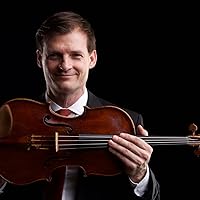
January 12, 2026
With 5,000 years of history, reading this slice of Chinese history puts into modern perspective age old pendulum-swinging topics of control, isolationism, and trust between members within a controlling body.
Much of the time is spent explaining trade and finance driven policies of the country’s history, but it really shines and becomes enthralling when explaining the social developments within China and how global interactions played out.
Interesting? Yes.
Detail driven? Absolutely
Still, I wish there was more substantive space dedicated to cultural and social changes within China, how they internally impacted the country, and how China impacted the world culturally/socially.
Much of the time is spent explaining trade and finance driven policies of the country’s history, but it really shines and becomes enthralling when explaining the social developments within China and how global interactions played out.
Interesting? Yes.
Detail driven? Absolutely
Still, I wish there was more substantive space dedicated to cultural and social changes within China, how they internally impacted the country, and how China impacted the world culturally/socially.

November 14, 2023
Compelling, Fascinating, Horrifying:
I never thought I was incredibly knowledgeable about China and communism, but good God, I didn't realize just how little I knew. Dikotter pulls no punches and does no sugarcoating in explaining both China's successes and failures over the past 100 years. I'll admit I definitely had to google a lot words and terms, but I cannot recommend this book highly enough to historical nonfiction enthusiasts.
I never thought I was incredibly knowledgeable about China and communism, but good God, I didn't realize just how little I knew. Dikotter pulls no punches and does no sugarcoating in explaining both China's successes and failures over the past 100 years. I'll admit I definitely had to google a lot words and terms, but I cannot recommend this book highly enough to historical nonfiction enthusiasts.
April 22, 2024
Dry, but good and understandable overview of modern China. If that’s the info you seek, I believe you’ll enjoy this one.
It’s the first and only book about this country I can recall reading, so I have nothing else to recommend on this topic anyway.
Recurring themes are central control, corruption, and propaganda.
It’s the first and only book about this country I can recall reading, so I have nothing else to recommend on this topic anyway.
Recurring themes are central control, corruption, and propaganda.
May 19, 2025
If you'd like a granular review of economic policy over a couple of decades, with little to no contextualsation of events, people, or policy, then this is a book for you. It requires previous knowledge to be appreciated, and I do not have that. Sadly, it was not the accessible account that I expected it to be.

June 2, 2025
Some very good insights into the CCP's errors of its way, and therefore worthwhile to peruse. However, the vast amount of details became too tedious to absorb. I'd rather have gotten a more general, bird's eye view and perhaps explored the psychological ramifications of their intrigues or warped political machinations.

June 3, 2026
w porównaniu do “trylogii” Diköttera nieco gorsza i mniej wciągająca, choć stanowi miłe uzupełnienie/kontynuacje
niektóre paragrafy lub zdania powtarzały się z wspomnianej trylogii, a wątków o Hu Jintao było zbyt mało
a sama treść - no cóż - opisuje jak Chiny zrobiły ze są tam gdzie są, od śmierci Mao aż do przejęcia władzy przez Xi. mniej mordowania niż w rewolucji kulturalnej, miły gest
niektóre paragrafy lub zdania powtarzały się z wspomnianej trylogii, a wątków o Hu Jintao było zbyt mało
a sama treść - no cóż - opisuje jak Chiny zrobiły ze są tam gdzie są, od śmierci Mao aż do przejęcia władzy przez Xi. mniej mordowania niż w rewolucji kulturalnej, miły gest
September 1, 2024
This book was the second chapter in my personal decision of getting to know more about China and its recent history. I have no idea such a country has been able to function (has it really?) like that and still keeps going. It's shocking and fascinanting at the same time.

November 16, 2025
A very thorough encapulsation of China from 1976 to modern day - I think the economics arguments were aimed at more experienced scholars than me, but a thoroughly enjoyable book with lots to ponder.
I'm excited to dive into more of Dikötter'd works!
I'm excited to dive into more of Dikötter'd works!
March 5, 2026
"a modern economic history of China" is the more apt subtitle. regardless, very enlightening
March 27, 2023
Frank Dikötter is a Dutch historian specialized in modern China. He is currently a professor of humanities at the University of Hong Kong. Dikötter is known for his research on the Maoist era and his books, including "Mao's Great Famine," which won the 2011 Samuel Johnson Prize for Non-Fiction. “China After Mao” is Dikötter’s recapture of Chinese history between Mao’s death in 1976 and Xi Jinping’s throning in 2012. Contrary to the prevailing narrative of the “China miracle,” Dikötter describes China’s journey as a tyrannic ruler class stumbling through economic development and globalization. Dikötter’s work is hailed as a correction of the popular view, presenting a different story based on solid evidence. However, “China After Mao” is not a complete recount and should be considered together with other works.
“China After Mao” is based on declassified Chinese Government archive and some recounts from notable figures such as Li Rui, a high-ranking official-turned-dissident. The book chapters divide the 36 years of coverage into two-year or longer periods and tell how China emerged from the near-collapse of the Cultural Revolution to become a global economic superpower. Probably due to the availability of supporting material, the book was more detailed about the earlier years (including a recount of high-ranking officials plotting the arrest of the “Gang of Four”) and cursory about the later years after 2000. As a person who lived through some of the transitions and has kept a close watch afterward, I value the book’s chronological approach. The book helps me to rise above the notable events and see a larger-scale trend.
The book's general theme is that the “China Miracle” is a mirage. Politically, the Chinese Communist Party leaders have never deviated from the Marxist doctrine and always prioritize maintaining their power base. They may cater to “openness” and “reform” but always stick with the “four cardinal principles,” which include the leadership from the Communist Party and guidance from Marxism, Leninism, and Mao Zedong's thoughts. The Party would crush any thoughts or movements that might pose a challenge to its power. Internationally, China started by mending the fence with the United States, “biding time,” as Deng Xiaoping put it. It then took advantage of the globalization movement to attract foreign investment for an economic jump-start and built an export-dependent economy. With growing economic power, China started to seek a more prominent role in international affairs and stepped up its harassment of Taiwan and neighboring countries. According to the author, there was no “transition” or “reversal” in China’s trajectory; it just chose tactics opportunistically based on strength calculations.
Economically, the author paints a bleak picture. The 36 years of the “open and reform” era is a succession of economic crises and countermeasures, which lead to new crises. China’s economic boom, according to the author, is chronically inefficient and fueled by over-investment, over-leveraging, and over-capacity. Official statistics are not trustable, and economic calamity is never far away. This defies the conventional belief that China has a long-term strategy for economic development, including education, significant spending on research and development, and large-scale infrastructure building.
The book is positioned as a serious historical research and an extensive evaluation of China, although the author did not address the subtitle “the rise of a superpower.” (The book did not explain why China is a superpower, let alone how it became one.) In any case, “China After Mao” proposes a unique view of China’s success and failure based on credible material. However, the book has some substantial flaws in its narrative.
As a comprehensive Chinese history work, the book’s perspective is too limited. It focuses on top-level officials, numerating their speeches and policy decisions. However, China is a country with more than a billion population. Even in a non-democratic country, people matter. Grassroots and intellectuals have fueled many of China’s changes and growth. Some of the social events omitted by the book profoundly impacted Chinese history. The resumption of the college entrance exam in 1977 is one of them. Although only a tiny portion of the youth was lucky enough to get into colleges, the opening up of higher education opportunities changed the mindset and priority of the entire generation.
Another significant event is the Internet boom in the late 1990s. Not only it gave birth to some prominent private companies such as Sina and Baidu, but also it changed the social lives of everybody in China. Through online news, blogs, and microblogs, ordinary Chinese people follow world events, share their life stories, and participate in social movements. The thriving of the Internet is accompanied by ever-increasing Government regulation and censorship. The cat-and-mouse game between censorship and evasion profoundly shaped the Chinese online culture and the relationship between the Government and the mass.
A related event is the emergence of non-official media and thought leaders. Enabled by the Internet, some intellectuals, celebrities, and writers obtained a large following and exerted considerable influence as political commentators or lifestyle leaders. Despite close monitoring and suppression by the Government, they still maintain various degrees of independence. On the other hand, the Government also sponsors, cultivates, or employs their own “throats and tongues” disguised as folk commentators and fans. This online landscape is critical for understanding Chinese pollical dynamics. Therefore, it is unfortunate that “China After Mao” entirely overlooked the online world in China.
The China economy story, likewise, cannot be completed without including Internet commerce. In addition to giant service providers such as Sina, Baidu, and Tencent, millions of small entrepreneurs are empowered by online platforms such as Alibaba and Jindong and set up online shops. Electronic payment systems enabled many new business sectors such as ride share, online banks, and online frauds (yes, that is a substantial business in China). In the years that the book covers (before 2012), online commerce has already flourished, and it certainly deserves a place in the book.
The second problem of the book is neglecting the “double talk” tradition in Chinese politics. Chinese bureaucrats always say, “on the one hand, on the other hand,” and “we need to do A and, at the same time, the opposite of A.” One can put a leader in any chosen position by selectively quoting his words, which the book does. For example, Jiang Zhemin’s “three representatives” theory enjoins the Communist Party to represent the most advanced production, the most advanced cultural development, and the broadest interest of the People. According to “China After Mao,” this “new thought” asserts the Party’s authoritative status in the new economy and inserts Party apparatus into private enterprises. However, the general view is that the “three representatives” doctrine is just Jiang Zhemin’s effort to leave his legacy (it was put forward near the end of his tenure). Its importance is decoupling Party’s legitimacy from the Marxist doctrines. Both interpretations make sense literally. To ascertain the true meaning requires further analyses.
Generally, every Party leader must confirm and reconfirm that he is sticking with the Marxist principles (and be titled posthumously as the “Great Marxist”) to maintain legitimacy for the Party and himself. Their real power comes from the monopoly of interpreting the proclamations and translating them into policies. Because of the “double talk” tradition, we need to build our understanding based on official statements and actual policy actions. The book is weak in such links; it regularly takes official speeches at their face value. This behavior strikes me as intellectual laziness.
The book's third problem is being blind to China's economic growth. As summarized before, “China After Mao” describes the Chinese economic growth as illusional, supported by fake data, credit bubbles, and intellectual property piracy. This may be true. However, the poverty reduction in China over the past decades is undyeable. The rise in the living standard of ordinary Chinese people is astonishing. When I came to the U.S. forty years ago, we couldn’t afford the standard test and application fees. Once in the U.S., we survived on financial aid or part-time jobs. Today, about a quarter million Chinese students study in the U.S. Their families, mostly wage earners, provide for their tuition and living expenses. When I grew up in Shanghai, a taxi was one of the ultimate luxuries, and personal cars were unheard of. Today, even people living in remote regions own cars. In large cities such as Shanghai and Beijing, private vehicles are so popular the Government severely rations new car registration. A license plate can be more expensive than a car on the second-hand market. The Los Vegas annual consumer electronics show is dominated by Chinese companies making telecommunication equipment, UAVs, robots, and smartphone accessories. The Chinese economy has its problems; some may be fatal someday. However, the book's credibility is compromised by failing to acknowledge and explain the real economic growth in China.
As many reviews raved, “China After Mao” provides an alternative view of contemporary Chinese history. It “debunks” the conventional belief of the “China miracle” and portrays a stumbling, struggling, rigid, and dangerous China. However, the book has never confronted the “conventional view” directly. It does not point out the flaws in the other narrative or explain the facts supporting the “miracle” story. It does not acknowledge Chinese success and does or identify and explain any advantages that China possesses in international competitions. The book's value diminishes because the author declines to engage in a conversation.
As a side note, the audio version of the book thoroughly butchers Chinese names, and I had a hard time recognizing even the most prominent figures based on the narrator’s pronunciation. In the absence of a bilingual reader, simple pronunciation training and practicing a dozen Chinese names could go a long way to improve the quality of this audiobook.
“China After Mao” is a scholarly history book about China after 1976, providing compiled facts and consistent views. Regrettably, the book’s coverage ends in 2012, although it was published ten years later. Judging from the prologue, the author appears to think of Xi’s reign as a continuation of the decades-long arc instead of an abrupt turn. Either way, the last ten years were pivotal to China’s development and to China’s relationship with the U.S. and with the world. Probably, Dikötter is saving it for the next book. In any case, this book is a valuable complement to the many “China miracle” books available. However, it cannot replace the latter because of its own intellectual shortcomings.
“China After Mao” is based on declassified Chinese Government archive and some recounts from notable figures such as Li Rui, a high-ranking official-turned-dissident. The book chapters divide the 36 years of coverage into two-year or longer periods and tell how China emerged from the near-collapse of the Cultural Revolution to become a global economic superpower. Probably due to the availability of supporting material, the book was more detailed about the earlier years (including a recount of high-ranking officials plotting the arrest of the “Gang of Four”) and cursory about the later years after 2000. As a person who lived through some of the transitions and has kept a close watch afterward, I value the book’s chronological approach. The book helps me to rise above the notable events and see a larger-scale trend.
The book's general theme is that the “China Miracle” is a mirage. Politically, the Chinese Communist Party leaders have never deviated from the Marxist doctrine and always prioritize maintaining their power base. They may cater to “openness” and “reform” but always stick with the “four cardinal principles,” which include the leadership from the Communist Party and guidance from Marxism, Leninism, and Mao Zedong's thoughts. The Party would crush any thoughts or movements that might pose a challenge to its power. Internationally, China started by mending the fence with the United States, “biding time,” as Deng Xiaoping put it. It then took advantage of the globalization movement to attract foreign investment for an economic jump-start and built an export-dependent economy. With growing economic power, China started to seek a more prominent role in international affairs and stepped up its harassment of Taiwan and neighboring countries. According to the author, there was no “transition” or “reversal” in China’s trajectory; it just chose tactics opportunistically based on strength calculations.
Economically, the author paints a bleak picture. The 36 years of the “open and reform” era is a succession of economic crises and countermeasures, which lead to new crises. China’s economic boom, according to the author, is chronically inefficient and fueled by over-investment, over-leveraging, and over-capacity. Official statistics are not trustable, and economic calamity is never far away. This defies the conventional belief that China has a long-term strategy for economic development, including education, significant spending on research and development, and large-scale infrastructure building.
The book is positioned as a serious historical research and an extensive evaluation of China, although the author did not address the subtitle “the rise of a superpower.” (The book did not explain why China is a superpower, let alone how it became one.) In any case, “China After Mao” proposes a unique view of China’s success and failure based on credible material. However, the book has some substantial flaws in its narrative.
As a comprehensive Chinese history work, the book’s perspective is too limited. It focuses on top-level officials, numerating their speeches and policy decisions. However, China is a country with more than a billion population. Even in a non-democratic country, people matter. Grassroots and intellectuals have fueled many of China’s changes and growth. Some of the social events omitted by the book profoundly impacted Chinese history. The resumption of the college entrance exam in 1977 is one of them. Although only a tiny portion of the youth was lucky enough to get into colleges, the opening up of higher education opportunities changed the mindset and priority of the entire generation.
Another significant event is the Internet boom in the late 1990s. Not only it gave birth to some prominent private companies such as Sina and Baidu, but also it changed the social lives of everybody in China. Through online news, blogs, and microblogs, ordinary Chinese people follow world events, share their life stories, and participate in social movements. The thriving of the Internet is accompanied by ever-increasing Government regulation and censorship. The cat-and-mouse game between censorship and evasion profoundly shaped the Chinese online culture and the relationship between the Government and the mass.
A related event is the emergence of non-official media and thought leaders. Enabled by the Internet, some intellectuals, celebrities, and writers obtained a large following and exerted considerable influence as political commentators or lifestyle leaders. Despite close monitoring and suppression by the Government, they still maintain various degrees of independence. On the other hand, the Government also sponsors, cultivates, or employs their own “throats and tongues” disguised as folk commentators and fans. This online landscape is critical for understanding Chinese pollical dynamics. Therefore, it is unfortunate that “China After Mao” entirely overlooked the online world in China.
The China economy story, likewise, cannot be completed without including Internet commerce. In addition to giant service providers such as Sina, Baidu, and Tencent, millions of small entrepreneurs are empowered by online platforms such as Alibaba and Jindong and set up online shops. Electronic payment systems enabled many new business sectors such as ride share, online banks, and online frauds (yes, that is a substantial business in China). In the years that the book covers (before 2012), online commerce has already flourished, and it certainly deserves a place in the book.
The second problem of the book is neglecting the “double talk” tradition in Chinese politics. Chinese bureaucrats always say, “on the one hand, on the other hand,” and “we need to do A and, at the same time, the opposite of A.” One can put a leader in any chosen position by selectively quoting his words, which the book does. For example, Jiang Zhemin’s “three representatives” theory enjoins the Communist Party to represent the most advanced production, the most advanced cultural development, and the broadest interest of the People. According to “China After Mao,” this “new thought” asserts the Party’s authoritative status in the new economy and inserts Party apparatus into private enterprises. However, the general view is that the “three representatives” doctrine is just Jiang Zhemin’s effort to leave his legacy (it was put forward near the end of his tenure). Its importance is decoupling Party’s legitimacy from the Marxist doctrines. Both interpretations make sense literally. To ascertain the true meaning requires further analyses.
Generally, every Party leader must confirm and reconfirm that he is sticking with the Marxist principles (and be titled posthumously as the “Great Marxist”) to maintain legitimacy for the Party and himself. Their real power comes from the monopoly of interpreting the proclamations and translating them into policies. Because of the “double talk” tradition, we need to build our understanding based on official statements and actual policy actions. The book is weak in such links; it regularly takes official speeches at their face value. This behavior strikes me as intellectual laziness.
The book's third problem is being blind to China's economic growth. As summarized before, “China After Mao” describes the Chinese economic growth as illusional, supported by fake data, credit bubbles, and intellectual property piracy. This may be true. However, the poverty reduction in China over the past decades is undyeable. The rise in the living standard of ordinary Chinese people is astonishing. When I came to the U.S. forty years ago, we couldn’t afford the standard test and application fees. Once in the U.S., we survived on financial aid or part-time jobs. Today, about a quarter million Chinese students study in the U.S. Their families, mostly wage earners, provide for their tuition and living expenses. When I grew up in Shanghai, a taxi was one of the ultimate luxuries, and personal cars were unheard of. Today, even people living in remote regions own cars. In large cities such as Shanghai and Beijing, private vehicles are so popular the Government severely rations new car registration. A license plate can be more expensive than a car on the second-hand market. The Los Vegas annual consumer electronics show is dominated by Chinese companies making telecommunication equipment, UAVs, robots, and smartphone accessories. The Chinese economy has its problems; some may be fatal someday. However, the book's credibility is compromised by failing to acknowledge and explain the real economic growth in China.
As many reviews raved, “China After Mao” provides an alternative view of contemporary Chinese history. It “debunks” the conventional belief of the “China miracle” and portrays a stumbling, struggling, rigid, and dangerous China. However, the book has never confronted the “conventional view” directly. It does not point out the flaws in the other narrative or explain the facts supporting the “miracle” story. It does not acknowledge Chinese success and does or identify and explain any advantages that China possesses in international competitions. The book's value diminishes because the author declines to engage in a conversation.
As a side note, the audio version of the book thoroughly butchers Chinese names, and I had a hard time recognizing even the most prominent figures based on the narrator’s pronunciation. In the absence of a bilingual reader, simple pronunciation training and practicing a dozen Chinese names could go a long way to improve the quality of this audiobook.
“China After Mao” is a scholarly history book about China after 1976, providing compiled facts and consistent views. Regrettably, the book’s coverage ends in 2012, although it was published ten years later. Judging from the prologue, the author appears to think of Xi’s reign as a continuation of the decades-long arc instead of an abrupt turn. Either way, the last ten years were pivotal to China’s development and to China’s relationship with the U.S. and with the world. Probably, Dikötter is saving it for the next book. In any case, this book is a valuable complement to the many “China miracle” books available. However, it cannot replace the latter because of its own intellectual shortcomings.

January 14, 2024
This was a really interesting account about the rise of China following the Communist Revolution, which broke down the political narrative into easily-digestible periods to highlight the far from inevitable rise of China.
I found it a little but unusual that a book published so recently didn’t really consider Xi or the future of Chinese policy under his rule, but still a really good history of one of the world’s most reclusive countries.
I found it a little but unusual that a book published so recently didn’t really consider Xi or the future of Chinese policy under his rule, but still a really good history of one of the world’s most reclusive countries.
Displaying 1 - 30 of 152 reviews