

What do you think?

Min kamp #1
My Struggle: Book 1
Almost ten years have passed since Karl Ove’s father drank himself to death. Vulnerable and assailed by doubts, he is now embarking on a new novel. With an uncanny eye for detail, Knausgaard breaks down his own life story into its elementary particles, reliving memories, reopening wounds, and examining with candor the turbulence and the epiphanies that emerge from his own experience of fatherhood, the fallout in the wake of his father’s death, and his visceral connection to music, art, and literature. Negotiating intimacy, love, and fear lie at the heart of his movements and mind as he moves from self- deprecation to self-absorption, from craving solitude to exposing an insatiable need for love and admiration, from alienation to harmony. Karl Ove’s dilemmas strike nerves that give us raw glimpses of our particular moment in history as we witness what happens to the sensitive and churning mind of a young man trying – as if his very life depended on it – to find his place in the disjointed world around him. This Proustian masterpiece opens a window into one of the most original minds writing today.
449 pages, Kindle Edition
First published January 1, 2009
About the author
Karl Ove Knausgård
79 books8,029 followersNominated to the 2004 Nordic Council’s Literature Prize & awarded the 2004 Norwegian Critics’ Prize.
Karl Ove Knausgård (b. 1968) made his literary debut in 1998 with the widely acclaimed novel Out of the World, which was a great critical and commercial success and won him, as the first debut novel ever, The Norwegian Critics' Prize. He then went on to write six autobiographical novels, titled My Struggle (Min Kamp), which have become a publication phenomenon in his native Norway as well as the world over.
Karl Ove Knausgård (b. 1968) made his literary debut in 1998 with the widely acclaimed novel Out of the World, which was a great critical and commercial success and won him, as the first debut novel ever, The Norwegian Critics' Prize. He then went on to write six autobiographical novels, titled My Struggle (Min Kamp), which have become a publication phenomenon in his native Norway as well as the world over.
Ratings & Reviews
Friends & Following
Create a free account to discover what your friends think of this book!
Community Reviews
Displaying 1 - 30 of 5,443 reviews

February 5, 2018
I lay on the beige textile corner sofa thinking that I should start writing my review for A Death In The Family, My Struggle Part 1. I sit up, unplug the laptop from the white charger and sit back down. I open the lid, punch in the password and click on the Notes application icon. A new blank page is revealed to me. I then start to look at the empty screen and realize I am hungry. I sit up again and take an orange form the fruit basket which also containes pears, apples, bananas and kiwis. I reach for the fruit knife from the counter and start to cut the orange peel in equal sized parts. The smell of fresh orange juice fills my nostrils with expectation. I start to unwrap each juicy orange bit and put them in a bowl to take with me. I lay in the sofa again with the laptop on my lap. I start to type a few words while eating the orange. Bored already? I am. However, Knausgaard writes in the same excruciating detail about all sorts of mundane stuff and I was never bored (almost) while reading this almost 500 pages memoir.
Here is an example of his detail at its worse: “I joined Yngve, who was standing in front of the house hold detergents section. We took Jif for the bathroom, Jif for the kitchen, Ajax all-purpose cleaner, Ajax window cleaner, Mr. Muscle for extra-difficult stains”- and he goes on and on with the things he bought. Yes, he wrote almost half a page about his shopping choices in a local supermarket.
The first few times I heard of this book and the omnipresent comparison with Proust, I thought that it is the kind of book literature “snobs” would read because of its originality and to prove their endurance with an unreadable novel. In short, I ran away from it with all my might. Gradually, after reading more and more positive reviews from friends, my attitude became a bit more accepting and I even became interested. While on holiday to beautiful Norway, I bought a couple of novels, this one included. I was surprised by the fact that I was drawn into the Karl Ove Knausgaard’s memoir right from the first sentence.
“For the heart, life is simple: it beats for as long as it can. Then it stops. Sooner or later, one day, this pounding action will cease of its own accord, and the bloody will begin to run towards the body’s lowest point, where it will collect in a small pool, visible from the outside as a dark, soft patch on ever whiter skin, as the temperature sinks, the limbs stiffen and the intestines drain.” Creepy but fascinating at the same time.
It took me two months to finish the first of this massive six volume fictionalized autobiography. I felt that I could not be rushed. Even though the book is filled with unnecessary mundane details about the author’s life and it does not have an obvious plot, I found it strangely readable and fascinating as a literary Big Brother can be.
The volume is structured in two parts, the first one deals with the author as a boy growing up, with bits and pieces from different periods. The 2nd part discusses the death of his alcoholic father and the burial preparations which triggers more memories from childhood. There is also a part about him as a struggling writer trying to be affectionate to a pregnant wife and to also find the much needed solitude to write. The narration shifts between painfully detailed memories of everyday activities, including banal dialogues between family and friends, to deep philosophical insights.
“Writing is drawing the essence of what we know out of the shadows. That is what writing is about. Not what happens there, not what actions are played out there, but the there itself. There, that is writing’s location and aim? But how to get there?”
Knausgaard is an amazing writer, a wizard who manages to keep one interested and willing to absorb all his written words. His sincerity is shocking and disarming. We get to see him as a self-absorbed man who is sometimes a jerk with the ones around him, who loathes his father and wants him dead but is destroyed by his death. A man who likes to be alone and is afraid to talk to people but writes a 7 volume memoir about himself. It was fascinated to enter Knausgaard mind with all its contradictions and flaws.
Here is an example of his detail at its worse: “I joined Yngve, who was standing in front of the house hold detergents section. We took Jif for the bathroom, Jif for the kitchen, Ajax all-purpose cleaner, Ajax window cleaner, Mr. Muscle for extra-difficult stains”- and he goes on and on with the things he bought. Yes, he wrote almost half a page about his shopping choices in a local supermarket.
The first few times I heard of this book and the omnipresent comparison with Proust, I thought that it is the kind of book literature “snobs” would read because of its originality and to prove their endurance with an unreadable novel. In short, I ran away from it with all my might. Gradually, after reading more and more positive reviews from friends, my attitude became a bit more accepting and I even became interested. While on holiday to beautiful Norway, I bought a couple of novels, this one included. I was surprised by the fact that I was drawn into the Karl Ove Knausgaard’s memoir right from the first sentence.
“For the heart, life is simple: it beats for as long as it can. Then it stops. Sooner or later, one day, this pounding action will cease of its own accord, and the bloody will begin to run towards the body’s lowest point, where it will collect in a small pool, visible from the outside as a dark, soft patch on ever whiter skin, as the temperature sinks, the limbs stiffen and the intestines drain.” Creepy but fascinating at the same time.
It took me two months to finish the first of this massive six volume fictionalized autobiography. I felt that I could not be rushed. Even though the book is filled with unnecessary mundane details about the author’s life and it does not have an obvious plot, I found it strangely readable and fascinating as a literary Big Brother can be.
The volume is structured in two parts, the first one deals with the author as a boy growing up, with bits and pieces from different periods. The 2nd part discusses the death of his alcoholic father and the burial preparations which triggers more memories from childhood. There is also a part about him as a struggling writer trying to be affectionate to a pregnant wife and to also find the much needed solitude to write. The narration shifts between painfully detailed memories of everyday activities, including banal dialogues between family and friends, to deep philosophical insights.
“Writing is drawing the essence of what we know out of the shadows. That is what writing is about. Not what happens there, not what actions are played out there, but the there itself. There, that is writing’s location and aim? But how to get there?”
Knausgaard is an amazing writer, a wizard who manages to keep one interested and willing to absorb all his written words. His sincerity is shocking and disarming. We get to see him as a self-absorbed man who is sometimes a jerk with the ones around him, who loathes his father and wants him dead but is destroyed by his death. A man who likes to be alone and is afraid to talk to people but writes a 7 volume memoir about himself. It was fascinated to enter Knausgaard mind with all its contradictions and flaws.

May 29, 2014
I sat, leaning slightly forward, and continued to stare at the screen, but I could think of nothing to say. I shifted my weight, trying to find a more comfortable position, and scratched my head, using my left hand; my right shoulder had still not completely recovered from the skiing accident I had suffered earlier that year, when for a few days I had felt near death. Now, it was hard to remember how I had experienced that time. A small shower of dandruff landed on the keyboard, and I wondered if I ought to change to a different brand of shampoo, but I had recently bought five bottles of Garnier Extra Mild, which were still sitting on the right-hand side of the cupboard under the bathroom sink, just behind a blue and white packet of paper tissues. It seemed ridiculous to waste the shampoo. I visualized the curved font on the label; now it occurred to me that exactly the same font had appeared on the tins of golden syrup I had eagerly spooned over my porridge as an eight-year-old. Not only that, the color of the shampoo was almost the same as that of the syrup. I felt a sudden connection to the person I had been then, and saw my father, now dead, looking at me as I dragged my spoon through the viscous syrup, stirring it into small waves and curlicues as it gradually diffused into the cooling porridge. I knew I was wasting precious time: I had been sitting there all afternoon, and so far I had not written a word. A wave of angst washed over me. My eyes filled with tears. I moaned involuntarily.
Ååååååååå, I said. Ååååååååå.
Not, my girlfriend, appeared in the doorway.
Are you alright? she said anxiously. What is it?
It's okay, I said. I'm just reviewing Min kamp.
[to Min kamp 2]
Ååååååååå, I said. Ååååååååå.
Not, my girlfriend, appeared in the doorway.
Are you alright? she said anxiously. What is it?
It's okay, I said. I'm just reviewing Min kamp.
[to Min kamp 2]

January 16, 2017
”But Dad was no longer breathing. That was what had happened to him, the connection with the air had been broken, now it pushed against him like any other object, a log, a gasoline can, a sofa. He no longer poached air, because that is what you do when you breathe, you trespass, again and again you trespass on the world.”

I first met Karl Ove Knausgaard while watching an interview he gave to BBC. He has all this barely tamed hair surrounding a face that conveys peaceful reflection. He has dramatic, bold features. Hollywood casting need look no further for what a novelist should look like or an artist or maybe even a poet. I can easily see him walking around in a toga in Ancient Greece, with a flock of students following him around, waiting to tongue any words he wished to speak.
Karl Ove is obsessed with his father, and therefore by extension, he is obsessed with himself. To understand how he feels about his father, he has to also understand himself. He can’t just loath his father without loathing himself. He can’t like himself until he figures out what it was that made his father so indifferent.
Did his father abuse him? Karl Ove doesn’t share any physical confrontations, but the way he keeps track of his father would indicate that there was a real fear of his father’s presence. ”When I could see him I felt safer with him, and in a way that was what mattered most. I knew his moods and had learned how to predict them long ago, by means of a king of subconscious categorization system, I have later come to realize, whereby the relationship between a few constants was enough to determine what was in store for me, allowing me to make my own preparations. “ The brooding silence of his father and the difficulty that he, his older brother Yngve, and their mother had having a conversation with him can also be a form of unintended abuse.
His father was unhappy.
I found it interesting that no one seemed to explore the idea of what was making his father unhappy. Was it a natural chemical imbalance? A dissatisfaction with life? A melancholy over feelings of failure? There are five more volumes, so more may be revealed. As children, we don’t really care why our parents are upset; we just hope they aren’t upset with us. Analysis of our parents comes much later when we first start to navigate the perils of creating our own life on our own raft.
His father didn’t drink much alcohol, and then if the Glomma River had turned to booze, he would have gladly drowned in it. The boys were long gone, living their own lives. He moved in with his mother and drank himself to death rather efficiently and quickly. When they came for the funeral, they found their grandmother in a state they never expected to see.
”The dress she was wearing was discolored with stains and hung off her scrawny body. The top part of her bosom the dress was supposed to cover revealed ribs shining through the skin. Her shoulder blades and hips stuck out. Her arms were no more than skin and bone. Blood vessels ran across the backs of her hands like thin, dark blue cables.
She stank of urine.”
A few years ago, I bought a house to use as a rental. An old woman had lived there by herself. The carpets had not been swept in a long time. Knobs were broken on the appliances. Everything was dusty and dirty. Smudge fingerprints were on the walls. The living room carpet had a huge brown blood stain that had never been cleaned up properly. The ceilings of every room was black with cigarette smoke. The house had been neglected for years, which also had me thinking that the woman had been neglected as well. Family becomes busy, and they don’t realize that their older relatives have become incapable or indifferent to caring for their home, but also for their person. It was certainly a lesson for me and reading about Karl Ove’s grandmother reinforced my own need to be attentive to my older relatives.
The book jumps around from time period to time period. We get a glimpse of Karl Ove when he is working as a writer, struggling to be an attentive husband to a pregnant wife when all he wants to do is disappear into the world he is creating with his words. ”I have always had a great need for solitude. I require huge swathes of loneliness and when I do not have it, which has been the case for the last five years, my frustration can sometimes become almost panicked, or aggressive. And when what has kept me going for my whole adult life, the ambition to write something exceptional one day, is threatened in this way my one thought, which gnaws at me like a rat, is that I have to escape.”

I always love pictures like this because it is like looking into the soul of reader. I can look at the books on their shelves.
Karl Ove has an addictive personality, and drinking and smoking is not spoken in terms of having one or two, but in having multitudes until he is somewhere beyond drunk and his throat is raw with smoke. He finds that, if he drinks, he can reach the happy zone where others at a party seem to reach so effortlessly. Smoking calms his jittery nerves down. He is self-medicating to appear as normal as possible, as many of us do.
The book is oddly hypnotic. His writing style, even in translation was smooth and easy to read. I asked myself a couple of times why I was reading this? It isn’t really my kind of thing, but every time I set it down to read something else, it wasn’t long before I reached for it again. I almost felt like a priest hearing Karl Ove’s confession, a whisper out of the dark Norwegian night.
”And death, which I have always regarded as the greatest dimension of life, dark, compelling, was no more than a pipe that springs a leak, a branch that cracks in the wind, a jacket that slips off a clothes hanger and falls to the floor.”
If you wish to see more of my most recent book and movie reviews, visit http://www.jeffreykeeten.com
I also have a Facebook blogger page at:https://www.facebook.com/JeffreyKeeten

I first met Karl Ove Knausgaard while watching an interview he gave to BBC. He has all this barely tamed hair surrounding a face that conveys peaceful reflection. He has dramatic, bold features. Hollywood casting need look no further for what a novelist should look like or an artist or maybe even a poet. I can easily see him walking around in a toga in Ancient Greece, with a flock of students following him around, waiting to tongue any words he wished to speak.
Karl Ove is obsessed with his father, and therefore by extension, he is obsessed with himself. To understand how he feels about his father, he has to also understand himself. He can’t just loath his father without loathing himself. He can’t like himself until he figures out what it was that made his father so indifferent.
Did his father abuse him? Karl Ove doesn’t share any physical confrontations, but the way he keeps track of his father would indicate that there was a real fear of his father’s presence. ”When I could see him I felt safer with him, and in a way that was what mattered most. I knew his moods and had learned how to predict them long ago, by means of a king of subconscious categorization system, I have later come to realize, whereby the relationship between a few constants was enough to determine what was in store for me, allowing me to make my own preparations. “ The brooding silence of his father and the difficulty that he, his older brother Yngve, and their mother had having a conversation with him can also be a form of unintended abuse.
His father was unhappy.
I found it interesting that no one seemed to explore the idea of what was making his father unhappy. Was it a natural chemical imbalance? A dissatisfaction with life? A melancholy over feelings of failure? There are five more volumes, so more may be revealed. As children, we don’t really care why our parents are upset; we just hope they aren’t upset with us. Analysis of our parents comes much later when we first start to navigate the perils of creating our own life on our own raft.
His father didn’t drink much alcohol, and then if the Glomma River had turned to booze, he would have gladly drowned in it. The boys were long gone, living their own lives. He moved in with his mother and drank himself to death rather efficiently and quickly. When they came for the funeral, they found their grandmother in a state they never expected to see.
”The dress she was wearing was discolored with stains and hung off her scrawny body. The top part of her bosom the dress was supposed to cover revealed ribs shining through the skin. Her shoulder blades and hips stuck out. Her arms were no more than skin and bone. Blood vessels ran across the backs of her hands like thin, dark blue cables.
She stank of urine.”
A few years ago, I bought a house to use as a rental. An old woman had lived there by herself. The carpets had not been swept in a long time. Knobs were broken on the appliances. Everything was dusty and dirty. Smudge fingerprints were on the walls. The living room carpet had a huge brown blood stain that had never been cleaned up properly. The ceilings of every room was black with cigarette smoke. The house had been neglected for years, which also had me thinking that the woman had been neglected as well. Family becomes busy, and they don’t realize that their older relatives have become incapable or indifferent to caring for their home, but also for their person. It was certainly a lesson for me and reading about Karl Ove’s grandmother reinforced my own need to be attentive to my older relatives.
The book jumps around from time period to time period. We get a glimpse of Karl Ove when he is working as a writer, struggling to be an attentive husband to a pregnant wife when all he wants to do is disappear into the world he is creating with his words. ”I have always had a great need for solitude. I require huge swathes of loneliness and when I do not have it, which has been the case for the last five years, my frustration can sometimes become almost panicked, or aggressive. And when what has kept me going for my whole adult life, the ambition to write something exceptional one day, is threatened in this way my one thought, which gnaws at me like a rat, is that I have to escape.”

I always love pictures like this because it is like looking into the soul of reader. I can look at the books on their shelves.
Karl Ove has an addictive personality, and drinking and smoking is not spoken in terms of having one or two, but in having multitudes until he is somewhere beyond drunk and his throat is raw with smoke. He finds that, if he drinks, he can reach the happy zone where others at a party seem to reach so effortlessly. Smoking calms his jittery nerves down. He is self-medicating to appear as normal as possible, as many of us do.
The book is oddly hypnotic. His writing style, even in translation was smooth and easy to read. I asked myself a couple of times why I was reading this? It isn’t really my kind of thing, but every time I set it down to read something else, it wasn’t long before I reached for it again. I almost felt like a priest hearing Karl Ove’s confession, a whisper out of the dark Norwegian night.
”And death, which I have always regarded as the greatest dimension of life, dark, compelling, was no more than a pipe that springs a leak, a branch that cracks in the wind, a jacket that slips off a clothes hanger and falls to the floor.”
If you wish to see more of my most recent book and movie reviews, visit http://www.jeffreykeeten.com
I also have a Facebook blogger page at:https://www.facebook.com/JeffreyKeeten

February 9, 2017

Karl Ove Knausgaard - Norwegian novelist born in 1968
This first volume of the author's novel captures episodes in his life, usually as a boy growing up but sometimes events in his twenties and thirties and also reflections as he writes in his forties, through a particular lens: the poignant emotions and heart-break of a teenager. While this would probably be a formula for literary disaster if attempted by most writers, in the skillful hands of Mr. Knausgaard it is a formidable achievement.
How does he do it? Darn if I know but, like a Cirque du Soleil juggler juggling eleven balls at once, Karl Ove makes it look easy. You might ask: `Why can't I write like that?' Well, go ahead and try! You will find out very quickly just how extremely difficult such a feat is to pull off. For example, he mixes this hypersensitivity with both light and dark humor as he sits at his writing desk and projects how the public will ponder his death, and captures the flavor in a number of wonderfully whimsical poems. Here are a few snatches:
Here lies a man who never complained
A happy life he never gained
His last words before he died
And went to cross the great divide
Were: Oh, Lord, there's such a chill
Can someone send a happy pill?
**
Here lies a man of letters
A noble man of Nordic birth
Alas, his hands were bound in fetters
Barring him from knowing mirth
Once he wrote with dash and wit
Now he's buried in a pit
Come on, worms, take your fill,
Taste some flesh, if you will
Try an eye
Or a thigh
He's croaked his last, have a thrill.
**
Book not accepted, the man blew his top
He guzzled and belched and couldn't stop
His belly it grew, his belt got tight,
His eyes glared, his tongue alight
"I only wanted to write what was right!"
And why have many reviewers, both men and women, described Karl Ove Knausgaard's writing as riveting and gripping? In large measure, I think the answer lies in the fact that the author's words reawaken the reader's own forgotten teenager years with all their intensity, insecurity and emotional, hormonal topsy-turvy. Matter of fact, the connection is so direct, many people have had the strong sense they were reading their own autobiography instead of his. In a way, this was my experience, as well.
One last example - here is a bit of the narrator's passionate swirl, age sixteen, when he is with Hanne, the first love of his life: "What does laconic mean? she asked, her green eyes looking at me. Every time she did that I almost fell apart. I could smash all the windows around us, knock all the pedestrians to the ground and jump up and down on them until all signs of life were extinguished, so much energy did her eyes fill me with. I could also grab her around the waist and waltz down the street, throw flowers at everyone we met and sing at the top of my voice." Ah, to be sixteen and in love. This is only Book One. Karl Ove Knausgaard wrote six thick volumes of My Struggle. What an exhilarating read; what a narrative voice; what an author. Thanks Karl.
Coda: Volume One contains powerful, almost overwhelming emotionally charged scenes revolving around Karl Ove's father. Be prepared for some tough going as you turn the pages, especially toward the end of the book.

October 24, 2021
ECCE HOMO

Avevo molti pregiudizi su il Mein Kempf di Karl Ove Knausgård, che in norvegese suona un filo meno raccapricciante: Min Kamp.
Migliaia di pagine (più o meno quattromila, dipende dalle edizioni) scritte nell’arco di due anni. Diffidenza totale! Autofiction portata all’estremo. La sensazione che il suo ego facesse impallidire perfino quello di Emmànuel Carrère (scrittore che ho abbandonato dopo quattro letture proprio perché ho un limite con l’autoreferenzialità). I paragoni, ripetuti da più parti, con la Recherche: ma siamo matti, Proust non si tocca, nessuno può neppure sfiorarlo! Addirittura la sua foto in primo piano sulla copertina, non sulla quarta o sulla bandella, proprio davanti manco fosse Miss Universo.
Poi ho deciso di dargli una chance.
O di darla a me.

Per giunta parte male: i discorsi iniziali su morti e defunti mi sono sembrati di profondità solo apparente, in realtà li ho trovati insipidi e pretenziosi. Per esempio quando si stupisce - fino al punto di trovare la cosa manifestazione di cinismo – che nelle agenzie di pompe funebri siano sparse scatole di kleenex. Al suo posto avrei evitato.
La prima entrata in scena del padre è raggelante. Anafettivo è eufemismo. Eppure scorrono le pagine e il figlio narratore, intendo Karl Ove, non lo dice esplicitamente, si limita a raccontarne i comportamenti, ma non esprime opinioni né giudizi. Viene da pensare che avrebbe avuto bisogno di un sano percorso psicanalitico.
Il pessimo comportamento dello stesso Karl Ove con i suoi stessi figli (che so, scossi e sbatacchiati a ripetizione), come se ripetesse con entusiasmo e dedizione il modello appreso da suo padre, probabilmente meno violento ma molto più gelido. E di nuovo, viene da pensare che avrebbe avuto bisogno di un sano percorso psicanalitico

Uno dei quadri preferiti di Karl Ove Knausgård: l’autoritratto a 63 anni di Rembrandt (1669, London Nationa Gallery).
E allora com’è che appena preso in mano ‘sto tomo ne ho letto centoventi pagine in un fiato? Cos’è che mi ha catturato e trascinato avanti?
Magari un filo di voyeurismo.
Forse una scrittura chiara, non particolarmente elaborata, ma mai tirata via: efficace, sempre sul pezzo, che non permette distrazioni.
Possibile che siano stati quei momenti in cui descrive particolari, dettagli, minuzie, temperature, luci, e tu ti chiedi, ma come fa a ricordarsi ‘ste cose con tanta chiarezza, che memoria ha… Poi, ti viene da pensare che siano parti letterari e che quindi l’autobiografia e la finzione siano intrecciate a meraviglia.
E magari sono stato conquistato dalla sua sincerità, dal suo cuore messo a nudo in modo così imbarazzante che gli avrei quasi suggerito di coprirsi, vestiti, non lo vedi che sei nudo, non puoi esporti così.

Sulla copertina del suo romanzo d’esordio (Fuori dal mondo, 1998, mai tradotto in italiano) uno scatto di Jock Sturges.
Tre aspetti ricorrenti mi hanno particolarmente colpito: la quantità di volte che Knausgård scrive e descrive le sue lacrime, i suoi pianti, che sgorgano numerosi anche in momenti che non sembrano giustificarli, fino al punto che qualche volta viene da dubitarne; l’insistenza ossessiva su dettagli inezia, quasi stesse cercando di trovare il suo karma attraverso l’elenco e descrizione di marginalità e quisquilie – che so, per esempio, con l’elenco delle marche dei detersivi, addirittura la storia degli stessi, il racconto delle pulizie nella casa dove muore il padre, mattonella per mattonella, listello per listello; il racconto di episodi che sembrerebbe automatico dovrebbero generare senso di colpa e pentimento, ma dei quali invece Knausgård si assolve senza incertezza e traccia d’onta, senza neppure porsi il problema: e qui, per esempio, mi riferisco a quelli di bullismo e sfottò esasperato che praticava negli anni di liceo, o al trattamento dei suoi piccoli figli in certi momenti.

La scrittrice e poetessa Linda Bostrom, seconda moglie di Karl Ove, madre dei suoi quattro figli, in un ritratto giovanile. Karl Ove e Linda erano sposati all’epoca di questo libro, e i figli erano ancora tre, due femmine e un maschio.
Knausgård non ne fa mistero: è presto chiaro che la titanica lotta, lunga tremilaseicento pagine divise in sei volumi, è con se stesso, con il suo febbrile sogno, e bisogno, di scrivere ed essere scrittore.
Lontanissimo da qualsiasi tentazione d’enfasi, con approccio che mi verrebbe da definire documentaristico, quasi si trattasse di altro soggetto e altra storia da sé – il che probabilmente giustifica l’atteggiamento di totale auto-assoluzione - senza censure, e con quella che forse si può chiamare sincerità, o onestà, Karl Ove si fa Holden e Huck Finn, si fa Zeno e Dante, Mersault e doctor Watson, diventa la madre di tutti i narratori omodiegetici, e giunto nel mezzo del cammin di questa via, finalmente, uccide il padre, simbolicamente compie giustizia filiare. Uccide suo padre che non ha mai imparato a essere padre, quell’uomo è moto senza aver capito cosa vuol dire avere figli.
Poi, anche se tutto sommato si tratta dei suoi primi quarant’anni, credo che a un certo punto ho sentito che Knausgård più che parlare di me, stesse parlando a me. Direttamente, a me.
Ma forse, questo è più facile se si scrive la verità?

Bergen al tramonto (foto di Daniele Rielli).
Avevo molti pregiudizi su il Mein Kempf di Karl Ove Knausgård, che in norvegese suona un filo meno raccapricciante: Min Kamp.
Migliaia di pagine (più o meno quattromila, dipende dalle edizioni) scritte nell’arco di due anni. Diffidenza totale! Autofiction portata all’estremo. La sensazione che il suo ego facesse impallidire perfino quello di Emmànuel Carrère (scrittore che ho abbandonato dopo quattro letture proprio perché ho un limite con l’autoreferenzialità). I paragoni, ripetuti da più parti, con la Recherche: ma siamo matti, Proust non si tocca, nessuno può neppure sfiorarlo! Addirittura la sua foto in primo piano sulla copertina, non sulla quarta o sulla bandella, proprio davanti manco fosse Miss Universo.
Poi ho deciso di dargli una chance.
O di darla a me.
Per giunta parte male: i discorsi iniziali su morti e defunti mi sono sembrati di profondità solo apparente, in realtà li ho trovati insipidi e pretenziosi. Per esempio quando si stupisce - fino al punto di trovare la cosa manifestazione di cinismo – che nelle agenzie di pompe funebri siano sparse scatole di kleenex. Al suo posto avrei evitato.
La prima entrata in scena del padre è raggelante. Anafettivo è eufemismo. Eppure scorrono le pagine e il figlio narratore, intendo Karl Ove, non lo dice esplicitamente, si limita a raccontarne i comportamenti, ma non esprime opinioni né giudizi. Viene da pensare che avrebbe avuto bisogno di un sano percorso psicanalitico.
Il pessimo comportamento dello stesso Karl Ove con i suoi stessi figli (che so, scossi e sbatacchiati a ripetizione), come se ripetesse con entusiasmo e dedizione il modello appreso da suo padre, probabilmente meno violento ma molto più gelido. E di nuovo, viene da pensare che avrebbe avuto bisogno di un sano percorso psicanalitico
Uno dei quadri preferiti di Karl Ove Knausgård: l’autoritratto a 63 anni di Rembrandt (1669, London Nationa Gallery).
E allora com’è che appena preso in mano ‘sto tomo ne ho letto centoventi pagine in un fiato? Cos’è che mi ha catturato e trascinato avanti?
Magari un filo di voyeurismo.
Forse una scrittura chiara, non particolarmente elaborata, ma mai tirata via: efficace, sempre sul pezzo, che non permette distrazioni.
Possibile che siano stati quei momenti in cui descrive particolari, dettagli, minuzie, temperature, luci, e tu ti chiedi, ma come fa a ricordarsi ‘ste cose con tanta chiarezza, che memoria ha… Poi, ti viene da pensare che siano parti letterari e che quindi l’autobiografia e la finzione siano intrecciate a meraviglia.
E magari sono stato conquistato dalla sua sincerità, dal suo cuore messo a nudo in modo così imbarazzante che gli avrei quasi suggerito di coprirsi, vestiti, non lo vedi che sei nudo, non puoi esporti così.
Sulla copertina del suo romanzo d’esordio (Fuori dal mondo, 1998, mai tradotto in italiano) uno scatto di Jock Sturges.
Tre aspetti ricorrenti mi hanno particolarmente colpito: la quantità di volte che Knausgård scrive e descrive le sue lacrime, i suoi pianti, che sgorgano numerosi anche in momenti che non sembrano giustificarli, fino al punto che qualche volta viene da dubitarne; l’insistenza ossessiva su dettagli inezia, quasi stesse cercando di trovare il suo karma attraverso l’elenco e descrizione di marginalità e quisquilie – che so, per esempio, con l’elenco delle marche dei detersivi, addirittura la storia degli stessi, il racconto delle pulizie nella casa dove muore il padre, mattonella per mattonella, listello per listello; il racconto di episodi che sembrerebbe automatico dovrebbero generare senso di colpa e pentimento, ma dei quali invece Knausgård si assolve senza incertezza e traccia d’onta, senza neppure porsi il problema: e qui, per esempio, mi riferisco a quelli di bullismo e sfottò esasperato che praticava negli anni di liceo, o al trattamento dei suoi piccoli figli in certi momenti.
La scrittrice e poetessa Linda Bostrom, seconda moglie di Karl Ove, madre dei suoi quattro figli, in un ritratto giovanile. Karl Ove e Linda erano sposati all’epoca di questo libro, e i figli erano ancora tre, due femmine e un maschio.
Knausgård non ne fa mistero: è presto chiaro che la titanica lotta, lunga tremilaseicento pagine divise in sei volumi, è con se stesso, con il suo febbrile sogno, e bisogno, di scrivere ed essere scrittore.
Lontanissimo da qualsiasi tentazione d’enfasi, con approccio che mi verrebbe da definire documentaristico, quasi si trattasse di altro soggetto e altra storia da sé – il che probabilmente giustifica l’atteggiamento di totale auto-assoluzione - senza censure, e con quella che forse si può chiamare sincerità, o onestà, Karl Ove si fa Holden e Huck Finn, si fa Zeno e Dante, Mersault e doctor Watson, diventa la madre di tutti i narratori omodiegetici, e giunto nel mezzo del cammin di questa via, finalmente, uccide il padre, simbolicamente compie giustizia filiare. Uccide suo padre che non ha mai imparato a essere padre, quell’uomo è moto senza aver capito cosa vuol dire avere figli.
Poi, anche se tutto sommato si tratta dei suoi primi quarant’anni, credo che a un certo punto ho sentito che Knausgård più che parlare di me, stesse parlando a me. Direttamente, a me.
Ma forse, questo è più facile se si scrive la verità?
Bergen al tramonto (foto di Daniele Rielli).

reviews-of-books-i-didnt-read
June 7, 2021I just came across a quote from Celeste Ng which pretty much sums this thing up for me. She admitted she couldn't finish it and added :
What really frustrates me about it is that, for centuries, extremely average straight white men get volumes to tell every detail of their lives, while stories by anyone else have to fight to be published at all.
What really frustrates me about it is that, for centuries, extremely average straight white men get volumes to tell every detail of their lives, while stories by anyone else have to fight to be published at all.

September 2, 2022
This is the first volume of Karl Ove Knausgaard's My Struggle, a magnus opus which as wonderfully put by the New York Times is essentially a "six volume, 3,600 page Norwegian novel about a man writing a six volume, 3,600 page Norwegian novel." There's been a death in Karl's family and semi-stream of conscious-like in episodic fashion he looks back in detail at the highs and lows of his childhood and teens as well as the present... oh yeah, and it is all real personal history, taking autobiographical writing to a new place.

This book is highly lauded around the world, but what did I think of it? In the first 50-odd pages I thought this was a dead-cert Five Star read, until the tedium set-in, this feels like one of those books that you have to immerse yourself in it 'to get it', so my reading this book whilst mostly using public transport has probably done it a disservice. But that asides, should I rate a biography highly just because of the brutally honest retelling of his life, especially about the slow disintegration of family by a thousand little almost painless cuts, painless to the parents to a degree; but painful for Karl and to a lesser extent his brother. If I could get the other five books free or from a library, I would certainly want to read them though. A Three Star, 6.5 out of 12
Karl Ove in the flesh :)

2022 read
This book is highly lauded around the world, but what did I think of it? In the first 50-odd pages I thought this was a dead-cert Five Star read, until the tedium set-in, this feels like one of those books that you have to immerse yourself in it 'to get it', so my reading this book whilst mostly using public transport has probably done it a disservice. But that asides, should I rate a biography highly just because of the brutally honest retelling of his life, especially about the slow disintegration of family by a thousand little almost painless cuts, painless to the parents to a degree; but painful for Karl and to a lesser extent his brother. If I could get the other five books free or from a library, I would certainly want to read them though. A Three Star, 6.5 out of 12
Karl Ove in the flesh :)
2022 read

May 28, 2014
“Life's a pitch, as the old woman said. She couldn't pronounce her b’s.”
I’m not sure I can say much of anything about this work that hasn’t already been said. I still have several volumes to finish. The next one is nearly 600 pages, so in a way, I’m just getting started on this enterprise.
Perhaps the best I can do is to offer a few of my observations. All I keep thinking is that this is the best boring book I’ve ever read. I can’t believe how utterly boring it is and that I cared. Every detail seemed mundane and lead to nowhere. I can’t believe that Knausgaard actually made me care about his first beer run or the detailed cleaning strategy he used to prepare his deceased father’s home for a wake.
In the London Book of Reviews, the novelist Ben Lerner writes, “It’s easy to marshal examples of what makes My Struggle mediocre. The problem is: it’s amazing.”
And that’s exactly right. This boring book is amazing. Ask me why, and I doubt I could adequately answer.
The only fleck of amazement I can even begin to articulate is the genius it took to actually remember or create an allusion to memory that had to occur for this book to be written.
How in the world could anyone remember such detail from a decade ago? I can barely remember five minutes ago. I found it almost unbelievable that Knausgaard remembered how deep he dipped his teabag into the cup at his Grandmother’s house back in the early 90s’.
The only way I could continue reading and find it believable was to devise some theories as to how he remembered these details. I know this is a novel and categorized as fiction, so there’s always liberties. But, I also know that it’s been marketed as autobiographical and that many of his own family members were so mortified by this book that they have refused to speak to him again.
Here are my theories about how Knausgaard constructed the details in this book:
• He knew he was going to write this novel from a very early age and therefore set about remembering and notating every single detail of his life, mundane or not. Genius.
• His memory failed him and he couldn’t remember anything, except for the major incidences, and therefore was forced to make up all the details, and every single minor observation is fiction. Genius.
• It’s a combination of both. He remembered some things, and what he didn’t, he had to relive or re-observe. He literally went back to his grandmother’s home and cleaned the railings with a rag and detergent and then recorded his observations as they would’ve occurred had he remembered every detail. Genius!
He does write that at one point he burned all of his journals from when he was younger, so my first theory may not be correct. He also states that his memory is weak, which supports the theory that the details were made up. Again, just a theory. There may be proof otherwise.
I don’t know how he did it. Perhaps I’ll gain some insights in the next volume.
Either way, I can’t undo what’s been done. I have a feeling this book will forever change the way that I read and observe life.
I wish I could say more or review more eloquently, but this is one of those you just have to see for yourself.
I’m not sure I can say much of anything about this work that hasn’t already been said. I still have several volumes to finish. The next one is nearly 600 pages, so in a way, I’m just getting started on this enterprise.
Perhaps the best I can do is to offer a few of my observations. All I keep thinking is that this is the best boring book I’ve ever read. I can’t believe how utterly boring it is and that I cared. Every detail seemed mundane and lead to nowhere. I can’t believe that Knausgaard actually made me care about his first beer run or the detailed cleaning strategy he used to prepare his deceased father’s home for a wake.
In the London Book of Reviews, the novelist Ben Lerner writes, “It’s easy to marshal examples of what makes My Struggle mediocre. The problem is: it’s amazing.”
And that’s exactly right. This boring book is amazing. Ask me why, and I doubt I could adequately answer.
The only fleck of amazement I can even begin to articulate is the genius it took to actually remember or create an allusion to memory that had to occur for this book to be written.
How in the world could anyone remember such detail from a decade ago? I can barely remember five minutes ago. I found it almost unbelievable that Knausgaard remembered how deep he dipped his teabag into the cup at his Grandmother’s house back in the early 90s’.
The only way I could continue reading and find it believable was to devise some theories as to how he remembered these details. I know this is a novel and categorized as fiction, so there’s always liberties. But, I also know that it’s been marketed as autobiographical and that many of his own family members were so mortified by this book that they have refused to speak to him again.
Here are my theories about how Knausgaard constructed the details in this book:
• He knew he was going to write this novel from a very early age and therefore set about remembering and notating every single detail of his life, mundane or not. Genius.
• His memory failed him and he couldn’t remember anything, except for the major incidences, and therefore was forced to make up all the details, and every single minor observation is fiction. Genius.
• It’s a combination of both. He remembered some things, and what he didn’t, he had to relive or re-observe. He literally went back to his grandmother’s home and cleaned the railings with a rag and detergent and then recorded his observations as they would’ve occurred had he remembered every detail. Genius!
He does write that at one point he burned all of his journals from when he was younger, so my first theory may not be correct. He also states that his memory is weak, which supports the theory that the details were made up. Again, just a theory. There may be proof otherwise.
I don’t know how he did it. Perhaps I’ll gain some insights in the next volume.
Either way, I can’t undo what’s been done. I have a feeling this book will forever change the way that I read and observe life.
I wish I could say more or review more eloquently, but this is one of those you just have to see for yourself.

March 27, 2014
My first impression of Karl Ove Knausgaard came from a black and white photograph published with a review of his book "A Time For Everything" in The New York Review of Books.
He is seen smoking against the rugged Norwegian landscape, hair disheveled, wearing an old, battered tee-shirt, lost in thought. Completely and unabashedly himself, yet ill at ease. Entirely present, feet deeply rooted in the present moment, yet his mind is clearly in flight, flickering at the surface of his gaze.
The striking portrait somehow encompasses all of the qualities of his writing: intense, raw, physical, elusive, inquisitive and elemental.
http://www.nybooks.com/articles/archi...
What Knausgaard achieves in "My Struggle", his mad yet mesmerizing 6-volume autobiographical enterprise, is simply the most "real" depiction of the movements of the mind that I have ever read. A life told in its most boring minutiae and its most elemental highs and lows, as it moves from the most mundane to the most transcendent.
Knausgaard plays alongside Proust or Virginia Woolf in his desire to encapsulate all of his experience as a human being, a teenager, a son, a friend, a lover, a father but most of all: a writer. But he does it with even more urgency, more radicality, more anger and more modernity. An Everyman of the 21st century with a 17th century temperament.
The second volume of this autobiography, which tackles the fire and vagaries of love as well as the deep ambivalences that lie at the heart of domestic life and parenthood, is utterly engrossing.
Read him, and listen to him below speak about Book 1, which deals with his youth and the death of his father, and he might very well change the way you look at the world around you and your own reaction to events.
http://youtu.be/1ODhM41VOYg
He is seen smoking against the rugged Norwegian landscape, hair disheveled, wearing an old, battered tee-shirt, lost in thought. Completely and unabashedly himself, yet ill at ease. Entirely present, feet deeply rooted in the present moment, yet his mind is clearly in flight, flickering at the surface of his gaze.
The striking portrait somehow encompasses all of the qualities of his writing: intense, raw, physical, elusive, inquisitive and elemental.
http://www.nybooks.com/articles/archi...
What Knausgaard achieves in "My Struggle", his mad yet mesmerizing 6-volume autobiographical enterprise, is simply the most "real" depiction of the movements of the mind that I have ever read. A life told in its most boring minutiae and its most elemental highs and lows, as it moves from the most mundane to the most transcendent.
Knausgaard plays alongside Proust or Virginia Woolf in his desire to encapsulate all of his experience as a human being, a teenager, a son, a friend, a lover, a father but most of all: a writer. But he does it with even more urgency, more radicality, more anger and more modernity. An Everyman of the 21st century with a 17th century temperament.
The second volume of this autobiography, which tackles the fire and vagaries of love as well as the deep ambivalences that lie at the heart of domestic life and parenthood, is utterly engrossing.
Read him, and listen to him below speak about Book 1, which deals with his youth and the death of his father, and he might very well change the way you look at the world around you and your own reaction to events.
http://youtu.be/1ODhM41VOYg

April 4, 2021
“The only thing I have learned from life is to endure it, never to question it, and to burn up the longing generated by this in writing.”
I could easily rate My Struggle both 3 and 5 stars, it is hard to put my thoughts into words for this one. I have complete Knausgaard on my shelves, as I've received them as a gift, and My struggle is a favorite book of someone I love dearly. Having a complicated relationship with popular contemporary writers, I was afraid to read it, as I was almost certain I will find it to be overrated, and end up disliking it.
But Knausgaard won me over with his honesty and rawness, as I connected a lot of his life experiences to my own. In a way, the book is and isn't outstanding. In my opinion, Knausgaard's writing here is uneven, as he has strikes of brilliancy intertwined with bits of sloppy writing. Blending the genre of autobiography and literary fiction, I've seen the same thing done better (one example I've recently read, much less known is “Un jour, je m'en irai sans en avoir tout dit“). Speaking of Proust, the only similarity they have is the same niche in which the In Search for Lost Time and My Struggle are.
Based on similar books I've adored that can be read both as a novel and memoir, I've expected to get to know little more about author's philosophy and world view, I've expected a marriage between contemplation, reflection, and the mundane. I find Knausgaard at times a bit shallow in his approach, but looking at quotes I've gathered from this book and reading his profound interviews I think he has a massive potential to go deeper than he did. I feel like there were moments where his true voice would shine through, but the need to speak from his hurt part about traumatic times in detail was greater. In the future, I would want more inner world blended with outer, even though Knausgaard makes a clear point that he is writing only what he wants to say, not what other people what him to write. He does not have the pretension to create beautiful art with luscious prose and dense writing as Proust. But even when the writing was simple and concentrated thoroughly on the mundane I was still engaged in what Knausgaard had to say, and I found even “boring“ parts of everydayness interesting.
I also love how honest he is in his expression of emotion. He is unapologetic about the fact he is sensitive and feels deeply, and I find this quality very appealing, healthy example to all the men that are perhaps still ashamed of their emotions.
The theme of a complex father-son relationship and complicated mourning of the death of a parent with which the child didn't have a healthy relationship is important for a lot of people. In my opinion, that is the strongest point in the book and an immense contribution for speaking the truth of the aftermath of a pathological parent-child dynamics.
Knausgaard's grief process reminded me of a sentence I've read in one book about psychotherapy:
"There are indeed no dead parents, they can be alive or half dead. If they have died, they live in the world of the child's inner world, in the form of an introject. A parent dies with the death of his children. "
Writer relationship with his father is a perfect example of how emotionally abusive parent can damage the child. Even though the physical violence isn't absent (he talks about being beaten from time to time and, for instance, being put in the cold water as punishment for crying), the relationship is soaked with tension, terror, and angst for Karl Ove predominantly because of psychological misconduct, from humiliation to abadonment.
The emotional/psychological abuse is so much harder to pinpoint and unmask, as most people can't even recognize it in its true form, even though they live every day with the aftermath of it. Most people come into psychotherapy in that state, they know that something wasn't quite right in the relationship with their parent but don't know what that is, and the objective observer is needed to unpack the scope of damage from a harmful relationship. The impact of a parent relationship is present as long as we live, and tragically, the influence of an unhealthy relationship is much greater than the healthy one. Ironically, the person will cope much easier with the death of a loving parent, than with the death of an unloving one. The figure of a parent can not vanish, it exists in our inner world till the day we die, and the parent's pathology will be played out in our life one way or another if we don't untangle and address it.
As Cliff Sargent beautifully said, a lot of this book deals with the massive importance our father's voice has on our life. Father's voice defies reason and logic and sometimes is even stronger than God's. And the voice of the infamous father will perpetuate the unholy trinity of anger, shame and guilt.
The presence of his father, dead or alive, is the dark shadow glooming over Karl's life.
In addition, I will put here quotes that describe the harmful nature of Karl Ove's relationship with his father, as I hope that if someone recognizes the familiar patterns in these, the comprehension that that wasn't right will come. It is not normal for a child to struggle with a constant feeling of humiliation and suffering, to be afraid of father's fury reactions all the time, gripped with feelings of worthlessness and self-loathing. It is not ok, it is abusive.
“Can’t we put on the heating?” son asks dad. “It’s freezing in here.” “Fweezing?” dad mimics, “We’re not putting on any heating, however fweezing it is.” “I couldn’t roll my ‘r’s,” son says in his text. ‘Never had been able to say “r”, it was one of the traumas of my late childhood. My father used to mimic me, sometimes to make me aware that I couldn’t pronounce it. But I just turned and went back upstairs. I did not want to give him the pleasure of seeing my moist eyes.“
“An eight-year-old boy runs across the grass because he’d seen death in the sea, on the TV news, bounding over to tell dad. Don’t run across the grass, Dad scowls, sledgehammer in hand. ‘I stared at him. How could he know I had run?’ His back was turned. “And shut your gob,” dad says to son. “You look like an idiot.” “You’re a waste of space.”
“The slightest critical remark and his fury washed over me. The same with parents’ evenings. The tiniest comment about my talking too much or a lack of care was followed by a venting of anger. Not to mention the few times I had been given a note to take home. That was Judgment Day. All hell broke loose.”
I hope the impact of this book is and will be to help the wounded inner child's experiences to be validated. As Knausgaard did not demonize his father, rather characterized him as a broken person, the validation of that experience does not mean that one can't love and understand his parent and feel empathy for him. The anger and hate towards the parent are always deeply entangled with love, admiration, and desire to be held and appreciated by that parent, and that is something that never fades.
“I had also wanted to show him that I was better than he was. That I was bigger than he was. Or was it just that I wanted him to be proud of me? To acknowledge me?”
Interestingly, writing wasn't and still isn't cathartic for Knausgaard, he insists on it, but I'm more hopeful about it. Contrary to his belief, I think unraveling deep scopes of internal pain, as Knausgaard did in his book can have immense cathartic potential.
I would highly recommend this book to EVERY person EVER struggling with a difficult parent-child dynamic or parent's death.
“And to me, what had Dad been to me?
Someone I wished dead.
So why all these tears?”
I could easily rate My Struggle both 3 and 5 stars, it is hard to put my thoughts into words for this one. I have complete Knausgaard on my shelves, as I've received them as a gift, and My struggle is a favorite book of someone I love dearly. Having a complicated relationship with popular contemporary writers, I was afraid to read it, as I was almost certain I will find it to be overrated, and end up disliking it.
But Knausgaard won me over with his honesty and rawness, as I connected a lot of his life experiences to my own. In a way, the book is and isn't outstanding. In my opinion, Knausgaard's writing here is uneven, as he has strikes of brilliancy intertwined with bits of sloppy writing. Blending the genre of autobiography and literary fiction, I've seen the same thing done better (one example I've recently read, much less known is “Un jour, je m'en irai sans en avoir tout dit“). Speaking of Proust, the only similarity they have is the same niche in which the In Search for Lost Time and My Struggle are.
Based on similar books I've adored that can be read both as a novel and memoir, I've expected to get to know little more about author's philosophy and world view, I've expected a marriage between contemplation, reflection, and the mundane. I find Knausgaard at times a bit shallow in his approach, but looking at quotes I've gathered from this book and reading his profound interviews I think he has a massive potential to go deeper than he did. I feel like there were moments where his true voice would shine through, but the need to speak from his hurt part about traumatic times in detail was greater. In the future, I would want more inner world blended with outer, even though Knausgaard makes a clear point that he is writing only what he wants to say, not what other people what him to write. He does not have the pretension to create beautiful art with luscious prose and dense writing as Proust. But even when the writing was simple and concentrated thoroughly on the mundane I was still engaged in what Knausgaard had to say, and I found even “boring“ parts of everydayness interesting.
I also love how honest he is in his expression of emotion. He is unapologetic about the fact he is sensitive and feels deeply, and I find this quality very appealing, healthy example to all the men that are perhaps still ashamed of their emotions.
The theme of a complex father-son relationship and complicated mourning of the death of a parent with which the child didn't have a healthy relationship is important for a lot of people. In my opinion, that is the strongest point in the book and an immense contribution for speaking the truth of the aftermath of a pathological parent-child dynamics.
Knausgaard's grief process reminded me of a sentence I've read in one book about psychotherapy:
"There are indeed no dead parents, they can be alive or half dead. If they have died, they live in the world of the child's inner world, in the form of an introject. A parent dies with the death of his children. "
Writer relationship with his father is a perfect example of how emotionally abusive parent can damage the child. Even though the physical violence isn't absent (he talks about being beaten from time to time and, for instance, being put in the cold water as punishment for crying), the relationship is soaked with tension, terror, and angst for Karl Ove predominantly because of psychological misconduct, from humiliation to abadonment.
The emotional/psychological abuse is so much harder to pinpoint and unmask, as most people can't even recognize it in its true form, even though they live every day with the aftermath of it. Most people come into psychotherapy in that state, they know that something wasn't quite right in the relationship with their parent but don't know what that is, and the objective observer is needed to unpack the scope of damage from a harmful relationship. The impact of a parent relationship is present as long as we live, and tragically, the influence of an unhealthy relationship is much greater than the healthy one. Ironically, the person will cope much easier with the death of a loving parent, than with the death of an unloving one. The figure of a parent can not vanish, it exists in our inner world till the day we die, and the parent's pathology will be played out in our life one way or another if we don't untangle and address it.
As Cliff Sargent beautifully said, a lot of this book deals with the massive importance our father's voice has on our life. Father's voice defies reason and logic and sometimes is even stronger than God's. And the voice of the infamous father will perpetuate the unholy trinity of anger, shame and guilt.
The presence of his father, dead or alive, is the dark shadow glooming over Karl's life.
In addition, I will put here quotes that describe the harmful nature of Karl Ove's relationship with his father, as I hope that if someone recognizes the familiar patterns in these, the comprehension that that wasn't right will come. It is not normal for a child to struggle with a constant feeling of humiliation and suffering, to be afraid of father's fury reactions all the time, gripped with feelings of worthlessness and self-loathing. It is not ok, it is abusive.
“Can’t we put on the heating?” son asks dad. “It’s freezing in here.” “Fweezing?” dad mimics, “We’re not putting on any heating, however fweezing it is.” “I couldn’t roll my ‘r’s,” son says in his text. ‘Never had been able to say “r”, it was one of the traumas of my late childhood. My father used to mimic me, sometimes to make me aware that I couldn’t pronounce it. But I just turned and went back upstairs. I did not want to give him the pleasure of seeing my moist eyes.“
“An eight-year-old boy runs across the grass because he’d seen death in the sea, on the TV news, bounding over to tell dad. Don’t run across the grass, Dad scowls, sledgehammer in hand. ‘I stared at him. How could he know I had run?’ His back was turned. “And shut your gob,” dad says to son. “You look like an idiot.” “You’re a waste of space.”
“The slightest critical remark and his fury washed over me. The same with parents’ evenings. The tiniest comment about my talking too much or a lack of care was followed by a venting of anger. Not to mention the few times I had been given a note to take home. That was Judgment Day. All hell broke loose.”
I hope the impact of this book is and will be to help the wounded inner child's experiences to be validated. As Knausgaard did not demonize his father, rather characterized him as a broken person, the validation of that experience does not mean that one can't love and understand his parent and feel empathy for him. The anger and hate towards the parent are always deeply entangled with love, admiration, and desire to be held and appreciated by that parent, and that is something that never fades.
“I had also wanted to show him that I was better than he was. That I was bigger than he was. Or was it just that I wanted him to be proud of me? To acknowledge me?”
Interestingly, writing wasn't and still isn't cathartic for Knausgaard, he insists on it, but I'm more hopeful about it. Contrary to his belief, I think unraveling deep scopes of internal pain, as Knausgaard did in his book can have immense cathartic potential.
I would highly recommend this book to EVERY person EVER struggling with a difficult parent-child dynamic or parent's death.
“And to me, what had Dad been to me?
Someone I wished dead.
So why all these tears?”

July 25, 2013
Jawdroppingly good. Somehow both a memoir and a page-turner. As smart as it gets, beautiful, and unusually simple for something this deep. A couple of knockout sequences (New Year's Eve party and especially cleaning his Grandma's house). I read it in a day, lagging only when he approached art history.
I am continually amazed, years later, after re-reading, by how many people have ideas about what this is, without having even tried it. I still remember, 6 years ago, the sun in Long Island as I read the sequence about his father's alcoholism. I was drinking a Miller Lite, and felt such nausea, such revulsion, that I had to go to the kitchen and pour it out.
I am continually amazed, years later, after re-reading, by how many people have ideas about what this is, without having even tried it. I still remember, 6 years ago, the sun in Long Island as I read the sequence about his father's alcoholism. I was drinking a Miller Lite, and felt such nausea, such revulsion, that I had to go to the kitchen and pour it out.

October 26, 2015
Book 1: A Death in the Family
"And death, which I have always regarded as the greatest dimension of life, dark, compelling, was no more than a pipe that springs a leak, a branch that cracks in the wind, a jacket that slips off a clothes hanger and falls to the floor."

First, let me say something about this novel (and I'm assuming the next five novels) that is both simple and genius. This is a weird book. It captures the reader because it falls into a funky zone between memoir and fiction. He is telling secrets. Opening the dirty closets. Cleaning the shit out of an old house. It is exhibitionism of sex, shit, death, life, etc., but it is also a clear reflection. So much of the power of this novel for me is a direct response to how clear I see myself in his exposure. I read about his relationship with his brother, his father, his girlfriends, his mother and I see myself. I see his thoughts on music and art and I think, hell, that is me too. I know it isn't, but that is the trick. Knausgaard uses these forms, or creates this form, in his novel that he fills with his own memories and history and soon you are seeing yourself in these same locks.
Structure/Forms/Locks
In his novel he mentions that great literature is structure or form first. He talks about this about half way through the book:
"For several years I had tried to write about my father, but had gotten nowhere, probably because the subject was too close to my life, and thus not so easy to force into another form, which of course is a prerequisite for literature. That is its sole law: everything has to submit to form. If any of literature's other elements are stronger than form, such as style, plot, theme, if any of these overtake form, the result suffers. That is why writers with strong style often write bad books. That is also why writers with strong themes so often write bad books. Strong themes and styles have to be broken down before literature can come into being. It is this breaking down that is called "writing". Writing is more about destroying than creating. - p195
Add this to Knausgaard's view of time and I think we get a hint at how he writes, and perhaps, what makes this novel so great:
For, while previously I saw time as a stretch of terrain that had to be covered, with the future as a distant prospect, hopefully a bright one, and never bring at any rate, now it is interwoven with our life here and in a totally different way. Were I to portray this with a visual image it would have to be that of a a boat in a lock: life is slowly and ineluctably raised by time seeping in from all sides. Apart from the details, everything is always the same. And with every passing day the desire grows for the moment when life will reach the top, for the moment when the sluice gates open and life finally moves on. At the same time I see that precisely this repetitiveness, this enclosedness, this unchangingness is necessary, it protects me. - p 33
So, I see his novels as a combination of these ideas, something like below:

Eugenides captures this construction perfectly in his review in the New York Times:
"Knausgaard’s life is a grab bag of events and recollections, and he uses whatever is handy. He doesn’t lie or make things up (so far as I know). But the selection process he subjects his memories to in order to fulfill the narrative demands of his writing rises to a level of considerable artifice. Other writers invent; Knausgaard remembers. His raw materials are more authentic (maybe), but the products they create no less artful."
Knausgaard's life/history/experience is the water he fills his locks with; the paint he paints his story with. It isn't history. It isn't autobiography. It isn't even good memory. It is art imitating life.
"And death, which I have always regarded as the greatest dimension of life, dark, compelling, was no more than a pipe that springs a leak, a branch that cracks in the wind, a jacket that slips off a clothes hanger and falls to the floor."
First, let me say something about this novel (and I'm assuming the next five novels) that is both simple and genius. This is a weird book. It captures the reader because it falls into a funky zone between memoir and fiction. He is telling secrets. Opening the dirty closets. Cleaning the shit out of an old house. It is exhibitionism of sex, shit, death, life, etc., but it is also a clear reflection. So much of the power of this novel for me is a direct response to how clear I see myself in his exposure. I read about his relationship with his brother, his father, his girlfriends, his mother and I see myself. I see his thoughts on music and art and I think, hell, that is me too. I know it isn't, but that is the trick. Knausgaard uses these forms, or creates this form, in his novel that he fills with his own memories and history and soon you are seeing yourself in these same locks.
Structure/Forms/Locks
In his novel he mentions that great literature is structure or form first. He talks about this about half way through the book:
"For several years I had tried to write about my father, but had gotten nowhere, probably because the subject was too close to my life, and thus not so easy to force into another form, which of course is a prerequisite for literature. That is its sole law: everything has to submit to form. If any of literature's other elements are stronger than form, such as style, plot, theme, if any of these overtake form, the result suffers. That is why writers with strong style often write bad books. That is also why writers with strong themes so often write bad books. Strong themes and styles have to be broken down before literature can come into being. It is this breaking down that is called "writing". Writing is more about destroying than creating. - p195
Add this to Knausgaard's view of time and I think we get a hint at how he writes, and perhaps, what makes this novel so great:
For, while previously I saw time as a stretch of terrain that had to be covered, with the future as a distant prospect, hopefully a bright one, and never bring at any rate, now it is interwoven with our life here and in a totally different way. Were I to portray this with a visual image it would have to be that of a a boat in a lock: life is slowly and ineluctably raised by time seeping in from all sides. Apart from the details, everything is always the same. And with every passing day the desire grows for the moment when life will reach the top, for the moment when the sluice gates open and life finally moves on. At the same time I see that precisely this repetitiveness, this enclosedness, this unchangingness is necessary, it protects me. - p 33
So, I see his novels as a combination of these ideas, something like below:
Eugenides captures this construction perfectly in his review in the New York Times:
"Knausgaard’s life is a grab bag of events and recollections, and he uses whatever is handy. He doesn’t lie or make things up (so far as I know). But the selection process he subjects his memories to in order to fulfill the narrative demands of his writing rises to a level of considerable artifice. Other writers invent; Knausgaard remembers. His raw materials are more authentic (maybe), but the products they create no less artful."
Knausgaard's life/history/experience is the water he fills his locks with; the paint he paints his story with. It isn't history. It isn't autobiography. It isn't even good memory. It is art imitating life.

March 20, 2012
It was a sense of bewilderment at the utter banality that is the immediate surface of this project of Knausgaard’s that at first had me thinking “I’m not going to be able to see this book through” and questioning not only whether it was worth my time but actually was it worth his, all this writing? It was a genuine bewilderment because I was taken aback, flustered, and not a little annoyed that he seemed so casual in his approach, so utterly unconcerned with any kind of decoration, any kind of Style, that thing that lets one know one is reading a personality that has encountered a world in some kind of authentic way. Nabokov is an overture of interlocking etyms fluttering in accord of each other in a flower garden like the lepidoptera he obsesses over and Gaddis is turmoiled density a kind of cacophony that emerges as tonal bliss and Joyce is the music of the spheres, a radiant cosmos, and Woolf is a kind of chamber orchestra in a shadowy room, but what was this? Just a man talking? Knausgaard is not a stylist, he is not a musician, he might be something like when the rain streaks the pavement different tones of bone-color and you are startled to become aware that this static plain is actually capable of unconcealing multiple appearances, that even a square of pavement can reveal a variety of essences - or when old bricks are made fox red by the right angle of light, fleetingly the animal can be seen in the baked clay. Or the gray cloud bank that arrives and only announces itself, gray cloud bank, but you understand that a gray cloud bank is a touching phenomenon all on its own. He is not Proust. Someone writing at length about their childhood does not make that someone a Proust. Proust is the sound of the different branes of our personal temporal multiverses gently touching one another creating big bangs that detonate and spread subaqueously, subcutaneously, muted and unnoticed but sending us forward in our lives, like we are the disturbed air waves on which the viola sings searching out the ears that might hear. But Knausgaard? He is not these writers; don’t go looking for them here.
But if you do decide to read this book, don’t give up on it until you have proceeded deeply into Part Two, because Knausgaard, unconcerned with winning you right away, really comes to life in Part Two, when he is in closest proximity to Death. This is a death-haunted book from page one to the end, and what becomes compelling in Knausgaard’s exhaustive realism, his absolute dedication to identifying every minutiae of movement, object, sense-item in a scene, is that through his spare prose meditations (almost stone quarries of the everyday) one is forced to reckon with the thought that, because we are involuntarily immersed, from birth, in our miserable, troubled, absurd, sometimes blissful, mostly futile and selfish strivings - since this is a fate we all share, that is only consecrated by Death - then the banality of each life is sacred, and worth the telling. I believe Knausgaard is sincerely approaching his project with the idea that each life is an epic, his not excepted. I see no evidence, in this first book, to qualify the accusation of narcissism, of navel-gazing, unless we are all guilty of this when looking back over our unhappiness, our growth, our attempts at becoming human. This is not narcissism so much as it is a reckoning of self-loathing, (and there is a vital difference between the neuroses of the self that are narcissism and self-loathing) - of coming to terms with our ugly humanity on this rock on which we were washed up at birth, when we plopped out covered in blood, cold, and screaming.
I am intrigued. I am at the very beginning of his project, and I’m not sold that this is literary greatness. But it is something worthy of your consideration. It might be something necessary...
But if you do decide to read this book, don’t give up on it until you have proceeded deeply into Part Two, because Knausgaard, unconcerned with winning you right away, really comes to life in Part Two, when he is in closest proximity to Death. This is a death-haunted book from page one to the end, and what becomes compelling in Knausgaard’s exhaustive realism, his absolute dedication to identifying every minutiae of movement, object, sense-item in a scene, is that through his spare prose meditations (almost stone quarries of the everyday) one is forced to reckon with the thought that, because we are involuntarily immersed, from birth, in our miserable, troubled, absurd, sometimes blissful, mostly futile and selfish strivings - since this is a fate we all share, that is only consecrated by Death - then the banality of each life is sacred, and worth the telling. I believe Knausgaard is sincerely approaching his project with the idea that each life is an epic, his not excepted. I see no evidence, in this first book, to qualify the accusation of narcissism, of navel-gazing, unless we are all guilty of this when looking back over our unhappiness, our growth, our attempts at becoming human. This is not narcissism so much as it is a reckoning of self-loathing, (and there is a vital difference between the neuroses of the self that are narcissism and self-loathing) - of coming to terms with our ugly humanity on this rock on which we were washed up at birth, when we plopped out covered in blood, cold, and screaming.
I am intrigued. I am at the very beginning of his project, and I’m not sold that this is literary greatness. But it is something worthy of your consideration. It might be something necessary...
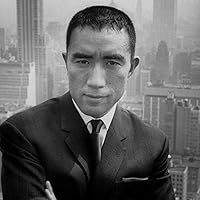
January 24, 2022
Part I
I can see the crystal clarity of the writing, and appreciate it. But so far the domestic subject matter is dull. Living with mother and father in that particular house, playing loud rock ‘n’ roll at a local shopping center. Meh. It’s only page 121 so my hopes remain keen. Knausgaard’s greatest strength is character. When he delves into local relationships the prose can feel a little like Mann’s Buddenbrooks.
Ugh, the petty vanity and lust and insecurity of teens. . . So far there’s no justification for recounting their blasé stories. There seems to be something stiff and ill at ease among the social interactions depicted here. The humor is thin and I can’t always be sure some of the formality, the stiffness, isn’t a peculiarity of the translation.
The translator Don Bartlett was interviewed in The Paris Review. He said: “Personally, I think Book Two is the best. I have suggested to people that they should start at the beginning, but I also know Book One has put some readers off. I think some readers check out very quickly because of the theme of death and the focus on self.” -April 28, 2015.
I think the narrator’s obnoxious. He has been raised well and had every advantage. Happiness writes white. I want to see him fall, keep hoping for that, but that’s unlikely given the 5 volumes to follow.
Part 2
I much prefer the narrator here in his adult guise. There is agony to the book that’s completely unsettling. But very little mitigating humor. I speak of the way William Shakespeare would use humor. And what is all this matter about art and intellect? It’s completely opaque. He should get back to telling a story. He’s not Schopenhauer.
I don’t believe that all the detail about getting on planes and kissing his wife and making coffee and looking out the window is actual memory, not that much description in an accurate sequence over pages and pages. No. And anyway he says his memory is bad, especially about childhood. Go figure.
“After a few hundred pages of this, I started to grumble: I understood that this was "My Struggle"; but did it also have to be my struggle? David Mitchell's captivating novel "Black Swan Green" has crossed this territory (roughly: the hideousness of a Northern European adolescence in the nineteen-eighties) with greater liveliness and comedy than
Knausgaard summons. And if we must have hundreds of pages of autopsied minutiae, then let them be as well written as the last two enormous volumes in Adam Mars-Jones's unfinished project in novelistic micro-realism.” —except from James Wood’s review: The New Yorker, August 8, 2012.
Knausgaard’s comments here about nightowls struck me as a revelation. It’s that the night is a less structured time of day, as such it possesses a sense of freedom that one doesn’t get during the day because of it’s association with the 9 to 5 grind. Obvious, no doubt, but the explicit connection with freedom is one I had never made.
I stopped page 264. It was just too tedious to bear. Despite some inspired pages, I don’t care about this stranger. There was too little narrative pleasure. He did not delight this particular reader.
I can see the crystal clarity of the writing, and appreciate it. But so far the domestic subject matter is dull. Living with mother and father in that particular house, playing loud rock ‘n’ roll at a local shopping center. Meh. It’s only page 121 so my hopes remain keen. Knausgaard’s greatest strength is character. When he delves into local relationships the prose can feel a little like Mann’s Buddenbrooks.
Ugh, the petty vanity and lust and insecurity of teens. . . So far there’s no justification for recounting their blasé stories. There seems to be something stiff and ill at ease among the social interactions depicted here. The humor is thin and I can’t always be sure some of the formality, the stiffness, isn’t a peculiarity of the translation.
The translator Don Bartlett was interviewed in The Paris Review. He said: “Personally, I think Book Two is the best. I have suggested to people that they should start at the beginning, but I also know Book One has put some readers off. I think some readers check out very quickly because of the theme of death and the focus on self.” -April 28, 2015.
I think the narrator’s obnoxious. He has been raised well and had every advantage. Happiness writes white. I want to see him fall, keep hoping for that, but that’s unlikely given the 5 volumes to follow.
Part 2
I much prefer the narrator here in his adult guise. There is agony to the book that’s completely unsettling. But very little mitigating humor. I speak of the way William Shakespeare would use humor. And what is all this matter about art and intellect? It’s completely opaque. He should get back to telling a story. He’s not Schopenhauer.
I don’t believe that all the detail about getting on planes and kissing his wife and making coffee and looking out the window is actual memory, not that much description in an accurate sequence over pages and pages. No. And anyway he says his memory is bad, especially about childhood. Go figure.
“After a few hundred pages of this, I started to grumble: I understood that this was "My Struggle"; but did it also have to be my struggle? David Mitchell's captivating novel "Black Swan Green" has crossed this territory (roughly: the hideousness of a Northern European adolescence in the nineteen-eighties) with greater liveliness and comedy than
Knausgaard summons. And if we must have hundreds of pages of autopsied minutiae, then let them be as well written as the last two enormous volumes in Adam Mars-Jones's unfinished project in novelistic micro-realism.” —except from James Wood’s review: The New Yorker, August 8, 2012.
Knausgaard’s comments here about nightowls struck me as a revelation. It’s that the night is a less structured time of day, as such it possesses a sense of freedom that one doesn’t get during the day because of it’s association with the 9 to 5 grind. Obvious, no doubt, but the explicit connection with freedom is one I had never made.
I stopped page 264. It was just too tedious to bear. Despite some inspired pages, I don’t care about this stranger. There was too little narrative pleasure. He did not delight this particular reader.

December 25, 2012
that statistic about how often the average man thinks of sex? well, double it, change 'sex' to 'death' and you have a hint as to what's going on in my head. the thought that (spoiler) you, me, and everyone we know, ever will know, and/or ever will know of, will end up an inanimate object seems preposterously unfair and, conversely, is what drives me to live-it-the-hell-up in my pitifully brief time on this less-than-a-speck-of-dust in our expanding universe.
obsessed with death, a collector of death (no bodies in my basement, i'm talkin' the artistic and historical representation of), karl ove knausgård jumps to the top of my personal canon (thanon?), edging in there right under ol' philip 'nothing more terrible, nothing more true' larkin.
as with life (KOK's secondary subject), there're pages and pages of dullsville until a flash of the morbidly sublime, ineffable, & mysterious rears its head and all that banality - as with boring memories seen through the lens of time passed - takes on the hazy glow of significance.
an imperfect book: my favorite of the year because of its imperfections. and five more volumes to come. yee-fuckin'-haw!
on seeing his father's corpse:
Now I saw his lifeless state. And that there was no longer any difference between what once had been my father and the table he was lying on, or the floor on which the table stood, or the wall socket beneath the window, or the cable running to the lamp beside him. For humans are merely one form among many, which the world produces over and over again, not only in everything that lives but also in everything that does not live, drawn in sand, stone, and water. And death, which I have always regarded as the greatest dimension of life, dark, compelling, was no more than a pipe that springs a leak, a branch that cracks in the wind, a jacket that slips off a clothes hanger and falls to the floor.
on memory:
You could still buy Slazenger tennis rackets, Tretorn balls, and Rossignol skis, Tyrolia bindings and Koflach boots. The houses where we lived were still standing, all of them. The sole difference, which is the difference between a child’s reality and an adult’s, was that they were no longer laden with meaning. A pair of Le Coq soccer boots was just a pair of soccer boots. If I felt anything when I held a pair in my hands now it was only a hangover from my childhood, nothing else, nothing in itself. The same with the sea, the same with the rocks, the same with the taste of salt that could fill your summer days to saturation, now it was just salt, end of story. The world was the same, yet it wasn’t, for its meaning had been displaced, and was still being displaced, approaching closer and closer to meaninglessness.
obsessed with death, a collector of death (no bodies in my basement, i'm talkin' the artistic and historical representation of), karl ove knausgård jumps to the top of my personal canon (thanon?), edging in there right under ol' philip 'nothing more terrible, nothing more true' larkin.
as with life (KOK's secondary subject), there're pages and pages of dullsville until a flash of the morbidly sublime, ineffable, & mysterious rears its head and all that banality - as with boring memories seen through the lens of time passed - takes on the hazy glow of significance.
an imperfect book: my favorite of the year because of its imperfections. and five more volumes to come. yee-fuckin'-haw!
on seeing his father's corpse:
Now I saw his lifeless state. And that there was no longer any difference between what once had been my father and the table he was lying on, or the floor on which the table stood, or the wall socket beneath the window, or the cable running to the lamp beside him. For humans are merely one form among many, which the world produces over and over again, not only in everything that lives but also in everything that does not live, drawn in sand, stone, and water. And death, which I have always regarded as the greatest dimension of life, dark, compelling, was no more than a pipe that springs a leak, a branch that cracks in the wind, a jacket that slips off a clothes hanger and falls to the floor.
on memory:
You could still buy Slazenger tennis rackets, Tretorn balls, and Rossignol skis, Tyrolia bindings and Koflach boots. The houses where we lived were still standing, all of them. The sole difference, which is the difference between a child’s reality and an adult’s, was that they were no longer laden with meaning. A pair of Le Coq soccer boots was just a pair of soccer boots. If I felt anything when I held a pair in my hands now it was only a hangover from my childhood, nothing else, nothing in itself. The same with the sea, the same with the rocks, the same with the taste of salt that could fill your summer days to saturation, now it was just salt, end of story. The world was the same, yet it wasn’t, for its meaning had been displaced, and was still being displaced, approaching closer and closer to meaninglessness.

September 28, 2019
I was initially sceptical about this Proustian roman fleuve, but I actually really enjoyed it! I find his writing is closer to that of Elena Ferrante than Marcel Proust.
I think there are two Proustian aspects to KOK: the autobiographical angle (the distance from Marcel of the book to Marcel the author is not very great even if often genders are transposed for societal reasons and situations shaked and baked to his narrative) is rather obvious. The other aspect is the roman fleuve and free association of thoughts and ideas which also reminds me of Faulkner. As much as I idolize Proust (I read it in the original French and it was like running a deca-marathon and was one of the greatest, most rewarding experiences of my reading life), I would hesitate to issue a value judgement of Proust being more satisfying. His descriptions are painstakingly accurate and his use of language is absolutely superb, but it is also archaic and often very hard to identify with since even in the Paris of 2019, no one speaks like that anymore. As for KOK, his language (in both English and French translation since I cannot, unfortunately, read the original in Norwegian) is the language of today and so easier to grasp. It also means that the reading time is more compressed: for one Proust book, I needed between one and three months because of the density of the text and the erudite quality of the language whereas I need a few days to a few weeks for a KOK book. This means that the beginnings of the books are still relatively fresh in my mind when I finish KOK whereas with Proust, sometimes I had to go back to refresh my memory. One warning though: I found that the English translation was far better and more "authentic" than the French one (again, big qualifier there because I have no clue what it is like in the original.)
As for comparing him to Ferrante, his language is a modern one (see my comments about Proust) like that of Ferrante, and even if The Neopolitan Tetrology is more visceral and action-packed, the economy of means she uses to evoke a noisy Naples street or a discussion in a café or an argument is similar in its compact precision to that of KOK.
If I was to introduce one criticism that applies more to KOK than to Proust, it is the telescoping of certain events means that others get skipped over - more in Book 2 where we see the creative process that led to A Time for Everything but then we don't really get to see how he gets from there to Men Kamp. Similarly, also in Book 2, we skip over his life with Tonje after the death of his father to a few years later when he arrives in Stockholm and meets Linda. Perhaps he comes back to this in Book 6, I am not there yet. But sometimes the shifts like that are hard to follow and a bit frustrating for the reader. Back to your point on Proust, I felt that the narrative jumps in La Recherche (apart from the narrative issues with Swann and Odette between Parts 1 and 2 which are contradictory) were smoother and more justifiable.
In Book 1, Karl Ove loses his father and we get glimpses into shades of his past and this particularly difficult relationship. The man dies from drinking himself to death and we are treated to a painfully graphic description of the house where he dies, the grandmother witnessing her son's descent into hell. It is a painful thing to read, but strangely cathartic at the same time. I really enjoyed this passage about life and death, chaos and order:
"Chaos and unpredictability represent both the conditions of life and its decline, one impossible without the other, and even though almost all our efforts are directed towards keeping decline at bay, it does not take more than one brief moment of resignation to be thrust into its light, and not, as now, in shadow. Chaos is a kind of gravity, and the rhythm you can sense in history, of the rise and fall of civilisations, is perhaps caused by this. It is remarkable that the extremes resemble each other, in one sense at any rate, for in both immense chaos and a strictly regulated, demarcated world the individual is nothing, life is everything. In the same way that the heart does not care which life it beats for, the city does not care who fulfils its functions." (p.192)
And despite all this chaos, he describes quiet and concentration in no uncertain terms:
"I put on some water for another cup of coffee and while I was waiting for it to boil, I skimmed through what I had written so far. The dust hovering in the broad, angled shafts of light anxiously followed every current of air. The neighbour in the adjacent flat had begun to play piano, The kettle hissed." (p. 193). I actually thought of Faulkner sitting in his house in Mississippi as I read this initially, and could truly picture the anxious dust motes in his room.
There was another rant on page 218 that stuck out for me:
"Even the phenomena that kill us we know about and understand, such as the bacteria and viruses that invade our bodies, attack our cells, and cause them to grow or die...The whole of the physical world has been elevated to this sphere, everything has been incorporated into the immense imaginary realm from South American rain forests and the islands of the Pacific Ocean to the North African deserts and Eastern Europe's tired, grey towns. Our minds are flooded with images of places we have never been, yet we still know, people we have never met, yet still know and in accordance with which we, to a considerable extent, live our lives. The feeling this gives that the world is small, tightly enclosed around itself, without openings to anywhere else, is almost incestuous, and although I knew this to be deeply untrue since actually, we know nothing about anything, still I could not escape it. The longing I always felt, which some days was so great it could hardly be controlled, had its source here. It was partly to relieve this feeling that I wrote, I wanted to open the world by writing..." (p.218). I can identify with this sense of the absurdity of our modern life where we have these false feelings of proximity thanks to the internet and yet feel isolated to a great degree since there is less human contact.
I like how Karl Ove Knausgård describes the world around and inside of himself and, even if we have different approaches to the banality of life, and we have had different experiences, I feel a certain kinship to him as a fellow human being thanks to this book. I aspire to write something that approaches the honesty and quality of this first instalment of My Struggle.
Book 1
Book 2
Book 3
Book 4
Book 5
Book 6
A Time For Everything
I think there are two Proustian aspects to KOK: the autobiographical angle (the distance from Marcel of the book to Marcel the author is not very great even if often genders are transposed for societal reasons and situations shaked and baked to his narrative) is rather obvious. The other aspect is the roman fleuve and free association of thoughts and ideas which also reminds me of Faulkner. As much as I idolize Proust (I read it in the original French and it was like running a deca-marathon and was one of the greatest, most rewarding experiences of my reading life), I would hesitate to issue a value judgement of Proust being more satisfying. His descriptions are painstakingly accurate and his use of language is absolutely superb, but it is also archaic and often very hard to identify with since even in the Paris of 2019, no one speaks like that anymore. As for KOK, his language (in both English and French translation since I cannot, unfortunately, read the original in Norwegian) is the language of today and so easier to grasp. It also means that the reading time is more compressed: for one Proust book, I needed between one and three months because of the density of the text and the erudite quality of the language whereas I need a few days to a few weeks for a KOK book. This means that the beginnings of the books are still relatively fresh in my mind when I finish KOK whereas with Proust, sometimes I had to go back to refresh my memory. One warning though: I found that the English translation was far better and more "authentic" than the French one (again, big qualifier there because I have no clue what it is like in the original.)
As for comparing him to Ferrante, his language is a modern one (see my comments about Proust) like that of Ferrante, and even if The Neopolitan Tetrology is more visceral and action-packed, the economy of means she uses to evoke a noisy Naples street or a discussion in a café or an argument is similar in its compact precision to that of KOK.
If I was to introduce one criticism that applies more to KOK than to Proust, it is the telescoping of certain events means that others get skipped over - more in Book 2 where we see the creative process that led to A Time for Everything but then we don't really get to see how he gets from there to Men Kamp. Similarly, also in Book 2, we skip over his life with Tonje after the death of his father to a few years later when he arrives in Stockholm and meets Linda. Perhaps he comes back to this in Book 6, I am not there yet. But sometimes the shifts like that are hard to follow and a bit frustrating for the reader. Back to your point on Proust, I felt that the narrative jumps in La Recherche (apart from the narrative issues with Swann and Odette between Parts 1 and 2 which are contradictory) were smoother and more justifiable.
In Book 1, Karl Ove loses his father and we get glimpses into shades of his past and this particularly difficult relationship. The man dies from drinking himself to death and we are treated to a painfully graphic description of the house where he dies, the grandmother witnessing her son's descent into hell. It is a painful thing to read, but strangely cathartic at the same time. I really enjoyed this passage about life and death, chaos and order:
"Chaos and unpredictability represent both the conditions of life and its decline, one impossible without the other, and even though almost all our efforts are directed towards keeping decline at bay, it does not take more than one brief moment of resignation to be thrust into its light, and not, as now, in shadow. Chaos is a kind of gravity, and the rhythm you can sense in history, of the rise and fall of civilisations, is perhaps caused by this. It is remarkable that the extremes resemble each other, in one sense at any rate, for in both immense chaos and a strictly regulated, demarcated world the individual is nothing, life is everything. In the same way that the heart does not care which life it beats for, the city does not care who fulfils its functions." (p.192)
And despite all this chaos, he describes quiet and concentration in no uncertain terms:
"I put on some water for another cup of coffee and while I was waiting for it to boil, I skimmed through what I had written so far. The dust hovering in the broad, angled shafts of light anxiously followed every current of air. The neighbour in the adjacent flat had begun to play piano, The kettle hissed." (p. 193). I actually thought of Faulkner sitting in his house in Mississippi as I read this initially, and could truly picture the anxious dust motes in his room.
There was another rant on page 218 that stuck out for me:
"Even the phenomena that kill us we know about and understand, such as the bacteria and viruses that invade our bodies, attack our cells, and cause them to grow or die...The whole of the physical world has been elevated to this sphere, everything has been incorporated into the immense imaginary realm from South American rain forests and the islands of the Pacific Ocean to the North African deserts and Eastern Europe's tired, grey towns. Our minds are flooded with images of places we have never been, yet we still know, people we have never met, yet still know and in accordance with which we, to a considerable extent, live our lives. The feeling this gives that the world is small, tightly enclosed around itself, without openings to anywhere else, is almost incestuous, and although I knew this to be deeply untrue since actually, we know nothing about anything, still I could not escape it. The longing I always felt, which some days was so great it could hardly be controlled, had its source here. It was partly to relieve this feeling that I wrote, I wanted to open the world by writing..." (p.218). I can identify with this sense of the absurdity of our modern life where we have these false feelings of proximity thanks to the internet and yet feel isolated to a great degree since there is less human contact.
I like how Karl Ove Knausgård describes the world around and inside of himself and, even if we have different approaches to the banality of life, and we have had different experiences, I feel a certain kinship to him as a fellow human being thanks to this book. I aspire to write something that approaches the honesty and quality of this first instalment of My Struggle.
Book 1
Book 2
Book 3
Book 4
Book 5
Book 6
A Time For Everything

August 5, 2013
For some reason, My Struggle (AKA, in the UK - 'A Death in the Family') made it into James Wood's Books of the Year 2012. Woods is, like Kakutani, a doyen of critics, and his word always carries a weight of sensitivity and intelligence gained from years of reading and teaching about literature. With Woods' nodding imprimatur bestowed upon it one would imagine the literary cachet of Knausgard's book is beyond reproach.
But having read my Struggle (and boy, what a struggle) I fear for Mr. Wood's critical acumen. (I nearly wrote "I think he's lost his god-damn mind"). Woods is such a perspicacious reader that I fear somehow I've read a different My Struggle or that he's read a different one, or that I'm in a parallel universe where my struggle with my Struggle is not the same as everyone elses - everyone else having from it, like, significant insights into the human condition, deep engagement with fictionalised wisdom, harrowing journeys into grief and sadness, the soul eclipsing throes of love, the constancy and Love for family etc., the sadness of growing older, etc etc.
The reason I say this, is that My Struggle Part 1 (AKA, in the UK 'A Death in the Family') was pretty damn bad. Boring bad. Pointless, bad. Why this is being compared to Proust is way beyond me. A handy way of selling more copies perhaps. All I know is that I don't think it is quite in the league of Proustian prose-majesty to reminisce how you went to the shop with your brother and bought a Lion bar and 1.5 litres of Sprite to wash it down with before spending the night watching TV getting hammered. Or wait, how you looked after your dementia-ridden grandmother for a while and on the trip to see her...you stopped off at the petrol station and bought a Bounty and had a ciggie leaning against the car. His brother calls him to say his dad has died and after they hang up he wanders to the shower and wonders whether he should "have a wank". This is hardly the realm of an enduring classic. 'War and Peace', this ain't. I truly don't think anyone will care about it in ten years time. I situate it in the "Scandanavian Cultural Renaissance" which has like some Nordic phagocyte, like the Vikings of old (but with less swords n' longboats) taken over the realms of detective novels, detective TV shows, detective movies, trendy retailing (H&M) haute-cuisine (Noma is the best restaurant in the world, say some.)Sure, they can do Volvos and cheap priced flat pack furniture but the world's eating their stuff up, and the Scans are happy. So, seeing a popularly written book about Weighty Subjects, the Scandi-media probably just saw an opportunity to make money from their native readers, and when people got reading it, it was decided to export the book by the bucketload by hyping it to the mesosphere. Notice many quotes about its Proustian might come from Scandanavian newspapers/magazines/reveiwers. Hmmmmmmmm....
Frankly the book was 400 page waste of my time, crammed full of trite observations. I would say "D minus. Could do better," but really I don't think he can. If I want to read detailed memoirs in I'll read them from someone who actually has something interesting to memoir about. Knausgard doesn't. In my defence, Wood says "even when I was bored, I was interested." at least Woods admits he was bored, and lets face it "I was interested" isn't quite "I was moved, I was edified, I was transported, I as shocked, I was touched," all those things we demand from quality fiction, but at least HE was interested. But, hey, I could be wrong. Maybe it picks up in books 2-6, but I'm not getting my hopes up. Sorry, Karl, but you'll have to struggle on without me.
But having read my Struggle (and boy, what a struggle) I fear for Mr. Wood's critical acumen. (I nearly wrote "I think he's lost his god-damn mind"). Woods is such a perspicacious reader that I fear somehow I've read a different My Struggle or that he's read a different one, or that I'm in a parallel universe where my struggle with my Struggle is not the same as everyone elses - everyone else having from it, like, significant insights into the human condition, deep engagement with fictionalised wisdom, harrowing journeys into grief and sadness, the soul eclipsing throes of love, the constancy and Love for family etc., the sadness of growing older, etc etc.
The reason I say this, is that My Struggle Part 1 (AKA, in the UK 'A Death in the Family') was pretty damn bad. Boring bad. Pointless, bad. Why this is being compared to Proust is way beyond me. A handy way of selling more copies perhaps. All I know is that I don't think it is quite in the league of Proustian prose-majesty to reminisce how you went to the shop with your brother and bought a Lion bar and 1.5 litres of Sprite to wash it down with before spending the night watching TV getting hammered. Or wait, how you looked after your dementia-ridden grandmother for a while and on the trip to see her...you stopped off at the petrol station and bought a Bounty and had a ciggie leaning against the car. His brother calls him to say his dad has died and after they hang up he wanders to the shower and wonders whether he should "have a wank". This is hardly the realm of an enduring classic. 'War and Peace', this ain't. I truly don't think anyone will care about it in ten years time. I situate it in the "Scandanavian Cultural Renaissance" which has like some Nordic phagocyte, like the Vikings of old (but with less swords n' longboats) taken over the realms of detective novels, detective TV shows, detective movies, trendy retailing (H&M) haute-cuisine (Noma is the best restaurant in the world, say some.)Sure, they can do Volvos and cheap priced flat pack furniture but the world's eating their stuff up, and the Scans are happy. So, seeing a popularly written book about Weighty Subjects, the Scandi-media probably just saw an opportunity to make money from their native readers, and when people got reading it, it was decided to export the book by the bucketload by hyping it to the mesosphere. Notice many quotes about its Proustian might come from Scandanavian newspapers/magazines/reveiwers. Hmmmmmmmm....
Frankly the book was 400 page waste of my time, crammed full of trite observations. I would say "D minus. Could do better," but really I don't think he can. If I want to read detailed memoirs in I'll read them from someone who actually has something interesting to memoir about. Knausgard doesn't. In my defence, Wood says "even when I was bored, I was interested." at least Woods admits he was bored, and lets face it "I was interested" isn't quite "I was moved, I was edified, I was transported, I as shocked, I was touched," all those things we demand from quality fiction, but at least HE was interested. But, hey, I could be wrong. Maybe it picks up in books 2-6, but I'm not getting my hopes up. Sorry, Karl, but you'll have to struggle on without me.

October 18, 2017
Now that all the hype over Karl Ove Knausgård cycle is over I thought it’s time to finally meet the guy. Almost everything about My struggle was already said, both bad and good stuff. The author was accused of every thing imaginable, of being ungrateful sonofbitch that fouls own nest, that he was hypocrite and megalomaniac, that he hurt own family in hope of making money, that he did it to win plaudits, that he can’t write and the book is rubbish and pure graphomania and much more like that. On the other side there were these who found the novel original, who could appreciate its simplicity, who could accept banality even, who didn’t consider that detailed report to be exhibitionistic gibberish and to that group I count myself. I thought it was painfuly honest and gritty, excruciatingly intimate family portrait.
I don’t mind that kind of writing though I don’t feel it’s necessary to write about almost every cup of tea or bottle of beer or meal or shower or lighting cigarette but it didn’t feel fatiguing either. Sometimes it’s the only way to deal with horrible things. Just celebrate simple deeds. I thought Knausgård primarily was writing for and to himself and only later to the reader. And it was device to tame the fear, clear head and calm down oneself. No, it didn’t enrich me but somehow felt right. There are parts in the novel that almost knock you down and it’s hard to read them. The level of sharing every nasty detail is really high and at times feels unbearably intimate, it’s like you were some voyeuristic jerk that witnesses how Karl’s father is drinking himself to death or sees how his grandmother lives. And it’s not a pleasant sight, believe me. Powerful but not pleasant. Then again there are pieces that KOK treats us truths and reflections on life that smacks of banality. And maybe there is a key to his success. To be painfully direct and make from banality and mundaneness a method.
I thought the writing was good, not especially quotable but solid and easy to follow. I found comparison to Proust rather laughable for the only thing in common is the length of the text. Knausgård operates on well-known territory and discusses basic things and emotions. He works his life out, dismantles it, speaks of growing up, love, music, uncertainty, friends, first steps towards writing career, death, parents and grandparents, hatred to father and how it felt destructive. Plain writings, pure emotions, with his heart on his sleeve. There is no place for flamboyance here. No need for extravagance. For sure going to see how it goes and how the author progesses, both in personal and professional life.

Read
October 9, 2012Reasons for Knausgaard's Reception (Notes on the Reviews)
This essay has three postscripts. What follows is a negative account of vol. 1, which I read when it was first out in English; now "My Struggle" is famous, and subsequent volumes have attracted some reflective reviews. Thoughts on those at the end. At the moment, there are three postscripts: I intend to add two more, about Fred Jameson's review and Toril Moi's essay. What is in need of explanation at this point (that is, after every other reader on the planet has tried "My Struggle") is the remarkably broad spectrum of indecision about his work: the fascination coupled with the disagreements about what "My Struggle" is. (This note added October 2019.)
- -
Notes on vol. 1, written c. 2013 (the original was published in 2009)
It’s possible this book may be memorable. It has structural, narrative, and tonal problems that may, in the end, turn out to be strengths. I have no idea why reviewers say it seems “like real life,” or why “the public have fallen to their knees in awe," but I do have some thoughts on its addictive and puzzling qualities.
For me, the compulsion of the reading experience turned on two qualities: perplexity about what Knausgaard imagined he was creating, and the strangeness of the incommensurability between what he apparently imagined, and what he created.
In another context, Knausgaard's endless inventories of uninteresting incidents could have been an emulation of one of Perec’s experiments in description, but Knausgaard has nothing to do with Oulipean ideas. Or they could have been demonstrations of the triviality of ordinary life, but Knausgaard is only a tiny bit like Kavanaugh and not at all like Larkin. Or they could have been intended to find the sublime or the poignant in the everyday, but that would not account for their length or lack of structure.
It becomes perplexing to decide just what the book is attempting, short of a total inventory of the author’s life, which the narrator knows is impossible. And that preplexity, for me, is one of the qualities that accounts for the book's hypnotic attraction for many readers. There is a kind of dogged deliberation in “My Struggle,” as if the only way to continue is to write, and the only way to write is to write everything: but at the same time Knausgaard doesn’t record systematically; “My Struggle” isn’t rule-bound or fanatical. It’s as if he has put all the energy and concentration he has into this project, writing year after year, writing out each memory in detail, omitting nothing, inventorying his entire remaining memory, but without any sense of what a complete life might look like, or any hope of stitching the parts together.
This sort of unsystematic, intermittently oblivious, partly uncaring attitude toward the obsessive compulsive project of plumbing his past produces strange effects. At first, a reader might expect that each episode will have some connection to others, or some special meaning or resonance -- as things usually do in novels. When that turns out not to be the case, a reader might reasonably conclude that the author is just writing as best as he can, about whatever he can remember, hoping the weight and inertia of the project will create, if not literature, then a sort of perplexity. He sometimes interrupts his narratives with meditations, which he apparently thinks are original or interesting; for me they usually aren’t. Only a few of the stories in Part One are interesting or unusual. Here is an example of the sort of meditation that is apparently presented as insightful:
“I recognized the feeling, it was akin to the one some works of art evoke in me. Rembrandt’s portrait of himself as an old man in London’s National Gallery was such a picture, Turner’s picture of the sunset over the sea off a port of antiquity in the same museum, Caravaggio’s picture of Christ in Gethsemane. Vermeer evoked the same, a few of Claude’s paintings, some of Ruisdael’s...” (the list continues; p. 219)
Knausgaard did not have an unusual childhood, and he does not describe it in an inventive way. But there is a strange contradiction between the narrative he wants us to read and the one that emerges as I began to attend to what was going wrong with what I took to be his project of writing a raw, honest memoir.
An example of the strangeness: he spends 200 pages describing his childhood, but he opens Part Two with remarks like this:
“If I had forgotten something in my childhood it was probably due to repression” (given as a throwaway line, and never developed; p. 216)
or
“I remembered hardly anything from my childhood.” (p. 189)
Weirdly, he doesn’t think it’s worth noting that it sounds odd to say that sort of thing after having spent 200 pages describing his childhood in meticulous detail.
He opens the book with a story about a face he thought he’d seen in the sea, and it comes back at the opening of Part Two. But, strangely, he doesn't think it is puzzling to simply mention the face, but not draw any meaning from it -- and he never returns to it again. All he gives us is one throwaway line (p. 189):
“the remarkable thing was that I had forgotten it and now remembered.”
And very strangely, he does not seem to notice that a reader might expect the story of the face in the sea to be of some interest to the narrator himself.
As I read, I became increasingly convinced that Knausgaard was not aware that the success of his project turns not on his anti-literary ambitions, but on the reader's perplexity about his inability and lack of interest in resolving his intentions, and in the strangeness of the results.
- -
First postscript, 2013
Volume 2 is now out in English, and there are signs Knausgaard will become a major figure. At the end of 2013 Rivka Galchen named vol. 2 as the "most interesting literary development" of the year, saying it is "substantive, comical, and artistically singular." (New York Times Book Review, Sunday, December 15, p. 43.) It is singular, but it is loose, unreflective about structure, unaware of readers' plausible expectations, and relentlessly simpleminded about how the everyday has been put into prose.
- -
Second postscript, May 2014
Volume 3 is now out in English, and it's gotten an excellent review by Ben Lerner, "Each Cornflake," London Review of Books, May 22, 2014. (I find this more convincing and clearer than the longer review by William Deresiewicz, " Why Has ‘My Struggle’ Been Anointed a Literary Masterpiece?" The Nation, May 13, 2014.)
I am surprised at how widely it's being accepted that Knausgaard is a major novelist -- or, in Lerner's assessment, a largely successful anti-novelist, who is out to end the novel and literature in general by avoiding selection. (By recording everything.) As Lerner notes, that sets up a tension between the endlessness and lack of selectivity in the writing, in which the entire world spills onto the page, on the one hand, and the idea of plot, structure, or development, on the other. This is how Lerner puts it:
"Of course Knausgaard does leave things out (why, I wonder, is sex described in less detail than cornflakes?), selects among scenes and sentences, but we are caught up in the fiction that he doesn’t. Yet that childish sense of open-endedness, in which everything is equally interesting, is countered by another fiction: that the meaning of 'My Struggle' will be revealed at its end, secured by the author’s death (at least his death qua author). The former fiction is a fiction of formlessness, the undifferentiated, an infinite verticality outside time; and the latter is a fiction that gives form, the imposition of shape on experience, a syntax of events. The constitutive tension of Knausgaard’s work, its internal struggle, is the push and pull between these two fictions."
Here "death" stands in for the novel and literature in general, and it is a reasonable synecdoche. For me Lerner's way of putting things raises two questions, both of which cannot be definitively answered for English-language readers until the final 3 volumes are translated. The two questions are:
1. Can the supposed lack of structure, choice, taste, plot, style, and skill – the things that ruined volume 1 for me – be adequately understood as a bid to escape from literature? I agree that "breaking of the vessel of art, the renunciation of fiction, literary suicide – these are fictions, and they’re the devices on which the power of 'My Struggle' depends"; but does the mass of unstructured writing actually work as an escape from fiction?
2. Can the supposed lack of structure, choice, taste, plot, style, and skill be understood as a representation of what Lerner calls "the undifferentiated mass of experience"? Can the flood of "raw" experiences, especially the uninteresting, unremarkable, everyday ones, represent experience?
These are two distinct questions. The first is about strategy: can a novelist put an end to the novel by putting everything into it except the structures that would have made it literature? The second is about experience: is it "experience" that is represented in "My Struggle"?
(I note that the first question is separate from the possibility, which Lerner ponders, that the book might conclude with death, and therefore conclude as literature: the question pertains to the strategy itself, not whether this 6-volume project succeeds. Apparently "My Struggle" does have an ending; is does end with "death": i.e., it has an arc, it does rehabilitate and motivate its formlessness. And apparently, too, Knausgaard has not defeated the novel, even for himself, because he has told an interviewer he is at work on another. But this first question is about strategy, not result.)
My answer to both questions is no. To the first question: I am not persuaded that proposing to have laid down the nameable skills of the novelist is a strategy to avoid literature. Some Oulipean strategies do bypass some parts of literature, but this strategy is too knowing, too deliberate, and – though I recognize this won't be a popular opinion, given the many enthusiastic reviews of "My Struggle" – too easy. It's too easy to fill 6 volumes with a spew of uncurated thoughts. It's true the novel "cracks," as Knausgaard himself says ("I thought of this project as a kind of experiment in realistic prose. How far is it possible to go into detail before the novel cracks and becomes unreadable?") but that does not mean literature is left behind or even effectively critiqued. It would be as if someone tried to "ruin" the sonnet by interpolating thousands of extra lines.
To the second question: the undifferentiated mass of experience supposedly rendered in "My Struggle" is itself a trope, an idea about the continuum of sensory experience that comes in part from Hume, Bergson, and de Certeau. "My Struggle" is a large-scale rehearsal of what counts, in such theories, as "raw" experience.
So I doubt the project of "My Struggle": it is not an effective anti-novel, and it does not break through conventions to represent real experience. We need to begin to ask more closely why we think, as Lerner does, that "it’s amazing."
- -
Third postscript, April 2016.
The fifth volume has just appeared. The New Yorker ran a long excerpt online ("At the Writing Academy," March 10, 2016), which is interesting because it includes photos taken of Knausgaard when he was at the writing academy in Bergen (the subject of the opening chapters of col. 5). The inclusion of images seems careless to me: I don't know the circumstances under which they were included, but I imagine the editors at The New Yorker imagined that they would lend appropriate veracity to an account that is itself a display of apparent unfiltered neutral observation. In relation to my own study of writing with images (online, under that name), these images are thoughtless, because Knausgaard's text is persistently slightly unbelievable in its apparent neutrality and directness, but the photographs are very direct in a much simpler manner. It's also curious that volume 5 opens with Knausgaard's observation that he kept his own photographs from that period, which are not reproduced in The New Yorker excerpt. (More on volume 5 later.)
This essay has three postscripts. What follows is a negative account of vol. 1, which I read when it was first out in English; now "My Struggle" is famous, and subsequent volumes have attracted some reflective reviews. Thoughts on those at the end. At the moment, there are three postscripts: I intend to add two more, about Fred Jameson's review and Toril Moi's essay. What is in need of explanation at this point (that is, after every other reader on the planet has tried "My Struggle") is the remarkably broad spectrum of indecision about his work: the fascination coupled with the disagreements about what "My Struggle" is. (This note added October 2019.)
- -
Notes on vol. 1, written c. 2013 (the original was published in 2009)
It’s possible this book may be memorable. It has structural, narrative, and tonal problems that may, in the end, turn out to be strengths. I have no idea why reviewers say it seems “like real life,” or why “the public have fallen to their knees in awe," but I do have some thoughts on its addictive and puzzling qualities.
For me, the compulsion of the reading experience turned on two qualities: perplexity about what Knausgaard imagined he was creating, and the strangeness of the incommensurability between what he apparently imagined, and what he created.
In another context, Knausgaard's endless inventories of uninteresting incidents could have been an emulation of one of Perec’s experiments in description, but Knausgaard has nothing to do with Oulipean ideas. Or they could have been demonstrations of the triviality of ordinary life, but Knausgaard is only a tiny bit like Kavanaugh and not at all like Larkin. Or they could have been intended to find the sublime or the poignant in the everyday, but that would not account for their length or lack of structure.
It becomes perplexing to decide just what the book is attempting, short of a total inventory of the author’s life, which the narrator knows is impossible. And that preplexity, for me, is one of the qualities that accounts for the book's hypnotic attraction for many readers. There is a kind of dogged deliberation in “My Struggle,” as if the only way to continue is to write, and the only way to write is to write everything: but at the same time Knausgaard doesn’t record systematically; “My Struggle” isn’t rule-bound or fanatical. It’s as if he has put all the energy and concentration he has into this project, writing year after year, writing out each memory in detail, omitting nothing, inventorying his entire remaining memory, but without any sense of what a complete life might look like, or any hope of stitching the parts together.
This sort of unsystematic, intermittently oblivious, partly uncaring attitude toward the obsessive compulsive project of plumbing his past produces strange effects. At first, a reader might expect that each episode will have some connection to others, or some special meaning or resonance -- as things usually do in novels. When that turns out not to be the case, a reader might reasonably conclude that the author is just writing as best as he can, about whatever he can remember, hoping the weight and inertia of the project will create, if not literature, then a sort of perplexity. He sometimes interrupts his narratives with meditations, which he apparently thinks are original or interesting; for me they usually aren’t. Only a few of the stories in Part One are interesting or unusual. Here is an example of the sort of meditation that is apparently presented as insightful:
“I recognized the feeling, it was akin to the one some works of art evoke in me. Rembrandt’s portrait of himself as an old man in London’s National Gallery was such a picture, Turner’s picture of the sunset over the sea off a port of antiquity in the same museum, Caravaggio’s picture of Christ in Gethsemane. Vermeer evoked the same, a few of Claude’s paintings, some of Ruisdael’s...” (the list continues; p. 219)
Knausgaard did not have an unusual childhood, and he does not describe it in an inventive way. But there is a strange contradiction between the narrative he wants us to read and the one that emerges as I began to attend to what was going wrong with what I took to be his project of writing a raw, honest memoir.
An example of the strangeness: he spends 200 pages describing his childhood, but he opens Part Two with remarks like this:
“If I had forgotten something in my childhood it was probably due to repression” (given as a throwaway line, and never developed; p. 216)
or
“I remembered hardly anything from my childhood.” (p. 189)
Weirdly, he doesn’t think it’s worth noting that it sounds odd to say that sort of thing after having spent 200 pages describing his childhood in meticulous detail.
He opens the book with a story about a face he thought he’d seen in the sea, and it comes back at the opening of Part Two. But, strangely, he doesn't think it is puzzling to simply mention the face, but not draw any meaning from it -- and he never returns to it again. All he gives us is one throwaway line (p. 189):
“the remarkable thing was that I had forgotten it and now remembered.”
And very strangely, he does not seem to notice that a reader might expect the story of the face in the sea to be of some interest to the narrator himself.
As I read, I became increasingly convinced that Knausgaard was not aware that the success of his project turns not on his anti-literary ambitions, but on the reader's perplexity about his inability and lack of interest in resolving his intentions, and in the strangeness of the results.
- -
First postscript, 2013
Volume 2 is now out in English, and there are signs Knausgaard will become a major figure. At the end of 2013 Rivka Galchen named vol. 2 as the "most interesting literary development" of the year, saying it is "substantive, comical, and artistically singular." (New York Times Book Review, Sunday, December 15, p. 43.) It is singular, but it is loose, unreflective about structure, unaware of readers' plausible expectations, and relentlessly simpleminded about how the everyday has been put into prose.
- -
Second postscript, May 2014
Volume 3 is now out in English, and it's gotten an excellent review by Ben Lerner, "Each Cornflake," London Review of Books, May 22, 2014. (I find this more convincing and clearer than the longer review by William Deresiewicz, " Why Has ‘My Struggle’ Been Anointed a Literary Masterpiece?" The Nation, May 13, 2014.)
I am surprised at how widely it's being accepted that Knausgaard is a major novelist -- or, in Lerner's assessment, a largely successful anti-novelist, who is out to end the novel and literature in general by avoiding selection. (By recording everything.) As Lerner notes, that sets up a tension between the endlessness and lack of selectivity in the writing, in which the entire world spills onto the page, on the one hand, and the idea of plot, structure, or development, on the other. This is how Lerner puts it:
"Of course Knausgaard does leave things out (why, I wonder, is sex described in less detail than cornflakes?), selects among scenes and sentences, but we are caught up in the fiction that he doesn’t. Yet that childish sense of open-endedness, in which everything is equally interesting, is countered by another fiction: that the meaning of 'My Struggle' will be revealed at its end, secured by the author’s death (at least his death qua author). The former fiction is a fiction of formlessness, the undifferentiated, an infinite verticality outside time; and the latter is a fiction that gives form, the imposition of shape on experience, a syntax of events. The constitutive tension of Knausgaard’s work, its internal struggle, is the push and pull between these two fictions."
Here "death" stands in for the novel and literature in general, and it is a reasonable synecdoche. For me Lerner's way of putting things raises two questions, both of which cannot be definitively answered for English-language readers until the final 3 volumes are translated. The two questions are:
1. Can the supposed lack of structure, choice, taste, plot, style, and skill – the things that ruined volume 1 for me – be adequately understood as a bid to escape from literature? I agree that "breaking of the vessel of art, the renunciation of fiction, literary suicide – these are fictions, and they’re the devices on which the power of 'My Struggle' depends"; but does the mass of unstructured writing actually work as an escape from fiction?
2. Can the supposed lack of structure, choice, taste, plot, style, and skill be understood as a representation of what Lerner calls "the undifferentiated mass of experience"? Can the flood of "raw" experiences, especially the uninteresting, unremarkable, everyday ones, represent experience?
These are two distinct questions. The first is about strategy: can a novelist put an end to the novel by putting everything into it except the structures that would have made it literature? The second is about experience: is it "experience" that is represented in "My Struggle"?
(I note that the first question is separate from the possibility, which Lerner ponders, that the book might conclude with death, and therefore conclude as literature: the question pertains to the strategy itself, not whether this 6-volume project succeeds. Apparently "My Struggle" does have an ending; is does end with "death": i.e., it has an arc, it does rehabilitate and motivate its formlessness. And apparently, too, Knausgaard has not defeated the novel, even for himself, because he has told an interviewer he is at work on another. But this first question is about strategy, not result.)
My answer to both questions is no. To the first question: I am not persuaded that proposing to have laid down the nameable skills of the novelist is a strategy to avoid literature. Some Oulipean strategies do bypass some parts of literature, but this strategy is too knowing, too deliberate, and – though I recognize this won't be a popular opinion, given the many enthusiastic reviews of "My Struggle" – too easy. It's too easy to fill 6 volumes with a spew of uncurated thoughts. It's true the novel "cracks," as Knausgaard himself says ("I thought of this project as a kind of experiment in realistic prose. How far is it possible to go into detail before the novel cracks and becomes unreadable?") but that does not mean literature is left behind or even effectively critiqued. It would be as if someone tried to "ruin" the sonnet by interpolating thousands of extra lines.
To the second question: the undifferentiated mass of experience supposedly rendered in "My Struggle" is itself a trope, an idea about the continuum of sensory experience that comes in part from Hume, Bergson, and de Certeau. "My Struggle" is a large-scale rehearsal of what counts, in such theories, as "raw" experience.
So I doubt the project of "My Struggle": it is not an effective anti-novel, and it does not break through conventions to represent real experience. We need to begin to ask more closely why we think, as Lerner does, that "it’s amazing."
- -
Third postscript, April 2016.
The fifth volume has just appeared. The New Yorker ran a long excerpt online ("At the Writing Academy," March 10, 2016), which is interesting because it includes photos taken of Knausgaard when he was at the writing academy in Bergen (the subject of the opening chapters of col. 5). The inclusion of images seems careless to me: I don't know the circumstances under which they were included, but I imagine the editors at The New Yorker imagined that they would lend appropriate veracity to an account that is itself a display of apparent unfiltered neutral observation. In relation to my own study of writing with images (online, under that name), these images are thoughtless, because Knausgaard's text is persistently slightly unbelievable in its apparent neutrality and directness, but the photographs are very direct in a much simpler manner. It's also curious that volume 5 opens with Knausgaard's observation that he kept his own photographs from that period, which are not reproduced in The New Yorker excerpt. (More on volume 5 later.)

June 28, 2013
It is said that this book is a modern rendition of Proust's Remembrances, making me an untrustworthy narrator for this review as I've never read the French giant's magnum opus of life's minutiae. Yes, I have Lydia Davis's new translation of Proust, but no, I haven't mustered the courage -- yet. Reading Knausgård's book won't help. Rather than inspire me to read Proust, it inspires me to read My Struggle: Book 2: A Man in Love. Such is life.
If plot's the thing, this 440-pager is probably not your best choice. Knausgård is one of those characterization writers who gives every detail of every action. He's more into "exploding the moment," as they say in writing class, than "shrinking a century."
The book shares traits with Petterson's Out Stealing Horses: a strong father-son theme, a strong coming-of-age theme, a distinct 70s flavor, and, what I like, a heavy dose of sensitivity and just noticing things. Like death. Our young protagonist is rather obsessed with it, and the book opens with a worthy "essay" on the subject (you will find others along the way as you read).
Death, Knausgård notes, is just a concept -- one we are happy to discuss and expose ourselves to in reading or movie-viewing -- but make it REAL (that is, find a dead body on your front lawn or consider your own mortality when something goes wrong with your ticker) and it's a whole other matter. We are all fascinated with death -- our own -- and when we run into the real thing with, say, members of our family, we as a society like to keep it hidden, out of sight. In that sense, the Western view of death amounts to the rather lame descriptor: Eew.
Very modern of us, isn't it? I don't think it was always so. Once upon a time, dead bodies used to become part of the living room furniture for wakes and such. And people died in their own homes, as a rule, or out of doors, wherever the Reaper sharpened his scythe and took his harvest. Not much different from road kill, I guess.
Certainly there wasn't such nonsense such as dying in hospitals and special homes for the dying (read: hospices). That would come with capitalism. Death as economic driver. Back then it was just a case of "death happens -- to squirrels and people. Let's move on, thanking God it wasn't us."
In any event, Knausgård has clearly given it a lot of thought, and you may enjoy his thoughts, too, because I happen to know that you have given mortality some meditation yourself. No one casts a spell like the Grim One.
But really, there's a lot of joyfully dumb adolescence to this first of a 6-book series, too. Young Karl Ove is finding his way -- with friends, with girls, with alcohol, with rock 'n roll, with books, with his one precious soul. He's the kind of sensitive loner most of us bookish, introspective introverts can identify with. Thus, the attention the book has drawn. Thus, the fact that I first discovered it via the New York Times ravings.
Is it THAT good? A classic to be? Please. But it's a great way to spend a slice of calendar. Recommended to fans of meandering, philosophical coming-of-age tomes -- and of Norway. And of hearing the Reaper say, "Not this time, Bud...not yet. Help yourself to another book, why don't you?"
If plot's the thing, this 440-pager is probably not your best choice. Knausgård is one of those characterization writers who gives every detail of every action. He's more into "exploding the moment," as they say in writing class, than "shrinking a century."
The book shares traits with Petterson's Out Stealing Horses: a strong father-son theme, a strong coming-of-age theme, a distinct 70s flavor, and, what I like, a heavy dose of sensitivity and just noticing things. Like death. Our young protagonist is rather obsessed with it, and the book opens with a worthy "essay" on the subject (you will find others along the way as you read).
Death, Knausgård notes, is just a concept -- one we are happy to discuss and expose ourselves to in reading or movie-viewing -- but make it REAL (that is, find a dead body on your front lawn or consider your own mortality when something goes wrong with your ticker) and it's a whole other matter. We are all fascinated with death -- our own -- and when we run into the real thing with, say, members of our family, we as a society like to keep it hidden, out of sight. In that sense, the Western view of death amounts to the rather lame descriptor: Eew.
Very modern of us, isn't it? I don't think it was always so. Once upon a time, dead bodies used to become part of the living room furniture for wakes and such. And people died in their own homes, as a rule, or out of doors, wherever the Reaper sharpened his scythe and took his harvest. Not much different from road kill, I guess.
Certainly there wasn't such nonsense such as dying in hospitals and special homes for the dying (read: hospices). That would come with capitalism. Death as economic driver. Back then it was just a case of "death happens -- to squirrels and people. Let's move on, thanking God it wasn't us."
In any event, Knausgård has clearly given it a lot of thought, and you may enjoy his thoughts, too, because I happen to know that you have given mortality some meditation yourself. No one casts a spell like the Grim One.
But really, there's a lot of joyfully dumb adolescence to this first of a 6-book series, too. Young Karl Ove is finding his way -- with friends, with girls, with alcohol, with rock 'n roll, with books, with his one precious soul. He's the kind of sensitive loner most of us bookish, introspective introverts can identify with. Thus, the attention the book has drawn. Thus, the fact that I first discovered it via the New York Times ravings.
Is it THAT good? A classic to be? Please. But it's a great way to spend a slice of calendar. Recommended to fans of meandering, philosophical coming-of-age tomes -- and of Norway. And of hearing the Reaper say, "Not this time, Bud...not yet. Help yourself to another book, why don't you?"

July 16, 2014
Estoy leyendo esta serie en desorden, este es el tercero que leo, y el primero de la serie. Da igual el orden en que lo he leído, y cada uno que leo me doy cuenta que leeré todos. Lleva la narrativa a otro nivel, y no es ficción, un elemento que me causa conflicto y me encanta a la vez.
Lectura obligada. Y muy recomendada.
Lectura obligada. Y muy recomendada.

January 31, 2015
Di cosa parla alla fine Knausgård? Beh, di un sacco di cose.
Gli amori adolescenziali, le prove con la band. Un padre inquieto e anaffettivo, una madre dolce e paziente. La festa di capodanno del 1985. Il quartiere residenziale e la vita di famiglia. Freddo e neve. Gli anni Settanta. Il rapporto indissolubile col fratello. I corsi di letteratura all’università e le riflessioni sull’arte. Alcool e brodaglie di caffè a fiumi. Una casa da pulire. E poi, appunto, la morte del padre, che occupa in buona parte la seconda metà del volume.
Tutto memorabile? No, non direi. Ci sono i momenti noiosi, eccome. Se scrivi più di 3000 pagine divise in 6 volumi su una vita abbastanza ordinaria arrivi inevitabilmente a lungaggini e momenti infiniti che si potevano ridurre a qualche paragrafo.
Però poi KOK ti ripaga sempre. E’ così diretto e sincero che ad un certo punto si trasforma in un vecchio amico che non vedevi da un po’. Uno a cui volevi bene e con cui ti va di riprendere un rapporto. E quindi ti devi sorbire, un po’ alla volta, tutti i momenti della sua vita che nel frattempo ti sei perso.
E ad un certo punto capisci che da tutto questo ordinario non hai più voglia di staccarti. Che è come se qualcuno ti stesse raccontando la tua, di vita.
Intervallati ai ricordi ci sono anche i momenti dell’oggi (ovvero del 2008). Knausgård scrittore e padre di famiglia. Il tempo da riservare ai figli e quello da togliere alla scrittura. Questa parte è assolutamente eccezionale, iperrealista, sei lì con lui davanti al pc con tutte le difficoltà che comporta raccontare qualcosa.
Credo che nel successo di questa “saga” ci sia anche un certo voyeurismo da parte del lettore. Metterci a nudo ci spaventa sempre un po' e quando sono gli altri a farlo al posto nostro siamo lì ad approfittarne. Un po’ come spesso fa Emmanuel Carrère che inserisce nei suoi romanzi momenti della sua vita privata, con percentuali notevoli in “La vita come un romanzo russo”.
E’ un libro potente, quasi da “buona la prima” come se l’importante fosse più buttare sulla carta tutto quello che c’è da raccontare nel modo meno mediato possibile piuttosto che cercare il modo migliore per dirlo.
Fate conto che sarebbero quattro stelle abbondanti ma non mi pare il caso di star qui a lesinare. [80/100]
Gli amori adolescenziali, le prove con la band. Un padre inquieto e anaffettivo, una madre dolce e paziente. La festa di capodanno del 1985. Il quartiere residenziale e la vita di famiglia. Freddo e neve. Gli anni Settanta. Il rapporto indissolubile col fratello. I corsi di letteratura all’università e le riflessioni sull’arte. Alcool e brodaglie di caffè a fiumi. Una casa da pulire. E poi, appunto, la morte del padre, che occupa in buona parte la seconda metà del volume.
Tutto memorabile? No, non direi. Ci sono i momenti noiosi, eccome. Se scrivi più di 3000 pagine divise in 6 volumi su una vita abbastanza ordinaria arrivi inevitabilmente a lungaggini e momenti infiniti che si potevano ridurre a qualche paragrafo.
Però poi KOK ti ripaga sempre. E’ così diretto e sincero che ad un certo punto si trasforma in un vecchio amico che non vedevi da un po’. Uno a cui volevi bene e con cui ti va di riprendere un rapporto. E quindi ti devi sorbire, un po’ alla volta, tutti i momenti della sua vita che nel frattempo ti sei perso.
E ad un certo punto capisci che da tutto questo ordinario non hai più voglia di staccarti. Che è come se qualcuno ti stesse raccontando la tua, di vita.
Intervallati ai ricordi ci sono anche i momenti dell’oggi (ovvero del 2008). Knausgård scrittore e padre di famiglia. Il tempo da riservare ai figli e quello da togliere alla scrittura. Questa parte è assolutamente eccezionale, iperrealista, sei lì con lui davanti al pc con tutte le difficoltà che comporta raccontare qualcosa.
Credo che nel successo di questa “saga” ci sia anche un certo voyeurismo da parte del lettore. Metterci a nudo ci spaventa sempre un po' e quando sono gli altri a farlo al posto nostro siamo lì ad approfittarne. Un po’ come spesso fa Emmanuel Carrère che inserisce nei suoi romanzi momenti della sua vita privata, con percentuali notevoli in “La vita come un romanzo russo”.
E’ un libro potente, quasi da “buona la prima” come se l’importante fosse più buttare sulla carta tutto quello che c’è da raccontare nel modo meno mediato possibile piuttosto che cercare il modo migliore per dirlo.
Fate conto che sarebbero quattro stelle abbondanti ma non mi pare il caso di star qui a lesinare. [80/100]

September 27, 2018
Ich setzte mich an meinen Schreibtisch, der trotz seiner Möglichkeit der Höhenverstellbarkeit meist auf einem unteren Niveau verharrte, blickte aus dem Fenster und fragte mich, wie lange das warme Spätsommerwetter noch anhalten würde. Währenddessen kippte der Nachbar im gegenüberliegenden Haus sein Küchenfenster, so dass die Sonne gespiegelt durch das Glas direkt in mein Gesicht schien, was mich störte. Folglich änderte ich die Sitzposition etwas nach links und verrückte auch die Tastatur. Unter ihr kamen Krümel von unbekannter Herkunft zum Vorschein, die mich daran erinnerten, die Sauberkeit in meinem Arbeitsraum zu verbessern. Während ich dem sich nach rechts ausbreitenden Balken der Startprogramm-Fortschrittsanzeige bei seiner Veränderung zusah, strichen meine Finger über die moderne Tastatur und ich erinnerte mich, wie ich auf der Olympus damals meine Wehrdienstverweigerung tippte, mit den abrutschenden Fingern immer mal wieder zwischen den Tasten der Schreibmaschine hängen blieb, was zu Hautabschürfungen und der Verwendung eines Tippex-Streifens führte. Wie verletzungsunanfälliger doch das Schreiben geworden war. Während meine Fingerkuppen kreisend die kleinen Erhebungen auf den Tasten F und J erkundeten, fragte ich mich, warum ich eigentlich den PC hochgefahren hatte. Ach ja, ich wollte eine Rezension schreiben zu STERBEN…
Ich könnte das jetzt im Knausgard-Stil fortsetzen, in dem ich erstmal die fehlende Möglichkeit beklagen würde, das norwegische a mit Bommel obendrauf am PC zu schreiben, was auf dem iPad viel leichter zu finden ist. Das meine Ignoranz gegenüber den fremdsprachlichen Lettern mich eventuell unter Knausga(bommel)rdianern als wenig skandinavienaffin abqualifizierte. Doch spätestens nach dem zweiten Absatz würden die an meiner Beurteilung des Buchs Interessierten sich fragen, wann dieser Semjon endlich mal auf den Punkt kommen würde. Ich würde dann entgegen, dass ich alle an meinem Findungsprozess bei der Frage, wie mir das Buch denn gefallen habe, möglichst authentisch teilhaben lassen wollte. Dass ein bloßer Zweizeiler den 567 Seiten teils faszinierenden und teils ermüdenden Realismus des gerade Gelesenen nicht gerecht werden würde. Ein Teil meiner Follower & Friends würden mich gelangweilt entfreunden auf Goodreads, aber eine feste Schar an Semjonianern würde künftig an meinen Lippen kleben und die Echtheit in meinen Rezensionen feiern.
Kurz um: Das Buch, im Original MEIN KAMPF heißend, war über weite Strecken auch mein Kampf mit der Frage gewesen, ob das gute Literatur ist. Oder ist das sogar Kunst? Ich hatte in diesem Jahr ein Buch über Literaturwissenschaft von Prof. Gelfert gelesen und mich dabei etwas über den folgenden Satz lustig gemacht: „Das Prinzip der Dichtung ist die Einkleidung der auszudrückenden Subjektivität in den Schleier einer sinnlich wahrnehmbaren Form. Wenn der Schleier dabei zum Selbstzweck wird und das Verschleierte übertrumpft, verstimmt das den Leser genauso wie schleierlose Subjektivität.“
Ich konnte mir nicht so recht vorstellen, was mit schleierlosen Subjektivität gemeint sein soll. Nach dem Lesen von STERBEN, weiß ich es. Die Form des Buchs ist klar strukturiert und wie ein Musikstück aufgebaut, bei dem der Komponist immer wieder zum eigentlichen Thema zurückfindet und am Ende einen dort abholt, wo er einen zu Beginn hat stehen lassen. Der Stil ist nach meinem Empfinden aber keineswegs von einem kunstvollen sinnlichen Schleier geprägt, sondern knallharte Detailverliebtheit bis zur Schmerzgrenze. Da kann sich der Rückblick auf einer Silvesterfeier in der Jugendzeit des Autors schon mal auf deutlich über 100 Seiten erstrecken. Der Autor hat in einem Interview gesagt, er wollte sich völlig entblößen, alles aufschreiben, was ihn betrifft, seine Gedanken, seine Erlebnisse, seinen Kampf mit den Widrigkeiten der Jugendzeit, der Familie und insbesondere mit dem Vater. Und die Leserschaft scheint dies zu lieben. Warum? Das war für mich das eigentlich Interessante an dem Buch. Ich sehe da Parallelen zur Big Brother-Shows und Social Media. Und genauso ein leichter Zeitvertreib wie das Scrollen durch Instagramm und Facebook ist das Lesen von Knausgard für mich. Ich kann hier jede Bewertung zwischen 2 bis 5 Sterne nachvollziehen. Ich war gerade im 1. Teil des Buchs sehr kritisch gegenüber dem Stil. Der 2. Teil, in dem Karl Ove mit seinem Bruder nach dem Tod des Vaters in die Heimatstadt fährt, die Beerdigung organisiert und sich um die Großmutter kümmert, hat mir wesentlich besser gefallen. Insofern kann ich mir durchaus vorstellen, auch die Folgebände zu lesen, aber nun brauche ich erstmal eine Authentizitätspause.
Ich könnte das jetzt im Knausgard-Stil fortsetzen, in dem ich erstmal die fehlende Möglichkeit beklagen würde, das norwegische a mit Bommel obendrauf am PC zu schreiben, was auf dem iPad viel leichter zu finden ist. Das meine Ignoranz gegenüber den fremdsprachlichen Lettern mich eventuell unter Knausga(bommel)rdianern als wenig skandinavienaffin abqualifizierte. Doch spätestens nach dem zweiten Absatz würden die an meiner Beurteilung des Buchs Interessierten sich fragen, wann dieser Semjon endlich mal auf den Punkt kommen würde. Ich würde dann entgegen, dass ich alle an meinem Findungsprozess bei der Frage, wie mir das Buch denn gefallen habe, möglichst authentisch teilhaben lassen wollte. Dass ein bloßer Zweizeiler den 567 Seiten teils faszinierenden und teils ermüdenden Realismus des gerade Gelesenen nicht gerecht werden würde. Ein Teil meiner Follower & Friends würden mich gelangweilt entfreunden auf Goodreads, aber eine feste Schar an Semjonianern würde künftig an meinen Lippen kleben und die Echtheit in meinen Rezensionen feiern.
Kurz um: Das Buch, im Original MEIN KAMPF heißend, war über weite Strecken auch mein Kampf mit der Frage gewesen, ob das gute Literatur ist. Oder ist das sogar Kunst? Ich hatte in diesem Jahr ein Buch über Literaturwissenschaft von Prof. Gelfert gelesen und mich dabei etwas über den folgenden Satz lustig gemacht: „Das Prinzip der Dichtung ist die Einkleidung der auszudrückenden Subjektivität in den Schleier einer sinnlich wahrnehmbaren Form. Wenn der Schleier dabei zum Selbstzweck wird und das Verschleierte übertrumpft, verstimmt das den Leser genauso wie schleierlose Subjektivität.“
Ich konnte mir nicht so recht vorstellen, was mit schleierlosen Subjektivität gemeint sein soll. Nach dem Lesen von STERBEN, weiß ich es. Die Form des Buchs ist klar strukturiert und wie ein Musikstück aufgebaut, bei dem der Komponist immer wieder zum eigentlichen Thema zurückfindet und am Ende einen dort abholt, wo er einen zu Beginn hat stehen lassen. Der Stil ist nach meinem Empfinden aber keineswegs von einem kunstvollen sinnlichen Schleier geprägt, sondern knallharte Detailverliebtheit bis zur Schmerzgrenze. Da kann sich der Rückblick auf einer Silvesterfeier in der Jugendzeit des Autors schon mal auf deutlich über 100 Seiten erstrecken. Der Autor hat in einem Interview gesagt, er wollte sich völlig entblößen, alles aufschreiben, was ihn betrifft, seine Gedanken, seine Erlebnisse, seinen Kampf mit den Widrigkeiten der Jugendzeit, der Familie und insbesondere mit dem Vater. Und die Leserschaft scheint dies zu lieben. Warum? Das war für mich das eigentlich Interessante an dem Buch. Ich sehe da Parallelen zur Big Brother-Shows und Social Media. Und genauso ein leichter Zeitvertreib wie das Scrollen durch Instagramm und Facebook ist das Lesen von Knausgard für mich. Ich kann hier jede Bewertung zwischen 2 bis 5 Sterne nachvollziehen. Ich war gerade im 1. Teil des Buchs sehr kritisch gegenüber dem Stil. Der 2. Teil, in dem Karl Ove mit seinem Bruder nach dem Tod des Vaters in die Heimatstadt fährt, die Beerdigung organisiert und sich um die Großmutter kümmert, hat mir wesentlich besser gefallen. Insofern kann ich mir durchaus vorstellen, auch die Folgebände zu lesen, aber nun brauche ich erstmal eine Authentizitätspause.

September 23, 2016
Ili sam ja sasvim mimo sveta, ili je po sredi nešto drugo, no, većina od onoga što diljem interneta prikazuje Knausgorovu „Moju borbu“ nema veze sa mojim doživljajem ove knjige. Prvo začuđenje me strefilo kad sam videla koliko uopšte ima tih prikaza na srpskom! Da se razumemo pričam o broju manjem od 7 - 8, što nije zavredelo ni velikomučeno lektirstvo Ane Karenjine, a ni velikomučno (bez e!)... šta god... one baka Palčice što nije Hrebeljanović ko Lazar, nego ono nešto slično, a što joj se knjige zovu „Živela Sveta Petka“ ili nešto slično.
Skoro da bih pomislila da su sva ta napisanija plaćeni oglasi, da je plaćanje bilo čega što ima dodirnih tačaka sa kulturom u Srbiji uopšte – dopustivo! Zaključiću, dakle, da se prašina digla sa realnih osnova. I ostaću pri pretpostavci da sam mimo sveta, tj. da to što ističu kao veličinu ovog romana ne smatram velikim. Ovako se meni čini:
Najpre, Prust: budalaština iz više perspektiva je to poređenje. Sve i da je marketiški potez, ne vidim mu smisao, jer Knausgor i Prust imaju veze taman koliko Markiz de Sad i Džejmi Oliver – ta, obojica su posvećena nekakvim telesnim zadovoljstvima, već prema volji. Prustov i Knausgorov čitalac mogu biti ista osoba – kao što i sadisti, izvesno, nešto jedu. U tom smislu, ne razumem šta je marketing menadžer hteo kasti tom oksimoronskom konstrukcijom „skandinavski Prust“. (Prust može biti samo Francuz, pobogu!)
Da, Knausgor je deskriptivan. Da, ta mu je sposobnost dostojna zavisti i Božanstva skribomanije lično, ali tu svaka veza sa Prustom prestaje.
Dalje, ništa manje besmisleni komentari „remek delo“, „već imamo najvećeg pisca veka“ „po značaju prevazilazi književne okvire“ i tako redom. Alo, bre, fanovi Malog Princa, aj' malo na odeljenje za odrasle. Za početak samo razgledajte.
Najzad „ pisac je izveo samog sebe pred Strašni sud“ „surovo iskrena ispovest “, „monumentalna autobiografija“ trt mrt.
Što bi mene, čitaoca, za sve to bilo briga? Hamlet je Šekspir lično, pa? Ili nije? Opet lepo. Ginter Gras je Oskar? Dobro, važi. Šta sad da radim s tim saznanjem?
Ono sa paljenjem cele police sa slovom K u knjižari je simpa marketinška fora. 'Ajd', neka bude i ono sa razvodom i demaršom iz familije semena i plemena. U knjizi nisam našla ozbiljne povode za takve postupke, ali, kako vidim da deca i dalje rastu iako jedu Plazma keks (koji te „Ne pušta da odrasteš“, kazao bilbord), shvatam da u promocijama sme da se lažucka.
„Moja borba“ je roman koji je napisao pristojno obrazovan čovek, naglašeno senzibilian, izrazito introvertan, prilično vešt, pismen kako i priliči nekome ko se pera laća. I to je to. Takav mu je i roman – pristojan, zadovoljavajući, čitljiv, zaslužuje popularnost koju je, izgleda, i stekao i ništa preko toga. A šta više treba? Sve pošteno, zavredelo da se mušterija ponovo vrati i kupi još nešto u toj radnji. Slike su mu jasne, jezik jednostavno lep, emocije bistre. Ne urla, ne cereka se, ne cmizdi (čak i kad nekontrolisano briznjava u plač svako malo na dobranih 200 strana), ne patetiše, ne drami, ne pretenduje na celomudrenije i visokoparnost. Gleda i priča o svemu (baš svemu) što vidi, kako on vidi. Ček je pristojno i uokvirio te slike, te ne pretenduje ni na nekakvu „vrtoglavu“ formu koju recenzije spominju.
Knausgor je idealan tip za komšiju sa trećeg koji ne smara ispred lifta, ali je uvek kaže neku zanimljivost kad dođe po dve kašičice kafe: il' je gledao neki dokumentarac o amazonskom plemenu koje piše na aramejskom, il' je na e bay-u kupio neko čudno sokoćalo, il' će od ponedeljka da krene na mačevanje. A sve to iz zdrave radoznalosti, nikako iz ne– znam – šta – ću – od– sebe.
Idealno vreme za „Moju borbu“ je onih nekoliko dana posle 1. januara, kad se u pidžami šeta od frižidera do daljinskog, pošto se svim tetkama (sveže sekularizovanim na Vajber) uzvratilo „Takođe“ na rimujuću čestitku dugu pet skrolova.
Prevodilac Radoš Kosović, na visini zadatka (lepo, ima tek preko 30).
Vrlo dobar, 4.
Skoro da bih pomislila da su sva ta napisanija plaćeni oglasi, da je plaćanje bilo čega što ima dodirnih tačaka sa kulturom u Srbiji uopšte – dopustivo! Zaključiću, dakle, da se prašina digla sa realnih osnova. I ostaću pri pretpostavci da sam mimo sveta, tj. da to što ističu kao veličinu ovog romana ne smatram velikim. Ovako se meni čini:
Najpre, Prust: budalaština iz više perspektiva je to poređenje. Sve i da je marketiški potez, ne vidim mu smisao, jer Knausgor i Prust imaju veze taman koliko Markiz de Sad i Džejmi Oliver – ta, obojica su posvećena nekakvim telesnim zadovoljstvima, već prema volji. Prustov i Knausgorov čitalac mogu biti ista osoba – kao što i sadisti, izvesno, nešto jedu. U tom smislu, ne razumem šta je marketing menadžer hteo kasti tom oksimoronskom konstrukcijom „skandinavski Prust“. (Prust može biti samo Francuz, pobogu!)
Da, Knausgor je deskriptivan. Da, ta mu je sposobnost dostojna zavisti i Božanstva skribomanije lično, ali tu svaka veza sa Prustom prestaje.
Dalje, ništa manje besmisleni komentari „remek delo“, „već imamo najvećeg pisca veka“ „po značaju prevazilazi književne okvire“ i tako redom. Alo, bre, fanovi Malog Princa, aj' malo na odeljenje za odrasle. Za početak samo razgledajte.
Najzad „ pisac je izveo samog sebe pred Strašni sud“ „surovo iskrena ispovest “, „monumentalna autobiografija“ trt mrt.
Što bi mene, čitaoca, za sve to bilo briga? Hamlet je Šekspir lično, pa? Ili nije? Opet lepo. Ginter Gras je Oskar? Dobro, važi. Šta sad da radim s tim saznanjem?
Ono sa paljenjem cele police sa slovom K u knjižari je simpa marketinška fora. 'Ajd', neka bude i ono sa razvodom i demaršom iz familije semena i plemena. U knjizi nisam našla ozbiljne povode za takve postupke, ali, kako vidim da deca i dalje rastu iako jedu Plazma keks (koji te „Ne pušta da odrasteš“, kazao bilbord), shvatam da u promocijama sme da se lažucka.
„Moja borba“ je roman koji je napisao pristojno obrazovan čovek, naglašeno senzibilian, izrazito introvertan, prilično vešt, pismen kako i priliči nekome ko se pera laća. I to je to. Takav mu je i roman – pristojan, zadovoljavajući, čitljiv, zaslužuje popularnost koju je, izgleda, i stekao i ništa preko toga. A šta više treba? Sve pošteno, zavredelo da se mušterija ponovo vrati i kupi još nešto u toj radnji. Slike su mu jasne, jezik jednostavno lep, emocije bistre. Ne urla, ne cereka se, ne cmizdi (čak i kad nekontrolisano briznjava u plač svako malo na dobranih 200 strana), ne patetiše, ne drami, ne pretenduje na celomudrenije i visokoparnost. Gleda i priča o svemu (baš svemu) što vidi, kako on vidi. Ček je pristojno i uokvirio te slike, te ne pretenduje ni na nekakvu „vrtoglavu“ formu koju recenzije spominju.
Knausgor je idealan tip za komšiju sa trećeg koji ne smara ispred lifta, ali je uvek kaže neku zanimljivost kad dođe po dve kašičice kafe: il' je gledao neki dokumentarac o amazonskom plemenu koje piše na aramejskom, il' je na e bay-u kupio neko čudno sokoćalo, il' će od ponedeljka da krene na mačevanje. A sve to iz zdrave radoznalosti, nikako iz ne– znam – šta – ću – od– sebe.
Idealno vreme za „Moju borbu“ je onih nekoliko dana posle 1. januara, kad se u pidžami šeta od frižidera do daljinskog, pošto se svim tetkama (sveže sekularizovanim na Vajber) uzvratilo „Takođe“ na rimujuću čestitku dugu pet skrolova.
Prevodilac Radoš Kosović, na visini zadatka (lepo, ima tek preko 30).
Vrlo dobar, 4.
November 25, 2012
Within a week of each other my mother and a grad school friend recommended this to me, both calling it "up my alley," maybe because it's a literary autobiography unafraid of piling on detail and ripping off pages of dense, insightful exposition. I hadn't seen the James Wood review in The New Yorker (didn't skim it until after I wrote a draft of this review), but I've long been a lover of the look and feel of Archipelago's books and I'm an Anselm Keifer fan (there's a Keifer on the cover). Fiction is fact selected, arranged, and charged with purpose, said Thomas Wolfe, but Knausgaard's acknowledged precedent is Proust. Narrator admits to gulping Proust down before writing this novel, memoir, "roman," something that maintains the circuituous structure but swaps out the velveteen serpentine suffusions for something cleaner, starker, heteronormative, and involuntarily cathartic more than ecstatic -- none of which mean it's better than Proust, just comparing the two because Proust is the archetype, the way some bands derive from The Beatles, The Stones, Led Zep, and others from Kraftwerk. A pretty clear division between scene and summary (exposition): pages of always welcomed dense/deep exposition (usually about death, although at first about parenthood) followed by pages of scenes (sometimes with quick little refreshing streams of sparsely attributed dialogue). The exposition I loved whereas the scenes, especially in the first part, I only admired -- or maybe I overrelated to the first section involving his adolescence? Teenage dudes driving around looking to drink, playing guitar (I loved how my electric guitar case smelled), crappy bands playing outside to no one (my college band once played outside to four of our friends), lusting, making out, varieties of -- to my mind -- overly common experience that may account for why I've never really written about my teen years, have always pushahed them, deemed them necessarily stoned more than beautiful, and therefore unworthy. But Knausgaard seemed to approve those years, those experiences, and shows how to go about it as long as -- as in Proust -- teen/childhood talk is filtered through a mature narrator's recollections. That depth, that distance, seems necessary in part to evade accusations of YA-ness from fuckheads like me. Something else I loved: things are detailed at times to the point of what Frank Conroy called "abject naturalism": comprehensive minute detailing of minor movements, especially washing dishes or setting a table or other rote physical actions. Here, such naturalism is less abject than the object, its point, a cataloguing of momentary forms, like monumental skyscapes at sunset, momentary, meaningless, lacking secret codes to crack, glanced at, deemed beautiful, that's it -- appreciated but so common they're taken for granted. "The veranda, the plastic bottles, the light in the neighbor's windows . . . The gutter and the rainwater still running down it into the grass. I could not grasp that he wouldn't see any more of this, however hard I tried." There's something steely about the narrator no matter how often he, like water from a rock, breaks into tears. Things are clear and rational and yet move unpredictably -- nonlinear layering of the story gives it more depth. It feels absolutely real and reading it enhanced perception of life around at least one reader. Also, when they inevitably round up the post-irony novels that have come since DFW's prediction in the famous TV essay about Leyner, Knausgaard will be mentioned. He's sincere without being stupid about it, without feeling like he's restraining a natural instinct to entertain or humor. Loved the bit, after he talks with his wife on the phone and they both say how much they miss and love each other, how he gets some things at a convenience store and wants to sleep with the chubby Iraqi or Iranian girl who won't look up at him. It's very well-done, understated, its significance not overexplicated with exposition, plus it suggests issues that might arise in later volumes. Throughout, its naturalism feels natural, like literature more than contemporary literary fiction that adheres to the rules of its genre and thereby so often for me feels unreal, like a story, like fiction. 4.5 stars for me -- I'll definitely read the next five or so volumes as they come out and maybe revisit this rating if moved to do so. I'm sure this will stick with me. A half-star off since it was a bit of a slog midway before the second half when the aftermath of the father's death started up -- but I also had trouble finding time to sit down for consistent stretches, plus it's too cold and windy to walk and read at lunch or to/fro work. One thing of note: when I did walk around at lunch and read this, it was fun to think that a few folks might have thought I was reading a fancy new translation of "Mein Kampf." That suggestion/juxtaposition is pretty audacious/rad since it adds heft to the minor details throughout -- reminds me a little of the early Kiefer photos (late '60s) of the artist giving the Heil Hitler while standing in a bathtub filled with toy boats, in front of the ocean, or alone in a field? The author's struggle is artistic, emotional, personal if not solitary (ie, familial), literally and figuratively cleaning the mess others have made in life, dealing with the memory of his father now that the narrator himself is a father of three. Not a depressing book since it's filled with life, even if it's mostly about death. Minimal talk of fjords, too, although the word definitely appears.
(If interested, here are my reviews of Books Two, Three, Four, and Five.)
(If interested, here are my reviews of Books Two, Three, Four, and Five.)

July 18, 2017
When I started reading this I had a feeling similar to when I read Elena Ferrante for the first time—the feeling that I was reading a book that would be read, possibly even studied, for years to come. I can't put my finger on what exactly it is about this one though that made me feel that way. With Ferrante it was the historical context, observant writing, and vivid characters. With Knausgård it might just be the ambition behind this series: a six-part autobiography.
Nevertheless, though his writing is interspersed with poignant and cutting remarks about life, death, love, family, and other highly universal and relatable themes, there is no denying this is a boring story. And I mean that with no malice. It's boring because it's a regular man telling a regular story about his upbringing in Norway between the 1970's and 80's. He's not particularly special, and he realizes that. But he decides to tell his story anyway. And somehow it's compulsively readable.
I did find myself more interested in his earlier life, and when the book changed directions about 1/3 of the way through I was a bit disappointed. I found the latter half to be too drawn out, despite his lush descriptions and insights which kept me reading till the end. That being said, I will continue with the series, I just may not be in much of a rush considering there are still about 3,000 pages to go. 3.5 stars
Nevertheless, though his writing is interspersed with poignant and cutting remarks about life, death, love, family, and other highly universal and relatable themes, there is no denying this is a boring story. And I mean that with no malice. It's boring because it's a regular man telling a regular story about his upbringing in Norway between the 1970's and 80's. He's not particularly special, and he realizes that. But he decides to tell his story anyway. And somehow it's compulsively readable.
I did find myself more interested in his earlier life, and when the book changed directions about 1/3 of the way through I was a bit disappointed. I found the latter half to be too drawn out, despite his lush descriptions and insights which kept me reading till the end. That being said, I will continue with the series, I just may not be in much of a rush considering there are still about 3,000 pages to go. 3.5 stars

May 14, 2012
Difficult - no, impossible - when beginning a book like this to ignore the adulation the book has received and not accumulate some sense of expectation; to anticipate a worthwhile return for your reading time when the author has been described as the Proust of our age and critics breathlessly annunciate their drug-like dependence on the authors prose and implore us to join them in appreciating "a memoir that burns with the heat of life", one which is "close to a work of genius" . Given all that, you could be forgiven for expecting that the book would, at the most basic and undemanding level, be a good read.
It doesn't take terribly long for doubts to filter into the mind, especially when one begins to notice an element of the narrative which will appear in various forms throughout the book: the lengthy and detailed description of some person or event which you begin to think must be of some significance, given the space being devoted to it, only to find that the subject is entirely incidental, like the jabbering of someone in your company whose nervousness is demonstrated by the need to fill every potentially silent moment with their own pointless observations. All of this would be more bearable if Knausgaard possessed any exceptional skill as a writer or a talent for original insights. Some element of style might transform the tedium into compelling prose. Instead we are stuck with writing that is (in, one presumes, a faithful translation) at best competent, or one might say, writing that matches the level of ennui that most of the subject-matter induces.
Only when the narrator's father dies does the book become briefly interesting (I almost said it comes to life). We are given descriptions of the circumstances in which the man and his mother lived which have a fascination that is at once repulsive and absorbing. But even here the effect is diminished by needless rambling, unimaginative descriptions and -something which is a feature of the entire book - a complete lack of humour. For when is humour more needed that at a time if death?
I have no idea why this book has been so adored and praised by critics and readers. But then I feel the same way about the film 'Boyhood' which was lauded and won prizes, but which I thought was lacking in any visual flair and whose clever construction masked a basic lack of soul or nerve. It bears a lot of similarities with the Knausgaard book, if not in specifics then certainly in the way that both are praised for their honest representation of truth. But the representation of truth does not necessarily exist in describing, or showing, someone walking along a street, with due attention to their clothes and the buildings and sky behind them. To understand the quiddity of that reality we need to have the experience reimagined for us so that we can be inside that scene and experience it as a transcendent moment, a moment of "enstrangement". That is why a book like Mircea Cărtărescu's Nostalgia is a book I adore and which seemed more real to me as I read it than any moment of Knausgaard's redundant demonstrations of "honesty".
It doesn't take terribly long for doubts to filter into the mind, especially when one begins to notice an element of the narrative which will appear in various forms throughout the book: the lengthy and detailed description of some person or event which you begin to think must be of some significance, given the space being devoted to it, only to find that the subject is entirely incidental, like the jabbering of someone in your company whose nervousness is demonstrated by the need to fill every potentially silent moment with their own pointless observations. All of this would be more bearable if Knausgaard possessed any exceptional skill as a writer or a talent for original insights. Some element of style might transform the tedium into compelling prose. Instead we are stuck with writing that is (in, one presumes, a faithful translation) at best competent, or one might say, writing that matches the level of ennui that most of the subject-matter induces.
Only when the narrator's father dies does the book become briefly interesting (I almost said it comes to life). We are given descriptions of the circumstances in which the man and his mother lived which have a fascination that is at once repulsive and absorbing. But even here the effect is diminished by needless rambling, unimaginative descriptions and -something which is a feature of the entire book - a complete lack of humour. For when is humour more needed that at a time if death?
I have no idea why this book has been so adored and praised by critics and readers. But then I feel the same way about the film 'Boyhood' which was lauded and won prizes, but which I thought was lacking in any visual flair and whose clever construction masked a basic lack of soul or nerve. It bears a lot of similarities with the Knausgaard book, if not in specifics then certainly in the way that both are praised for their honest representation of truth. But the representation of truth does not necessarily exist in describing, or showing, someone walking along a street, with due attention to their clothes and the buildings and sky behind them. To understand the quiddity of that reality we need to have the experience reimagined for us so that we can be inside that scene and experience it as a transcendent moment, a moment of "enstrangement". That is why a book like Mircea Cărtărescu's Nostalgia is a book I adore and which seemed more real to me as I read it than any moment of Knausgaard's redundant demonstrations of "honesty".

December 21, 2017
(Re-editing of my review of 5 years ago).
There are many loose ends to this autobiographical novel, but it does intrigue. The difficult relationship between father and son Knausgard (the writer) is central to the story, that much is clear, but where does that bizarre, one-sided behavior from the father come from? Why exactly did Karl Ove (the writer) have such a fright for his father? And above all, how did the author evolve from a rather banal adolescent into a complex but very self-reflexive man? Occasionally small elements are provided, but my suspicion is that the next five parts of “My Struggle” (what a strange reference to Hitler's "Mein Kampf") hopefully will bring clarification.
The most remarkable thing about this first part were the large differences in register and tone throughout the book. It starts with a cultural philosophical reflection on the disguising of death in our society, then gives a beautiful, very recognizable portrait of how chaotic a family life with small children can be, followed by a very long section about Knausgard's time as a teenager, struggling with many classic-pubertal problems. Especially that part is written in a such a dry style, with long descriptions of trivial actions and many environmental details, that I thought I would close the book. Fortunately, shortly before halfway Knausgard suddenly changes tack and uses a very different, much richer timbre, focusing on the writer at a more mature age, writing a book, about to become a father, and very cleverly thinking about life and what he sees around him. The style of this part even made me think of W.G. Sebald, one of my favorite authors.
The last, and large, third part of the book suddenly jumps back to the period of the death of his father who had become completely marginalized, and is again set in a different register: a mixture of actions (the very intensive cleaning of the house of the grandmother, where father stayed at the end), flashbacks to the author's youth and again profound musings and self-reflections. That change of style registers suggests that this writer has a lot more to offer than he wanted to show here. That’s why I keep my rating for the whole book rather average, but I expect a bit more in the following parts.
(In the meanwhile I read the whole series, and eventually it became clear what a formidable self-reflexive exploit this whole cycle is. Not every part is toplevel, but Knausgards excruciating way of looking at reality - especially his own behavior - truly is mesmerizing. See my other reviews, or my global review https://www.goodreads.com/review/show...)
There are many loose ends to this autobiographical novel, but it does intrigue. The difficult relationship between father and son Knausgard (the writer) is central to the story, that much is clear, but where does that bizarre, one-sided behavior from the father come from? Why exactly did Karl Ove (the writer) have such a fright for his father? And above all, how did the author evolve from a rather banal adolescent into a complex but very self-reflexive man? Occasionally small elements are provided, but my suspicion is that the next five parts of “My Struggle” (what a strange reference to Hitler's "Mein Kampf") hopefully will bring clarification.
The most remarkable thing about this first part were the large differences in register and tone throughout the book. It starts with a cultural philosophical reflection on the disguising of death in our society, then gives a beautiful, very recognizable portrait of how chaotic a family life with small children can be, followed by a very long section about Knausgard's time as a teenager, struggling with many classic-pubertal problems. Especially that part is written in a such a dry style, with long descriptions of trivial actions and many environmental details, that I thought I would close the book. Fortunately, shortly before halfway Knausgard suddenly changes tack and uses a very different, much richer timbre, focusing on the writer at a more mature age, writing a book, about to become a father, and very cleverly thinking about life and what he sees around him. The style of this part even made me think of W.G. Sebald, one of my favorite authors.
The last, and large, third part of the book suddenly jumps back to the period of the death of his father who had become completely marginalized, and is again set in a different register: a mixture of actions (the very intensive cleaning of the house of the grandmother, where father stayed at the end), flashbacks to the author's youth and again profound musings and self-reflections. That change of style registers suggests that this writer has a lot more to offer than he wanted to show here. That’s why I keep my rating for the whole book rather average, but I expect a bit more in the following parts.
(In the meanwhile I read the whole series, and eventually it became clear what a formidable self-reflexive exploit this whole cycle is. Not every part is toplevel, but Knausgards excruciating way of looking at reality - especially his own behavior - truly is mesmerizing. See my other reviews, or my global review https://www.goodreads.com/review/show...)

January 6, 2014
I hadn’t really thought to read this despite it being “the” book of 2012, but I read the article he wrote for the March 1, 2015 NYT Sunday magazine, Part I(!) It was the funniest thing I’d ever read. Here is an author whose linked novel/memoirs has taken the literary world by storm and he is showing his utter unpreparedness for that world and the interactions it requires. I wanted to see if that tongue-in-cheek droll self-awareness was his constant subject.
As it turns out, his six-volume memoir cum fiction is much more than that. It has a vibrancy, truth-telling honesty, and relevance far beyond anything I expected. And the writing…well, the writing was involving and exacting…and addictive. For a man who doesn’t like to talk to strangers, he does an awful lot of talking to strangers.
My Struggle Volume I begins with a discussion about death and how the dead have been removed from our purview, we lucky ones in the Western world who do not experience street conflict. This is precisely the thing I have been mulling over lately, so he drew me in with his talk of death rather than put me off. Without even a pause or a section break from our dip into death’s icy waters in the first pages, Knausgaard relates a news event in his childhood he watched on television, in which some newscasters showed the waters of a fjord, explaining that some Nordic fishermen were lost on a ship that sunk without a trace. His parents had laughed at his eight-years-old imagination that he had seen a face in the waves on the newscaster’s film shot. He returns to that humiliation again and again as he grows older, for the sense of having seen something and the shame of having been laughed at never leave him.
There is a circular momentum to his narrative (a circling-the-drain quality, all facetiousness aside), for he returns to the death of his father in the second half of Volume One. But first we learn his age (39 years), and learn of his marriage, his children, his attempt to create something important, circling back to begin at the beginning, his birth and childhood. Knausgaard as a teen is not to be missed. The second half of the book is consumed with his father’s death, which occurred just before he turned thirty. When viewing his father's corpse he writes: "The idea that I could scrutinize this face unhindered for the first time was almost unbearable." Unhindered? What a remarkable thing to say. But, he goes on to say, "I was no longer looking at a person but something that resembled a person." His father, with all his personality, strengths and failures, was gone.
The very ordinariness of his days, and of his detail about those days makes the novel/memoir something extraordinary. Knausgaard says in a Paris Review interview that he was trying to get the detail "as close to life as possible," so we shouldn’t feel surprised to experience a palpable peristalsis of boredom followed by intense interest and inescapable need. The interminable house cleaning and grass mowing…we feel those details in our exhaustion, repugnance, and need to escape. The accretion of detail, the structure, the language…all of it add up to something impossible to put down and impossible to forget.
Karl Ove, the narrator, shows us how he is his father’s son. He claimed to hate his father, but he loved him, too, and was more like him in his reserve than he dares mention. But we see it. We don’t get a clear or complete picture of his father--his father as son, his father as husband, as teacher, as neighbor--but the moments of his tenderness and of his decline flash from the book like beacons.
Observing Knausgaard’s intense reluctance to self-reveal in ordinary day-to-day interactions and conversation, one has to ask why Knausgaard wrote a book like this. The answer comes in a thousand ways, but it revolves around the breaking of accepted patterns, of standing outside so as to observe and understand more deeply, of the spaces between things, like language…what it doesn’t describe, what it can’t catch. He seeks to make an experience, rather than just describe one. "Writing is more about destroying than creating." Well, he’s done something provocative here, and it is absolutely an experience reading this book.
As it turns out, his six-volume memoir cum fiction is much more than that. It has a vibrancy, truth-telling honesty, and relevance far beyond anything I expected. And the writing…well, the writing was involving and exacting…and addictive. For a man who doesn’t like to talk to strangers, he does an awful lot of talking to strangers.
My Struggle Volume I begins with a discussion about death and how the dead have been removed from our purview, we lucky ones in the Western world who do not experience street conflict. This is precisely the thing I have been mulling over lately, so he drew me in with his talk of death rather than put me off. Without even a pause or a section break from our dip into death’s icy waters in the first pages, Knausgaard relates a news event in his childhood he watched on television, in which some newscasters showed the waters of a fjord, explaining that some Nordic fishermen were lost on a ship that sunk without a trace. His parents had laughed at his eight-years-old imagination that he had seen a face in the waves on the newscaster’s film shot. He returns to that humiliation again and again as he grows older, for the sense of having seen something and the shame of having been laughed at never leave him.
There is a circular momentum to his narrative (a circling-the-drain quality, all facetiousness aside), for he returns to the death of his father in the second half of Volume One. But first we learn his age (39 years), and learn of his marriage, his children, his attempt to create something important, circling back to begin at the beginning, his birth and childhood. Knausgaard as a teen is not to be missed. The second half of the book is consumed with his father’s death, which occurred just before he turned thirty. When viewing his father's corpse he writes: "The idea that I could scrutinize this face unhindered for the first time was almost unbearable." Unhindered? What a remarkable thing to say. But, he goes on to say, "I was no longer looking at a person but something that resembled a person." His father, with all his personality, strengths and failures, was gone.
The very ordinariness of his days, and of his detail about those days makes the novel/memoir something extraordinary. Knausgaard says in a Paris Review interview that he was trying to get the detail "as close to life as possible," so we shouldn’t feel surprised to experience a palpable peristalsis of boredom followed by intense interest and inescapable need. The interminable house cleaning and grass mowing…we feel those details in our exhaustion, repugnance, and need to escape. The accretion of detail, the structure, the language…all of it add up to something impossible to put down and impossible to forget.
"But as anyone with the least knowledge of literature and writing—maybe art in general—will know, concealing what is shameful to you will never lead to anything of value."--Paris Review interview
Karl Ove, the narrator, shows us how he is his father’s son. He claimed to hate his father, but he loved him, too, and was more like him in his reserve than he dares mention. But we see it. We don’t get a clear or complete picture of his father--his father as son, his father as husband, as teacher, as neighbor--but the moments of his tenderness and of his decline flash from the book like beacons.
"But still, there is much more to a relationship than what you can say. You just take one more step back into yourself. I’ve never understood psychoanalysis. Mentioning things doesn’t change anything, doesn’t help anything, it’s just words. There is something much more deep and profound to a relationship than that. Revealing stories and quarrels—that’s just words. Love, that’s something else."--Paris Review interview
Observing Knausgaard’s intense reluctance to self-reveal in ordinary day-to-day interactions and conversation, one has to ask why Knausgaard wrote a book like this. The answer comes in a thousand ways, but it revolves around the breaking of accepted patterns, of standing outside so as to observe and understand more deeply, of the spaces between things, like language…what it doesn’t describe, what it can’t catch. He seeks to make an experience, rather than just describe one. "Writing is more about destroying than creating." Well, he’s done something provocative here, and it is absolutely an experience reading this book.


August 15, 2019
لم أقرأ بعد رواية (البحث عن الزمن المفقود) لبروست في أجزاءها السبع وبما أن الكل يجمع بأن هذه الرواية تشبه روحياً تلك فقد زاد الأمر من حماسة ولهفة لإنتظار الطبعة التي سوف تصدر قريباً عن دار الجمل
،رواية "؛كارل أوفه" تختزل أبجديات الحياة منذ النشأة بتفاصيل مركزة قد يكون تركيزها بأكثر ما يمكن أن يتوقعه القارئ تلك التفاصيل الدقيقة ، ،الحارقة، الماضية، الصلبةالمفرطة حد التخمة في إفراطها والمشحونة بمشاعر وأحاسيس حقيقية ....هذا الإفراط هو سر الرواية التي أراهن على أن عدد كبير من القراء لن يتعدى طيات الخمسين صفحة ويتركها
تحفة أدبية وتمرد على فكرة الرواية الأدبية تجعل من هذا النص عملاً متقناً يغرد خارج السرب ومنعطفاً تاريخياً لآفاق لا حدود لها
ينقسم العمل الكتاب الأول إلى قسمين أرى أنني انجذبت إلى قسمه الأول بعاطفة أكبر فهو يجوب بك عالم الثمانينيات من القرن المنصرم ولا يقلل ذلك من أهمية قسمه الثاني الذي بادر به الكاتب سرده في الحديث عن الألفية الثانية في بداياتها....سرد بروح سيرة يستحق الخمسة نجوم
،رواية "؛كارل أوفه" تختزل أبجديات الحياة منذ النشأة بتفاصيل مركزة قد يكون تركيزها بأكثر ما يمكن أن يتوقعه القارئ تلك التفاصيل الدقيقة ، ،الحارقة، الماضية، الصلبةالمفرطة حد التخمة في إفراطها والمشحونة بمشاعر وأحاسيس حقيقية ....هذا الإفراط هو سر الرواية التي أراهن على أن عدد كبير من القراء لن يتعدى طيات الخمسين صفحة ويتركها
تحفة أدبية وتمرد على فكرة الرواية الأدبية تجعل من هذا النص عملاً متقناً يغرد خارج السرب ومنعطفاً تاريخياً لآفاق لا حدود لها
ينقسم العمل الكتاب الأول إلى قسمين أرى أنني انجذبت إلى قسمه الأول بعاطفة أكبر فهو يجوب بك عالم الثمانينيات من القرن المنصرم ولا يقلل ذلك من أهمية قسمه الثاني الذي بادر به الكاتب سرده في الحديث عن الألفية الثانية في بداياتها....سرد بروح سيرة يستحق الخمسة نجوم
Displaying 1 - 30 of 5,443 reviews