Jump to ratings and reviews
Rate this book

The Story of Civilization #7

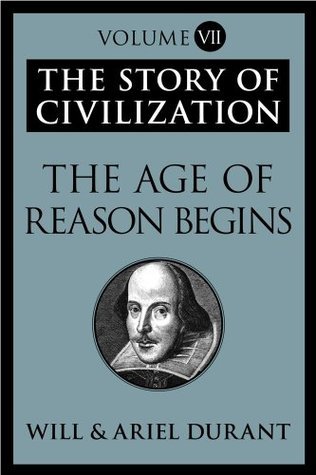
The Age of Reason Begins: The Story of Civilization, Volume VII

Rate this book
The Story of Civilization, Volume VII: A history of European civilization in the period of Shakespeare, Bacon, Montaigne, Rembrandt, Galileo, and Descartes: 1558-1648. This is the seventh volume of the classic, Pulitzer Prize-winning series.

1239 pages, Kindle Edition

First published January 1, 1961

144 people are currently reading
2634 people want to read

About the author

Will Durant

777 books3,042 followers
William James Durant was a prolific American writer, historian, and philosopher. He is best known for the 11-volume The Story of Civilization, written in collaboration with his wife Ariel and published between 1935 and 1975. He was earlier noted for his book, The Story of Philosophy, written in 1926, which was considered "a groundbreaking work that helped to popularize philosophy."

They were awarded the Pulitzer Prize for literature in 1967 and the Presidential Medal of Freedom in 1977.

Ratings & Reviews

What do you think?
Rate this book

Friends & Following

Create a free account to discover what your friends think of this book!

Community Reviews

5 stars
526 (51%)
4 stars
364 (35%)
3 stars
123 (11%)
2 stars
11 (1%)
1 star
3 (<1%)
Displaying 1 - 30 of 95 reviews
Profile Image for Darwin8u.
1,833 reviews9,037 followers
December 10, 2019
"If we interpret philosophy not as metaphysics but as any large perspective of human affairs, as a generalized view not only of the cosmos and the mind but as well of morals, politics, history, and faith, Shakespeare is a philosopher, profounder than Bacon, as Montaigne is deeper than Descartes; it is not form that makes philosophy."
-- Will Durant, The Age of Reason Begins

A great survey of the start of the Age of Reason (1559 to 1648). Will Durant (with Ariel Durant) continues to amaze me. Some parts drag just a bit, but for a survey this large, I'm constantly impressed that I'm rarely bored. His passion for people, history, philosophy and art jumps off every page. Volume VII starts with Queen Elizabeth and Shakespeare and ends with Descartes.

I'll add more later I'm sure.
Profile Image for Roy Lotz.
Author 2 books9,048 followers
June 3, 2017
So continues my slow Odyssey through European history, with Durant as my leisurely guide.

Durant originally planned a single, massive volume, to be entitled The Age of Reason, that would have taken the reader from the end of his volume on the Reformation (around 1560) all the way to the French Revolution. But he soon realized that there was far too much information to compress. So, in his words, “one of the present authors, at an unseemly age, becomes a prima donna making a succession of farewell tours.” The projected single volume became three. Then, for good measure, the Durants wrote two more.

Probably because of its genesis, this volume is less satisfying as a self-contained work than its predecessors. The political and military history are related at supersonic speed. Very often I felt bored or confused during these sections, since it seemed as though Durant, no political animal, was rushing to get through them. True, the portrait he paints of Elizabeth is vivid and engrossing; and his coverage of Richelieu is nearly as strong. Yet when the camera zooms out from the personalities of individual rulers to the dynamics of armed conflicts, Durant falters. Even the Thirty Years’ War, one of the bloodiest and most important struggles in European history, is somewhat lifeless in Durant’s hands. He simply had no taste for war; he lacked that journalistic knack for making readers care about the winner of a race, even if we don’t know who’s running or what’s the prize.

As usual, when Durant gets the political history out of the way and begins on cultural history, the quality improves markedly. And he had so much to write about! In England we meet Shakespeare, Marlowe, Jonson, and Bacon; from France we have Montaigne, Corneille, and Descartes; in Italy Bernini, Caravaggio, and Galileo; and in Spain the entire Golden Age: Cervantes, Lope de Vega, Velazquez, El Greco, and so many others. This is not to mention Rubens, Rembrandt, Tycho Brahe, and Kepler. It’s humbling to think that all these fellows were near contemporaries.

Despite this rich feast, this volume was somewhat unsatisfying for me, since the political and military history was so sketchy and the final endpoint somewhat arbitrary. For this reason, I'm rushing straight into the next volume, eager for Newton, Spinoza, Leibniz, and the Sun King. I must say that it’s exciting to be slowly and steadily approaching the present day. So far I’ve been with Durant for well over 2,000 years. With Montaigne, Shakespeare, and Descartes, I now encounter the first people who speak to me as directly as if they were my uncles. The world as I know it is now slowly coming into being.
Profile Image for Angela Dawn.
22 reviews27 followers
June 10, 2007
This series, "The Story of Civilization" by the brilliant and erudite Will Durant and his equally brilliant wife Ariel, is still one of the best series on world history ever written despite it's age.
It's multidisciplinary approach to understanding history and insightful and articulate execution represent a time piece of the best ideals of Twentieth Century thought and writing.
It's rare to read historical works from this time period that do not overwhelmingly evidence the heavy hand of personal and political prejudices that were widely held in that day and age.
This is the life work of a pair of great humanitarian thinkers.
Always in the avant garde of their field, their work requires relatively little substantive correction compared to other contemporaries after more than 40 years of ongoing historical research have passed. Their objective and well researched insight into history lead them to present a storyline that is still meaningful for readers of history today.
Regardless of the issue of perfect coincidence with present day perceptions of historical accuracy,
this text would still be readable, and valuably so, for any student of history for it's insight into the human condition as evidenced in the changing fortunes of statesmen, peoples, and nations through history.
This is history as narrative the way that few are fluent enough to tell it. The voices of the two authors merge seamlessly to emerge as one voice with a dry wit and clear eyed wisdom that serve to inform and delight the reader and sometimes even made me laugh out loud.
A fascinating classic series for the history buff.
You won't regret the time and effort required to read this long series. It will beautifully flesh out your historical knowledge base and it's a real page turner.
It will feel as if you sat beside the fire with an endlessly wise and funny storyteller on many successive nights so that he could tell you the history of the world.
here's a quote from an article by Will Durant that explains his ideas about history in his own words:

"History” said Henry Ford, “is bunk.”
As one who has written history for twenty-five years, and studied it for forty-five, I should largely agree with the great engineer who put half the world on wheels. History as studied in schools – history as a dreary succession of dates and kings, of politics and wars, of the rise and fall of states – this kind of history is verily a weariness of the flesh, stale and flat and unprofitable. No wonder so few students in school are drawn to it; no wonder so few of us learn any lessons from the past.

But history as man’s rise from savagery to civilization – history as the record of the lasting contributions made to man’s knowledge, wisdom, arts, morals, manners, skills – history as a laboratory rich in a hundred thousand experiments in economics, religion, literature, science, and government – history as our roots and our illumination, as the road by which we came and the only light that can clarify the present and guide us into the future – that kind of history is not “bunk;” it is, as Napoleon said on St. Helena, “the only true philosophy and the only true psychology.” Other studies may tell us how man might behave, or how he should behave; history tells us how he has behaved for six thousand years. One who knows that record is in large measure protected in advance against the delusions and disillusionments of his time. He has learned the limitations of human nature, and bears with equanimity the faults of his neighbors and the imperfections of states. He shares hopefully in the reforming enterprises of his age and people; but his heart does not break, nor his faith in life fade out, when he perceives how modest are the results, and how persistently man remains what he has been for sixty centuries, perhaps for a thousand generations.

"We are choked with news, and starved of history".
~Will Durant


Profile Image for Perry.
634 reviews617 followers
September 29, 2016
Hyper-Active Period in History: 1560-1650
The Age of Reason Begins


I was intrigued by the historical activity in the period of 1560-1650, at the beginning of "The Age of Reason," in this, the 7th volume of Will and Ariel Durant's unsurpassed effort to write the history of the world's civilization, an 11-volume set collectively called The Story of Civilization . They published the first volume Our Oriental Heritage in 1935, and their last volume The Age of Napoleon in 1975, thus covering history through 1815. Sadly, the Durants were unsuccessful in capturing the complete history up to 1935 as they had planned. Time on Earth is far too short {{sigh}}.

"The Age of Reason" covers the history of Europe and the Near East from around 1560 until about 1650.

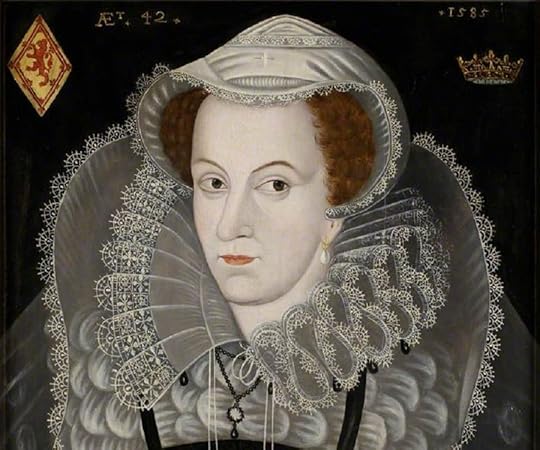
The volume contains sections on England and its leaders Queen Elizabeth, Mary, Queen of Scots, James VI and I;


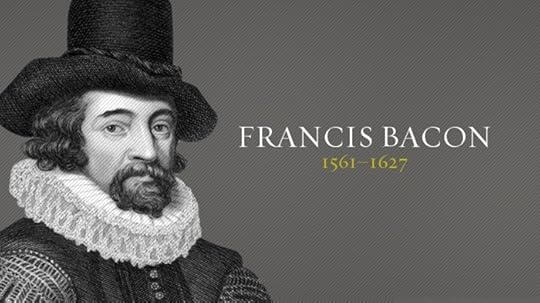
on Elizabethan England, the summons to reason from superstition, the rise and fall of Francis Bacon, the religious cauldron, Puritans and the theatre;


and writers such as Shakespeare, Marlowe, John Donne and Ben Jonson.

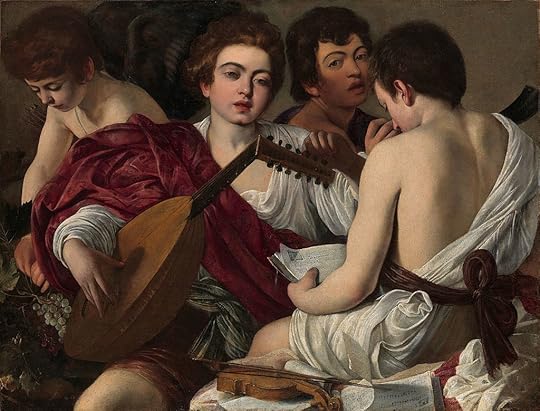
I found particularly interesting sections on the birth of opera and the coming of the Baroque in Italy;


Musicians, Caravaggio, 1596

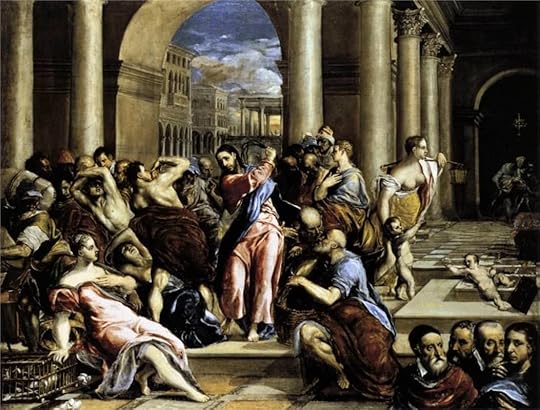
the golden age of Spanish literature in Cervantes and Calderon, of Spanish art in El Greco;


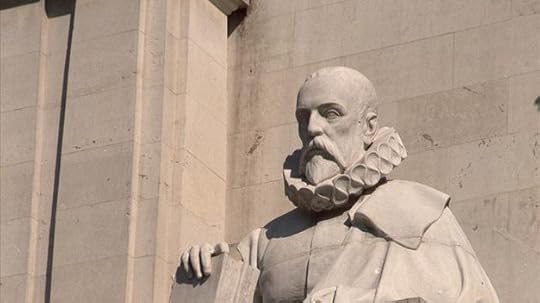
Cervantes


Calderon


"Cleansing of the Temple," El Greco, 1584-94


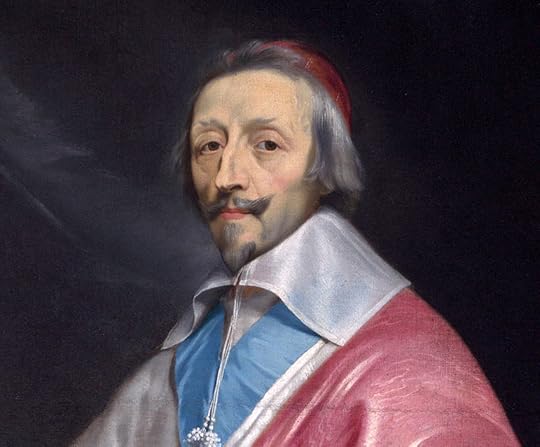
Montaigne, Good King Henry IV and Cardinal Richelieu in France;

Portrait of Cardinal de Richelieu, Champaigne, 1633-40

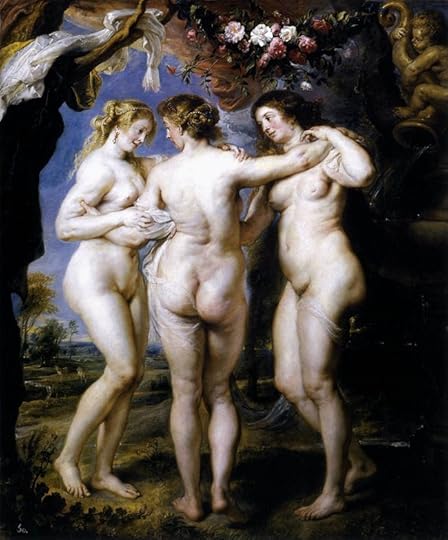
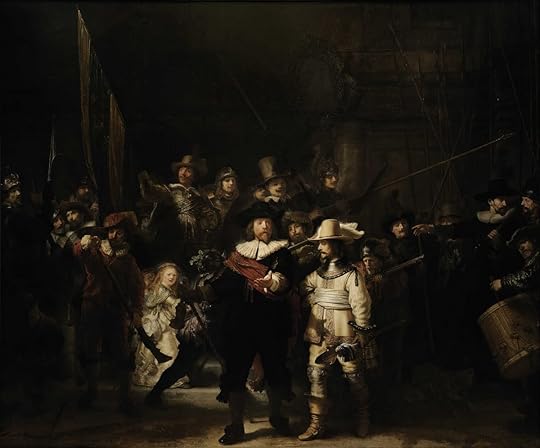
the revolt of the Netherlands and Flemish artists Rubens and Rembrandt;


The Three Graces, Rubens, 1639


The Night Watch, Rembrandt, 1642


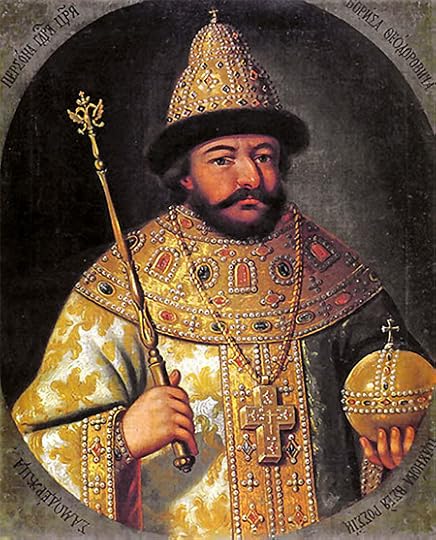
Holy Russia and Boris Godunov;


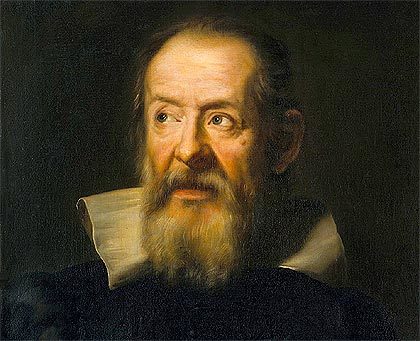
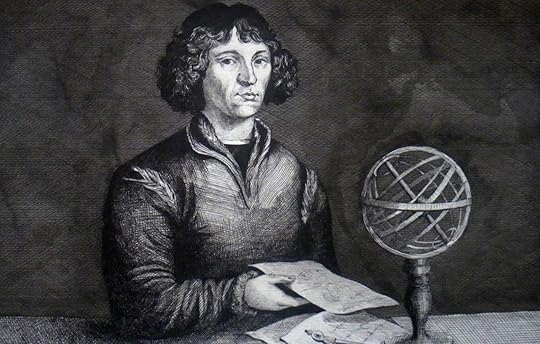
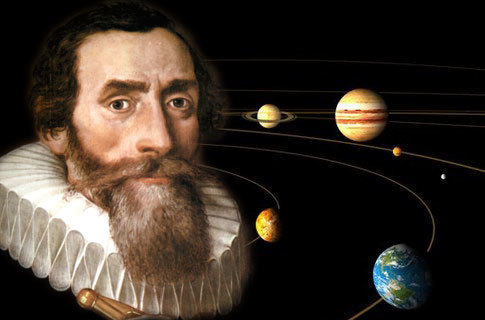
the Turks and the decline of the Sultan, science in the age of Galileo, Copernicus and Kepler, and the rebirth of philosophy and the rationalists like Bacon and Rene Descartes.


Galileo


Copernicus


Kepler


For a book on history, the writing is astonishingly good as it keeps the story enticing and smoothly flowing. Not being a history buff, I cannot exactly say that I enjoyed reading this 729-page book. This is the first volume I've read. Reading even one volume of the eleven is a significant investment of time. I have already read most of Volume 8 (The Age of Louis XIV (1648-1710), 801 pp.). I plan to read Volume 9 (The Age of Voltaire (generally 1710-1760), 898 pp.), provided, however, life and time permit.

Profile Image for Helga.
1,384 reviews478 followers
May 20, 2021

This volume covers from 1559 to 1648, discussing the social, economic, scientific, political and religious history of Europe and the Near East.
Profile Image for Jamie Smith.
521 reviews112 followers
March 23, 2022
Edward Gibbon wrote that “History is indeed little more than the register of the crimes, follies, and misfortunes of mankind.” That quote has often come to mind as I make my way through the eleven volumes of the Durants’ Story of Civilization, but it hit me with greater effect this time. Age of Reason indeed. I suppose it had to start somewhere, and with this book we get Shakespeare, Francis Bacon, Cervantes and more of history’s great luminaries, who shine like diamonds in the dungheap of their times. In previous books of this series I sometimes felt that the long digressions into art, literature, architecture, science, and economics distracted from the main theme of history. With this one, however, I welcomed those quiet interludes amidst the unrelenting depravity and bloodshed of the times.

This was the age when Montaigne wrote, “It is setting a high value upon our opinions to roast men and women alive on account of them,” yet everywhere people were slaughtered in the name of religion, to glorify the Price of Peace. Catholics and Protestants were equally murderous, equally sure that theirs was the One True Religion, and that anyone who thought otherwise was fit only to die, preferably by horrific means. After reading about yet another slaughter, the siege and capture of Maastricht by Spanish forces in 1579, where only 400 of the population of thousands were left alive, I understood the philosophers who say that nothing consumes men’s souls like religion.

As I have done with the other volumes of this series, I will step aside and let Durant speak in his own words. He is interesting and insightful, providing not just facts and dates, but context and illumination.


Elizabethan England
Inheriting a nation politically in chaos and militarily in decay, her only practicable policy was to keep England’s enemies from uniting against it, to encourage the Huguenot revolt against the French monarchy, the Netherlands revolt against Spain, the Protestant revolt against a Scottish Queen too closely bound to France. It was an unscrupulous policy, but Elizabeth believed with Machiavelli that scruples are not becoming in rulers responsible for states.

Every Continental government condemned and admired [Elizabeth I]. “If she were not a heretic,” said Pope Sixtus V, “she would be worth a whole world.”

Wars determine theology and philosophy, and the ability to kill and destroy is a prerequisite for permission to live and build.

The defeat of the Armada affected almost everything in modern European civilization. It marked a decisive change in naval tactics; grappling and boarding gave way to cannonading from shipside and deck. The weakening of Spain helped the Dutch to win their independence, advanced Henry IV to the throne of France, and opened North America to English colonies. Protestantism was preserved and strengthened, Catholicism waned in England, and James VI of Scotland ceased to flirt with the popes.

No one thought of letting the people rule; politics was—as always—a contest of minorities to determine which should rule the majority.

When she acceded there was hardly a nation so poor as to do England reverence; when she died England controlled the seas and challenged the intellectual hegemony of Italy or France.

She re-established the Reformation, but she represented the Renaissance—the lust to live this earthly life to the full, to enjoy and embellish it every day. She was no exemplar of virtue, but she was a paragon of vitality.

[Walter Raleigh] phrased the doctrine of sea power perfectly: “Whoever commands the sea commands the trade; whoever commands the trade of the world commands the riches of the world, and consequently the world itself.”

Bacon distrusted Parliament as composed of uneducated and intolerant landowners and merchants or their agents.

When an ambassador complimented her on her languages she remarked that “it was no marvel to teach a woman to talk; it were far harder to teach her to hold her tongue.”

Tantum possumus quantum scimus—Our power is proportioned to our knowledge.

Montaigne
Montaigne was the most civilized of Frenchmen in that savage age.

Of Montaigne, as of few authors before the eighteenth century, it may be said that he is read today as if he had written yesterday.

Seldom has a man so relished solitude, which is almost our direst dread. A man must sequester and recover himself from himself … We should reserve a storehouse for ourselves … wherein we may hoard up and establish our true liberty. The greatest thing in the world is for a man to know how to be his own.

In the brave morning of his thought he adopted Stoicism. Since Christianity, splitting into fratricidal sects and bloodying itself with war and massacre, had apparently failed to give man a moral code capable of controlling his instincts, Montaigne turned to philosophy for a natural ethic, a morality not tied to the rise and fall of religious creeds. Stoicism seemed to have approached this ideal; at least it had molded some of the finest men of antiquity.

The only sin that he recognized was excess. “Intemperance is the pestilence which killeth pleasure; temperance is not the flail of pleasure, it is the seasoning thereof.”

Here, at the very outset of the Age of Reason, a generation before Bacon and Descartes, Montaigne asks the question that they would not stop to ask, that Pascal would ask eighty years later, that the philosophers would not face till Hume and Kant: Why should we trust reason?

Man is no more the center of life than the earth is the center of the universe. It is presumptuous of man to think that God resembles him, or that human affairs are the center of God’s interest, or that the world exists to serve man. And it is ridiculous to suppose that the mind of man can fathom the nature of God. “O senseless man, who cannot make a worm and yet will make gods by the dozen!”

“Nothing is so firmly believed as that which is least known,” and “a persuasion of certainty is a manifest testimony of foolishness.”

He is willing to accept the immortality of the soul on faith, but finds no evidence for it in experience or reason; and the idea of eternal existence appalls him.

He notes that he is a Christian by geographical accident; otherwise “I should rather have taken part with those who worshiped the sun.”

He was not neutral in the duel for France, but “my interest has not made me forget either the commendable qualities of our adversaries or the reproachful qualities of those whom I have supported.”

His loquacity is redeemed by quaintness and clarity; there are no shopworn phrases here, no pompous absurdity. We are so weary of language used to conceal thought or its absence that we can overlook the egoism in these self-revelations. We are surprised to see how well this amiable causeur knows our hearts; we are relieved to find our faults shared by so wise a man, and by him so readily absolved. It is comforting to see that he too hesitates and does not know; we are delighted to be told that our ignorance, if realized, becomes philosophy.

And what a relief it is, after St. Bartholomew, to come upon a man who is not sure enough to kill!

We are more deeply moved by Pascal’s desperate attempt to save his faith from Montaigne than by Montaigne’s willingness to have no faith at all.

Pascal went almost insane trying to salvage his faith from Montaigne’s questionings.

Society
“Virtue ennobles the blood. Every man,” [Don Quixote] tells Sancho, “is the son of his own works.”

[Bartolomé Esteban Murillo:] Over his tomb, by his instructions, were inscribed his name, a skeleton, and two words, Vive moriturus—”Live as though about to die.”

Royal absolutism, which was the cause of civil war in England, was the effect of civil war in France.

To minds frozen in the perspective of today, the royal absolutism desired by Richelieu seems but a reactionary despotism; in the view of history, and of the great majority of Frenchmen in the seventeenth century, it was a liberating progress from feudal tyranny to unified rule. France was not ripe for democracy; most of its population were ill-fed, ill-clothed, illiterate, darkened with superstitions and murderous with certainties.

The middle classes, the artisans, and the peasants approved the absolutism of the king as the only protection they could see from the absolutism of the lords.

Reason, as well as tradition and authority, was now to be checked by the study and record of lowly facts; and whatever “logic” might say, science would aspire to accept only what could be quantitatively measured, mathematically expressed, and experimentally proved.

The modern mind was slowly climbing back to what the Greeks had known two thousand years before.

Next to travel, the best education is history, which is travel extended into the past.

Religion
The central feature of medieval politics was the unifying supremacy of the papacy over the kings; the outstanding aspect of modern political history is the conflict of national states freed from papal power; hence the first question that agitated political philosophy in the century after the Reformation was the demand of Catholic thinkers that papal supremacy be restored, and the demand of Protestant thinkers that papal authority be wholly destroyed.

Protestantism in the sixteenth century had the feverish energy of a new idea fighting for the future; Catholicism had the strength of traditional beliefs and ways deeply rooted in the past.

Catholicism in Italy deliberately ignored the minds of the elite and offered to the masses of the people a beneficent but unwelcome moral code wrapped up in poetry, drama, symbolism, catharsis, and hope.

To offset the divisive power of the barons, the kings had supported the Catholic clergy, and had dowered these with wealth leading to venality, lethargy, and concubines.

In the broil of Europe between the Reformation (1517) and the Peace of Westphalia (1648), this collective competition used religion as a cloak and a weapon for economic or political ends. When, after a century of struggle, the combatants laid down their arms, Christianity barely survived among the ruins.

The religion whose varieties gave specious excuses for so many wars was beginning to suffer from its political employment; there was a growing number of men who questioned the divinity of doctrines that argued by the competitive shedding of blood; and in the upper classes doubts of the Christian ethic began to mingle with skepticism of the creed.

The Catholics had the advantages of tradition and unity; the Protestants enjoyed more liberty of belief, and they divided into Lutherans, Calvinists, Anabaptists, and Unitarians; even among the Lutherans there was a war of creeds between the followers and the opponents of the liberal Melanchthon. In 1577 the Lutherans formulated their faith in the Book of Concord, and thereafter Calvinists were expelled from Lutheran states.

The struggle between Lutherans and Calvinists was as bitter as between Protestants and Catholics, and it damaged Protestant co-operation during the war, for each alternation of roles between persecutors and persecuted left a heritage of hate.

Through the Jesuits, the Capuchins, the reformation of the clergy, the zeal of bishops, and the diplomacy of popes and nuncios, half the ground won by German Protestantism in the first half of the sixteenth century was regained for the Church in the second half.

the masses were tired of uncertainty, controversy, and predestination; their rulers saw in a unified and traditional Catholicism a stronger support of government and social order than in a Protestantism chaotically divided and precariously new.

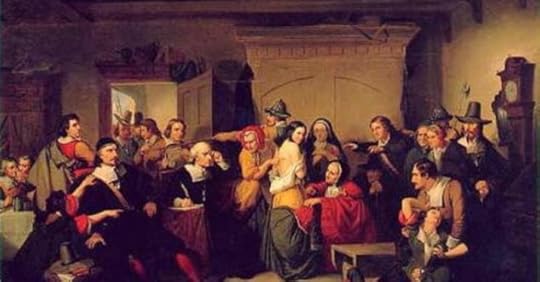
though the Reformation had been saved, it suffered, along with Catholicism, from a skepticism encouraged by the coarseness of religious polemics, the brutality of the war, and the cruelties of belief. During the holocaust thousands of “witches” were put to death. Men began to doubt creeds that preached Christ and practiced wholesale fratricide. They discovered the political and economic motives that hid under religious formulas, and they suspected their rulers of having no real faith but the lust for power.

A call to duty sounded throughout the Puritan ethic, and with it a stern inculcation of courage, self-reliance, prudence, thrift, and work. It was an ethic congenial to the middle class; it was made for industrious workers and gave a religious sanction to mercantile enterprise and private property. Poverty, not wealth, was a sin; it revealed lack of personal character and divine grace.

James disgraced himself by having two Unitarians burned for doubting the divinity of Christ despite the proofs which he offered them (1612), but he distinguished himself by never thereafter allowing an execution for religious dissent; these were the last men to die for heresy in England.

The multiplication of sects, and their spirited debates, led a small minority to doubt all forms of Christianity. Bishop Fotherby mourned (1622) that “the Scriptures (with many) have lost their authority, and are thought only fit for the ignorant and the idiotic.”

Bolder were the “Epicureans” of Germany, who laughed at the Last Judgment, which took so long in coming, and at hell, which was probably not so terrible after all, since all the jolliest company gathered there.

it was no longer a question of Catholicism versus Protestantism, it was a question of Christianity itself, of doubts and denials rising about the dearest fundamentals of the ancient creed. The thinkers of Europe—the vanguard of the European mind—were no longer discussing the authority of the pope; they were debating the existence of God.

Is Christianity dying? Is the religion that gave morals, courage, and art to Western civilization suffering slow decay through the spread of knowledge, the widening of astronomic, geographical, and historical horizons, the realization of evil in history and the soul, the decline of faith in an afterlife and of trust in the benevolent guidance of the world? If this is so, it is the basic event of modern times, for the soul of a civilization is its religion, and it dies with its faith.
Profile Image for Noah Goats.
Author 8 books31 followers
June 28, 2019
The Age of Reason Begins is another solid installment in Will Durant’s huge history of Western Civilization. It’s history that gives highlights of politics and war, but also delves deeply into culture. Durant is interested in art, philosophy, literature, and people, and this books covers (to greater and lesser degrees) just about every country in Europe. The book is wide ranging both in topics and territory.

There were parts of this book that bored me (which is why it took 3 months to listen to all of it). Durant’s long descriptions of artwork, for example, are dangerous to listen to while driving because they will make you fall asleep. But I enjoyed his discussions of literature very much, his profile of Montaigne (who I have been reading, and reading about, recently) was very good, for example. I also really enjoyed his description of The Netherlands’ struggle for independence (probably because it’s a great topic that I know little about. I need to find a good book on the subject).
Profile Image for Alex.
162 reviews20 followers
December 17, 2020
How did Durant choose the scope of this book? Perhaps a more apt title would have been the Reformation Continues, as its set after the lifetime of the main Reformers and ends with the Thirty Years War or Imperial Armageddon as Durant refers to it. However, perhaps to avoid being repetitive, Durant chooses to call the book the Age of Reason Begins, and Francis Bacon proudly graces the cover. A common theme after all of Durant's coverage of the period is that Christianity itself was a casualty of the Reformation, its religious wars, cynical political ploys, and the rejection of authority ultimately leaving ones personal sense of reason as the ultimate judge of truth, a private judgement which Europe soon found out was soon enthusiastically turned against all religion itself.

One notices that as Durant begins to cover the modern era and its ocean of sources it’s more difficult to contain events in his books, and historical figures begin to spill over into multiple volumes. A thread that ties this volume together at least is devastating civil wars, and France, Germany, and Britain all go through important domestic conflicts that shape what the nations will become. The Dutch War of Independence against Spain is not quite a civil war, but the factors which caused it are related. Religion is involved in all of these conflicts, but to what extent?

Catherine de Medicis argued that “religion is a cover which serves merely to mask ill will and yet they have nothing less than religion in their hearts.” Durant concedes more sincerity to the true believers but doesn't deny the political and economical factors that played a role in the Reformation. Was it a coincidence that Protestantism seemed to be more embraced by the increasingly wealthier middle classes? “The [French] businessmen who at the great fairs met prosperous Germans, Englishmen, and Swiss noted the successful alliance of merchants with Protestant rulers and ideas. They had long suffered...under bishops and barons disdainful of commerce...they learned with pleasure and envy that Calvin was well disposed toward business and finance.”

In England of course, the Civil War was not between Catholics and Protestants, but between Anglicans, which had not yet drifted that far from Catholicism anyways and Puritans, if of course I'm allowed a bit of oversimplification, because Protestantism in England then was split into “Anglicans, Presbyterians, and Puritans, and Puritans into Independents who dreamed of a republic, Quakers...Millenerians...Antinomians...Brownist Separatists, and Seekers, and Ranters. A member of parliament complained that [artisans] were preaching their own hot brands of faith, many of them clothing economic or political demands in Scriptural texts.” Beneath the religious and political veneer, an economic revolution had been occurring and “[King] Charles' basic mistake was his failure to recognize that the wealth now represented by the House of Commons was much greater than that wielded by those loyal to the King, and that the power of Parliament must be increased accordingly.” Yet he ruled with the absolutism that Henry VIII claimed not realizing that the nobility only tolerated such an autocratic mandate with fresh memories of the chaos that the War of the Roses had unleashed upon the nation. The era of kings in Europe was already ending and its fascinating that in the aftermath of King Charles' beheading there were radicals that toyed with the idea of universal suffrage for the nation.

All of the political, social, and religious factors of the era also cynically burst forth in the Thirty Years War in which Germany was almost united two hundred years early, and made Catholic again by Emperor Ferdinand and his general Wallenstein if Cardinal Richelieu had not betrayed his religion for the sake of French national interests, although in keeping with a theme found in the previous volume the Catholic powers in general were horribly disunited. And after that failed unification of Germany the French were not the only ones who likely breathed a sigh of relief. “If Germany were entirely subject to one monarchy,” wrote Sir Thomas Overbury in 1609, “it would be terrible to all the rest”. I enjoyed reading how before the bloodshed, Emperor Rudolf II “learned half a dozen languages, practiced almost every science and art, made valuable collections of pictures and statuary, botanical varieties and zoological specimens. He helped poets and historians, and founded many schools. He became proficient in mathematics, physics, chemistry, astronomy, medicine, but also in alchemy and astrology; he financed the astronomic researches of Tycho Brahe and Kepler. “

Will Durant doesn't just focus on Western Europe, we learn about how Scandinavia during this era was not a peninsula of modest neutrals but a domain of great powers being able to shape the course of Europe. Christian IV of Denmark names the capital of Norway after himself and tries to reconquer Sweden, unsuccessfully of course. Gustavus Adolphus of Sweden dies playing an important role in the Thirty Years War. Christina of Sweden, converts to Catholicism, abdicates, and invites Descartes to Sweden, whose weather may have killed him.

A picturesque succession controversy engulfed Russia in this era. Boris Godunov ruled as regent for Feodor, the son of Ivan the Terrible. Another of Ivan's sons, Dmitiri, had died under mysterious circumstances. When Feodor died Boris Godunov was invited by the nobility to become Czar itself, only to then deal with a young man in Poland claiming to be the dead Dmitri. The pretender married a Pole and converted to Catholicism, and suddenly it was in the interests of both Poland and the Catholic Church to support his claims to the throne. What's more amazing is that he succeeded, gaining the support of the Russian people against the unpopular role of Godunov. Despite ruling well, he was overthrown in a plot by nobles, an event that subsequently led to an invasion of Russia by Poland and Sweden, both great powers in this era.

There is not as much coverage of the Islamic world as there was in the previous volume, but Ottoman Turkey and Safavid Persia still get their chapter, the key event of which being the Battle of Lepanto. After centuries of encroachments upon Europe and coming remarkably close to Rome itself, the Islamic tide would begin to ebb. Turkey in this era however was not the decadent empire which would fall to pieces in the coming centuries. “Literacy was probably higher in European Turkey, in the seventeenth century, than in Christendom.” “Calligraphy was in so high repute...story had it that a line of handwriting by Mir Imad was sold for a gold piece even in his lifetime.” Their art was world renowned and their rugs found their ways into the homes of European nobility as far as England.

There were European visitors to Persia who left their praises in their writings. “Tavernier, seeing Isfahan in 1664 described it as equaling Paris in extent, but only a tenth as populous, for every family had its own house and garden.” “[Tavernier] thought the clear Persian sky had influenced Persian art to brilliance of luster and color and had happily affected the Persians in body and mind. He believed that the Persians had profited from their mixture with the people of Georgia and the Caucasus, whom he rated the handsomest and bravest in the world”

It's not a Will Durant book without extensive coverage of culture, and you can't finish this book without feeling like you've taken a course in Shakespeare, Spencer, Tasso, Montaigne, Lope de Vega, Calderon, and Cervantes. In his coverage of the theater I was surprised that there were people who pirated plays through a primitive version of camrips. “Sometimes a stenographer would record a play while it was being acted, and a printer would publish from this report a pirated and garbled edition.”

Of course this is also the Age of Reason, and to end up on the cover Francis Bacon wrote endlessly about the benefits of science, and the need to move away from Aristotle, and to publicly support the pursuit of knowledge. In The New Atlantis, he writes of an imaginary island ruled by technocrats whom after equal tests and equal educational opportunity rule the kingdom without elections. “The end of our Foundation is the knowledge of causes and secret motions of things, and the enlarging of the bounds of Human Empire, to the effecting of all things possible.” “[They had] invented microscopes, telescopes, self-winding clocks, submarines, automobiles, and airplanes; they have discovered anesthetics, hypnosis, and ways of preserving health and lengthening life, they have found ways of grafting plants, generating new species, transmuting metals, and transmitting music to distant places.”

He seems remarkably contemporary for a man of the sixteenth century but his own world was encountering unprecedented technological advancement upon which he simply extrapolated. “Gunpowder was used in mine blasting...the making of glass was cheapened, hence windowpanes become common...we first hear of the screw lathe (1578), the knitting frame (1589), the revolving stage (1597), the threshing machine and the fountain pen (1636).” “Giant bellows ventilated mines; complicated pumps raised water into towers to give pressure for houses and fountains...Truss bridges were built... in 1624 a submarine traveled two miles...in the Thames. Jerome Cardan, Giambattista della Porta, and Salomon de Caus advanced the theory of the steam engine.”

This was the era of the tragic conflict between Galileo and the Catholic Church, although there is more nuance to the conflict than is commonly known. Heliocentrism dated at least as far back as Aristarchus and Seleucus of Seleucia in ancient times. The heliocentric model was already well known throughout Europe before Galileo as the Copernican model, and there seemed to be a stubborn insistence among the authorities not in preventing the heliocentric model from being written about or explored, but simply to keep treating it as a hypothesis. “The Jesuit astronomers had no objection to considering [heliocentrism] as a hypothesis. Schener sent his objections to the Copernican view to Galileo, with a conciliatory letter. 'If you wish to advance counterarguments,' he wrote, “we shall in no way be offended by them, but will, on the contrary, gladly examine your arguments in the hope that all this will assist in the elucidation of the truth” In spite of this, Galileo proceeded to treat heliocentrism as a fact, ironically supported by a now discredited argument regarding the tides. “The views for which he was punished are not precisely those that astronomers hold today; like most martyrs” says the agnostic Durant, “[Galileo] suffered for the right to be wrong.” The affair however, then and now, proved to be an infamous scandal.

Galileo remained a Catholic but this was also an era of more open disbelief. “In 1623 the Jesuit Francois Garasse published a quarto of over a thousand pages, in which he denounced the beaux espirits who 'believe in God only by way of form or as a maxim of state' and 'accept only Nature and destiny. In that same year Marin Mersenne estimated the 'atheists' of Paris at fifty thousand.” Though Durant argues that this may have been a more general terms for unbelievers including Deists. The lives of Giordano Bruno and Vanini, both executed for unbelief, are detailed here.

Durant ends the book with a reflection on the rise of irreligion.“Soon all the wars and revolutions of the rival states would sink into minor significance compared with the mounting spreading contest between faith and reason which was to agitate and transform the minds of Europe, perhaps of the world.”
Profile Image for Matt.
746 reviews
March 18, 2024
The near century between the death of John Calvin and the Council to Trent to the end of the Thirty Years War saw first religious intolerance and religious wars range across the continent until in the end politics trumped everything like it always does. The Age of Reason Begins is the seventh volume of The Story of Civilization series by Will & Ariel Durant as Protestants fight one another and both fight Catholics before eventually politics overrules everything and people begin to ignore religion.

This volume continues a trend of transitions that defined Early Modern Era highlighting a single nation, then the continent, and finally beginning of the return of “reason” over “religion”. The Durants began the rise of Great Britain from the reign of Elizabeth I to the death of Charles I as it transitioned from warring individual nations to nations united political though with significant differences that still needed to be worked out. Next, they followed the transition across the continent of various religious wars that saw either the rise or follow of great powers from prominence that ultimately went from how God was worshiped but what was politically more important. Then they completed the volume with the rise of science and slow return of now religious inspired philosophy. Even though the Durants focused on philosophy and scientific advances in the last 100 pages of the book, they did not neglect cultural developments in literature to theater to music to the development of scientific thought, it was in this area that one could tell Will Durant was enjoying writing. After three volumes in which Will Durant had to focus on religion more than he liked this volume a reader of the series could tell change in Will’s writing that could by a result of Ariel or Will love of philosophy and science.

The Age of Reason Begins is a transitional volume of Will Durant’s The Story of Civilization not only in the transition into the Early Modern Era but also the involvement of his wife Ariel as a cowriter.
Profile Image for Barry Belmont.
121 reviews23 followers
January 13, 2015
Working off a fragment of a poem from Shah Abbas II which includes the lines "The wave is ignorant of the true nature of the sea; / How can the temporal comprehend the eternal?" the Durants, as they always seem to do, describe it perfectly: "If the music of Persian poetry eludes us, the enjoyment of Safavid art is not beyond our reach, for here is a speech that all can understand." It is their communion with, appreciate for, and wonderful comments on history that makes the Durants peerless. Never before or since has grandeur, humility, and wordplay rested so well in the hearts of two people. Luckily their work is still available to us and we can, within our own chests, feel something quite close.
Profile Image for ألاء.
115 reviews
December 25, 2019
2.5
بدأت هذه السلسلة قبل أربع سنوات ضمن خطة لإنهاء الأحد عشر مجلدا
في خمس سنوات، مجلدين كل عام لكن هذا العام لم أقرأ إلا واحد فقط
وقد كان الأصعب في الإنهاء بالرغم من أنه لم يكن الأسوأ على الإطلاق
ولكني كنت قد فقدت الاهتمام تماما وضقت ذرعا بهذه السلسلة لعدة أسباب

1- الكاتب ملحد و هذا منعكس على
فلسفته لتفسير للتاريخ

2- نبرة التسامح المستعلية التي
يستعملها مع الدين وكل ما يمسه

3- اهتمامه الشديد بالفلسفة والأدب
والفنون وهو ما ليس سيئا لولا أن أغلبية
هذا الإهتمام منصب على مواضيع لا قيمة
لها إطلاقا من المنظور الإسلامي كالنحت
والرسم(رسم الأشخاص) والموسيقى... الخ
صفحات وصفحات
لا تنتهي في هذه المواضيع وأصحابها

4- كل مجلد يغطي فترات زمنية طويلة ومساحات
جغرافية شاسعة باقتضاب مما لابد أن ينسي بعضه
بعضا في نهاية الأمر، ويجعل من السلسلة مصدرا للتعرف
على المواضيع أكثر منه أساسا للتعمق في الفهم

على أي بما أن المجلدات القادمة تقترب أكثر من التاريخ
المعاصر فربما أتابع السلسلة، لكن ليس بأكثر من مجلد
في العام.
209 reviews2 followers
June 23, 2019
The Age of Reason Begins covers the time frame from 1558 - 1648; from Elizabeth to Richelieu, from Shakespeare to Descartes. In typical fashion the Durants are exhaustive in covering European Civilization’s economic, social, and political life with a strong focus on the cultural and religious aspects. The first 500 pages or so explain why religious and political conflicts delayed the “Age of Reason” in Europe. They credit Bacon as the the first to call for an “Age of Reason” by suggesting an inductive study of nature through experience and experimentation. The final 100 pages or so cover the early steps in the scientific world of discovery and knowledge. Durant says that religion is the soul of civilization and therefore delves into the struggle between religion which brought so much to society and the spread of knowledge which the author says led to a decline of faith. Faith is being replaced by science, philosophy, and reason. This book seems like an introduction to the “Age of Reason” which continues in the next two volumes. A good read.
Profile Image for Angela.
29 reviews34 followers
April 15, 2010
Just one favorite from this stellar series, "The Story of Civilization" by the brilliant and erudite Will Durant and his equally brilliant wife Ariel, which is still one of the best series on world history ever written, despite it's age.
It's multidisciplinary approach to understanding history and insightful and articulate execution represent a time piece of the best ideals of Twentieth Century thought and writing.
It's rare to read historical works from this time period that do not overwhelmingly evidence the heavy hand of personal and political prejudices that were widely held in that day and age.
This is the life work of a pair of great humanitarian thinkers.
Always in the avant garde of their field, their work requires relatively little substantive correction compared to other contemporaries after more than 40 years of ongoing historical research have passed. Their objective and well researched insight into history lead them to present a storyline that is still meaningful for readers of history today.
Regardless of the issue of perfect coincidence with present day perceptions of historical accuracy,
this text would still be readable, and valuably so, for any student of history for it's insight into the human condition as evidenced in the changing fortunes of statesmen, peoples, and nations through history.
This is history as narrative the way that few are fluent enough to tell it. The voices of the two authors merge seamlessly to emerge as one voice with a dry wit and clear eyed wisdom that serve to inform and delight the reader and sometimes even made me laugh out loud.
A fascinating classic series for the history buff.
You won't regret the time and effort required to read this long series. It will beautifully flesh out your historical knowledge base and it's a real page turner.
It will feel as if you sat beside the fire with an endlessly wise and funny storyteller on many successive nights so that he could tell you the history of the world.
here's a quote from an article by Will Durant that explains his ideas about history in his own words:

"History” said Henry Ford, “is bunk.”
As one who has written history for twenty-five years, and studied it for forty-five, I should largely agree with the great engineer who put half the world on wheels. History as studied in schools – history as a dreary succession of dates and kings, of politics and wars, of the rise and fall of states – this kind of history is verily a weariness of the flesh, stale and flat and unprofitable. No wonder so few students in school are drawn to it; no wonder so few of us learn any lessons from the past.

But history as man’s rise from savagery to civilization – history as the record of the lasting contributions made to man’s knowledge, wisdom, arts, morals, manners, skills – history as a laboratory rich in a hundred thousand experiments in economics, religion, literature, science, and government – history as our roots and our illumination, as the road by which we came and the only light that can clarify the present and guide us into the future – that kind of history is not “bunk;” it is, as Napoleon said on St. Helena, “the only true philosophy and the only true psychology.” Other studies may tell us how man might behave, or how he should behave; history tells us how he has behaved for six thousand years. One who knows that record is in large measure protected in advance against the delusions and disillusionments of his time. He has learned the limitations of human nature, and bears with equanimity the faults of his neighbors and the imperfections of states. He shares hopefully in the reforming enterprises of his age and people; but his heart does not break, nor his faith in life fade out, when he perceives how modest are the results, and how persistently man remains what he has been for sixty centuries, perhaps for a thousand generations.

"We are choked with news, and starved of history".
~Will Durant


Profile Image for carriedaway.
59 reviews4 followers
July 23, 2009
Typically non fiction took me far longer to read than fiction and oddly enough, the first section on Elizabeth I's reign was the hardest going and it's what I'm most familiar with! The one upside of digital books is that one day I hope they embed histories in names. I never can remember if the Duke of Buckingham does indeed mean George Villiers....(in this case, yes).

Until then, this is a great overview and historical reference. I picked it up as background research to read the Ring of Fire series by Eric Flint and his co-authors and it more than filled the bill. (It's more fun to read an alternative history when you know what happened historically. Should I admit I'd never even heard of the Thirty Years War in Germany? And me of German descent). This is the 7th volume in their story of civilization.

The Durants covered the days of Queen Elizabeth I through Charles II in England, Richlieu in France and the absolute mess the German provinces were in. It's amazing Christianity survived the debacle of that era. They also covered Sweden, Holland, Italy, the Holy Roman Empire, the Hapsburgs, the literature, science and philosophy of the time.
Profile Image for Erik Graff.
5,165 reviews1,449 followers
July 16, 2013
Will and Ariel Durant's relationship was, by modern standards, illegal and immoral. He was her principal at the Ferrer Modern School, marrying her when she was fourteen, he about twenty-seven. Together they produced what amounts to the most substantial history of the world available to the general public in English, The Story of Civilization, in eleven volumes (the last being in historiography).

Like all volumes in the series, except the first, Our Oriental Heritage, this constitutes an excellent introduction to the period.
Profile Image for James Violand.
1,268 reviews73 followers
June 29, 2014
This review applies to all Durant's History of Civilization. The author does not follow a strictly chronological approach, but emphasizes those events/personages that have developed our Western civilization. He tends to emphasize certain personalities - some of whom I take exception to - but he stresses those things which make Western man unique. The arts have a prominent place in developing our culture and Durant convinces the reader how important they are.
Profile Image for for-much-deliberation  ....
2,689 reviews
shelved
May 22, 2011
Volume seven of the eleven volume 'Story of Civilisation' by Will and Ariel Durant. The volume focuses on the age of reason...
Profile Image for Kerwin.
8 reviews1 follower
February 17, 2013


This series provides the opportunity for a reader to look over Will Durant's shoulder as he journeys through history and writes the intellectual adventure of a lifetime.
Profile Image for J.D. Steens.
Author 3 books32 followers
March 21, 2019
The Goodreads blurb on this book provides a good nutshell summary of this Durant volume.

The title seems misleading. It implies humanity's development, a fundamental break with antiquity and its magical and religious and earth-centric explanations of cosmology and our place in the world. Hasn't there always been this tension between the metaphysical and material-empirical? What about Democritus, Lucretius, and the Epicureans? Isn't there the same tension today? In what way is it fair to say that the age of reason "begins?" In one sense, it's always been there, and it's not exactly like we have left the magical-religious explanations behind. Elsewhere, the Durants note that this age was about "the growth of reason," which might be a better way to describe the beginnings of scientific thinking from this era.

Most of this volume is about the religious wars and the fights with kings. It's crazy humanity at its worst. Only in the third, the last, book of this volume do the Durants deal with "reason." That book's title is apt, "The Tentatives of Reason," as are its two chapter titles, "Science in the Age of Galileo" and "Philosophy Reborn." In the former chapter, the Durants write that science "began to liberate itself from the placenta of its mother, philosophy." Here, the Durants note that "Reason" means two quite different things. Descartes and Spinoza "longed to reduce metaphysics itself to mathematical form" whereas the upcoming cosmologists did not put their "faith in 'pure reason' independent of experience and experiment." Rather, science "would aspire to accept only what could be quantitively measured, mathematically expressed, and experimentally proved."

In the latter chapter, philosophers began to separate themselves from theology. A most notable figure in this chapter was Giordano Bruno (1548-1600) and this account shows the Durants at their best. "Our philosopher," they write, "was no Job. He wrote brilliantly about the stars and found earthlings intolerably dull....If philosophy means calm perspective, reasoned restraint, ability to see all sides, tolerance of difference, even sympathy for simpletons, Bruno was not a philosopher but a warrior." The Durants go on to write that "Bruno's vision of the universe is primarily aesthetic, a profound and wondering appreciation of an incandescent infinity; but it is also a philosophical attempt to adjust human thought to a cosmos in which our planet is an infinitesimal part of an unknowable immensity....there is motion or energy inherent in every part of the whole...Mind is not in a 'heaven above,' but in every particle of reality....Each particle has its own individuality, has a mind of its own; and yet its freedom is not liberation from law but...behavior according to its own inherent law and character." Then the Inquisition took this marvelous man, and, "his body nude, his tongue tied, he was bound to an iron stake on a pyre in the Piazza Campo e'Fiori and was burned alive, in the presence of an edified multitude."

Descartes is given the most attention because, reputedly, he got the West moving down the scientific path, primarily, through his belief that "the whole universe, except God and the rational soul, may be viewed as mechanical." While Descartes' thinking might resonate scientifically, he, it might be said of his God-founded rational soul, steers philosophy into a totally wrong-headed direction, devoid of any connection to "mortal flesh." "As we follow Descartes," the Durants write, "we see the infant Age of Reason recoiling in fear from the hazards of thought and seeking to re-enter the warm womb of faith."

The Durants are impressive with their detail but unless one wants to know all of this information for some specific purpose, it's easy to get overwhelmed. The Durant volumes are described as the "story" of civilization, and I suppose that suggests that history entertains as well but Durant - drawing from his past volumes, I am presuming that it is Mr. Durant - has this penchant, using a steady diet of well-turned phrases, for offering editorial comments and asides on almost every page that in some way explain these historical events, as opposed to just being content to describe them, as if Durant was actually privy to such information.* That struck me as taking some liberties and got old quickly.

In his note "to the reader" Durant refers to his multi-volumes as "the history of civilization." The Durant volumes are on Western, white man history and even Volume One, "Our Oriental Heritage," draws from other civilizations mainly (as the key term "Our" implies) as they contributed to the history of the West. This equating of civilization with the West is strikingly dated.

*A reviewer of a book on Thomas Cromwell wrote, critically: "She respected the known historical facts, but filled the lacunae in the story with her own creative imagination."
Profile Image for Steve R.
1,055 reviews65 followers
January 26, 2018
A commendable effort, but probably the most disjointed of works in this series so far. The figures of Francis Bacon and Rene Descartes overlook the vicissitudes of their age, and are to be admired for their effort to develop a new path for philosophical endeavor, based on reason, experiment, mathematics and a willingness to doubt all the assumptions of Aristotle, scholasticism and religious cant. Yet, this was also the time of unprecedented burning of witches, the barbaric slaughter of the Thirty Years War and the introduction of the slave trade consequent on the expansion of the known world to include Africa, the Far East and the Americas. While Bruno was burned and Galileo silenced for their attempts to shift the paradigm of astronomical thinking toward the Copernican view, Kepler's amazing mathematical precision allowed him to prove that planets orbit the sun in elliptical rather than circular paths. Certainly such seemingly disparate developments require a more stringent thematic interpretation that the Durants seem to have been capable of in this work.

The control of the Church over the fate nations was challenged by the development of absolute monarchy, personified best by the reign of Elizabeth I. During her time, Renaissance men such as Walter Raleigh (gentleman, soldier, mariner, adventurer, poet, philosopher, orator, historian) prospered until his eventual martyrdom. More than 200 poets of her reign are known. While Marlowe was killed a the age of 29, Shakespeare was allowed to retire after writing his 37 plays, in which he 'pilfered plots, passages, phrases, and lines from anywhere and yet came up with the most original, distinctive and creative writing of all time.' In Spain the stage was even more important: by 1800 30,000 plays had been produced and Cervantes thought his drama, not Don Quixote, to be his most important work.

While the abuse of royal powers helped led to the English civil war and the increase in parliamentary powers, in France, the civil war between Protestant and Catholic forces helped lead to royal absolutism until Henry IV and Richelieu. Obtaining from Italy such significant cultural developments as the salon, violin, chateau, ballet, opera and syphilis, the France of this age produced two major philosophers in Montaigne and Descartes, the one so lacking in organization of his ideas that his works are simply titled 'Essays' while the other made a sincere attempt to develop an entire philosophical system based on the primacy of individual thought but (quite maddeningly!) accepting the existence of an omniscient and beneficent deity.

The devastation of the Thirty Years War is well described, with the horrific disregard for any moral code, religious purpose or political aim other than a pure lust for individual power making for truly sickening reading. It is no accident that a first attempt at understanding geopolitical principles was made at this time by Hugo Grotius in his The Laws of War and Peace (1625). While the Turks developed a very strong Ottoman Empire which not only lasted longer than any other European dynasty (from 1288 to 1922), they failed to reconcile themselves and their Sunni beliefs with the Persians who were Shi'a. The Dutch and English began their replacement of the Spanish and Portuguese as the dominant sea-faring nations. The fragmentation of Germany and Italy was quite pronounced relative to the increasing hegemony of the French kings over their nobles - a development which would help lead to the French Revolution in a subsequent volume in this series.

All-in-all, much better in its specific parts than its overall conception, it is still a more than admirable attempt to make sense of so many mutually-antagonist developments in the political, social, religious, intellectual and cultural spheres of human existence.
Profile Image for M. Ashraf.
2,396 reviews131 followers
June 15, 2019
For the 7th year,
I continue with The Story of Civilization by Will Durant
It became a constant every year, a great lesson in History with different aspects of stories, characters, architecture, art, poetry and philosophy.
The Age of Reason Begins:
- The English Ecstasy: 1558–1648
- The Faiths Fight For Power: 1556–1648
- The Tentatives of Reason: 1558–1648
The Religious wars after the Reformation and finally Peace after long period of bloodshed.
Another great installment of the series
Next: The Age of Louis XIV


Was the execution - of Charles I - just? Yes, so far as war is just. Once law is set aside by trial at arms, the defeated may ask for mercy, but the victor may exact the ultimate penalty if he judges it necessary as a preventive of renewed resistance, or as a deterrent to others, or as protection for the lives of himself and his followers. Presumably a triumphant King would have hanged Cromwell, Ireton, Fairfax, and many more, perhaps with the tortures regularly allotted to persons convicted of treason.

By 1789 (French Revolution) the English had digested their two rebellions, and could look with horror and eloquence upon a revolution that, like its own, incarnadined a country and killed a king because the past had tried to stand still.

AS long as he fears or remembers insecurity, man is a competitive animal. Groups, nations, and races compete as covetously as their constituent individuals, and more violently, as knowing less law and having less protection; Nature calls all living things to the fray.

The ulema formed the children in faithful orthodoxy, and saw to it that no Age of Reason should raise its head in Islam. There the conflict between religion and philosophy gave religion a decisive victory.
Profile Image for Al.
1,657 reviews58 followers
January 15, 2020
Volume 7 of the Durants' distinguished history of civilization; this volume covers the period 1558-1648 and, to me at least, is one of the more interesting. These works are tightly written, comprehensive, impeccably researched, and often quite entertaining--even occasionally humorous. They are not page-turners, but if you regret that your history education wasn't all that it could have been, Durant's history is an excellent way to fill in the gaps.
Profile Image for Moud Barthez.
125 reviews7 followers
July 27, 2019
What a journey, i can say this volume is the best so far!
The world is changing in front of your eyes, how action sets to motion and what factors played roles into our evolution and current political, economical system and way of life.
Profile Image for Heidi Burkhart.
2,768 reviews61 followers
August 6, 2019
An incredible series of books!

I was so glad that Will Durant is finally giving Ariel, his wife, partial credit for this book. I hazard a guess that she probably deserved credit for books #1-6 as well.
Profile Image for Christopher.
406 reviews5 followers
August 18, 2019
Re-read after about 40 years or so—enjoyed it even more the second time around. Their approach to philosophy, science, literature, and art always inspires me to go to the sources or to return to them again.
Profile Image for Thomas Funke.
Author 3 books8 followers
February 13, 2025
I'm renaming this book "The Renaissance and Reformation Ends (and oh we'll spend 75 pages talking about a few minor philosophers & Descartes)

Other than the title being misleading, a must read.
Profile Image for Christopher.
253 reviews64 followers
March 9, 2017
Unlike all the previous books of this series, each of which I have awarded a perfect 5-star rating, this one was different. Unfortunately, I might add. This period is probably my favorite, but something about the writing of this volume was different to its predecessors. While all of his works tend to have very intelligent and witty humor, this one suffered from an extreme overabundance of droll remarks which made the readings of some pages almost painful; I noted none in the last few chapters, which was both surprising and warmly welcomed. Had his style been marred by this mark of senility (or did the increased contribution of his wife have something to do with it?) throughout, rather than only on occasion, I would have been even more harsh in my rating.

However, of course, this volume is brilliant, a shining light in the sea of ignorance which seems to have flooded much of the thought and lives of humanity's last five millennia. I shall never regret having dedicated so very many hours to reading the thousands of pages which constitute Will Durant's The Story of Civilization. It is a beautiful read: so charming, so erudite, so diverse. From the continuation of the religious wars and persecutions and calumnies described so vividly in the previous volumes, to the dawn of our current rational (I laugh as I write that, but compared to the eras long since past) age, Will Durant is himself the closest thing to a master of history I have ever encountered. This work as a whole shall remain on my list of most highly recommended books for however so long I shall ever have such a list.
Profile Image for D.L. Morrese.
Author 11 books57 followers
August 27, 2014
This is one of the most interesting books of history I've read. It covers a period between 1558 and 1648, a time of real and important change in how people saw the world. Rather than simply providing a detailed and dry account of wars and kings, it focuses on the evolution of the ideas and beliefs, specifically chronicling the progress of human thought and humanity's understanding of nature. To a modern reader, much of the sixteenth and seventeenth century bickering about theological minutia may seem ridiculous to us, but to them, those alive at the time, these things were important. This books helps one understand why. There are, of course, a lot of dates and names of people who are only remembered because of an accident of birth or because of the damage they caused. This is history, after all. But it also relates the story of philosophers and fledgling scientists who made a positive and lasting difference. These are the people who helped drag civilization out of the Dark Ages to make the modern world modern.
Displaying 1 - 30 of 95 reviews

Can't find what you're looking for?

Get help and learn more about the design.