

What do you think?
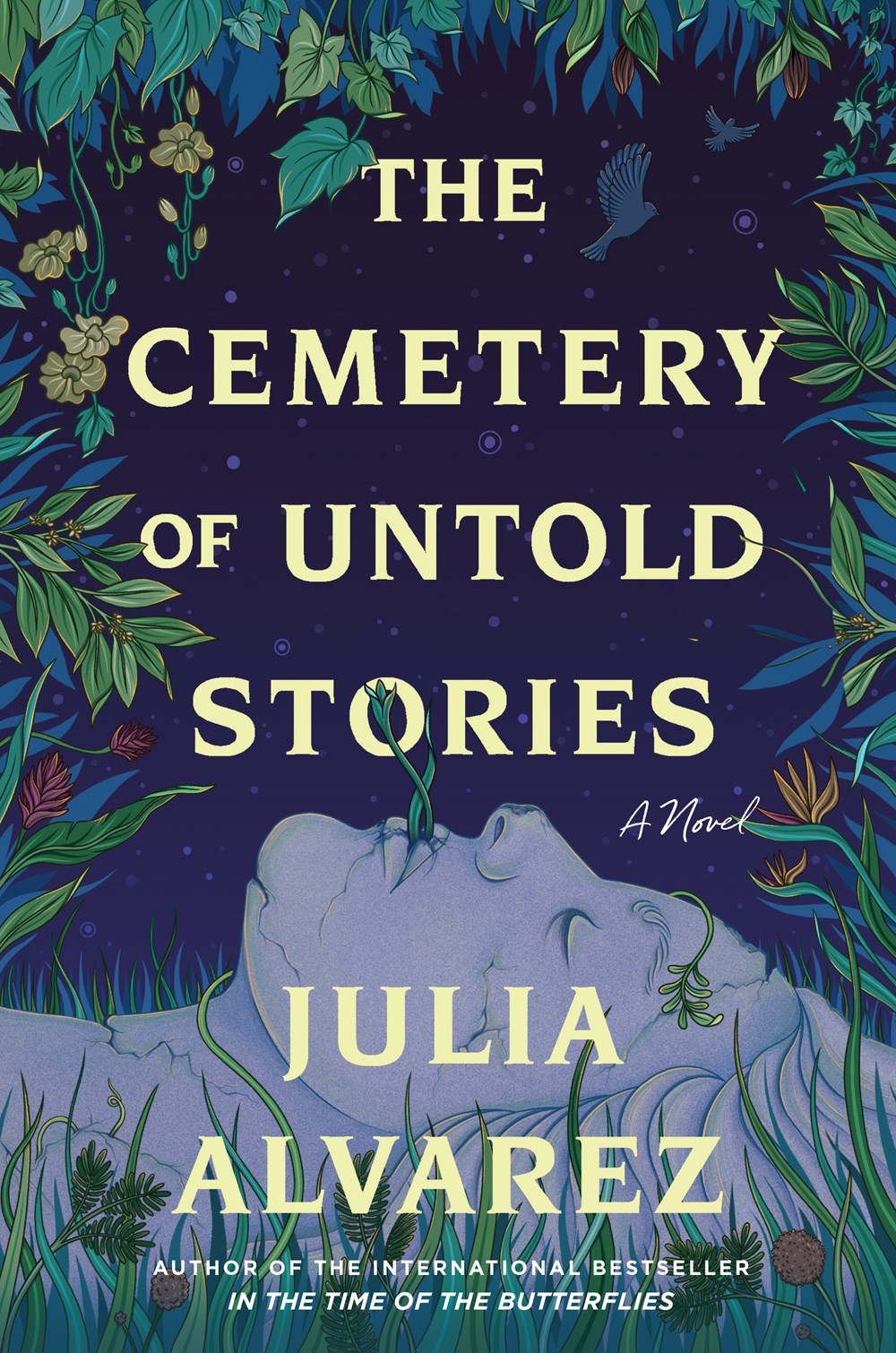
The Cemetery of Untold Stories
Literary icon Julia Alvarez returns with an inventive and emotional novel about storytelling itself that will be an instant classic.
Alma Cruz, the celebrated writer at the heart of The Cemetery of Untold Stories , doesn’t want to end up like her friend, a novelist who fought so long and hard to finish a book that it threatened her sanity. So when Alma inherits a small plot of land in the Dominican Republic, her homeland, she has the beautiful idea of turning it into a place to bury her untold stories—literally. She creates a graveyard for the manuscript drafts and revisions, and the characters whose lives she tried and failed to bring to life and who still haunt her.
Alma wants her characters to rest in peace. But they have other ideas, and the cemetery becomes a mysterious sanctuary for their true narratives. Filomena, a local woman hired as the groundskeeper, becomes a sympathetic listener as Alma’s characters unspool their secret tales. Among them: Bienvenida, the abandoned second wife of dictator Rafael Trujillo, consigned to oblivion by history, and Manuel Cruz, a doctor who fought in the Dominican underground and escaped to the United States.
The characters defy their author: they talk back to her and talk to one another behind her back, rewriting and revising themselves. The Cemetery of Untold Stories asks: Whose stories get to be told, and whose buried? Finally, Alma finds the meaning she and her characters yearn for in the everlasting vitality of stories.
Readers of Isabel Allende’s Violeta and Barbara Kingsolver’s Demon Copperhead will devour Alvarez’s extraordinary new novel about beauty and authenticity that reminds us the stories of our lives are never truly finished, even at the end.
Alma Cruz, the celebrated writer at the heart of The Cemetery of Untold Stories , doesn’t want to end up like her friend, a novelist who fought so long and hard to finish a book that it threatened her sanity. So when Alma inherits a small plot of land in the Dominican Republic, her homeland, she has the beautiful idea of turning it into a place to bury her untold stories—literally. She creates a graveyard for the manuscript drafts and revisions, and the characters whose lives she tried and failed to bring to life and who still haunt her.
Alma wants her characters to rest in peace. But they have other ideas, and the cemetery becomes a mysterious sanctuary for their true narratives. Filomena, a local woman hired as the groundskeeper, becomes a sympathetic listener as Alma’s characters unspool their secret tales. Among them: Bienvenida, the abandoned second wife of dictator Rafael Trujillo, consigned to oblivion by history, and Manuel Cruz, a doctor who fought in the Dominican underground and escaped to the United States.
The characters defy their author: they talk back to her and talk to one another behind her back, rewriting and revising themselves. The Cemetery of Untold Stories asks: Whose stories get to be told, and whose buried? Finally, Alma finds the meaning she and her characters yearn for in the everlasting vitality of stories.
Readers of Isabel Allende’s Violeta and Barbara Kingsolver’s Demon Copperhead will devour Alvarez’s extraordinary new novel about beauty and authenticity that reminds us the stories of our lives are never truly finished, even at the end.
243 pages, Hardcover
First published April 2, 2024
About the author
Julia Alvarez
98 books4,281 followersJulia Alvarez left the Dominican Republic for the United States in 1960 at the age of ten. She is the author of six novels, three books of nonfiction, three collections of poetry, and eleven books for children and young adults. She has taught and mentored writers in schools and communities across America and, until her retirement in 2016, was a writer-in-residence at Middlebury College. Her work has garnered wide recognition, including a Latina Leader Award in Literature from the Congressional Hispanic Caucus Institute, the Hispanic Heritage Award in Literature, the Woman of the Year by Latina magazine, and inclusion in the New York Public Library’s program “The Hand of the Poet: Original Manuscripts by 100 Masters, from John Donne to Julia Alvarez.” In the Time of the Butterflies, with over one million copies in print, was selected by the National Endowment for the Arts for its national Big Read program, and in 2013 President Obama awarded Alvarez the National Medal of Arts in recognition of her extraordinary storytelling.
Photo copyright by Brandon Cruz González
EL VOCERO DE PUERTO RICO
Photo copyright by Brandon Cruz González
EL VOCERO DE PUERTO RICO
Ratings & Reviews
Friends & Following
Create a free account to discover what your friends think of this book!
Community Reviews
Displaying 1 - 30 of 2,700 reviews

April 2, 2024
4.5⭐️
“She needed a place to bury her unfinished work, a space honoring all those characters who had never had the chance to tell their stories. She wanted to bring them home to their mother tongue and land.”
The daughter of Dominican immigrants, renowned Latin American novelist Alma Cruz, decides to relocate to the Dominican Republic after she retires from academia, much to the surprise of her sisters. Despite her successful career as a writer, she carries the burden of several unfinished and abandoned manuscripts that she has decides to lay to rest in a “cemetery” she builds on a piece of land inherited from her late father. Collaborating with a local artist, Alma plans to burn and inter the remains of her notes and manuscripts with artistically sculpted markers for each of her unfinished works. Visitors would be allowed at the cemetery of untold stories but only if they meet some very specific criteria.
“If a story is never told, where does it go?”
Two of the unfinished manuscripts, both of which had a special place in Alma’s heart, don’t burn and are buried as is – one of which was based on the stories shared by her father, Dr. Manuel Cruz, a Dominican immigrant who fled from the Trujillo regime; and the other inspired by the life of Bienvenida Inocencia Ricardo Martinez Trujillo, second wife of former Dominican dictator Rafael Trujillo. Alma employs Filomena, a lonely woman who has been visiting the cemetery as a groundskeeper. But Filomena does much more than just tend to the property. Capable of hearing the words floating around the cemetery, she lends a sympathetic ear to the interred characters who share their stories with her – stories that inspire her to reflect on her own life.
As the narrative progresses, we follow all of these characters and the history, people and places that have shaped their lives.
An ode to the power of stories, storytelling and orature, The Cemetery of Untold Stories by Julia Alvarez is an exquisitely penned character-driven novel that combines elements of historical fiction, magical realism and family drama. The narrative is presented from multiple perspectives across past and present timelines. As the four separate threads of the story converge and diverge, the narrative explores themes of family and sisterhood, the immigrant experience and how the stories of those who came before us are never truly lost and continue to influence the lives of those they left behind. I loved how the magical realism aspect of this story was executed and appreciated that the author did not resort to melodrama while describing intense emotional moments. Though there are moments where the narrative might come across as disjointed (the narrative does jump timelines a tad abruptly which takes a while to get used to), this does not detract from the overall reading experience. There were a few aspects and storylines that I wished had been developed further, but I was satisfied with how the author chose to bring all of the threads of the story together. With its fascinating premise, complex characters, rich historical context and powerful writing, I found this novel to be a compelling read.
I paired my reading with the audiobook narrated by Alma Cuervo for an engaging immersion reading experience. I should mention, however, that the narration is more in storytelling mode with minimal variation between character voices. While this itself did not bother me, I feel that given the structure of the novel, it might be difficult to follow the multiple tracks and timelines if one plans to rely solely on the audiobook. I would recommend pairing the book with the audio.
“Seems like everyone who lives has endured some sadness, sometimes buried so deep inside them, even they don’t know it’s there. And if you could hear other people’s stories all the time, what then? Would you understand them better? Would you forgive them?”
Many thanks to Algonquin Books for the digital review copy and RB Media for the ALC via NetGalley. All opinions expressed in this review are my own.
Connect with me! ✏ Instagram ✏ My Blog ✏ The StoryGraph
“She needed a place to bury her unfinished work, a space honoring all those characters who had never had the chance to tell their stories. She wanted to bring them home to their mother tongue and land.”
The daughter of Dominican immigrants, renowned Latin American novelist Alma Cruz, decides to relocate to the Dominican Republic after she retires from academia, much to the surprise of her sisters. Despite her successful career as a writer, she carries the burden of several unfinished and abandoned manuscripts that she has decides to lay to rest in a “cemetery” she builds on a piece of land inherited from her late father. Collaborating with a local artist, Alma plans to burn and inter the remains of her notes and manuscripts with artistically sculpted markers for each of her unfinished works. Visitors would be allowed at the cemetery of untold stories but only if they meet some very specific criteria.
“If a story is never told, where does it go?”
Two of the unfinished manuscripts, both of which had a special place in Alma’s heart, don’t burn and are buried as is – one of which was based on the stories shared by her father, Dr. Manuel Cruz, a Dominican immigrant who fled from the Trujillo regime; and the other inspired by the life of Bienvenida Inocencia Ricardo Martinez Trujillo, second wife of former Dominican dictator Rafael Trujillo. Alma employs Filomena, a lonely woman who has been visiting the cemetery as a groundskeeper. But Filomena does much more than just tend to the property. Capable of hearing the words floating around the cemetery, she lends a sympathetic ear to the interred characters who share their stories with her – stories that inspire her to reflect on her own life.
As the narrative progresses, we follow all of these characters and the history, people and places that have shaped their lives.
An ode to the power of stories, storytelling and orature, The Cemetery of Untold Stories by Julia Alvarez is an exquisitely penned character-driven novel that combines elements of historical fiction, magical realism and family drama. The narrative is presented from multiple perspectives across past and present timelines. As the four separate threads of the story converge and diverge, the narrative explores themes of family and sisterhood, the immigrant experience and how the stories of those who came before us are never truly lost and continue to influence the lives of those they left behind. I loved how the magical realism aspect of this story was executed and appreciated that the author did not resort to melodrama while describing intense emotional moments. Though there are moments where the narrative might come across as disjointed (the narrative does jump timelines a tad abruptly which takes a while to get used to), this does not detract from the overall reading experience. There were a few aspects and storylines that I wished had been developed further, but I was satisfied with how the author chose to bring all of the threads of the story together. With its fascinating premise, complex characters, rich historical context and powerful writing, I found this novel to be a compelling read.
I paired my reading with the audiobook narrated by Alma Cuervo for an engaging immersion reading experience. I should mention, however, that the narration is more in storytelling mode with minimal variation between character voices. While this itself did not bother me, I feel that given the structure of the novel, it might be difficult to follow the multiple tracks and timelines if one plans to rely solely on the audiobook. I would recommend pairing the book with the audio.
“Seems like everyone who lives has endured some sadness, sometimes buried so deep inside them, even they don’t know it’s there. And if you could hear other people’s stories all the time, what then? Would you understand them better? Would you forgive them?”
Many thanks to Algonquin Books for the digital review copy and RB Media for the ALC via NetGalley. All opinions expressed in this review are my own.
Connect with me! ✏ Instagram ✏ My Blog ✏ The StoryGraph
April 19, 2024
I'm not sure what I expected this to be. For a title as captivating as this, and a cover so lush and beautiful, this certainly fell flat. Before you go, "But, Mai! You constantly say you you don't hate your three-star reads." And I don't hate this. I appreciate what the author has done. I just didn't love it, or mesh with it.
This cast of characters is not likable. It took me quite some time to want to pick the book up, and when it did, I couldn't put parts of it down. I won't say I enjoyed those parts. I was horrified by the behavior of the featured family. Two of the sisters were particularly memorable, and one of their sons. The rest faded in the background.
📱 Thank you to NetGalley and Algonquin Books
This cast of characters is not likable. It took me quite some time to want to pick the book up, and when it did, I couldn't put parts of it down. I won't say I enjoyed those parts. I was horrified by the behavior of the featured family. Two of the sisters were particularly memorable, and one of their sons. The rest faded in the background.
📱 Thank you to NetGalley and Algonquin Books

March 27, 2024
You might say that the characters we read about in novels speak to us in one way or another each time we read a work of fiction. I’ve said any number of times that an author brings his or her characters to life, but Julia Alvarez has given that phrase a whole new meaning with a dose of magical realism that makes for such an enticing read. Alma, a writer is unable to fully tell the story of some characters she has been trying to write about for years. Nearing what she sees as the end of her writing career, she decides to move back to the Dominican Republic where she lived as a girl and bury the remnants of her stories in a “cemetery of untold stories” . However, two of her characters have ideas of their own and take over parts of the narrative to be sure their stories are told. What a clever mechanism!
They tell their stories to Filomena, who Alma hires as a caretaker . We learn Filomena’s story as well and get caught up in the drama of her family. Bienvenida Trujillo, the ex wife of the past dictator of Dominican Republic and Alma’s father Dr. Manuel Cruz are the two characters who speak to Filomena and to each other as well after the boxes containing drafts and notes of their stories have been buried. The combined story lines reflect a slice of Dominican history, complex family dynamics, and family secrets. It’s dark at times, funny at times, and thought provoking. It’s about love and family, aging and of course about storytelling, how people’s lives connect through our stories .
Julia Alvarez is a wonderful storyteller . I’ve read several of her novels and she never disappoints. Anyone interested in that slice of Dominican history should read her beautful novel In the Time of the Butterflies based on the lives of three real sisters . I have to be sure to get to her classic How the García Girls Lost Their Accents one of these days soon.
I received a copy of this book Algonquin Press through NetGalley.
They tell their stories to Filomena, who Alma hires as a caretaker . We learn Filomena’s story as well and get caught up in the drama of her family. Bienvenida Trujillo, the ex wife of the past dictator of Dominican Republic and Alma’s father Dr. Manuel Cruz are the two characters who speak to Filomena and to each other as well after the boxes containing drafts and notes of their stories have been buried. The combined story lines reflect a slice of Dominican history, complex family dynamics, and family secrets. It’s dark at times, funny at times, and thought provoking. It’s about love and family, aging and of course about storytelling, how people’s lives connect through our stories .
Julia Alvarez is a wonderful storyteller . I’ve read several of her novels and she never disappoints. Anyone interested in that slice of Dominican history should read her beautful novel In the Time of the Butterflies based on the lives of three real sisters . I have to be sure to get to her classic How the García Girls Lost Their Accents one of these days soon.
I received a copy of this book Algonquin Press through NetGalley.

July 1, 2024
This is Alma’s story – well, her story as a writer of a lot of unfinished manuscripts. What will she do with all her stories that she could not find an ending for? In her mind, the best solution was to purchase a plot of land and build a proper graveyard and give them a proper burial. (Hence: the title of the book!)
Thus, a most unusual story. And, the locals are up in arms trying to figure out what is going on with this neighbor. Of course, everyone loves a great author, but an author who is going to bury her words? Maybe there can be a festival for storytelling of tales untold that we all can participate in? (Some of the rantings of the neighbors!) Regardless, Alma’s own stories are going to find their place.
And, before we know it, readers are bombarded with a multitude of characters to keep up with as Alma intends to bury her stories. Are Alma’s stories coming to life on their own?
In many ways, for this reader, I felt confused. I wasn’t sure I was following where this story was going, or if I wanted to go along for the ride from Vermont to the Dominican Republic. Or even if I liked Alma. All I wanted was for the story to end.
But in all fairness, there was still something magical and witty and earnest and strange that made me continue to read it. Did that make me weird?
3.5 stars rounded up
Thus, a most unusual story. And, the locals are up in arms trying to figure out what is going on with this neighbor. Of course, everyone loves a great author, but an author who is going to bury her words? Maybe there can be a festival for storytelling of tales untold that we all can participate in? (Some of the rantings of the neighbors!) Regardless, Alma’s own stories are going to find their place.
And, before we know it, readers are bombarded with a multitude of characters to keep up with as Alma intends to bury her stories. Are Alma’s stories coming to life on their own?
In many ways, for this reader, I felt confused. I wasn’t sure I was following where this story was going, or if I wanted to go along for the ride from Vermont to the Dominican Republic. Or even if I liked Alma. All I wanted was for the story to end.
But in all fairness, there was still something magical and witty and earnest and strange that made me continue to read it. Did that make me weird?
3.5 stars rounded up

January 9, 2025
When the father of the acclaimed author Alma Cruz, known as her pen name Scheherazade, dies, he leaves her a dilapidated and worthless land in the Dominican Republic.
But what to do with all that land?
As she is getting older, Alma knows she won’t be able to write down all the stories that reside in her head; stories she had been unable to finish; stories about her father’s past; stories about Bienvenida, Trujillo's discarded wife; stories that deserve more than to be forgotten in some box.
What better way to say farewell to her untold stories than build a cemetery in her inherited land and bury them there, where they belong, in her own homeland where her roots are; where it all began.
Julia Alvarez is undeniably an excellent storyteller. The book was written in a ‘once upon a time’ style… like a fairytale.
The language was smooth and clear; the characters well sketched.
That said, the multiple viewpoints, the time change and the interwoven stories were often confusing; there were too many characters telling their stories that despite of their connection with one another, they felt disjointed and displaced.
Throughout reading, my feeling about the book constantly see-sawed from 3 to 5 stars and down and up again.
As I said, I loved the author’s way of weaving the story, mixing the history with fiction and will be reading her 'In the Time of the Butterflies' sometime soon.
But what to do with all that land?
As she is getting older, Alma knows she won’t be able to write down all the stories that reside in her head; stories she had been unable to finish; stories about her father’s past; stories about Bienvenida, Trujillo's discarded wife; stories that deserve more than to be forgotten in some box.
What better way to say farewell to her untold stories than build a cemetery in her inherited land and bury them there, where they belong, in her own homeland where her roots are; where it all began.
Julia Alvarez is undeniably an excellent storyteller. The book was written in a ‘once upon a time’ style… like a fairytale.
The language was smooth and clear; the characters well sketched.
That said, the multiple viewpoints, the time change and the interwoven stories were often confusing; there were too many characters telling their stories that despite of their connection with one another, they felt disjointed and displaced.
Throughout reading, my feeling about the book constantly see-sawed from 3 to 5 stars and down and up again.
As I said, I loved the author’s way of weaving the story, mixing the history with fiction and will be reading her 'In the Time of the Butterflies' sometime soon.

April 4, 2024
Thanks to NetGalley and Algonquin Books for access to this title. All opinions expressed are my own.
At times, it's not just the book covers that capture my attention. Once in a while, the title itself is enough to pique my interest completely. This particular book has an interesting concept where the author hides their untold stories, but the characters come to life and tell their stories through a stream-of-consciousness writing style. I read numerous glowing reviews of this novel and was excited to read it myself.
But I am going to be honest.
I didn't get it
I had high hopes for the literary fiction book I was reading, but unfortunately, I found myself disengaged. It felt like all the characters were on one side of the river while I was stranded on the other. As I progressed through the book, I found myself skimming through pages. If it weren't an advance review copy, I might have given up on it altogether.
All in all, I don't think it was the book for me as a reader.
Publication Date 02/04/24
Goodreads Review 04/04/24
#TheCemeteryofUntoldStories #NetGalley.
At times, it's not just the book covers that capture my attention. Once in a while, the title itself is enough to pique my interest completely. This particular book has an interesting concept where the author hides their untold stories, but the characters come to life and tell their stories through a stream-of-consciousness writing style. I read numerous glowing reviews of this novel and was excited to read it myself.
But I am going to be honest.
I didn't get it
I had high hopes for the literary fiction book I was reading, but unfortunately, I found myself disengaged. It felt like all the characters were on one side of the river while I was stranded on the other. As I progressed through the book, I found myself skimming through pages. If it weren't an advance review copy, I might have given up on it altogether.
All in all, I don't think it was the book for me as a reader.
Publication Date 02/04/24
Goodreads Review 04/04/24
#TheCemeteryofUntoldStories #NetGalley.
arc
August 28, 2023As a rabid bookworm, I love books about books and stories about stories. Throw in some magical realism and I'm yours. This is a lovely ode to the magic of stories and storytelling. I typically struggle with collections featuring an array of narrators or POVs as some are invariably stronger than others, but the stories brought to life here are interwoven in such a lovely way. This collection has beautiful prose, compelling voices, and comes together in a hypnotic, magical way.
April 13, 2024
A journey through time and imagination, where the past intertwines with the present in a dazzling display of literary prowess......…..
Book Information
The Cemetery of Untold Stories by Julia Alvarez is a 256-page work of fiction with a publication date of April 2, 2024. Thank you to Algonquin Books for providing me with an Advance Readers Copy for review.
Summary
Alma Cruz, a renowned writer, creates a cemetery in the Dominican Republic for her unfinished manuscripts and characters. However, her characters defy her, rewriting their narratives and prompting reflection on whose stories are told.
My Thoughts
In "The Cemetery of Untold Stories" by Julia Alvarez, readers are transported to a world where history intertwines with imagination in a mesmerizing blend of genres. Alvarez's prose is nothing short of enchanting, painting vivid landscapes that evoke a strong sense of place and atmosphere.
At its heart, the novel presents a unique concept reminiscent of a pet cemetery, but instead of pets, it's stories that find their final resting place. Each tale buried within the pages holds a piece of history, a fragment of culture, and a wealth of emotion waiting to be unearthed and ultimately, live a new life. With the precision of a master storyteller, Alvarez breathes life into each character, infusing the cemetery's soil with the echoes of their untold stories.
While some readers may find themselves enthralled by the rich tapestry of historical fiction, literary fiction, and magical realism woven throughout the narrative, I struggled with the intermittent use of Spanish without translation. While the Spanish adds authenticity and depth to the story, it can create a barrier for those who don't speak the language fluently.
The pacing of the book is deliberate, allowing readers to savor each moment as they journey through the interconnected stories. However, the abundance of characters and plotlines, along with frequent time and storyline jumps, left me feeling disoriented and struggling to keep track.
Despite Alvarez's masterful character development, connecting with the diverse cast proved challenging for me. While each character is impeccably crafted and imbued with depth, there's a sense of detachment that prevents a deeper emotional resonance.
Recommendation
Despite my challenges with immersion into the story, “The Cemetery of Untold Stories" is a good read that rewards patient readers with its exquisite prose, intricate storytelling, and thought-provoking themes. It's a book that lingers in the mind long after the final page is turned, leaving behind a haunting echo of the untold tales that shape our lives.
Rating
3 Beautiful Prose Stars
Book Information
The Cemetery of Untold Stories by Julia Alvarez is a 256-page work of fiction with a publication date of April 2, 2024. Thank you to Algonquin Books for providing me with an Advance Readers Copy for review.
Summary
Alma Cruz, a renowned writer, creates a cemetery in the Dominican Republic for her unfinished manuscripts and characters. However, her characters defy her, rewriting their narratives and prompting reflection on whose stories are told.
My Thoughts
In "The Cemetery of Untold Stories" by Julia Alvarez, readers are transported to a world where history intertwines with imagination in a mesmerizing blend of genres. Alvarez's prose is nothing short of enchanting, painting vivid landscapes that evoke a strong sense of place and atmosphere.
At its heart, the novel presents a unique concept reminiscent of a pet cemetery, but instead of pets, it's stories that find their final resting place. Each tale buried within the pages holds a piece of history, a fragment of culture, and a wealth of emotion waiting to be unearthed and ultimately, live a new life. With the precision of a master storyteller, Alvarez breathes life into each character, infusing the cemetery's soil with the echoes of their untold stories.
While some readers may find themselves enthralled by the rich tapestry of historical fiction, literary fiction, and magical realism woven throughout the narrative, I struggled with the intermittent use of Spanish without translation. While the Spanish adds authenticity and depth to the story, it can create a barrier for those who don't speak the language fluently.
The pacing of the book is deliberate, allowing readers to savor each moment as they journey through the interconnected stories. However, the abundance of characters and plotlines, along with frequent time and storyline jumps, left me feeling disoriented and struggling to keep track.
Despite Alvarez's masterful character development, connecting with the diverse cast proved challenging for me. While each character is impeccably crafted and imbued with depth, there's a sense of detachment that prevents a deeper emotional resonance.
Recommendation
Despite my challenges with immersion into the story, “The Cemetery of Untold Stories" is a good read that rewards patient readers with its exquisite prose, intricate storytelling, and thought-provoking themes. It's a book that lingers in the mind long after the final page is turned, leaving behind a haunting echo of the untold tales that shape our lives.
Rating
3 Beautiful Prose Stars

May 7, 2024
In “The Cemetery of Untold Stories” by literary icon Julia Alvarez, Alma Cruz is a successful yet burdened novelist who inherits a plot of land in the Dominican Republic. Instead of conventional use, Alma transforms this land into a cemetery for her unfinished manuscripts and the characters within them that never fully came to life. The novel’s concept is both innovative and deeply resonant, reflecting on the stories that define us and the ones we leave behind (and making it a hauntingly unique setting I wish were real). The story explores themes of storytelling, memory, and the power of unspoken histories through multiple timelines and character perspectives. As the characters narrate their hidden tales to Filomena, the cemetery's caretaker, they find a kind of peace and recognition that had previously eluded them.
As a Dominican, I appreciated the authentic reflections of our culture, subtly woven into the characters' actions and the broader narrative, reminiscent of Junot Diaz's storytelling. The rich, cruel history of the Dominican Republic is poignantly interlaced, intensifying the impact of characters' journeys. Twice I gasped out loud and had to put the book down because, after being connected with the humanity of the characters, they still shocked me with their choices.
Overall, “The Cemetery of Untold Stories" is a captivating piece that marries the allure of magical realism with the poignant depth of historical fiction. I bought a physical copy for my personal bookshelf after listening to the audiobook. Highly recommended.
Thanks to Netgalley, RB Media, Julia Alvarez, and Alma Cuervo for the advanced copy in exchange for an honest review.
As a Dominican, I appreciated the authentic reflections of our culture, subtly woven into the characters' actions and the broader narrative, reminiscent of Junot Diaz's storytelling. The rich, cruel history of the Dominican Republic is poignantly interlaced, intensifying the impact of characters' journeys. Twice I gasped out loud and had to put the book down because, after being connected with the humanity of the characters, they still shocked me with their choices.
Overall, “The Cemetery of Untold Stories" is a captivating piece that marries the allure of magical realism with the poignant depth of historical fiction. I bought a physical copy for my personal bookshelf after listening to the audiobook. Highly recommended.
Thanks to Netgalley, RB Media, Julia Alvarez, and Alma Cuervo for the advanced copy in exchange for an honest review.

September 17, 2024
3.5 stars, rounded up
The Cemetery of Untold Stories is another book that had a wonderful premise but only somewhat worked for me. Alma Cruz is a successful writer. But even successful writers have a ton of stories they could never quite finish. So, when she inherits a plot of land in her home country of the Dominican Republic, she creates an actual graveyard for all the unfinished manuscripts. And she hires Filomena as the caretaker. While Alma intends to put her characters to rest, instead, they want their stories told. And they tell them to Filomena.
Alvarez’s writing is beautiful. She gave me a great sense of time and place for each of the plotlines. The problem was that, as you might expect, there’s a disjointed feel to the book. We hear from two of these fictional characters. Beinvenida is the divorced wife of a dictator. But she hadn’t left him when she discovered what a horrendous character he was. No, he threw her over for a younger, livelier, fertile wife while she still remained in love with him. And then Alma tells the story of her father, a doctor who is forced to flee the DR during a failed rebellion and later commits adultery. It was hard to sympathize with either of these characters. And in between, we learn of Filomena’s life. To me, hers was the most interesting of the stories.
The book tackles a whole set of big themes - family, betrayal, whose stories get told, the power of stories.
The magical realism of the book worked well here, providing an interesting way for Alma’s characters to “come to life” and talk to Filomena and each other.
I listened to this and I think this is a book best read. Alma Cuervo was a decent narrator but because the story is told in the third person, she makes no attempts to differentiate the voices. It made for some confusion, at least for me.
The Cemetery of Untold Stories is another book that had a wonderful premise but only somewhat worked for me. Alma Cruz is a successful writer. But even successful writers have a ton of stories they could never quite finish. So, when she inherits a plot of land in her home country of the Dominican Republic, she creates an actual graveyard for all the unfinished manuscripts. And she hires Filomena as the caretaker. While Alma intends to put her characters to rest, instead, they want their stories told. And they tell them to Filomena.
Alvarez’s writing is beautiful. She gave me a great sense of time and place for each of the plotlines. The problem was that, as you might expect, there’s a disjointed feel to the book. We hear from two of these fictional characters. Beinvenida is the divorced wife of a dictator. But she hadn’t left him when she discovered what a horrendous character he was. No, he threw her over for a younger, livelier, fertile wife while she still remained in love with him. And then Alma tells the story of her father, a doctor who is forced to flee the DR during a failed rebellion and later commits adultery. It was hard to sympathize with either of these characters. And in between, we learn of Filomena’s life. To me, hers was the most interesting of the stories.
The book tackles a whole set of big themes - family, betrayal, whose stories get told, the power of stories.
The magical realism of the book worked well here, providing an interesting way for Alma’s characters to “come to life” and talk to Filomena and each other.
I listened to this and I think this is a book best read. Alma Cuervo was a decent narrator but because the story is told in the third person, she makes no attempts to differentiate the voices. It made for some confusion, at least for me.

October 5, 2025
Thoughts
The concept of this book is unique and intriguing, the title alone caught my eye. The story itself was beautifully written, full of layers and rich with culture. I haven't read anything by this author before this book and I genuinely think she gave the feeling of "characters speaking to us through novels" a different feel which for me is another reason as to why this book is unique, though I admit I wasn't quite sure what to expect from it ( yes I went in blindly) but it definitely delivered! However I will say that some parts felt repetitive but overall was a beautiful read and I'll definitely be coming back to this author in the future
Plot Summary
Dominican American writer Alma Cruz, weary of unfinished drafts, moves back to her homeland and creates a cemetery to bury her abandoned manuscripts. But the stories resist being silenced—especially those about her father and Bienvenida, a forgotten wife of dictator Trujillo. With the help of Filomena, a local caretaker who hears the buried voices, these untold histories rise to the surface. The novel blends memory and magic to explore creativity, legacy, and the power of giving silenced stories a place to be heard.
My Bookstagram
The concept of this book is unique and intriguing, the title alone caught my eye. The story itself was beautifully written, full of layers and rich with culture. I haven't read anything by this author before this book and I genuinely think she gave the feeling of "characters speaking to us through novels" a different feel which for me is another reason as to why this book is unique, though I admit I wasn't quite sure what to expect from it ( yes I went in blindly) but it definitely delivered! However I will say that some parts felt repetitive but overall was a beautiful read and I'll definitely be coming back to this author in the future
Plot Summary
Dominican American writer Alma Cruz, weary of unfinished drafts, moves back to her homeland and creates a cemetery to bury her abandoned manuscripts. But the stories resist being silenced—especially those about her father and Bienvenida, a forgotten wife of dictator Trujillo. With the help of Filomena, a local caretaker who hears the buried voices, these untold histories rise to the surface. The novel blends memory and magic to explore creativity, legacy, and the power of giving silenced stories a place to be heard.
My Bookstagram

May 19, 2024
I have been reading Julia Alvarez for as long as I can remember, probably since middle school. Recently my oldest daughter read ¡Yo! for the first time and told me she enjoyed it. Alvarez has always made me laugh, either with her authobiographical novels that put her on the literary map or with the nonfiction Once Upon a Quinceañera that is guaranteed to leave the reader in stitches. Her books are a cause for me to celebrate because until recently I knew I would be reading a selection that would end up in my year’s top ten list. Lately, the authors I grew up reading have entered into the later stages of their lives, and I have noticed that while they are still storytellers, their writing isn’t the same level of brilliance as it was at the pinnacle of their writing lives. With Alvarez’ last book, she merely restated the story of the García girls thirty years later; I was unimpressed. A few years later, Alvarez has come up with a unique story, about what to do with stories that did not make it into book form. Who would tell these stories, when, and where. Not Alvarez’ usual story, I decided to see if she was still writing at the level that I have come to savor.
Alma Cruz, who for all practical purposes is Yolanda García (red flag), is retiring from her forty year position as an English professor at a Vermont college. From outward appearances, it seems that Alvarez is regurgitating the same story yet again until she isn’t. Cruz decides to move back to the Dominican Republic much to the chagrin of her sisters who do everything in concert. It is dangerous, crime, robberies, etc. Cruz has inherited a parcel of land from parents’ estate and decides to use it as a cemetery for the stories she has written over the years that she could not creatively turn into book form. Her sisters are appalled, Americanas to the core, but Cruz takes the plunge and actually returns to her homeland, constructing a casita on the cemetery’s grounds in order to live out the rest of her days in seclusion from the writing rat race. Along the way, she creates a sisterhood who each have a story to tell, so Alma decides that in order to gain entry to the cemetery, one must tell a story into the intercom. If her psychologist sisters knew how she lived, they would have her committed.
While it is obvious that Alma Cruz is Yolanda García who is Julia Alvarez in yet another character, the cemetery views this story from a new angle. In order to appease the sisters, Cruz hires a caretaker, a vecina named Filomena who is haunted by a lifetime of her own unfinished stories. A country girl turned maid, Filomena tends to the grave markers with loving care and encourages Cruz to make the cemetery into a bird sanctuary as well. While cleaning a snow globe, the marker guarding the story of Manuel Cruz, Alma’s father, and a sculpture of a woman’s head stitched together with words, the stories begin to speak to her. Filomena at this point in her life is both illiterate and pious and would never tell these untold stories to the masses. She becomes the guardian of the story of Bienvenida Inocencia Trujillo, the ex-wife of the dictator, and learns her side of the story. This story intertwines with that of Manuel Cruz, and in their afterlife as both real people and characters, the protagonists become friends. If only Alvarez had actually written a story about Bienvenida Trujillo rather than the same one many times over about her family. This would have been captivating to read. Employing magical realism that only a Latinx writer can, something missing from her earlier books, Alvarez brings these untold stories to life.
I laud Julia Alvarez for reinventing herself at this stage of her career. Yes, she touches on her own life and the dementia plaguing nearly fifty percent of the Dominicano population - all the marriages between primos; however, rather than telling a story about herself in vignette form that made her a household name, Alvarez introduces new characters and their stories. Filomena’s story is a typical one but has largely been left untold. She and her sister were taken from the countryside to be maids in an upper class home in the capital. The son Tesoro makes Perla- the sister- his mistress and marries her so that the child is not a bastard. The couple move to Nueva York and become citizens but Pepito stays and is raised by Filomena, and the two develop a bond as strong as that of mother and son. In the end Pepito rejoins his parents and now younger brother in New York and eventually he becomes an accomplished writer in his own right. Alvarez has all the stories come to a nexus, discussing life as a professor in that Pepito has taken up the torch for the new generation of Latinx writers as he has been teaching the work of Alma Cruz in his classes for years. Now his aunt is Cruz’ employee. In some circles it is said that things were divinely ordained.
While the writing in Cemetery of Untold Stories is not as crisp as her earlier works, it presents the same story while also introducing new characters and stories to Alvarez’ body of work. In her nonfiction, Alvarez has noted that writers need to act as padrinos and madrinas to younger generations of writers. In this story, Alma Cruz ends up mentoring Pepito late in her life. In real life, Alavrez has attempted to pass the torch to younger generations of Domincan writers, most notably Angie Cruz, who she has lauded as young reader with an older soul. If writers can mentor each other in this regard, stories will get told although from an entirely different voice. Alvarez also touches here that writers while their brains are sharpest write the most and do end up in decline toward the end their lives. She realizes that she still has stories to tell and will attempt to maximize those she still has in her with the rest of her writing life. Hopefully, whatever stories she still have to tell are as refreshing and original as this one.
4 stars
Alma Cruz, who for all practical purposes is Yolanda García (red flag), is retiring from her forty year position as an English professor at a Vermont college. From outward appearances, it seems that Alvarez is regurgitating the same story yet again until she isn’t. Cruz decides to move back to the Dominican Republic much to the chagrin of her sisters who do everything in concert. It is dangerous, crime, robberies, etc. Cruz has inherited a parcel of land from parents’ estate and decides to use it as a cemetery for the stories she has written over the years that she could not creatively turn into book form. Her sisters are appalled, Americanas to the core, but Cruz takes the plunge and actually returns to her homeland, constructing a casita on the cemetery’s grounds in order to live out the rest of her days in seclusion from the writing rat race. Along the way, she creates a sisterhood who each have a story to tell, so Alma decides that in order to gain entry to the cemetery, one must tell a story into the intercom. If her psychologist sisters knew how she lived, they would have her committed.
While it is obvious that Alma Cruz is Yolanda García who is Julia Alvarez in yet another character, the cemetery views this story from a new angle. In order to appease the sisters, Cruz hires a caretaker, a vecina named Filomena who is haunted by a lifetime of her own unfinished stories. A country girl turned maid, Filomena tends to the grave markers with loving care and encourages Cruz to make the cemetery into a bird sanctuary as well. While cleaning a snow globe, the marker guarding the story of Manuel Cruz, Alma’s father, and a sculpture of a woman’s head stitched together with words, the stories begin to speak to her. Filomena at this point in her life is both illiterate and pious and would never tell these untold stories to the masses. She becomes the guardian of the story of Bienvenida Inocencia Trujillo, the ex-wife of the dictator, and learns her side of the story. This story intertwines with that of Manuel Cruz, and in their afterlife as both real people and characters, the protagonists become friends. If only Alvarez had actually written a story about Bienvenida Trujillo rather than the same one many times over about her family. This would have been captivating to read. Employing magical realism that only a Latinx writer can, something missing from her earlier books, Alvarez brings these untold stories to life.
I laud Julia Alvarez for reinventing herself at this stage of her career. Yes, she touches on her own life and the dementia plaguing nearly fifty percent of the Dominicano population - all the marriages between primos; however, rather than telling a story about herself in vignette form that made her a household name, Alvarez introduces new characters and their stories. Filomena’s story is a typical one but has largely been left untold. She and her sister were taken from the countryside to be maids in an upper class home in the capital. The son Tesoro makes Perla- the sister- his mistress and marries her so that the child is not a bastard. The couple move to Nueva York and become citizens but Pepito stays and is raised by Filomena, and the two develop a bond as strong as that of mother and son. In the end Pepito rejoins his parents and now younger brother in New York and eventually he becomes an accomplished writer in his own right. Alvarez has all the stories come to a nexus, discussing life as a professor in that Pepito has taken up the torch for the new generation of Latinx writers as he has been teaching the work of Alma Cruz in his classes for years. Now his aunt is Cruz’ employee. In some circles it is said that things were divinely ordained.
While the writing in Cemetery of Untold Stories is not as crisp as her earlier works, it presents the same story while also introducing new characters and stories to Alvarez’ body of work. In her nonfiction, Alvarez has noted that writers need to act as padrinos and madrinas to younger generations of writers. In this story, Alma Cruz ends up mentoring Pepito late in her life. In real life, Alavrez has attempted to pass the torch to younger generations of Domincan writers, most notably Angie Cruz, who she has lauded as young reader with an older soul. If writers can mentor each other in this regard, stories will get told although from an entirely different voice. Alvarez also touches here that writers while their brains are sharpest write the most and do end up in decline toward the end their lives. She realizes that she still has stories to tell and will attempt to maximize those she still has in her with the rest of her writing life. Hopefully, whatever stories she still have to tell are as refreshing and original as this one.
4 stars

March 31, 2024
Julia Álavrez never disappoints. Never. Her writing has a gentleness to it that can temporarily make us feel it's not doing much. This is a mistake. Word by word, idea by idea, she takes us to fantastic places. And she doesn't do this with a lot of flash and bang—or at least not the kind of flash and bang that shake the house and put everyone on edge. Instead we readers find ourselves realizing there is so much going on here in this novel that pretends it's not saying much at all.
OK, that's not true of all her work. In the Time of the Butterflies definitely has flash and bang—and hilarity and righteous anger and justice and injustice and so much more. But her more recent work is just as powerful in a way that sneaks up on us. Case in point: The Cemetery of Untold Stories. The premise here (if we assume that in some ways what writers write about is themselves, which, of course, we. are. never. supposed. to. do) is almost self-deprecating. A writer finds herself growing older surrounded by a growing body of unfinished works: stories and novels that she wanted to write, needed to write, but that quietly refused to be written.
So what can this writer do? She can move back to her home country, create a graveyard with room for each unfinished story, and allow the stories to fall into a kind of sleep in which they interact with one another.
Reading The Cemetery of Untold Stories is like looking into one of those multi-paned dressing room mirrors, the kind in which, depending on how we angle the different panes in relation to one another show us multiple images and multiples of multiple images. And just like the images in those mirrors, no matter how complex the story gets, its parts remain alongside one another. We think we're taking baby steps, moving forward in small increments; then, at some point we realize we've been given seven-league boots to wear and are traveling distances we couldn't have imagined from our starting place.
Read this book. Respect its pace, but don't be fooled. The journey is magical.
I received a free electronic review copy of this title from the publisher via NetGalley; the opinions are my own.
OK, that's not true of all her work. In the Time of the Butterflies definitely has flash and bang—and hilarity and righteous anger and justice and injustice and so much more. But her more recent work is just as powerful in a way that sneaks up on us. Case in point: The Cemetery of Untold Stories. The premise here (if we assume that in some ways what writers write about is themselves, which, of course, we. are. never. supposed. to. do) is almost self-deprecating. A writer finds herself growing older surrounded by a growing body of unfinished works: stories and novels that she wanted to write, needed to write, but that quietly refused to be written.
So what can this writer do? She can move back to her home country, create a graveyard with room for each unfinished story, and allow the stories to fall into a kind of sleep in which they interact with one another.
Reading The Cemetery of Untold Stories is like looking into one of those multi-paned dressing room mirrors, the kind in which, depending on how we angle the different panes in relation to one another show us multiple images and multiples of multiple images. And just like the images in those mirrors, no matter how complex the story gets, its parts remain alongside one another. We think we're taking baby steps, moving forward in small increments; then, at some point we realize we've been given seven-league boots to wear and are traveling distances we couldn't have imagined from our starting place.
Read this book. Respect its pace, but don't be fooled. The journey is magical.
I received a free electronic review copy of this title from the publisher via NetGalley; the opinions are my own.

April 15, 2024
GUYS. I TRIED SO HARD. I wanted to love this book. The idea of it is SO intriguing. But after three weeks of getting absolutely no where with this audiobook I’m giving up. I’m CONSTANTLY lost. I’ve listened to the same chapter several times and I still don’t know exactly what’s going on, how I got there, or where this it’s trying to lead me. I liked the prose itself. Julia Alvarez is a good writer, that I can say with confidence. I just truly cannot get the hang of this one. I hope if anyone else has gotten a chance to read it, their experience has been better lol. I’ve saw lots of other reviews on NetGalley with others also struggling to comprehend what’s going on in this audiobook. Maybe eventually I’ll give this one a shot as a physical book, but that won’t be happening anytime soon 🥴
Thanks to NetGalley and RB Media for the ARC copy.
Thanks to NetGalley and RB Media for the ARC copy.

May 1, 2024
The premise sounded interesting - a cemetery in Dominican Republic to bury unpublished unfinished manuscripts - the actual execution went in a different direction than I anticipated. I liked that it was about an older diaspora female writer Alma Cruz who had already achieved success in the literary field. Vaguely I thought she would eventually finish writing the unfinished stories that bothered her the most, that of her father's Manuel Cruz and the divorced wife Bienvenida of the country's dictator Trujillo.
Early on the story, Alma has a famous writer friend who turns up her nose at her reading audience who say they don't understand her books and her retort is she is not writing for white people. As well, there is a persistent train of thought in Alma that writers vampirize stories from people's lives. I wonder if there is a meta aspect: firstly, Spanish words, dialogue and proverbs pepper the book throughout* and secondly, some of the 'silenced' and misunderstood who do eventually tell their stories like Bienvenida fret when her story is about to go to print. I would have liked more elaboration about this: who has the right to tell another's story, especially one that is full of trauma? Even in fictional form, does it violate the personal privacy of the person? Do they wish for their stories to be told? Are writers continually taking bits of others' lives to put in their writing?
One of the things that bothered me the most is the sexism and casual acceptance of infidelity. Wives gaining weight in middle age is written as a natural justification for cheating on them with younger women. This is in the thought process of even supposedly the 'good' son character Pepito, who thinks to himself thank goodness mom is 'clueless' about dad's cheating and that she has 'really let herself go.' Manuel Cruz moans and groans to himself that he has been neglected by his wife who is in demand giving talks around the world, he goes after the cleaning lady who is in shape and finds it endearing that she is illiterate. Yet the book regards him from a sympathetic angle in that he has forced himself to be silent with his daughters and wife.
In my humble opinion, not enough attention was placed upon the damage and harm inflicted upon the family with cheating. The scene where This is also the point that marked a significant change in direction and feel in the novel, turning it into a drama-filled telenovela. It also made her who had wasted decades of her life with this wastrel, into someone plagued with guilt and remorse, who felt she is the one who should be punished. Just felt like a really odd authorial choice.
A lot of the female characters who have suffered seem determined to be martyrs to the nth degree.
I have the impression that Julia Alvarez wished to present DR immigrants in the US in the best possible light, understandable given the racism and vilification they've been subjected to. Sometimes, however, it doesn't quite jive with the character composite. Tesoro in the DR is presented as a spoilt selfish lazy guy, ostensibly with low morals as he tricks two countryside girls to his house to work as maids and sex on the side. In the United States, he is mentioned as one of the 'hardworking immigrants.' Did he have a personality transplant?
This is my main conundrum with this novel. Characters I am supposed to sympathize with or like, I am quite turned off by. A minor character like Odette, for instance, she sounds like a mini dictator in training. Pepito especially with his lack of allegiance to his mother and non-understanding of the difficulties she went through. I also can't believe
Overall, this was a captivating read. I liked looking up all the Spanish proverbs and words. Alma's sisters were a fun riotous group. Alma herself didn't feature very strongly and faded away. Brava is a cool friend to have! The emphasis on storytelling and the circular nature of intertwined stories is well done. I wasn't expecting Alvarez to 'explain' DR's history and culture. The Haitian massacre requires its own book and author.
3.5 ⭐️
Early on the story, Alma has a famous writer friend who turns up her nose at her reading audience who say they don't understand her books and her retort is she is not writing for white people. As well, there is a persistent train of thought in Alma that writers vampirize stories from people's lives. I wonder if there is a meta aspect: firstly, Spanish words, dialogue and proverbs pepper the book throughout* and secondly, some of the 'silenced' and misunderstood who do eventually tell their stories like Bienvenida fret when her story is about to go to print. I would have liked more elaboration about this: who has the right to tell another's story, especially one that is full of trauma? Even in fictional form, does it violate the personal privacy of the person? Do they wish for their stories to be told? Are writers continually taking bits of others' lives to put in their writing?
One of the things that bothered me the most is the sexism and casual acceptance of infidelity. Wives gaining weight in middle age is written as a natural justification for cheating on them with younger women. This is in the thought process of even supposedly the 'good' son character Pepito, who thinks to himself thank goodness mom is 'clueless' about dad's cheating and that she has 'really let herself go.' Manuel Cruz moans and groans to himself that he has been neglected by his wife who is in demand giving talks around the world, he goes after the cleaning lady who is in shape and finds it endearing that she is illiterate. Yet the book regards him from a sympathetic angle in that he has forced himself to be silent with his daughters and wife.
In my humble opinion, not enough attention was placed upon the damage and harm inflicted upon the family with cheating. The scene where This is also the point that marked a significant change in direction and feel in the novel, turning it into a drama-filled telenovela. It also made her who had wasted decades of her life with this wastrel, into someone plagued with guilt and remorse, who felt she is the one who should be punished. Just felt like a really odd authorial choice.
A lot of the female characters who have suffered seem determined to be martyrs to the nth degree.
I have the impression that Julia Alvarez wished to present DR immigrants in the US in the best possible light, understandable given the racism and vilification they've been subjected to. Sometimes, however, it doesn't quite jive with the character composite. Tesoro in the DR is presented as a spoilt selfish lazy guy, ostensibly with low morals as he tricks two countryside girls to his house to work as maids and sex on the side. In the United States, he is mentioned as one of the 'hardworking immigrants.' Did he have a personality transplant?
This is my main conundrum with this novel. Characters I am supposed to sympathize with or like, I am quite turned off by. A minor character like Odette, for instance, she sounds like a mini dictator in training. Pepito especially with his lack of allegiance to his mother and non-understanding of the difficulties she went through. I also can't believe
Overall, this was a captivating read. I liked looking up all the Spanish proverbs and words. Alma's sisters were a fun riotous group. Alma herself didn't feature very strongly and faded away. Brava is a cool friend to have! The emphasis on storytelling and the circular nature of intertwined stories is well done. I wasn't expecting Alvarez to 'explain' DR's history and culture. The Haitian massacre requires its own book and author.
3.5 ⭐️
This entire review has been hidden because of spoilers.

April 27, 2024
With its focus on writing, the first chapter of The Cemetery of Untold Stories hooked me and I was curious to see how the title idea would play out.
Alma is a writer living in NYC and when she inherits land in the Dominican Republic, she decides to return home and turn it into a cemetery to bury her untold stories. Alma hires Filomena, a local woman, to be the groundskeeper. Alma wants the characters to rest in peace but they have other ideas of their own and Filomena, who is facing her own personal challenges, is a dutiful listener.
I enjoyed Alma’s story the most of the many included in this book, and as my interest in the others began to wane some, Alvarez brought it all back together. The Cemetery of Untold Stories is my second book by Alvarez and her talent as a writer is clear.
Alma is a writer living in NYC and when she inherits land in the Dominican Republic, she decides to return home and turn it into a cemetery to bury her untold stories. Alma hires Filomena, a local woman, to be the groundskeeper. Alma wants the characters to rest in peace but they have other ideas of their own and Filomena, who is facing her own personal challenges, is a dutiful listener.
I enjoyed Alma’s story the most of the many included in this book, and as my interest in the others began to wane some, Alvarez brought it all back together. The Cemetery of Untold Stories is my second book by Alvarez and her talent as a writer is clear.
April 30, 2024
Audiobook (9 hours) narrated by Alma Cuervo.
Alma Cuervo does a decent job narrating this novel.
The audio quality is mostly high without distortion or erroneous noise. There are a couple of places where the quality of the audio audibly changes for a few minutes, as well as a couple of obvious edits.
I found a good listening range to be from 1x to 2.65x speed.
The Cemetery of Untold Stories has a very interesting synopsis that immediately attracted me to the book. Also goodreads has a quote at the bottom of their summary that states:
"Readers of Isabel Allende’s Violeta and Barbara Kingsolver’s Demon Copperhead will devour Alvarez’s extraordinary new novel about beauty and authenticity that reminds us the stories of our lives are never truly finished, even at the end."/quote>
I absolutely loved Demon Copperhead.
The Cemetery of Untold Stories is absolutely nothing like Demon Copperhead I am completely mind boggled on who, what, when, where, or why anyone would relate these two titles, other than they are both books, and they both have words.
I found the early part of the novel to be slow and just not my desired style of novel, as nearly the entire first half of the book is someone telling me a story rather than the novel being about a story. If that doesn't make sense, it's a difference of me watching a play or someone watching who is a part of the production sitting next to me and telling me about the play. In other words, Alma just talks about her life as if she lived it and is telling a friend about how it went, instead of us getting to ride along through her life story.
At some points we get off the general narrative and get to peek in on the lives of some of the characters. There is a bit of flip flopping between stories, which I see in some of the reviews was confusing to some readers, and I can understand why someone might be confused if they think that this is a single story about one person, instead of peeking in on the stories of the characters within the story. It could be clearer, you really have to realize that this is in the magical realism genre and we are listening to Alma's created characters come to life.
The characters stories are interesting, but honestly I would rather read a book about any of these stories that Alma wrote, than read this one. It sounded good on paper, and if it was delivered more in a short story type of format it may have been more enjoyable, but as it stood, it was some decent stories in the middle of a lot of jibber jabber.
Some may be completely fine with the delivery, but something is up because my local library prepared by picking up a lot of copies, and I originally had a long hold time and all of a sudden my hold came up and all but 2 copies are on the shelf waiting to be read. This is really unusual for a new book that came out less than a month ago.
There is some entertainment value, so if it sounds good to you I would borrow a copy, but personally for me it's a:
Not Recommended.
Alma Cuervo does a decent job narrating this novel.
The audio quality is mostly high without distortion or erroneous noise. There are a couple of places where the quality of the audio audibly changes for a few minutes, as well as a couple of obvious edits.
I found a good listening range to be from 1x to 2.65x speed.
The Cemetery of Untold Stories has a very interesting synopsis that immediately attracted me to the book. Also goodreads has a quote at the bottom of their summary that states:
"Readers of Isabel Allende’s Violeta and Barbara Kingsolver’s Demon Copperhead will devour Alvarez’s extraordinary new novel about beauty and authenticity that reminds us the stories of our lives are never truly finished, even at the end."/quote>
I absolutely loved Demon Copperhead.
The Cemetery of Untold Stories is absolutely nothing like Demon Copperhead I am completely mind boggled on who, what, when, where, or why anyone would relate these two titles, other than they are both books, and they both have words.
I found the early part of the novel to be slow and just not my desired style of novel, as nearly the entire first half of the book is someone telling me a story rather than the novel being about a story. If that doesn't make sense, it's a difference of me watching a play or someone watching who is a part of the production sitting next to me and telling me about the play. In other words, Alma just talks about her life as if she lived it and is telling a friend about how it went, instead of us getting to ride along through her life story.
At some points we get off the general narrative and get to peek in on the lives of some of the characters. There is a bit of flip flopping between stories, which I see in some of the reviews was confusing to some readers, and I can understand why someone might be confused if they think that this is a single story about one person, instead of peeking in on the stories of the characters within the story. It could be clearer, you really have to realize that this is in the magical realism genre and we are listening to Alma's created characters come to life.
The characters stories are interesting, but honestly I would rather read a book about any of these stories that Alma wrote, than read this one. It sounded good on paper, and if it was delivered more in a short story type of format it may have been more enjoyable, but as it stood, it was some decent stories in the middle of a lot of jibber jabber.
Some may be completely fine with the delivery, but something is up because my local library prepared by picking up a lot of copies, and I originally had a long hold time and all of a sudden my hold came up and all but 2 copies are on the shelf waiting to be read. This is really unusual for a new book that came out less than a month ago.
There is some entertainment value, so if it sounds good to you I would borrow a copy, but personally for me it's a:
Not Recommended.

December 11, 2023
“She needed a place to bury her unfinished work, a space honoring all those characters who had never had a chance to tell their stories.”
Those of us who write know what it’s like to carry around inside of us the voices of characters who want to be heard but are abandoned somewhere along the line. Even those who would never consider themselves to be writers often have a story to tell. Yet, too often, people don’t believe in themselves and instead narrate some predictable, hackneyed plot copied from a sitcom.
For all those people who have a story to tell – and that, Julia Alverez suggests, is all of us – here is a book that will encourage us to excavate stories that are begging to be told.
I can’t help but feel that this book is personal for the author. Julia Alverez’s literary oeuvre has been defined through the years by her vivid characters, strong portrayal of sisterhood, and sharp insights into human nature. The author has been quoted as saying that stories have the ability to transform, encourage empathy, spur the imagination, and reveal our full humanity. Her character, Alma, is also a writer who hails from the Dominican Republic and whose works have found their way into the mainstream of American Literature. Alma, like the author, is now a woman in her 70s who wishes to honor the stories her characters tell and put them to rest.
After inheriting an unwanted piece of land in her home country, Alma hires a local woman named Filomena (her name means “friend of strength”) to maintain the place and listen to stories that have been buried with their creators. She is a conduit of sorts, revealing the poignant and often heartbreaking story of Bienvenida, the cast-off second wife of the infamous dictator Rafael Trujillo, and also the story of Manual Cruz, a doctor whose tale is ultimately one of betrayal. Filomena’s own colorful and compelling story also weaves a fascinating tale.
This emotionally engaging novel inspires each of us to embrace our own Scheherazade and understand how powerful our stories can be. I am so pleased to be an early reader and am grateful to Algonquin Books for an advance copy in exchange for an honest review.

September 19, 2023
When Alma (Spanish word for "soul") and her sisters inherit land in the Dominican Republic she chooses the largest but most rural and abandoned area to create a cemetery. Alma has a room filled with untold and unfinished stories and she plans to bring the stories there. Her thought is this will free her from these untold characters and plots and save her from potentially losing her mind like a friend who finally created her magnum opus.
But the characters of the stories have different plans! Bienvenida, a forgotten second wife begins to tell her story to the local groundskeeper. Alvarez seamlessly weaves in these "untold and unfinished tales"
and before long you forget who is the protagonist of this bewitching tale
I am not the biggest fan of magical realism but this story was just right and I loved the idea of both Alma Cruz and Alvarez struggling to say goodbye to snippets and ideas of stories they had in mind!
#algonquin #Thecemeteryofuntoldstories #juliaalvarez
But the characters of the stories have different plans! Bienvenida, a forgotten second wife begins to tell her story to the local groundskeeper. Alvarez seamlessly weaves in these "untold and unfinished tales"
and before long you forget who is the protagonist of this bewitching tale
I am not the biggest fan of magical realism but this story was just right and I loved the idea of both Alma Cruz and Alvarez struggling to say goodbye to snippets and ideas of stories they had in mind!
#algonquin #Thecemeteryofuntoldstories #juliaalvarez

October 4, 2024
Alma Cruz is retiring from her university position, but she still has boxes of rough drafts of stories that she could never finish. She decides to bury boxes of unfinished manuscripts in a cemetery she designs in the Dominican Republic. However, some characters refuse to be quieted and they tell their stories to the cemetery's caretaker, Filomena.
There are four main stories that run through the book, and they all have some aging characters. Two stories are about living characters--Alma and her sisters, and Filomena and her relatives. The two main deceased characters are Bionvenida, an ex-wife of Dominican dictator Rafael Trujillo, and Manuel Cruz, a Dominican doctor who immigrated to the United States. Some characters never reveal the whole truth to their families or to the author who is writing their story. A different author might imagine a totally different ending to a character's untold story.
The stories have a good sense of place as the book tells of their lives in the Dominican Republic and New York City. The author uses many Spanish phrases which gives a sense of authenticity to the characters' speech. A reader does not have to speak Spanish since the book is written in a way that you can get a sense of what is being said. Like many Latin American writers, magical realism is an important component of Julia Alvarez's writing.
The untold stories are about family, passion, aging, grief, immigration, and politics. While everything came together in the end, the first half of the book sometimes felt disjointed as it shifted from one story to another, each with many characters. I did admire author Julia Alvarez's creativity and felt that she is probably at a similar point in her life--an older Dominican-American author with many untold stories. 3.5 stars, rounded up to 4 stars.
There are four main stories that run through the book, and they all have some aging characters. Two stories are about living characters--Alma and her sisters, and Filomena and her relatives. The two main deceased characters are Bionvenida, an ex-wife of Dominican dictator Rafael Trujillo, and Manuel Cruz, a Dominican doctor who immigrated to the United States. Some characters never reveal the whole truth to their families or to the author who is writing their story. A different author might imagine a totally different ending to a character's untold story.
The stories have a good sense of place as the book tells of their lives in the Dominican Republic and New York City. The author uses many Spanish phrases which gives a sense of authenticity to the characters' speech. A reader does not have to speak Spanish since the book is written in a way that you can get a sense of what is being said. Like many Latin American writers, magical realism is an important component of Julia Alvarez's writing.
The untold stories are about family, passion, aging, grief, immigration, and politics. While everything came together in the end, the first half of the book sometimes felt disjointed as it shifted from one story to another, each with many characters. I did admire author Julia Alvarez's creativity and felt that she is probably at a similar point in her life--an older Dominican-American author with many untold stories. 3.5 stars, rounded up to 4 stars.

May 29, 2024
“Thought-provoking and powerful, ‘The Cemetery of Untold Stories’ is a balancing act of the everyday and the magical, a blend of history and cuento. Through imperfect characters longing for love and fighting against el olvido, we are reminded that stories have the power to bring us together.”———JACQUIRA DIAZ, author of Ordinary Girls
Alma Cruz, a professor of literature and a celebrated writer, is at the heart of the novel, The Cemetery of Untold Stories by Julia Alvarez, acclaimed poet, novelist and essayist. Alma Cruz, remembering her thirty-year friendship with a writer who was haunted over her lifetime by the one story that would not be hurried, one that possessed her, in spite of her many literary achievements and ultimately driving her to madness. On the eve of her retirement as Alma Cruz is packing up her office in Vermont, she is struck by the numerous boxes of her unfinished manuscripts and the many voices still unheard. But Alma has an idea to return to her homeland, the Dominican Republic, when she inherits a small plot of land. It is here that she will create a cemetery on her land to literally bury all of her untold stories. Alma creates a graveyard for all of her literary manuscripts filled with the characters that she was unable to bring to life, still haunting her with their voices.
“To close a story, the old people back home would utter a chant. Colorin colorado, este cuento se ha acabado. The tale is done. Release the duende to the wind. But how to exorcise a story that had never been told.”
“A sign goes up on the wall at the main gate. EL CEMENTERIO DE LOS NUNCA CONTADOS. A cemetery for untold stories.”
The Cemetery of Untold Stories is a powerful and literal magical tale about an older artist haunted by her own creativity. The lyrical prose is beautiful as one ponders whose stories get to be told, and who’s buried. And the tales that are told by the many characters will keep one entertained as we see the vitality of the stories as we are reminded that the narratives of our lives are never finished. Magical and multifaceted, this lovely novel with the overarching themes of creativity, culture and aging was a magnificent book.
“But Alma has seen enough. She is done believing she can unearth the mysteries of another’s heart. No less her father’s. Whatever stories Manuel Cruz refused to tell, it’s not for Schherazade to resurrect them. There are borders even Joan Didion would not cross. The untold is sacred ground. Whatever stories are buried there should be left alone. It’s called ‘the afterlife’ for a reason. Her turn will come soon enough.”

September 12, 2024
Rating: 2.5 stars
I initially borrowed the audiobook from the library. However, the odd writing style/narration makes it hard to differentiate what is a actual dialogue and what is inner/thought dialogue, and also whose story is being told, since there are stories within stories. This confusion didn't improve much on reading the text. This is one of those novels that doesn't make use of punctuation (and makes my hand itch to whip out the red pen!). Punctuation was invented to help clarify walls of text, so not bothering to use it is not helpful to the reader. I hope no one ever decides to leave out the spaces between words in an attempt to be "innovative" and "fresh". I'm quite willing to nominate everyone who invented useful punctuation for Sainthood (and sacrifice punctuationless books to the god of punctuation)! Since figuring out whose story is being told is easier in text than in audio, I stuck with the written word for the remainder of the story.
The majority of this novel is set in the Dominican Republic, and shows something of what it's like living there through the lives of the various characters. This story is a mish-mash historical fiction, literary fiction, and magical realism. The concept is interesting, but the execution was messy, and after a while the whole thing just got tedious. It even turned into something of a soap-opera at one point, and I simply just did not give a fig about the characters or their family dramas. This book is only 240 or so pages long, but it felt much longer and took days to get through. I really liked the idea of a cemetery for untold stories, but this novel just didn't work for me.
NOTE: There are quite a lot of Spanish phrases and slang/colloquialisms, so your enjoyment of the novel may be effected by how familiar you are with the language or how much you are willing to guess from context.
I initially borrowed the audiobook from the library. However, the odd writing style/narration makes it hard to differentiate what is a actual dialogue and what is inner/thought dialogue, and also whose story is being told, since there are stories within stories. This confusion didn't improve much on reading the text. This is one of those novels that doesn't make use of punctuation (and makes my hand itch to whip out the red pen!). Punctuation was invented to help clarify walls of text, so not bothering to use it is not helpful to the reader. I hope no one ever decides to leave out the spaces between words in an attempt to be "innovative" and "fresh". I'm quite willing to nominate everyone who invented useful punctuation for Sainthood (and sacrifice punctuationless books to the god of punctuation)! Since figuring out whose story is being told is easier in text than in audio, I stuck with the written word for the remainder of the story.
The majority of this novel is set in the Dominican Republic, and shows something of what it's like living there through the lives of the various characters. This story is a mish-mash historical fiction, literary fiction, and magical realism. The concept is interesting, but the execution was messy, and after a while the whole thing just got tedious. It even turned into something of a soap-opera at one point, and I simply just did not give a fig about the characters or their family dramas. This book is only 240 or so pages long, but it felt much longer and took days to get through. I really liked the idea of a cemetery for untold stories, but this novel just didn't work for me.
NOTE: There are quite a lot of Spanish phrases and slang/colloquialisms, so your enjoyment of the novel may be effected by how familiar you are with the language or how much you are willing to guess from context.

April 9, 2024
Julia Alvarez is a favorite author of mine. When I heard she had published a new book, I wanted to read it. I see patterns in her work. This book too, has some of Alvarez' trademarks: There are four sisters, magical realism, creative story telling, the Dominican Republic, and Spanish, in the novel.
The book contains four story lines, concerning four key protagonists. It begins with the celebrated author, Alma Cruz, deciding to retire from writing. Alma is haunted by two of her characters whom she had attempted to build novels around. The novels never gelled, but the characters are real to her. When she inherits land in the Dominican Republic, Alma decides to retire there and create a cemetery/park to lay her characters to rest in. She hires Filomena (a local woman) to be the caretaker of the cemetery, never dreaming that Filomena has interesting stories of her own.
Alma's characters are: Bienvenida, the abandoned second wife of dictator Rafael Trujillo, about whom little is known, and Manuel Cruz, Alma's own papi (father). Manuel was a doctor and a quiet man, whom his daughter suspected of having secrets.
This is a fanciful work, fueled by Julia Alvarez' imagination. Some of the parts read like a telenovela. Ultimately, it is about the power of stories and characters to speak to us - something that we readers know all about.
The book contains four story lines, concerning four key protagonists. It begins with the celebrated author, Alma Cruz, deciding to retire from writing. Alma is haunted by two of her characters whom she had attempted to build novels around. The novels never gelled, but the characters are real to her. When she inherits land in the Dominican Republic, Alma decides to retire there and create a cemetery/park to lay her characters to rest in. She hires Filomena (a local woman) to be the caretaker of the cemetery, never dreaming that Filomena has interesting stories of her own.
Alma's characters are: Bienvenida, the abandoned second wife of dictator Rafael Trujillo, about whom little is known, and Manuel Cruz, Alma's own papi (father). Manuel was a doctor and a quiet man, whom his daughter suspected of having secrets.
This is a fanciful work, fueled by Julia Alvarez' imagination. Some of the parts read like a telenovela. Ultimately, it is about the power of stories and characters to speak to us - something that we readers know all about.

April 14, 2024
Julia Alvarez has written a new writer (Alma Cruz) into the world grown wearied of writing, and ready to be done with its detritus. Alma herds her cats (metaphorical), bags them and heads to the Dominican Republic to bury them in inherited land she will "cemetery" and ensure they can Rest In Peace. Those cats, of course, are not cats, they are Untold - Unfinished Stories that she wants to finally put to rest. They are having none of it. You can't keep a good story buried.
As for me, I wish she'd repent of her " Este cuento se ha acabado. ", and give us the stories after all. I long for more of Bienvenida, Doc Cruz and even Filomena, and find myself thinking of them, and other "cemeteries" we keep of our own stories, untold and unfinished. All are conversations worth revisiting and are begging for revisions that bring them up for air and sunshine.
A read that rearranges thinking about stories, if you let it.
*A sincere thank you to Julia Alvarez, Algonquin Books, RB Media and NetGalley for an ARC to read and independently review.* #TheCemeteryofUntoldStories #NetGalley
As for me, I wish she'd repent of her " Este cuento se ha acabado. ", and give us the stories after all. I long for more of Bienvenida, Doc Cruz and even Filomena, and find myself thinking of them, and other "cemeteries" we keep of our own stories, untold and unfinished. All are conversations worth revisiting and are begging for revisions that bring them up for air and sunshine.
A read that rearranges thinking about stories, if you let it.
*A sincere thank you to Julia Alvarez, Algonquin Books, RB Media and NetGalley for an ARC to read and independently review.* #TheCemeteryofUntoldStories #NetGalley

May 28, 2024
In a word: disappointing. This book has a great beginning, but becomes a bit of a telenovela in the middle, with over-the-top character decisions and a proliferation of threads that never really tie back together in the whimper of an ending.
Like many others, I enjoyed Alvarez’s In the Time of the Butterflies back in the day, and this book looked entertainingly unique, as well as perhaps a cheeky good-bye to writing from the author: both Alvarez and her protagonist, Alma, are successful Dominican-American writers in their 70s, retiring from teaching and (at least in Alma’s case) trying to decide what comes next. Alma decides to move back to the Dominican Republic and build a cemetery for all her unfinished manuscripts. For its upkeep, she hires Filomena, a local woman who’s lived a hard life. Filomena soon begins to hear voices in the cemetery, mostly of the two people whose stories Alma tried hardest to tell: Alma’s father Manuel, a former dissident who kept secrets from the family, and Bienvenida Trujillo, the second of three wives of the infamous dictator. (I should note this book is only questionably metafiction, as the spirits in the cemetery seem to be those of the actual people Alma’s characters were based on, rather than the characters themselves.) Another thread follows Filomena’s estranged (and terrible) sister Perla, and the soap operatic drama involving Perla, her terrible husband and his terrible mistress.
For me the best part of the book was definitely the opening, tracing the decades-long friendship between Alma and another successful, but increasingly paranoid, minority writer whom Alma believes was driven mad by her own untold story. But the first half of the book in general is fun, with strong writing and a lot of drama; I was curious about these people and how it would all play out. I also enjoyed the amount of Spanish in the book, though it’s enough to be a stumbling block for those who don’t speak Spanish.
Unfortunately, the different threads all peter out rather than coming together. Alma’s role fades out after inaugurating the cemetery: The existence of the voices in the cemetery doesn’t actually affect much. Bienvenida’s thread in particular seems totally disconnected from everything else, and I disagree that “naïve, innocent woman falls in love with brutal man” is a particularly intriguing story—it’s a very common trope, and Bienvenida’s version and voice were just the typical write-by-numbers. The portrayal of the justice system is wildly off-base: no, if you committed a crime in the U.S., you can’t get deported to your home country and tried there; the evidence and witnesses are all in the place where the crime happened!
So sadly, in the end all that drama came to nothing much. The fun premise never fulfills its promise, the metafictional aspects have no meaningful impact on the living characters, and the characters mostly end in a disappointing place. Maybe it’s all an illustration of why some stories don’t get told, and Alvarez just threw all the characters still haunting her into a stew to get them out of her system? In that case, she has at least averted Alma’s fate. For the rest of us, well, at least it was short.
Like many others, I enjoyed Alvarez’s In the Time of the Butterflies back in the day, and this book looked entertainingly unique, as well as perhaps a cheeky good-bye to writing from the author: both Alvarez and her protagonist, Alma, are successful Dominican-American writers in their 70s, retiring from teaching and (at least in Alma’s case) trying to decide what comes next. Alma decides to move back to the Dominican Republic and build a cemetery for all her unfinished manuscripts. For its upkeep, she hires Filomena, a local woman who’s lived a hard life. Filomena soon begins to hear voices in the cemetery, mostly of the two people whose stories Alma tried hardest to tell: Alma’s father Manuel, a former dissident who kept secrets from the family, and Bienvenida Trujillo, the second of three wives of the infamous dictator. (I should note this book is only questionably metafiction, as the spirits in the cemetery seem to be those of the actual people Alma’s characters were based on, rather than the characters themselves.) Another thread follows Filomena’s estranged (and terrible) sister Perla, and the soap operatic drama involving Perla, her terrible husband and his terrible mistress.
For me the best part of the book was definitely the opening, tracing the decades-long friendship between Alma and another successful, but increasingly paranoid, minority writer whom Alma believes was driven mad by her own untold story. But the first half of the book in general is fun, with strong writing and a lot of drama; I was curious about these people and how it would all play out. I also enjoyed the amount of Spanish in the book, though it’s enough to be a stumbling block for those who don’t speak Spanish.
Unfortunately, the different threads all peter out rather than coming together. Alma’s role fades out after inaugurating the cemetery: The existence of the voices in the cemetery doesn’t actually affect much. Bienvenida’s thread in particular seems totally disconnected from everything else, and I disagree that “naïve, innocent woman falls in love with brutal man” is a particularly intriguing story—it’s a very common trope, and Bienvenida’s version and voice were just the typical write-by-numbers. The portrayal of the justice system is wildly off-base: no, if you committed a crime in the U.S., you can’t get deported to your home country and tried there; the evidence and witnesses are all in the place where the crime happened!
So sadly, in the end all that drama came to nothing much. The fun premise never fulfills its promise, the metafictional aspects have no meaningful impact on the living characters, and the characters mostly end in a disappointing place. Maybe it’s all an illustration of why some stories don’t get told, and Alvarez just threw all the characters still haunting her into a stew to get them out of her system? In that case, she has at least averted Alma’s fate. For the rest of us, well, at least it was short.

April 18, 2024
A Dominican-American novelist and professor who has lived in the States for decades decides, upon retirement, to return to the Dominican Republic, with several unfinished novels in tow, and buries them in the garden: the cemetery of untold stories. Thereupon, these stories begin to communicate with the author and her female groundskeeper, whispering in the voices of the characters to tell their stories. Obviously, we’re in the land of magical realism here. Though I like me a touch of the magical realism and have really enjoyed Alvarez’ previous novels, this one really didn’t grab me. I listened to it as an audiobook and found my attention wandering a lot, and the characters hard to keep straight—so many duplicate names!

September 25, 2024
Dnf @44%. Maybe would have been more enjoyable if half of it wasn’t in a language I don’t speak?

May 13, 2024
Julia Alvarez is such a Rich Storyteller. Her character Alma, moves back to the Dominican Republic and has an unusual cemetery where she buries all her unfinished stories and manuscripts. Yet, the characters do not want to be silenced. They speak to Filomena, who works on the grounds. This brings up such an important theme of what stories deserve to be told and do they have value if not printed? Yes, they do, but how do we hear those stories. Sometimes, Rich Stories are passed down through Verbal Stories or Written and go from generation to generation. Sometimes, part of a story takes a life of its own and becomes Folklore. Really different way,
Using Magical Realism, with a Cemetery and all that these unfinished stories have characters wishing to be speak their truth.
Beautifully Written and Rich Development of Life in the Dominican Republic. Loved reading about people’s lives and how each lived.
Thank you NetGalley, Julia Alvarez and Algonquin Books for a copy of this book. I always leave reviews of books I read.
Using Magical Realism, with a Cemetery and all that these unfinished stories have characters wishing to be speak their truth.
Beautifully Written and Rich Development of Life in the Dominican Republic. Loved reading about people’s lives and how each lived.
Thank you NetGalley, Julia Alvarez and Algonquin Books for a copy of this book. I always leave reviews of books I read.

May 21, 2024
This one gave me strong The Inheritance of Orquídea Divina vibes in the best possible way, not that the stories have that much in common in terms of plot points but they both feature pretty unique families in a magical realism context that's relatively cozy and a peculiar little house. So it's no surprise that I really enjoyed it.
Filomena was such an endearing character too, I probably would have stuck around just for her even if I hadn't otherwise enjoyed the story.
Filomena was such an endearing character too, I probably would have stuck around just for her even if I hadn't otherwise enjoyed the story.

January 10, 2025
‘The Cemetery of Untold Stories’ by Julia Alvarez is a wonderful novel, not simply a wonderful literary novel. It is a rarity not often seen today, being a character-driven literary novel full of heart, smiles, and tears. It is not the usual literary masterpiece published in the last few decades consisting of only pyrotechnical creativity designed to be awarded by some literary committee or honed writing techniques while getting an MFA. However, there are a LOT of characters, members of two families, involved in ‘parenting’ stories/characters on many levels (creation by marrying, sibling opinions, everyone messaging whatever the narrative to absolve or forgive or understand, not least the invisible author playing creator), and we are obliged to pick up and drop the continuing threads of their stories throughout the novel.
I have copied the book blurb:
”Literary icon Julia Alvarez returns with an inventive and emotional novel about storytelling itself that will be an instant classic.
Alma Cruz, the celebrated writer at the heart of The Cemetery of Untold Stories , doesn’t want to end up like her friend, a novelist who fought so long and hard to finish a book that it threatened her sanity. So when Alma inherits a small plot of land in the Dominican Republic, her homeland, she has the beautiful idea of turning it into a place to bury her untold stories—literally. She creates a graveyard for the manuscript drafts and revisions, and the characters whose lives she tried and failed to bring to life and who still haunt her.
Alma wants her characters to rest in peace. But they have other ideas, and the cemetery becomes a mysterious sanctuary for their true narratives. Filomena, a local woman hired as the groundskeeper, becomes a sympathetic listener as Alma’s characters unspool their secret tales. Among them: Bienvenida, the abandoned second wife of dictator Rafael Trujillo, consigned to oblivion by history, and Manuel Cruz, a doctor who fought in the Dominican underground and escaped to the United States.
The characters defy their author: they talk back to her and talk to one another behind her back, rewriting and revising themselves. The Cemetery of Untold Stories asks: Whose stories get to be told, and whose buried? Finally, Alma finds the meaning she and her characters yearn for in the everlasting vitality of stories.
Readers of Isabel Allende’s Violeta and Barbara Kingsolver’s Demon Copperhead will devour Alvarez’s extraordinary new novel about beauty and authenticity that reminds us the stories of our lives are never truly finished, even at the end.”
I wish the last few pages had been placed up at the front of the novel, though. They added clarity to the author’s intention and point of view besides being beautiful to read. To me, sometimes the narrative was a little muddy. Some of the characters are ‘real’ narrators, but others are speaking from their graves. These graves are not where actual people are buried, though. Alma Cruz, having become perhaps too old to finish new books, but not so old as to stop being haunted by the characters still in her head, buried the ashes of her notes outlining ideas for characters and plots, and all of her unfinished manuscripts. Her imagined characters based on real life historical figures as well as on living family members ‘talk’ to us throughout the novel, gentle readers. Are they really talking, telling us the story of their lives that Alma started but did not finish? In any case, I was moved to tears and understanding nods and to being confounded by some of the choices made.
The one quote from the book which most spoke to me:
”Turns out he has a talent for stealth, perfected over the years, a handicap of living in the world of story, becoming this or that character with the turn of a page, breaking and entering others’ lives. He once had a therapist who suggested that it was time that he leave those strategies behind. Find out who he really is. But how would he know what a true self is without a story to put the idea in him?”
Stories are teaching moments, not only an unburdening of the teller’s conscience or a need to be heard and understood fully. Because I know this, I have rarely been a tl;dr person.
I have always had difficulty in deciphering any author’s initial introduction of magical realism. Magical realism sometimes is about cultural myths that have crossed the boundary of imagination or the past to arrive into the real world. Sometimes magical realism is about ‘real’ characters being haunted by visions that are in their mind, and only in their mind, telling us more eventually about the character’s inner state than what is actually happening. Imagined (often multi-dimensional - the invisible author imagining the characters imagining stuff) or not, magical realism scenes sometimes serve to inspire characters, or give insight or direction. In this case, it is about the shaping of personal narratives for oneself without an intervention by author, reader or another character or death. The requirement of everyone is ‘listen’.
The author revealed in an interview she took the action of burying her unfinished stories for real! Hmmm.
There are beautiful sentences and ‘aha!’ insights everywhere in the novel, either about relationships or about telling stories. The telling of stories insights I immediately understood. I had more difficulty with those about family. My family being not a close one, I set about the business of self-preservation over any yearning or rage for what would never be. I cannot grok those women who never give up on abusive or emotionally distant men whether they be fathers or husbands. I must believe though, because of the many stories I have read and heard, my choosing to believe actions speak louder than words in relationships is rare.
I have copied the book blurb:
”Literary icon Julia Alvarez returns with an inventive and emotional novel about storytelling itself that will be an instant classic.
Alma Cruz, the celebrated writer at the heart of The Cemetery of Untold Stories , doesn’t want to end up like her friend, a novelist who fought so long and hard to finish a book that it threatened her sanity. So when Alma inherits a small plot of land in the Dominican Republic, her homeland, she has the beautiful idea of turning it into a place to bury her untold stories—literally. She creates a graveyard for the manuscript drafts and revisions, and the characters whose lives she tried and failed to bring to life and who still haunt her.
Alma wants her characters to rest in peace. But they have other ideas, and the cemetery becomes a mysterious sanctuary for their true narratives. Filomena, a local woman hired as the groundskeeper, becomes a sympathetic listener as Alma’s characters unspool their secret tales. Among them: Bienvenida, the abandoned second wife of dictator Rafael Trujillo, consigned to oblivion by history, and Manuel Cruz, a doctor who fought in the Dominican underground and escaped to the United States.
The characters defy their author: they talk back to her and talk to one another behind her back, rewriting and revising themselves. The Cemetery of Untold Stories asks: Whose stories get to be told, and whose buried? Finally, Alma finds the meaning she and her characters yearn for in the everlasting vitality of stories.
Readers of Isabel Allende’s Violeta and Barbara Kingsolver’s Demon Copperhead will devour Alvarez’s extraordinary new novel about beauty and authenticity that reminds us the stories of our lives are never truly finished, even at the end.”
I wish the last few pages had been placed up at the front of the novel, though. They added clarity to the author’s intention and point of view besides being beautiful to read. To me, sometimes the narrative was a little muddy. Some of the characters are ‘real’ narrators, but others are speaking from their graves. These graves are not where actual people are buried, though. Alma Cruz, having become perhaps too old to finish new books, but not so old as to stop being haunted by the characters still in her head, buried the ashes of her notes outlining ideas for characters and plots, and all of her unfinished manuscripts. Her imagined characters based on real life historical figures as well as on living family members ‘talk’ to us throughout the novel, gentle readers. Are they really talking, telling us the story of their lives that Alma started but did not finish? In any case, I was moved to tears and understanding nods and to being confounded by some of the choices made.
The one quote from the book which most spoke to me:
”Turns out he has a talent for stealth, perfected over the years, a handicap of living in the world of story, becoming this or that character with the turn of a page, breaking and entering others’ lives. He once had a therapist who suggested that it was time that he leave those strategies behind. Find out who he really is. But how would he know what a true self is without a story to put the idea in him?”
Stories are teaching moments, not only an unburdening of the teller’s conscience or a need to be heard and understood fully. Because I know this, I have rarely been a tl;dr person.
I have always had difficulty in deciphering any author’s initial introduction of magical realism. Magical realism sometimes is about cultural myths that have crossed the boundary of imagination or the past to arrive into the real world. Sometimes magical realism is about ‘real’ characters being haunted by visions that are in their mind, and only in their mind, telling us more eventually about the character’s inner state than what is actually happening. Imagined (often multi-dimensional - the invisible author imagining the characters imagining stuff) or not, magical realism scenes sometimes serve to inspire characters, or give insight or direction. In this case, it is about the shaping of personal narratives for oneself without an intervention by author, reader or another character or death. The requirement of everyone is ‘listen’.
The author revealed in an interview she took the action of burying her unfinished stories for real! Hmmm.
There are beautiful sentences and ‘aha!’ insights everywhere in the novel, either about relationships or about telling stories. The telling of stories insights I immediately understood. I had more difficulty with those about family. My family being not a close one, I set about the business of self-preservation over any yearning or rage for what would never be. I cannot grok those women who never give up on abusive or emotionally distant men whether they be fathers or husbands. I must believe though, because of the many stories I have read and heard, my choosing to believe actions speak louder than words in relationships is rare.
Displaying 1 - 30 of 2,700 reviews