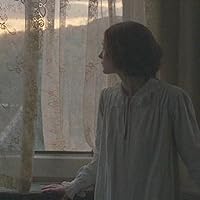
A prophecy of Merlin foretold that the Countess von Eppstein, who died on Christmas Eve, would forever be only half dead. A lone hunter, lost in Germany's Taunus Mountains, discovers the truth of this legend when his sleep is interrupted by the specter haunting the castle's "Red Chamber."
The experience forces him to seek out the tale of how the last von Eppstein countess comes to the neglected and crumbling Gothic castle, an appropriate symbol for a once-proud family. He learns of the romance of two innocents and hears of the dashing of a young girl's dreams, the betrayal of a son by his own father, and how a concealed identity led to a wife's tragic and husband's ghastly death.
The Castle of Eppstein by Alexandre Dumas was originally published in 1843 as Chateau d'Eppstein.
This note regards Alexandre Dumas, père, the father of Alexandre Dumas, fils (son). For the son, see Alexandre Dumas fils.
Alexandre Dumas père, born Alexandre Dumas Davy de la Pailleterie, was a towering figure of 19th-century French literature whose historical novels and adventure tales earned global renown. Best known for The Three Musketeers, The Count of Monte Cristo, and other swashbuckling epics, Dumas crafted stories filled with daring heroes, dramatic twists, and vivid historical backdrops. His works, often serialized and immensely popular with the public, helped shape the modern adventure genre and remain enduring staples of world literature. Dumas was the son of Thomas-Alexandre Dumas, a celebrated general in Revolutionary France and the highest-ranking man of African descent in a European army at the time. His father’s early death left the family in poverty, but Dumas’s upbringing was nonetheless marked by strong personal ambition and a deep admiration for his father’s achievements. He moved to Paris as a young man and began his literary career writing for the theatre, quickly rising to prominence in the Romantic movement with successful plays like Henri III et sa cour and Antony. In the 1840s, Dumas turned increasingly toward prose fiction, particularly serialized novels, which reached vast audiences through French newspapers. His collaboration with Auguste Maquet, a skilled plotter and historian, proved fruitful. While Maquet drafted outlines and conducted research, Dumas infused the narratives with flair, dialogue, and color. The result was a string of literary triumphs, including The Three Musketeers and The Count of Monte Cristo, both published in 1844. These novels exemplified Dumas’s flair for suspenseful pacing, memorable characters, and grand themes of justice, loyalty, and revenge. The D’Artagnan Romances—The Three Musketeers, Twenty Years After, and The Vicomte of Bragelonne—cemented his fame. They follow the adventures of the titular Gascon hero and his comrades Athos, Porthos, and Aramis, blending historical fact and fiction into richly imagined narratives. The Count of Monte Cristo offered a darker, more introspective tale of betrayal and retribution, with intricate plotting and a deeply philosophical core. Dumas was also active in journalism and theater. He founded the Théâtre Historique in Paris, which staged dramatizations of his own novels. A prolific and energetic writer, he is estimated to have written or co-written over 100,000 pages of fiction, plays, memoirs, travel books, and essays. He also had a strong interest in food and published a massive culinary encyclopedia, Le Grand Dictionnaire de cuisine, filled with recipes, anecdotes, and reflections on gastronomy. Despite his enormous success, Dumas was frequently plagued by financial troubles. He led a lavish lifestyle, building the ornate Château de Monte-Cristo near Paris, employing large staffs, and supporting many friends and relatives. His generosity and appetite for life often outpaced his income, leading to mounting debts. Still, his creative drive rarely waned. Dumas’s mixed-race background was a source of both pride and tension in his life. He was outspoken about his heritage and used his platform to address race and injustice. In his novel Georges, he explored issues of colonialism and identity through a Creole protagonist. Though he encountered racism, he refused to be silenced, famously replying to a racial insult by pointing to his ancestry and achievements with dignity and wit. Later in life, Dumas continued writing and traveling, spending time in Belgium, Italy, and Russia. He supported nationalist causes, particularly Italian unification, and even founded a newspaper to advocate for Giuseppe Garibaldi. Though his popularity waned somewhat in his final years, his literary legacy grew steadily. He wrote in a style that was accessible, entertaining, and emotionally reso
A gothic classic or a parody of the genre? Not sure. Early 1800s, Napoleon is in his zenith but in the land of Germany we have a ghost, beautiful chaste young ladies, illicit love between the classes, a possible murder, an egotistical Count, his son who is left to bring himself up, the friendly local gamekeeper and his kindly family, a banished brother, dark stormy nights, an isolated castle and questions of what God is doing. Given it's age it still reads well albeit with the usual romantic dialogue that marks books of that era.
BOOK 5 - Around the World Read - France I chose this because I wanted to experience Dumas in "short novel form" as opposed to the huge "Monte Cristo" and "Three Muskateers", both enjoyable. In the introduction, I learned that this author was the son of a Napoleonic General and the grandson of a black woman from Santo Domingo. Apparently, Dumas was a large, imposing character of color, instantly recognized, revered, and welcome in any salon in France. And Dashiell Hammett, in his great "Dain Curse" has a character say, simply, "Dumas" early in the novel and it can easily go unnoticed, but it spins the entire book into an unexpected orbit (at least for me, during my second read of that novel). Oh, the stories Dumas can (and does) tell! But I'm a sucker for the 'haunted castle' genre anyway, and I expected Dumas to do it nicely. Does he deliver? SUMMARY: During an extended house party, each guest is invited to tell a story, an imaginary one. But Count Elim, at first reticent, finally agrees to tell a 'true' story that he, himself, experienced. He is one of the few people who've dared to spend the night in the Red Chamber of Castle Eppstein. REVIEW: Yes, Dumas delivers the goods in the form of numerous gothic elements: 1) Count Elim, lost in the mountains during a hunting escapade, finds his way to 2) a castle (Hammett has a twist on this theme his "Dain Curse") which has 3) a room referred to as the 'Red Chamber' which is 4) haunted and 5) has a mysterious, centuries-old secret that can be traced to a 6) hidden panel in the wall which leads to 7) a hidden staircase leading to the family tombs and to the...well, there are surprises in store if you haven't read this. I liked very much how Dumas isolates the family and places them in a certain time: Napolean wages war but those in the castle haven't heard his name. The names of the characters are great: Count Maximillian, Countess Albinia, Jonathas, Willhelmina, Dominus Aloysius, Empress Eremangarde, Count Sigismond, Rosamunde, and more. Tension builds to the last page on which Dumas ends his story in Grand Guignol style. Some readers may find the over-the-top romantic/love scenes a bit much: but it goes with the times and I enjoyed those scenes. But it's the very last line of the novel that leads me to a 4-star rating. And without giving anything away, here it is: "The death of the soldier, the prayers of the virgin, the tears of the solitary man-were they sufficient to obtain grace for the murderer?" But which murderer? This is a must read for gothic romance fans, for historical mystery fans, for anyone wishing for a good read on 'a dark and stormy night.' A classic, and simply a blast to read! And, it's my favorite Dumas.
Am ținut morțiș să citesc o carte mai puțin cunoscută de la Alexandre Dumas si am ales-o pe aceasta. Mi s-a părut oarecum interesanta la început, iar apoi m-a pierdut din ce in ce mai mult. Nu doar că se citește greu, deși este scurta. Stilul este greoi și se înțelege de ce, doar este un roman scris in secolul 19. Am crezut că este o poveste cu fantome (până la un punct, chiar este), dar autorul a încercat să introducă mai multe teme. Familia, iubirea, datoria fata de tara și datoria filiala, razbunarea. O anumita poveste de dragoste dintre doua personaje mi s-a părut ridicol înfățișată. Iar finalul brusc și repede schițat. Nu a fost chiar ce mă așteptam, însă mă bucur că am mai citit și altceva de la Dumas. Cu siguranță voi mai citi și alte cărți, chiar și mai puțin cunoscute.
A mysterious castle...a tragedy spanning generations...a Romantic hero...a vengeful ghost!
This was a solid gothic novel, but it felt like the author hadn't quite figured out how to make plot tropes his own yet, as he would in Monte Cristo. The novel feels like a "best of gothic tropes!" collection, all boxes checked bit no new territory covered.
Still: a fun read. A bit more Romantic than gothic in spots, but recommended if you like either style.
Very, very gothic and a darn good ghost story told in the old fashioned style of a narrator sharing a scary story at a social gathering. Readers who don't like Dumas's over the top melodrama probably won't like this book, and those looking for the intrigue and complicated relationships of The Count of Monte Cristo and The Three Musketeers will might be a little disappointed as well. This is early Dumas, possibly when he was writing all of a book by himself, and there's as much focus on setting as character in this one, and I liked that. There were portions of the work that didn't read like something written in the 1840s, however and for that I blame the translation. Also, I'm not a fan of footnotes in fiction. They take me out of the story and into a lesson that the editor didn't trust me enough to figure out for myself.
The ending was horrible. The book couldn’t decide what it wanted to be when it grew up and chose unemployment instead. It tried to be too many things and only truly became a confusing genre mix. (Also the German characters behaved like French ones)
Avant de commencer à vous parler de ce qui m’a gêné, je vous confirme que c’était une lecture agréable. Mais ça s’arrête là.
J’ai été déçue sur plusieurs plans, le premier étant le schéma narratif qu’a choisi d’utiliser Dumas. Il commence par une introduction dans laquelle un personnage raconte à d’autres l’histoire du livre. Généralement, on retrouve ce personnage à la fin pour conclure, mais là, pas du tout. Comme si l’auteur avait oublié qu’il était passé par cette porte d’entrée pour son récit. D’ailleurs, ce n’est pas la seule incohérence. D’autres sont relevées dans les notes de fin, mais ne portent pas forcément préjudice à l’histoire.
Ensuite, je trouve que Dumas nous perd un peu en ne choisissant pas un seul personnage ou une seule trame. Comme s’il n’arrivait pas à choisir. À plusieurs reprises je me suis demandée ce qu’il voulait nous raconter.
Il faut s’attendre à un manichéisme très poussé. On a les bons et les méchants. Les femmes sont des êtres pures et pieuses, elles se définissent par leur sacrifice envers leur fils ou leur époux. Ce n’est pas surprenant pour l'époque, et ça ne m’a pas tant dérangé. Mais c’était très larmoyant et exagéré, très théâtral. De la part de Dumas, je m’attendais à entrer dans une psychique plus complexe des personnages, comme j’ai pu le trouver dans Le comte de Monte-Cristo.
Fantastique, vraiment ?
Un roman gothique, certes. On a un château vétuste, une forêt agitée, des personnages mélancoliques et des amours malheureuses. Mais du fantastique ? Pas vraiment. En réalité, la seule touche merveilleuse est le fantôme d’un des personnages. Quant à l’histoire d’amour… Disons qu’elle était plutôt charmante mais rien de sensationnel (aie, ça me fait mal de dire ça d’un récit de Dumas 😭)
El viejo bosque por otro lado, no representaba para el joven tan sólo un lugar de retiro, una casa o un nido. Era algo más, mucho más que todo eso: junto con la cripta del castillo, era el lugar donde volvía a ver a su madre, con la diferencia de que, en la tumba, su madre estaba muerta, mientras que allí en el bosque estaba viva con él, vivía con él.
La historia tiene un gran inicio, con buenas descripciones del ambiente, hasta que llegan al famoso castillo de los Eppstein. Tiene un poquito de engaño, porque tenía toda la pinta de ser algo de terror, pero luego se fue diluyendo y el terror solo fueron pequeñas betas en la novela, pero muy importantes. El final esta dividido en dos partes, la primera fue genial y la última no me gusto, pero uno intuía que sería así.
La novela corta de tajo lo anterior, y sigue con una historia familiar de la aristocracia. Dumas se ve que tuvo gran inspiración en la obra de Shakespeare: Otello. No es una copia, porque tiene sus grandes diferencias (no hay pañuelo), lo lleva bien, aunque; no me gusto mucho el final (demasiado rebuscado, tal vez no quiso copiar la acción del general Otello, por eso busco algo diferente para despegarse, no le salió bien)
La historia de Rosamunda y Everard es muy bella, creo que esa fue la parte que repunto y por eso seguí leyendo el libro, y por eso lo comprare en fisco.
Novela gótica con todos los elementos clásicos: castillos, fantasmas y romance. La lectura es densa, ya no estamos acostumbrados a leer textos en ese lenguaje tan rico. El autor es Alejandro Dumas ( el padre, recordad que su hijo Alejandro Dumas, el el autor de libros como La dama de las camelias.
A mí me ha encantado, he sufrido por Albina, una joven inocente pero muy inteligente que me ha fascinado como personaje. Everard me ha parecido muy valiente, aunque lo he pasado un poco mal por Rosamunde y ese amor que parecía siempre a punto de romperse.
Roman gothique au caractère fantastique légèrement différent de sa production habituelle, Le Château d'Eppstein d'Alexandre Dumas (et Paul Meurice principalement, même s'il est rarement cité) explore des thèmes aussi variés que les revenants, le romantisme allemand, la vengeance ou la force de l'éducation comme moyen de s'extraire de sa condition.
La légende dit que les comtesses d'Eppstein mortes au soir de Noël dans la chambre rouge ne sont pas tout à fait mortes et reviennent parfois parmi les vivants.... Et ce n'est pas le calme des lieux qui empêchera la haine et le mal de bouleverser les destins... Mais les fantômes peuvent aussi se montrer attentionnés et c'est auprès du spectre de sa mère que l'on assiste à l'évolution d'Everard, le héros, jeune homme solitaire et sauvage destiné à devenir comte d'Eppstein, mais qui ne rêve que de vivre auprès de la belle Rosamonde.
Le contexte politique de la Révolution Française est étouffé au profit des histoires d'amour et de désespoir de plusieurs générations d'aristocrates allemands dont le magnifique château enfoui dans la végétation d'une des plus belles régions de la lande de Hesse abrite aussi la plus glaçante des légendes.
Roman feuilleton aux chapitre courts pleins de suspens, récit enchâssé très immersif, la construction narrative, en mêlant l'auteur lui-même à la trame romanesque, efface les limites entre fiction et réalité et plonge efficacement le lecteur en plein drame familial.
Le Château d'Eppstein mêle l'amour, la grandeur de la nature et la puissance des éléments à des matériaux d'ordre spirituels et religieux propres à faire frissonner ou à élever l'esprit. Ode au romantisme et à la transmission, c'est aussi un livre profondément humain, emprunt de compassion et d'intelligence qui fourmille de références littéraires.
Une histoire de Dumas un peu moins connue que les autres – peut-être parce qu'elle est privée du souffle de l'aventure qui a rendu l'écrivain si populaire (ou peut-être parce qu'elle a principalement été écrite par Meurice ??) –, mais que j'ai trouvé pour ma part passionnante et qui m'a rappelé la beauté des "Mystères d'Udolphe" ou de "Pauline" à travers ses descriptions mélancoliques des forêts prodondes.
Après Poe, cette nouvelle expérience de lecture montre une fois de plus que le retour au gothique classique se révèle toujours enrichissant.
Cuando Alejandro Dumas publica "El castillo de Eppstein" en 1843, ese tipo no novelas góticas están ya superadas hace tiempo, al menos en el mundo anglosajón, es verdad que no tanto en el francés. De hecho esta historia no es ni más ni menos que un acercamiento a "El castillo de Otranto" (nótese hasta la semejanza en el título- de Horace Walpole, relato inaugural de la novela gótica, pero publicada 78 años antes.
Por lo demás es muy parecida, salvo que transcurre en Alemania, pero los castillos, pasadizos, salas misteriosas, maldiciones, romanticismo, fantasmas, tragedia, historias cruzadas y culebrones familiares, evocaciones medievales, lugares apartados... todo está ya inventado hacia mucho. Dumas sobre todo en su primera etapa fue un gran "plagiador", un hombre que leía, se documentaba y se apropiaba de muchas historias que ya estaban por ahí, y las daba un toque personal.
A mi juicio es una obra menor de Dumas, que creo que marca definitivamente el final de un periodo y significa la ruptura con casi todo lo que estaba haciendo, y decide dejar el género de terror y gótico para centrarse y explorar la novela histórica de aventuras, que es por lo que es un mito literario hoy.
L’aspect gothique est très peu présent, et sur ce point le résumé est assez trompeur. Je m’attendais à beaucoup plus d’ambiance de vieux château hanté, selon les romans gothiques originels, et c’est ce que le résumé de cette édition promet. Le début est assez prometteur sur ce point, à travers le mariage de Maximilien et d’Albine et la mort de cette dernière la nuit de Noël, lui permettant d’accéder au statut de fantôme. Cependant, l’histoire se focalise rapidement sur leur fils, Éverard, et en réalité on passe bien plus à un récit d’apprentissage et d’amour qu’à un roman gothique. On suit la vie d’un jeune garçon dans la forêt et dans une chaumière plus que dans le château, dans une ambiance de pastorale qui m’a fortement fait penser à Paul et Virginie sur bien des points (et ce n’est pas forcément un point positif pour moi) : la vie dans la nature, l’absence d’éducation d’Éverard, puis l’amour interdit pour celle qu’il a toujours considéré comme sa soeur… On sent l’influence romantique, avec beaucoup de grandes envolées sur la nature, sur Dieu, sur les émotions tourmentées du personnage et sur ses dilemmes, et si ma lecture ne m’a pas déplue dans l’ensemble, ce n’est pas ce à quoi je m’attendais. J’ai aussi eu l’impression de sentir que Dumas n’a eu qu’une part minime dans l’écriture de ce roman (même si je ne sais pas si je l’aurais forcément remarqué si le dossier critique ne précisait pas que Paul Meurice en est l’auteur principal). Bref, j’ai largement préféré La dame pale et son ambiance bien plus gothique, et j’ai hâte de lire Pauline !
Je ne m'attendais pas à trouver Dumas dans ce registre, et encore moins à l'aimer, mais j'ai été agréablement surprise. La grande sensibilité qui se dégage tout au long de l'histoire m'a énormément plu, même si j'ai trouvé que cette dernière mettait un peu trop longtemps à se mettre en place. J'ai bien aimé les quelques "plot twist", ils étaient les bienvenus et portaient l'histoire, la rendant plutôt addictive. On pourrait croire à une histoire d'amour mais, à mon sens, on ne peut pas réellement la qualifier comme telle. Éverard et Rosemonde s'aiment en premier lieu d'un amour strictement filial, pour ensuite se développer en un amour moins platonique. Mais cette relation n'est pas exploitée, les deux protagonistes se posent des barrières pour le moins bancales et j'ai eu envie par moments de les secouer. Mais c'était chou. On voit à quel point ils s'aiment, c'est indéniable, mais pour moi cet amour n'entre en rien dans un amour romantique. Mon avis reste tout de même plutôt positif pour ce livre, principalement pour la sensibilité, mais aussi pour ce registre un peu décalé où je n'attendais pas l'auteur. Dumas m'a fait apprécié un registre que je n'ai pas pour habitude de lire, et j'ai, comme toujours, beaucoup aimé sa plume.
After having worked through the tones of Dumas years ago, what a treat this book was to find after believing to have finished his works.
This book, set at Eppstein Castle near Frankfurt, Germany has all the clout you would expect from Dumas. It has love, romance, loss, drama, the full works. It has subtle undertones of Romeo and Juliette with a touch of madness of Hamlet.
This book follows the life and drama of Eppstein Castle, the unfortunate death of two women both on Christmas Eve and the trials of Count Maximilian. We see his son Everard grow and trying to find his way in life.
Ne aflam la castelul prinţesei Galitzin. Seara, lungă ca toate serile de iarnă, era totuşi plăcută.
Ne înţelesesem de cu vreme, ca fiecare din noi să povestească cea mai interesantă aventură a vieţii sale.
Toţi se achitaseră de datorie, fiecare se ostenise cât mai mult să ne încânte, fie prin verva lui, fie prin diversitatea întâmplărilor povestite, fie prin nimbul de mister care înconjura păţania fiecăruia.
― Dar contele Elim, de ce nu ne povesteşte ceva? zise într-un timp unul din musafiri, care începuse să simtă povara tăcerii.
Încă tânăr, contele Elim avea o statură înaltă, subţire şi impunătoare. Ochii săi erau ferestrele bunătăţii şi melancoliei sufletului său; privirea lor sinceră trăda sentimentele ce-l stăpâneau, tot atât de schimbătoare ca şi firea lui nehotărâtă.
Trăsătura cea mai caracteristică a lui Elim era însă fără îndoială, credinţa sa în fantome, în năluci, în apariţii şi în spectre.
De câte ori prietenii îl întrebau care e explicaţia acestei credinţe, sau cel puţin care sunt motivele ce l-au convins de realitatea apariţiilor, Elim nu avea decât un singur răspuns, acelaşi totdeauna „Cred”.
De ce credea? Nimeni nu ştia.
De fapt nu s-a găsit omul, care să poată spume cu precizie de ce este sigur de realitatea unor astfel de lucruri; fiecare, crede sau nu, fără să se întrebe de ce şi pentru ce.
S-ar fi putut discuta asupra acestui subiect ceasuri întregi. Contele Elim nu ţi-ar fi răspuns niciodată mai mult decât invariabilul „Cred”.
Nimeni nu se îndoia însă de buna sa credinţă. Nimeni nu ar fi cutezat să gândească măcar că Elim n-ar fi sigur de apariţia spectrelor sau a celor dispăruţi.
Aşadar, când veni rândul său, fiecare se întoarse spre el, hotărât să înfrunte orice argument de împotrivire al povestitorului şi convins că ceea ce va urma, avea să îmbrace haina realităţii.
Dar Elim nici nu se gândea să refuze invitaţia de a vorbi. Îşi cerea numai iertare că dezvăluie auditorilor o întâmplare strict personală.
Se înţelege că această mică introducere nu era menită decât să mărească atenţia ascultătorilor.
Fiecare aştepta începutul povestirii. Răbdarea lor, nu fu pusă la grele încercări, căci contele începu:
„1838. Călătoream prin Germania; mă îndreptam spre domeniul de vânătoare al unui negustor din Frankfurt care ştiindu-mă pasionat după acest sport, mă invitase să vânez, nu cu el (trebuie să recunosc: negustorul nu aprecia deloc patima mea), ci cu fiul său care avea cu totul alte idei decât tatăl.
This was a good novel. It's shorter and less complicated than other novels by Dumas, but it's also in a vastly different genre.
The characters, though simple, were interesting enough. I liked the way the story was set up (as someone recounting a tale which had been told to him) and I really enjoyed the premise of the ghost story itself. However, the character and plot development were not on par with Dumas's larger works like The Three Musketeers and The Count of Monte Cristo. (Castle Eppstein was written only a year or two before both of those novels.)
The novel was dragging by the end and I was not a fan of the ending. At all. After 200+ pages of building the story (and my anticipation for a grand conclusion), everything was resolved far too abruptly- a big event took place and then in less than a page, Dumas told us the fate of the major characters. This abrupt ending may be due in part to the way Gothic novels were written at the time, but it left me dissatisfied.
For the sake of telling the best story possible, Dumas would have done better to either shorten the book or to expand the plot and characters. I believe Dumas could successfully have gone deeper into the story had he wanted to create a long novel like The Three Musketeers or The Count of Monte Cristo.
After the novel there were two short essays: the first gave a biography of Dumas and the second analyzed Castle Eppstein in the context of other Gothic fiction. This second essay was an interesting read- especially for someone not overly familiar with Gothic novels.
Castle Eppstein was good overall and I'm thankful to Norman L. Goodrich for translating it to English.
Dans le cadre d'un château médiéval, les épouses des Eppstein sont maudites, frappées par la mort la nuit de Noël. Après l'histoire d'une première génération, le roman commence avec le mariage entre Albine, une femme qui rêve d'amour et d'histoire, et Maximilien, orgueilleux, jaloux et vindicatif.
Maximilien, diplomate, part en voyage. A son retour, il est persuadé que sa femme l'a trompé avec un autre homme qu'elle fréquentait, qui n'était autre que son frère déshonoré. Heureuse de le retrouver, elle lui apprend qu'elle attend un enfant, mais aveuglé par la colère, il la tue. La mère perd la vie le même soir que son enfant est extirpé de son ventre, le soir de Noël. Le jeune Everard grandira dans une petite chaumière du château, loin de son père qui l'abhorre, connaissant une vie douce dans la campagne. Il retrouve sa mère, être fantomatique, dans l'air frais de la campagne, les douceurs de la nuit, omniprésente grâce à la mort. Il tombe amoureux de sa soeur de coeur, Rosemonde qui lui voue un amour pur, celui d'une vierge.
Ce roman se tisse sur un fond fantastique, qui n'est qu'un prétexte pour démontrer les limites de la vengeance ! Celle d'un mari jaloux, celle d'une mère aimante, celle d'un fils abandonné. En aval de la haine et de la vengeance, les thèmes prédominants sont ceux de l'amour filiale : la mère aime son enfant, la soeur aime son frère, Albine la sœur protège le secret de son frère, ce qui cause sa mort. Un morceau d'anthologie, au chapitre 22, témoigne de l'importance de l'éducation d'un enfant - celle d'Everard. Celui-ci a tout appris seul, non par obligation, mais par amour du savoir. Les antithèses et les oxymores illustrent le style de l'auteur.
En 1846, les Romantiques continuent sereinement de considérer que l’Allemagne est le setting d’une campagne DND qui n’existent que dans leur tête.
Le Rhin est devenu tout moche et industriel. Ils persistent alors et investissent l’imaginaire des châteaux en ruine, des légendes médiévales étranges et des fantômes.
Paul Meurice invente l’histoire d’un comte allemand violent et brutal qui s’appelle Eppstein - sans commentaire - et d’un meurtre terrible qui prend place dans une chambre rouge. Dumas survient comme une fleur dans ce manuscrit et en bon dramaturge et en bon Romantique, il transforme ce conte fantastique sagement rousseauiste en une vraie proposition gothique. Le château est transformé par ses soins en un espace liminaire issu des légendes médiévales, dépositaire de la mémoire de ses châtelaines. Notre fantôme, parle avec la voix de la Nature toute entière - et c’est bien cette cosmologie éco-féministe (par pure inadvertance) qui sauve le récit un peu convenu des amours d’Everard le Hamlet de Lidl et de sa Rosemonde des prés.
En somme, c’est un roman qui a les qualités de ses défauts. Le style de Dumas est une beauté et les descriptions enthousiastes des forêts allemandes nous embarquent immédiatement dans un écosystème de brume et de pins. Comme toujours, Dumas collabore pour élever et rendre plus vivant ce qu’il a sous la main - mais ce qu’il avait sous la main n’était que du sous-Brontë et Dumas n’était clairement pas faiseur de miracles.
À lire pour le fantôme qui possède les biches, le vent et les bois et qui terrifie son meurtrier avec constance et mystère !
Alors là 5/5. Je ne m’étais jamais vraiment intéressée à Dumas, j’ai été agréablement surprise de la qualité d’écriture et surtout de l’histoire, qui m’a directement séduit dès le premier chapitre. Cette œuvre s’inscrit pleinement dans le romantisme (évidemment!!) et réussit à représenter le fantastique (avec la légende médiévale, le fantôme d’Albine qui hante les lieux , le décor flippant et le doute qui est toujours là). J’ai presque envie de dire que ça se rapproche du gothique par moment, avec un château moyenâgeux, des personnages nobles, des vielles légendes, des forêts très lugubres, ainsi qu’une action de déroulant en pleine Europe (ici l’Allemagne). En outre nous pouvons retrouver la structure type des romans de formation du XIXe siècle : un garçon rejeté, marginal qui s’élève grâce à une figure adulte et/ou maternelle, faisant office de mentor, ici c’est Rosemonde qui éduque Éverard. Celle-ci se comporte un peu comme une grande soeur, ou quelque chose de très maternel au debut. Notre héros assez mélancolique finira par s’imposer face à son père (l’antagoniste de l’histoire). J’ai adoré la fin, avec le plotwist qui change le cour du récit, renforçant mon intérêt pour cette oeuvre. En bref, c’est mon gros coup de coeur de l’année, ça fait plaisir de découvrir ce genre de roman auquel on ne s’attend pas! ✨✨
Lors d’un dîner mondain où la discussion dévie vers les histoires paranormales, le comte Elim nous raconte celle qui l’a marqué.
Alexandre Dumas lie avec beauté la vie et la mort. Si l’on pense tomber dans une histoire de fantômes, ce n’est pas tout à fait le cas. Ici on traite de l’amour d’une mère si fort qu’il ne s’est pas éteint après sa disparition. Le fond de l’histoire est réellement touchant quand on réalise que l’amour maternel et filial n’a pas de limite. Cette relation à travers deux mondes guide le roman dans un rythme doux et chaleureux, car quoi qu’il n’y ait personne alentour, on ne sent jamais seul.
Ce roman fut vraiment sympathique à découvrir bien que je m’attendais à un peu plus frissonnant. Je n’en suis pas déçue pour autant, c’était une agréable lecture qui m’a même fait sourire parfois grâce aux situations cocasses dans lesquelles se retrouve le compte d’Eppstein et qui lui sont bien dues.
Un petit point négatif néanmoins, la fin est bien trop expéditive. Quelques pages de plus auraient été grandement appréciées.
4/5 J'adore Dumas, je trouve que c'est vraiment l'un des auteurs classique les plus accessibles et toujours très divertissants. Dans Le Château d'Eppstein, il reprend les éléments habituels d'un roman gothique: en Allemagne (patrie du Romantisme), l'omniprésence de la nature, un château hanté, des revenants et des drames à fendre le cœur. Ce n'est pas un chef d’œuvre du genre, mais une très bonne lecture de saison si vous aimez les romans gothiques ou que vous avez envie d'un classique. L'équilibre entre inquiétant et paisible était agréable et les personnages très attachants. Après avoir lu Ann Radcliffe, maitresse du genre, l'année dernière, forcément, on peut voir la parenté. C'est moins sérieux toutefois, plus facile à la lecture et toujours plein de rebondissements comme Dumas sait si bien le faire. Bon, il ne "montre" pas, il "raconte" beaucoup ce qui se passe par des ellipses temporelles, mais on lui pardonne grâce au plaisir qu'on prend à la lecture :)