

What do you think?

Dagon
H.P. Lovecraft's "Dagon" immerses readers in a realm of otherworldly dread, where ancient forces lie dormant, waiting to be awakened by human folly. As an anguished protagonist recounts his harrowing encounter with a monstrous creature, we are drawn into the mesmerizing grip of cosmic horror. Lovecraft's skillful prose and atmospheric descriptions transport us to a nightmarish landscape, leaving us to contemplate the insignificance of humanity in the vastness of the cosmos. "Dagon" is a haunting tale of terror that lingers long after the last page is turned, a testament to Lovecraft's unmatched ability to invoke fear of the unknown.
9 pages, Kindle Edition
First published July 1, 1917
About the author
H.P. Lovecraft
7,046 books19.9k followersHoward Phillips Lovecraft, of Providence, Rhode Island, was an American author of horror, fantasy and science fiction.
Lovecraft's major inspiration and invention was cosmic horror: life is incomprehensible to human minds and the universe is fundamentally alien. Those who genuinely reason, like his protagonists, gamble with sanity. Lovecraft has developed a cult following for his Cthulhu Mythos, a series of loosely interconnected fictions featuring a pantheon of human-nullifying entities, as well as the Necronomicon, a fictional grimoire of magical rites and forbidden lore. His works were deeply pessimistic and cynical, challenging the values of the Enlightenment, Romanticism and Christianity. Lovecraft's protagonists usually achieve the mirror-opposite of traditional gnosis and mysticism by momentarily glimpsing the horror of ultimate reality.
Although Lovecraft's readership was limited during his life, his reputation has grown over the decades. He is now commonly regarded as one of the most influential horror writers of the 20th Century, exerting widespread and indirect influence, and frequently compared to Edgar Allan Poe.
See also Howard Phillips Lovecraft.
— Wikipedia
Lovecraft's major inspiration and invention was cosmic horror: life is incomprehensible to human minds and the universe is fundamentally alien. Those who genuinely reason, like his protagonists, gamble with sanity. Lovecraft has developed a cult following for his Cthulhu Mythos, a series of loosely interconnected fictions featuring a pantheon of human-nullifying entities, as well as the Necronomicon, a fictional grimoire of magical rites and forbidden lore. His works were deeply pessimistic and cynical, challenging the values of the Enlightenment, Romanticism and Christianity. Lovecraft's protagonists usually achieve the mirror-opposite of traditional gnosis and mysticism by momentarily glimpsing the horror of ultimate reality.
Although Lovecraft's readership was limited during his life, his reputation has grown over the decades. He is now commonly regarded as one of the most influential horror writers of the 20th Century, exerting widespread and indirect influence, and frequently compared to Edgar Allan Poe.
See also Howard Phillips Lovecraft.
— Wikipedia
Ratings & Reviews
Friends & Following
Create a free account to discover what your friends think of this book!
Community Reviews
Displaying 1 - 30 of 1,079 reviews

January 12, 2017
Apart from juvenilia, this tale (with the exception of “The Tomb”), was the first story Lovecraft wrote. And yet, in the fullness of its vision, it reads like something H.P. might have composed a decade later, on the verge of his most intense explorations.
Written in 1917, it is a tale contemporary with the Great War, and tells of a captured merchant seaman who escapes from a German man-of-war in a small boat equipped with provisions. In mid-ocean, he falls into an uneasy sleep and wakes only to find his ship beached on an obscure island and surrounded by a noxious foul-smelling ooze, which he is then forced to crawl through. Later, while exploring a crater formed by an ancient volcanic disturbance, he discovers antediluvian sculptures and bas reliefs that hint at an unsettling history. And it is then, out of the darkness, that something horrible arrives.
It is a story that came to him in dreams (“I dreamed,” he wrote to an amateur writer and friend, “that whole hideous crawl, and can yet feel the ooze sucking me down!"), and its images of volcanic islands and fish-headed creatures foreshadow both “The Call of Cthulhu” and “The Shadow over Innsmouth,” stories that would not be written for ten or twelve years.
No wonder the Muses are proclaimed to be the daughters of Memory! Could it be that creativity is merely the process of perfectly realizing the force of one single youthful dream? Is it true that, if in dream, a muse touches a poet, he carries the dream-mark for the rest of his life?
I, however, choose to look at the facts another way, a way not entirely comforting: Suppose a middling writer toiled painstakingly, toiled throughout his brief life, to create a few dark gods, and suppose that, a few years before Death took him, he succeeded. Could these dark new gods he created reach back into the past? Could they have visited him in his long dead dreams?

March 27, 2016
In the 2016 bipartisan United States presidential debates.
Announcer: Thank you all for your answers regarding the World Bank. Now, our next topic, the 1919 H.P. Lovecraft short story Dagon.
[All look at each other.]
Bernie: Well, I’ll be the first to say that Lovecraft’s mention of addiction and suicide is why we need more education, and we need to end the ridiculous prohibition of marijuana!
Ted: Also, freedom of religion, if someone wants to worship an ancient Phoenician fish god or even a pre-historic alien deity, well that is something they should be able to do in the privacy of their homes and as long as it doesn’t interfere with God-fearing Americans, I guess it’ll be OK.
Donald: What?? What are we talking about?? It’s this kind of liberal mamby pamby literati that’s wrong with America! Instead of telling ghost stories, Lovecraft should have gotten a job, or borrowed some money to start a business and maybe he’d have lived longer!
Hillary: Oh for God’s sake, the clear message from Dagon was the need for love and family understanding. The narrator was probably homosexual and was self-medicating because he was living in a time when gay men and women could not fully express themselves. The fish god was a metaphor for conservative America – I mean, maybe you can’t understand it Donald but it’s clear to me and anyone with some sense.
John: Um, I think it was about a guy picked up by a German warship, lost at sea, witnessed a Cthulhu like phenomena, lost his mind and got hooked on morphine. Except for the drug references, all standard Lovecraft themes. Also, the monolith may have influenced Arthur C. Clarke.
[All look at him.]
John: It’s a cool story. I think kids these days would like it.
Donald: Well … no wonder why you’re trailing ME.
Announcer: That’s all our time, thank you and goodnight.

Announcer: Thank you all for your answers regarding the World Bank. Now, our next topic, the 1919 H.P. Lovecraft short story Dagon.
[All look at each other.]
Bernie: Well, I’ll be the first to say that Lovecraft’s mention of addiction and suicide is why we need more education, and we need to end the ridiculous prohibition of marijuana!
Ted: Also, freedom of religion, if someone wants to worship an ancient Phoenician fish god or even a pre-historic alien deity, well that is something they should be able to do in the privacy of their homes and as long as it doesn’t interfere with God-fearing Americans, I guess it’ll be OK.
Donald: What?? What are we talking about?? It’s this kind of liberal mamby pamby literati that’s wrong with America! Instead of telling ghost stories, Lovecraft should have gotten a job, or borrowed some money to start a business and maybe he’d have lived longer!
Hillary: Oh for God’s sake, the clear message from Dagon was the need for love and family understanding. The narrator was probably homosexual and was self-medicating because he was living in a time when gay men and women could not fully express themselves. The fish god was a metaphor for conservative America – I mean, maybe you can’t understand it Donald but it’s clear to me and anyone with some sense.
John: Um, I think it was about a guy picked up by a German warship, lost at sea, witnessed a Cthulhu like phenomena, lost his mind and got hooked on morphine. Except for the drug references, all standard Lovecraft themes. Also, the monolith may have influenced Arthur C. Clarke.
[All look at him.]
John: It’s a cool story. I think kids these days would like it.
Donald: Well … no wonder why you’re trailing ME.
Announcer: That’s all our time, thank you and goodnight.

June 2, 2019
A man can't stand his life any longer since he met something unexpected and strange on an eerie island. He could escape a German ship of war in a little boat and landed on a deserted island. Upon exploring the surrounding he meets a monolithic stone with uncanny inscriptions like hieroglyphs. Then he sees more, a nasty thing with a resemblance to the Fish God Dagon as he's told later on. This is too much for his brain and he turns insane. Classic Lovecraft, extremely compelling, dark, forebodings of the dark Gods resting at the bottom of the ocean looming over the pages. Great story. Absolutely recommended!

November 14, 2018
Horror at sea.
PHILLISTINE DEITY
A sailor after an accident at sea,...
...he ended up in some kind of island where there is a monolith...
...used to worship a “sea-god” just like Dagon, the Phillistine sea-god...
...mentioned in the book of Judges in The Bible.
It's a compelling reading but lacking of some punch.
PHILLISTINE DEITY
A sailor after an accident at sea,...
...he ended up in some kind of island where there is a monolith...
...used to worship a “sea-god” just like Dagon, the Phillistine sea-god...
...mentioned in the book of Judges in The Bible.
It's a compelling reading but lacking of some punch.

January 3, 2019
My first story in 2019
Look how smart I am... I start my new year with one of the darkest mythos in literature, and a one that named "Dagon" lol
The only thing that I don't like about this short stories is that it gave me the same impression that I had after "The Call of Cthulhu", like it has nothing new over the Cthulhu story, but nevertheless it is great, shorts and easy to read.
I highly recommend it to be read first in the whole Cthulhu Mythos list of tales.
Look how smart I am... I start my new year with one of the darkest mythos in literature, and a one that named "Dagon" lol
The only thing that I don't like about this short stories is that it gave me the same impression that I had after "The Call of Cthulhu", like it has nothing new over the Cthulhu story, but nevertheless it is great, shorts and easy to read.
I highly recommend it to be read first in the whole Cthulhu Mythos list of tales.

April 20, 2020

Weird and foreboding, this bite-sized short story acts as an introduction to Dagon who appears on a bigger scale in The Shadow Over Innsmouth. I loved the atmosphere and narrative as I always do while reading Lovecraft. But the story itself didn't favor me. Not that I was expecting much from these seven pages but it turned out to be too basic.
Upside? Lovecraft's infamous racism hasn't been manifested here.

September 21, 2022
Wow che viaggio ragazzi!
Un mondo onirico,cupo, delirante, spaventosamente inquietante, dove non sai se l'Io narrante è in preda a delirio o racconta il vero.
Credo che, data la brevità dei suoi racconti, Lovecraft entrerà a gomitate nelle mie letture, e a spizzichi e bocconi leggerò TUTTO di H.P.Lovecraft
Un mondo onirico,cupo, delirante, spaventosamente inquietante, dove non sai se l'Io narrante è in preda a delirio o racconta il vero.
Credo che, data la brevità dei suoi racconti, Lovecraft entrerà a gomitate nelle mie letture, e a spizzichi e bocconi leggerò TUTTO di H.P.Lovecraft

September 24, 2022
5'5 / 10
Como siempre la atmosfera en la que te envuelve Lovecraft es genial, terrorífica, sucia, asfixiante. Pero esta vez se queda en eso, ya que no profundiza casi nada en el monstruo que nos presenta.
El final queda en el aire, cosa que -en general- no me gusta.
Mi experiencia ha mejorado un poco al haber escuchado en audio el relato.
Como siempre la atmosfera en la que te envuelve Lovecraft es genial, terrorífica, sucia, asfixiante. Pero esta vez se queda en eso, ya que no profundiza casi nada en el monstruo que nos presenta.
El final queda en el aire, cosa que -en general- no me gusta.
Mi experiencia ha mejorado un poco al haber escuchado en audio el relato.

Want to Read
April 17, 2020Not a review: The Disney baby names book includes Dagon.
I think there must be some cultist on their staff.
I think there must be some cultist on their staff.

June 9, 2020
فَإِذا بَرِقَ الْبَصَرُ
یکم. وسط خوندن یکی از داستانهای لاوکرفت خوابم برد وُ بله، وحشتناکترین و کابوسوارترین رویای ممکن رو دیدم. هنوز وحشتش مثل عسل توی رگهام شریان داره.
دوم. این وحشتی که لاوکرفت خلق میکند، تنها برآمده از فضاست. اینکه تو رو تنها رها میکند میان ناشناختههایی که تعریف میکند و اما تصویری نمیسازد. و حالا تو خودتی و ترسهایت. مثل آن صحنهی هریپاتر که در کلاس درس، آن موجود بیتعریف در مقابل هر کس شبیه به ترس آن طرف میشد. حالا ما در داستانها و ناشناختهها و چیزهای شگفت لاوکرفت، با ترسهای خودمان روبرو میشویم.
یکم. وسط خوندن یکی از داستانهای لاوکرفت خوابم برد وُ بله، وحشتناکترین و کابوسوارترین رویای ممکن رو دیدم. هنوز وحشتش مثل عسل توی رگهام شریان داره.
دوم. این وحشتی که لاوکرفت خلق میکند، تنها برآمده از فضاست. اینکه تو رو تنها رها میکند میان ناشناختههایی که تعریف میکند و اما تصویری نمیسازد. و حالا تو خودتی و ترسهایت. مثل آن صحنهی هریپاتر که در کلاس درس، آن موجود بیتعریف در مقابل هر کس شبیه به ترس آن طرف میشد. حالا ما در داستانها و ناشناختهها و چیزهای شگفت لاوکرفت، با ترسهای خودمان روبرو میشویم.

October 28, 2022
4 Stars for Dagon (audiobook) by H. P. Lovecraft read by Cathy Dobson.
This creepy short story is getting me ready for Halloween.
This creepy short story is getting me ready for Halloween.

July 13, 2021
Otra historia que me ha defraudado un poco de Lovecraft, debo reconocer que se esfuerza un mundo en crear el ambiente, sin embargo, cuando se empieza a narrar la historia se queda corto, a que siento que no ocurre nada significativo, así me ocurrió con este cuento. Creo que se me olvidará dentro de poco.

March 2, 2020
Me gusta como crea un escenario que muestra algo tan insólito e imposible de ser comprendido o soportado por la mente humana, la que termina refugiándose en la locura y desesperación.

December 22, 2018
Real Rating: 3.75* of five
I have read the text, found it fairly overwrought; then I listened to it and was enthralled. You can get details from the myriad reviews, if you need them, but I'll add that new land rising above the ocean's waters is a trope I whole-heartedly approve of and would like to see some enterprising horror writer use now. *pointed stares at Edward Lorn, Jonathan Janz, Kealan Patrick Burke, Glen Krisch...*
I have read the text, found it fairly overwrought; then I listened to it and was enthralled. You can get details from the myriad reviews, if you need them, but I'll add that new land rising above the ocean's waters is a trope I whole-heartedly approve of and would like to see some enterprising horror writer use now. *pointed stares at Edward Lorn, Jonathan Janz, Kealan Patrick Burke, Glen Krisch...*

November 4, 2016
FINAL RATING: 4.5 STARS
Dagon remains to be one of my favorite Lovecraft tales to this date. This may be partially due to, and this is debatable, it being that this story is one of the foundations of Lovecraft's Cthulhu Mythos, which was a monicker given to his weird coherent stories. It was coined by author August Derleth. Again, there may be other stories that some may argue as being the foundation, but either way I think Lovecraft fans and fanatics can agree Dagon was possible one of Lovecraft's earliest examples of writing psychological and cosmic horror.
The plot is simple and the story is short. A man addled with opioids survives a shipwreck and finds himself stranded on an island, where he finds weird cyclopean monoliths of fish-like creatures. FUN FACT: These creatures return in the story The Shadow Over Innsmouth, which backs up my point of this story starting the foundation of the Cthulhu Mythos.
So, with a simple plot like that, what makes this story unique and creepy? One of the reasons to this is this story seemed to show us the elaborate language Lovecraft was fond of using and was still attempting to craft well at the time. If you read an earlier story of his like The Alchemist (1915) or The Beast in the Cave' (1905), you may see that the stories are a bit clunky. Lovecraft didn't just start writing complicated prose well overnight! By looking back at his very early stories, you'll see a master trying to perfect his work. I believe Dagon is the tale that shows the style he would become good at and use for his later stories.
I wanted to do a more simple, short review of this story as well, as it's only about a few pages long. However, finishing it for the fourth time now I realized this story was important in the Lovecraft canon, as well as it being very different from other works of fiction being published at the time. This story was published in 1919...what other story are you going to find from that time period that involves a man getting washed onto an island that may have been home to a race of fish creatures, whom he later claims rise out of the water? By the end of the story we're not sure if he really encountered what he said he saw or he was simply crazed by being stranded on the ocean for a long period of time (or was affected by the opioids he dosed on before becoming stranded).. Before he discovers the monoliths on the island or the island itself we get to hear him speak about being on the ship. He...doesn't sound well to put it shortly.
I'd talk more about the character and discussing what else he sees or does, but it would spoil the whole story. This is why I don't tend to review short stories, especially those pertaining to Lovecraft. Oh well. When I learn to be more succinct in my reviews I'll attempt it.
NOTE: There's a beautifully illustrated graphic novel version of Dagon in a compilation of Lovecraft comics called The Lovecraft Anthology Vol. 1. They're done by super talented artists and this introduced me to The Godfather of Cosmic Horror in the first place.
Dagon remains to be one of my favorite Lovecraft tales to this date. This may be partially due to, and this is debatable, it being that this story is one of the foundations of Lovecraft's Cthulhu Mythos, which was a monicker given to his weird coherent stories. It was coined by author August Derleth. Again, there may be other stories that some may argue as being the foundation, but either way I think Lovecraft fans and fanatics can agree Dagon was possible one of Lovecraft's earliest examples of writing psychological and cosmic horror.
The plot is simple and the story is short. A man addled with opioids survives a shipwreck and finds himself stranded on an island, where he finds weird cyclopean monoliths of fish-like creatures. FUN FACT: These creatures return in the story The Shadow Over Innsmouth, which backs up my point of this story starting the foundation of the Cthulhu Mythos.
So, with a simple plot like that, what makes this story unique and creepy? One of the reasons to this is this story seemed to show us the elaborate language Lovecraft was fond of using and was still attempting to craft well at the time. If you read an earlier story of his like The Alchemist (1915) or The Beast in the Cave' (1905), you may see that the stories are a bit clunky. Lovecraft didn't just start writing complicated prose well overnight! By looking back at his very early stories, you'll see a master trying to perfect his work. I believe Dagon is the tale that shows the style he would become good at and use for his later stories.
I wanted to do a more simple, short review of this story as well, as it's only about a few pages long. However, finishing it for the fourth time now I realized this story was important in the Lovecraft canon, as well as it being very different from other works of fiction being published at the time. This story was published in 1919...what other story are you going to find from that time period that involves a man getting washed onto an island that may have been home to a race of fish creatures, whom he later claims rise out of the water? By the end of the story we're not sure if he really encountered what he said he saw or he was simply crazed by being stranded on the ocean for a long period of time (or was affected by the opioids he dosed on before becoming stranded).. Before he discovers the monoliths on the island or the island itself we get to hear him speak about being on the ship. He...doesn't sound well to put it shortly.
I'd talk more about the character and discussing what else he sees or does, but it would spoil the whole story. This is why I don't tend to review short stories, especially those pertaining to Lovecraft. Oh well. When I learn to be more succinct in my reviews I'll attempt it.
NOTE: There's a beautifully illustrated graphic novel version of Dagon in a compilation of Lovecraft comics called The Lovecraft Anthology Vol. 1. They're done by super talented artists and this introduced me to The Godfather of Cosmic Horror in the first place.

April 26, 2020
Me estoy haciendo adicta a Leer estos pequeños relatos de Lovecraft, este de Dagón escrito en 1917 tan cortito como es, nos relata la historia de este marinero que naufraga y se encuentra con toda una civilización marina, su encuentro con Dagón que es en realidad el Dios de los peces en la cultura filistea y así nuestro protagonista comienza este relato con:
"Escribo esto bajo una fuerte tensión mental, ya que cuando llegue la noche habré dejado de existir. Sin dinero y agotada mi provisión de droga".
Ahí se los dejo, como pueden ver, solo con el principio del relato podemos vislumbrar lo genial que va a ser este pequeño relato del grandioso Lovecraft.
"Escribo esto bajo una fuerte tensión mental, ya que cuando llegue la noche habré dejado de existir. Sin dinero y agotada mi provisión de droga".
Ahí se los dejo, como pueden ver, solo con el principio del relato podemos vislumbrar lo genial que va a ser este pequeño relato del grandioso Lovecraft.

January 16, 2022
Me ha gustado la locura y la monstruosidad de este mini relato.
.
I liked the madness and the monstrosity of this mini story.
.
I liked the madness and the monstrosity of this mini story.

April 27, 2016
"De repente, me llamó la atención un objeto singular que había en la ladera opuesta, el cual se erguía enhiesto como a un centenar de yardas de donde estaba yo; objeto que brilló con un resplandor blanquecino al recibir de pronto los primeros rayos de la luna ascendente. "
Este cuento tiene todo lo que esperas de Lovecraft, misterio, atmosfera y un narrador que te hace dudar de todo. La ambientación hace sentir aprisionado y aunque hoy día no parezca terrorífico lo que ha trascendido es la sensacion de abandono y desesperanza.
El final

en el estilo de Lovecraft, obviamente.
Este cuento tiene todo lo que esperas de Lovecraft, misterio, atmosfera y un narrador que te hace dudar de todo. La ambientación hace sentir aprisionado y aunque hoy día no parezca terrorífico lo que ha trascendido es la sensacion de abandono y desesperanza.
El final
en el estilo de Lovecraft, obviamente.

August 21, 2025
It's not the first time I read this short story and it certainly won't be the last.
Lovecraft has a way of writing that truly immerses you in his eerie and scary environments and Dagon is no exception to that.
I always really enjoy horrors related to the deep ocean so this one was quite fun to read!
Lovecraft has a way of writing that truly immerses you in his eerie and scary environments and Dagon is no exception to that.
I always really enjoy horrors related to the deep ocean so this one was quite fun to read!


January 7, 2015
3.5
Written in 1917, Dagon announces both The Call of Cthulhu and The Shadow Over Innsmouth. Inhabitants of Innsmouth were members of the Cult of Dagon. A short, but no less significant story.
It is a testimony of a morphine addict of what brought him where he is and why he is contemplating suicide.
There, he finds a monolith depicting one of the Elder Gods.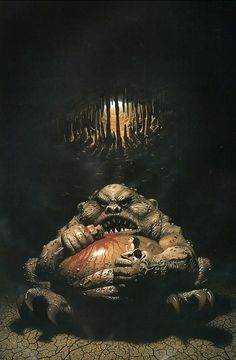 People he sees depicted on the monolith have what would later be called the Innsmouth look.
Written in 1917, Dagon announces both The Call of Cthulhu and The Shadow Over Innsmouth. Inhabitants of Innsmouth were members of the Cult of Dagon. A short, but no less significant story.
It is a testimony of a morphine addict of what brought him where he is and why he is contemplating suicide.
'I cannot think of the deep sea without shuddering at the nameless things that may at this very moment be crawling and floundering on its slimy bed, worshipping their ancient stone idols and carving their own detestable likenesses on submarine obelisks of water-soaked granite.'Germans captured his ship. He manages to escape in a small boat, but gets lost in the Pacific. All he knows is that is somewhere south. After days of floating, he finds land, but it's nothing he had seen before. He has to wait for three days to be able to walk to the mountain he sees.
There, he finds a monolith depicting one of the Elder Gods.
People he sees depicted on the monolith have what would later be called the Innsmouth look.
December 27, 2019
"Dagon" is a short story about a man addicted to morphine and thinking to commit suicide!!
Broken and lonely he writes down the horror he saw..
Struggling against the tormenting ghosts in his head..
A haunted and wrecked man with a knowledge far to heavy to live with!!
He prefers the slavery of the drug and even death instead of facing reality..
Something gruesome happened to him, he became the witness to a nameless abomination!!
Again, classic Lovecraft..
And again a quick read but very good and gripping..
Happy reading my frieds..
Dean;)
Broken and lonely he writes down the horror he saw..
Struggling against the tormenting ghosts in his head..
A haunted and wrecked man with a knowledge far to heavy to live with!!
He prefers the slavery of the drug and even death instead of facing reality..
Something gruesome happened to him, he became the witness to a nameless abomination!!
Again, classic Lovecraft..
And again a quick read but very good and gripping..
Happy reading my frieds..
Dean;)

March 12, 2017
This is my first encounter with Lovecraft, yet I easily found certain elements contained within these 13 pages to possibly foretell more of what was to come in later tales. I state this purely based on the fact that I am aware this was one of his earliest works and noted several hints geared toward tales that even those such as myself have some vague familiarity with.
I admit that my appreciation for the dark and depressing tale was not instant. It was not until several hours after having completed the final pages did the full impact of it truly occur to me. Introduced to a nameless, captured seaman who has managed to escape in a small boat, he finds himself on an island where he will make a discovery that will leave him desperate to escape once more and haunt him until the very end. This was a very atmospheric and dark read that left me pondering the possibilities of what had truly happened. A promising start for myself and HP.
You may also find this review here.
I admit that my appreciation for the dark and depressing tale was not instant. It was not until several hours after having completed the final pages did the full impact of it truly occur to me. Introduced to a nameless, captured seaman who has managed to escape in a small boat, he finds himself on an island where he will make a discovery that will leave him desperate to escape once more and haunt him until the very end. This was a very atmospheric and dark read that left me pondering the possibilities of what had truly happened. A promising start for myself and HP.
You may also find this review here.

Read
July 28, 2016"No puedo pensar en las profundidades del mar sin estremecerme ante las espantosas entidades que quizás en este instante se arrastran y se agitan en su fecho fangoso."
Por fin alguien entiende mi miedo :( jaja
Por fin alguien entiende mi miedo :( jaja

June 29, 2018
The final confession of a morphine addicted marine merchant who experienced something so terrifying during a sea voyage in World War I that it shattered his sanity. These are his hastily scrawled notes he managed to write down before casting himself from his hospital window, for he just can't bear to live with the long lost secrets of ancient seafaring creatures and intelligent entities that lurk below the water's surface.
Dagon, despite being one of Lovecraft's earliest stories feels on par with his later masterpieces such as The Shadow Over Innsmouth and At the Mountains of Madness, just not nearly as stretched out. It's a tale that touches on one of my greatest fears; the unknown horrors of the sea and the infinite secrets that it holds within itself. Discovering dark secrets and higher beings never meant to be witnessed by human eyes, being driven to madness and suicidal tendencies, hallucinatory encounters with unfathomable horrors, all of the Lovecraftian staples are present here. The prose and atmosphere are strong, rivaling the effectiveness of his greatest works that he would go on to write closer to the end of his career.
***
If you're looking for some dark ambient music for reading horror, dark fantasy and other books like this one, then be sure to check out my YouTube Channel called Nightmarish Compositions: https://www.youtube.com/channel/UCPPs...
Dagon, despite being one of Lovecraft's earliest stories feels on par with his later masterpieces such as The Shadow Over Innsmouth and At the Mountains of Madness, just not nearly as stretched out. It's a tale that touches on one of my greatest fears; the unknown horrors of the sea and the infinite secrets that it holds within itself. Discovering dark secrets and higher beings never meant to be witnessed by human eyes, being driven to madness and suicidal tendencies, hallucinatory encounters with unfathomable horrors, all of the Lovecraftian staples are present here. The prose and atmosphere are strong, rivaling the effectiveness of his greatest works that he would go on to write closer to the end of his career.
***
If you're looking for some dark ambient music for reading horror, dark fantasy and other books like this one, then be sure to check out my YouTube Channel called Nightmarish Compositions: https://www.youtube.com/channel/UCPPs...

May 25, 2017
A man turns to morphine to deal with something he saw. He decides to kill himself, but first explains the experience responsible for making him insane. The world beneath arose, and worshipped stones call to sea-creatures roaming land. One looks like a fish god worshipping stone.
I found it entertaining. Lovecraft never disappoints me.
I found it entertaining. Lovecraft never disappoints me.

March 3, 2026
I’m of two minds about this one. On the one hand this really is nothing, almost more of a sketch than an actual story (and that makes sense given that this is one of Lovecraft’s earliest works). On the other hand there’s something deeply charming to me about the bones of this thing and how hysterical it all is by the very end. Like this is literally just a guy going “saw a weird rock, saw an even weirder fish guy, guess I’ll die.” And I get that there’s more to it than that, and more going on here than what I’ve described but as I said, the bones of the story? Kinda funny to me.

March 19, 2020
Labs šausmu stāstiņš.
Stāstu var noklausīties arī video ar fascinējošām ilustrācijām.
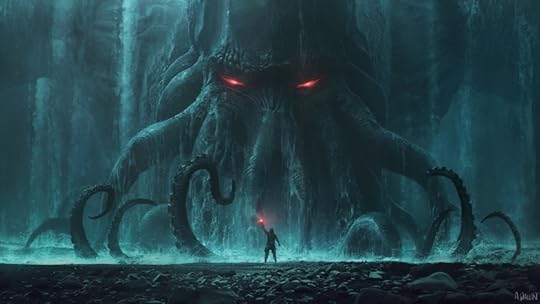
Stāstu var noklausīties arī video ar fascinējošām ilustrācijām.

March 19, 2020
Dagon on YouTube
If you can spare 15 minutes for an extremely captivating illustrated video with a narration of this very early Lovecraft short story, do not miss out on it.
It's a typical Lovecraft setting where an innocent guy witnesses things that go beyond the limits of his mental strength and make him lose his sanity.
It's very basic and very short but it hints at the greatness that Lovecraft's storytelling will become.
4 stars!
If you can spare 15 minutes for an extremely captivating illustrated video with a narration of this very early Lovecraft short story, do not miss out on it.
It's a typical Lovecraft setting where an innocent guy witnesses things that go beyond the limits of his mental strength and make him lose his sanity.
It's very basic and very short but it hints at the greatness that Lovecraft's storytelling will become.
4 stars!

September 15, 2022
3,5/5
Me encantan los relatos de Lovecraft, sobre todo me gustan sus relatos de terror cósmico, con sus monstruos, que a veces me resultan casi imposibles de imaginar, aunque este relato me ha gustado, no me ha gustado tanto como otros suyos, quizás porque no es terror cósmico, quizás porque es una historia ambientada en el mar....que no me suelen motivar o quizás porque me ha faltado algo en esta historia aunque no sé especificar el qué.
Está narrado en primera persona por un oficial de la marina que al ser capturado por los alemanes logra escapar de sus captores en un bote llega a un continente que esta cubierto de cadáveres de peces y al investigar el terreno hace un siniestro descubrimiento que lo lleva al borde de la locura.....
Me encantan los relatos de Lovecraft, sobre todo me gustan sus relatos de terror cósmico, con sus monstruos, que a veces me resultan casi imposibles de imaginar, aunque este relato me ha gustado, no me ha gustado tanto como otros suyos, quizás porque no es terror cósmico, quizás porque es una historia ambientada en el mar....que no me suelen motivar o quizás porque me ha faltado algo en esta historia aunque no sé especificar el qué.
Está narrado en primera persona por un oficial de la marina que al ser capturado por los alemanes logra escapar de sus captores en un bote llega a un continente que esta cubierto de cadáveres de peces y al investigar el terreno hace un siniestro descubrimiento que lo lleva al borde de la locura.....
Displaying 1 - 30 of 1,079 reviews