

What do you think?
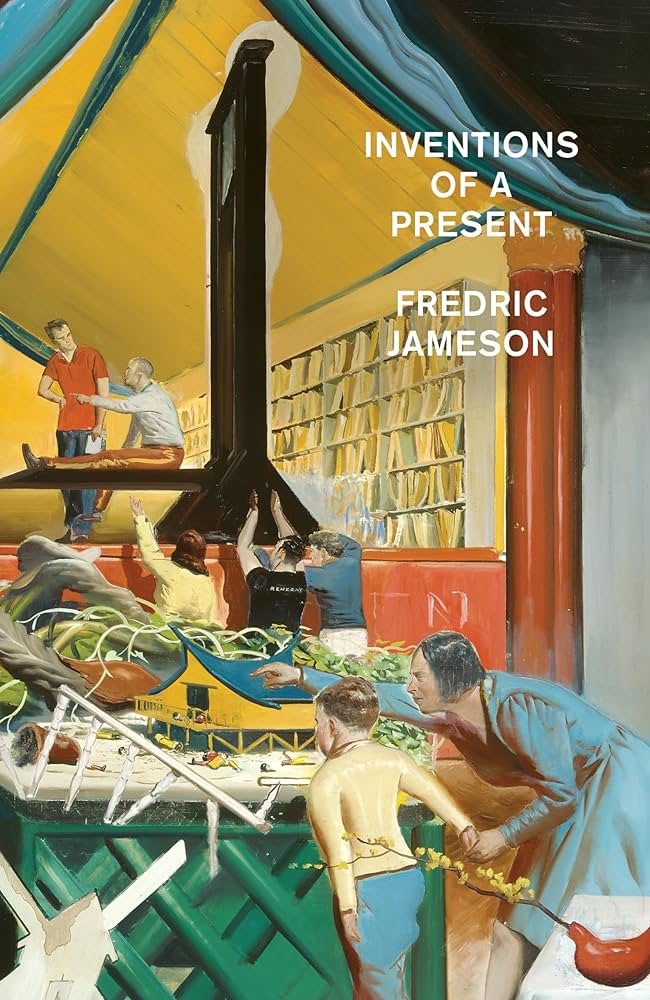
Inventions of A Present: The Novel in its Crisis of Globalization
The giant of literary theory analyses the Conrad, James, Atwood, Oe, Mailer, Grass, Grossman, Garcia Marquez, Gibson, Knausgaard and more
A novel is an act, an intervention, which, most often, the naïve reader takes as a representation. The novel intervenes to modify or correct our conventional notions of a situation, and, in the best and most intense cases, to propose a wholly new idea of what constitutes an event or of the very experience of living.
The most interesting contemporary novels are those which try – and sometimes succeed – in awakening our sense of a collectivity behind individual experience; opening up a relationship between the isolated subjectivity and class or community. But even if this happens (rarely!), one must go on to find traces of collective praxis hidden away within the mere awakening of a feeling of multitude.
And, since it is in the sense of the nation and nationality that collectivity is most often expressed, it is urgent to disengage the possibilities of genuine action within these nationalisms.
This sweeping collection of essays ranges from the elusive politicality of North American literature to the sometimes frozen narrative experiences of the eastern countries and the old Soviet Union; from East Germany to Japan, Latin America and the Nordic countries. Like any such voyage, it is an arbitrary movement across the world of historical situations which, however, seeks to dramatize their common kinship in late capitalism itself.
A novel is an act, an intervention, which, most often, the naïve reader takes as a representation. The novel intervenes to modify or correct our conventional notions of a situation, and, in the best and most intense cases, to propose a wholly new idea of what constitutes an event or of the very experience of living.
The most interesting contemporary novels are those which try – and sometimes succeed – in awakening our sense of a collectivity behind individual experience; opening up a relationship between the isolated subjectivity and class or community. But even if this happens (rarely!), one must go on to find traces of collective praxis hidden away within the mere awakening of a feeling of multitude.
And, since it is in the sense of the nation and nationality that collectivity is most often expressed, it is urgent to disengage the possibilities of genuine action within these nationalisms.
This sweeping collection of essays ranges from the elusive politicality of North American literature to the sometimes frozen narrative experiences of the eastern countries and the old Soviet Union; from East Germany to Japan, Latin America and the Nordic countries. Like any such voyage, it is an arbitrary movement across the world of historical situations which, however, seeks to dramatize their common kinship in late capitalism itself.
273 pages, Kindle Edition
Published May 7, 2024
About the author
Fredric Jameson
155 books698 followersFredric Jameson was an American literary critic, philosopher and Marxist political theorist. He was best known for his analysis of contemporary cultural trends, particularly his analysis of postmodernity and capitalism. Jameson's best-known books include Postmodernism, or, The Cultural Logic of Late Capitalism (1991) and The Political Unconscious (1981).
Ratings & Reviews
Friends & Following
Create a free account to discover what your friends think of this book!
Community Reviews
Displaying 1 - 8 of 8 reviews

September 4, 2024
I read this in order to submit a book review to a journal. My mind was half blown, the other half was like, what is this (in a bad way)? I need to think on this for a while.
“Inventions of a Present” is a collection of pieces of literary criticism — some contemporary, some old, and all ever-reverential to the literary canon (Marquez, Beckett, and Foucault are some of his favorites). Some titles were interesting — borderline scared me — such as “Commodity Bulimia” and “The Businessman in Love.” His primary regions of interest appear to be: America, Latin America, the Soviet Union, Germany, Poland, a little bit of Japan (Oe) and Norway (Knausgaard). He seemed interested in the effects of globalization/the marketplace, war, religion, etc. on daily life and written forms. He also seemed obsessed with genre dissolution and ineffability (he often argues that stories are not neatly Postmodern or Jamesian — I didn’t even know this was an adjective, that’s another thing, he is deep in this literary criticism shit — or Russian or anything. Instead, he sort of creates new categorical genres… it’s all hard to follow).
Finally, my only introduction to Jameson prior was in the class Migrant Narratives, whereby his conceptions of Third World literature as allegory was responded to by a fiery critique written by Aijaz Ahmad. In this work, Jameson sort of doubles down on his “third world literature is always a national allegory” claim, since he states it twice. Towards the end of this collection of essays, he argues that first world life allows and makes possible an attempt at apolitical life — but elsewhere he sort of contradicts himself by saying the apolitical is a political choice, maybe he just meant for a novelist? — versus third world literature must necessarily be political because of political instability. Honestly, he should just concede to Ahmad.
At many moments, I found myself instinctually disagreeing with Jameson, and I think it will take some time to get all my ducks (reasons) in a row. However, the book allowed me to think critically, made me miss school, and made me wish to explore classics more, especially to understand him more since every great classical author is now being used as an adjective to describe a new author (slight shade here intended).
Another question I had was: what is the exact throughline of all these different pieces? How do they all relate to the “novel in crisis” or even “globalization”? I need to think about this more!!
Another problem that I have is similar to popular critiques of the New York Times best books of 2024 but that critique on steroids, which is, who is this stuff even for? What do people do when they want criticism but perhaps are not well versed in a world of symbols, where Faulkner is an adjective and the assumption is that we all understand philosophical positivism? I think this book did not solve the “ivy tower” dilemma, since it felt very removed from the domain of influence on anyone except a very, very niche group of scholars, which I suppose is its point, but makes me question the purpose nevertheless. I thought some essays were more readable and something more than 20 people would be interested in, such as the Knausgaard Q&A that was previously published in the London Review of Books.
“Inventions of a Present” is a collection of pieces of literary criticism — some contemporary, some old, and all ever-reverential to the literary canon (Marquez, Beckett, and Foucault are some of his favorites). Some titles were interesting — borderline scared me — such as “Commodity Bulimia” and “The Businessman in Love.” His primary regions of interest appear to be: America, Latin America, the Soviet Union, Germany, Poland, a little bit of Japan (Oe) and Norway (Knausgaard). He seemed interested in the effects of globalization/the marketplace, war, religion, etc. on daily life and written forms. He also seemed obsessed with genre dissolution and ineffability (he often argues that stories are not neatly Postmodern or Jamesian — I didn’t even know this was an adjective, that’s another thing, he is deep in this literary criticism shit — or Russian or anything. Instead, he sort of creates new categorical genres… it’s all hard to follow).
Finally, my only introduction to Jameson prior was in the class Migrant Narratives, whereby his conceptions of Third World literature as allegory was responded to by a fiery critique written by Aijaz Ahmad. In this work, Jameson sort of doubles down on his “third world literature is always a national allegory” claim, since he states it twice. Towards the end of this collection of essays, he argues that first world life allows and makes possible an attempt at apolitical life — but elsewhere he sort of contradicts himself by saying the apolitical is a political choice, maybe he just meant for a novelist? — versus third world literature must necessarily be political because of political instability. Honestly, he should just concede to Ahmad.
At many moments, I found myself instinctually disagreeing with Jameson, and I think it will take some time to get all my ducks (reasons) in a row. However, the book allowed me to think critically, made me miss school, and made me wish to explore classics more, especially to understand him more since every great classical author is now being used as an adjective to describe a new author (slight shade here intended).
Another question I had was: what is the exact throughline of all these different pieces? How do they all relate to the “novel in crisis” or even “globalization”? I need to think about this more!!
Another problem that I have is similar to popular critiques of the New York Times best books of 2024 but that critique on steroids, which is, who is this stuff even for? What do people do when they want criticism but perhaps are not well versed in a world of symbols, where Faulkner is an adjective and the assumption is that we all understand philosophical positivism? I think this book did not solve the “ivy tower” dilemma, since it felt very removed from the domain of influence on anyone except a very, very niche group of scholars, which I suppose is its point, but makes me question the purpose nevertheless. I thought some essays were more readable and something more than 20 people would be interested in, such as the Knausgaard Q&A that was previously published in the London Review of Books.

January 9, 2025
Compelling even when I’m not in full agreement (I remain a Henry James fan), if nothing else Jameson was an excellent reader. Some highlights included here are the essay on Márquez; his suggestion that readings of Heart of Darkness need to consider how disillusioned Conrad was with the change to steam power; the Knausgaard essay on literature of “itemization”, which I remember reading upon the publication of the final struggle volume; and some musings on East German literature through the prism of Uwe Tellkamp’s The Tower. Would say it’s sad to know there’ll never be another Jameson book but publishers will probably start pumping out volumes of his lectures and letters — that’s what you get for being notable!

August 25, 2024
I like the Jameson review/essay collections even more than the heavy-hitting stuff like Postmodernism, Marxism and Form, The Geopolitical Aesthetic, because they have even more drive-by profoundly cool ideas that are also wacky. Best here are the big reveal that Margaret Atwood is importantly Canadian and the astute re-naming of whatever Knausgard is up to as "itemization" rather than autofiction. The Knausgard essay (originally in LRB) is also incredible for starting off as a Q&A, abandoning this concept after two pages, and then picking it up again with no warning at the end. A truly fine tribute to the sixth book of My Struggle, with its nutty bibliography on page like 640 out of 1010.

December 20, 2025
The scholar longs for a tiger's leap into the past; the book reviewer for flashes of the present. The novel, meanwhile, is time's relief map, its furrows and spurs marking the intrusion of history into individual lives or else its tell-tale silences. All novels are thus historical; but the viability of the full-blown nineteenth-century or "realist" novel rested on protagonicity, that is, the capacity of its central character to suffer history's lightning strikes and to survive in some memorable form, which might well simply be death (or its American equivalent, failure).
A great collection of essays. RIP Jameson.

April 29, 2024
Happily, an acessible collection of book and TV/film reviews from the last 50 years.
A Marxist approach to HBO's "The Wire"? It's here.
Along with reviews of Deliverance, Henry James, Robert Stone, and a host of Eurpean and South American authors.
A Marxist approach to HBO's "The Wire"? It's here.
Along with reviews of Deliverance, Henry James, Robert Stone, and a host of Eurpean and South American authors.

December 31, 2024
Jameson w nieco luźniejszym stylu, przede wszystkim jako krytyk literacki i czytelnik (który zdradza m.in. że nie znosi spoilerów), ale nigdy nie dystansujący się od swojego dialektycznego silnika. Piękny esej o „Stu latach samotności”.
February 17, 2026
nobody else was doing it like this
April 29, 2024
Inventions of A Present: The Novel in its Crisis of Globalization
Displaying 1 - 8 of 8 reviews