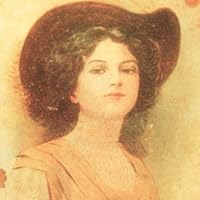
Jonathan Cape,, (2001). Fine in a fine dust jacket (as new.). First printing. The author's second novel, third book. "In the Netherlands in the 1640s Astraea tells of the relationship between Elizabeth of Bohemia, daughter of James I, and another exile, Pelagius, heir apparent to the Yoruba kingdom of Oyo, a freed slave with shamanic gifts. They fall in love, marry clandestinely and, secretly, she gives birth to a son - their hope for a new age." Elizabeth was also known as the Winter Queen. 308 pp.
Dr. Jane Stevenson (born 1959) is a UK author who was born in London and brought up in London, Beijing and Bonn. She has lectured in history at Sheffield University, and teaches literature and history at the University of Aberdeen. Her fiction books include Several Deceptions, a collection of four novellas; a novel, London Bridges; and the historical trilogy made up of the novels The Winter Queen, The Shadow King, and The Empress of the Last Days. Stevenson lives in Aberdeenshire, Scotland.
Her academic publications include Women Latin Poets (Oxford University Press), Early Modern Women Poets with Peter Davidson (Oxford University Press) and The Closet of Sir Kenelm Digby, co-edited with Peter Davidson (Prospect Books).
You aren't going to believe this but this book is about Elizabeth of Bohemia, 1596 to 1662, the Winter Queen, having an affair with a freed African slave while living in exile in Holland.
This novel opens in 1634 as Pelagius van Overmeer is on his first voyage as a free man. Pelagius was a young African Prince, in line to succeed his father as king of their people, when he was captured and sold as a slave, and all his ocean voyages till now have been spent in chains. Pelagius had spent the next 20 years of his life in the West Indies as a slave, assisting his master in a study of plants of that area, especially in regard to their medicinal properties. During that time, Pelagius became a scholar himself, learning several languages, and studying both plants, and religion. Now as a freed man, Pelagius has chosen to join his former master in The Netherlands, where Pelagius will be assisting him to document their findings about plants in a book. Pelagius with his history, strong intellect and wisdom, made him my favorite character in this book, but he is a fictional character, invented by the author as she builds a story around a true historical figure, The Queen of Bohemia Elizabeth Stuart, part of the family of the Stuarts of England. Elizabeth and her husband had only a brief time to reign in Bohemia before becoming exiles in The Netherlands, and so she became known as the Winter Queen. When this story opens, Elizabeth , now in her early 40's, has been a widow for several years. Elizabeth and Pelagius's lives become entangled when his services as an oracle are requested by Elizabeth. I chose this book as I felt it might teach me something about the history and landscape of The Netherlands, the homeland of at least some of my ancestors. And it did do that, somewhat. But is was really the story of Pelagius became my greater interest, and kept me reading. Reading this book satisfied challenge #3, to read a book set in the homeland of your ancestors, in the group A Book for All Seasons.
An unusual, remarkably wise and sensitive book. It's less the story of "the winter queen" than it is of an African prince in the 17th century who is sold into slavery in the East Indies, freed by a Dutch scientist, who becomes his patron while he studies theology, then calls him back into his service to finish a book; after the scientists' death, he meets the exiled queen of Bohemia ("the winter queen") and brother of the king of England; they fall in love, secretly marry, & have a son. Throughout, the prince & the queen are guided by their Reformed Protestant faith in a way that the author is highly sensitive to & passes no even implicit judgment on. Our hero successfully wrestles with the relationship between science & religion, then tries to integrate his African religious & healing traditions with his newfound Christian faith & his understanding of Western medicine, and finally the contradictions & complexities of applying his (& the queen's) providential understanding of events (both personal & global) in an era of intense rivalry between Protestants & Catholics--a conflict in which the fate of the queen & her family are profoundly implicated. And all of this heady stuff is embedded in an intimate, touching, & unique love story between a couple with profound respect for & intense attraction to each other.
Sometimes it all comes together, you know? The inspiration, the story, the writing and the reader. This time is was a trilogy by Jane Stevenson: The Winter Queen, The Shadow King and The Empress of Last Days. As novels, these books are terrific. As historical novels this series is brilliant.
Starting in the 1640's in the Netherlands and using the Thirty Years Year as a backdrop, the first novel, The Winter Queen, follows the fortunes of two exotic royals: Elizabeth, Queen of Bohemia and Pelaguis van Overmeer the heir to the Youba Kingdom of Oyo. Elizabeth has been dethroned and is angling for the return to power of her house. The daughter of James I (son of Mary Queen of Scots and heir to Queen Elizabeth I of England) and sister to Charles I, she had been one of the most sought after Princesses in Europe. Now after the death of her husband and the loss of her throne she is desperate to use what power and connections she has to see her son restored to power and her other children's futures secured. Pelaguis was brought to Europe years ago as a slave. At the start of the novel he has recently been given his freedom by his former master. Pelaguis has been educated in theology and spent his life working on a study of the merits of indigenous plants. The two come together when Elizabeth learns of his reputation as a scholar and a reader of oracles.
Age and politics have led Elizabeth and Pelaguis to believe they are past romantic relationships at this time in their lives but they are not. As unlikely as a relationship between Elizabeth and Pelaguis (who is an invented character) seems the it's a testament to Stevenson's skill that you believe in it and want it to succeed. These are two unusual main characters in historical fiction. They are old, very old for their time. That alone is a wonderful change of pace. These are people who have lived most of their lives before we met them. They are also flawed. Their mistakes are of their own making. Youth and the manipulations of others are not their excuse.
As the series moves to The Shadow King, Stevenson brings us the story of the son of Elizabeth and Pelaguis, Balthazar. Baltahzar knows the secret of his birth but it's of little use to an educated, bi-racial, doctor and clandestine Prince in Holland in the 17th century. In his struggles Balthazar makes an intriguing enemy who is his equal in ambition and flaws, Aphra Behn. Aphra is one of the real historical people that Stevenson brings into these novels. Aphra, a live-by-your-wits schemer who has been credited with being the first woman known to have made her living by writing. (Makes you wonder why there hasn't been a novel about her, right?) Stevenson uses Aprhra as a catalyst for Balthazar. It is her discovery of his secret and threats to make it public that force him to take greater chances in his life.
A true disciple of the Enlightenment, Balthazar is convinced that he is the equal of any other man and can be of benefit to his community, but what is his community? Barely acknowledged in The Winter Queen, race and prejudice sit at the forefront of The Shadow King. Balthazar is viewed as an oddity, a diversion in high society and something to be treated with disdain and fear everywhere else. After he is unable to sustain a medical practice in Holland he attempts life as a planter in Barbados. He is forced to purchase slaves in Barbados to survive and fails there both economically and morally. Balthazar finally settles in an unwelcoming London finding a way to practice his gifts with medicine and raise his family.
In the series finale, The Empress of Last Days, Stevenson moves the story to contemporary academia and takes us through a young student and an Oxford don's discovery of this past and it's potential ramifications for the British monarchy. The student, Corinne is a Dutch graduate student. The don is Michael Foxwist a man disillusioned in his profession by college politics. In the course of her research Corinne discovers some obscure 17th century theological and botanical writings. These lead her and Michael to an equally obscure play about a marriage between a royal and a slave by Aphra Behn and from there to a mysterious scientist named Melpomene Palelogue who might be the last descendant of Elizabeth and Pelaguis and therefore the Queen of England.
Jane Stevenson employs a wide historical perspective when telling these peoples stories. She takes all of her exiles: Elizabeth, Pelaguis, Balthazar, Aphra, Michael, Corinne and Melpomene and through their lives illustrates: the Thirty Years War, the plague, Calvinism, slavery, colonialism, Restoration London and the lives, politics and economy of tradesman and royals in the 17th century. These novels are a masterclass in the history of the 17th century and how to write historical fiction. Not only does Stevenson gracefully display her scholarship but she does it in the context of plot and character development with emotional power and intellectual style. This is not bed hopping, pages of description of dresses, sword fight fiction. Stevenson has taken a moment in history that merits no mention in textbooks and expanded it in unexpected ways.
The Winter Queen and The Shadow King could each be read as successful, stand alone novels. I'm not sure that is the case with The Empress of Last Days. That said the story Stevenson tells needs Empress to bring it to completion. It can sometimes happen in a series that subsequent novels do not live up the first one in the series. The first in any series has whatever skills the author has plus the element of discovery for the reader that can never be duplicated in any susequent volumes. Think of these three books as one, dive in and be up to your eyeballs in reading joy and admiration.
It feels somehow sacrilegious to say this but, I'm pretty sure the movie version of this book (should anyone bother to make one) will be better than the book. The love story could be compelling if it were filled in with actors we cared out about, actors who might add some necessary layers of subtext or tension or something. As it is, though, the love story is sort of sketched in here and the bulk of the story gets lost in "news" from England. This novel is basically like someone reading you an old political newspaper from a town you don't live in, while there's a really interesting love affair happening in the next house over but because this person with the newspaper won't shut up, you never get to really investigate the love story. At one point, towards the end, the main character says something about the conflict not touching him personally. He says he doesn't really care about the political news that is so important to his lover, nor any of her family, since he has no relationship with them. The same was true for me. I had no interest in the people who were supposed to be important in this political intrigue and no amount of reporting from letters could make me interested. Also, the unending theological arguments got a little tedious as well. Between the extremely dull political reporting and the somewhat less dull, but awfully indulgent theological arguments, we get glimpses of an interesting narrative. Pelagius is a really interesting character from the get go and once he meets Elizabeth of Bohemia, the story has mounds of potential. It's just that in this novel, all these interesting characters got to do was read the news and talk about scripture. So, wait for the movie. I think the movie will be good. The more Hollywood, the better please.
Okay, here goes: The “Winter Queen” is Elizabeth of Bohemia, but these titles can really throw one off. She’s not Central European. She’s the daughter of James the IV of Scotland who became James the First of England after Elizabeth the First died childless, replacing the Tudors with the Stuarts on the English throne.
So she’s Scottish, and Dutch (on her mother’s side), but really more English than Scottish or Dutch given her upbringing: she was six years old when her father became King of England, and she grew up at the English court.
At the age of 16, she was married off to one of the German Protestant princes, Frederick V, Elector of the Palatinate, who later was offered the crown of Bohemia. He became King and Elizabeth became Queen of Bohemia, but their claim to that throne was contested by then-Holy Roman Emperor, Ferdinand II, who defeated them at the Battle of White Mountain, touching off the Thirty Years War. Forced into exile (and dubbed the Winter King and Queen because their short-lived reign spanned only the winter of 1619-20), they went to live in The Hague.
None of this is clearly laid out in the book. That’s not a criticism of the book, which is not meant to be a history lesson after all. When the story opens, Elizabeth is a widow, still ensconced in The Hague, the head of her household, attended by pages, a few ladies-in-waiting, a personal secretary, and a chaplain, all living in reduced though comparatively comfortable circumstances. But although the book’s title suggests that Elizabeth is its focus, its central character is someone else altogether, a creation of the author’s imagination.
His name is Pelagius. He is an African prince sold into slavery, later freed by his Dutch master, who establishes himself as a scholar and nascent preacher turned oracle. He is consulted by the local women, then by the queen in exile.
One of the most beautiful and haunting scenes is when Pelagius and Elizabeth first meet, when she asks him “to see” for her (she is concerned about her sons, one of whom is being held hostage) and he takes her and several of her gentlewomen out onto the ice in the twilight. He clears the ice of the snow to show the hard, glassy darkness of the ice with its sinews of currents and the little bubbles and fragments of frozen weed which were held in it. As Elizabeth looks down, she saw the black fall of her dress and the sables in which she was huddled, she felt the hard grip of the ice clutching through the soles of her shoes. Before her stretched an inky pool of clear ice. She was worried about Charles Louis, wherever he might be, struggling to raise support among the deadly indifference of Europe’s kings, and about her poor Rupert, prisoner in Linz: she tried to concentrate her mind. Charles Louis, Rupert. My darling boys.
But it’s someone else she sees.
There was something under the ice. In the complete darkness of the water a glimmer of light. Not a glimmer, a something. Pale, oval. Heedless of her dress, her stiff knees, Elizabeth slid down, as it became clearer and clearer to her. Under the ice, under armoured glassy inches, he came up: Fredrik Hendrik, her first born, her beloved, his skin leaden and pinched with the cold, hair waving like black weed, his lovely grey eyes filled with innocent astonishment. Help me, mother. Mother, why am I dead? Later we learn that he drowned when he was 18 when the ship he was traveling in went down in a storm, his body later found in the frigid seas, his cheek frozen to a piece of the ship’s mast.
The book is about the relationship between Pelagius and Elizabeth, but it is just as much an evocation of the Dutch landscape, which always seems to be lit with a kind of moody half-light, a beautiful watery twilight, the colors of the sky merging with colors of the surrounding sea; sky, sea, ice, the cold. The interiors, where the interplay of light and dark continues, are as finely wrought. The book has an academic, learned feel to it, but it is rewarding, and the ending is beautiful and poignant.
There WAS some whispering that Elizabeth, The Winter Queen, had secretly married again but this version is so unlikely as to be preposterous. So, historically - forget it. With that in mind, however, it is a well-constructed tale and reads both easily and engagingly. It's a nice idea; an optimistic dream....then I saw it becomes a trilogy and the third part reaches the Frankly Barking Mad category, so I will no more.
Historical fiction is a difficult beast - is the emphasis on 'historical' or on 'fiction'? To my mind the story must at least be possible - believable - with regard to the historical context. Otherwise it is simply fiction or belongs in the fantasy genre - a clear example of that is A Natural History of Dragons. Thus I deduce that the emphasis is on 'historical' rather than 'fiction' as that is the genre. If it wants to be fiction or fantasy or whatever it can be - but it should not call itself 'historical' if it isn't at least possible.
Pelagius would have been considered a witch in the real historical context and the rest of it would have been so profoundly shocking it cannot be overstated - not to mention the number of cultural and personal mindsets a very proper princess, deeply conscious of her rank, would have had to ride roughshod over to even feel an attraction. And probably that would have been true of him also. In fact, the number of cultural liberties taken in the context of that time-frame is quite breathtaking.
A pleasant read, but not quite good enough for that elusive fourth star.
First in a trilogy of historical novels set in 17th century Europe, "The Winter Queen" is set in Golden Age Holland and tells the story of a fictional marriage between the real Elizabeth, Queen of Bohemia (daughter of James I of England and VI of Scotland) and a fictional African physician and religious scholar who is a former Dutch slave, yet the scion of a Yoruba royal house. Lots of interesting historical background here, set amidst the politics of the Dutch War of Independence, the Thirty Years War and events leading up to the English Civil War. The inter-racial romance is handled sensitively, but runs across some stilted historical dialogue. Also, the framing of such plot as exists is not terribly satisfying.
While I found "The Winter Queen" to be reasonably enlightening and enjoyable, I don't have any desire to continue with the second or third books in Stevenson's series.
Well-written, with interesting characters and believable historical setting in a period (that of the 30 Years War in Europe) that I find fascinating. My main frustration with it is not really the book's fault: I found the close intermingling of real historical figures, with complete fiction a little hard to take, and all the more so because the historical character, Elizabeth of Bohemia, was so well-drawn. I could believe in the Elizabeth of this novel; I could believe in the character of Pelagius (a Yoruba prince turned slave turned Protestant scholar), but despite the author's carefulness, putting them together––as fascinating as they were together––felt contrived. But this may be a personal prejudice; I don't much care for novels about real people in general.
This book was intriguing enough that I read it in just a few days time. Even though the story itself was not terribly compelling, I became involved with the characters enough that I wanted to know what was going to happen to them. The ending left me a bit unsatisfied, and so I will be picking up the sequel, Shadow King. I guess I am still a bit on the edge of my seat with this one. This is not a genre I typically read, so a bit new for me.
Set in 17th century Holland, this intelligently written novel concerns the clandestine marriage between Elizabeth Stuart, Queen of Bohemia, and the African scholar Pelagius, a former slave. The Winter Queen is a rather quiet novel in which even the romance is understated and mature. Both Elizabeth and Pelagius are portrayed as intelligent, strong, thoughtful people who understand the consequences of the choices they make and are able to skillfully negotiate the complexities of their lives.
The narrative is somewhat interesting, but the queen of the title isn't even introduced until halfway through. By then I no longer cared, about her or the book. It just couldn't sustain my interest, although I picked it up and put it down several times. I don't see myself checking it out again.
An entertaining read - I have read extensively about the Tutors and a bit about the Stuarts, so it was fun to follow Elizabeth in Holland and to imagine her later life. The romance is completely fabricated/imagined, to the best of my knowledge, but that doesn't lessen the quality of the story at all. I'm not sure I'll pursue this series, but this novel was well worth it.
While the love affair MAY be implausible, the character development was outstanding and I want to read more. The main characters are believable and the author shows great respect for Pelagius's backstory; how often do you read a historical novel about European royalty which includes empathy for non-white cultures? This is a first for me & I liked it enough to seek out the next book in the series.
I liked Pelagius, and I liked the background atmosphere of Dutch life, but this moved very very slowly. It's not a summer read. It's something to read if you're snow-bound in a cabin up north, with quilts and hot chocolate.
Pelagius is a fascinating character. He is a Yoruba prince, who was tricked, enslaved, and eventually freed by his master in Batavia. We meet him in The Hague, Leiden, etc. where he goes to study theology but gets sucked back in to his former master's plans to publish a quasi-medical book about plants in Indonesia. Lots of details about the book publishing world, at a time when printing presses were still fairly new.
For a while, Pelagius has to make a living using "ifa," a Yoruba divination technique, comparable to the I Ching or tarot cards. He's a devout Calvinist by now, so this causes him some inner conflict. Lots of theological discussions in here. A bit dry, but helped me get in the heads of people of that era. I'd rather read about their moments of religious doubt than silly fashion details (the InStyle approach to historical fiction is not my thing).
Worth coming back to someday, especially b/c it's the first in a series.
The Winter Queen is quite a pleasant read. The first half is the better reading by far and is good enough to keep the reader engaged for the remainder. The author does a great job in capturing the attitudes, beliefs, and politics of 17th century Europe, and she deftly avoids turning the story into a melodrama. However, the real story is the hero, Pelagius; his life and internal world is fascinating, and the author tripped when she moved away from him to focus more on politics and the Queen's family members that we know little of or care much about. Still, it is a beautifully written book and it's short length makes it worthwhile.
Somewhat lacking in the gorgeous detail that can make good historical fiction come alive, Stevenson doesn't slack on historical grounding, and does a relatively decent job of rendering a completely fictional story believable when one of the primary characters is a real and significant person (Elizabeth of Bohemia). Although it would be ludicrous to think that such an affair would go completely unnoticed by her house, or that she would even consent to such a relationship that she has with Pelagius.
Stevenson does a wonderful job of creating a vibrant 15th cen. Holland, as well as strong character development, but not wholly believable characters. Also, I found the arc of the plot seem not to conclude effectively. It seems more like she stopped writing and did a quick "tidy up" as opposed to allowing the characters to come to more organic conclusions and take the plot with them. A lot to like here as "portraits" in prose, but not a satisfying novel per se.
Interesting, although the history and time period are less engaging than the characters. Queen Elizabeth of Bohemia is the title character, but the story of Pelagius (the displaced African prince) is the core of the book. Pelagius reminds us to live gratefully; Elizabeth not so much. The weaving of their lives brings forth difficulties that would not occur were Elizabeth not of royal blood.
All in all a fairly gentle read. Entertaining but not gripping.
The Winter Queen is surely a throughly researched book of historical fiction. I wasn't drawn too much into the characters but I liked the story and the historical details and had an easy read with it. It has its lengths, especially towards the end when page-long considerations of the historical background and protestant ethics come to be part of the story. As Part of a trilogy, I am still pondering if I choose to spend on the other two books of the series.
This is the first of a trilogy about a West African man, a former slave to a Dutchman in the 1600s who, as a free man, secretly marries a European Queen. The sequels follow some of their descendants.
a very interesting book. I did not know anything about Elizabeth of Bohemia, so I have learned a lot. Very interesting to read this historical time from a different vantage point