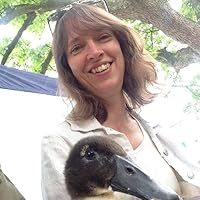
Teika Marija Smits is one of the finest short story writers to emerge on the genre scene in recent years. Her storytelling relies on keen observation of the world and people around her interpreted through the lens of her imagination, dancing between science fiction, realism, and horror. Umbilical features selected stories from her output so far alongside several new stories, published here for the first time.
An AI repairman keeps his true purpose hidden; Baba Yaga sets up home close to a black hole; a mother and daughter share a unique bond which none can sunder; a painter literally invests body and soul in her work; a plague of flies search for their Madonna; Sherlock Holmes calls upon his psychic cousin Isadora for help with an intriguing case...
Icarus Dreams Death of the Grapevine His Birth The Wife That Never Was Umbilical How to Honour a Beginning Minotaur/Mindtour Delphine as Daedalus The Case of the High Pavement Ghosts Girls’ Night Out ATU334 the Wise Our Lady of Flies The Green Man A Piece of Fabric the Size of a Pin Machina in Deo The Eyes of the Goddess Herself A Survival Guide for the Contemporary Princess This Little Piggy Tough Love The Sun is God Star Making at Sellafield The November Room or Leaving the Labyrinth
High quality stories that defy both genre and gender boundaries.
Teika Marija Smits is a UK-based freelance editor and the author of the short story collections Umbilical (NewCon Press), which was shortlisted for the 2024 Rubery Book Award, and Waterlore (Black Shuck Books), as well as the poetry pamphlet Russian Doll (Indigo Dreams Publishing). In 2024 she edited the We-inspired speculative fiction anthology The Utopia of Us (Luna Press Publishing) to celebrate the centenary of the first publication of Zamyatin’s We. Most recently, she was the winner of the British Fantasy Society’s Sydney J. Bounds Award for Best Newcomer. She is delighted that ‘Teika’ means fairy tale in Latvian.
I love Teika's writing, and this collection doesn't disappoint. It is certainly an eclectic collection, incorporating short stories, flash, and poetry; fantasy, science fiction, ghost stories and fairy tales.... along with a dash or two of horror. There is whimsy and there is heart-breaking poignancy... even Sherlock Holmes makes an appearance! But through it all weaves Teika's undoubted skill as a wordsmith, and that is why I have no hesitation in recommending this book to anyone who appreciates a well-crafted tale.
I have followed Smits’ beautiful writing for some years but she’s been so successful in getting her stories into a huge range of journals that I couldn’t afford to buy each one in its setting! So it’s great to be able to buy a collection that’s wholly by her.
Horror, fantasy and science fiction – two out of the three genres I don’t usually read, but Smits writes with compassion and wisdom, looking at themes from motherhood to miscarriage, climate change to cancer, art to artificial intelligence. These are deep themes and Smits takes us with her to dark places, but there’s also love and hope offering a light to strive for.
I usually read a book of short stories in stints, breaking off to read a novel then returning for a few more. It’s a tribute to the writing here that I read it all in one stint, over a few days. My particular favourites are: “Death of the Grapevine” (no, Dave, no, don’t do it!), “The Wife that Never Was”, “Delphine as Daedalus”, “The Case of the High Pavement Ghosts” (that ending!), “The Green Man”, “The Sun as God” and, of course, the powerful “The November Room”. Lovely touches were the way two minor characters in the first story had their own story later in the collection, and that the poem that starts the book is referenced in the last piece.
Smits writing covers a wide variety of genres - science fiction, fantasy, fairy tale, horror, historical. As the title suggests, many (thought not all) of the stories here explore motherhood and the various emotions that can accompany it, and do so in a very powerful way.
My personal favourites - my current reading taste is increasingly leaning in this direction - were those that utilized horror, such as the titular 'Umbilical', a bittersweet body-horror extravaganza; 'This Little Piggy', which utilises haunted house tropes to explore fears over personal infertility; and my standout favourite 'Our Lady of Flies', an incredible story of insecurity, dysmorphia, and mental breakdown.
There is plenty to enjoy here, and given the thematic and/or literal connections between many of the stories, I expect it is a collection that would reward rereads. I look forward to Smits' next release!
Ever since I started reading this collection, it’s all that’s been on my mind this week. I keep thinking back through each story and their individual importance in talking about life, creation, relationships, etc.
She incorporates so many different vantage points, cultures, and perspectives that it really put my mind in meditative mode. I haven’t read something in a long time that had this effect.
I love the collections in this assortment. Some have made me cry (repeatedly) and others made me smile. Some actually confused me and I had to ponder on them for a while. The first lines I’m including today is one of those short stories that I just can’t stop thinking about – it left a deep mark on my soul and will always be with me.
This is the author’s first collection of stories, twenty-one in all, plus one poem. Sixteen of them were culled from appearances in a variety of outlets over the past ten years, five are making their first appearance in print. The contents range in genre over SF, fantasy, myth and horror, with stories sometimes crossing over their borders.
In general, literature deals largely with the themes of love, sex and death. Science Fiction tends to be more restrictive (love for example tends to be bypassed and sex for the most part avoided) but its signature feature is in making its metaphors literal. (The outstanding example of that here is the title story, about the bond between a daughter and her mother.) Fantasy, myth and horror act more as warnings and as stripped-down guides to human relationships.
In the first few stories here the theme of death seems to be a connecting thread but this does not then extend to the collection as a whole.
The poem, Icarus Dreams, opens proceedings and partly sets the tone by inviting Icarus to heed his father and rewrite his story. Smits is more than adequately equipped to provide new shapes to old tales. To that end there are herein updated treatments riffing on the Blackbeard and Theseus stories, while the Baba Yaga of Russian folklore meets an AI.
But the author has further strings to her bow. Elsewhere, moles on the skin are a marker of long, perhaps immortal, life, and carry the threat of incarceration to unravel their genetic secrets. We meet an AI repairman whose encounter with his charge becomes reminiscent of 2001: A Space Odyssey. One story (not narrated by Dr Watson) features Sherlock Holmes, but only in a bystanding part as he asks his psychic investigator – and female – cousin to help him. We have tales where a psychological decline follows the break-up of a relationship which had settled into routine, the Green Man appears to rescue a ravaged future Britain, a woman inherits a bookshop with an unusual kind of ghost, AI/human hybrids question each other over their origins – and the nature of God. One story centres on the reliving of bottled memories. There is an African inspired SF/fantasy cross-over. A woman falls in love with her witness protection AI android bodyguard, another tells of the lengths she went to in an attempt to get pregnant, a brother and sister hatch a plot to rescue their twin siblings from VR addiction in a warehouse, a female painter who sells pictures under her brother’s name finds she cannot hide her expertise from J M W Turner (with whom she shares the same reverence for sunlight,) two people celebrate their involvement with the commercial start-up of nuclear fusion at Sellafield, a woman on the point of death remembers incidents from her life while subjectively traversing a fantastical purgatorial maze.
Their telling requires a comprehensive array of authorial registers and Smits handles them all well, with very few infelicities. She is a talent to watch.
This collection of short stories defies expectation and takes the reader on a wild journey. Smits is an amazing writer who knows how to create realistic and relatable characters. While her stories cross many genres from sci-fi to fantasy to horror and just about everything in between, her style is all her own. I particularly loved the short story Umbilical as I related to the feelings, having lost my own child to cancer. Smits proves there isn't a genre or topic she can't successfully tackle. Her brazenness in taking on each genre with consistency and thoroughness proves she is an author to watch.
As happens with short story collections, there were a few stories I couldn't get in to, however, I suspect that is simply matter of personal taste. All were written well and felt complete. Some were intriguing enough, I wanted more and thought could be expanded into a novella or novel. At every point, I felt I was reading a well thought out and professional story. Smits is especially adept at setting a scene and inviting the reader to join the characters on their journeys. Well done!