Ce roman se passe à paris. Et pourtant on y croise des crocodiles.Ce roman parle des hommes. Et des femmes. Celles que nous sommes, celles que nous voudrions être, celles que nous ne serons jamais, celles que nous deviendrons peut-être.Ce roman est l'histoire d'un mensonge. Mais aussi une histoire d'amours, d'amitiés, de trahisons, d'argent, de rêves.Ce roman est plein de rires et de larmes.Ce roman, c'est la vie.
Katherine Pancol moved from Casablanca to France when she was five. She studied literature and initially became a French and Latin teacher, before turning to journalism. While working for Paris-Match and Cosmopolitan, she is noticed by an intuitive publisher who encourages her to begin writing. Following the success of her first novel Moi D'abord (Me First) in 1979, Pancol moves to New York City where she spends the next decade pursuing creative writing and screenwriting classes at Columbia University while producing three more novels La Barbare in 1981, Scarlett, si possible and Les hommes cruels ne courent pas les rues. Influenced by the American way of life, her style becomes even more enjoyable, action packed and fast paced. Pancol's insights into human psychology, and particularly women, are amazingly accurate and her sense of details often shaded with wry humor. Her gift to lift people's spirits while providing great entertainment has been key to her success, inspiring many women to dare to be themselves while keeping a positive relationship with life itself. Her novel The Yellow Eyes of Crocodiles (published in 2006) has been a huge success in France, where it sold more than one million copies and received the "Prix de Maison de la Presse, 2006" for largest distribution in France. Katherine Pancol was awarded "Best author 2007" by Gorodets Publishing (Moscow). The Yellow Eyes of Crocodiles was the 6th best sold book in France in 2008 (Le Figaro Littéraire). The Yellow Eyes of Crocodiles is already being translated into Russian, Chinese, Ukrainian, Polish, Italian, Korean, Vietnamese and Norwegian. Katherine Pancol is divorced and has two grown children. She lives in Paris, France where she is currently writing the third sequel to The Yellow Eyes of Crocodiles. Pancol updates her blog every week on her web-site (http://www.katherine-pancol.com). - from Wikipedia
Sisters: one is introverted and 'frumpy;' the other is extroverted, sexy and has all the guys wrapped around her finger. So in this French novel, the sexy sister, who married into money through her good looks and who appears to have it all, gets her frumpy sister, a medieval research historian, to ghost-write a historical novel for her.
The medieval historian is in dire straits with two daughters and an ex-husband who just ran off to Africa. He took off with his girlfriend to raise crocodiles for the Chinese market. Her two daughters repeat the sister pattern: the older one is hot and has all the guys mooning over her and doing her bidding. The younger daughter, like her mom, is plain looking and a timid wallflower.
The ghost-written novel is wildly successful and we get a bit of a role reversal because the deal is that the plain, intellectual sister will earn all the money from the book while the good-looking one takes to the airwaves to do PR for “her” novel. (I’m not giving away any plot because all of this is described on the book jacket.)
Although translated from the French and set in France, the story could take place anywhere in the modern Western world.
The author was born in Casablanca in 1954 and moved to France when she was five. She tried teaching and journalism and then moved to New York for a decade after she began to write. All her novels involve women’s issues and have a wry sense of humor. Now she’s back in France. Crocodiles sold a million copies and she wrote a sequel, The Slow Waltz of Turtles. I believe those are her only two novels translated into English.
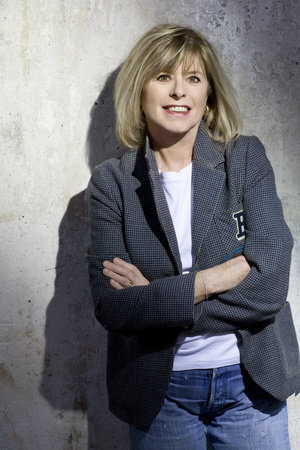
Top photo of a crocodile farm in Zimbabwe from earthisland.org The author from penguin randomhouse.com
Francuski bestseler, ženski roman s dobrom pričom i prvi deo trilogije... U svetu su prodati milioni primeraka njenih knjiga a po ovom romanu se upravo snima film... Autorka je prava francuska dama, imala sam priliku da je upoznam pre nekoliko godina... :)
I picked this book up with doubts. My friends in France all...smiled with the look of "ugh", popular, but such a bad book.....sadly, for them, I liked it a lot. I got pulled into the story....and found myself reading 100 pages per day. Addictive like dark chocolate covered almonds.
The story? A woman...who is not so self-confident separates from her husband. She puts up with awful family members (including her daughter)...and finds her life and her footing. All while writing a book about a XXII woman. Maybe cheesy in points, but a good read....for the beach? Or when spending all your free time teaching.
I bought this book because it was an international best seller and so I figured that it had to be a good read. The back blurb made it sound like a comedic adventure but I have to confess that I didn’t like it. The story didn’t live up to the book description’s promises. I found the main character, Josephine, to be whiney and too much of a martyr. Her husband runs off with his sexy mistress, leaving Josephine to look after their two daughters. On top of this he takes out a loan for 200,000 Euros, defaults on the loan and Josephine simply starts paying the loan repayments because the loan is in both their names. She claims he tricked her but the reality is she didn’t even bother to read the papers that she was signing. She doesn’t get angry or confront her scheming husband, make a fuss, or tell anyone. Instead she suffers in silence, which I thought made her a pathetic character, and didn’t do much for the portrayal of modern day French women. Josephine’s neighbour, Shirley, is a woman in hiding with a secretive past, and later it’s revealed that she’s actually connected to the British Royal Family, and is an occasional bodyguard to the Queen. The idea may seem funny but story lacked the strength to pull it off convincingly. In amongst all of this Josephine writes a best seller and overcomes a lifelong emotional trauma from her childhood in the blink of an eye, or a matter of lines. I feel that this book tries to include too many big, bold events that simply aren’t handled all that well. The worst of it was that I didn’t find it funny at all. I found most of the women in the books irritating, self indulgent and annoying. Shirley, the neighbour, was the only sane character, and then she lost credibility throughout the book with irrational moments tied to the royal family angle. In my opinion, this book had great potential but it’s missed the mark. There were simply too many elements that weren’t believable, and as such the story lacked credibility. All up it was a disappointing read, and I guess it shows that just because a book is on the best seller list it doesn’t mean it’s brilliantly written.
Non merci. J'ai cru que je n'allais pas me rendre à la page 50. C'est bourré de clichés qui véhiculent une image de la femme complètement débile. Et c'est tellement mal écrit qu'on n'arrive pas à voir les véritables thèmes que l'auteur tente maladroitement d'aborder. Je ne comprends pas pourquoi c'est un bestseller, pour moi c'est un mauvais soap.
No puedo decir que el libro me haya gustado, por momentos incluso pensé en dejarlo de lado.
Empieza lento, muy lento, situando a los personajes en su lugar, relacionando a unos con otros, pero de una forma tan aburrida que no puedes evitar preguntarte: ¿pero de verdad me interesa todo esto?
Hay un grupo de personajes egoístas, malvados, interesados, que rodean a una protagonista buena, buenísima pero débil hasta la exasperación. Unos caracteres tan planos e irreales que resulta imposible ninguna identificación ni con los secundarios ni con la protagonista. Nadie es tan malo, nadie es tan bueno, nadie es tan tonto.
Si superas el tedio del principio, llega un punto en el que sigues leyendo porque te preguntas cómo acabará todo. Si algunos recibirán su merecido, si otros encontrarán la felicidad, pero el final decepciona. No es categórico en lo que respecta a muchos personajes, está demasiado diluido, demasiados pequeños hilos sin importancia que se van cerrando para dejar cómo el último el más ñoño, el menos interesante, la relación de la protagonista con su hija mayor, una hija odiosa que sigue siendo odiosa hasta el último segundo y cuya supuesta redención es inadmisible como tal.
Sé que detrás de este van otros dos libros, de hecho, llegué a Los ojos amarillos de los cocodrilos" por la recomendación de "Las ardillas de Central Park están tristes los lunes", pero no me siento con ganas de leer más de esta autora.
The Yellow Eyes of Crocodiles is the first novel in the Joséphine series by French author, Katherine Pancol. When she discovers her unemployed husband Antoine (call me Tonio) is having an affair with his manicurist, Joséphine Cortès kicks him out of their Paris apartment and resolves to somehow manage, with two daughters, on her own. Her meagre salary at the CNRS as a 12th Century historian will need to be supplemented; luckily, her brother-in-law, Philippe Dupin offers her some translation work.
When Antoine and his mistress, Mylène desert Paris to run a crocodile farm in Kenya, Joséphine knows her daughters’ survival is dependent on her: 10-year-old Zoé can still be reassured, but 14-year-old Hortense is becoming a wilful handful. And the bank manager has a nasty surprise for Joséphine. Desperation and a sense of filial loyalty see her agreeing to a dubious deal with her glamorous (and manipulative) sister, Iris: Jo will write a novel set in 12th Century France; Iris will relish doing the publicity and taking the credit; she’ll funnel the fees to Jo.
Pancol’s plot is wholly credible; it has a few twists and turns to keep things interesting as some two years of Joséphine’s life are detailed against a backdrop of other family and neighbourhood dramas: an eviction, a secret Royal baby, a long-standing unrequited love, a black-sheep twin, repressed memories, internet dating, lovers, plenty of gossip, mistresses, revealing YouTube clips, fake designer bags, hungry crocodiles, failing marriages, and a longed-for heir.
Pancol gives the reader a diverse cast of characters, none perfect, all flawed, all very human, with their strengths and weaknesses, none wholly good or bad: a few are easy to despise; others draw the reader’s sympathy; insecure and reticent, Joséphine will, at first, frustrate, as we wait and hope for her to lose her naiveté and develop some backbone. And everyone has secrets they’re not telling.
This first book (of three so far) is translated from the original French by William Rodarmor and Helen Dickinson. Readers who enjoy this novel will be pleased to know that the second book, The Slow Waltz of Turtles is also available in English. Funny, moving and highly entertaining, this is a very enjoyable read.
I read this book over ten years ago, so my memory of the specifics are vague. I mostly remember that it was lent to me by a well-meaning but clumsy colleague named Joanne, who always saw me with books and thought she would lend me one she had liked – which was sweet of her. I read it, and then gave it back to her and had to be really careful to never let it slip that I thought the book was sentimental, silly and not that well-written or interesting… because Joanne had clearly loved it and she couldn’t wait for the sequel to come out, and would I like to borrow it when she was done with it? Groan.
I have one colleague now, Louis, who loves books as much as I do, who is also a reader of classics and strange books and who is as upset as I am by the mediocrity of the stuff he sees on best-seller shelves at the “mostly knick-knacks with a book section” store near the office. I haven’t heard much from him since the lockdown, but seeing this book on my feed made me think of him and made me hope he has a big pile of great books to keep him company.
I was listening to "Fresh Air" on NPR recently, as I often do in the morning, when one of their regular book reviewers started talking about this book. She went on about how it had been a best seller in France and had been translated into several different languages and had finally made it into English, translated by William Rodarmor and Helen Dickinson. She raved so about the book that I decided to put it on my TBR list, even though I knew nothing about the author.
Indeed, I had never heard of Katherine Pancol. Now that I've read her book, I won't be forgetting that name.
The plot of the novel might read like a typical chic-lit or women's novel formula. We have the drab 40-something housewife who is deserted by her dolt of a husband, who runs off with his mistress to Kenya where he plans to become rich raising crocodiles, but not before emptying their joint bank account and taking out a loan for which the wife has naively co-signed.
The naive wife is left to raise two daughters on her own. The older daughter is a thorough-going teenage brat who delights in tormenting her mother. The younger daughter is a sweet and sensitive child.
In order to take care of the family, the drab housewife has to pinch pennies and take odd jobs. Nothing really new about that - she had been doing it for at least a year since her now-absent husband had lost his job and refused to find another.
This housewife, Josephine (Jo) Cortes, starts out as an authentic drudge, but she is not without resources, one of which is her intelligence and her scholarship. She is a scholar of medieval history, particularly of 12th-century literature and that allows her to earn a meager living tutoring and translating.
She has a beautiful older sister, Iris, in whose shadow she has lived for her entire life. Iris is married to a successful lawyer with whom she has a son, but she is really doing nothing. Her life is all blather and bravado and she is bored beyond tears.
Iris comes up with a scheme that she thinks will solve both sisters' problem. She suggests that shy and retiring Jo write a historical novel set in the 12th-century and beautiful and charismatic Iris will pretend to be the author and will do all the interviews and book tours that are required of an author trying to sell a book. Iris will get all the glory and Jo will get all the money. As soon as Jo agrees to this, the reader suspects that things are not going to go exactly as planned, but, in fact, things proceed swimmingly for a while. Then the book becomes the literary sensation of the year!
The rest of the novel is about how the sisters' lie affects Jo and her children, Iris and her family, and all the other several fascinating characters that we get introduced to along the way. Suffice to say that Jo's virtue shines through, she becomes a more confident person, she loses weight, gets highlights in her hair, and ends up rich and with a dishy boyfriend. In other words, it's just your typical middle-aged suburban housewife's life story!
Did I mention that all of this takes place in Paris and its environs? Yes, Katherine Pancol is a French writer and this novel seems very French in its conception and outlook. The book explores relationships and infidelity and the characters' attitudes toward them, how they deal with them, but essentially this book is about money. It's all about what money can and cannot buy and how having enough money makes all the difference in people's lives.
There are just a few quibbles with the story or maybe with the translation. For example, in Kenya one Christmas, the absconding husband and his mistress are unable to find turkey for their dinner so that have "wapiti." Maybe. But it seems to me that if there is one thing less likely to be found in Kenya than turkey, it might be elk meat. Also, the ending of the tale, as often happens, seemed a bit contrived in order to tie up all the loose strings.
But I can barely even bring myself to mention any complaints, because the truth is I loved this book! Once I got a few pages into it, I could hardly put it down.
This was the first of at least three books featuring these characters. I don't think the other two (The Slow Waltz of the Turtles and The Central Park Squirrels Are Sad on Monday) have been translated into English yet, but I'm definitely on the lookout for them. I can't wait to see what happens to Jo.
Sunku šį romaną apibūdinti kaip nors kitaip nei „labai prancūziškas“. Į tuos du žodžius, mano manymu, sutelpa tikrai daug – tam tikras dramatiškumas ir hiperbolė, aikčiojimai ir šūkčiojimai, meilė, seksas, neištikimybe ir aistra, o kur dar daug dėmesio išvaizdai, statusui ir pinigams. Į tikrai nemenkos apimties kūrinį autorė sugeba sudėti visa tai ir daugiau, todėl skaitytoją ji paleidžia į gana spalvingą kelionę.
Istorija gana tradicinė – dvi seserys, viena jų – graži, turtinga ir rodos turinti viską, ko tik galima užsigeisti, o kita – gyvenanti nelaimingoje santuokoje, praradusi save, žinoma, ne tokia graži ar geidžiama. Paraleliai sekdami abiejų veikėjų gyvenimus netrukus suprantame, kad ne viskas taip gražu, kaip gali pasirodyti iš pirmo žvilgsnio – čia daug apsimetinėjimo, neigimo, paslapčių ir nutylėjimo. Kone visi vyrai šiame romane neištikimi savo žmonoms, visiems jiems rūpi jaunesnės ir gražesnės, kas antras pokalbis sukasi aplink pinigus, o jei ne apie juos – tai apskritai apie sunkų gyvenimą. Ir tai galiausiai ima kiek varginti, ypač turint omenyje didelę knygos apimtį. Suprantu, kad autorė tiesiog norėjo parodyti vienos šeimos gyvenimo chaosą, bet man viskas pasirodė šiek tiek per daug melodramatiška, kaip viename iš tų serialų, kuriuos būdama jauna paauglė žiūrėdavau grįžusi iš mokyklos ir norėdama kuo ilgiau atidėti namų darbų ruošimą. Tada gal ir buvo visai smagu pasinerti į kiek nerealistiškas kažkokių žmonių gyvenimo peripetijas, bet dabar skaitant man trūko gylio, nukrypimo nuo jau gerai pažįstamo kelio, kuris čia ir užsibaigė gana aiškiai.
Neabejoju, kad mėgstantiems būtent tokią prancūzų literatūrą – ne tą subtilią ir dažnai pretenzingą, o spalvingą, garsią ir primenančią atrakcionus, čia bus tikra šventė. O man knyga stoja prie tų gana vidutiniškų, kurias perskaičiusi nesigailiu, bet ir daug pasiėmusi iš istorijos nesijaučiu.
As usual, I received this book through the kindness of some giveaway or other. In this case it appears to have been an actual GoodReads giveaway. That certainly doesn't happen much any more!
So to begin, I realize that this book is probably in a genre more generally considered appropriate to the female gender and because of that, as a dude I'm a bit of an interloper. Despite that slight misalignment, I found this book pretty delightful. It's complexity of character made me realize just how bad I am at keeping names straight. After 40 pages I came up short and found I had no clue who all these people were so I went back through those pages and made a nice tidy relationship diagram of who slept with whom and who was previously dating whom and which characters were, in fact, screwing like rabbits in the back storeroom. Of all these there are many examples.
On the positive side, after sorting out all the 'whos' in diagrammatic format, this story had quite a bit to say. The intrigues were entertaining as well as demonstrating a clear and refreshing evolution of character and story. I found myself very invested in the characters and fervently rooting for some justice at the end and for things to turn out just so. I took a couple days getting started but by half way I was staying up late and reading before work to get through it. It does get ahold of you.
On the neutral side, some of the subplots came across a bit weakly. I was tied up in most of them but others just left me rather quizzical. There are certainly high points and "meh" points. Also, in this translation some of the dialog just doesn't come across as very Parisian. At times the characters seem more Midwestern than European and one wonders how a passage from Little House on the Prairie leaked into the novel.
One final item of note is that this book is exceptionally graphic at times. It's not exactly pornographic but it certainly pulls no punches when it comes to who's doing what to whom. If you're easily offended by such things then don't bother. Personally I found such candid talk refreshing but then again, I am a guy and we do have a different view on such things most of the time.
In summary, a grand and enthralling book that could have used just a little better translation job. It's a quick and entertaining 430 pages.
The were some of the most unforgettable fictional characters I've ever read. This novel was a totally new reading experience - because the characters were so FRENCH. Meaning that they have their own way about them - from fashion, to food, to beliefs on marriage and mistresses. I found myself laughing out loud, gasping with surprise, wanting to smack a few of these characters, feeling deeply sympathetic to Josephine and also deeply respecting her even when she seemed like her whole world of family and friends were walking all over her. There were numerous surprises in this novel - characters who seem to be one way turned out to be completely different. Circumstances seemed to point to one impression but ends up being completely different. I loved that. This novel truly does have a cast of characters:
There's Josephine - a specialist in 12th century history and the character I loved the most. She seems like a pushover, and maybe she is sometimes, but she's also just an awesome person - kind, caring, loving. And she can put her foot down when she absolutely needs to do so. Sometimes you'll want to shake her, but most of the time you can't help but like her. A LOT! Here daughters: Zoe and Hortense - Zoe is likable and sweet. Hortense has attitude and knows how to use her looks to manipulate men. She's a handful - an understatement, actually! Antoine - Josephine's ass of a husband & father of Zoe and Hortense - Never the man he should be. Mylene - Antoine's mistress, a strong woman. Luca - a guy Josephine meets in a library, swoon. Iris - Josephine's sister - so not who I thought she was, I'm keeping my mouth shut - you'll figure her out eventually. Philippe - Iris's husband who is very wealthy - and not what he appears to be, either. Alexandre - Philippe and Iris's son - sweet boy. Henriette - Iris and Josephine's mother- Oh gawd - a nightmare of a mother!!!!! Marcel - married to Henriette, a self-made highly successful businessman & good guy, in love with Joisane, and so likable. Joisane - madly in love with Marcel, a bimbo? I didn't love her or hate her, but I did seem to understand her. Shirley - an Englishwoman with secrets & friend and neighbor to Josephine - she's kick-ass awesome. Gary - Shirley's son - crushing on Hortense, swoony for the younger set.
AND THERE ARE MANY MORE minor characters! Surprise, surprise - I didn't have any trouble keeping them all straight. That's because Pancol does an amazing job giving each very distinct characteristics and personalities!
So, if you love a character driven novel, this is the ultimate. And it's set in Paris!! <3 <3
Oh, and the crocodile references are great - woven into the story line in many different ways. Love that!
Thank you to Pamela Dorman Books for a review copy!
Lo he intentado, he llegado a leer una cuarta parte del libro, pero se me estaba haciendo eterno y finalmente ha podido conmigo. Historia sin pies ni cabeza. Relata constantemente el pensamiento de varias mujeres. El argumento, ninguno. La dureza de la vida para la mujer trabajadora moderna, recién divorciada y con hijos. Con amantes y líos amorosos de por medio. ¿No pasa nada más interesante? No. Infumable, no sé cómo ha dado para una trilogía.
Das war wirklich eine sehr unterhaltsame Lektüre. Es geht um zwei Schwestern, die unterschiedlicher nicht sein könnten. Iris ist die Ehefrau eines international angesehenen Anwalts und Joséphine ist die Frau eines Träumers, wenn man es romantisch ausdrücken möchte.
Iris hat einen Sohn und Jo hat zwei Töchter. Ihre älteste Tochter ist stark, eigenwillig und steht oft auf Kriegsfuß mit ihrer eigenen Mutter…..
Zuviel möchte ich jedoch nicht verraten. Denn es entspinnen sich nach und nach komplexe Charaktere, die alle ihr Päckchen zu tragen haben.
Manche Protagonist:innen sind sogar in ihrer Oberflächlichkeit tiefgründig.
Ich muss leider einen Punkt abziehen, da die Handlung für mich persönlich einige Längen hatte. Dennoch kam man so den Charakteren näher. Dadurch, dass man viel Lesezeit mit ihnen verbrachte 😅.
Ich fand es wirklich großartig, dass die Autorin es geschafft hat, so verschiedene Persönlichkeiten zu erschaffen, die wirklich alle ihre Eigenheiten, Ecken und Kanten hatten. Außerdem gefiel es mir, dass die Geschichte durch stetige Perspektivwechsel weiter getragen und weitererzählt wurde. Z.B. traf sich eine Figur in einer Szene mit einer anderen und wir verlassen die Szene mit der Figur, die hinzukam. Wir gehen quasi mitten im Text mit dem nächsten Protagonisten weiter. Mir hat das Spaß gemacht und dem Text eine gewisse Dynamik verliehen.
Nach dieser umfangreichen Geschichte, mache ich aber nun erstmal etwas Pause, bevor es mit Band 2 weitergeht.
Momentan möchte ich mich - aus aktuellem Anlass - mit der Longlist des deutschen Buchpreises etwas auseinandersetzen.
Les personnages sont creux, ennuyeux, et pas aimables. L’histoire est plein de clichés. Il y a des petites sections intéressantes, et ensuite, des bêtises encore. J’ai fini le livre par la seule volonté, et la fin n’était pas satisfaisante. Je l’ai donné deux étoiles et pas une car le français n’est pas ma langue maternelle, donc je crois qu’il y a des choses que j’ai manqués... Mais c’est tout
Ik heb dit boek met veel plezier gelezen, ik vond het ontspannende lectuur. Het hoofdpersonage is Josephine, die in het begin van het verhaal verlaten wordt door haar man Antoine, en achterblijft met haar twee dochters, de beeldschone 15jarige Hortense en de 10jarige Zoë. Josephine heeft ook nog een zus, Iris, die ook erg aantrekkelijk is en getrouwd is met de rijke Philippe, ze hebben een zoontje van Zoë's leeftijd, Alexandre. Dan is er ook nog Henriëtte, de moeder van Josephine en Iris, die zich na de dood van haar eerste man opgewerkt heeft in het bedrijf van Marcel, en zich onmisbaar gemaakt heeft, en dan is Marcel met haar getrouwd, en Henriëtte heeft het heel slim gespeeld, zodat ze inspraak heeft in hele bedrijf, en natuurlijk ook over de inkomsten. Een goede vriendin van Josephine is Shirley, die in hetzelfde appartementsgebouw woont met haar zoon Gary, en die een geheim meedraagt dat ze met niemand kan delen. Josephine is een academisch onderlegd persoon, gespecialiseerd in de geschiedenis van de 12de eeuw. Op een dag heeft Iris, om op te vallen, zich op een feestje waar ook een uitgever aanwezig is, laten ontvallen dat ze een boek aan het schrijven is over het leven in de 12de eeuw, wat helemaal niet waar is. Ze dist verschillende anecdotes op die ze van Josephine gehoord heeft en krijgt een contract aangeboden. Nu is het dus zaak om Josephine over te halen om zo'n boek te schrijven. Ondertussen is Antoine naar Afrika verhuisd, met zijn minnares Mylène, en is manager van een krokodillenfarm geworden. Marcel dan weer, moe van het geterg van Henriëtte, heeft de liefde gevonden bij zijn secretaresse Josiane, en zou graag besluiten om samen met haar verder te gaan, maar dan moet hij Henriëtte buiten spel kunnen zetten, om zelf de middelen te hebben om een nieuw leven te beginnen. De laatste persoon dan die ik vermeldenswaard vind is Luca, een man die Josephine ontmoet heeft in de bibliotheek. In dit boek gaat het dus over het leven van deze personen, hun vreugde en verdriet, hun hoop en teleurstellingen, hun vechten en hun wanhoop. De schrijfster heeft er een boeiend verhaal van gemaakt, met sommige onverwachte wendingen, en andere verhaallijnen die dan weer ongeveer lopen zoals je kon verwachten, of in elk geval hoopte dat het zo zou zijn. Ik vond dit boek niet echt een topper, maar ik kon het toch wel smaken.
In the burbs of Courbevoi, outside of Paris, Joséphine Cortès and her husband, Antoine, have fallen out of step with each other. He is unemployed; she is trying to make ends meet on her pittance as a 12tch century medieval scholar. Their radiantly beautiful and arrogant daughter, Hortense, is on the verge of womanhood, and has little respect for her overweight, overwrought mother, who carries herself with slack ill-confidence. The younger one, Zoé, is bashful and sensitive. When Antoine runs off with his mistress to Kenya to start a crocodile farm, Joséphine tries to keep the family from falling apart. The rest of the story is watching the gradual transformation of Joséphine from insecure, reticent, and overwhelmed to a woman who is ready to take charge of her life. This means also dealing with her beautiful, wealthy, and manipulative socialite sister.
Iris has a plan to recapture her own joie de vivre and get back in the limelight, while helping Joséphine earn a lot of money. She finally talks her sister into writing a novel in her own métier, the 12th century. Joséphine will get all the money, and Iris will get all the fame, by purporting to be the author. Will this plan work?
Says Josephine: "I see all, I feel all, I am the depository of thousands of details that stab me like shards of glass, and that other people don't even notice."
This is a French screwball comedy of manners, with some poignant and pithy moments slipped in effortlessly. As the book jacket states, it is the "ultimate upmarket escapist read." This is what I call a fine sorbet book, one that is contrived and predictable at turns, but still keeps you wanting more and wondering how it will ultimately bring characters together--or apart. Iris's husband is a very observant man, and Joséphine and Iris's mother is a cruel and sexless woman, married to their stepfather, Marcel, who has been in love with another woman, Josiane, for twenty years. Then there is Shirley, Joséphine's best friend, who has secrets of her own. And, of course, there's Antoine, struggling in Kenya.
"But in the evening, reality didn't have such a jagged edge, and the yellow eyes of crocodiles were a thousand points of light."
Read this for the fun of it. It's a very swift read--don't let the 400 pages fool you. It's a smaller than average paperback, and the sentences just pour like silk milk. You can probably start it one day and finish the next. It's a feel good, witty story about transformation and coming to terms with your authentic self. Well, sometimes you have to use a little subterfuge to get there...
I had no idea what I was walking into when I first started this book. I don’t usually read work by foreign authors but I gave this one a chance because I thought it sounded good and IT WAS!
In its jumble-y, multiple pov style, this story was really incredibly moving and powerful and I really enjoyed it. Josephine is a wonderful human being and she reminds me a little bit of myself: always a people pleaser and having a difficult time saying “no.” Hortense had me irritated the whole time but as a young woman, I can relate to her also. Sweet little Zoe was more of a background character to me but I still loved her disposition.
Shirley is more of an icon to me than how Iris was portrayed as one. Love Iris, minus the manipulation tactics, but Shirley had more mystery to her and more secrets that made her character super interesting.
Marcel and Josiane were weird in my opinion but they have a kid and they’re happy. Henriette and Antoine essentially got what they deserved but I felt bad for Antoine’s demise…..
Overall, a really good book and I enjoyed it a lot!
Je n'ai absolument pas accroché avec ce livre. Premièrement, le style. Loin de moi l'idée de jouer la jeune fille prude et bien élevée mais je suis restée franchement gênée devant le style cru de Madame Pancol. Je ne le qualifierais pas de vulgaire mais plutôt de déplacé, voire lourdingue (on a quand même le droit à du "popaul"...) Deuxièmement, et c'est ce qui a le plus chatouillé la féministe qui sommeille en moi, ce roman est truffé de stéréotypes sur les femmes et leur statut dans la société. Ce n'est bien sûr que mon avis, une impression que j'ai eu dès les premières pages du roman et qui n'a fait que s'intensifier au fil de sa lecture. La femme ne peut pas vivre seule, La femme est faite pour satisfaire les hommes, et tant d'autres idées toutes faites se dégagent de ce livre.
Bien sûr, ce langage cru est propre à certains personnages (Marcel notamment) et certains lecteurs apprécient peut être justement le côté caméléon de la plume de Katherine Pancol, capable de finesse à certains moments et de "franc-parler populaire" à d'autres. Mais de mon côté, ça ne m'a pas franchement plu. Quant-aux stéréotypes sur les femmes, certes l'auteur ne les exprime pas "sous sa plume" mais dans les pensées des personnages. Cependant, à force de croiser ces idées toutes faites au fil des pages, j'en ai fini par conclure que Mme Pancol en était peut être convaincue elle même (rien qu'un peu au fond d'elle) et ça m'a sincèrement gênée. Bref, je passe mon tour, même si l'histoire avait l'air plutôt "haletante" et pleine de rebondissements.
25/04/21 : Je dois avoir un côté maso mais j'ai repris et terminé ce livre. Et mon avis reste inchangé. Je ne comprends pas comment ce livre a pu suscité autant d'engouement.
16/02/20 : DNF 43% Bon, je jette l'éponge. Je rends les armes. Les crocodiles m'ont eue. D'habitude, je persévère même si je n'aime pas un bouquin en particulier quand c'est un genre que je ne lis que peu mais là, non je ne peux pas. Rien que de penser qu'il restait 378 pages à lire, c'était au-dessus de mes forces (et il y a deux autres tomes !). Je resterai donc à la 283ème page sur les 661 pages que constituent ce roman vide de substance.
Des personnages aussi caricaturaux qu'insipides, une histoire ou plutôt des histoires aussi clichés les unes que les autres et qui trainent en longueur. Et des longueurs, il y en a beaucoup. Beaucoup. C'est la seule explication pour que ce roman fasse autant de pages pour ne rien dire.
Pancol, je te dis : adieu. Je doute que nos chemins se recroisent de nouveau mais ne jamais dire jamais, n'est-ce pas ?
The story revolves around two sisters: Josephine who is a scholar and wallflower and lives in the shadow of her extravagant sister Iris. The two sisters have different lives, but they are close. The story unfolds around the shifts in both their lives and is full of characters that add to the shenanigans.
This is the first in a series and one that I think will be fun to revisit. I liked the levity of the story which balances out some serious moments. The story moves along at a good pace and while some moments are cringe worthy, I did enjoy the story.
This book was a fun surprise! It's a bit quirky and you have to be patient with Jo, but I thought it worth the read. It's very French as are the characters, except for the one who is from the UK.
At first I wasn't sure what to think about this book and, to be fair, a couple of parts were a bit crasser than I like (but nothing like the crassest parts of Crazy Rich Asians), but my main disappointment is that this was abridged from the French (still really good) and that the third book has not been translated into English, at least not yet.
Be warned--yes, Joséphine does start like a whiney pushover, but not only is there a really good reason for this you don't know yet, plus . But also, she's not the only main character. One of my favourite parts is that .
Humour is subjective, of course, and I can't say I enjoyed every bit, but I am giving this 4 stars which from me is very good.
Lengvai skaitoma istorija vasarai. Kiek ištęsta, vietomis užknisanti. Ypač tie intarpai apie rašomos knygos veikėją Floriną (lygtai toks buvo jos vardas) ir jos vyrus. Bet šiaip visai nieko.
Este es el primer libro de una trilogía (aunque no leeré los otros libros porque para mi la historia termina aquí y me agrada como termina). Este es uno de esos libros que dejaba de leer y retomaba en los tiempos muertos cuando no tenía nada más que leer. Es una historia sobre una familia y las muchas cosas que suceden, habla del amor y del interés por supuesto de la maternidad vista desde diferentes aristas, aunque para mi no fue una novela que me generara impacto o algún tipo de sentimiento, sólo quería terminarla de leer.
Nos cuenta de Josephine, una mujer con un marido, Antoine, y dos hijas, Zoe y Hortense. Antoine se encuentra en paro desde hace un buen tiempo, además que tiene una amante, cansada de la situación Jo le pide a este que se vaya de la casa porque ella no puede más, esto conlleva a que tenga que preocuparse por mantener a sus dos hijas sin la ayuda de él.
La Madre de Jo, Henrietta es una mujer clasista y que muestra un desinterés por Jo porque representa todo lo que no le gusta, casada con un hombre que no es millonario, estudiosa y nerd, además, que no se preocupa por su cuidado personal y lo que más le disgusta es su falta de ambición, mientras que su otra hija, Iris, está casada con un hombre millonario, tiene clase y elegancia, es bellísima. El marido de Henrietta, Marcel,es el padrastro de Jo y de Iris, es un hombre que ha trabajado muy duro para conseguir su fortuna, es un hombre sin clase y la única razón para estar casado con esta mujer es que pensó que ella le daría la clase que le faltaba, ella lo detesta. Marcel tiene una amante.
Por último tenemos a Iris que es una mujer que tiene todo lo que puede desear pero vive en un estado de sopor que invade todos los aspectos de su vida, intenta mantener una imagen de perfección aunque su matrimonio no está bien, no soporta el comportamiento de su hijo y realmente no tiene ningún aliciente su vida.
Me llama la atención, y no me ha gustado nada, es la narración en tercera persona que en ocasiones alterna sin motivo con la primera persona, a veces hasta en un mismo párrafo sin cambiar de narrador o personaje.
Me costó un poco al principio por impotencia hacia lo que le pasaba a la prota, pero AGUANTA que hay evolución de personajes muy importante. Eso, lo resumiría diciendo que es de los libros que me he leído en el que más evolucionan los personajes y lo que siento hacia ellos. Como he llorado con el final joder
The first chicklit by a French author for me. A page-turner. The feel-good kind well suited for my half lockdown spirit. The characters' depth are on par with that of a decent American origin; in fact, the translation was so well-done that I almost forgot the book was written in French. Now it got me hooked, I can't wait to read the sequels. Unfortunately book3 has yet to be translated.