Ennis began his comic-writing career in 1989 with the series Troubled Souls. Appearing in the short-lived but critically-acclaimed British anthology Crisis and illustrated by McCrea, it told the story of a young, apolitical Protestant man caught up by fate in the violence of the Irish 'Troubles'. It spawned a sequel, For a Few Troubles More, a broad Belfast-based comedy featuring two supporting characters from Troubled Souls, Dougie and Ivor, who would later get their own American comics series, Dicks, from Caliber in 1997, and several follow-ups from Avatar.
Another series for Crisis was True Faith, a religious satire inspired by his schooldays, this time drawn by Warren Pleece. Ennis shortly after began to write for Crisis' parent publication, 2000 AD. He quickly graduated on to the title's flagship character, Judge Dredd, taking over from original creator John Wagner for a period of several years.
Ennis' first work on an American comic came in 1991 when he took over DC Comics's horror title Hellblazer, which he wrote until 1994, and for which he currently holds the title for most issues written. Steve Dillon became the regular artist during the second half of Ennis's run.
Ennis' landmark work to date is the 66-issue epic Preacher, which he co-created with artist Steve Dillon. Running from 1995 to 2000, it was a tale of a preacher with supernatural powers, searching (literally) for God who has abandoned his creation.
While Preacher was running, Ennis began a series set in the DC universe called Hitman. Despite being lower profile than Preacher, Hitman ran for 60 issues (plus specials) from 1996 to 2001, veering wildly from violent action to humour to an examination of male friendship under fire.
Other comic projects Ennis wrote during this time period include Goddess, Bloody Mary, Unknown Soldier, and Pride & Joy, all for DC/Vertigo, as well as origin stories for The Darkness for Image Comics and Shadowman for Valiant Comics.
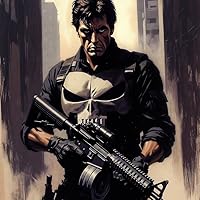
After the end of Hitman, Ennis was lured to Marvel Comics with the promise from Editor-in-Chief Joe Quesada that he could write The Punisher as long as he cared to. Instead of largely comical tone of these issues, he decided to make a much more serious series, re-launched under Marvel's MAX imprint.
In 2001 he briefly returned to UK comics to write the epic Helter Skelter for Judge Dredd.
Other comics Ennis has written include War Story (with various artists) for DC; The Pro for Image Comics; The Authority for Wildstorm; Just a Pilgrim for Black Bull Press, and 303, Chronicles of Wormwood (a six issue mini-series about the Antichrist), and a western comic book, Streets of Glory for Avatar Press.
In 2008 Ennis ended his five-year run on Punisher MAX to debut a new Marvel title, War Is Hell: The First Flight of the Phantom Eagle.
In June 2008, at Wizard World, Philadelphia, Ennis announced several new projects, including a metaseries of war comics called Battlefields from Dynamite made up of mini-series including Night Witches, Dear Billy and Tankies, another Chronicles of Wormwood mini-series and Crossed both at Avatar, a six-issue miniseries about Butcher (from The Boys) and a Punisher project reuniting him with artist Steve Dillon (subsequently specified to be a weekly mini-series entitled Punisher: War Zone, to be released concurrently with the film of the same name).
Garth Ennis is a masterful storyteller in the comic book genre. His Hellblazer stories stand out far above those of all others. His dialogue is real, down to earth, and relatable. His ability to tell the story through both dialogue and Steve Dillon’s wonderful art are perfection to be seen. Of all the comic book scenes I’ve read, is superbly written and displayed. As the two storylines converge, Everything about these scenes is PERFECT. Just. Perfect. The absolute best of the bunch so far, and the climax to John’s best storyline yet. I’m very sad to see Ennis and Dillon are done with the series at this point - they were perfect together with John.
This volume wrapped up the Ennis/Dillon/Fabry run. I think they finished the whole triple demon soul thing started in Dangerous Habits, but somehow I have a feeling that situation may pop up again in later volumes.
There was a huge twist in the storyline that I won't get into here. I don't think I'd be able to explain it adequately anyway to be honest. Let's just say what I thought was a somewhat slow story turned out with a shock. I just didn't see it coming.
There's also the Heartland one shot in this one, and that was one of the most dramatic stories Ive ever seen in comic book form. Just a really deep story dealing with family issues that really had no "comic book" elements. It was mostly talking heads but the story was so deep it never got boring. In my opinion this is an underrated story, because I've never seen that done in comics.
Overall a fitting send off for the Ennis team, but I really hated to see them go. I'm curious to see how the series progressed from here.
I know this is the end of Ennis' run on Hellblazer, but this book in no way stands on its own. Too many unknown characters and a deus ex machina that is just completely disappointing after all the build up. I'm not a big fan of Ennis at his best, and this certainly isn't it.
Сатана все еще расстроен: Константин обвел его вокруг пальца, но внезапно появляется шанс забрать его душу. Тем временем, Джон опять причиняет боль своим близким, знакомым и просто людям поблизости. Всё как обычно. Плюс БНП в парламенте, бунты на улицах, проститутки-героинщицы - короче, социалочка как она есть. Без неё Константин - не Константин.
As a fan who loves a good Hellblazer story but isn't a die hard Hellblazer fan I have to say I was disappointed with this effort. Too many characters I didn't remember or care about and a very unsatisfying ending. Constantine ends up doing nothing and the day is saved by a third party. I like the heroes of my story to actually be an active part of the story but so much of it was just talk and not any interesting events. as well, I have to say I am NOT a fan of Dillon's over simplistic art and I hate the way he draws Constantine - he seems to draw everyone practically the same, man or woman. I actually liked the tag on story Heartland a whole lot more than the Rake at the Gates of Hell storyline. But that didn't have Constantine in it and was more a well told human interest story (Dillon's art was actually better for this story). The whole subplot of slum riots didn't fit into anything and made no sense to me. Maybe for die hard fans it meant a little more. Overall, a pass for me. There are so many better stories for Constantine than this one.
This final collection of Garth Ennis Hellblazer stories unfortunately is not a brilliant swan song. It feels too much like a re-hash of past glories but not with as much success. The Prince of Darkness yet again pursues Constantine yet again, but this time John needs outside help to evade his grasp rather than outwitting him. This volume also includes Heartland, which attempts to be a poignant tale of the old country, in the vein of a previous story focussing on John's ex-girlfriend Kit and her friends in Belfast, but this one doesn't quite make it; maybe Ennis was trying too hard, or maybe the scenario only had one tale to tell, but Ennis's dialogue is nowhere near as sharp in this one-off issue as in the previous story. Steve Dillon's artwork is as effective and pleasing as ever and Glenn Fabry's covers are a delight, but the stories disappoint.
Rake at the Gates of Hell is Ennis back at his best. It's high-octane Constantine adventure that never lets up. It's brutal, it's got Constantine teetering on the edge, and it's a perfect ending to Ennis' run. There's one plot point that I don't understand about the importance of some stolen pages, but I'm willing to give that a pass in an otherwise note-perfect story.
Heartland is a lot slower, but it gains emotional depth and resonance throughout the story and ends up being a great family drama with no easy answers.
Esimene pool Esimesega Langenuist, deemonitariks muutunud Astra Logue'ga ja kohutava lõpliku kättemaksuga Constantine'le oli mega. Teine osa, lõppu kleebitud pikk jutustus Kit Ryani pere oludest Belfastis oli...huvitav tegelikult, kuigi esimest-teist korda lugedes tundus ülimõttetu ja puine jama. Aga ilmselt Ennisel oli vaja see Belfasti-teema endast välja kirjutada lõplikult. Tegelikult päris he apilguheit oli sellesse sõjatsoonis asuvasse linna keset EUd.
Garth Ennis concluye su aclamado ciclo en los guiones de Hellblazer con el - entonces - enfrentamiento definitvo entre John Constantine y el Primero de los Caídos. Una premisa instrumental para atar cabos, cerrar subtramas y llevarse mucho de su propio aporte al título, cuya etapa se caracterizó por un perfil más visceral, el salto del comentario social a lo plenamente político - sobre todo la omnipresente cuestión irlandesa - y atacar al personaje desde su faceta más vulnerable e íntima, dirección que no satisfizo a todos los lectores. Con luces y sombras, una de las mejores etapas del volumen.
Neskutečně lidské a zemité. Magie a peklo jsou tu až a druhém místě. Posrané mezilidské vztahy mají přednost. A ano i na Johna jednou dojde. SVĚTÁK PŘED BRANAMI PEKLA je ten typ příběhu, který před odchodem zhasíná a zamyká dveře. Poslední kamarádi umírají a ďábel zjistil jak se pomstít za to že s ním Constantine posledně vyjebal. Do toho městem zmítají nepokoje a všichni přicházejí o morální zábrany. Ďáblův finální monolog je třešničkou na dortu.
unfortunately I have not been writing reviews for every volume which makes it impossible for me at this point to understand which comic wad about what. Needless to say, Garth Ennis is as cool as it gets and Hellblazer is an awesome comic.
it was great to get a glimpse of some of Constantine's and Kit's preview life experiences which helps us understand the characters more deeply. It was also great to have an end of his dispute with the devil.
Me lo he pasado teta leyéndolo. Los personajes son la hostia. Me vuelve a pasar con Ennis que va ensamblando una historia que engancha y que tiene un desenlace que no está al nivel del resto. Algunos eventos se sienten demasiado acelerados. Pero bueno, lo recomendaría y si te gustan las aventuritas del bueno de Johnny esta no puede faltar en tu colección.
So this is how Garth Ennis ended his run of Hellblazer, eh? For a while I was a bit disappointed: even though the last collection I read must've ended 6 issues before this one got started, I still didn't know or recognize half the characters or what the relationships were all about. Also, I think Ennis bit off more than he could chew, what with writing a grisly story about racial violence coupled with Constatine trying to save the life of his ex-girlfriend hooker, not to mention the inevitable showdown with the Devil. The racial violence story was the weakest to me, just an excuse to have violence and reckoning and espouse a cynical attitude. The Devil's revelation to Constatine about the Creator was a bit of a letdown as well, as it seems a pretty obvious copout conclusion given the shitty condition of the Hellblazer universe, but considering he's the Devil, who knows if he's even telling the truth? I like the bit where Constatine tells the Devil he's God's conscience, that at least was an interesting spin (The Devil, in all his millenniums alive, never realized this? Talk about a character flaw.) But Constatine's salvation from this predicament came totally out of leftfield, as I didn't read whatever stupid crap issues set it up, and that pissed me off.
Ennis has a pisspoor attitude about religion, which is annoying, but didn't really hurt my enjoyment of his stories too much, and as these stories are riddled with English and Irish history and politics, it only makes sense. I'm not sure if enough happens in these stories, or if you can say your grappling with Big Issues if you say you are, by mentioning them, if that's enough or the same as actually doing it. In other words, these books are big on talk, but I'm not sure if that talk is only skimming the surface, if it's all allusion and illusion and reference and reflection and catchy Brit lingo and the like. I don't know, on the one hand the stories can seem mighty realistic, as far as human relationships go, but on the other hand they seem to be missing something I can't get my finger on.
Well, there's all this and then another story featuring Constatine's ex and her friends and family back in Belfast. This be a good character story with decent writing, and nary a devil or any other bugaboo in sight. Ennis is showing off a bit with this one, I think, showing how he has command of human relationship stories (he does) just as much as he does of horror ones (I'm not too sure). But all in all it's a great two-in-one, a good deal, this whole thing. I'd recommend this collection if it didn't involve anally reading every fucking issue Ennis read up to this point like it was some goddamn soap opera.
Ennis' run on Hellblazer, satisfyingly, ends with something of a bang. Not content with simply pitting Constantine against the First of the Fallen who is hugely pissed at being tricked by the cocky Cockney in "Fear and Loathing" Ennis leaves that one simmering in the background to show us not 1, but 3 additional sideplots, one involving a racial tension and rioting in Tower Hamlets, another involving one of Constantine's old girlfriends being raped and beaten by a pimp and his subsequent desire for revenge, and finally recent girlfriend Kit returns (we've seen the dire consequences of her leaving recently in the run) and provides John with at least a little closure somewhere in his life. On top of this there's a lot of religious philosophising and personal soul searching in the comic.
There's so much here to cram six issues that it oughtn't to work, but it does and brilliantly. At first glace there's a bit of a disconnect between the different strands of the narrative, but ultimately I think that's part of the point. If Satan is having an affect on Constantine's life in such a direct way, we're shown in maller vignettes the way that negative influence permeates throughout society. The link, really, is Constantine's involvement in each scenario and how helpless he is to exert his authority over each situation (and he still hasn't packed in the ciggies)and although ultimately he's in control enough to dispatch of an evil God rather swiftly, he's not got what it takes to talk to a kid meaningfully and stop a riot happening or to stop the woman he leaves walking out on him. Human freewill , perhaps, much bigger than God.
Ennis is a great satirist but with the high points of his Hellblazer saga he proves that he's so much more than a caustic writer, he shows a lot of sympathy and empathy towards his characters, admiring them for their glaring faults and making the apparently worthless seem very human.
“Rake at the Gates of Hell” ties together many plot elements of Ennis’ run for a thrilling and emotional conclusion. Constantine himself is fantastic here, all cynical and bruised and angry and vulnerable. There’s shocking action interspersed with with social commentary and terrific dialogue (as usual). Like parts of Ennis’ run, “Rake” is sometimes too wordy and the storytelling could occasionally be smoother. But it’s still a hell of an ending, with many standout scenes and a great showcase for Constantine. Ennis and Dillon only improve as storytellers after this with Preacher and Punisher. They set a pretty high bar with Hellblazer, though.
This book also collects the Heartland special, which revisits Kit’s family in Belfast. Ennis explores Northern Irish politics while delivering an all too human story of family. It’s slower than “Rake,” but very well-written and often funny. And Dillon proves he can create compelling drama from people talking just as well as violent action.
I was a casual John Constantine fan before this run and now I’m a Hellblazer convert. Also, as an Ennis fan who’s read much of his later work, I enjoyed seeing the beginning of some of his trademarks, such as interest in war and male friendship. Friendship is a major theme of his run and some of my favorite parts were scenes of friends talking.
Finally the Devil's quest for a way out of the bureaucratic loophole that Constantine stuck him in is over and the two go head to head. Well, not exactly head to head per se, since Constantine talked one of his demonic allies into manipulating the Devil into killing his triumvirate brothers (out of the reamins of which she forms a sword), and then it is the demon who kills the Devil with this newly forged sword. I'm not really fond of this cop out solution and the myriad of questions it raises, but that's just John Constantine for you. Nothing is ever done quite as expected, and he rarely has to get his own hands dirty... I did enjoy the Devil's little rant about God and Creation though. The Devil and God's conscience is a strange situation, but it actually makes quite a bit of sense because the Devil questions God's choices regarding humanity like a conscience makes any person think twice about their actions. But really, consciences aren't supposed to be disposable, even for God! He should just learn to ignore his like the rest of us do (haha).
This entire review has been hidden because of spoilers.
John Constantine er hovedperson i tegneserien Hellblazer, men gjør også gjesteopptredener i andre forfatteres arbeid. Han er best beskrevet som en okkult detektiv og anti-helt. Han er opptatt av at den vanlige mann skal ha rett på et vanlig liv, og han håper dette inkluderer ham selv. Men der kommer til stadighet magi, demoner og mord i veien. Constantine opptrer i tegneserier utgitt av DC Comics, for det meste under forlaget Vertigo. Hele min omtale finner du på bloggen min Betraktninger
I haven’t read any other Hellblazer, but I’m familiar with John Constantine, primarily from his brief appearances in Sandman. Garth Ennis penned this arc, which I enjoyed, though there were clearly references to other events and characters that I didn’t understand. I also liked the non-supernatural one-off “Heartland” included in this volume, which deals with one of Constantine’s love interests and her life in Belfast.
This book concludes Garth Ennis' run on Hellblazer, as well as a story focusing on one of the supporting characters from Ennis' run. Both stories are well done, and there is a nice twist at the end of the Constantine storyline, although if you haven't read an earlier Hellblazer trade "Bloodlines", the twist will feel like a bit of a cheat. Nevertheless, the stories are enjoyable, and Steve Dillon's art really helps the story.
Ennis clearly wanted to end his run with a really big bang. Despite trying to awkwardly cram a few too many things into the story, the whole piece works well and wraps things up nicely. A far improvement than the sequence of pub-crawls and random drunken pissery that had been the previous issues that had come before and certainly far more cohesive than his American arc. A great way to close. I also liked the included Heartland story AKA further domestic adventures of Kit.
Wow! I see why this story is so popular with John Constantine fans. Combines all elements that make Hellblazer so refreshingly different, such as a commentary on British social issues along with angels & demons, into a compelling story that ends with a twist that I never saw coming. The only thing that disappoints me is Dillon's artwork which is not to my taste - I find it rather plain & lacking in detail.
Read this as part of my preparation for the next RevolutionSF book club. The first part was OK, but having not read the rest of the series, I had some trouble connecting to the various characters. What is better in this book is the stand alone story at the back about family secrets and pain. That was excellent.
The Devil has finally hatched a scheme to revenge himself on John Constantine, with the help of a spectre from Constantine's past. Is this it, or does Constantine still have a couple of tricks up his sleeve?