

What do you think?

Personae
Lord God of heaven that with mercy dight Th' alternate prayer-wheel of the night and light Eternal hath to thee, and in whose sight Our days as rain drops in the sea surge fall, As bright white drops upon a leaden sea Grant so my songs to this grey folk may be: As drops that dream and gleam and falling catch the sun, Evan'scent mirrors every opal one Of such his splendour as their compass is, So, bold My Songs, seek ye such death as this.
86 pages, Paperback
First published January 1, 1909
About the author
Ezra Pound
553 books1,051 followersEzra Weston Loomis Pound was an American expatriate poet, critic and intellectual who was a major figure of the Modernist movement in early-to-mid 20th century poetry.
Pound's The Cantos contains music and bears a title that could be translated as The Songs—although it never is. Pound's ear was tuned to the motz et sons of troubadour poetry where, as musicologist John Stevens has noted, "melody and poem existed in a state of the closest symbiosis, obeying the same laws and striving in their different media for the same sound-ideal - armonia."
In his essays, Pound wrote of rhythm as "the hardest quality of a man's style to counterfeit." He challenged young poets to train their ear with translation work to learn how the choice of words and the movement of the words combined. But having translated texts from 10 different languages into English, Pound found that translation did not always serve the poetry: "The grand bogies for young men who want really to learn strophe writing are Catullus and François Villon. I personally have been reduced to setting them to music as I cannot translate them." While he habitually wrote out verse rhythms as musical lines, Pound did not set his own poetry to music.
Pound's The Cantos contains music and bears a title that could be translated as The Songs—although it never is. Pound's ear was tuned to the motz et sons of troubadour poetry where, as musicologist John Stevens has noted, "melody and poem existed in a state of the closest symbiosis, obeying the same laws and striving in their different media for the same sound-ideal - armonia."
In his essays, Pound wrote of rhythm as "the hardest quality of a man's style to counterfeit." He challenged young poets to train their ear with translation work to learn how the choice of words and the movement of the words combined. But having translated texts from 10 different languages into English, Pound found that translation did not always serve the poetry: "The grand bogies for young men who want really to learn strophe writing are Catullus and François Villon. I personally have been reduced to setting them to music as I cannot translate them." While he habitually wrote out verse rhythms as musical lines, Pound did not set his own poetry to music.
Ratings & Reviews
Friends & Following
Create a free account to discover what your friends think of this book!
Community Reviews
Displaying 1 - 7 of 7 reviews

July 2, 2018
"For our wonder that grows not old"
After hearing of An Idyl for Glaucus and then finished the rest, I particularly liked Masks and Search.
Though after finding of the personality of the poet, I am less impressed.
After hearing of An Idyl for Glaucus and then finished the rest, I particularly liked Masks and Search.
Though after finding of the personality of the poet, I am less impressed.

February 6, 2021
A surprising and fascinating collection—having read some of Pound's later works, I wasn't expecting the strong metrical patterns and lush, sometimes archaic, language to be found here. It's chock-full of historical and mythological references, some well known and some extremely obscure; not easy reading by any means (even for the kind of nerd who will read The Divine Comedy and "get" 9 out of 10 references).
All in all quite worthwhile; I'm looking forward to following the progression of Pound's career from the style of Personae to that of his later, more spare, works.
(Content cautions: some profane language, and a poem that seems to portray adultery positively.)
All in all quite worthwhile; I'm looking forward to following the progression of Pound's career from the style of Personae to that of his later, more spare, works.
(Content cautions: some profane language, and a poem that seems to portray adultery positively.)

December 28, 2020
Pound’s other work is much better, but there are still some gems in this collection:
“I will sing of the white birds
In the blue waters of heaven,
The clouds that are spray to its sea.”
“In vain have I striven with my soul to teach my soul to bow.
What soul boweth while in his heart art thou?”
“I will sing of the white birds
In the blue waters of heaven,
The clouds that are spray to its sea.”
“In vain have I striven with my soul to teach my soul to bow.
What soul boweth while in his heart art thou?”

February 26, 2023
In spite of Political-Pound, I always want to like Poetical-Pound. (In A Station of the Metro IS well done, right?) I am usually underwhelmed. The last 3 weren't bad, though.
Maybe the next volume.....
Maybe the next volume.....

August 28, 2020
Persona poems by Ezra Pound
While I much prefer Pound’s later works, you begin to see his evolution into more modern language in this collection.
While I much prefer Pound’s later works, you begin to see his evolution into more modern language in this collection.
January 15, 2015
Look at this guy:
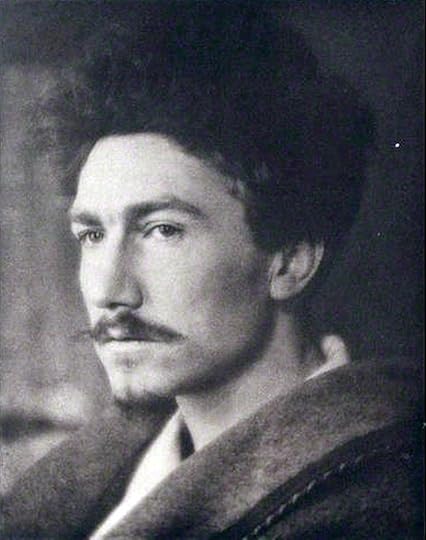
That sort of poet.
That sort of poet.
March 29, 2020
Free
Poems are as they say, Ezra pound, and the ebook was free, but I think to understand the poetry one needs either a reading buddy or better notation.
Poems are as they say, Ezra pound, and the ebook was free, but I think to understand the poetry one needs either a reading buddy or better notation.
Displaying 1 - 7 of 7 reviews