Jump to ratings and reviews
Rate this book

L'herbe

Rate this book
« Le roman tourne autour d'une hésitation : Louise quittera-t-elle ou non son mari pour l'amant à qui elle exprime son trouble ? Cette question se double d'une autre : la vieille tante agonisante, Marie, mourra-t-elle pour de bon ? Liant une jeune et une vieille femme, ce roman situe le dilemme de son personnage central dans le cadre d'une famille déchirée. Dans l'apparente absurdité de la vie de Marie, Louise parvient à lire les signes d'un sacrifice austère. Voyage à travers le temps, l'expérience de la vieille femme s'est identifiée à celui-ci jusqu'à en devenir exemplaire. Pendant les dix jours de l'agonie de Marie, la jeune femme prend conscience de l'impossibilité de son projet : la puissance d'attraction de Marie l'oblige de rester ; tout rentre dans l'ordre. Le thème de l'Histoire intervient de manière nouvelle chez Claude Simon : la présence implicite des grands événements de l'histoire contemporaine, l'exode de 1940, l'effondrement de la France, ont à la limite moins d'importance que le passage inexorable du temps éprouvé par chacun des personnages de la fiction. Tout comme Le Vent, L'Herbe exprime un ordre des choses tout naturel que l'esprit et la volonté humains semblent impuissants à dominer. » (Stuart Sykes)L'Herbe est paru en 1958.

261 pages, Paperback

First published February 1, 1958

17 people are currently reading
623 people want to read

About the author

Claude Simon

65 books134 followers
Awarded 1985 Nobel Prize in Literature, for being an author "who in his novel combines the poet's and the painter's creativeness with a deepened awareness of time in the depiction of the human condition."

Ratings & Reviews

What do you think?
Rate this book

Friends & Following

Create a free account to discover what your friends think of this book!

Community Reviews

5 stars
71 (35%)
4 stars
61 (30%)
3 stars
39 (19%)
2 stars
20 (10%)
1 star
7 (3%)
Displaying 1 - 30 of 30 reviews
Profile Image for Steve.
441 reviews584 followers
Read
March 10, 2018


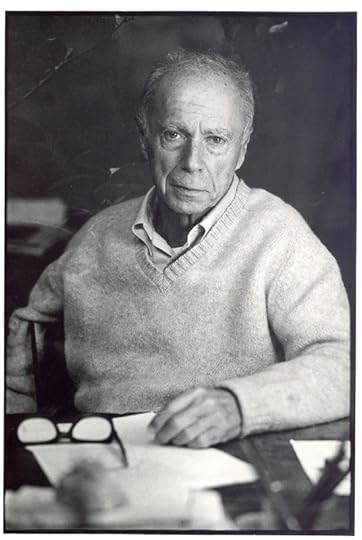
Claude Simon (1913-2005)


Marcel Proust Meets Alain Robbe-Grillet


No one makes history, one doesn't see it any more than one sees the grass grow.
- Boris Pasternak


Closely identified with the relatively brief literary movement known as the Nouveau Roman, Claude Simon actually transcended that bone dry, if conceptually interesting attempt to denude literature of most of what draws readers to it by possessing a fertile, even lush gift for language. Though he later abjured his earliest novels - which stood under Faulkner's powerful influence - and refused to admit them into Gallimard's Bibliothèque de la Pléiade edition of his works, stream of consciousness and varying perspectives play a central role in L'Herbe (*) (1958, available in English translation under the title The Grass), as do the long and sinuous sentences, the obsession with memory and the focus on intricately detailed description of another great Modernist, Marcel Proust. Unlike the sadly limited diction of France's most recent Nobelist in Literature, Simon's rich and flexibly employed language stimulates this reader's admiration and pleasure.

Born on Madagascar, raised in Perpignan, educated in Paris, Oxford and Cambridge, Simon fought briefly for the Republicans in the Spanish Civil War and was one of the unfortunates who rode horses against the Panzers at the opening of the Blitzkrieg, but he survived, escaped from captivity and joined the Resistance. After the war he returned to Roussillon to produce wine for a living and to write experimental novels in relative seclusion. Nonetheless, he was awarded the Nobel Prize in literature in 1985, though it appears that few read his work now. That's regrettable.

At the center of the nearly plotless L'Herbe, in which aspects of the oh so quotidian life of several generations of a family slowly emerge, is a dying nonagenerian woman whose slow descent into death colors much of the text. The artfully presented banality of the family's life - money problems, swindle, adultery, aging - reflects Simon's deeply felt pessimism, to which he gave explicit expression in his Nobel address:

... je n'ai jamais encore, à soixante-douze ans, découvert aucun sens à tout cela, si ce n'est comme l'a dit, je crois, Barthes après Shakespeare, que « si le monde signifie quelque chose, c'est qu'il ne signifie rien » — sauf qu'il est. (**)

But then if your father is killed at the outset of World War I within a year of your birth, your mother dies of cancer when you are eleven, you go to Spain to help the democrats and end up in a Stalinist unit, you are sent in a division of cavalry to slow a column of Panzers just long enough for them to shred you to pieces, and you live through most of the horrendous 20th century in Europe, you could well be inclined to a bit of pessimism.


Jean Fautrier, 1948


Though L'Herbe is visually a nearly seamless text with no chapters and few paragraphs, it strikes me as a mosaic, consisting of a multitude of colored shards - closely described moments or objects from different times and places - from whose cumulative effect emerges a coherent image. And is that not how memory works? One remembers only moments, places, objects, feelings, fragments of conversations, and from these stones forms the retrospective image of one's life. A coherent narrative - a "first this, then this, and finally this" - is selectively imposed later. One could make the case that this text is closer to real memory than to literary narrative, but an enormous amount of selection and ordering has taken place here nonetheless.

I cannot close this brief discussion of a book that clearly needs to be re-read at least once without mentioning Simon's facility for presenting conversations: their caesuras, elisions, evasions, circumlocutions, their indirect power struggles. But I won't be able to mention his constant use of the present participle to eternalize the action, the distancing use of "perhaps", the qualifying use of "or rather" as he circles around an object or situation to perceive it more closely, more accurately, the.....


(*) Which he did admit into his canon.

(**) I have not yet, at the age of seventy-two, discovered any sense in all that [life], if it's not as was said, I believe, by Barthes after Shakespeare, that "if the world means something, it's that it means nothing" - except that it exists. ( I presume he is referring to Macbeth's lines:

Life's but a walking shadow, a poor player
That struts and frets his hour upon the stage
And then is heard no more. It is a tale
Told by an idiot, full of sound and fury,
Signifying nothing.
)
Profile Image for Daniel Polansky.
Author 35 books1,248 followers
Read
November 30, 2019
A woman tell her lover about her husband's aunt, who was a lovely woman, and lived a life like any other life, which is to say pregnant with hushed meaning, tragic in its quotidian reality, sublimely beautiful, and largely without the benefit of the period, a form of punctuation which, it must be said (must it be said?) Simon rejects on basic principal, because he has read too much Proust or is just very French or perhaps because it beat him as a child, the period, I mean, coming on him at the schoolyard or perhaps at home by his writing desk (the oak one, the one that faced out the window, the one beside the yellow wallpaper) and delivering such vigorous and forceful cruelties that our author (Simon) chose to eschew them (periods as a form of punctuation) throughout his long career as a writer, a career which included winning the Nobel prize, not that there's anything wrong with this style of writing, which allows (forces?) the reader basically amount to push one's mind through the complex series of exercises required to make heads or tails of the prose, prose which is beautiful but often, after all the navigation, the deciphering, the wandering about, proves to be, say, a description of a fat woman's blouse, a blouse which, like every other blouse, is a fractal, proving some essential and indelible truth about the nature of the world, a sad world, a world we inhabit against ourselves, a world which, once again, must avoid ending its sentences as it would throwing a baby out the window, and heaven forbid someone calls you while you're reading or you want to stop and scratch your armpit or something, because as soon as you break the flow of the sentence it takes another five or ten or twenty minutes to get back into the groove, which, fine, some people like, even I like, sometimes, but not all the time, and not here as much as I have in other works of Simon's that I've read.
Profile Image for Siv30.
2,789 reviews192 followers
December 22, 2024
"העשב" הוא סיפורה של משפחה צרפתית כפרית. הסיפור נמסר מתודעתה של לואיז, כלת המשפחה, המתבוננת מהצד וחוככת בדעתה האם לעזוב את המשפחה עם המאהב שלקחה לה או להמשיך ולדבוק במשפחה שאותה ואת הרגליה היא לא מסוגלת לאמץ או לעכל.

בנוסף, שתי נשים דומיננטיות אחרות המופיעות ברומאן הן מארי, דודתו של ז'ורז' בעלה של לואיז, השוכבת על ערש דווי ולמרות שאין נוכחותה משמעותית להווה שכן היא חסרת הכרה, דמותה מהווה מפתח וציר סביבו נסוב הבית ואירועיו. וסבין, אימו של ז'ורז' המסרבת להזדקן, עסוקה בדיבור אובססיבי על בגידותיו האמיתיות או המדומיינות של בעלה ובמעקב אחריו. חלקים ארוכים מהספר עוסקים בלהג הבלתי נפסק שלה ובמעקבים שלה אחרי פייר ובגידותיו ההזויות, המגיעות עד ליום חתונתה.

הגברים בספר נתפסים כחסרי פוטנציה ואונים כאשר קיימת תנועה מתמדת בין דורית לכיוון חידלון וכישלון: הסב, שהיה איכר אנלפבית שלח את בנו פייר לקבלת השכלה אקדמאית. פייר (אחיה של מארי) במקביל ל רחבת הרוח כך התנוון גופו וצבר משמנים . ז'ורז' בעלה של לואיז, בחר לחזור לעבודת הקרקע אך נדמה שהיסטוריה והגנטיקה של עבודת האדמה אבדו לו. הוא השקיע את כספי משפחתו במטע אגסים נרקבים שאינו מצליח לקטוף אותם וכך הוא מתגלגל להימורים בטלה וחובות.

בניגוד לביקורות אותן קראתי שציינו את הקושי בקריאה, צלחתי את הספר תוך הקשבה לשרון תומר שעשה עבודה מופלאה וסייע בפירוק וגם פרשנות מסויימת של הטקסט. הטקסט שכתוב ללא פרקים מנוסח בחלקו כזרם תודעה, בחלקו במונולוגים ובחלקו בדיאלוגים אינו סדור והקריינות מאפשרת להתמקד בזרימה הסיפורית ובמבע הסיפורי.
לכך אוסיף את התרגום המשובח של עילאי ראונר ולילך נתנאל ולאחרית הדבר המאירת עיניים שהוסיפו.
Profile Image for Mauro.
Author 5 books201 followers
January 9, 2012
The syntax of the long sentences (which maximizes the use parentheses – and of emdashes, too – without in any way appearing programmatic or gratuitous) is beautiful.
Profile Image for Heidi.
716 reviews9 followers
May 24, 2019
Claude Simon oli ranskalainen kirjailija, joka on jäänyt minulle aiemmin etäiseksi. En osaa sanoittaa miksi. En ole aina välittänyt erityisesti ranskalaisesta proosakirjallisuudesta. Olen kokenut sen tylyksi ja kieleltään usein epäkiinnostavaksi ja jotenkin häiritsevällä tavalla itsetietoiseksi. Ruohosta kirjan takakannen esittelyssä kerrotaan, että siinä Claude Simon toteutti ensimmäisen kerran täydessä mitassa ns. uuden romaanin periaatteita, joka reippaasti oikoen tarkoittaa ymmärtääkseni irtaantumista realismin perinteestä ja on tyylikeinoiltaan kokeilevaa. Eli juuri sellaista proosaa joka itseäni kiinnostaa. Miksi sitten Claude Simon on minulle ollut etäinen? Kenties olen pitänyt Ruohon kaltaisia teoksia kömpelönä ja nyt 2010-luvulla jopa vanhanaikaisena ”nouveau roman -skenessä”? Voi olla. Ainakaan Ruoho ei heti alkuunsa saanut aivojani ylikuumentumaan onnesta kuten vaikkapa Perec. No. Nyt kuitenkin tapahtui jotakin. Alkuunsa Ruoho vaikutti Marcel Proustin Kadonnutta aikaa etsimässä pastissilta, mutta on esifotoaan koherentimpi. Rönsyjä vähemmän. Mutta ei ole reilua pastisoida Ruohoa. Tämä on itsenäinen ja lukemisen edetessä yhä kiehtovampi teos. Kaikessa tiiviydessään tarina (jota ei voi edes spoilata, jes!-efektinen kirja eli kiinnostava) on tämä: vanha nainen tekee kuihtuvaa kuolemaa Ranskan maaseututalossa, jossa myös asuu ja vierailee suvun/perheen muita jäseniä. Tarinassa kehitellään vaikutelmia yhden perhepiirin muistoista, tunteista ja aistikokemuksista suhteessa toisiinsa. Ruoho on on ajattelun, muistojen, vaikutelmien, rikotun dialogin ja aistikokemusten vyöryisä vyyhti. Monisäikeinen elävä organismi, jossa mennään pinnalta syvälle ja jossakin huomaamattomassa hetkessä noustaan takaisin maan pinnalle. Kirjan aiheiksi voisin nähdä ajan virtaavuuden, ihmisten luomat varjot ja elämisen ja ihmisten välisten läheisyyksien kuivuuden. Ruoho on valoton muttei synkkä, painava muttei upottava. Vaikutelmien, kuvaelmien ja kohtausten kollaasina Ruoho muistuttaa mm. Pierre Bonnardin maalauksia, johon on lisätty joitakin kiehtovan häiritseviä aksentteja.
Profile Image for Carmen.
2,777 reviews
January 16, 2021
"But it's only an old woman dying," Louise said. "That's all..." Still standing, the grass, the thin tongues of the grass along her bare legs swaying gently -not the breeze but the warm air in its indolent eddies- the high timothy, its supple spidery heads waving, licking her ankles, the multifarious green tongues of the earth, and around her this soft vibration of heat gradually fading, the outlines of things undulating like algae, the aspen leaves endlessly trembling, swaying, palpitating, the seven o'clock train coming out from behind the rise


Just beautiful!
Profile Image for Cen.
48 reviews3 followers
February 3, 2017
"C'est tout de même assez comique et même complètement absurde d'être obligé, de se croire obligé de s'exprimer d'une façon cohérente quand ce que l'on éprouve est incohérent."
91 reviews3 followers
February 2, 2022
Asioiden väliset yhteydet = selvärajattomuus, asioiden toisiinsa valuminen, ponnistusten valuminen hiekkaan, ajan kulumisen hallitsemattomuus, holtiton kasvu (multa; kurpitsoja ja rikkaruohoja), pienuus/vaivaisuus/kontrollointi, elämänvalintojen julkisuus - tarkkailun sukurasite.

Kuoleman ajatteleminen vanhoja valokuvia katsellessa, kauppalistat ajan kulumisena, varhaislapsuuden järkytykset joille nauraa myöhemmin, mutta kaikelle nauraa lopuksi

(ensimmäisen kappaleen teemat lukupiirikerran sato siis!)
Profile Image for Mike.
1,436 reviews57 followers
December 23, 2025
1.5 stars. The second time I’ve suffered through the failed Faulknerian prose of Simon, whose annoying repetitive syntax is the worst attempt of stream-of-consciousness I’ve read. This made me want to read Faulkner, Woolf, or Richardson. I’ll give Simon a few more shots, but I don’t have high hopes.
Profile Image for Mela Kanootti.
182 reviews10 followers
Read
January 9, 2022
raskaslukunen… kiinnostava kyl! En oo lukenu tyyliltään vastaavaa aiemmin
Profile Image for Ali Nazifpour.
391 reviews18 followers
May 23, 2025
The story of a woman, trapped in an unhappy marriage, who is thinking about the her husband's auntn who's dying. The novel has a stream of consciousness form, going forwards and backwards in time, and is mostly about contemplating death and its effects on people. It has a unique subject matter. Grief for someone that you aren't supposed to grieve but you have a deep and unexplained affection for, someone whose dying moves you to reconsider your own life. I just think this is a beautiful novel, deeply tender and moving, human and poetic. I love it, and I love it more than I love The Flanders Road.
Profile Image for Heather.
139 reviews24 followers
May 2, 2011
It's hard to give these French experimental novels a rating, just as it is difficult to tell someone what the book is about. These books explore what the novel is and I thought The Grass was compelling look at novels, death, dying, meaning and meaninglessness but all with the subtlety of very astute analogies.
Profile Image for Louison Lit.
43 reviews
October 6, 2025
« et encore l'entêtant parfum des poires tombées pourrissant par milliers sur le sol, l'odeur montant des inutiles hectares de vergers à l'assaut de la colline, sucrée, sure, stagnant dans l'air épais comme de ces resserres, ces placards où les fruits de septembre sur les rayons recouverts de papier journal exhalent cette lourde senteur de fermenté, écœurante, agressive (Georges lui avait raconté que quand ils allaient passer les vacances chez elle, ou plutôt chez elles deux puisqu'alors elles étaient encore deux, toutes les deux déjà formidablement vieilles, même quand il était tout petit, de sorte qu'il ne connaissait, ne se rappelait d'elles que cela : la vieillesse, toutes deux menues, vêtues de sombre et sans âge, les deux semblables visages flasques et doux avec leurs identiques et pudiques traces d'une poudre grise mal mise, leurs identiques mains jaunes - décrivant donc l'immense et froide maison, aussi vaste et froide qu’une caserne, où elles vivaient comme, disait-il, dans une sorte de tombeau démesuré et pharaonesque à la succession de chambre inutiles, transportant d'une pièce à l'autre sous les hauts plafonds (comme si, à mesure qu'elles se ratatinaient, le cubage, les dimensions de la bâtisse augmentaient) leurs menues et invincibles carcasses - la maison tout entière exhalait un subtil et pénétrant parfum de moisi, de fruits desséchés et de confitures qu'il avait fini par ne plus séparer d'elles, comme si elles étaient elles-mêmes deux de ces fragiles et vieillottes poupées de bois se tavelant, se desséchant lentement dans la permanente et automnale odeur des poires et des pommes rangées sur les étagères, se ridant insensiblement, laissant sourdre comme un relent de mort, de passé révolu, sur les vieux journaux qui leur servaient de lits, avec leurs titres relatant des événements morts eux aussi, désuets, surannés et sans plus aucune signification) »
3 reviews1 follower
February 20, 2025
Je ne suis pas sûr d’avoir compris tout ce qu’il a dû se passer dans ce livre, qui est de très bonne facture (c’était la première fois de ma vie que je tenais une édition de minuit poche dans les mains ; l’expérience est je crois recommandable, ou en tout confortable ( pas sûr que ce soit l’adjectif le plus adapté), bonne prise en main) ; chouette expérience littéraire à la frontière du entre le mot et la chose, finalement je pense avoir aimé ne rien saisir directement.
Profile Image for Léna.
50 reviews6 followers
November 17, 2025
Wow, un déluge de paroles et d’images, rarement lu quelque chose d’aussi dense et d’aussi beau…
Profile Image for Auli.
37 reviews3 followers
December 29, 2012
Simonista on tullut uusi lempikirjailijani. Samaan aikaan olen kehittänyt valtavan himon kaikenlaisiin hedelmämössöihin, smootheihin ja tuorepuristettuihin liemiin, ja Simonin tyyli yhdistyy jollain tapaa niihin: se on kuin paksua juomaa joka ottaa valtaansa ja jonka imemistä ei voi lopettaa, joka on raikasta ja hämmentävää ja moninaista. Joskus (antoisakin) lukeminen tuntuu pikkukivien nielemiseltä yksi kerrallaan; Simon vyöryy kurkusta alas, sitä ei voi lukea hitaasti, se on kuin mäenlaskua jossa maisemat vilisevät silmissä - ihan siksikin että esimerkiksi kyseinen romaani koostuu kokonaisuudessaan vain kourallisesta mammuttimaisia jättilauseita jotka imevät sisäänsä.

Näin etenkin kirjailijan ns. nouveau roman -tyyli, jota kesällä lukemani, erittäin vaikuttava Akaasia edusti. Nyt luin Akaasiaa kolmisenkymmentä vuotta varhaisemman Ruohon, jossa samaa tekniikkaa ilmeisesti käytettiin ensi kerran. Ensin Ruoho tuntui Akaasiaan verrattuna hieman karkeammalta, tuntui että tekniikka oli tosiaan vielä tuore, siinä oli lapsen intoa ja ironiaa, ja rakenne oli vaativa Akaasian nerokkaan aikataso-voileipäkakun jälkeen. Mutta noin puolessa välissä teosta olin vakuuttunut että tämä oli jopa vieläkin suurenmoisempi kirja kuin ehkä sangen siloiteltu Akaasia. Sitä paitsi Ruohon tematiikka kosketti syvältä: aika, ajan kuluminen, historia, vanheneminen, muuttuminen, kuoleminen... eikä abstrakteina yleistyksinä vaan hienosti punoutuvana, pitsimäisenä ja nestemäisenä liikkeenä, hetki hetkeltä kerättyinä kuvina joista höyrystyi henkeäsalpaava synteesi.

Ruohossa oli myös hyvin paljon samaa kuin Akaasiassa, ihan aiheiden tasolla: samat kuvat, samat näyt jotka selvästi vainoavat kirjailijaa (esim. ajatus kahdesta ankarasta vanhapiika-siskoksesta valtavassa talossa, ajatus kuolevasta muumioksi kuivettuneesta vanhasta naisesta.)

Ja näistä vainoavista näyistä syntyy Simonin mielestäni tenhoavin piirre: hän työskentelee kuin öljymaalari, joka työstää yhä uudestaan ja uudestaan samaa kuvaa, samaa pintaa. Romaani on hänelle kuvien kerrostuma, jossa samat näyt palaavat eteen yhä uudelleen ja saavat uuden maalikerroksen; mutta kyseessä ei ole uusi valaistus, uusi näkökulma, ainoastaan paksumpi väritys; hän voisi viimeistellä ja pyöritellä samaa kuvaa loputtomiin, se ei kuluisi koskaan mielenkiinnottomaksi. Oikeastaan Simon on kehittänyt toiston keinon huippuunsa: toisto paksuntamisena, kasvattamisena, hankaamisena.

Ja nouveau roman -hengessä tämä toteutetaan massiivisilla, sulkeiden, luetteloiden, määreiden vyöryjen kansoittamilla lauseilla, jotka ovat keveitä ja jättimäisiä kuin kasvit. Kaikki tapahtuu tällöin silmänräpäyksessä ja ihmisiässä, yhtä aikaa ja valtavan ajan erottamana. Kaikki on läsnä samassa suunnattoman paksussa pinnassa. Ruohon rakenne oli häikäisevä, tunteiden ja näkyjen, ajatusten pyörre, jossa äärettömän monimutkainen ajan käsittely tuntui kaikista luontevimmalta tavalta.
Profile Image for Giovanni Gregory.
645 reviews7 followers
June 15, 2022
"(...) todo en el mismo plano —entradas por madera, vacaciones, partidas, cuentas del tendero u honorarios del médico—: no la tragedia, los gritos, lo accidental, lo espectacular, sino lo que constituye, por así decirlo, la trama misma de la existencia, como si (lo mismo que en esas cartas que escriben o reciben los soldados y donde no se encuentran, a pesar de las lecciones de la escuela, ni puntuación, ni mayúsculas) algún secreto conocimiento, esa rigurosa experiencia que no precisa de libros ni de frases, hubiera guiado la mano a lo largo de las páginas, le hubiera enseñado a no establecer diferencias entre el hecho —la obligación— de alimentar el fuego, de llevar un traje, o de morir, escribiendo".
Profile Image for Alger Landau.
49 reviews19 followers
August 4, 2014
¡Pffff! Tan maratónico como "EL INMORTAL" de Beckett o "KADDISH POR EL HIJO NO NACIDO" de Kertész, pero tan afracensado como esas persepciones juguetonas, pintorescas y musicales de la nouvelle-vague (desde donde proviene la novela). No tuve mucha pinshi idea de lo que trataba más allá del lenguaje experimental y el placer de leer por leer (y no en el sentido superficial y pretencioso, sino en la delicia de fluir dentro de una novela que luce como un riachuelo surrealista y descriptivo que como una auténtica trama de desarrollo y conclusión). Aquí el desarrollo es el lenguaje, las imágenes... y la hierba, el zacate franchute pa' quienes gustan del rocío literario.
Profile Image for Ami.
255 reviews17 followers
June 12, 2018
Exquisite technique. Some superb images. Delicate observation skill. Excellent metaphors. Innovative syntax: long sentences. No periods. A lot of parentheses. And such a boring, boring book. French literature at it's worst. No wonder he got a noble price.

This book is all about technique. If you liked The Sound and the Fury, you'll probably like this one too. If you didn't (I didn't), you'll probably be bored to death.
59 reviews21 followers
September 30, 2021
This book contains no chapter, no breaking off parts, just the beginning and the end. Mr Simon writes about the world around him, nature, the grass, flowers, changing sky, the ending of summer, rain pouring down. It is beautiful writing, the characters are minor, the world of nature is the major character. Mr Simon writes much like Thomas Wolfe's book "Look Homeward Angel." Mr Wolfe writes about everything surrounding him in his novel, a very long book, Claude Simon's book is only 216 pages. It is a different way of writing, I did like his way of writing after I got used to it. I read "Look Homeward Angel" a very long time ago.

The book contains much about death, a family is waiting for the death of elderly Aunt Marie, age eighty four. Marie, never married, was an old maid school teacher, as was her older sister, Eugenie, now deceased. Marie is in a room in the large family house, a nurse attends to the old lady.

Louise, the wife of Georges, has taken a lover. She is telling him what is going on in the lives of this family. The book drifts back and forth in time. Pierre, the father of Georges, is a very fat man, a walking mountain, who has been a college professor and the younger brother of the two old maid sisters. Pierre's father was illiterate, wanted his son to be educated, a professor. The two older sisters gave up their lives to make this happen. The two did without, saving money, living as cheap as they could, denying themselves too much. The family comes from southwestern France.

Pierre married well, Sabine, his wife is fighting growing old. She has bright, red hair, wears heavy makeup, dresses like a much younger woman. She has a perfume bottle into which she puts alcohol and sneaks drinks. Part of the book is funny about the couple talking and arguing. Sabine is angry at Pierre, she accuses him of cheating on her when they were young with young college girls, friends, which he probably has. There are wedding pictures of the two, very attractive back in time. Time catches up.

The long, hot summer is coming to an end. The day is growing dark, night comes. The story takes place in one day, but contains flashbacks.

Son, Georges, has put money into growing pear trees. The orchard is not doing well. The half ripe pears fall to the ground, dying, sweet, heavy perfume invades the air.

Pierre is fifteen years younger than Marie, Sabine is younger, but they both are old.

I enjoyed the beautiful writing of Mr Simon, the lovely nature scenes, the story of lives growing old, then dying, his different way of writing. This is the first book I have read by this author. I have never heard of him.

Richard Howard did an excellent job of translating this book.
Profile Image for Rasmus Tillander.
742 reviews53 followers
April 6, 2022
Ruoho oli kirja, jossa en ihan pysynyt perässä. Se oli pullollaan hienoja muotoiluja ja muistettavia hetkiä. Mutta jos pitäisi nyt kertoa, että miten juoni eteni niin en kyllä osaisi.

Yksi Simonin keskeisistä innoittajista oli William Faulkner. Faulknerin kohdalla pääsin hänen tyyliinsä sisään neljännen kirjan jälkeen. Ruoho oli vasta toinen Simon, mutta tuntui jo kuitenkin selvemmältä kuin aiemmin luettu Flanderin tie. Näiden tällaisten "no tässä nyt on virke, joka jatkuu useita sivuja" -teosten kohdalla pitää vaan osata olla itselleen armollinen.

Simonin proosan taika kuitenkin takoi läpi jopa minun paksusta kallostani, useamman kerran jouduin pysähtymään jonkun sykähdyttävän kauniin ajatuksen tai lauseen äärelle. Esimerkiksi vaikka se miten kirjan keskeisin teema, ajan pysäyttämätön marssi, tuodaan esiin ostoslistoilla, jotka hehkuvat elämää. Ai, että!

Tämä oli kuitenkin hyvä kokemus. Siinä toivossa, että ymmärrän joskus Simoniakin, on hyvä elää.
Profile Image for Margo.
18 reviews
July 4, 2025
J'aime les histoire banales mais lorsque rien n'est original les auteurs se replient sur le style. C'est presque attendrissant de voir les grands garçons érudits réfléchir sur la nouveauté qu'ils peuvent faire naître sous leurs doigts. Mais ici Simon m'a perdue, je n'ai pas aimé, j'ai compris la démarche, j'ai étudié la négation de la phrase jusque dans son noyau et je n'y ai rien trouvé qui m'impressionne. Rien qui m'émeuve, rien qui ne fasse pas de moi une jeune fille dévouée aux récits d'Arthur plutôt qu'à celui de Simon. Il racontait son week-end, on bavardait tandis que Simon ne me parlait pas, ou peut-être me parlait-il trop. Les phrases sont trop longues, pas dans le sens expérimental, de déconstruction brique par brique des dictats, juste barbantes. BARBANT c'est exactement ça, le livre est barbant.
Maintenant merci Arthur d'avoir "je suis fou de toi" à la page 120, j'aurais dû y prêter plus d'attention.
Profile Image for Léa s'égare.
41 reviews
June 28, 2024
...deux pièces closes, donc, deux silences, et là aussi il y avait une pendule sur la cheminée, arrêtée il est vrai, probablement même détraquée, ne figurant sans doute là que pour mémoire, peu important du reste la position des aiguilles sur le cadran, l'essentiel étant qu'il y eût un cadran et des aiguilles, c'est-à-dire l'idée d'un circuit fermé sur lui-même et inlassablement reparcouru [...] (où point n'est besoin sans doute de savoir l'heure [...] mais d'avoir constamment présente à l'esprit la conscience du temps en train de s'écouler...)
Profile Image for Marius.
17 reviews2 followers
August 31, 2025
Si vous avez secrètement souhaité exister dans ces natures mortes à fond noir, vases à fleurs fanées ou d’enterrement, ce roman est peut-être pour vous.

L’auteur de ce livre témoigne d’une vision narrative sans récit à proprement parler, très personnelle: une suite de souvenirs et pensées sombres avec pour centre une scène d’agonie (de vieillesse) d’un personnage insignifiant, souvenirs venant et revenant par bribes ou vagues, sous la forme d’impressions sensorielles.

Une lecture très ardue et dénuée de toute once de gaieté.
Profile Image for Antoine.
13 reviews1 follower
November 5, 2021
pas très fun fact : c'est l'histoire d'une grande tante qui meurt et à la fin de ma lecture ma grande tante est morte :P arrêtez de lire des livres je vous le dis
Displaying 1 - 30 of 30 reviews

Can't find what you're looking for?

Get help and learn more about the design.