If all the text dedicated to describing phylogenies were to be replaced by cladograms, about a hundred pages would vanish from this volume, with no loss of information. Holtz's abjection to the pedantry of phylogenetics turns a wonderful subject, full of mystery and wonder and grandeur, into a tedious one. Much more could have been made of recent advances in the study of dinosaur behaviour, or of recent spectacular finds, or of dino-diseases and injuries, or something - anything but the amount of phylogeny here. Also, every other chapter seems to have a paragraph or two about how wrong Jurassic Park is - give your readers some credit, man, even children know how to weigh the authority of sources. Other than these peeves, the book is good. It is easy to read (perhaps too easy - one might argue a book for junior readers should challenge, not simplify, but Holtz walks this line well) and contains just about as much stuff as you'd find in most other books on the subject. Overall, not bad, but could be better.
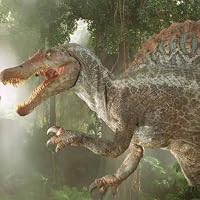
Rey's artwork toes another line, this one between 'vivid' and 'gaudy.' Personal preference will dictate your response, but some variety at least would be welcome. There's something about Rey's artwork, at least on the printed page, that seems imprecise or washed out. It hardly recalls the grand, sharp, elegant dinosaur art of yore. Add to this an utter absence of size comparison images (an arguably indispensable feature - 130 feet is just a number, until you see it), and again, this area of the book is not bad, but could be better.
If you're thinking of buying, it is advisable to hang out for the next edition. 7 years is a vast period in science, and enough phylogenetic shuffling has occurred in the interim to invalidate much of the bafflegab already clogging the paragraphs here (to add insult to injury). Plus, in the last 7 years, enough new dinosaurs have been discovered to populate a Pokemon game or two, so the then-admirably-complete genus list at the end is now sadly incomplete. If you really want a hardcopy dinosaur encyclopaedia, then sure, buy the next edition of this book; it is a fine book. For now, though, wikipedia is up to date, cites sources, displays rather than describes cladograms, uses scientific terminology, often includes sections on each animal's floral and faunal context (as well as cool stuff like palaeopathology)--AND has size comparison images. So depending on what you look for in a dinosaur book, this one may have it. It serves as a gentle introduction and is well suited to be beheld and pored over by the young. For older or more experienced readers, alternate sources may be preferable.