While Evelyn Toynton’s father became a hard-working, civic-minded American, with a great sense of obligation to his suburban community, her uncle never stopped feeling like an exile in the US; and as soon as he could after World War II, he started making trips back to Germany. The women in her family also had widely varying relationships to the societies in which they found refuge. One of them, after browbeating a Nazi police chief into arranging for her husband’s release from Dachau, wound up in England and became a passionate Anglophile; another, a widow deprived of all material comfort and security, retreated into seclusion in her tiny New York apartment, distancing herself from American life and finding solace in her beloved German poets. A fierce Zionist who smuggled guns and money from Europe into Palestine under the noses of the British went on to found a kibbutz and fight for the rights of Arabs as well as Jews. Then there was the author’s German-born mother, who emigrated to the U.S. only to be struck down by tragedy and forced to live separately from her children, but still found ways to nurture them and provide them with a haven from their own sorrows. Each of these remarkable people had lost not only their native homeland and their sense of identity but many of the people they loved. Yet almost all found ways to give meaning to their lives, whether in their own small circles or in the larger world.
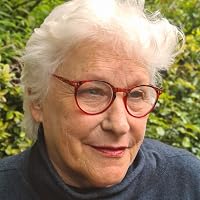
Evelyn Toynton's work has appeared in Harper's, The Atlantic, The Times Literary Supplement, The New York Times Book Review, and The American Scholar. Her novel Modern Art, loosely based on the story of Lee Krasner and Jackson Pollock, was a New York Times Notable Book of the Year. Her most recent novel is The Oriental Wife, published in 2011. She lives in Norfolk, England.
I am now reading this book for the second time. Evelyn Toynton is an interesting, intelligent and deeply insightful writer, and I have read most of her books. This one did not fail to impress and keep me riveted all the way through. In this memoir, she describes her mother's cruel fate, her own difficult childhood, her Uncle Hans (who particularly resonated with me because he shouted - I too am a shouter), and various family members who stand out for the vigour of their opinions and of their approach to life. This is a book that I would recommend to anyone who wonders what happened to those who managed to escape the concentration camps and who started a new life elsewhere, strangers in a strange land. This particular family appears to have met the challenges with gusto and determination. A great read!
'They Were Good Germans Once' tells the story of Jewish displacement and suffering during the reign of the Nazis. The author keeps the reader engaged in the book; however, the book lacks sufficient punch to make it truly interesting like other novels in the same genre.
I received a free copy of this book in exchange for a fair and honest review.