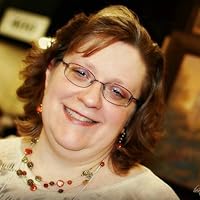
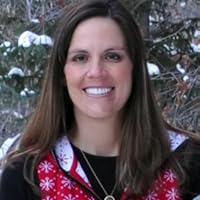
Carroll was born into a family of storytellers and readers. Her mother was an English teacher who insisted on correct grammar and delighted in quoting classic poetry. No wonder she was always interesting in writing!
Carroll wrote her first novel, The Broken Covenant, while living in Germany (her husband, Gary, was participating in a Fulbright teacher exchange). All of her novels are set in the context of Mormon culture. They explore the choices people make and the way those choices ripple outward to affect relationships and the possible future.
Carroll is the mother of four adult children. She and her husband live in Green Valley, Arizona.
I liked this book a lot. It is LDS fiction, although it is not necessarily just for an LDS audience. I particularly identified with the main plot of an aging mother who was dying. I found the attitude of the dying mother refreshing and something worthy of emulation. I also found lots of interesting observations that rang true to real life in the later chapters of the book (chapters 16 to the end).
It was interesting how I came to read this book. It has been on my shelves for probably 20 years. As I was looking for books to dispose of, I came to a shelf of unread LDS fiction. I decided to start there. For some reason I chose this book. After reading it, it is NOT a book I will dispose of! I ended up marking favorite parts at the end of the book and put it back on my shelves as a book to look at again.
Also, another interesting thing is the fact that this book is set in Shelton, Wyoming, which appears to be a fictional town, but it is located near to Powell and Cody, Wyoming. My son, Tom, and his family, just spent 6 months in Powell, and I visited them there several times and just loved it. It's a small town which, unlike so many small western U.S. towns, was still very much alive and well! The book talks about the Heart Mountain Relocation Center, which I also visited and found very moving. (This was one of the Japanese Internment Camps during WWII.) Had I read this book prior to spending time in Powell, or to my mother dying, it would not have been nearly as interesting or meaningful to me.
And one more thing--this book has a pedigree chart in the beginning! Helps to keep track of who's who, not that there are that many characters. That was one truly "LDS" idiosyncrasy which I enjoyed.
This book by an LDS author shared the journey of a woman diagnosed with terminal cancer in the 1980s, who chose to not pursue chemotherapy, and to die at home. For that time, it was an unusual choice and one that many people didn't support, including her doctor and her children- at first. It was interesting to read about the complex relationships, some that were able to accept and find resolution with the main character's death and some that were not. As a nurse, I see families go through the same kinds of struggles, so I think the author did pretty well with the story exploring the experience of waiting for death and accepting a loved one's choice for death, weaving in the Bonsai trees to be a symbol of our lives, I guess. (just figured that out!) Most of the characters were well developed, and entertaining- particularly "Crazy Mae" and nurse Keith- though he was a little unbelievable. I liked his holistic approach. It was poignant when Mae said goodbye to her grandchildren in her own way. There were some paragraphs on philosophy about how or why things happen to us and how God fits into those happenings that I kind of skimmed. I enjoyed the book and it was a pretty quick read. Its a thought provoking book that might help people consider their own views on death and on family relationships. Its not a happily ever after book, people are real and have their faults, but this story has some great moments of forgiveness between family members that left me feeling satisfied.
I didn't love this book. I didn't hate it either. It was ok. I'm not sure I really understood some of it and found myself somewhat bored during a lot of the thoughts and memories of this woman. It just felt too much and simply didn't interest me that much. Having said that I can't just give this a 2 star review because the here and now stuff was of more interesting as was the subject matter. It's called The Bonsai I guess because these little trees meant so much to her and the shaping and molding and years of care to make it be something quite special...perhaps like we shape and live out lives. The book had very little coverage on them actually and they didn't feel key to anything much to me.
Mae has been diagnosed with stage 4 cancer and decides that she is not wanting chemo or radiation. She is in her 60's, a widow, and ready to take what comes. Her family and friends and even Doctor are upset with her lack or will to fight and live. Through time all must accept what is and with help from an easy going hippy type male nurse many life lessons are taught before she comes to the end of her life.
Again it was good but I was ready to end the book way before it actually did end.