

What do you think?

Sacred Dissertations on the Lords Prayer
Book by Witsius, Herman
- GenresPrayer
424 pages, Hardcover
First published April 1, 1994
About the author
Herman Witsius
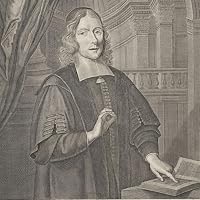
65 books10 followersHermann Witsius (Herman Wits or in Latin Hermannus Witsius) was a Dutch theologian.
Life
He was born at Enkhuizen. He studied at the University of Groningen, Leiden, and Utrecht. He was ordained in the ministry, becoming the pastor of Westwoud in 1656 and afterwards at Wormer, Goes, and Leeuwarden. He became professor of divinity successively at the University of Franeker in 1675 and at the University of Utrecht in 1680. In 1698 he was appointed to the University of Leiden as the successor of the younger Friedrich Spanheim. He died in Leiden.
Views
While in his theology Witsius aimed at a reconciliation between the reigning orthodoxy and Covenant Theology (also known as federalism), he was first of all a Biblical theologian, his principal field being systematic theology. His chief work is entitled The Economy of the Covenants between God and Man (originally published in Latin: De oeconomia foderum Dei cum hominibus, Leeuwarden, 1677). He was induced to publish this work by his grief at the controversies between Voetians and Cocceians. Although himself a member of the federalistic school, he was in no way blind to the value of the scholastically established dogmatic system of the Church. In the end, he did not succeed in pleasing either party.
Life
He was born at Enkhuizen. He studied at the University of Groningen, Leiden, and Utrecht. He was ordained in the ministry, becoming the pastor of Westwoud in 1656 and afterwards at Wormer, Goes, and Leeuwarden. He became professor of divinity successively at the University of Franeker in 1675 and at the University of Utrecht in 1680. In 1698 he was appointed to the University of Leiden as the successor of the younger Friedrich Spanheim. He died in Leiden.
Views
While in his theology Witsius aimed at a reconciliation between the reigning orthodoxy and Covenant Theology (also known as federalism), he was first of all a Biblical theologian, his principal field being systematic theology. His chief work is entitled The Economy of the Covenants between God and Man (originally published in Latin: De oeconomia foderum Dei cum hominibus, Leeuwarden, 1677). He was induced to publish this work by his grief at the controversies between Voetians and Cocceians. Although himself a member of the federalistic school, he was in no way blind to the value of the scholastically established dogmatic system of the Church. In the end, he did not succeed in pleasing either party.
Ratings & Reviews
Friends & Following
Create a free account to discover what your friends think of this book!
Community Reviews
Displaying 1 - 9 of 9 reviews

May 19, 2024
A helpful exposition. Some highlights:
-Perpetual quoting from every direction in almost every paragraph. The sources range from the main Church Fathers to obscure pagan playwrights.
-Witsus starts off with a defense of an orthodox doctrine of God, the Trinity and proper Christology (as one does), as that is the basis for understanding the what, how and why of prayer.
-He argues for the necessity of prayer, not just despite God’s sovereignty, but because of it. He refutes the arguments of those who try to claim otherwise.
-Having laid out a brief theology of prayer, he expounds on the deep meditation which is to accompany prayer at all times, referring to it as “a perpetual state of prayer.”
-The section on gestures in prayer was a thorough survey. Though he does not prescribe the gestures themselves as regulative, he does argue that they may inform us in our disposition when coming to God.
-Though he quotes the Fathers extensively, he does not shy away from arguing that much of their though regarding prayer was often accompanied by superstition.
-The address of “Our Father” as inherently the greatest assurance of our sure adoption through the Work of Christ.
-Emphasis on the chiastic structure of the Lord’s Prayer.
Some quibbles:
-The adamant historicism definitely shows in his exposition of the second petition.
-Since he is writing to his students, he assumes a prior knowledge of the Biblical Languages (mostly Greek). Thus, some small sections are of little use to readers who aren't trained in them.
Though a dutchman, Witsius has been said to be of the warmer, pastoral voices of the Dutch Reformed tradition. His scholastic precision is very much present in the first couple of dissertations. Once he gets to the Lord’s prayer itself (halfway through the book, I might add), the writing style is fit for the benefit of almost any inquiring layman.
-Perpetual quoting from every direction in almost every paragraph. The sources range from the main Church Fathers to obscure pagan playwrights.
-Witsus starts off with a defense of an orthodox doctrine of God, the Trinity and proper Christology (as one does), as that is the basis for understanding the what, how and why of prayer.
-He argues for the necessity of prayer, not just despite God’s sovereignty, but because of it. He refutes the arguments of those who try to claim otherwise.
-Having laid out a brief theology of prayer, he expounds on the deep meditation which is to accompany prayer at all times, referring to it as “a perpetual state of prayer.”
-The section on gestures in prayer was a thorough survey. Though he does not prescribe the gestures themselves as regulative, he does argue that they may inform us in our disposition when coming to God.
-Though he quotes the Fathers extensively, he does not shy away from arguing that much of their though regarding prayer was often accompanied by superstition.
-The address of “Our Father” as inherently the greatest assurance of our sure adoption through the Work of Christ.
-Emphasis on the chiastic structure of the Lord’s Prayer.
Some quibbles:
-The adamant historicism definitely shows in his exposition of the second petition.
-Since he is writing to his students, he assumes a prior knowledge of the Biblical Languages (mostly Greek). Thus, some small sections are of little use to readers who aren't trained in them.
Though a dutchman, Witsius has been said to be of the warmer, pastoral voices of the Dutch Reformed tradition. His scholastic precision is very much present in the first couple of dissertations. Once he gets to the Lord’s prayer itself (halfway through the book, I might add), the writing style is fit for the benefit of almost any inquiring layman.

February 24, 2021
A really great book on the Lord's Prayer. Three things set this book apart from others:
1. His initial discussion of prayer in general, which is very good.
2. His scholarly understanding of various issues.
3. His devotion to Christ and His Word which pervade the work and lead to excellent application throughout.
It could use some updating, but really worth the time.
1. His initial discussion of prayer in general, which is very good.
2. His scholarly understanding of various issues.
3. His devotion to Christ and His Word which pervade the work and lead to excellent application throughout.
It could use some updating, but really worth the time.
March 17, 2024
This is probably the best single volume on prayer I’ve ever read, after the Confessions

February 9, 2021
When preaching on the Lord's Prayer, I was consulting a number of resources both pre-modern and modern. Witsius and William Perkins (in vol. 1 of his works, on the Sermon on the Mount) were above all the rest. Attention to the text, scholarly accuracy and warmth found in these two were unsurpassed. 100% recommended.
September 19, 2018
A very helpful and thorough study of the Lord's Prayer.

August 10, 2012
A rich reflection on the Lord's Prayer. It is amazing how academic, yet pastoral Witsius is. At many points, he's translating, making arguments from the biblical languages. At other times, he's doing text criticism. He's quoting and name dropping from church history. But in the next breath he'll be practically applying the Scriptures to himself and the reader. This bro was a pastor-scholar if there ever was one.
Dissertation 1: On Prayer
Prayer--prayer is the address of a rational creature to God, expressing to Him the desires of the mind, with the hope of obtaining them (8).
Great illustration of the sinner-criminal's need for the Advocate Spirit to help (12).
The necessity of Trinitarian prayer.
Section on praying in tongues. "prayer without a mind is like a body without a soul."
Dissertation 2: On the advantage and necessity of prayer
Dissertation 3: On the preparation of the mind for right prayer
Dissertation 4: on gestures in prayer
Fascinating chapter on the history of gestures in prayer. Two extremes to be avoided: careless profanity and anxious superstition.
Dissertation 5: on states hours of prayer
3 seasons of daily prayer: morning, noon, evening.
"At whatever time He (Spirit) is pleased to visit the soul, and excite it to prayer, it becomes our duty to throw aside every hindrance, and to do that to which we feel ourselves impelled by the Spirit of God. When we are visited by a favorable gale of that heavenly wind, we ought instantly to spread the sails of our prayers, without restricting ourselves to any one method which, either slothfulness, or laborious trifling, might suffer the desired season to pass away unimproved."
Witsius argues against stated hours of prayer brilliantly: 1) when you feel Spirit, pray. 2) all things in religion should be orderly--apply the same to public worship. 3) OT and NT examples had stated hours of prayer. 4) to only pray when we 'feel' it is to neglect our duty. Do it even when you don't feel it, especially when you don't feel it.
Dissertation 6: on the petitions, a summary
Dissertation 7: Our Father in heaven
Lots of good stuff in here on sonship and adoption.
Awesome Chrysostom quote (177).
"Our Father" gives us both the indicative and the imperative.
Dissertation 8: Hallowing God's Name
God exercises the dominion of His kingdom through the prayers of His people.
Doctrine leads to praxis (199)--the knowledge of the Divine perfections must produce in us love...
Christ & culture (202)
Dissertation 9: Coming of God's kingdom
Jesus is wisdom incarnated in His words and actions.
Amazing stuff here on how a desire for God's kingdom affects our interests and prospects. Witsius holds to universal and special kingdom--yet the special kingdom changes our interests in the universal kingdom (210).
What was purpose of OT kingdom (214)
Witsius is favorable towards Christendom (226)
Witsius is not A-mil (231), yet doesnt appear to be post-mil either (234).
Great paragraph on what we pray when we say Thy Kingdom Come (242)
Proto-Piper quote on 249--don't waste your life
Dissertation 9: doing God's will
There are moral examples in Scripture.
Dissertation 11: on daily bread
Lord's prayer should change us (267)
Proto-Kline: cultural mandate refracted (274)
Right theology frees us from greed (282)
Witsius deals with OT typology (292)
"He who has learned moderation has made great progress towards actual composure of mind." (296)
Proto-Keller stuff on work in creation and post-fall and how gospel affects your work (299).
Dissertation 12: on forgiveness of debts
more 2K stuff (320)
Dissertation 13: temptation
Satan cant hurt Jesus, so he hurts disciples.
Romans 7 explanation (347)--Paul is speaking as Christian.
Great explanation on what it means to pray to God not to lead us into temptation.
Dissertation 14: conclusion
3 kingdoms! (377)
Dissertation 1: On Prayer
Prayer--prayer is the address of a rational creature to God, expressing to Him the desires of the mind, with the hope of obtaining them (8).
Great illustration of the sinner-criminal's need for the Advocate Spirit to help (12).
The necessity of Trinitarian prayer.
Section on praying in tongues. "prayer without a mind is like a body without a soul."
Dissertation 2: On the advantage and necessity of prayer
Dissertation 3: On the preparation of the mind for right prayer
Dissertation 4: on gestures in prayer
Fascinating chapter on the history of gestures in prayer. Two extremes to be avoided: careless profanity and anxious superstition.
Dissertation 5: on states hours of prayer
3 seasons of daily prayer: morning, noon, evening.
"At whatever time He (Spirit) is pleased to visit the soul, and excite it to prayer, it becomes our duty to throw aside every hindrance, and to do that to which we feel ourselves impelled by the Spirit of God. When we are visited by a favorable gale of that heavenly wind, we ought instantly to spread the sails of our prayers, without restricting ourselves to any one method which, either slothfulness, or laborious trifling, might suffer the desired season to pass away unimproved."
Witsius argues against stated hours of prayer brilliantly: 1) when you feel Spirit, pray. 2) all things in religion should be orderly--apply the same to public worship. 3) OT and NT examples had stated hours of prayer. 4) to only pray when we 'feel' it is to neglect our duty. Do it even when you don't feel it, especially when you don't feel it.
Dissertation 6: on the petitions, a summary
Dissertation 7: Our Father in heaven
Lots of good stuff in here on sonship and adoption.
Awesome Chrysostom quote (177).
"Our Father" gives us both the indicative and the imperative.
Dissertation 8: Hallowing God's Name
God exercises the dominion of His kingdom through the prayers of His people.
Doctrine leads to praxis (199)--the knowledge of the Divine perfections must produce in us love...
Christ & culture (202)
Dissertation 9: Coming of God's kingdom
Jesus is wisdom incarnated in His words and actions.
Amazing stuff here on how a desire for God's kingdom affects our interests and prospects. Witsius holds to universal and special kingdom--yet the special kingdom changes our interests in the universal kingdom (210).
What was purpose of OT kingdom (214)
Witsius is favorable towards Christendom (226)
Witsius is not A-mil (231), yet doesnt appear to be post-mil either (234).
Great paragraph on what we pray when we say Thy Kingdom Come (242)
Proto-Piper quote on 249--don't waste your life
Dissertation 9: doing God's will
There are moral examples in Scripture.
Dissertation 11: on daily bread
Lord's prayer should change us (267)
Proto-Kline: cultural mandate refracted (274)
Right theology frees us from greed (282)
Witsius deals with OT typology (292)
"He who has learned moderation has made great progress towards actual composure of mind." (296)
Proto-Keller stuff on work in creation and post-fall and how gospel affects your work (299).
Dissertation 12: on forgiveness of debts
more 2K stuff (320)
Dissertation 13: temptation
Satan cant hurt Jesus, so he hurts disciples.
Romans 7 explanation (347)--Paul is speaking as Christian.
Great explanation on what it means to pray to God not to lead us into temptation.
Dissertation 14: conclusion
3 kingdoms! (377)

September 1, 2025
A warm exposition of the Lord's Prayer, which is preceded by some teaching on prayer in general. It is a great encouragement to pray, and a help to reflect on what we're praying when we use the Lord's Prayer. Each phrase of the prayer is considered thoughtfully with application to Christian living, not just to how we pray.
This translation is easy to read with Greek/Hebrew phrases in the footnotes rather than in the main text.
This translation is easy to read with Greek/Hebrew phrases in the footnotes rather than in the main text.

December 31, 2021
I’ve read a lot of expositions/sermons/dissertations/essays on the Lord’s Prayer, from the early church fathers through modern evangelical voices. This is the best all-in-one, hands down.

January 22, 2014
Overall, this is a pretty good exposition of the Lord's Prayer coming from a 17th century Reformer's perspective. Most of this specifically deals with the Lord's Prayer, but the first several chapters are about prayer in general. The second dissertation "On the Advantage and Necessity of Prayer" is pure gold and worth the price of the book.
Displaying 1 - 9 of 9 reviews