Teach us to pray
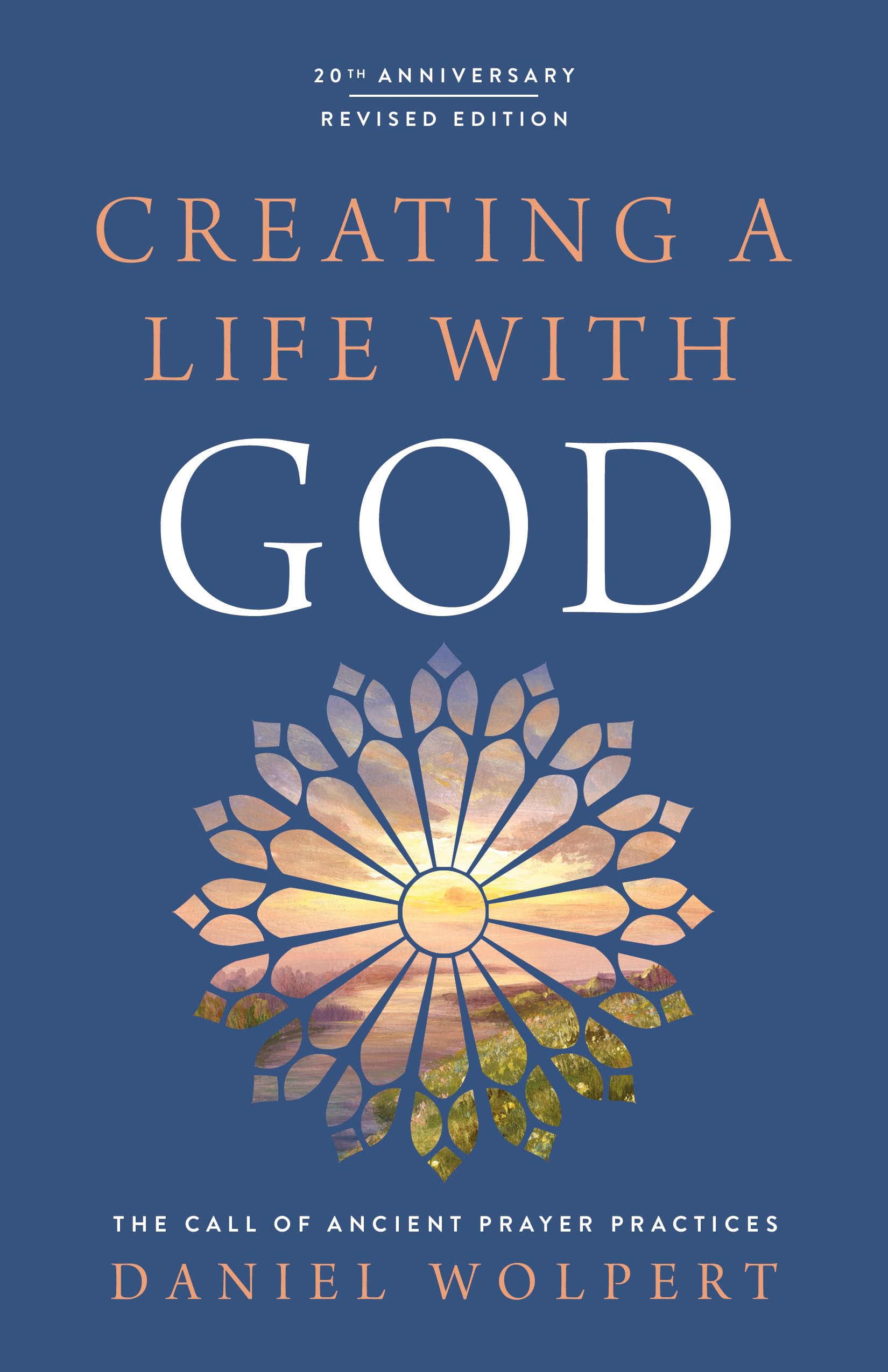
One of Jesus’ disciples said to him, “Lord, teach us to pray.” (Luke 4:1) Jesus responded with the familiar “Lord’s Prayer.” Prayer, of course, has always been a part of religious practice from Jesus’ day to the present. Over the centuries, Christians have developed many different practices for praying. Those many practices and their historical origins are the very point of Daniel Wolpert’s twentieth anniversary revised edition of Creating life with God; the call of the ancient prayer practice.
Early in the book, Wolpert defines the purpose for his book on prayer. “My hope for these new chapters…is to demonstrate how a life of daily prayer and practice is not something we pursue for individual satisfaction and peace….Its higher purpose is to shape us and prepare us to engage the world as fearless ambassadors for God’s goodness.” (p.22)
To accomplish that goal, he has dedicated chapters detailing twelve prayer practices that have been developed through time by many Christians. Many of them have monastic origins by groups or by individuals. For example, the practice of solitude and silence, Wolpert connects with the desert mothers and fathers. The practice of lectio divina comes from and an individual Saint Benedict.
Most of the practices described are mostly mental. For examples, the Jesus prayer, silent contemplation, and journaling are really mostly “in the head” practices. However, others are also physical, such as the body prayer, walking toward God, and praying with nature. Likewise, most practices are done for individual spiritual formation, although the author includes directions for using those practices in group settings.
Wolpert notes in introducing the last practice, a praying community, that historically most practices were tool to be used in a communal setting. The concept of prayer as an individual act is mostly western European and American approach. (p. 162) The author hope that the many and varied ways of praying may be a means of focusing the somewhat scattered, fragmented, and distrusted church in today’s world.
In the final two chapters, Wolpert focuses on the connection between social action and contemplation that is between the spiritual life and the active life. Too many Christians see these as different and unrelated parts of faith. However, they are connected, and the author rightfully and skillfully ends the book with chapters on prayer and climate change, as well as prayer and social action, the latter focusing on the black theologian Howard Thurman.
Creating life with God can teach us much about how to pray. In addition to the “Lord’s Prayer,” we have many practices to choose from thanks to Daniel Wolpert, who is, by the way, confounder of the Minnesota Institute of Contemplation (MICAH).
Let us pray.
Robert L. Otte
Librarian, LaGrave Avenue Church
Grand Rapids, MI