

What do you think?

Burnt Offerings
How far would you go to save yourself when the truth can't set you free?
Scotland, 1589.
Besse Craw is a young mother whose husband has mysteriously vanished. And in a time when women were powerless, she is accused of witchcraft, abused by her employer, and destined to lose her daughter, her freedom and her life.
Set during the infamous North Berwick Witch Trials, that saw many persecuted, tortured and killed, Besse uncovers long-held secrets as she fights for justice and truth in a world of suspicion and lies.
Scotland, 1589.
Besse Craw is a young mother whose husband has mysteriously vanished. And in a time when women were powerless, she is accused of witchcraft, abused by her employer, and destined to lose her daughter, her freedom and her life.
Set during the infamous North Berwick Witch Trials, that saw many persecuted, tortured and killed, Besse uncovers long-held secrets as she fights for justice and truth in a world of suspicion and lies.
311 pages, Kindle Edition
First published October 5, 2023
Ratings & Reviews
Friends & Following
Create a free account to discover what your friends think of this book!
Community Reviews
Displaying 1 - 30 of 32 reviews

November 10, 2023
Set in the 1500s during the infamous Berwick Witch Trials, Bessie is accused of being a witch and sentence death after her husband mysteriously goes missing.
Trying to prove her innocence and get back her daughter Jenny, Besse and, on her own, Jenny find the truth about her husband and her accusers.
With powerful and strong female main characters, this historical fiction books takes the truth of the horrors of what these women went through during the trails and portrays the honest truth of the women and girls who her persecuted for being nothing other than females.
Honestly I don’t understand how this books only had like 3 reviews on good reads. It’s amazing. I’m not the biggest reader of historical fiction and I’m so happy that this one proves that this genre is amazing.
Trying to prove her innocence and get back her daughter Jenny, Besse and, on her own, Jenny find the truth about her husband and her accusers.
With powerful and strong female main characters, this historical fiction books takes the truth of the horrors of what these women went through during the trails and portrays the honest truth of the women and girls who her persecuted for being nothing other than females.
Honestly I don’t understand how this books only had like 3 reviews on good reads. It’s amazing. I’m not the biggest reader of historical fiction and I’m so happy that this one proves that this genre is amazing.

December 15, 2023
I saw Danielle Devlin's Burnt Offerings online and was immediately intrigued because it's set during the North Berwick witch trials, so you can imagine my delight when I was kindly sent a review copy by @birlinnbooks
📚
The North Berwick witch trials are historically significant because they formed part of the first large scale Scottish witchhunt, and had the personal involvement of King James VI of Scotland and I of England. James was freshly returned from Norway and Denmark, where he had taken a keen interest in the trials of those '"witches" accused of trying to kill his new bride. Back home, he put what he'd learned into practice with the North Berwick "witches", an experience that formed the basis for his Daemonologie books, and which in turn influenced future witch hunts and trials across both Scotland and England.
📚
Danielle Devlin's Burnt Offerings is a fictional account telling the story of Besse Craw, a young wife and mother accused of witchcraft, imprisoned, and separated from her daughter. It's a fast-paced and highly readable story with plenty of twists and turns that make for a thought-provoking and enjoyable read. If you're interested in the subject, or even if you're just looking for some adventurous historical fiction, I'd recommend picking it up.
📚
I've spoken before about the valuable role historical fiction plays in imagining a voice for those people we've traditionally silenced, and in allowing us as a modern day audience to draw parallels between then and now. Burnt Offerings highlighted the patriarchal society that the North Berwick witch trials took place in, and imagined the accused as real people with real relationships and goals. For me, the standout elements were the characters and stories of Agnes and John, which I would have liked to have read more on. Without spoiling anything, I was less sold on certain other parts of the story, in particular the romantic subplot. I can, however, see that there is a value in having at least some happy endings in order to create a contrast with the plights of the many supposed "witches" whose lives were cut tragically short.
📚
The North Berwick witch trials are historically significant because they formed part of the first large scale Scottish witchhunt, and had the personal involvement of King James VI of Scotland and I of England. James was freshly returned from Norway and Denmark, where he had taken a keen interest in the trials of those '"witches" accused of trying to kill his new bride. Back home, he put what he'd learned into practice with the North Berwick "witches", an experience that formed the basis for his Daemonologie books, and which in turn influenced future witch hunts and trials across both Scotland and England.
📚
Danielle Devlin's Burnt Offerings is a fictional account telling the story of Besse Craw, a young wife and mother accused of witchcraft, imprisoned, and separated from her daughter. It's a fast-paced and highly readable story with plenty of twists and turns that make for a thought-provoking and enjoyable read. If you're interested in the subject, or even if you're just looking for some adventurous historical fiction, I'd recommend picking it up.
📚
I've spoken before about the valuable role historical fiction plays in imagining a voice for those people we've traditionally silenced, and in allowing us as a modern day audience to draw parallels between then and now. Burnt Offerings highlighted the patriarchal society that the North Berwick witch trials took place in, and imagined the accused as real people with real relationships and goals. For me, the standout elements were the characters and stories of Agnes and John, which I would have liked to have read more on. Without spoiling anything, I was less sold on certain other parts of the story, in particular the romantic subplot. I can, however, see that there is a value in having at least some happy endings in order to create a contrast with the plights of the many supposed "witches" whose lives were cut tragically short.

December 27, 2023
Highly recommend to anyone with an interest in the Scottish witch trials in particular or witch trials in general.
Very well written - drew me in from the first chapter, held a good pace through out, great character development and vivid description, characters possessing morals and way of thinking of their time.
It's clear that the author put a lot of research into both the time period, the witch trials, the real characters and the knowledge of herbs, plants etc.
The torture scenes were tough to get through and it's absolutely unfathomable in this day and age to think that anyone was treated in such violent and barbaric ways - but we owe it to these poor people to familiarise ourselves with their stories and their persecution.
Highly recommend, only reason I couldn't give a 5 without giving away too much is I think more could of been done with the character of Thomas Reed, I feel he could of been written stronger and held fast for Besse.
Very well written - drew me in from the first chapter, held a good pace through out, great character development and vivid description, characters possessing morals and way of thinking of their time.
It's clear that the author put a lot of research into both the time period, the witch trials, the real characters and the knowledge of herbs, plants etc.
The torture scenes were tough to get through and it's absolutely unfathomable in this day and age to think that anyone was treated in such violent and barbaric ways - but we owe it to these poor people to familiarise ourselves with their stories and their persecution.
Highly recommend, only reason I couldn't give a 5 without giving away too much is I think more could of been done with the character of Thomas Reed, I feel he could of been written stronger and held fast for Besse.

September 10, 2025
Once I got going, I couldn’t put this down!!!
November 12, 2023
I loved this book so much!! So many people are talking about this book online and it’s getting great reviews in the press, and having read it in only a couple of days I can absolutely see why!
Burnt Offerings is a gripping account of the North Berwick witch trails, told from the perspective of Besse Craw, a young mother left to fend for herself and her child when her husband, Rupert, vanishes. When her lecherous landlord tries to take advantage of this situation, Besse finds herself accused of witchcraft simply for fighting off his advances. Hoping Rupert will return and save her, the truth of his disappearance and the fact that she has been abandoned to die gradually becomes apparent to her, but she may have left it too late to save herself.
Books about the witch trials are definitely on trend right now, but what sets this one head and shoulders above the rest is the focus on everyday women and the impact the witch hunts had on their lives. Devlin immerses you in Besse's world, terrifying as it is, and holds no punches when it comes to describing the horrors women were subjected to, while at the same time never glamourising it or using it for dramatic effect. The prose is stunning without ever being showy, and the descriptions are beautifully written and bring the time and the setting to life, but never slow down the pace of the story. I can’t recommend this book highly enough, I'm sure it's set to be a word-of-mouth hit!!
Burnt Offerings is a gripping account of the North Berwick witch trails, told from the perspective of Besse Craw, a young mother left to fend for herself and her child when her husband, Rupert, vanishes. When her lecherous landlord tries to take advantage of this situation, Besse finds herself accused of witchcraft simply for fighting off his advances. Hoping Rupert will return and save her, the truth of his disappearance and the fact that she has been abandoned to die gradually becomes apparent to her, but she may have left it too late to save herself.
Books about the witch trials are definitely on trend right now, but what sets this one head and shoulders above the rest is the focus on everyday women and the impact the witch hunts had on their lives. Devlin immerses you in Besse's world, terrifying as it is, and holds no punches when it comes to describing the horrors women were subjected to, while at the same time never glamourising it or using it for dramatic effect. The prose is stunning without ever being showy, and the descriptions are beautifully written and bring the time and the setting to life, but never slow down the pace of the story. I can’t recommend this book highly enough, I'm sure it's set to be a word-of-mouth hit!!

January 24, 2024
Not what I was expecting. This was a historical thriller.

August 10, 2024
I picked this up completely at random in Waterstones last week after seeing the words Scotland and Witch trials, I am glad I did because this book was Beautiful, Disturbing, Heartbreaking and Powerful in equal measures, A true hidden gem book, Why haven't I heard anyone talk about this? I guess I'll have to review it.

June 2, 2024
“There were few soft corners in our lives. Better truth of what it was to be a woman, than lie. Be forever on guard. Be forever weary.”
This drew me in instantly and had me invested right until the final word!! A great historical thriller
This drew me in instantly and had me invested right until the final word!! A great historical thriller

July 6, 2025
4.5 stars - a real slow start for me, I’d read no more than 5 pages at a time before putting it down, but around page 70 something clicked and I’ve read the other 260 pages in a day. Amazing story telling and pacing.

November 15, 2023
I will say that this was very dark, and I don't recommend it to anyone who is not comfortable with reading about abuse.
However, I did enjoy the story and was nearly crying at some bits
However, I did enjoy the story and was nearly crying at some bits

December 11, 2025
3.5 ⭐️
First of all, massive content warning for this book.
Second, there were so many errors, I’m not sure if it’s the copy I had or just the way it’s been published but there were so many spelling mistakes and grammar errors that I feel like someone needed to pay closer attention when editing this.
Finally, this book was an odd one. I feel weird saying I enjoyed it when it was genuinely one of the most miserable stories I’ve read, but it was good? I’m not well versed on the Scottish witch trials but this book had an interesting story to tell (whether factually accurate, I’m not sure).
First of all, massive content warning for this book.
Second, there were so many errors, I’m not sure if it’s the copy I had or just the way it’s been published but there were so many spelling mistakes and grammar errors that I feel like someone needed to pay closer attention when editing this.
Finally, this book was an odd one. I feel weird saying I enjoyed it when it was genuinely one of the most miserable stories I’ve read, but it was good? I’m not well versed on the Scottish witch trials but this book had an interesting story to tell (whether factually accurate, I’m not sure).
This entire review has been hidden because of spoilers.
June 21, 2025
stop what you are doing and read this book RIGHT NOW!!!!

November 19, 2023
"We were mothers. Sisters. Grandmothers. Until we were witches...They did not care what they did to us, as long as we confessed to what they thought we were. Broken legs. Broken fingers. Our limbs did not matter to them. They were no longer our own. We were no longer human. Before, we were alive. We lived. We breathed. Now, we were the forgotten. The bearer of bastards. The wicked. The damned. The Devil's handmaids."
In 1589 King James VI of Scotland (and later King of England) attempted to cross the stormy seas to collect his new bride, Anne, from Denmark. However, perilous weather would prove too dangerous and so the ships turned back. A superstitious man, King James grew convinced that the dangerous seas were the work of witchcraft and quickly launched his so-called crusade in Scotland against magic and witchcraft. The witch trials of North Berwick were famous for their sheer brutality, with an estimated 70-200 individuals put on trial, horrifically tortured and executed, however the exact number of those who died is unknown.
In this fictionalised account of the trials, we follow the story of Besse Craw. A young mother living in Scotland, she is suddenly thrust into uncertainty and danger when her husband, Rupert, goes missing.
Danielle Devlin's portrayal of the lives of women in the late 16th century was a visceral, unflinching take on the horrors of the injustice against women.
A harrowing experience, it has been a while since a novel has made me feel physically sick as though I were alongside the lead character, holding her hand as she experienced her trauma.
Devlin is unfiltered in her narrative, so if graphic descriptions are something that are not for you, perhaps be wary with this one. However, the vivid historical reality successfully unleashes intense emotions and I think it's important for books like these to be read. I was angry at what these women went through and for good reason. We should be angry.
Thank you to @birlinnbooks for offering me the novel to review.
In 1589 King James VI of Scotland (and later King of England) attempted to cross the stormy seas to collect his new bride, Anne, from Denmark. However, perilous weather would prove too dangerous and so the ships turned back. A superstitious man, King James grew convinced that the dangerous seas were the work of witchcraft and quickly launched his so-called crusade in Scotland against magic and witchcraft. The witch trials of North Berwick were famous for their sheer brutality, with an estimated 70-200 individuals put on trial, horrifically tortured and executed, however the exact number of those who died is unknown.
In this fictionalised account of the trials, we follow the story of Besse Craw. A young mother living in Scotland, she is suddenly thrust into uncertainty and danger when her husband, Rupert, goes missing.
Danielle Devlin's portrayal of the lives of women in the late 16th century was a visceral, unflinching take on the horrors of the injustice against women.
A harrowing experience, it has been a while since a novel has made me feel physically sick as though I were alongside the lead character, holding her hand as she experienced her trauma.
Devlin is unfiltered in her narrative, so if graphic descriptions are something that are not for you, perhaps be wary with this one. However, the vivid historical reality successfully unleashes intense emotions and I think it's important for books like these to be read. I was angry at what these women went through and for good reason. We should be angry.
Thank you to @birlinnbooks for offering me the novel to review.

January 23, 2026
I wanted to like this book more than I did. I will read almost any historical fiction set during the Scottish witch trials, and I am firmly of the view that fiction has an important role to play here. The loss of records and the erasure of so many women’s lives means invention is often necessary. Creating imagined characters, inner lives, and even composite experiences is not only acceptable but often essential.
What matters to me is that fiction also educates, giving a sense of place, belief, fear, and the realities of what these people endured, without distorting the few facts we do know.
Unfortunately, this novel repeatedly misconstrues those known facts. The suggestion that Scottish witch trials were empowered by the pope fundamentally misrepresents a post-Reformation, Protestant legal and theological system.
Making reference to the use of the dooking stool, the portrayal of witches being burned alive as standard practice, and the inclusion of anachronistic language and quotations, including a line from The Tempest written decades after the North Berwick trials, all weaken the historical grounding. These choices feel less like creative licence and more like reliance on familiar tropes to heighten drama.
The most troubling invention is the treatment of Agnes Sampson. She is depicted as burned alive, causing a gunpowder explosion, later brought home for burial, and ultimately posthumously pardoned. None of this reflects historical reality. Agnes Sampson was strangled and then burned following conviction. There was no explosion, no burial, and no pardon. Introducing one is especially uncomfortable given that posthumous pardons are being actively campaigned for now. Suggesting that such justice was imaginable or achieved at the time risks diminishing both the brutality of the system and the significance of those modern efforts. The idea that Agnes’ body could be recovered and buried ignores the very purpose of burning, which was to reduce the body to ashes and deny any Christian burial.
That said, there are things I appreciated. The use of Scots adds texture and atmosphere, and the portrayal of Agnes as a woman, a healer, and a fully realised human being is thoughtful and sympathetic. Those moments show what the book could have achieved had it trusted the historical reality rather than reshaping it.
I am all for historical fiction. I am not for rewriting the foundations of events that are already so poorly understood. When the facts we have are altered, especially in stories about real women who suffered and died, it matters. For me, that is where this novel ultimately fell short
What matters to me is that fiction also educates, giving a sense of place, belief, fear, and the realities of what these people endured, without distorting the few facts we do know.
Unfortunately, this novel repeatedly misconstrues those known facts. The suggestion that Scottish witch trials were empowered by the pope fundamentally misrepresents a post-Reformation, Protestant legal and theological system.
Making reference to the use of the dooking stool, the portrayal of witches being burned alive as standard practice, and the inclusion of anachronistic language and quotations, including a line from The Tempest written decades after the North Berwick trials, all weaken the historical grounding. These choices feel less like creative licence and more like reliance on familiar tropes to heighten drama.
The most troubling invention is the treatment of Agnes Sampson. She is depicted as burned alive, causing a gunpowder explosion, later brought home for burial, and ultimately posthumously pardoned. None of this reflects historical reality. Agnes Sampson was strangled and then burned following conviction. There was no explosion, no burial, and no pardon. Introducing one is especially uncomfortable given that posthumous pardons are being actively campaigned for now. Suggesting that such justice was imaginable or achieved at the time risks diminishing both the brutality of the system and the significance of those modern efforts. The idea that Agnes’ body could be recovered and buried ignores the very purpose of burning, which was to reduce the body to ashes and deny any Christian burial.
That said, there are things I appreciated. The use of Scots adds texture and atmosphere, and the portrayal of Agnes as a woman, a healer, and a fully realised human being is thoughtful and sympathetic. Those moments show what the book could have achieved had it trusted the historical reality rather than reshaping it.
I am all for historical fiction. I am not for rewriting the foundations of events that are already so poorly understood. When the facts we have are altered, especially in stories about real women who suffered and died, it matters. For me, that is where this novel ultimately fell short
This entire review has been hidden because of spoilers.

October 27, 2024
We have the joy of being able to celebrate witchcraft as an art form, a celebration of life, and let people choose to practice this pagan religion today in Scotland openly. It's a wonder, joy, and freedom I hope we never take for granted as just a couple of centuries ago, a madness stemming from delusion and fear meant to utter the word 'witch' likely meant a death sentence for the one the finger pointed at.
Danielle Devlin has written a thought-provoking, gripping, and harrowing fictionalised account of the North Berwick witch trials with Burnt Offerings. Her writing is crisp, full of vivid descriptions of both beautiful and distressing horrors faced by accused witches, bringing the time and setting to life in a visceral immersive way with powerful female characters grounded in the confines of a 16th-century women's world.
Burnt Offerings uncompromisingly portrays the grim historical reality of the brutality, trauma, and torture the accused witches must have suffered. Some graphic descriptions will induce physical discomfort, testing your stomach and sanity with intense emotional responses. I've experienced a whirlwind of anger, sorrow, grief, and solemn joy reading Besse's story based on the plight of so many of the historical victims of the Scottish witch-hunts.
A disturbing, harrowingly beautiful, heartbreaking, and powerful story that brings to life the genuine betrayal, pain, and injustices endured by the victims of the North Berwick witch trials of the 16th century. It's unfathomable to think of how these victims were treated so barbarically and persecuted for no reason but for being different or refusing. I think it's imperative to remember stories like this in the modern world so we don't forget it's easy to set down a slippery slope out of complacency, fear, and hatred to commit atrocities against one another based on different genders, opinions, lifestyles, and beliefs.
Danielle Devlin has written a thought-provoking, gripping, and harrowing fictionalised account of the North Berwick witch trials with Burnt Offerings. Her writing is crisp, full of vivid descriptions of both beautiful and distressing horrors faced by accused witches, bringing the time and setting to life in a visceral immersive way with powerful female characters grounded in the confines of a 16th-century women's world.
Burnt Offerings uncompromisingly portrays the grim historical reality of the brutality, trauma, and torture the accused witches must have suffered. Some graphic descriptions will induce physical discomfort, testing your stomach and sanity with intense emotional responses. I've experienced a whirlwind of anger, sorrow, grief, and solemn joy reading Besse's story based on the plight of so many of the historical victims of the Scottish witch-hunts.
A disturbing, harrowingly beautiful, heartbreaking, and powerful story that brings to life the genuine betrayal, pain, and injustices endured by the victims of the North Berwick witch trials of the 16th century. It's unfathomable to think of how these victims were treated so barbarically and persecuted for no reason but for being different or refusing. I think it's imperative to remember stories like this in the modern world so we don't forget it's easy to set down a slippery slope out of complacency, fear, and hatred to commit atrocities against one another based on different genders, opinions, lifestyles, and beliefs.

January 19, 2025
I bumped into Burnt Offerings when I was travelling in Scotland. I was in a small village and a restaurant had what looked like a shelf to sell books from local authors. I had never heard of the book before and there wasn't really much on Goodreads either. Yet, the subject called my attention and it was the only souvenir I got from that trip.
It remained unread on my shelves till now, when I decided to read the books I have before buying more. It was the first one I wanted to read. And I'm quite happy I did it. The narrative is fast paced and engaging. The historical background seems pretty much alive in the context, although don't expect much of a historical narrative in the book.
The book ends as a cliché, as already mentioned by others. Probably, there were really happy endings in the story of those women burnt as witches (pretty much for being women). Regardless, I don't really think it minimises the book. The only sad thing is that the author doesn't have any other book, just short stories, and I'm not really a big fan of those.
If you have something along the same lines to recommend, please let me know!
It remained unread on my shelves till now, when I decided to read the books I have before buying more. It was the first one I wanted to read. And I'm quite happy I did it. The narrative is fast paced and engaging. The historical background seems pretty much alive in the context, although don't expect much of a historical narrative in the book.
The book ends as a cliché, as already mentioned by others. Probably, there were really happy endings in the story of those women burnt as witches (pretty much for being women). Regardless, I don't really think it minimises the book. The only sad thing is that the author doesn't have any other book, just short stories, and I'm not really a big fan of those.
If you have something along the same lines to recommend, please let me know!

June 20, 2026
A fictional account of one - or rather two - women's fates at the hands of James VI of Scotland's witch hunters.
Besse Craw's husband is an abusive womaniser but when he fails to return from one of his many 'business' trips, having absconded with his boss's rents, Besse decides to find him. She could have taken her young daughter and gone home to Agnes, a healer and the woman who raised her (a plot point never explained and therefore with no significance that I could see). Instead, she leaves the daughter behind somewhere she should be safe, takes Agnes and heads off into very very big trouble.
The historical detail is remarkable, and not for the faint-hearted, but I couldn't really bond with Besse. Stroppy and mouthy does not make a strong protagonist all on its own. The story did keep my attention, although the sunny happy ever after jarred a little against the grim atmosphere of the rest of the book.
In summary, if you want to learn how they treated women - and some men - in those dark days, give it a go.
Besse Craw's husband is an abusive womaniser but when he fails to return from one of his many 'business' trips, having absconded with his boss's rents, Besse decides to find him. She could have taken her young daughter and gone home to Agnes, a healer and the woman who raised her (a plot point never explained and therefore with no significance that I could see). Instead, she leaves the daughter behind somewhere she should be safe, takes Agnes and heads off into very very big trouble.
The historical detail is remarkable, and not for the faint-hearted, but I couldn't really bond with Besse. Stroppy and mouthy does not make a strong protagonist all on its own. The story did keep my attention, although the sunny happy ever after jarred a little against the grim atmosphere of the rest of the book.
In summary, if you want to learn how they treated women - and some men - in those dark days, give it a go.
January 17, 2024
I picked this up as I have been enjoying the recent “witch trial” genre and North Berwick is a place I’m very familiar with. These books are fascinating to me for the opportunity they provide to imagine how the women felt and what they experienced. I enjoyed the immersion in north Berwick/ Edinburgh history and I enjoyed the characters of Agnes and Dr Fian. However I personally didn’t enjoy the main character “Besse” as much. I felt she was niave and frankly a tad annoying in her wishy washy approach to the men around her (her loyalty to her husband almost to the end but constant griping about Thomas didn’t make sense to me). I thought the ending was almost a little too neat although I do understand the desire to give these witches some semblance of a happy ending. All in all I thought it was… ok. Probably wouldn’t read again but it did kick off a long deep dive into the actual Berwick witch trials.
This entire review has been hidden because of spoilers.

May 26, 2024
I was completely gripped by this historical thriller set during the North Berwick witch trials. It is shocking and brutal in places and the tension scarcely abates once Besse is wrongly accused of witchcraft. The historical setting is beautifully described and I felt I was there with Besse in the stench and the mud and the cold listening to the roil and roar of the North Sea. In a time where women had so little agency, Danielle Devlin gives us three fantastic female characters in the three generations of Besse’s family and I was rooting for Jenny, Besse and Agnes from the first page. A deeply compelling debut and I’m looking forward to seeing what comes next from this talented author.
April 1, 2026
A brutal but intriguing story. This one was hard to put down. This book captured the injustice and cruelty of the witch trials in Scotland. At times it was difficult to read, with visceral descriptions of what Bessie (the protagonist) endured. I definitely needed a lighter read after this book. But it was well written, detailed and really captivating. Pick it up if you are interested in historical fiction and don’t mind some violence and despair. The images will play over in your mind like a movie for months after reading it.

December 10, 2023
I loved this book from the very first page. From the very first chapter, this book lays bare the emotive journey to come for not just the main protagonists but those of all of Noth Berwick (and Scotland). I do not usually like First Person POV, but I really, thoroughly enjoyed this book. It's not a nice tale, but an important one with themes that very much resound in today's climate. I can't wait to see what Devlin does next.
July 20, 2026
I really enjoyed this book. It hooked me very quickly and had a good pace throughout.
The characters were well written and I felt immersed in their lives. It was horrific to think about what women at that time went through, and the lengths they had to go to in order to protect themselves.
Without giving too much away, I found the ending satisfying. It felt fitting for the story, while also acknowledging that it was probably not the outcome most women would have experienced at the time.
The characters were well written and I felt immersed in their lives. It was horrific to think about what women at that time went through, and the lengths they had to go to in order to protect themselves.
Without giving too much away, I found the ending satisfying. It felt fitting for the story, while also acknowledging that it was probably not the outcome most women would have experienced at the time.
May 28, 2024
not what was expected
It was a hard read and yet so many things I saw before they happened, wonderful ending but in a ways similar to the pain I felt knowing my husband abused our child and emotionally abused me, I was so much like Besse. Definitely a historical read, just a bit hard on me at the moment as I deal with divorce, etc.
It was a hard read and yet so many things I saw before they happened, wonderful ending but in a ways similar to the pain I felt knowing my husband abused our child and emotionally abused me, I was so much like Besse. Definitely a historical read, just a bit hard on me at the moment as I deal with divorce, etc.

November 16, 2023
I really enjoyed this book! I picked it up for the cover art and then couldn’t put it down. Besse was such a strong character and so easy to empathize with. The pace was just fast enough to keep the story moving while providing a ton of historical details. Highly recommend!

April 9, 2024
5 🌟 I was lost in this book each time I picked it up, this is my favourite genre and a wonderful example of how it should be done! An immersive and thoroughly enjoyable read 📚

July 11, 2024
For anyone who has an interest in the witch trials which happened in the late 1500's in Scotland under the reign of king James v1 .

September 6, 2024
Beautiful. Finished in half a day! Gripping, dark and gorgeous!!!!
January 27, 2025
Really enjoyed this one!!!
February 4, 2025
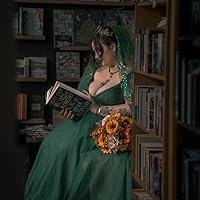
This book was heart breaking, full of women who refused to back down and fought no matter what.

March 17, 2025
There was nothing wrong with this book. It wasn’t particularly badly written or paced. But for some reason I just wasn’t into it. I speeded through the last 50 pages so I could finish it tbh.
Displaying 1 - 30 of 32 reviews