

What do you think?
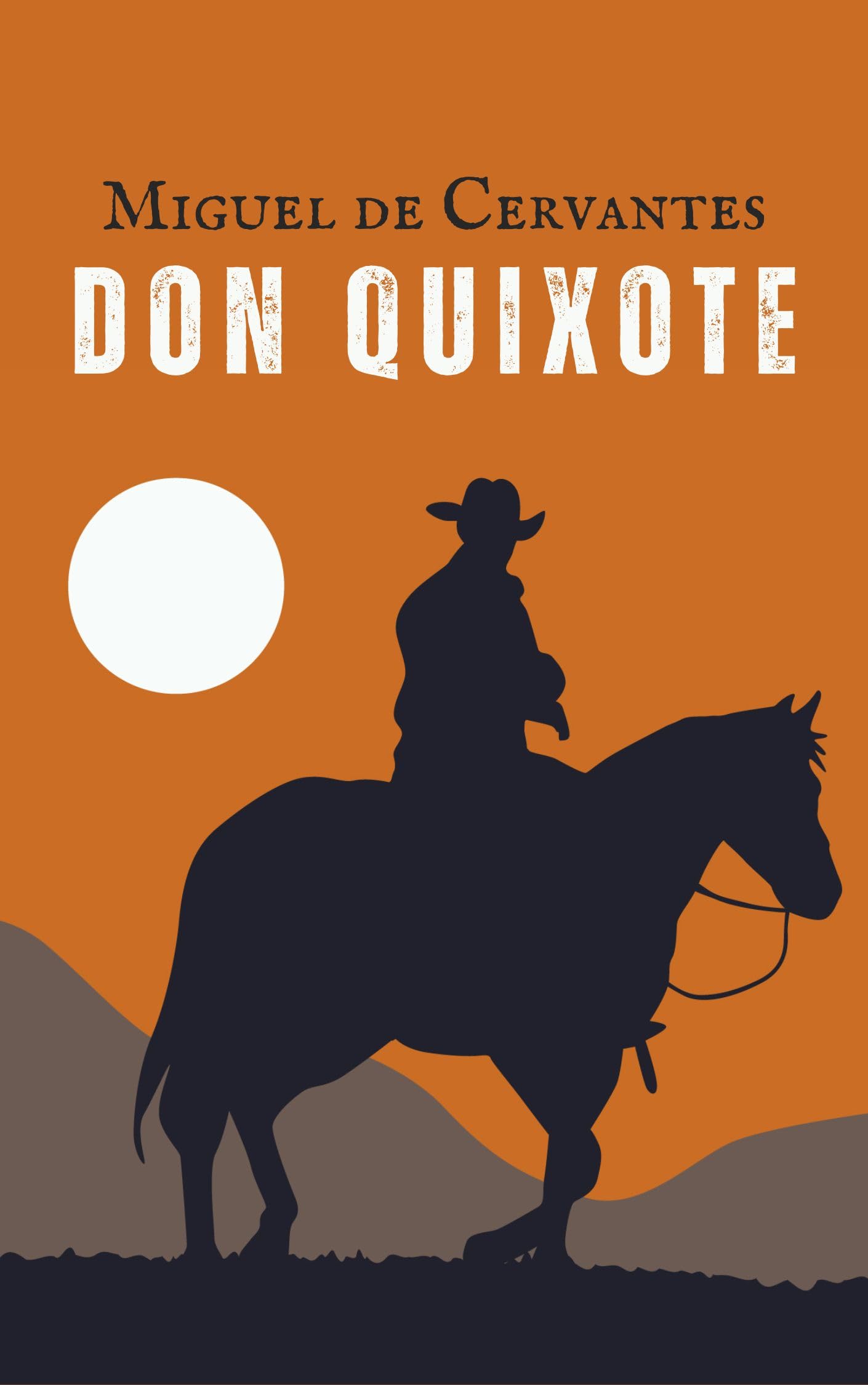
Don Quijote de la Mancha #1-2
Don Quixote: The Original Unabridged and Complete Edition
'Didn't I tell you they were only windmills? And only someone with windmills on the brain could have failed to see that!'
Don Quixote has become so entranced by reading romances of chivalry that he determines to become a knight errant and pursue bold adventures, accompanied by his squire, the cunning Sancho Panza. As they roam the world together, the ageing Quixote's fancy leads them wildly astray. At the same time the relationship between the two men grows with fascinating subtlety. Often considered to be the first modern novel, Don Quixote is a wonderful burlesque of the popular literature its disordered protagonist is obsessed with.
John Rutherford's landmark translation does full justice to the energy and wit of Cervantes's prose. His introduction discusses the traditional works parodied in Don Quixote and issues of literary translation.
Don Quixote has become so entranced by reading romances of chivalry that he determines to become a knight errant and pursue bold adventures, accompanied by his squire, the cunning Sancho Panza. As they roam the world together, the ageing Quixote's fancy leads them wildly astray. At the same time the relationship between the two men grows with fascinating subtlety. Often considered to be the first modern novel, Don Quixote is a wonderful burlesque of the popular literature its disordered protagonist is obsessed with.
John Rutherford's landmark translation does full justice to the energy and wit of Cervantes's prose. His introduction discusses the traditional works parodied in Don Quixote and issues of literary translation.
1274 pages, Kindle Edition
First published December 20, 1605
About the author
Miguel de Cervantes Saavedra
5,476 books3,844 followersMiguel de Cervantes y Cortinas, later Saavedra was a Spanish novelist, poet, and playwright. His novel Don Quixote is often considered his magnum opus, as well as the first modern novel.
It is assumed that Miguel de Cervantes was born in Alcalá de Henares. His father was Rodrigo de Cervantes, a surgeon of cordoban descent. Little is known of his mother Leonor de Cortinas, except that she was a native of Arganda del Rey.
In 1569, Cervantes moved to Italy, where he served as a valet to Giulio Acquaviva, a wealthy priest who was elevated to cardinal the next year. By then, Cervantes had enlisted as a soldier in a Spanish Navy infantry regiment and continued his military life until 1575, when he was captured by Algerian corsairs. He was then released on ransom from his captors by his parents and the Trinitarians, a Catholic religious order.
He subsequently returned to his family in Madrid.
In Esquivias (Province of Toledo), on 12 December 1584, he married the much younger Catalina de Salazar y Palacios (Toledo, Esquivias –, 31 October 1626), daughter of Fernando de Salazar y Vozmediano and Catalina de Palacios. Her uncle Alonso de Quesada y Salazar is said to have inspired the character of Don Quixote. During the next 20 years Cervantes led a nomadic existence, working as a purchasing agent for the Spanish Armada and as a tax collector. He suffered a bankruptcy and was imprisoned at least twice (1597 and 1602) for irregularities in his accounts. Between 1596 and 1600, he lived primarily in Seville. In 1606, Cervantes settled in Madrid, where he remained for the rest of his life.
Cervantes died in Madrid on April 23, 1616.
-Copied from Wikipedia
It is assumed that Miguel de Cervantes was born in Alcalá de Henares. His father was Rodrigo de Cervantes, a surgeon of cordoban descent. Little is known of his mother Leonor de Cortinas, except that she was a native of Arganda del Rey.
In 1569, Cervantes moved to Italy, where he served as a valet to Giulio Acquaviva, a wealthy priest who was elevated to cardinal the next year. By then, Cervantes had enlisted as a soldier in a Spanish Navy infantry regiment and continued his military life until 1575, when he was captured by Algerian corsairs. He was then released on ransom from his captors by his parents and the Trinitarians, a Catholic religious order.
He subsequently returned to his family in Madrid.
In Esquivias (Province of Toledo), on 12 December 1584, he married the much younger Catalina de Salazar y Palacios (Toledo, Esquivias –, 31 October 1626), daughter of Fernando de Salazar y Vozmediano and Catalina de Palacios. Her uncle Alonso de Quesada y Salazar is said to have inspired the character of Don Quixote. During the next 20 years Cervantes led a nomadic existence, working as a purchasing agent for the Spanish Armada and as a tax collector. He suffered a bankruptcy and was imprisoned at least twice (1597 and 1602) for irregularities in his accounts. Between 1596 and 1600, he lived primarily in Seville. In 1606, Cervantes settled in Madrid, where he remained for the rest of his life.
Cervantes died in Madrid on April 23, 1616.
-Copied from Wikipedia
Ratings & Reviews
Friends & Following
Create a free account to discover what your friends think of this book!
Community Reviews
Displaying 1 - 30 of 15,963 reviews

April 15, 2022
welcome to...DONCEMBER QUIXOTE.
this is like the final boss of project long classics, in which i read a lengthy old book over a month as an excuse to a) seem brave and intellectual and b) make horrible month-based puns.
except i'm not going to be finished after this, because i love the attention too much. so i guess i just mean this is especially intimidating.
but i have no choice. i've got to know what the deal is with those windmills.
DAY ONE
i'll be reading two chapters of this a day, which will take me two months instead of one, but if i try to get through 4 on a daily basis i'll give up immediately. to be honest that poem-ridden prologue scared the hell out of me but otherwise we are off to an amusing start.
DAY TWO
we are sallying forth, and we are pausing to be knighted, and we are sallying forth-er.
DAY THREE
it's pretty cool that even using the word "lie" around a cool person was offensive. we should bring that back.
anyway our boy don got beat up so he's back home for a bit.
DAY FOUR
we have acquired a squire and we're ready to head back out.
DAY FIVE
windmill alert!
DAY SIX
don quixote is a better man than me. if i was trying to put a bandaid on my ear wound and a new acquaintance was like "hang on, i have a better idea: i'm going to spit chewed up herbs on it" none of them would ever see me again.
DAY SEVEN
imagine your life and demise generating gossip so good that strangers — including a guy who thinks he's a knight — travel just to see if your funeral is cool. goals.
DAY EIGHT
the funeral (which was surprisingly musical) was swiftly followed by a hot girl standing on a mountain yelling "it's not my fault he died." this book keeps getting better.
DAY NINE
we're back on the road, which mostly means going to inns and getting beat up. no one is getting their sh*t rocked like don and sancho.
DAY TEN
don quixote just entered a flock of sheep he thought was an army, got the hell knocked out of him by the corresponding shepherds, and threw up on sancho, who then threw up on him. that's funny in every century.
DAY ELEVEN
the girls are fighting! (don just made them ride overnight to fight giants that turned out to be hammers in a cloth factory and sancho lost his mind laughing.)
DAY TWELVE
damn. even the chain gang of convicts don and sancho freed beat the hell out of them. hurt people hurt people.
DAY THIRTEEN
don quixote just met a real knight, interrupted his tale of woe to talk about his favorite books, and — say it with me now — got the hell beaten out of him and sancho because of it.
DAY FOURTEEN
we circled back for the rest of the real knight's tragic backstory.
DAY FIFTEEN
pausing to hear the related sad history of a nearby hot girl.
DAY SIXTEEN
a wannabe knight, a real knight, a priest, a hot girl in disguise, an alleged squire, and a recently stolen donkey walk into a bar...
DAY SEVENTEEN
this is the very long beginning of an even longer story about a guy who convinces his best friend to try to seduce his wife, who's all "no no no — actually your wife is really hot."
DAY EIGHTEEN
this is the lengthy conclusion, in which the best friend does seduce the wife and then the two of them put on a lengthy play to pretend they didn't hook up, complete with stabbing. anyway when the guy finds out the truth he dies. the end!
DAY NINETEEN
the other hot girl and the rapscallion who played featured roles in the previous tales of woe are here finish out their plotlines.
DAY TWENTY
we've added A Captive to our party and it's his turn to share his background.
DAY TWENTY-ONE
it's mostly about being christian and having a hot girlfriend.
DAY TWENTY-TWO
trapped in this truly hilarious cycle where people keep arriving, bringing the world's most beautiful woman with them, giving their backstory, joining the party, and noticing another guy with a hot girl en route.
DAY TWENTY-THREE
don quixote just beat the hell out of someone with the title "peace officer." classic.
DAY TWENTY-FOUR
look how they massacred my boy! (don is in a cage.)
DAY TWENTY-FIVE
we're conducting some experiments to determine just how insane don is, and in which capacities.
DAY TWENTY-SIX
we lost a bunch of the random guys and beautiful women from our group, but we just gained a goatherd, so. time to hear his backstory and audition him for the squad.
DAY TWENTY-SEVEN
don quixote has been forcibly returned to his house, but don't worry because he escaped again for a third sally, but do worry because we don't know anything about it and now he's dead and here are his and the gang's epitaphs to prove it. onto part two, i guess!
DAY TWENTY-EIGHT
okay, so part two begins where we left off. don has been shipped back home. everyone is alive and accounted for. miguel, don't ever scare me like that again!
DAY TWENTY-NINE
don just found out about the first book. meta.
DAY THIRTY
this chapter beginning like "there's almost no way that sancho could possibly sound this smart, but i have to translate what i've got, so" is devastating.
u>DAY THIRTY-ONE
sancho just tried to negotiate a raise and got his feelings hurt. we've all been there.
DAY THIRTY-TWO
we are off to find don's lady love, which is only marginally complicated by the fact that she doesn't exist.
DAY THIRTY-THREE
new friend alert! found a knight in the woods.
DAY THIRTY-FOUR
they're fighting. in hindsight i don't know what i expected.
DAY THIRTY-FIVE
this second book is mostly about don going out of his way to catfish himself.
DAY THIRTY-SIX
don just encountered some lions but they wouldn't get out of their transport to fight him. generally we're getting beat up a lot less in book two.
DAY THIRTY-SEVEN
sancho having roughly the same experience at a rich person wedding as i do.
DAY THIRTY-EIGHT
don just entered an abyss and when sancho and co. pulled him out was like "why wouldn't you leave me in the dark depths??" been there.
DAY THIRTY-NINE
these chapters dare to ask the question: is don quixote too dumb and crazy to lie?
DAY FORTY
they just had their fortunes told and went to see a puppet show (where they beat the hell out of the puppets).
my dream date. cute. and he knows that.
DAY FORTY-ONE
every time don quixote f*cks up he says "the thing you have to understand is...i'm being followed by master prankster enchanters. and they did this." which is a statement i will take with me into my own life.
DAY FORTY-TWO
seems awesome to count people with titles as your fans. i want to be fawned over by a duchess!
DAY FORTY-THREE
i take it back. there might not be any enchanters pranking don, but these royals sure are.
DAY FORTY-FOUR
sancho just said nothing will part him and don but "the pick and the shovel." is this the greatest love story ever told?
DAY FORTY-FIVE
the duke and duchess cast a woman in the role of dulcinea, don's imaginary girlfriend. this of course resulted in sancho getting beat up.
DAY FORTY-SIX
my sentiments swing too "eat the rich" to be delighting in these royal assholes pranking my guys.
DAY FORTY-SEVEN
a bunch of bearded ladies just told a story of woe. all of it fake. whatever, i'm over all the pranks! let these two prank themselves!
DAY FORTY-EIGHT
they're just too fun to prank. this may never end.
DAY FORTY-NINE
now don is giving etiquette advice. what can't he do.
DAY FIFTY
he is so pissed that all these women keep falling in love with him.
DAY FIFTY-ONE
in case you're wondering if don has run out of ways to get beat up, he just got pinched for half an hour.
DAY FIFTY-TWO
i'm mostly writing about don just because sancho is always enduring a side plot on the level of charlie from always sunny.
DAY FIFTY-THREE
for instance right now he's a governor. and he's actually really good.
DAY FIFTY-FOUR
sancho's heading back to bestie.
DAY FIFTY-FIVE
okay, slight delay because he fell in a hole.
DAY FIFTY-SIX
reunited! and damn, these two can't go anywhere without being held up by adoring fans.
DAY FIFTY-SEVEN
don has found a lot of success in his matchmaking side hustle.
DAY FIFTY-EIGHT
as it turns out, in order to finish this in the span of TWO FULL MONTHS, i'm going to have to ramp up to four chapters a day for the grand finale.
DAY FIFTY-NINE
don and sancho have been captured, by guys who are calling them cannibals and...goths? who knows.
DAY SIXTY
so it turns out the captors were the prankster duke and duchess from before, and now that they've (i believe) set sancho painlessly on fire and resurrected a girl and brought some devils in the mix, sancho and don get to move back in.
DAY SIXTY-ONE
what the hell...nothing could have prepared me for this ending. i thought we were having a good time!
OVERALL
this is an extremely long book. it's also extremely funny, and extremely enjoyable, and regrettably i'm going to sit here and recommend that you all read a thousand-page tomb from the seventeenth century.
(the first book is better than the second one, though. classic sequel situation.)
rating: 4
this is like the final boss of project long classics, in which i read a lengthy old book over a month as an excuse to a) seem brave and intellectual and b) make horrible month-based puns.
except i'm not going to be finished after this, because i love the attention too much. so i guess i just mean this is especially intimidating.
but i have no choice. i've got to know what the deal is with those windmills.
DAY ONE
i'll be reading two chapters of this a day, which will take me two months instead of one, but if i try to get through 4 on a daily basis i'll give up immediately. to be honest that poem-ridden prologue scared the hell out of me but otherwise we are off to an amusing start.
DAY TWO
we are sallying forth, and we are pausing to be knighted, and we are sallying forth-er.
DAY THREE
it's pretty cool that even using the word "lie" around a cool person was offensive. we should bring that back.
anyway our boy don got beat up so he's back home for a bit.
DAY FOUR
we have acquired a squire and we're ready to head back out.
DAY FIVE
windmill alert!
DAY SIX
don quixote is a better man than me. if i was trying to put a bandaid on my ear wound and a new acquaintance was like "hang on, i have a better idea: i'm going to spit chewed up herbs on it" none of them would ever see me again.
DAY SEVEN
imagine your life and demise generating gossip so good that strangers — including a guy who thinks he's a knight — travel just to see if your funeral is cool. goals.
DAY EIGHT
the funeral (which was surprisingly musical) was swiftly followed by a hot girl standing on a mountain yelling "it's not my fault he died." this book keeps getting better.
DAY NINE
we're back on the road, which mostly means going to inns and getting beat up. no one is getting their sh*t rocked like don and sancho.
DAY TEN
don quixote just entered a flock of sheep he thought was an army, got the hell knocked out of him by the corresponding shepherds, and threw up on sancho, who then threw up on him. that's funny in every century.
DAY ELEVEN
the girls are fighting! (don just made them ride overnight to fight giants that turned out to be hammers in a cloth factory and sancho lost his mind laughing.)
DAY TWELVE
damn. even the chain gang of convicts don and sancho freed beat the hell out of them. hurt people hurt people.
DAY THIRTEEN
don quixote just met a real knight, interrupted his tale of woe to talk about his favorite books, and — say it with me now — got the hell beaten out of him and sancho because of it.
DAY FOURTEEN
we circled back for the rest of the real knight's tragic backstory.
DAY FIFTEEN
pausing to hear the related sad history of a nearby hot girl.
DAY SIXTEEN
a wannabe knight, a real knight, a priest, a hot girl in disguise, an alleged squire, and a recently stolen donkey walk into a bar...
DAY SEVENTEEN
this is the very long beginning of an even longer story about a guy who convinces his best friend to try to seduce his wife, who's all "no no no — actually your wife is really hot."
DAY EIGHTEEN
this is the lengthy conclusion, in which the best friend does seduce the wife and then the two of them put on a lengthy play to pretend they didn't hook up, complete with stabbing. anyway when the guy finds out the truth he dies. the end!
DAY NINETEEN
the other hot girl and the rapscallion who played featured roles in the previous tales of woe are here finish out their plotlines.
DAY TWENTY
we've added A Captive to our party and it's his turn to share his background.
DAY TWENTY-ONE
it's mostly about being christian and having a hot girlfriend.
DAY TWENTY-TWO
trapped in this truly hilarious cycle where people keep arriving, bringing the world's most beautiful woman with them, giving their backstory, joining the party, and noticing another guy with a hot girl en route.
DAY TWENTY-THREE
don quixote just beat the hell out of someone with the title "peace officer." classic.
DAY TWENTY-FOUR
look how they massacred my boy! (don is in a cage.)
DAY TWENTY-FIVE
we're conducting some experiments to determine just how insane don is, and in which capacities.
DAY TWENTY-SIX
we lost a bunch of the random guys and beautiful women from our group, but we just gained a goatherd, so. time to hear his backstory and audition him for the squad.
DAY TWENTY-SEVEN
don quixote has been forcibly returned to his house, but don't worry because he escaped again for a third sally, but do worry because we don't know anything about it and now he's dead and here are his and the gang's epitaphs to prove it. onto part two, i guess!
DAY TWENTY-EIGHT
okay, so part two begins where we left off. don has been shipped back home. everyone is alive and accounted for. miguel, don't ever scare me like that again!
DAY TWENTY-NINE
don just found out about the first book. meta.
DAY THIRTY
this chapter beginning like "there's almost no way that sancho could possibly sound this smart, but i have to translate what i've got, so" is devastating.
u>DAY THIRTY-ONE
sancho just tried to negotiate a raise and got his feelings hurt. we've all been there.
DAY THIRTY-TWO
we are off to find don's lady love, which is only marginally complicated by the fact that she doesn't exist.
DAY THIRTY-THREE
new friend alert! found a knight in the woods.
DAY THIRTY-FOUR
they're fighting. in hindsight i don't know what i expected.
DAY THIRTY-FIVE
this second book is mostly about don going out of his way to catfish himself.
DAY THIRTY-SIX
don just encountered some lions but they wouldn't get out of their transport to fight him. generally we're getting beat up a lot less in book two.
DAY THIRTY-SEVEN
sancho having roughly the same experience at a rich person wedding as i do.
DAY THIRTY-EIGHT
don just entered an abyss and when sancho and co. pulled him out was like "why wouldn't you leave me in the dark depths??" been there.
DAY THIRTY-NINE
these chapters dare to ask the question: is don quixote too dumb and crazy to lie?
DAY FORTY
they just had their fortunes told and went to see a puppet show (where they beat the hell out of the puppets).
my dream date. cute. and he knows that.
DAY FORTY-ONE
every time don quixote f*cks up he says "the thing you have to understand is...i'm being followed by master prankster enchanters. and they did this." which is a statement i will take with me into my own life.
DAY FORTY-TWO
seems awesome to count people with titles as your fans. i want to be fawned over by a duchess!
DAY FORTY-THREE
i take it back. there might not be any enchanters pranking don, but these royals sure are.
DAY FORTY-FOUR
sancho just said nothing will part him and don but "the pick and the shovel." is this the greatest love story ever told?
DAY FORTY-FIVE
the duke and duchess cast a woman in the role of dulcinea, don's imaginary girlfriend. this of course resulted in sancho getting beat up.
DAY FORTY-SIX
my sentiments swing too "eat the rich" to be delighting in these royal assholes pranking my guys.
DAY FORTY-SEVEN
a bunch of bearded ladies just told a story of woe. all of it fake. whatever, i'm over all the pranks! let these two prank themselves!
DAY FORTY-EIGHT
they're just too fun to prank. this may never end.
DAY FORTY-NINE
now don is giving etiquette advice. what can't he do.
DAY FIFTY
he is so pissed that all these women keep falling in love with him.
DAY FIFTY-ONE
in case you're wondering if don has run out of ways to get beat up, he just got pinched for half an hour.
DAY FIFTY-TWO
i'm mostly writing about don just because sancho is always enduring a side plot on the level of charlie from always sunny.
DAY FIFTY-THREE
for instance right now he's a governor. and he's actually really good.
DAY FIFTY-FOUR
sancho's heading back to bestie.
DAY FIFTY-FIVE
okay, slight delay because he fell in a hole.
DAY FIFTY-SIX
reunited! and damn, these two can't go anywhere without being held up by adoring fans.
DAY FIFTY-SEVEN
don has found a lot of success in his matchmaking side hustle.
DAY FIFTY-EIGHT
as it turns out, in order to finish this in the span of TWO FULL MONTHS, i'm going to have to ramp up to four chapters a day for the grand finale.
DAY FIFTY-NINE
don and sancho have been captured, by guys who are calling them cannibals and...goths? who knows.
DAY SIXTY
so it turns out the captors were the prankster duke and duchess from before, and now that they've (i believe) set sancho painlessly on fire and resurrected a girl and brought some devils in the mix, sancho and don get to move back in.
DAY SIXTY-ONE
what the hell...nothing could have prepared me for this ending. i thought we were having a good time!
OVERALL
this is an extremely long book. it's also extremely funny, and extremely enjoyable, and regrettably i'm going to sit here and recommend that you all read a thousand-page tomb from the seventeenth century.
(the first book is better than the second one, though. classic sequel situation.)
rating: 4

June 24, 2014
“Don Quixote”, I answered, and looked into almost shocked facial expressions, followed by quiet, uncomfortable giggling.
What was the question? If my friends at the coffee table had asked: “What is your favourite book, Lisa?”, and received that answer, they would have nodded knowingly, sympathetically, adding some random fact about the 1000+-page-classic I claimed to love more than the countless other books I have read. But that was not the question. It was:
“With which literary character do you identify most?”
I was not the first one around the table to answer, and there had been plenty of identification with the brave, the strong, the pretty, the good, the clever heroes and heroines of the literary universe before it was my turn. I had time to think, and to think carefully.
There is no one like Don Quixote to make me feel the connection between my reading self and my real life. Who else loved books to the extent that he was willing to immerse himself completely in the illusion of his beloved fiction, against all reason? Who else struggled to survive and keep the spirit of beautiful ideas in the face of ugly, mean, bullying reality?
Why was there such awkwardness when I said I identified with Don Quixote? Because he is clumsy, he is bullied by the brutal ordinary people who can’t stand a mind focused on literary thoughts and idealist ideas, he is treated badly and made fun of. He is so very UNCOOL! He makes a silly figure in the ordinary society where appearance and participation in shared activities are more important to social survival and reputation than reflective thinking and expression of individuality. He is off the main track, and that is only acceptable to the world if you are a strong, fighting, violent hero, not if you are a harmless, yet ridiculous dreamer.
If you can’t be one of the group, you have to be stronger, more violent than the majority. Just being different is the most dangerous, the most hated thing in the world. Still!
But I don’t think there was much choice for Don Quixote. He had seen the raging madness of the world, and made a decision:
“When life itself seems lunatic, who knows where madness lies? Perhaps to be too practical is madness. To surrender dreams — this may be madness. Too much sanity may be madness — and maddest of all: to see life as it is, and not as it should be!”
In the most famous scene of all, the dialogue between Sancho Pansa and Don Quixote reveals the deliberate choice to see more in life than just the mere practicalities of food provision and business:
"What giants?" Asked Sancho Pansa.
"The ones you can see over there," answered his master, "with the huge arms, some of which are very nearly two leagues long."
"Now look, your grace," said Sancho, "what you see over there aren't giants, but windmills, and what seems to be arms are just their sails, that go around in the wind and turn the millstone."
"Obviously," replied Don Quixote, "you don't know much about adventures.”
If you only have one life to live, why choose the boredom of reality when your mind can create an imaginary adventure of giant proportions?
What a wonderful match they are, the idealist dreamer and his realist companion, complementing each other perfectly while exploring the real world in the same way Dante and Virgil complement and support each other’s thoughts while they explore the fantastic fiction of Afterlife in the Divine Comedy.
To me there is more heroism in seeing a perfect horse in the lame Rosinante, or a beautiful woman in the ugly, mean Dulcinea, than there could ever be in the strongest superhero riding the most powerful horse and gaining the love of the most stunning lady. That is a no-brainer, while it requires deeper thinking skills to see the adventure and beauty in average, weak, ugly life.
The moment Don Quixote turns ridiculous, and sad and “quixotic” in my world, is the moment before death when he renounces his ideal in favour of the mainstream understanding of Christian “comme il faut”, breaking Sancho Pansa’s heart, who, in his own, realist and practical way, understands the world’s need for characters like Don Quixote.
The sanity Don Quixote gains when he dictates his last testament is the capitulation of the tired, worn-out spirit. He has already stopped living.
Another of my favourite windmill-fighting characters, Jean Barois, foresaw the weakness of old age and wrote his testament to the world at the height of his intellectual power, thus haunting the bigot winners of his dying body afterwards with his words of idealistic power from the other side of the grave.
And for all those who smile at Don Quixote: it is much braver, and harder, to fight inanimate, mechanised windmills than fire-spitting dragons!
And: you have to have more than an ounce of Don Quixote in you to try to review this book of superlatives!
What was the question? If my friends at the coffee table had asked: “What is your favourite book, Lisa?”, and received that answer, they would have nodded knowingly, sympathetically, adding some random fact about the 1000+-page-classic I claimed to love more than the countless other books I have read. But that was not the question. It was:
“With which literary character do you identify most?”
I was not the first one around the table to answer, and there had been plenty of identification with the brave, the strong, the pretty, the good, the clever heroes and heroines of the literary universe before it was my turn. I had time to think, and to think carefully.
There is no one like Don Quixote to make me feel the connection between my reading self and my real life. Who else loved books to the extent that he was willing to immerse himself completely in the illusion of his beloved fiction, against all reason? Who else struggled to survive and keep the spirit of beautiful ideas in the face of ugly, mean, bullying reality?
Why was there such awkwardness when I said I identified with Don Quixote? Because he is clumsy, he is bullied by the brutal ordinary people who can’t stand a mind focused on literary thoughts and idealist ideas, he is treated badly and made fun of. He is so very UNCOOL! He makes a silly figure in the ordinary society where appearance and participation in shared activities are more important to social survival and reputation than reflective thinking and expression of individuality. He is off the main track, and that is only acceptable to the world if you are a strong, fighting, violent hero, not if you are a harmless, yet ridiculous dreamer.
If you can’t be one of the group, you have to be stronger, more violent than the majority. Just being different is the most dangerous, the most hated thing in the world. Still!
But I don’t think there was much choice for Don Quixote. He had seen the raging madness of the world, and made a decision:
“When life itself seems lunatic, who knows where madness lies? Perhaps to be too practical is madness. To surrender dreams — this may be madness. Too much sanity may be madness — and maddest of all: to see life as it is, and not as it should be!”
In the most famous scene of all, the dialogue between Sancho Pansa and Don Quixote reveals the deliberate choice to see more in life than just the mere practicalities of food provision and business:
"What giants?" Asked Sancho Pansa.
"The ones you can see over there," answered his master, "with the huge arms, some of which are very nearly two leagues long."
"Now look, your grace," said Sancho, "what you see over there aren't giants, but windmills, and what seems to be arms are just their sails, that go around in the wind and turn the millstone."
"Obviously," replied Don Quixote, "you don't know much about adventures.”
If you only have one life to live, why choose the boredom of reality when your mind can create an imaginary adventure of giant proportions?
What a wonderful match they are, the idealist dreamer and his realist companion, complementing each other perfectly while exploring the real world in the same way Dante and Virgil complement and support each other’s thoughts while they explore the fantastic fiction of Afterlife in the Divine Comedy.
To me there is more heroism in seeing a perfect horse in the lame Rosinante, or a beautiful woman in the ugly, mean Dulcinea, than there could ever be in the strongest superhero riding the most powerful horse and gaining the love of the most stunning lady. That is a no-brainer, while it requires deeper thinking skills to see the adventure and beauty in average, weak, ugly life.
The moment Don Quixote turns ridiculous, and sad and “quixotic” in my world, is the moment before death when he renounces his ideal in favour of the mainstream understanding of Christian “comme il faut”, breaking Sancho Pansa’s heart, who, in his own, realist and practical way, understands the world’s need for characters like Don Quixote.
The sanity Don Quixote gains when he dictates his last testament is the capitulation of the tired, worn-out spirit. He has already stopped living.
Another of my favourite windmill-fighting characters, Jean Barois, foresaw the weakness of old age and wrote his testament to the world at the height of his intellectual power, thus haunting the bigot winners of his dying body afterwards with his words of idealistic power from the other side of the grave.
And for all those who smile at Don Quixote: it is much braver, and harder, to fight inanimate, mechanised windmills than fire-spitting dragons!
And: you have to have more than an ounce of Don Quixote in you to try to review this book of superlatives!

March 15, 2019
“Finally, from so little sleeping and so much reading, his brain dried up and he went completely out of his mind.”
Why did no one tell me this book is hilarious? I can't believe it took me so long to finally pick it up.
Don Quixote is densest in the early chapters, which are packed full of footnotes that should be read for full context. I highly recommend using two bookmarks-- one for your place in the story and one for in the notes. If this seems too much like hard work, I want to reassure you that the notes become less frequent as you progress through the book, but they add some very helpful background information in the beginning.
If you don't know what it's about, Don Quixote follows the titular character and his lovable squire, Sancho Panza, as the former declares himself a knight-errant and goes looking for noble adventures. The context is important here because, at the time of the novel, chivalry romances like Amadis De Gaula had become so popular in Spain that monarchs of the time feared the influence of them on the impressionable minds of young people.
Cervantes responded by writing a parody of these knightly adventures. Don Quixote has read so many of these books that they have had a profound effect on his mental state. He gets caught up in a fictional world created by his imagination and truly believes that not only is he a knight, but the inns he encounters are castles, the prostitutes are princesses, and the windmills are... giants. This latter is, apparently, an iconic moment in the novel and I can definitely see why-- it is so funny. I read it through about five times and laughed each time. I think it's the way I hear Sancho saying "What giants?" in my mind that cracks me up.
The adventures do feel repetitive at times, and I don't feel like either Part 1 or Part 2 needed to be as long as it was. The buffoonish squabbles get old after a while. However, I really enjoyed the switch to a more meta style in the second part, which the notes will tell you was published some ten years after the first. In this, Cervantes explores the idea of characters knowing they were being written about, and the book takes a more philosophical - and arguably darker - turn.
I read some critical interpretations alongside the book, and I found Edith Grossman's especially interesting. She says she saw Don Quixote as a terribly depressing book. Nabokov, too, called it "cruel and crude" (that's the guy who wrote about the stalking and raping of a child). And though there are many moments of humour, I don't disagree with them. There is something undeniably sad about this book, too.
Maybe it is sad because this man is so deluded, so wrapped up in fictions. Maybe it is the way he allows himself to be deceived, and the ways others take advantage of this chance at deception. But I think, personally, that it is sad because none of it is real. Don Quixote wants something admirable, to do good, defend the weak and defeat the bad guys, but it is all in his naive imagination.
I don't know what was truly intended by the ending but, unlike some, I don't see it as a final victory. Instead I see it as a sad loss of something important. Either way, I am glad to have finally read this book. We can argue about interpretations, but Don Quixote's impact on western literature cannot be overstated.
Blog | Facebook | Twitter | Instagram | Youtube

November 7, 2020
All the chivalric romance is long dead and gone… But the travesty Don Quixote is alive and kicking… The strange ones are the fittest…
As soon as the mocking accolade is over Don Quixote is off to fight evil, to defeat monsters, to perform feats and to save damsels in distress…
The valorous life of knight-errant is full of hardship so every new feat brings a new sorrow.
The grandiose epic continues: Sancho Panza plays his role of the squire and governor; Don Quixote plays his role of the valiant hero and all the rest play the roles of his adversaries or allies… Adventures, quests, mishaps and show go on…
Many brave knights fought dragons and won but no one remembers their names… Don Quixote fought just a single windmill and even if he failed to defeat it, everyone knows him.
…the castellan brought out the book in which he had jotted down the hay and barley for which the mule drivers owed him, and, accompanied by a lad bearing the butt of a candle and the two aforesaid damsels, he came up to where Don Quixote stood and commanded him to kneel. Reading from the account book – as if he had been saying a prayer – he raised his hand and, with the knight’s own sword, gave him a good thwack upon the neck and another lusty one upon the shoulder, muttering all the while between his teeth. He then directed one of the ladies to gird on Don Quixote’s sword, which she did with much gravity and composure; for it was all they could do to keep from laughing at every point of the ceremony, but the thought of the knight’s prowess which they had already witnessed was sufficient to restrain their mirth.
As soon as the mocking accolade is over Don Quixote is off to fight evil, to defeat monsters, to perform feats and to save damsels in distress…
“And if,” said Sancho, “those gentlemen wish to know who the valiant one was who did this to them, your Grace may inform them that he is the famous Don Quixote de la Mancha, otherwise known as the Knight of the Mournful Countenance.”
At this the knight inquired of his squire what had led him to call him by such a title at that particular moment.
“I can tell you,” said Sancho. “I was looking at you for a time by the light of the torch that poor fellow carried; and truly, your Grace now has the worst-looking countenance that I have ever seen, whether due to exhaustion from this combat or the lack of teeth and grinders, I cannot say.”
The valorous life of knight-errant is full of hardship so every new feat brings a new sorrow.
The grandiose epic continues: Sancho Panza plays his role of the squire and governor; Don Quixote plays his role of the valiant hero and all the rest play the roles of his adversaries or allies… Adventures, quests, mishaps and show go on…
“One plays the ruffian, another the cheat, this one a merchant and that one a soldier, while yet another is the fool who is not so foolish as he appears, and still another the one of whom love has made a fool. Yet when the play is over and they have taken off their players’ garments, all the actors are once more equal.”
“Yes,” replied Sancho, “I have seen all that.”
“Well,” continued Don Quixote, “the same thing happens in the comedy that we call life, where some play the part of emperors, others that of pontiffs – in short, all the characters that a drama may have – but when it is all over, that is to say, when life is done, death takes from each the garb that differentiates him, and all at last are equal in the grave.”
Many brave knights fought dragons and won but no one remembers their names… Don Quixote fought just a single windmill and even if he failed to defeat it, everyone knows him.

June 23, 2018
يا عشاق القراءة..ها هي نهاية كل منا..فارس بلا قضية..بطل بلا بطولة؛ عاشق بلا حبيبة
بصراحة بدأت في قراءتها مرغمة..من يود قراءة كلاسيكيات القرن 17..؟

و لكن سرعان ما جذبني كيخانا الطيب الشغوف بقراءة قصص الفرسان..فيحول نفسه لفارس احمق
ويسافر خلف هدف وهمي..
من اجمل ما تم كتابته عن الحماقة عندما تتملك من الإنسان..قد تكون راكضا خلف مثاليات...أهدافك نبيلة
و لكن ماذا عن وسائلك؟
لم يترك سرفانتس طبقة او طائفة في اسبانيا الا وانتقدها ..لاقى فارسنا مهانة متكررة في خروجه. .او رحلته لاصلاح المايل !!ا
ليعود منكسرا لكتبه
تماما كما انكسر سرفانتس طوال حياته وتجاهله الجماهير..
و بعد وفاته تم طبع دون كيخوته مئات المرات
و صارت قراءتها من سمات المثقفين لانها بالفعل تعبر ببساطة و صدق عن مصير القراء ..ممن تتمكن منهم المثاليات. .فلابد لهم من صدمة تؤكد لهم كم كانوا ساذجين
ترجمة: عبد الرحمن بدوى اكثر من رائعة
بصراحة بدأت في قراءتها مرغمة..من يود قراءة كلاسيكيات القرن 17..؟
و لكن سرعان ما جذبني كيخانا الطيب الشغوف بقراءة قصص الفرسان..فيحول نفسه لفارس احمق
ويسافر خلف هدف وهمي..
من اجمل ما تم كتابته عن الحماقة عندما تتملك من الإنسان..قد تكون راكضا خلف مثاليات...أهدافك نبيلة
و لكن ماذا عن وسائلك؟
لم يترك سرفانتس طبقة او طائفة في اسبانيا الا وانتقدها ..لاقى فارسنا مهانة متكررة في خروجه. .او رحلته لاصلاح المايل !!ا
ليعود منكسرا لكتبه
تماما كما انكسر سرفانتس طوال حياته وتجاهله الجماهير..
و بعد وفاته تم طبع دون كيخوته مئات المرات
و صارت قراءتها من سمات المثقفين لانها بالفعل تعبر ببساطة و صدق عن مصير القراء ..ممن تتمكن منهم المثاليات. .فلابد لهم من صدمة تؤكد لهم كم كانوا ساذجين
ترجمة: عبد الرحمن بدوى اكثر من رائعة

January 8, 2021
One day, a waspish wag who was a friend of the Parnassian poet W.H. Auden said to the sly old master, “Well then, Wystan! Tell us, for a change, that you’ve FINALLY finished Cervantes!”
And of course Auden famously retorted to this (with his favorite deus ex cathedra - playful pedantry), “One is NEVER finished with Quixote!”
No, there’s simply no end for us slowpokes. So I’ve gotta admit here and now that I’ve never finished it, either.
But that doesn’t stop me from opening Cervantes’ magical gearbox with a little fairytale, to reveal the mechanism by which he forces everyone’s attention to the simple fact that, with this one book, he has written the Magnum Opus of modern lit...
One day, God looked around him in Heaven and was mightily perturbed.
He said to his Archangel Gabriel, “Don’t tell me that simple, practical soul Sancho has again beat a retreat from the body of that mad Don Quixote to slum around up here in undisturbed peace?”
“Alas, Almighty, that’s just the way it is on Earth. When a soul can no longer tolerate its master it retreats up here during the madman’s sleep.”
“Hmmm,” said the Lord. “And isn’t the pace of life on earth now becoming more and more intolerable for everyone? Isn’t in-your-face reality in itself becoming unbearable?”
“Yes, Lord,” conceded Gabriel. “But isn’t that the reason You inspired the man Gutenberg to create BOOKS?”
“I know, I know. But just look what READING has done to the mad Don! And isn’t holy Heaven an unsuitable rest stop for an unshriven soul like Sancho?”
“I’ve got a plan, Lord. What about inspiring that wrongly impugned just man Cervantes to put the story of their misadventures together into a colossal book? And making up a happy ending for this Desperate Duo in which the hapless knight Quixote finally comes to his senses? And can now die a holy death...
“THAT way both master and servant, body and soul, can be happily united in Paradise!”
And God was pleased, because He saw it was Good.
***
And now, can I rest my case?
For the object, surely, is not to slog tirelessly through Cervantes’ prolixity...
But to unite Reality and Fantasy in our minds with a life dedicated to Unalloyed Goodness!
And of course Auden famously retorted to this (with his favorite deus ex cathedra - playful pedantry), “One is NEVER finished with Quixote!”
No, there’s simply no end for us slowpokes. So I’ve gotta admit here and now that I’ve never finished it, either.
But that doesn’t stop me from opening Cervantes’ magical gearbox with a little fairytale, to reveal the mechanism by which he forces everyone’s attention to the simple fact that, with this one book, he has written the Magnum Opus of modern lit...
One day, God looked around him in Heaven and was mightily perturbed.
He said to his Archangel Gabriel, “Don’t tell me that simple, practical soul Sancho has again beat a retreat from the body of that mad Don Quixote to slum around up here in undisturbed peace?”
“Alas, Almighty, that’s just the way it is on Earth. When a soul can no longer tolerate its master it retreats up here during the madman’s sleep.”
“Hmmm,” said the Lord. “And isn’t the pace of life on earth now becoming more and more intolerable for everyone? Isn’t in-your-face reality in itself becoming unbearable?”
“Yes, Lord,” conceded Gabriel. “But isn’t that the reason You inspired the man Gutenberg to create BOOKS?”
“I know, I know. But just look what READING has done to the mad Don! And isn’t holy Heaven an unsuitable rest stop for an unshriven soul like Sancho?”
“I’ve got a plan, Lord. What about inspiring that wrongly impugned just man Cervantes to put the story of their misadventures together into a colossal book? And making up a happy ending for this Desperate Duo in which the hapless knight Quixote finally comes to his senses? And can now die a holy death...
“THAT way both master and servant, body and soul, can be happily united in Paradise!”
And God was pleased, because He saw it was Good.
***
And now, can I rest my case?
For the object, surely, is not to slog tirelessly through Cervantes’ prolixity...
But to unite Reality and Fantasy in our minds with a life dedicated to Unalloyed Goodness!

June 24, 2020
In this episodic tale, a never-ending story of great fun, Cervantes invites us to laugh at the madness of his hero. The head of the latter was stuffed with those absurdities that we find in chivalry novels - very popular wildly in Spain between 1300 and 1600, where everyone liked to listen to it (we read it publicly) or read it, the people as well of the crowned heads.
A hilarious parody of chivalry novels, an honest social critic when the Spanish power is experiencing a decisive crisis, Don Quixote is also a gratifying work, perhaps because it has much to do with the eventful life of Cervantes. Who was wounded during the victorious battle of Lepanto against the Turks and later imprisoned in Algiers for five long years awaiting redemption?
These are traumatic episodes that were, unfortunately, followed by others. But Cervantes encountered family, professional, and financial difficulties. These were undoubtedly not foreign to the tender irony and the fundamental kindness brought to his characters, who of a work of unmatchable modernity have it. It made an unforgettable masterpiece of profound humanity.
One last word for that great Portuguese prose writer, the translator of this outstanding work - Aquilino Ribeiro.
A hilarious parody of chivalry novels, an honest social critic when the Spanish power is experiencing a decisive crisis, Don Quixote is also a gratifying work, perhaps because it has much to do with the eventful life of Cervantes. Who was wounded during the victorious battle of Lepanto against the Turks and later imprisoned in Algiers for five long years awaiting redemption?
These are traumatic episodes that were, unfortunately, followed by others. But Cervantes encountered family, professional, and financial difficulties. These were undoubtedly not foreign to the tender irony and the fundamental kindness brought to his characters, who of a work of unmatchable modernity have it. It made an unforgettable masterpiece of profound humanity.
One last word for that great Portuguese prose writer, the translator of this outstanding work - Aquilino Ribeiro.

March 30, 2017
"Don Quijote loco y nosotros cuerdos: él va sano riendo, vuesa merced queda molido y triste.
Sepamos, pues, ahora, cuál es más loco: ¿el que lo es por no poder menos, o el que lo es por su voluntad?
Antes de comenzar a escribir mi reseña de este libro maravilloso, debo pedirle mis sentidas disculpas a don Miguel de Cervantes Saavedra, puesto que considero una falta de respeto el no haber leído su Don Quijote de la Mancha mucho tiempo antes de todos los que leí y revisioné mucho después, especialmente y teniendo en cuenta de que me considero un lector de clásicos.
Entonces, ¿por qué no empezar por el clásico más importante de todos? No diré que es algo imperdonable, pero si lo considero una falta grave. Además, aclaro que una novela de semejante calibre merecería una reseña acorde a su relevancia y aunque no puedo aventurar que sea tan extensa como la obra, trataré de hacerlo de la manera más sentida posible.
Don Quijote de la Mancha es considerada la primera novela moderna en la historia de la literatura, de eso no hay discusión ni vueltas. Podríamos considerar que hay antecedentes que nos remontan a la época de las epopeyas griegas, pero estas están escritas en hexámetros y no poseen el cuerpo de una novela propiamente dicha.
Otro antecedente se le atribuiría a Los cuentos de Canterbury el Decamerón pero estos están orientados más al cuento aunque posean un hilo conductor entre los distintos personajes que narran sus historias en ambos libros.
A mi entender, podría decirse que Gargantúa y Pantagruel, escrito por Rabelais en 1534 es la obra que más se aproxima al contexto novelesco del Quijote dado que ese caso sí nos encontramos con una historia cuya coherencia conceptual y argumental se equipara con la de Cervantes.
Algunos teóricos e historiadores literarios pretenden atribuírselo a una novelita llamada "La Princesa de Clèves" escrita por Madame de La Fayette en 1678, pero eso es algo de lo que prefiero no opinar puesto que me ofende de sobremanera.
No existe novela alguna que pueda considerarse como iniciadora del género como lo es Don Quijote de la Mancha, que fue la más traducida, la que más se ha editado y que en muchas ocasiones ha sido pobremente imitada, recreada o reversionada.
Miguel de Cervantes fue un escritor total, puesto que incursionó en la novela, la poesía y especialmente el teatro, pero fundamentalmente y a partir del Quijote es considerado un auténtico innovador en la literatura considerando que la primera parte de esta novela fue escrita en 1605 y la segunda diez años más tarde a partir del enojo de Cervantes ante la publicación de una segunda parte apócrifa, escrita por un tal Alonso Fernández de Avellaneda en 1614, tergiversando la historia de Cervantes con saña y mala intención, algo que el mismo Cervantes se encargará de ajusticiar tanto en el prólogo como en pasajes de la segunda parte a cargo de su propio Quijote tomando a modo de burla al escritorzuelo de Tordesillas.
En realidad, Cervantes no tenía intención de escribir una segunda parte pero esto lo obligó a sacar al ruedo a su hidalgo y escudero y a sellar su muerte hacia el final de la historia echando por tierra cualquier intento trasnochado de resucitar a su personaje.
Retomo el concepto de innovador de Cervantes puesto que en Don Quijote podemos encontrar verdaderas características de intertextualidad, o sea, “la relación que un texto (oral o escrito) mantiene con otros textos (orales o escritos), ya sean contemporáneos o anteriores; el conjunto de textos con los que se vincula explícita o implícitamente un texto constituye un tipo especial de contexto, que influye tanto en la producción como en la comprensión del discurso (tomado esto de conceptos de teoría literaria).
A qué me refiero con esto, a que constantemente en esta novela encontraremos conexión con otras obras como "Las Metamorfosis" de Ovidio, "La Eneida" de Virgilio, "La llíada" y "La Odisea", ambas de Homero, el "Orlando Furioso" de Ariosto, "El Lazarillo de Tormes", "El Vellocino de Oro" de Apuleyo, infinidad de referencias a los textos bíblicos del Viejo y Nuevo Testamento, el género picaresco, la sátira, el romancero, el barroquismo, obras del Renacimiento, la poesía y por supuesto, lo más importante de todo: las novelas de caballería.
Tan innovador es Cervantes que incluso por primera vez incluye pequeñas novelas dentro de la novela principal, como lo son las de "El Curioso impertinente" y "El Cautivo", las historia de Dorotea, el Caballero de la Sierra, el cuento de la pastora Marcela, la curiosa historia de la infanta Micomicona, la dueña Dolorida, la Altisidora y la de doña Rodríguez. Este concepto de novela dentro de otras será explotado por gigantes literarios de la talla de Fiódor Dostoievski o Herman Melville, como podemos comprobar dentro de obras como "Los Hermanos Karamázov", "Los Demonios" o "Moby Dick", por nombrar sólo algunos títulos, lo que prueba la influencia del gran escritor español para las letras que le sucedieron.
¡Y todo esto dicho a partir de los diálogos de Don Quijote, Sancho Panza y un puñado de personajes que no llega a la veintena! ¿Quién puede negar la grandeza innovadora y pionera de Cervantes en la literatura? ¿Quién puede negarlo como uno de los padres de las letras universales?
Don Quijote está narrado a partir de las crónicas de un musulmán, llamado el Cide Hamete Benengeli. Cervantes lo utiliza como alter ego para llevar adelante la historia del hidalgo en las dos partes. Luego de terminar la novela reconozco encontré un poco más difícil de leer la primera parte que la segunda. Tal vez, el español antiguo conspira contra el lector que no está acostumbrado a este tipo de narrativas.
Leí la edición de Penguin Clásicos revisada por el catedrático de la Universidad Autónoma de Madrid y especialista en el Siglo de Oro español, Florencio Sevilla Arroyo, quien contribuyó con 1710 notas a pie de página para la primera parte y 1887 para la segunda, lo que demuestra cuánto cuesta adaptar una obra del siglo XVII a nuestros días. Confieso que en algunos casos me fue realmente útiles y en otros simplemente no me ayudaron a comprender la naturaleza del vocablo o frase, pero es preferible contar con 3597 notas al pie que con ninguna.
Pero vayamos brevemente a nuestros personajes principales. Alonso Quijano (Quejana en la primera parte), devenido en Don Quijote es el símbolo del idealismo y el heroísmo que todos los seres humanos poseemos en cuerpo y alma y que expresamos en mayor o menor media. Su devoción total a las novelas de caballerías y a enarbolar las banderas de la causa del caballero andante, su idolatría a personajes como Amadís de Gaula y el mismo Orlando Furioso lo llevan a calzarse las armas, vestir su armadura y montar a Rocinante para buscar aventuras inventadas por su propia locura y sus visiones desmedidas.
Y todo esto porque como bien lo aclara el Cide Hamete: "En resolución, él se enfrascó tanto en su lectura, que se le pasaban las noches leyendo de claro en claro, y los días de turbio en turbio, y así, del poco dormir y del mucho leer, se le secó el cerebro, de manera que vino a perder el juicio. Llenósele la fantasía de todo aquello que leía en los libros, así de encantamientos, como de pendencias, batallas, desafíos, heridas, requiebros, amores, tormentas y disparates imposibles, y asentósele de tal modo en la imaginación que era verdad toda aquella máquina de aquellas soñadas invenciones que leía, que para él no había otra historia más cierta en el mundo."
Nombra a Sancho Panza su fiel escudero y sale al galope para luchar contra todos los encantadores que le persiguen y a la vez, jurando el amor eterna a su amor, doña Dulcinea del Toboso, una doncella que sólo vive en su imaginación y que nunca vio y la que ni siquiera su rostro conoce. Esta Dulcinea si es de carne y hueso en la novela: se llama Aldonza Lorenzo pero nunca se entera del amor que el Caballero de la Triste Figura le profesa eternamente.
Se enredará en un sinfín de misiones peligrosas en las que algunas que casi le cuestan la vida. Algunas de ellas son arremeter contra molinos de viento confundiéndolos con gigantes de muchos brazos, sus cruces con el Cortés de la Muerte, el Caballero del Bosque, el Caballero de los Espejos (que es una chanza llevada a cabo por su amigo Sansón Carrasco para probar el estado de su locura), el Caballero del Verde Gabán, su lucha por apoderarse del yelmo de Mambrino que al fin de cuentas es una bacía de barbero, su incursión a la cueva de Montesinos, el rebaño de carneros que confunde con un enorme ejército y por sobre todo con una pesada broma que le juegan el Duque y la Duquesa durante su estadía en el castillo de estos.
Todas estas visiones ilusorias o ideales inalterables de don Quijote serán tomadas por otros autores. Podría citar a Lewis Carroll para su "Alicia en el país de las Maravillas" y "Alicia a través del espejo", puesto que tanto molinos de vientos como un rebaño de carneros devenidos en ejército pueden compararse con los ejércitos de naipes y animales fantásticos que crea Carroll en sus libros.
Los ideales quijotescos pueden apreciarse incluso en personajes como el Príncipe Mishkin en la novela "El Idiota" de Fiódor Dostoievski con su lema "La belleza salvará al mundo", o en el de Ignatius Reilly de "La conjura de los necios" de John Kennedy Toole. Nikólai Gógol escribe "Almas Muertas", considerado "el Quijote ruso" dado que su afinidad con el hidalgo español es sorprendente si tenemos en cuenta el viaje que realiza y las personas con las que se encuentra su personaje principal, Chichikov junto a su lacayo Petrushka y que tiene innumerables puntos en común entre ambas novelas, algo de destacar en Gógol del que se nota también poseer una verdadera admiración por la obra de Cervantes.
Y comento esto por tomar sólo dos casos de la influencia que Cervantes ejerció en tantos escritores y que es vasta puesto que no hay autor que no le admire: como dijera previamente, Fiódor Dostoievski, Herman Melville, pero también Goethe, Gustave Flaubert y su "Quijote con faldas", como llamaron a "Madame Bovary", Jorge Luis Borges, Benito Pérez Galdós, Miguel de Unamuno. En fin, la lista es larga...
Pero don Quijote es fiel a sus ideales, nunca ceja ni se detiene, se compromete a defender al débil, como a ese muchacho que está siendo azotado por su amo o aquella doncella que fue ofendida por su enamorado. Siempre tomará su lanza y nunca defraudará a todo aquel que necesite de su ayuda.
Qué decir de Sancho Panza, ese escudero fiel, aunque temeroso enamorado del buen comer quien también persigue un ideal que al final consigue, el de ser gobernador de la ínsula Barataria que don Quijote le promete y a través del duque se le concede. Tan sólo diez días durará su gobierno, pero estará poblado de jugosas anécdotas. El significado de la amistad está fielmente demostrado en la figura de este personaje que nunca abandona, que acompaña y que se sacrifica por su amo más allá de su notoria cobardía.
Queda también claramente establecido el contraste entre el idealismo de don Quijote y el realismo de Sancho Panza, y esto funciona a modo de perfecto equilibrio entre las partes. Ambos son dos polos opuestos que a la vez se suplementan y complementan hasta en un grado tal que uno no puede funcionar muy bien sin el otro. Se necesitan, se apoyan y se sostienen. Se transforman en uno sólo.
Un rasgo único y maravilloso de Sancho Panza es su fuente infinita de refranes y frases. Todo lo que expresa se transforma en una maraña de dichos que a veces confunde y que hacen reír al lector. Y es que Sancho es uno de los personajes más divertidos y más queribles de la literatura. ¿Quién puede no sentir cariño por un personaje como él? Sancho es un personaje justo y necesario y otra hubiera sido la novela él no hubiera estado en ella.
Leer todos esos refranes y proverbios de Sancho me hizo recordar instantáneamente a mi abuela, doña Palmira Alende González de Bueno, españolísima de origen, casada con don Inocencio Bueno, ambos originarios de Castilla la Vieja y, oh casualidad, que en la página final del Quijote encuentro que el Cide Hamete nomba su ciudad natal...
Mi abuela, famosa por tener frases y refranes que nunca olvidé, que le decía a mi madre y que luego me trasmitía a mí fue una comparación perfecta para las frases de Sancho. Si me habré reído con sus dichos como "Al que juega con la miel se le pega" y "Eso es la lotería más segura", cuando se enteraba de que una de sus hijas estaba embarazada u otras como "Allá Marta con sus pollos" y la que más me gusta: "Mucho te quiero culo, pero no te alcanzo a besar"; todas estas frases son sanchezcas, cervantinas y españolas.
Leer a Sancho fue recordar a Palmira.
En resumidas cuentas, Don Quijote de la Mancha es la madre de todas las novelas, guste o no.
Cervantes supo crear en Don Quijote un personaje único, inolvidable y por que no, alguien del cual todos tenemos algo, ya que de cuerdos y locos todos tenemos un poco.
¡Dios tenga en la gloria a don Miguel de Cervantes Saavedra, al Ingenioso Hidalgo Don Quijote de la Mancha y a don Sancho Panza!
Este viaje maravilloso de 1215 páginas valió bien la pena.

Sepamos, pues, ahora, cuál es más loco: ¿el que lo es por no poder menos, o el que lo es por su voluntad?
Antes de comenzar a escribir mi reseña de este libro maravilloso, debo pedirle mis sentidas disculpas a don Miguel de Cervantes Saavedra, puesto que considero una falta de respeto el no haber leído su Don Quijote de la Mancha mucho tiempo antes de todos los que leí y revisioné mucho después, especialmente y teniendo en cuenta de que me considero un lector de clásicos.
Entonces, ¿por qué no empezar por el clásico más importante de todos? No diré que es algo imperdonable, pero si lo considero una falta grave. Además, aclaro que una novela de semejante calibre merecería una reseña acorde a su relevancia y aunque no puedo aventurar que sea tan extensa como la obra, trataré de hacerlo de la manera más sentida posible.
Don Quijote de la Mancha es considerada la primera novela moderna en la historia de la literatura, de eso no hay discusión ni vueltas. Podríamos considerar que hay antecedentes que nos remontan a la época de las epopeyas griegas, pero estas están escritas en hexámetros y no poseen el cuerpo de una novela propiamente dicha.
Otro antecedente se le atribuiría a Los cuentos de Canterbury el Decamerón pero estos están orientados más al cuento aunque posean un hilo conductor entre los distintos personajes que narran sus historias en ambos libros.
A mi entender, podría decirse que Gargantúa y Pantagruel, escrito por Rabelais en 1534 es la obra que más se aproxima al contexto novelesco del Quijote dado que ese caso sí nos encontramos con una historia cuya coherencia conceptual y argumental se equipara con la de Cervantes.
Algunos teóricos e historiadores literarios pretenden atribuírselo a una novelita llamada "La Princesa de Clèves" escrita por Madame de La Fayette en 1678, pero eso es algo de lo que prefiero no opinar puesto que me ofende de sobremanera.
No existe novela alguna que pueda considerarse como iniciadora del género como lo es Don Quijote de la Mancha, que fue la más traducida, la que más se ha editado y que en muchas ocasiones ha sido pobremente imitada, recreada o reversionada.
Miguel de Cervantes fue un escritor total, puesto que incursionó en la novela, la poesía y especialmente el teatro, pero fundamentalmente y a partir del Quijote es considerado un auténtico innovador en la literatura considerando que la primera parte de esta novela fue escrita en 1605 y la segunda diez años más tarde a partir del enojo de Cervantes ante la publicación de una segunda parte apócrifa, escrita por un tal Alonso Fernández de Avellaneda en 1614, tergiversando la historia de Cervantes con saña y mala intención, algo que el mismo Cervantes se encargará de ajusticiar tanto en el prólogo como en pasajes de la segunda parte a cargo de su propio Quijote tomando a modo de burla al escritorzuelo de Tordesillas.
En realidad, Cervantes no tenía intención de escribir una segunda parte pero esto lo obligó a sacar al ruedo a su hidalgo y escudero y a sellar su muerte hacia el final de la historia echando por tierra cualquier intento trasnochado de resucitar a su personaje.
Retomo el concepto de innovador de Cervantes puesto que en Don Quijote podemos encontrar verdaderas características de intertextualidad, o sea, “la relación que un texto (oral o escrito) mantiene con otros textos (orales o escritos), ya sean contemporáneos o anteriores; el conjunto de textos con los que se vincula explícita o implícitamente un texto constituye un tipo especial de contexto, que influye tanto en la producción como en la comprensión del discurso (tomado esto de conceptos de teoría literaria).
A qué me refiero con esto, a que constantemente en esta novela encontraremos conexión con otras obras como "Las Metamorfosis" de Ovidio, "La Eneida" de Virgilio, "La llíada" y "La Odisea", ambas de Homero, el "Orlando Furioso" de Ariosto, "El Lazarillo de Tormes", "El Vellocino de Oro" de Apuleyo, infinidad de referencias a los textos bíblicos del Viejo y Nuevo Testamento, el género picaresco, la sátira, el romancero, el barroquismo, obras del Renacimiento, la poesía y por supuesto, lo más importante de todo: las novelas de caballería.
Tan innovador es Cervantes que incluso por primera vez incluye pequeñas novelas dentro de la novela principal, como lo son las de "El Curioso impertinente" y "El Cautivo", las historia de Dorotea, el Caballero de la Sierra, el cuento de la pastora Marcela, la curiosa historia de la infanta Micomicona, la dueña Dolorida, la Altisidora y la de doña Rodríguez. Este concepto de novela dentro de otras será explotado por gigantes literarios de la talla de Fiódor Dostoievski o Herman Melville, como podemos comprobar dentro de obras como "Los Hermanos Karamázov", "Los Demonios" o "Moby Dick", por nombrar sólo algunos títulos, lo que prueba la influencia del gran escritor español para las letras que le sucedieron.
¡Y todo esto dicho a partir de los diálogos de Don Quijote, Sancho Panza y un puñado de personajes que no llega a la veintena! ¿Quién puede negar la grandeza innovadora y pionera de Cervantes en la literatura? ¿Quién puede negarlo como uno de los padres de las letras universales?
Don Quijote está narrado a partir de las crónicas de un musulmán, llamado el Cide Hamete Benengeli. Cervantes lo utiliza como alter ego para llevar adelante la historia del hidalgo en las dos partes. Luego de terminar la novela reconozco encontré un poco más difícil de leer la primera parte que la segunda. Tal vez, el español antiguo conspira contra el lector que no está acostumbrado a este tipo de narrativas.
Leí la edición de Penguin Clásicos revisada por el catedrático de la Universidad Autónoma de Madrid y especialista en el Siglo de Oro español, Florencio Sevilla Arroyo, quien contribuyó con 1710 notas a pie de página para la primera parte y 1887 para la segunda, lo que demuestra cuánto cuesta adaptar una obra del siglo XVII a nuestros días. Confieso que en algunos casos me fue realmente útiles y en otros simplemente no me ayudaron a comprender la naturaleza del vocablo o frase, pero es preferible contar con 3597 notas al pie que con ninguna.
Pero vayamos brevemente a nuestros personajes principales. Alonso Quijano (Quejana en la primera parte), devenido en Don Quijote es el símbolo del idealismo y el heroísmo que todos los seres humanos poseemos en cuerpo y alma y que expresamos en mayor o menor media. Su devoción total a las novelas de caballerías y a enarbolar las banderas de la causa del caballero andante, su idolatría a personajes como Amadís de Gaula y el mismo Orlando Furioso lo llevan a calzarse las armas, vestir su armadura y montar a Rocinante para buscar aventuras inventadas por su propia locura y sus visiones desmedidas.
Y todo esto porque como bien lo aclara el Cide Hamete: "En resolución, él se enfrascó tanto en su lectura, que se le pasaban las noches leyendo de claro en claro, y los días de turbio en turbio, y así, del poco dormir y del mucho leer, se le secó el cerebro, de manera que vino a perder el juicio. Llenósele la fantasía de todo aquello que leía en los libros, así de encantamientos, como de pendencias, batallas, desafíos, heridas, requiebros, amores, tormentas y disparates imposibles, y asentósele de tal modo en la imaginación que era verdad toda aquella máquina de aquellas soñadas invenciones que leía, que para él no había otra historia más cierta en el mundo."
Nombra a Sancho Panza su fiel escudero y sale al galope para luchar contra todos los encantadores que le persiguen y a la vez, jurando el amor eterna a su amor, doña Dulcinea del Toboso, una doncella que sólo vive en su imaginación y que nunca vio y la que ni siquiera su rostro conoce. Esta Dulcinea si es de carne y hueso en la novela: se llama Aldonza Lorenzo pero nunca se entera del amor que el Caballero de la Triste Figura le profesa eternamente.
Se enredará en un sinfín de misiones peligrosas en las que algunas que casi le cuestan la vida. Algunas de ellas son arremeter contra molinos de viento confundiéndolos con gigantes de muchos brazos, sus cruces con el Cortés de la Muerte, el Caballero del Bosque, el Caballero de los Espejos (que es una chanza llevada a cabo por su amigo Sansón Carrasco para probar el estado de su locura), el Caballero del Verde Gabán, su lucha por apoderarse del yelmo de Mambrino que al fin de cuentas es una bacía de barbero, su incursión a la cueva de Montesinos, el rebaño de carneros que confunde con un enorme ejército y por sobre todo con una pesada broma que le juegan el Duque y la Duquesa durante su estadía en el castillo de estos.
Todas estas visiones ilusorias o ideales inalterables de don Quijote serán tomadas por otros autores. Podría citar a Lewis Carroll para su "Alicia en el país de las Maravillas" y "Alicia a través del espejo", puesto que tanto molinos de vientos como un rebaño de carneros devenidos en ejército pueden compararse con los ejércitos de naipes y animales fantásticos que crea Carroll en sus libros.
Los ideales quijotescos pueden apreciarse incluso en personajes como el Príncipe Mishkin en la novela "El Idiota" de Fiódor Dostoievski con su lema "La belleza salvará al mundo", o en el de Ignatius Reilly de "La conjura de los necios" de John Kennedy Toole. Nikólai Gógol escribe "Almas Muertas", considerado "el Quijote ruso" dado que su afinidad con el hidalgo español es sorprendente si tenemos en cuenta el viaje que realiza y las personas con las que se encuentra su personaje principal, Chichikov junto a su lacayo Petrushka y que tiene innumerables puntos en común entre ambas novelas, algo de destacar en Gógol del que se nota también poseer una verdadera admiración por la obra de Cervantes.
Y comento esto por tomar sólo dos casos de la influencia que Cervantes ejerció en tantos escritores y que es vasta puesto que no hay autor que no le admire: como dijera previamente, Fiódor Dostoievski, Herman Melville, pero también Goethe, Gustave Flaubert y su "Quijote con faldas", como llamaron a "Madame Bovary", Jorge Luis Borges, Benito Pérez Galdós, Miguel de Unamuno. En fin, la lista es larga...
Pero don Quijote es fiel a sus ideales, nunca ceja ni se detiene, se compromete a defender al débil, como a ese muchacho que está siendo azotado por su amo o aquella doncella que fue ofendida por su enamorado. Siempre tomará su lanza y nunca defraudará a todo aquel que necesite de su ayuda.
Qué decir de Sancho Panza, ese escudero fiel, aunque temeroso enamorado del buen comer quien también persigue un ideal que al final consigue, el de ser gobernador de la ínsula Barataria que don Quijote le promete y a través del duque se le concede. Tan sólo diez días durará su gobierno, pero estará poblado de jugosas anécdotas. El significado de la amistad está fielmente demostrado en la figura de este personaje que nunca abandona, que acompaña y que se sacrifica por su amo más allá de su notoria cobardía.
Queda también claramente establecido el contraste entre el idealismo de don Quijote y el realismo de Sancho Panza, y esto funciona a modo de perfecto equilibrio entre las partes. Ambos son dos polos opuestos que a la vez se suplementan y complementan hasta en un grado tal que uno no puede funcionar muy bien sin el otro. Se necesitan, se apoyan y se sostienen. Se transforman en uno sólo.
Un rasgo único y maravilloso de Sancho Panza es su fuente infinita de refranes y frases. Todo lo que expresa se transforma en una maraña de dichos que a veces confunde y que hacen reír al lector. Y es que Sancho es uno de los personajes más divertidos y más queribles de la literatura. ¿Quién puede no sentir cariño por un personaje como él? Sancho es un personaje justo y necesario y otra hubiera sido la novela él no hubiera estado en ella.
Leer todos esos refranes y proverbios de Sancho me hizo recordar instantáneamente a mi abuela, doña Palmira Alende González de Bueno, españolísima de origen, casada con don Inocencio Bueno, ambos originarios de Castilla la Vieja y, oh casualidad, que en la página final del Quijote encuentro que el Cide Hamete nomba su ciudad natal...
Mi abuela, famosa por tener frases y refranes que nunca olvidé, que le decía a mi madre y que luego me trasmitía a mí fue una comparación perfecta para las frases de Sancho. Si me habré reído con sus dichos como "Al que juega con la miel se le pega" y "Eso es la lotería más segura", cuando se enteraba de que una de sus hijas estaba embarazada u otras como "Allá Marta con sus pollos" y la que más me gusta: "Mucho te quiero culo, pero no te alcanzo a besar"; todas estas frases son sanchezcas, cervantinas y españolas.
Leer a Sancho fue recordar a Palmira.
En resumidas cuentas, Don Quijote de la Mancha es la madre de todas las novelas, guste o no.
Cervantes supo crear en Don Quijote un personaje único, inolvidable y por que no, alguien del cual todos tenemos algo, ya que de cuerdos y locos todos tenemos un poco.
¡Dios tenga en la gloria a don Miguel de Cervantes Saavedra, al Ingenioso Hidalgo Don Quijote de la Mancha y a don Sancho Panza!
Este viaje maravilloso de 1215 páginas valió bien la pena.

September 5, 2019
La figura de don Quijote, lamentable (y a menudo malhumorado) caballero andante, y de su ridículo escudero Sancho, es celebérrima — incluso ha llegado a ser el símbolo de las letras hispánicas. Pero lo más curioso es que casi solo es eso mismo: un símbolo, una figura, que ilustra hasta qué punto se puede llegar a enloquecer tan solo por leer libros. Una figura desde luego universal, ya que hoy día, se podría contar una historia muy parecida: pongamos por caso algún lector obsesivo de novelas (yo mismo ¡o tu, querido/a lector!) o gamer trastornado por los video juegos y series de fantasy. Ese desgraciado sale a la calle, creyéndose de la misma alcurnia que Gandalf, Bilbo o Dumbledore. Lo que ocurre luego es poco sorprendente: demasiado débil para provocar una matanza, hace el ridículo, lo toman por loco, le dan de hostias, lo hacen un cristo, lo echan al calabozo, hasta que al final, lo que podía haber sido un cuento heroico o una tragedia, acaba siendo una deplorable payasada.
De hecho, la pareja de don Quijote y Sancho muchas veces me hizo pensar en la tradicional pareja del circo: por un lado, el Carablanca, sofisticado, distinguido y de triste figura; por el otro el Augusto, patoso, tontorrón y alegre. Es muy posible que ambas tradiciones tengan un origen común… El famoso dúo del Gordo y el Flaco (Stan Laurel & Oliver Hardy) es uno de sus recientes avatares.
Digo que aquí don Quijote y Sancho solo constituyen una figura, una imagen, porque la verdad es que la narración de la novela de Cervantes (como otras obras picarescas de la misma época) no tiene argumento siquiera. Es una serie de aventuras y episodios extravagantes, que tienen poco vinculo entre ellos y, básicamente, todo eso no va a ningún sitio. De modo que, al cabo de pocos capítulos, Cervantes empieza a insertar otros cuentos dentro del cuento principal. Algo así como Las mil y una noches o el Decamerón, Don Quijote de la Mancha es, al fin y al cabo, una colección de novelas cortas: Grisóstomo y Marcela, “El curioso impertinente” (compárese con Othello), el cuento (más o menos autobiográfico) del cautivo, el discurso de Quijote sobre las armas y las letras, el cuento de Cardenio, Luscinda, Fernando y Dorotea (compárese con A Midsummer Night's Dream), etc. Historias y discursos, pues, insertados dentro del cuento principal; este cuento mismo siendo presentado por su autor como un relato derivado, traducción de un manuscrito árabe de un tal Cide Hamete Benengeli… En fin, que la novela de Cervantes no tiene una forma lineal, de principio a fin, sino un movimiento espiral y desatado, de arriba abajo o desde dentro hacia afuera, y aunque la lectura sea amena siempre, el lector (un poco como Quijote en su jaula) a menudo ignora por donde lo están llevando.
Otro punto evidente es el carácter paródico de la novela de Cervantes. Como es sabido, a Alonso Quijano se le va la castaña, no solo porque evidentemente es un viejo chocho, sino porque, al parecer, ha leído demasiadas novelas de caballería. Las referencias a los libros que se encuentran en la biblioteca de nuestro protagonista son múltiples y, en muchos casos, desconocidos o olvidados (al menos del que escribe estas líneas). Algunos de estos libros, sin embargo, siguen siendo obras maestras y hasta best sellers desde el medioevo: Palmerín de Inglaterra, Tirant lo Blanc, Amadís de Gaula, El cantar de Roldán, el Libro del Caballero Zifar, y sobre todo el gran ciclo de las leyendas del Rey Arturo y de los Caballeros de la Mesa Redonda, desde Lancelot y Tristan hasta Le Morte d'Arthur (véase, en tiempos más recientes, The Once and Future King). Es evidente que Cervantes debió ser un fan de este tipo de literatura. El cura y el barbero, que deciden quemar los libros de caballería en el patio de la casa de Quijano, son obviamente unos pavos empedernidos. El largo debate que tienen Quijote y el Canónigo acerca de las virtudes respectivas de la literatura histórica, del teatro y de las leyendas caballerescas (cap. 47-50), es uno de los pasajes más fascinantes de esta novela. En todo caso, la primera parte del Quijote es un intento burlesco de “desmitologizar” las leyendas y convenciones caballerescas.
Sin embargo, me parece que también hay otro aspecto quizá, un poco escondido debajo de estas historias de locura y de caballería andante. Bien es verdad que Cervantes se burla de los libros de caballeros; sin embargo, esa burla no parece sincera, ya que por otro lado el autor demuestra un conocimiento y, tal vez, un amor a esa clase de libros. En verdad, yo diría que Cervantes se burla de otro tipo de literatura: cuando los personajes de su novela se refieren a los libros de caballería andante, muchas veces es para compararlos con las Santas Escrituras, y es inevitable pensar que, si los libros de caballería han vuelto loco a don Quijote, los mitos y las leyendas que contiene la Biblia han tenido un efecto similar sobre la civilización Europea.
Aun más, no me queda nada claro que don Quijote esté verdaderamente loco, en el sentido de que haya agarrado una sobredosis o algún pedo brutal a base de libros de caballería — para mí que sólo está pasando por una crisis de mediana edad algo intensa... De hecho, es una persona que razona con destreza y trata de convencerse con todas las justificaciones posibles de que la realidad es conforme a lo que esta escrito en sus novelas de aventura. Y cuando no sabe dar más explicaciones, siempre recurre o cede al mismo argumento: es que ahí hay un encantamiento (o sea, un milagro). Una persona religiosa no renegaría de este método de explicación “científica”, ni tampoco del empeño repetido de don Quijote en que la gente con quien se topa confiese, como un Credo o acto de fe, la belleza de Dulcinea sin haberla jamás visto. Por decirlo de otro modo, la figura del Quijote no es más que una metáfora de la santidad, del martirio, e incluso del fanatismo, o sea un anticristo bufonesco. De paso, está forma radical de denegación de la realidad que ilustra don Quijote no solo es aplicable a la religión, sino también a la política (recordemos los alternate facts). Y finalmente, la denegación es la esencia misma del acto de leer ficciones: o sea lo que mejor nos define como lectores de novelas.
***
Lo que está en juego en el relato de la segunda parte del Quijote parece bastante trivial: en resumen, don Quijote se da cuenta que la sin par Dulcinea no es más que una labradora bastante cutre y, claro está, concluye que ha sido embrujada. Una forma de volverla a su hermosura inicial es que Sancho se dé 3.330 azotes (¿acabará dándoselos?). Sancho, por su parte, tiene una autentica fijación por conseguir el gobierno de su famosa “ínsula”… ¡A partir de allí, puede empezar de nuevo el cachondeo! El cual, se despliega de forma extensa en las aventuras — un tanto sádicas — de los duques (cap. 30-57, con un montaje alternado entre las aventuras respectivas de don Quijote y de Sancho), de Altisidora, de Sansón Carrasco, etc. Quizás uno de los episodios más notables de esta segunda parte sea la del “retablo de maese Pedro” (cap. 26, puesto en música por Manuel de Falla) — dónde el teatro se asemeja peligrosamente a los libros de caballería —, que curiosamente me recordó la escena de The Murder of Gonzago en Hamlet (III,2) — donde el teatro se asemejaba peligrosamente a la realidad.
Sin embargo, esta segunda parte es muy distinta a la primera. Aquí Cervantes se centra bastante más firmemente en sus dos protagonistas, don Quijote y Sancho: las historias insertadas que abundaban en la primera parte ahora ya casi no aparecen (el propio personaje del bachiller hace la crítica de este procedimiento recurrente de la primera parte en el capítulo 3 de la segunda). Sin embargo, aquí hay otra forma de mise en abyme, aun más barroca y vertiginosa, provocada por la publicación apócrifa, entre las dos partes, del Quijote de Avellaneda: en varias ocasiones, los personajes de Cervantes discurren sobre la existencia de la primera parte, de la segunda apócrifa y aun de la segunda que estamos leyendo.
Finalmente, y aunque deba confesar que la novela acabó haciéndoseme sobremanera larga y a ratos tediosa, el que realmente es “ingenioso” es el mismo Cervantes, que consigue, a partir de una pareja francamente poco prometedora — un semi-loco que no para de dar sermones sobre lo grande que es la caballería andante, y un semi-cateto que ensarta refranes capitulo tras capitulo — consigue esculpir unas figuras propiamente míticas que, voluntariamente o no, han engendrado un sinfín de pareja literarias de varones: Bouvard y Pécuchet en Gustave Flaubert, Sherlock Holmes y Dr. Watson en Arthur Conan Doyle, Phileas Fogg y Passepartout en Jules Verne, Frodo y Samwise en J.R.R. Tolkien, Vladimir y Estragon o Hamm y Clov en Samuel Beckett, Tintín y Haddock en Hergé, Jon Snow y Samwell Tarly en A Game of Thrones y muchos etcéteras.
Tal vez incluso podría decirse que don Quijote y Sancho han llegado a liberarse de la misma ficción cervantina. Recuerdo un viaje que hice hace años por la Mancha: los habitantes se referían a tal aldea, tal camino, tal venta — hoy ya transformados en zonas industriales, en hipermercados o en autopistas — como a sitios donde verdaderamente estuvieron don Quijote y su escudero, recitando las virtudes de la caballería andante y las gracias de la sin par Dulcinea del Toboso. Tal vez Cervantes fue el inventor de la novela moderna, pero lo cierto es que Cide Hamete fue cronista o historiador de una realidad desvanecida.
La muerte de don Quijote es un momento verdaderamente penoso: de pronto la realidad fantástica heroica, poética, fabricada por el Caballero de los Leones, se desvanece. Obviamente, no puede soportar la realidad prosaica, ruin y hasta asquerosa de lo cotidiano (las zonas industriales, los hipermercados, las autopistas). En realidad, aunque don Quijote acaba renegando de los libros de caballería, el libro de Cervantes es una exaltación del poder de la literatura (y tal vez de la religión) contra la realidad. Y mientras la primera parte pretendía burlarse y destruir el género caballeresco, la segunda, en particular en su patético final, parece ser una reafirmación nostálgica del mismo.
De no morirse don Quijote, Cervantes hubiera podido dejarnos una tercera parte, una novela pastoril, la de Quijótiz y Pancino. Ojalá… Desgraciadamente, Cervantes murió pocos meses después de don Quijote, quizás contagiado por su misma melancolía. Otros muchos autores (Unamuno, Ortega y Gasset, Mann, Borges, Fuentes...), cineastas y músicos se encargarán de la posteridad del caballero de la Mancha; el más reciente siendo Salman Rushdie con su Quichotte.
N.B.: La versión del Quijote que he leído es una adaptación al castellano moderno, de la mano de Andrés Trapiello. Puede que esta versión sea algo más legible que el original, pero habiendo comparado ambas versiones, la verdad es que la lengua castellana ha evolucionado bien poco desde los tiempos de Cervantes (no podría decirse lo mismo del inglés de Shakespeare o del francés de Montaigne), con lo cual una versión modernizada es algo de lo que uno puede perfectamente prescindir. También tengo en casa una edición antigua ilustrada por Gustave Doré (con el estilo dramático que caracteriza sus grabados) y una, más reciente, traducida al francés, con pinturas desestructuradas de Gérard Garouste.
Revisión: Quiero destacar el maravilloso álbum titulado Don Quijote de la Mancha, Romances y Músicas, a cargo de La Capella Reial de Catalunya, bajo la batuta de Jordi Savall. Esta adaptación musical recoge muchos de los romances, canciones, seguidillas y sonetos que se encuentran integrados (o simplemente aludidos) a lo largo de los capítulos de la novela de Cervantes, y los entregan con músicas y cantos propios del medioevo y renacimiento. Una lectura del Quijote (en ocasión del cuarto centenario de la obra) sobremanera enriquecedora y exquisita.
De hecho, la pareja de don Quijote y Sancho muchas veces me hizo pensar en la tradicional pareja del circo: por un lado, el Carablanca, sofisticado, distinguido y de triste figura; por el otro el Augusto, patoso, tontorrón y alegre. Es muy posible que ambas tradiciones tengan un origen común… El famoso dúo del Gordo y el Flaco (Stan Laurel & Oliver Hardy) es uno de sus recientes avatares.
Digo que aquí don Quijote y Sancho solo constituyen una figura, una imagen, porque la verdad es que la narración de la novela de Cervantes (como otras obras picarescas de la misma época) no tiene argumento siquiera. Es una serie de aventuras y episodios extravagantes, que tienen poco vinculo entre ellos y, básicamente, todo eso no va a ningún sitio. De modo que, al cabo de pocos capítulos, Cervantes empieza a insertar otros cuentos dentro del cuento principal. Algo así como Las mil y una noches o el Decamerón, Don Quijote de la Mancha es, al fin y al cabo, una colección de novelas cortas: Grisóstomo y Marcela, “El curioso impertinente” (compárese con Othello), el cuento (más o menos autobiográfico) del cautivo, el discurso de Quijote sobre las armas y las letras, el cuento de Cardenio, Luscinda, Fernando y Dorotea (compárese con A Midsummer Night's Dream), etc. Historias y discursos, pues, insertados dentro del cuento principal; este cuento mismo siendo presentado por su autor como un relato derivado, traducción de un manuscrito árabe de un tal Cide Hamete Benengeli… En fin, que la novela de Cervantes no tiene una forma lineal, de principio a fin, sino un movimiento espiral y desatado, de arriba abajo o desde dentro hacia afuera, y aunque la lectura sea amena siempre, el lector (un poco como Quijote en su jaula) a menudo ignora por donde lo están llevando.
Otro punto evidente es el carácter paródico de la novela de Cervantes. Como es sabido, a Alonso Quijano se le va la castaña, no solo porque evidentemente es un viejo chocho, sino porque, al parecer, ha leído demasiadas novelas de caballería. Las referencias a los libros que se encuentran en la biblioteca de nuestro protagonista son múltiples y, en muchos casos, desconocidos o olvidados (al menos del que escribe estas líneas). Algunos de estos libros, sin embargo, siguen siendo obras maestras y hasta best sellers desde el medioevo: Palmerín de Inglaterra, Tirant lo Blanc, Amadís de Gaula, El cantar de Roldán, el Libro del Caballero Zifar, y sobre todo el gran ciclo de las leyendas del Rey Arturo y de los Caballeros de la Mesa Redonda, desde Lancelot y Tristan hasta Le Morte d'Arthur (véase, en tiempos más recientes, The Once and Future King). Es evidente que Cervantes debió ser un fan de este tipo de literatura. El cura y el barbero, que deciden quemar los libros de caballería en el patio de la casa de Quijano, son obviamente unos pavos empedernidos. El largo debate que tienen Quijote y el Canónigo acerca de las virtudes respectivas de la literatura histórica, del teatro y de las leyendas caballerescas (cap. 47-50), es uno de los pasajes más fascinantes de esta novela. En todo caso, la primera parte del Quijote es un intento burlesco de “desmitologizar” las leyendas y convenciones caballerescas.
Sin embargo, me parece que también hay otro aspecto quizá, un poco escondido debajo de estas historias de locura y de caballería andante. Bien es verdad que Cervantes se burla de los libros de caballeros; sin embargo, esa burla no parece sincera, ya que por otro lado el autor demuestra un conocimiento y, tal vez, un amor a esa clase de libros. En verdad, yo diría que Cervantes se burla de otro tipo de literatura: cuando los personajes de su novela se refieren a los libros de caballería andante, muchas veces es para compararlos con las Santas Escrituras, y es inevitable pensar que, si los libros de caballería han vuelto loco a don Quijote, los mitos y las leyendas que contiene la Biblia han tenido un efecto similar sobre la civilización Europea.
Aun más, no me queda nada claro que don Quijote esté verdaderamente loco, en el sentido de que haya agarrado una sobredosis o algún pedo brutal a base de libros de caballería — para mí que sólo está pasando por una crisis de mediana edad algo intensa... De hecho, es una persona que razona con destreza y trata de convencerse con todas las justificaciones posibles de que la realidad es conforme a lo que esta escrito en sus novelas de aventura. Y cuando no sabe dar más explicaciones, siempre recurre o cede al mismo argumento: es que ahí hay un encantamiento (o sea, un milagro). Una persona religiosa no renegaría de este método de explicación “científica”, ni tampoco del empeño repetido de don Quijote en que la gente con quien se topa confiese, como un Credo o acto de fe, la belleza de Dulcinea sin haberla jamás visto. Por decirlo de otro modo, la figura del Quijote no es más que una metáfora de la santidad, del martirio, e incluso del fanatismo, o sea un anticristo bufonesco. De paso, está forma radical de denegación de la realidad que ilustra don Quijote no solo es aplicable a la religión, sino también a la política (recordemos los alternate facts). Y finalmente, la denegación es la esencia misma del acto de leer ficciones: o sea lo que mejor nos define como lectores de novelas.
***
Lo que está en juego en el relato de la segunda parte del Quijote parece bastante trivial: en resumen, don Quijote se da cuenta que la sin par Dulcinea no es más que una labradora bastante cutre y, claro está, concluye que ha sido embrujada. Una forma de volverla a su hermosura inicial es que Sancho se dé 3.330 azotes (¿acabará dándoselos?). Sancho, por su parte, tiene una autentica fijación por conseguir el gobierno de su famosa “ínsula”… ¡A partir de allí, puede empezar de nuevo el cachondeo! El cual, se despliega de forma extensa en las aventuras — un tanto sádicas — de los duques (cap. 30-57, con un montaje alternado entre las aventuras respectivas de don Quijote y de Sancho), de Altisidora, de Sansón Carrasco, etc. Quizás uno de los episodios más notables de esta segunda parte sea la del “retablo de maese Pedro” (cap. 26, puesto en música por Manuel de Falla) — dónde el teatro se asemeja peligrosamente a los libros de caballería —, que curiosamente me recordó la escena de The Murder of Gonzago en Hamlet (III,2) — donde el teatro se asemejaba peligrosamente a la realidad.
Sin embargo, esta segunda parte es muy distinta a la primera. Aquí Cervantes se centra bastante más firmemente en sus dos protagonistas, don Quijote y Sancho: las historias insertadas que abundaban en la primera parte ahora ya casi no aparecen (el propio personaje del bachiller hace la crítica de este procedimiento recurrente de la primera parte en el capítulo 3 de la segunda). Sin embargo, aquí hay otra forma de mise en abyme, aun más barroca y vertiginosa, provocada por la publicación apócrifa, entre las dos partes, del Quijote de Avellaneda: en varias ocasiones, los personajes de Cervantes discurren sobre la existencia de la primera parte, de la segunda apócrifa y aun de la segunda que estamos leyendo.
Finalmente, y aunque deba confesar que la novela acabó haciéndoseme sobremanera larga y a ratos tediosa, el que realmente es “ingenioso” es el mismo Cervantes, que consigue, a partir de una pareja francamente poco prometedora — un semi-loco que no para de dar sermones sobre lo grande que es la caballería andante, y un semi-cateto que ensarta refranes capitulo tras capitulo — consigue esculpir unas figuras propiamente míticas que, voluntariamente o no, han engendrado un sinfín de pareja literarias de varones: Bouvard y Pécuchet en Gustave Flaubert, Sherlock Holmes y Dr. Watson en Arthur Conan Doyle, Phileas Fogg y Passepartout en Jules Verne, Frodo y Samwise en J.R.R. Tolkien, Vladimir y Estragon o Hamm y Clov en Samuel Beckett, Tintín y Haddock en Hergé, Jon Snow y Samwell Tarly en A Game of Thrones y muchos etcéteras.
Tal vez incluso podría decirse que don Quijote y Sancho han llegado a liberarse de la misma ficción cervantina. Recuerdo un viaje que hice hace años por la Mancha: los habitantes se referían a tal aldea, tal camino, tal venta — hoy ya transformados en zonas industriales, en hipermercados o en autopistas — como a sitios donde verdaderamente estuvieron don Quijote y su escudero, recitando las virtudes de la caballería andante y las gracias de la sin par Dulcinea del Toboso. Tal vez Cervantes fue el inventor de la novela moderna, pero lo cierto es que Cide Hamete fue cronista o historiador de una realidad desvanecida.
La muerte de don Quijote es un momento verdaderamente penoso: de pronto la realidad fantástica heroica, poética, fabricada por el Caballero de los Leones, se desvanece. Obviamente, no puede soportar la realidad prosaica, ruin y hasta asquerosa de lo cotidiano (las zonas industriales, los hipermercados, las autopistas). En realidad, aunque don Quijote acaba renegando de los libros de caballería, el libro de Cervantes es una exaltación del poder de la literatura (y tal vez de la religión) contra la realidad. Y mientras la primera parte pretendía burlarse y destruir el género caballeresco, la segunda, en particular en su patético final, parece ser una reafirmación nostálgica del mismo.
De no morirse don Quijote, Cervantes hubiera podido dejarnos una tercera parte, una novela pastoril, la de Quijótiz y Pancino. Ojalá… Desgraciadamente, Cervantes murió pocos meses después de don Quijote, quizás contagiado por su misma melancolía. Otros muchos autores (Unamuno, Ortega y Gasset, Mann, Borges, Fuentes...), cineastas y músicos se encargarán de la posteridad del caballero de la Mancha; el más reciente siendo Salman Rushdie con su Quichotte.
N.B.: La versión del Quijote que he leído es una adaptación al castellano moderno, de la mano de Andrés Trapiello. Puede que esta versión sea algo más legible que el original, pero habiendo comparado ambas versiones, la verdad es que la lengua castellana ha evolucionado bien poco desde los tiempos de Cervantes (no podría decirse lo mismo del inglés de Shakespeare o del francés de Montaigne), con lo cual una versión modernizada es algo de lo que uno puede perfectamente prescindir. También tengo en casa una edición antigua ilustrada por Gustave Doré (con el estilo dramático que caracteriza sus grabados) y una, más reciente, traducida al francés, con pinturas desestructuradas de Gérard Garouste.
Revisión: Quiero destacar el maravilloso álbum titulado Don Quijote de la Mancha, Romances y Músicas, a cargo de La Capella Reial de Catalunya, bajo la batuta de Jordi Savall. Esta adaptación musical recoge muchos de los romances, canciones, seguidillas y sonetos que se encuentran integrados (o simplemente aludidos) a lo largo de los capítulos de la novela de Cervantes, y los entregan con músicas y cantos propios del medioevo y renacimiento. Una lectura del Quijote (en ocasión del cuarto centenario de la obra) sobremanera enriquecedora y exquisita.

February 18, 2023
I am going to miss the ingenious hidalgo Don Quixote of La Mancha and and his witty squire Sancho Panza. Reading about their adventures has been a therapy to me for almost two months. I am sorry, it is over.
It is a great novel about the most important things in life - freedom, loyalty, kindness (and cruelty), friendship, insanity and common sense. It is a story about the courage to be an odd duck and often a laughing stock (some might call that insanity). But, above all, it is a story about having faith and then losing it. And losing faith means mental or physical death.
--------------------------------------------------------------------------------
'When life itself seems lunatic, who knows where madness lies? Perhaps to be too practical is madness. To surrender dreams — this may be madness. Too much sanity may be madness — and maddest of all: to see life as it is, and not as it should be!'
--------------------------------------------------------------------------------
'So it isn’t the masses who are to blame for demanding rubbish, but rather those who aren’t capable of providing them with anything else.'
------------------------------------------------------------------------------
'I think and believe that I’m enchanted, and this satisfies my conscience, for it would weigh heavily upon me, if I believed I wasn’t enchanted and had let myself be locked up in this crate like a lazy coward'
------------------------------------------------------------------------------
'It’s up to brave hearts, sir, to be patient when things are going badly, as well as being happy when they’re going well … For I’ve heard that what they call fortune is a flighty woman who drinks too much, and, what’s more, she’s blind, so she can’t see what she’s doing, and she doesn’t know who she’s knocking over or who she’s raising up.'
------------------------------------------------------------------------------
'... truth, whose mother is history, who is the rival of time, depository of deeds, witness of the past, example and lesson to the present, and warning to the future'
------------------------------------------------------------------------------
'Laughter distances us from that which is ugly and therefore potentially distressing, and indeed enables us to obtain paradoxical pleasure and therapeutic benefit from it.'
It is a great novel about the most important things in life - freedom, loyalty, kindness (and cruelty), friendship, insanity and common sense. It is a story about the courage to be an odd duck and often a laughing stock (some might call that insanity). But, above all, it is a story about having faith and then losing it. And losing faith means mental or physical death.
--------------------------------------------------------------------------------
'When life itself seems lunatic, who knows where madness lies? Perhaps to be too practical is madness. To surrender dreams — this may be madness. Too much sanity may be madness — and maddest of all: to see life as it is, and not as it should be!'
--------------------------------------------------------------------------------
'So it isn’t the masses who are to blame for demanding rubbish, but rather those who aren’t capable of providing them with anything else.'
------------------------------------------------------------------------------
'I think and believe that I’m enchanted, and this satisfies my conscience, for it would weigh heavily upon me, if I believed I wasn’t enchanted and had let myself be locked up in this crate like a lazy coward'
------------------------------------------------------------------------------
'It’s up to brave hearts, sir, to be patient when things are going badly, as well as being happy when they’re going well … For I’ve heard that what they call fortune is a flighty woman who drinks too much, and, what’s more, she’s blind, so she can’t see what she’s doing, and she doesn’t know who she’s knocking over or who she’s raising up.'
------------------------------------------------------------------------------
'... truth, whose mother is history, who is the rival of time, depository of deeds, witness of the past, example and lesson to the present, and warning to the future'
------------------------------------------------------------------------------
'Laughter distances us from that which is ugly and therefore potentially distressing, and indeed enables us to obtain paradoxical pleasure and therapeutic benefit from it.'

March 10, 2014
A book of parallels, Don Quixote by Spanish author Miguel de Cervantes Saavedra, through two of the most emblematic characters ever conceived, discusses what's imagined and what's seen, the ideal vs. the real, the conflicts between illusion and actuality and how these solid lines start to blur by the influences Don Quixote and Sancho Panza inflict on each other through the course of this comic (yet sad sometimes...) tale.
A second-hand account translated from Arab historian Cide Hamete Benengeli - that's how our narrator describes it -, the book tells the story of Alonso Quixano, a country gentleman around fifty years of age, retired, who lives with his niece and a housekeeper in a village of La Mancha. A big chivalry tales enthusiast, he spends most of his time reading books (Amadís de Gaula, Orlando Furioso and Tirant lo Blanch, among others) about knights and their unending courage and dangerous quests. His excessive reading (is reading ever too much? :)) takes a toll on his mind - or "his brains got so dry that he lost his wits."
Wishing to seek for adventures and enforce peace and justice, he renames himself Don Quixote, designates Dulcinea del Toboso as the lady of his heart - "for a knight-errant without love was like a tree without leaves or fruit, or a body without a soul" -, puts on an old armor that had belonged to his great-grandfather, gets on his horse (now called Rocinante) and, early in the morning, starts his enterprise as knight-errant. After some muddles, Don Quixote ends up being severely beaten and is returned to his home by a peasant who recognizes him. That is the end of his first sally.
At this point, you can't help but ask yourself: what really goes on inside of Don Quixote's head? Could he simply be deemed as crazy? In every aspect but his love for chivalry, it's noticeable how he's witty and sharp - and this becomes clearer as the story goes on. Putting aside the crazy card for a minute, it's impossible not to wonder if and why he's possibly trying to escape reality. Has he been unhappy or unsatisfied with his life? He often talks about how one day a book will be written about him, telling all of his great deeds. Does he feel he's lacking accomplishments in life and therefore embarks on his imbroglio? These are just a few of the superficial questions this apparently simple book raises.
After a short period of unconsciousness - during which his friends burn most of his books of chivalry in a funny yet unsettling scene where the parish curate judge one by one if they're appropriate or not -, our clumsy hero decides that he needs an esquire and convinces his neighbor Sancho of joining him on his quests, by promising him governorship of an ínsula. Here, we witness the birth of literary's best relationship between a protagonist and his sidekick.
Sancho Panza, described as a farm laborer, honest man but with very little wit in his pate, leaves his wife and children to serve as Quixote's esquire. Big-bellied, a mouthful of proverbs and the ever-faithful companion, Sancho follows his master and obeys his wishes, but not without speaking his mind - until he is forbidden to, since Quixote can't take his blabbering anymore; much to our amusement though, the knight lifts his ban. Matching Don Quixote's supposed insanity is Sancho's so-called stupidity. Sure, he's uneducated and illiterate, but could he be called stupid or dumb? He realizes very early that his master is delusional as far as his chivalry ways go and is often baffled by his actions - but still, never leaves his side; is that because of friendship and his unwavering loyalty?
One of the most striking aspects of the novel is its language: written in a playful and light tone, almost evoking innocence, Cervantes was able to make his readers go through moments containing some evil doings and violence without feeling any disgust; some punches and kicks were rather funny and amusing. And how was one supposed to witness Sancho's unfortunate encounter with the blanketers without any giggles? Even being an one thousand pages book, it never feels tiring to read it: its episodic format, constituted mainly of short chapters, keeps you going on just for one more. Before you realize it, you're three hundred pages deep already.
Contrary to popular belief that sequels are never as good as the original, a second volume of Don Quixote appeared in 1615 - first volume came out in 1605; nowadays it's mostly published as single work - and is just as good (and has often been regarded by critics as better) than the first installment for its greater character development and philosophical insights. Written by Cervantes partially as a response to an unauthorized continuation of the novel, this infamous part 2 is actually one of the matters discussed by Cervantes on his own sequel, as Don Quixote and Sancho find out through someone who recognizes their names that there's a book written about them. After hearing some of the book's contents, they dismiss it as being full of lies and injuries. This was one of Cervantes innovations where characters were aware that they were being written about.
Don Quixote ranks really high on "best books ever written" lists - most of the time, it stands proudly at number one. Based on the number of adaptations alone - dozens of films, operas and ballets -, books that were influenced by it - Madame Bovary by Flaubert; The Life and Opinions of Tristram Shandy, Gentleman by Sterne and The Idiot by Dostoyevsky, to name just a few -, comics, cartoons and even a painting by Picasso and a sculpture by Dalí, it becomes quite clear that it isn't without reason that Don Quixote had an enormous artistic impact in the world and is considered to be one of the best works of fiction ever written.
Rating: simply put, Don Quixote is an undeniable masterpiece that's both amusing and thought-provoking that never let me down: 5 stars.
A second-hand account translated from Arab historian Cide Hamete Benengeli - that's how our narrator describes it -, the book tells the story of Alonso Quixano, a country gentleman around fifty years of age, retired, who lives with his niece and a housekeeper in a village of La Mancha. A big chivalry tales enthusiast, he spends most of his time reading books (Amadís de Gaula, Orlando Furioso and Tirant lo Blanch, among others) about knights and their unending courage and dangerous quests. His excessive reading (is reading ever too much? :)) takes a toll on his mind - or "his brains got so dry that he lost his wits."
Wishing to seek for adventures and enforce peace and justice, he renames himself Don Quixote, designates Dulcinea del Toboso as the lady of his heart - "for a knight-errant without love was like a tree without leaves or fruit, or a body without a soul" -, puts on an old armor that had belonged to his great-grandfather, gets on his horse (now called Rocinante) and, early in the morning, starts his enterprise as knight-errant. After some muddles, Don Quixote ends up being severely beaten and is returned to his home by a peasant who recognizes him. That is the end of his first sally.
At this point, you can't help but ask yourself: what really goes on inside of Don Quixote's head? Could he simply be deemed as crazy? In every aspect but his love for chivalry, it's noticeable how he's witty and sharp - and this becomes clearer as the story goes on. Putting aside the crazy card for a minute, it's impossible not to wonder if and why he's possibly trying to escape reality. Has he been unhappy or unsatisfied with his life? He often talks about how one day a book will be written about him, telling all of his great deeds. Does he feel he's lacking accomplishments in life and therefore embarks on his imbroglio? These are just a few of the superficial questions this apparently simple book raises.
After a short period of unconsciousness - during which his friends burn most of his books of chivalry in a funny yet unsettling scene where the parish curate judge one by one if they're appropriate or not -, our clumsy hero decides that he needs an esquire and convinces his neighbor Sancho of joining him on his quests, by promising him governorship of an ínsula. Here, we witness the birth of literary's best relationship between a protagonist and his sidekick.
Sancho Panza, described as a farm laborer, honest man but with very little wit in his pate, leaves his wife and children to serve as Quixote's esquire. Big-bellied, a mouthful of proverbs and the ever-faithful companion, Sancho follows his master and obeys his wishes, but not without speaking his mind - until he is forbidden to, since Quixote can't take his blabbering anymore; much to our amusement though, the knight lifts his ban. Matching Don Quixote's supposed insanity is Sancho's so-called stupidity. Sure, he's uneducated and illiterate, but could he be called stupid or dumb? He realizes very early that his master is delusional as far as his chivalry ways go and is often baffled by his actions - but still, never leaves his side; is that because of friendship and his unwavering loyalty?
One of the most striking aspects of the novel is its language: written in a playful and light tone, almost evoking innocence, Cervantes was able to make his readers go through moments containing some evil doings and violence without feeling any disgust; some punches and kicks were rather funny and amusing. And how was one supposed to witness Sancho's unfortunate encounter with the blanketers without any giggles? Even being an one thousand pages book, it never feels tiring to read it: its episodic format, constituted mainly of short chapters, keeps you going on just for one more. Before you realize it, you're three hundred pages deep already.
Contrary to popular belief that sequels are never as good as the original, a second volume of Don Quixote appeared in 1615 - first volume came out in 1605; nowadays it's mostly published as single work - and is just as good (and has often been regarded by critics as better) than the first installment for its greater character development and philosophical insights. Written by Cervantes partially as a response to an unauthorized continuation of the novel, this infamous part 2 is actually one of the matters discussed by Cervantes on his own sequel, as Don Quixote and Sancho find out through someone who recognizes their names that there's a book written about them. After hearing some of the book's contents, they dismiss it as being full of lies and injuries. This was one of Cervantes innovations where characters were aware that they were being written about.
Don Quixote ranks really high on "best books ever written" lists - most of the time, it stands proudly at number one. Based on the number of adaptations alone - dozens of films, operas and ballets -, books that were influenced by it - Madame Bovary by Flaubert; The Life and Opinions of Tristram Shandy, Gentleman by Sterne and The Idiot by Dostoyevsky, to name just a few -, comics, cartoons and even a painting by Picasso and a sculpture by Dalí, it becomes quite clear that it isn't without reason that Don Quixote had an enormous artistic impact in the world and is considered to be one of the best works of fiction ever written.
Rating: simply put, Don Quixote is an undeniable masterpiece that's both amusing and thought-provoking that never let me down: 5 stars.

December 31, 2019
The truth may be stretched thin, but it never breaks, and it always surfaces above lies, as oil floats on water.
Don Quixote ~~~ Miguel de Cervantes Saavedra

Don Quixote is as good as, if not better than, everything you have ever heard about it. I've not felt such a sense of accomplishment in finishing a book since I closed the cover on Ulysses 15 months ago. Yes, it’s that good.
If you’ve never read Don Quixote you are more than likely to be familiar with the story of Don Quixote , but there is so much more to this amazing piece of writing than an old man fighting windmills.
Don Quixote by Miguel de Cervantes Saavedra has been called the Bible of humanity and the universal novel. After having read it, I believe this to be true. Published in 1605, this two-part book is the work of fiction that single-handedly created modern Western storytelling. Don Quixote ’s effect is everywhere ~~ he's in Mowgli from The Jungle Book and Billy Pilgrim in Slaughterhouse Five .
Four hundred years later, Don Quixote ’s importance has not diminished.

Alonzo Quixano, an impoverished man possibly of the gentry ~~ one is never quite sure ~~ rises one day after reading too many romances. Driven mad by that other world where knights, courtly manners, the meaning of life, and greatness of soul are upheld and ~~ most importantly ~~ evident, he decides to change his name to Don Quixote de la Mancha. Putting on armor and helmet ~~ at least that’s what he thinks his hat is ~~ he sets out to seek a quest to do chivalrous deeds in the mundane world. Or is the world not so mundane?
As he travels, he meets royalty and clergy, rich and poor, fellow-travelers and the working classes. Throughout, he is accompanied by Sancho Panza, who is quite his opposite: a realist who sees life as it is but who is too kindhearted to go about forcing his views on others. Sancho is especially admirable in this regard, because if indeed Don Quixote is great, it is a greatness the world does not recognize.

The world Cervantes creates reflects the cross-section of a society moving from one world toward another, a world which is incapable of recognizing either itself or others because societal standards are changing. Cervantes seems to be concerned about this changing and societal flux. The glorious truths of dogmatic religion and romantic chivalry may or may not work in the practical world where money, power, and pragmatism are what really matter. In the pragmatic world, shrewdness, power, wealth, gender, and youth matter. Noble values are ridiculous and pitiable at best, dangerous at worst, and ugly realities whatever way one looks at them.
The question here is Don Quixote a great soul in a small, mean-spirited, cruel world? Is this a story which is a pitiful depiction of an old man’s dementia? Is Cervantes on the side of his hero? Or does he really think there is bliss in avoiding ideals and the written spiritual and romantic books which indoctrinate? I don't have an answer to this. Neither I think did Cervantes.
Cervantes writes about his time and about the Spanish character, but he also writes about human nature, universal hopes, general historical and social factors. Whatever one thinks of Don Quixote, this extremely long novel is a classic that should be read by all who treasure brilliant literature.
This review feels incomplete, but I think it's best that way.

Don Quixote ~~~ Miguel de Cervantes Saavedra
Don Quixote is as good as, if not better than, everything you have ever heard about it. I've not felt such a sense of accomplishment in finishing a book since I closed the cover on Ulysses 15 months ago. Yes, it’s that good.
If you’ve never read Don Quixote you are more than likely to be familiar with the story of Don Quixote , but there is so much more to this amazing piece of writing than an old man fighting windmills.
Don Quixote by Miguel de Cervantes Saavedra has been called the Bible of humanity and the universal novel. After having read it, I believe this to be true. Published in 1605, this two-part book is the work of fiction that single-handedly created modern Western storytelling. Don Quixote ’s effect is everywhere ~~ he's in Mowgli from The Jungle Book and Billy Pilgrim in Slaughterhouse Five .
Four hundred years later, Don Quixote ’s importance has not diminished.
Alonzo Quixano, an impoverished man possibly of the gentry ~~ one is never quite sure ~~ rises one day after reading too many romances. Driven mad by that other world where knights, courtly manners, the meaning of life, and greatness of soul are upheld and ~~ most importantly ~~ evident, he decides to change his name to Don Quixote de la Mancha. Putting on armor and helmet ~~ at least that’s what he thinks his hat is ~~ he sets out to seek a quest to do chivalrous deeds in the mundane world. Or is the world not so mundane?
As he travels, he meets royalty and clergy, rich and poor, fellow-travelers and the working classes. Throughout, he is accompanied by Sancho Panza, who is quite his opposite: a realist who sees life as it is but who is too kindhearted to go about forcing his views on others. Sancho is especially admirable in this regard, because if indeed Don Quixote is great, it is a greatness the world does not recognize.
The world Cervantes creates reflects the cross-section of a society moving from one world toward another, a world which is incapable of recognizing either itself or others because societal standards are changing. Cervantes seems to be concerned about this changing and societal flux. The glorious truths of dogmatic religion and romantic chivalry may or may not work in the practical world where money, power, and pragmatism are what really matter. In the pragmatic world, shrewdness, power, wealth, gender, and youth matter. Noble values are ridiculous and pitiable at best, dangerous at worst, and ugly realities whatever way one looks at them.
The question here is Don Quixote a great soul in a small, mean-spirited, cruel world? Is this a story which is a pitiful depiction of an old man’s dementia? Is Cervantes on the side of his hero? Or does he really think there is bliss in avoiding ideals and the written spiritual and romantic books which indoctrinate? I don't have an answer to this. Neither I think did Cervantes.
Cervantes writes about his time and about the Spanish character, but he also writes about human nature, universal hopes, general historical and social factors. Whatever one thinks of Don Quixote, this extremely long novel is a classic that should be read by all who treasure brilliant literature.
This review feels incomplete, but I think it's best that way.

September 26, 2018
Is Don Quixote one of the most impressive, mind shattering, extraordinary works of Spanish Golden Age? Yes, hundred percent it is! Is it worth to get lost in nearly 1050 full pages of adventure? Again yes it is absolutely worth it!
There so many critics defined this unconventional classic as depressive, dark and as for the second part of the book which is written after 10 years takes darker, more serious turn!
In my opinion this is one the saddest stories I’ve ever had. This story is mostly about journey matters more than the destination as you have a delusional mind and see what’s not out there! It is sad to see Don Quixote interpret everything from his own distorted perceptive which makes him vulnerable and gives people enough opportunity to take advantage of him. Yes, he’s living in a different world and reading forbidden works about knights direct him to his own escape route.
The dynamics between him and his loyal squire Sancho Panza and their noble adventures, the people they meet through their way who tell their own vivid stories including damsels, peasants in love pick your interest and finally you realize you don’t want to skip any of those chapters because the writing structure resembling Arabic Nights and Canterbury Tales keeps you allured.
Overall: this is one of my favorite classics I enjoy to reread which helps me to enjoy something different and learn to see things from Quixote’s creative and vulnerable mind!
Here are my favorite quotes:
“Take my advice and live for a long, long time. Because the maddest thing a man can do in this life is to let himself die.”
“The wounds received in battle bestow honor, they do not take it away.”
“The fault lies not with the mob, who demands nonsense, but with those who do not know how to produce anything else.”
“Perhaps to be too practical is madness.”
“Too much sanity may be madness — and maddest of all: to see life as it is, and not as it should be!”
“When life itself seems lunatic, who knows where madness lies?”
“The truth may be stretched thin, but it never breaks, and it always surfaces above lies, as oil floats on water”
And here’s my all time favorite quote of the book:
“Finally, from so little sleeping and so much reading, his brain dried up and he went completely out of his mind.”( definitely resonates with me)
There so many critics defined this unconventional classic as depressive, dark and as for the second part of the book which is written after 10 years takes darker, more serious turn!
In my opinion this is one the saddest stories I’ve ever had. This story is mostly about journey matters more than the destination as you have a delusional mind and see what’s not out there! It is sad to see Don Quixote interpret everything from his own distorted perceptive which makes him vulnerable and gives people enough opportunity to take advantage of him. Yes, he’s living in a different world and reading forbidden works about knights direct him to his own escape route.
The dynamics between him and his loyal squire Sancho Panza and their noble adventures, the people they meet through their way who tell their own vivid stories including damsels, peasants in love pick your interest and finally you realize you don’t want to skip any of those chapters because the writing structure resembling Arabic Nights and Canterbury Tales keeps you allured.
Overall: this is one of my favorite classics I enjoy to reread which helps me to enjoy something different and learn to see things from Quixote’s creative and vulnerable mind!
Here are my favorite quotes:
“Take my advice and live for a long, long time. Because the maddest thing a man can do in this life is to let himself die.”
“The wounds received in battle bestow honor, they do not take it away.”
“The fault lies not with the mob, who demands nonsense, but with those who do not know how to produce anything else.”
“Perhaps to be too practical is madness.”
“Too much sanity may be madness — and maddest of all: to see life as it is, and not as it should be!”
“When life itself seems lunatic, who knows where madness lies?”
“The truth may be stretched thin, but it never breaks, and it always surfaces above lies, as oil floats on water”
And here’s my all time favorite quote of the book:
“Finally, from so little sleeping and so much reading, his brain dried up and he went completely out of his mind.”( definitely resonates with me)

January 25, 2011
done quixote!!!
pun quixote!!
fun quixote??
none quixote...
and that's not entirely true; there are some rollicking good times in here, but the first part is so much endlessly episodic violence, and while the second half becomes calmer and more focused, it never got my imagination engaged nor my blood flowing.
in fact, although i know he really does love it, i can't help but feel that brian's recommending this to me is similar to the duke and duchess having their fun with don q. i feel like brian is pulling a prank on me - that he does not want me to meet my reading goal and is laughingly crowing, "no, karen, you will not read 150 books this year!! i am preventing you!!"
i will show you. despite the amount of time i was stalled on this one, i will come right back in the game.
but this, i did not love this. and a lot of it is just context. i can appreciate it as an artifact and as a foundation for western literature, but it suffers from the fate of any work that was not edited professionally.
tastes change over time. just in the same way that marilyn monroe would have probably had to drop fifteen pounds to rock our modern-day underfed runway ideal, so this book could lose a similar amount of text. stop frothing, bri, seriously if this turned up in some slush pile somewhere, there would be allll kinds of criticism, and it might even get passed around the office (lgm) a few times to the giggles of the editorial assistants: "this guy can't even keep the supporting character's wife's name straight!!", "this is inconsistent!!"," "this is repetitive!""what is this interlude that has nothing to do with anything else doing in here??" "this is flat-out stolen from another source!!!"
an editor would go to town on this puppy.
but we have the luxury of reading this 500 years after it was written and marveling at how fresh and modern it still sounds. and part of it is very modern. but grossman's frequent "cervantes probably meant ____here" or "this is the wrong reference" would not play in a modern novel. if jonathan safran foer had done this, there would be a crown of pretentious classics majors drawling, "i can't believe he said "perseus" when he meant "theseus"... " guffaw guffaw.
but 500 years down the road, we can afford to be more forgiving. vanity press authors take heart!
and i am aware i am being nitpicky, i am more just interested in pointing out how a lot of people who love this book would be very indignant to read something produced today that had so many obvious flaws.
but i do admire longevity.
i just couldn't get into it, overall. there are a lot of great moments here: the burning of the books (nooo!), the puppet show, don q. in a cage, and great non-action sequences in the discussions of the value of drama as a medium and the difficulty of translation and many other minor occurrences.
the first half is just episode after episode of this delusional thug with some kind of 'roid-rage, meth-aggression attacking people and innocent lions, unprovoked, and his sidekick who is a grasping fiend who would sell you out for even the promise of a sandwich. and it all reads like marx brothers slapsticky stuff. i mean, how do you break someone's nose with a loaf of bread??
with the second half, it is better and becomes more self-reflexive and much sadder, but a lot of it still remains tedious. the second half, written ten years after the first part, frequently references the unauthorized sequel to don q that some guy wrote and pissed cervantes off. it is like a mean girl passing notes to the cool kids, "did you hear what he said??? that's my man he's messing with!!" etc etc.
and i am not a lazy reader, even though my tastes tend toward a faster pace than this, but i have read plenty of slow-paced, dense prose that didn't make me take out my mental red pen and slash away at what i felt was extraneous or repetitious.
i can appreciate the message about art and its impact and its potential and its place in the world, but i did not have fun reading this book.
and i make no apologies.
and for jasmine - who doesn't think there is anything complicated or pretentious in the spanish language - this qualifies, i think. it gets all meta in the second act. for its time, it was seriously mind-bending stuff.
 come to my blog!
pun quixote!!
fun quixote??
none quixote...
and that's not entirely true; there are some rollicking good times in here, but the first part is so much endlessly episodic violence, and while the second half becomes calmer and more focused, it never got my imagination engaged nor my blood flowing.
in fact, although i know he really does love it, i can't help but feel that brian's recommending this to me is similar to the duke and duchess having their fun with don q. i feel like brian is pulling a prank on me - that he does not want me to meet my reading goal and is laughingly crowing, "no, karen, you will not read 150 books this year!! i am preventing you!!"
i will show you. despite the amount of time i was stalled on this one, i will come right back in the game.
but this, i did not love this. and a lot of it is just context. i can appreciate it as an artifact and as a foundation for western literature, but it suffers from the fate of any work that was not edited professionally.
tastes change over time. just in the same way that marilyn monroe would have probably had to drop fifteen pounds to rock our modern-day underfed runway ideal, so this book could lose a similar amount of text. stop frothing, bri, seriously if this turned up in some slush pile somewhere, there would be allll kinds of criticism, and it might even get passed around the office (lgm) a few times to the giggles of the editorial assistants: "this guy can't even keep the supporting character's wife's name straight!!", "this is inconsistent!!"," "this is repetitive!""what is this interlude that has nothing to do with anything else doing in here??" "this is flat-out stolen from another source!!!"
an editor would go to town on this puppy.
but we have the luxury of reading this 500 years after it was written and marveling at how fresh and modern it still sounds. and part of it is very modern. but grossman's frequent "cervantes probably meant ____here" or "this is the wrong reference" would not play in a modern novel. if jonathan safran foer had done this, there would be a crown of pretentious classics majors drawling, "i can't believe he said "perseus" when he meant "theseus"... " guffaw guffaw.
but 500 years down the road, we can afford to be more forgiving. vanity press authors take heart!
and i am aware i am being nitpicky, i am more just interested in pointing out how a lot of people who love this book would be very indignant to read something produced today that had so many obvious flaws.
but i do admire longevity.
i just couldn't get into it, overall. there are a lot of great moments here: the burning of the books (nooo!), the puppet show, don q. in a cage, and great non-action sequences in the discussions of the value of drama as a medium and the difficulty of translation and many other minor occurrences.
the first half is just episode after episode of this delusional thug with some kind of 'roid-rage, meth-aggression attacking people and innocent lions, unprovoked, and his sidekick who is a grasping fiend who would sell you out for even the promise of a sandwich. and it all reads like marx brothers slapsticky stuff. i mean, how do you break someone's nose with a loaf of bread??
with the second half, it is better and becomes more self-reflexive and much sadder, but a lot of it still remains tedious. the second half, written ten years after the first part, frequently references the unauthorized sequel to don q that some guy wrote and pissed cervantes off. it is like a mean girl passing notes to the cool kids, "did you hear what he said??? that's my man he's messing with!!" etc etc.
and i am not a lazy reader, even though my tastes tend toward a faster pace than this, but i have read plenty of slow-paced, dense prose that didn't make me take out my mental red pen and slash away at what i felt was extraneous or repetitious.
i can appreciate the message about art and its impact and its potential and its place in the world, but i did not have fun reading this book.
and i make no apologies.
and for jasmine - who doesn't think there is anything complicated or pretentious in the spanish language - this qualifies, i think. it gets all meta in the second act. for its time, it was seriously mind-bending stuff.
come to my blog!
May 30, 2008
Whatever else Don Quixote may be, I never found it boring. Parts of it were very funny, others had wonderful similarities with Shakespeare, some bits were more serious: it's like a mini library in a single volume. Wonderful.
Overall, it has quite a Shakespearean feel - more in the plotting and tales within tales (eg The Man Who was Recklessly Curious, stolen by Mozart for Cosi fan Tutte) than the language. In fact, the story of Cardenio is thought to be the basis for Shakespeare's lost play of the same name.
Humour
Very funny - slapstick, toilet and more subtle humour, with lots of factual historical and chivalric detail as well, but it doesn't feel especially Spanish to me. Certainly long, but I don't understand why, supposedly, so few people manage to finish it. Some of DQ's delusions hurt only himself (tilting at windmills), but others lead to suffering for his "squire" Sancho Panza (tossed in a blanket) or reluctant beneficiaries of his salvation (the beaten servant, beaten even more once DQ departs) and bemuse people (mistaking inns for castles, sheep for enemy armies and ordinary women as princesses) and are used to justify theft (the golden "helmet"/bowl) and non-payment to inn-keepers. His resolute optimism in the face of severe pain and disaster is extraordinary. Meanwhile, Sancho wavers between credulity (wishfully thinking the promise of an island for him to rule will come true) and pragmatism.
Two Parts
Part II starts with Cervantes' response to the unknown writer of an unofficial sequel to part 1, though DQ, Sancho and others also critique it in early chapters. The following story presumes that part 1 is true, and shows how DQ's resulting fame affects his subsequent adventures. A very modern mix of "fact" and fiction. Some characters doubt his exploits, others pander to them, especially the duke and duchess who go to great lengths to treat him in knightly/chivalric manner, and provide new adventures (for their amusement, at the painful expense of DQ and Sancho). Sancho gets rather more scope for lengthy meanderings of jumbled and largely irrelevant proverbs. Less slapstick and more pontificating than part I - both DQ's advice to Sancho on how to govern his promised insula and when Sancho has intriguing disputes to resolve.
A Third, courtesy of Borges?
Borges wrote the short story "Pierre Menard, Author of the Quixote" (published in The Garden of Forking Paths ). Menard is an imaginary writer, described as if he's real, who “did not want to compose another Quixote” but “the Quixote” by combining the don and Sancho into a single character and by, in some sense, becoming Cervantes.
What Don Q Means to Me
I was wary of this book for many years; I feared it was too heavy in ounces and themes/plot/language, but only the former is true, and that can be obviated by a comfy chair (or an ebook).
I plucked up the courage to read it shortly after joining GR, partly through encouragement from others. It was a revelation, both in terms of the power of GR friends to enrich my life and my own confidence as a reader.
My enjoyment was heightened by reading it whilst my kid and their friend who was staying (both aged ~10) repeatedly watched and quoted Monty Python's Holy Grail - very appropriate!
Overall, it has quite a Shakespearean feel - more in the plotting and tales within tales (eg The Man Who was Recklessly Curious, stolen by Mozart for Cosi fan Tutte) than the language. In fact, the story of Cardenio is thought to be the basis for Shakespeare's lost play of the same name.
Humour
Very funny - slapstick, toilet and more subtle humour, with lots of factual historical and chivalric detail as well, but it doesn't feel especially Spanish to me. Certainly long, but I don't understand why, supposedly, so few people manage to finish it. Some of DQ's delusions hurt only himself (tilting at windmills), but others lead to suffering for his "squire" Sancho Panza (tossed in a blanket) or reluctant beneficiaries of his salvation (the beaten servant, beaten even more once DQ departs) and bemuse people (mistaking inns for castles, sheep for enemy armies and ordinary women as princesses) and are used to justify theft (the golden "helmet"/bowl) and non-payment to inn-keepers. His resolute optimism in the face of severe pain and disaster is extraordinary. Meanwhile, Sancho wavers between credulity (wishfully thinking the promise of an island for him to rule will come true) and pragmatism.
Two Parts
Part II starts with Cervantes' response to the unknown writer of an unofficial sequel to part 1, though DQ, Sancho and others also critique it in early chapters. The following story presumes that part 1 is true, and shows how DQ's resulting fame affects his subsequent adventures. A very modern mix of "fact" and fiction. Some characters doubt his exploits, others pander to them, especially the duke and duchess who go to great lengths to treat him in knightly/chivalric manner, and provide new adventures (for their amusement, at the painful expense of DQ and Sancho). Sancho gets rather more scope for lengthy meanderings of jumbled and largely irrelevant proverbs. Less slapstick and more pontificating than part I - both DQ's advice to Sancho on how to govern his promised insula and when Sancho has intriguing disputes to resolve.
A Third, courtesy of Borges?
Borges wrote the short story "Pierre Menard, Author of the Quixote" (published in The Garden of Forking Paths ). Menard is an imaginary writer, described as if he's real, who “did not want to compose another Quixote” but “the Quixote” by combining the don and Sancho into a single character and by, in some sense, becoming Cervantes.
What Don Q Means to Me
I was wary of this book for many years; I feared it was too heavy in ounces and themes/plot/language, but only the former is true, and that can be obviated by a comfy chair (or an ebook).
I plucked up the courage to read it shortly after joining GR, partly through encouragement from others. It was a revelation, both in terms of the power of GR friends to enrich my life and my own confidence as a reader.
My enjoyment was heightened by reading it whilst my kid and their friend who was staying (both aged ~10) repeatedly watched and quoted Monty Python's Holy Grail - very appropriate!

Read
March 13, 2016Can I tell you a story - only it may take a little time because sometimes "a thousand trifles have to be recounted, as irrelevant as they are necessary, for the true understanding of a tale."
Chapter I : Regarding what befell the narrator on visiting a theatre
The comic operetta 'Don Quixote' was being performed at my local theatre and I was amongst the audience at the first performance. It was a lively and entertaining re-enactment featuring the knight-errant Don Quixote and his erring squire Sancho Panza, and many of their adventures were recounted. As I sat in the theatre watching the performance I found myself more and more drawn towards the happenings on the stage. I continually shifted in my seat, and half-rose from it many times. I kept wanting to intervene, to give Don Quixote a fine new coat of armour, for example, and to exchange the old shaving bowl he wore on his head for the real Helmet of Mambrino which, as an avid reader with a large library, I knew exactly where to find.
I wanted to give his horse Rocinante a good feed so that he would have some flesh on his poor bones (though I also knew that his and his master’s bony condition had saved them already from being eaten by a hungry lion).
I wanted to give Sancho Panza an even larger role in the story, with longer speeches, more proverbs, and greater opportunity to influence events.
I wanted to go backstage and meet with the producer—and perhaps get a glimpse of the man who wrote the libretto.
But most of all I wanted Don Quixote to finally meet the Lady Dulcinea.
Chapter II : "In which the diverting adventure of a puppet master is recounted, along with other things that are really worthwhile."
The operetta had reached the scene where Don Quixote is sitting in an inn along with other customers watching a traveling puppeteer’s production of the tale of a beautiful princess held captive in a castle. In the course of the puppet show, the puppet princess escapes from the castle and is pursued by her captors. Before anyone realised what he intended, Don Quixote sprang from his seat intent on rescuing the princess. He swung his sword at the hoard of cardboard figures, reducing them, and the entire puppet theatre to smithereens within minutes. Pandemonium ensued.
Don Quixote’s reckless actions were just the example I needed. Though it wasn't easy to move fast in my long opera gown, I ran towards the steps at the side of the stage, heedless of the whisperings and murmurings of the people I’d disturbed on the way. Before anyone knew what I intended, I had joined the actors on the stage where the puppet master was loudly berating poor Don Quixote for the destruction of his puppet theatre. Don Quixote was contemplating the havoc he had created when he glanced up and noticed me standing near him. The Knight of the Sorrowful Face never looked so happy.
“The Lady Dulcinea at last, freed from her enchantment,” he said, dropping to one knee and covering my hands with kisses.
Everyone was stupefied.
“If that's the Lady Dulcurea”, muttered Sancho Panza, looking me up and down, “I’ll eat my packsaddle!”
“Curb your tongue, you jester and longtime nuisance,” responded Don Quixote, “does it seem right to dishonour and insult a duenna as venerable and worthy of respect as she? Consider and reflect on your words before they leave your mouth.”
I wasn’t terribly pleased to be described as a ‘duenna’ but I didn’t have time to debate the point because at that moment, the producer emerged from the wings and began to propel me from the stage.
“The Lady Dulcinea will appear at the proper time, dear Don Quixote,” he whispered consolingly, “and those words you’ve just uttered about the duenna belong in a later scene. This is the scene with the puppet theatre in the inn. Let’s not get ahead of ourselves.”
Then he signaled to the puppet master to carry on with his speech and pushed me into the wings—though I struggled a bit. I’d quite enjoyed being addressed as the Lady Dulcinea, duenna or no duenna.
Chapter III : Which continues the tale of The Reader who was Recklessly Meddlesome
“What do you think you're doing interfering in my production in such a ridiculous fashion?” the producer hissed into my ear, pushing me down a corridor and closing the door to the stage.
"It's all so entrancing I just couldn't stay in my seat," I insisted excitedly, “and I want to help Don Quixote, and Sancho Panza too, I want to arrange things better for them."
"What would you do for Sancho Panza?" he asked, standing with his back to the stage door and stroking his pointed beard thoughtfully.
"I'd give him a lot more speeches," I said eagerly, seeing that he'd calmed down a bit. "Speeches that would show him to be cleverer than he appears at the moment because I'm certain he is really very clever."
"And what would you do for Don Quixote?"
"I would give him success in a tournament, and I'd like to think he might sometime meet the Lady Dulcinea, even if only briefly."
He didn’t answer immediately, just continued to stroke his beard thoughtfully. It seemed that he might be considering my request.
“Can I examine your spectacles,” he asked suddenly, holding out his hand.
I was so surprised that I handed over my glasses immediately.
“Tortoiseshell, I see,” he said, tapping the frames with his index finger, “I've only ever seen it used for peinetas. Can I borrow these spectacles?”
“Absolutely not,” I cried, “I can’t see a thing without them and I’ll miss the rest of the play—I’m missing enough as it is.”
“Hmm, if you won’t lend the spectacles, perhaps you’d lend your person?” he said with the trace of a smile. “After the interval there’s a short scene involving a duenna called Doña Rodríguez who wears spectacles, and since you want so much to be involved, you could take her place. She only appears once, and only has a couple of lines to deliver. But you must remove that ring,” he said, pointing to a ring I wore on my left hand.
I was thrilled to be given a chance to take part, and agreed immediately, especially since the director said he might tweak some of the later scenes to allow Sancho Panzo to have a greater role just as I had requested. He went off to consult with Cide Hamete, the librettist, while a costume person brought me a long and elaborate headdress to wear, complete with a peineta. The whole thing resembled a nun's veil. I donned it unwillingly. What can't be cured must be endured, after all, and the habit does not make the nun.

Chapter IV : "Which deals wth matters related to this history and no other"
Immediately after the interval comes the scene where Don Quixote and Sancho Panza are being welcomed to the castle of a wealthy duke. All the duennas in the service of the duchess stand in line to greet them. This was my big scene. Each duenna is supposed to be accompanied by a daughter so I also had a daughter whose job was to hold the end of my long headdress. As I stood with all the others, the two heroes passed so close to me I could have reached out and touched their sleeves. Just as they were about to enter the castle, Sancho stopped as if he'd forgotten something, and then he turned to me and said,
"Señora Gonzalez, or whatever your grace's name may be..”
"Doña Rodriguez de Grijalba is my name,” I responded, settling into my role, "How can I help you, brother?”
I was ready to oblige him in whatever way I could until I heard what he wanted. I was to go outside the castle gate and find his donkey and take him to the stable because the donkey apparently didn't like to be left alone under any circumstances. I didn't think this was at all the kind of duty a duenna was supposed to undertake, and so I told Sancho—in a slightly raised voice. Then we traded a few insults in which the word 'old' was mentioned. The duchess and Don Quixote overheard and the Don castigated Sancho severely. “Curb your tongue, you jester and longtime nuisance. Does it seem right to dishonour and insult a duenna as venerable and worthy of respect as she? Consider and reflect on your words before they leave your mouth.”
Then the duchess explained that although I was wearing spectacles and a wimple, I was in fact still quite young. I was mollified and Sancho went on his way, muttering something about the need for duennas to show more generosity towards donkeys.
Chapter V : Which recounts the second adventure of the Duenna, also called Doña Rodriguez
I watched the next few scenes from the wings. It seemed to me that the Duke and Duchess were organizing some very elaborate entertainments at the expense of the two heroes, entertainments in which a fair amount of trickery and deceit was involved. The more I watched, the less I liked it, especially when Don Quixote was clawed by a bunch of angry cats he thought were demons. He was recovering in his bed from this attack when I decided to creep into his chamber during the night and warn him about what the Duke and Duchess were up to. To get his attention, I had to pretend there was a damsel in distress who needed his help, so I told him that my daughter had been forsaken by her lover and would he please challenge the lover to a duel. That was exactly the right way to get him onside and he began to pay attention to the rest of what I had to say. I had just begun to explain about all the trickery that was going on in the castle when some figures dressed in black appeared and began to spank me unmercifully. “Ouch,” I cried, "help, help!", but to no avail [see update status: page 772] because Don Quixote was also being attacked, and since Sancho Panza was far away, he couldn't comfort either of us with his soothing proverbs. And so ended my unfortunate and embarrassing mid-night tête à tête with the noble knight.
Chapter VI : "Regarding matters that concern and pertain to this adventure"
Back stage, everybody was complaining about my "foolishness and audacity" in meddling in the plot and generally making a spectacle of myself. The director said he regretted letting me play the part of the duenna. I was forbidden to step on stage again, and more or less thrown out of the theatre. But I didn't want to leave without speaking further with Don Quixote, and even with Sancho, who'd suddenly begun to deliver some of the best speeches of the entire opera, filled with juicy proverbs "like pears in a wicker basket".
I reckoned I might as well be hung for a sheep as for a lamb, and how would an omelette get made if we didn’t break a few eggs, so I hid behind a windmill prop in the wings and awaited my chance.
As the Don and his squire were taking leave of the Duke, I stepped onstage once again and had the most interesting of my encounters with Don Quixote and the wise squire Sancho.
When we had finished conversing, I withdrew to a seat at the back of the theatre to watch the rest of the operetta, completely satisfied that my interventions had been useful and were achieving some effect.
Postscript: "Which recounts what will be seen by whoever reads it and other matters which will be understood if the reader reads with attention"
So now you've heard the story of how Doña Rodriguez, who was only supposed to have one scene in the opera, ended up having three, and of how this crazy reader, who recklessly entered the story, brought this mischief about. If you don't believe any of this could have happened, read Chapter LVI of Don Quixote, "Regarding the extraordinary and unprecedentedly successful battle that Don Quixote of La Mancha had with the footman Tosilos in defense of the daughter of the duenna Doña Rodriguez".
And when you’ve read that, read Chapter LXIX : "Concerning the strangest and most remarkable event to befall Don Quixote in the entire course of his history" which features not just one spectacle-wearing duenna but four!
My tortoiseshell glasses had started a craze.

When the performance was finally over, I left the theatre, pleased that my recklessness had lead to such a satisfying outcome, but thoughtful too about some of the things that had happened.
Why had Don Quixote addressed me as the Lady Dulcinea?
Why had the director asked me to remove my ring? I took it from my pocket and examined it. It's an old ring, in fact it's been in my family for a long, long time. I had picked it to wear to the theatre because it has a heraldic design, showing a gyron or triangular shape inside a coat of arms.
What all that signifies however, I cannot quite grasp for the moment, but I’m hoping some attentive reader will soon tell me...
Chapter I : Regarding what befell the narrator on visiting a theatre
The comic operetta 'Don Quixote' was being performed at my local theatre and I was amongst the audience at the first performance. It was a lively and entertaining re-enactment featuring the knight-errant Don Quixote and his erring squire Sancho Panza, and many of their adventures were recounted. As I sat in the theatre watching the performance I found myself more and more drawn towards the happenings on the stage. I continually shifted in my seat, and half-rose from it many times. I kept wanting to intervene, to give Don Quixote a fine new coat of armour, for example, and to exchange the old shaving bowl he wore on his head for the real Helmet of Mambrino which, as an avid reader with a large library, I knew exactly where to find.
I wanted to give his horse Rocinante a good feed so that he would have some flesh on his poor bones (though I also knew that his and his master’s bony condition had saved them already from being eaten by a hungry lion).
I wanted to give Sancho Panza an even larger role in the story, with longer speeches, more proverbs, and greater opportunity to influence events.
I wanted to go backstage and meet with the producer—and perhaps get a glimpse of the man who wrote the libretto.
But most of all I wanted Don Quixote to finally meet the Lady Dulcinea.
Chapter II : "In which the diverting adventure of a puppet master is recounted, along with other things that are really worthwhile."
The operetta had reached the scene where Don Quixote is sitting in an inn along with other customers watching a traveling puppeteer’s production of the tale of a beautiful princess held captive in a castle. In the course of the puppet show, the puppet princess escapes from the castle and is pursued by her captors. Before anyone realised what he intended, Don Quixote sprang from his seat intent on rescuing the princess. He swung his sword at the hoard of cardboard figures, reducing them, and the entire puppet theatre to smithereens within minutes. Pandemonium ensued.
Don Quixote’s reckless actions were just the example I needed. Though it wasn't easy to move fast in my long opera gown, I ran towards the steps at the side of the stage, heedless of the whisperings and murmurings of the people I’d disturbed on the way. Before anyone knew what I intended, I had joined the actors on the stage where the puppet master was loudly berating poor Don Quixote for the destruction of his puppet theatre. Don Quixote was contemplating the havoc he had created when he glanced up and noticed me standing near him. The Knight of the Sorrowful Face never looked so happy.
“The Lady Dulcinea at last, freed from her enchantment,” he said, dropping to one knee and covering my hands with kisses.
Everyone was stupefied.
“If that's the Lady Dulcurea”, muttered Sancho Panza, looking me up and down, “I’ll eat my packsaddle!”
“Curb your tongue, you jester and longtime nuisance,” responded Don Quixote, “does it seem right to dishonour and insult a duenna as venerable and worthy of respect as she? Consider and reflect on your words before they leave your mouth.”
I wasn’t terribly pleased to be described as a ‘duenna’ but I didn’t have time to debate the point because at that moment, the producer emerged from the wings and began to propel me from the stage.
“The Lady Dulcinea will appear at the proper time, dear Don Quixote,” he whispered consolingly, “and those words you’ve just uttered about the duenna belong in a later scene. This is the scene with the puppet theatre in the inn. Let’s not get ahead of ourselves.”
Then he signaled to the puppet master to carry on with his speech and pushed me into the wings—though I struggled a bit. I’d quite enjoyed being addressed as the Lady Dulcinea, duenna or no duenna.
Chapter III : Which continues the tale of The Reader who was Recklessly Meddlesome
“What do you think you're doing interfering in my production in such a ridiculous fashion?” the producer hissed into my ear, pushing me down a corridor and closing the door to the stage.
"It's all so entrancing I just couldn't stay in my seat," I insisted excitedly, “and I want to help Don Quixote, and Sancho Panza too, I want to arrange things better for them."
"What would you do for Sancho Panza?" he asked, standing with his back to the stage door and stroking his pointed beard thoughtfully.
"I'd give him a lot more speeches," I said eagerly, seeing that he'd calmed down a bit. "Speeches that would show him to be cleverer than he appears at the moment because I'm certain he is really very clever."
"And what would you do for Don Quixote?"
"I would give him success in a tournament, and I'd like to think he might sometime meet the Lady Dulcinea, even if only briefly."
He didn’t answer immediately, just continued to stroke his beard thoughtfully. It seemed that he might be considering my request.
“Can I examine your spectacles,” he asked suddenly, holding out his hand.
I was so surprised that I handed over my glasses immediately.
“Tortoiseshell, I see,” he said, tapping the frames with his index finger, “I've only ever seen it used for peinetas. Can I borrow these spectacles?”
“Absolutely not,” I cried, “I can’t see a thing without them and I’ll miss the rest of the play—I’m missing enough as it is.”
“Hmm, if you won’t lend the spectacles, perhaps you’d lend your person?” he said with the trace of a smile. “After the interval there’s a short scene involving a duenna called Doña Rodríguez who wears spectacles, and since you want so much to be involved, you could take her place. She only appears once, and only has a couple of lines to deliver. But you must remove that ring,” he said, pointing to a ring I wore on my left hand.
I was thrilled to be given a chance to take part, and agreed immediately, especially since the director said he might tweak some of the later scenes to allow Sancho Panzo to have a greater role just as I had requested. He went off to consult with Cide Hamete, the librettist, while a costume person brought me a long and elaborate headdress to wear, complete with a peineta. The whole thing resembled a nun's veil. I donned it unwillingly. What can't be cured must be endured, after all, and the habit does not make the nun.
Chapter IV : "Which deals wth matters related to this history and no other"
Immediately after the interval comes the scene where Don Quixote and Sancho Panza are being welcomed to the castle of a wealthy duke. All the duennas in the service of the duchess stand in line to greet them. This was my big scene. Each duenna is supposed to be accompanied by a daughter so I also had a daughter whose job was to hold the end of my long headdress. As I stood with all the others, the two heroes passed so close to me I could have reached out and touched their sleeves. Just as they were about to enter the castle, Sancho stopped as if he'd forgotten something, and then he turned to me and said,
"Señora Gonzalez, or whatever your grace's name may be..”
"Doña Rodriguez de Grijalba is my name,” I responded, settling into my role, "How can I help you, brother?”
I was ready to oblige him in whatever way I could until I heard what he wanted. I was to go outside the castle gate and find his donkey and take him to the stable because the donkey apparently didn't like to be left alone under any circumstances. I didn't think this was at all the kind of duty a duenna was supposed to undertake, and so I told Sancho—in a slightly raised voice. Then we traded a few insults in which the word 'old' was mentioned. The duchess and Don Quixote overheard and the Don castigated Sancho severely. “Curb your tongue, you jester and longtime nuisance. Does it seem right to dishonour and insult a duenna as venerable and worthy of respect as she? Consider and reflect on your words before they leave your mouth.”
Then the duchess explained that although I was wearing spectacles and a wimple, I was in fact still quite young. I was mollified and Sancho went on his way, muttering something about the need for duennas to show more generosity towards donkeys.
Chapter V : Which recounts the second adventure of the Duenna, also called Doña Rodriguez
I watched the next few scenes from the wings. It seemed to me that the Duke and Duchess were organizing some very elaborate entertainments at the expense of the two heroes, entertainments in which a fair amount of trickery and deceit was involved. The more I watched, the less I liked it, especially when Don Quixote was clawed by a bunch of angry cats he thought were demons. He was recovering in his bed from this attack when I decided to creep into his chamber during the night and warn him about what the Duke and Duchess were up to. To get his attention, I had to pretend there was a damsel in distress who needed his help, so I told him that my daughter had been forsaken by her lover and would he please challenge the lover to a duel. That was exactly the right way to get him onside and he began to pay attention to the rest of what I had to say. I had just begun to explain about all the trickery that was going on in the castle when some figures dressed in black appeared and began to spank me unmercifully. “Ouch,” I cried, "help, help!", but to no avail [see update status: page 772] because Don Quixote was also being attacked, and since Sancho Panza was far away, he couldn't comfort either of us with his soothing proverbs. And so ended my unfortunate and embarrassing mid-night tête à tête with the noble knight.
Chapter VI : "Regarding matters that concern and pertain to this adventure"
Back stage, everybody was complaining about my "foolishness and audacity" in meddling in the plot and generally making a spectacle of myself. The director said he regretted letting me play the part of the duenna. I was forbidden to step on stage again, and more or less thrown out of the theatre. But I didn't want to leave without speaking further with Don Quixote, and even with Sancho, who'd suddenly begun to deliver some of the best speeches of the entire opera, filled with juicy proverbs "like pears in a wicker basket".
I reckoned I might as well be hung for a sheep as for a lamb, and how would an omelette get made if we didn’t break a few eggs, so I hid behind a windmill prop in the wings and awaited my chance.
As the Don and his squire were taking leave of the Duke, I stepped onstage once again and had the most interesting of my encounters with Don Quixote and the wise squire Sancho.
When we had finished conversing, I withdrew to a seat at the back of the theatre to watch the rest of the operetta, completely satisfied that my interventions had been useful and were achieving some effect.
Postscript: "Which recounts what will be seen by whoever reads it and other matters which will be understood if the reader reads with attention"
So now you've heard the story of how Doña Rodriguez, who was only supposed to have one scene in the opera, ended up having three, and of how this crazy reader, who recklessly entered the story, brought this mischief about. If you don't believe any of this could have happened, read Chapter LVI of Don Quixote, "Regarding the extraordinary and unprecedentedly successful battle that Don Quixote of La Mancha had with the footman Tosilos in defense of the daughter of the duenna Doña Rodriguez".
And when you’ve read that, read Chapter LXIX : "Concerning the strangest and most remarkable event to befall Don Quixote in the entire course of his history" which features not just one spectacle-wearing duenna but four!
My tortoiseshell glasses had started a craze.
When the performance was finally over, I left the theatre, pleased that my recklessness had lead to such a satisfying outcome, but thoughtful too about some of the things that had happened.
Why had Don Quixote addressed me as the Lady Dulcinea?
Why had the director asked me to remove my ring? I took it from my pocket and examined it. It's an old ring, in fact it's been in my family for a long, long time. I had picked it to wear to the theatre because it has a heraldic design, showing a gyron or triangular shape inside a coat of arms.
What all that signifies however, I cannot quite grasp for the moment, but I’m hoping some attentive reader will soon tell me...

October 29, 2019
“Finally, from so little sleeping and so much reading, his brain dried up and he went completely out of his mind.”

Renowned the world over for its portrayal of a delusional knight-errant, Don Quixote, and his squire, Sancho Panza, Cervantes’ masterpiece is funny, tragic and way too relatable. The line between wisdom and madness is flipped on its head over and over. Published in 1605 and 1615, Don Quixote still amazes! I’d read the first part of Don Quixote several times, but never read the complete novel before now. While reading the first part gets the reader most of the iconic scenes from this work (most will recognize Don Quixote battling windmills, or mistaking a peasant for a lady, for instance), a complete read turns Don Quixote and Sancho into old friends that is consequently enjoyable and satisfying.
Don Quixote is unable to revive the age of chivalry in 16th century Spain. Already, living according to these codes is antiquated. However, because the first part of the Don Quixote’s ‘history’ was published during his lifetime, when he takes up knight-errantry again he finds that he and his squire are famous for their many adventures. It is a dubious fame for which he and Sancho are continuously pranked. The message is clear (for me) in this part: Is it better to believe in something and see life as an adventure or not be fooled? What would be lost if Don Quixote’s sanity were restored? So much could be said. Don Quixote is admittedly a long read, but very worthwhile!
Renowned the world over for its portrayal of a delusional knight-errant, Don Quixote, and his squire, Sancho Panza, Cervantes’ masterpiece is funny, tragic and way too relatable. The line between wisdom and madness is flipped on its head over and over. Published in 1605 and 1615, Don Quixote still amazes! I’d read the first part of Don Quixote several times, but never read the complete novel before now. While reading the first part gets the reader most of the iconic scenes from this work (most will recognize Don Quixote battling windmills, or mistaking a peasant for a lady, for instance), a complete read turns Don Quixote and Sancho into old friends that is consequently enjoyable and satisfying.
Don Quixote is unable to revive the age of chivalry in 16th century Spain. Already, living according to these codes is antiquated. However, because the first part of the Don Quixote’s ‘history’ was published during his lifetime, when he takes up knight-errantry again he finds that he and his squire are famous for their many adventures. It is a dubious fame for which he and Sancho are continuously pranked. The message is clear (for me) in this part: Is it better to believe in something and see life as an adventure or not be fooled? What would be lost if Don Quixote’s sanity were restored? So much could be said. Don Quixote is admittedly a long read, but very worthwhile!

November 4, 2016
To compensate for an unliterary childhood (no furtive torch readings of Alice under the duvet until the wee hours for me), I hit the universities to read English Literature, which I failed to study, focusing instead on the local record shop and depression. To compensate for an unliterary literature degree, I ramped up the reading to more sensible levels, and began an ongoing passionate marriage with the written word: a marriage of comfortable convenience spiced up from time to time with trips into mindblowing orgasmic delight. As I leave my twenties, a mostly intolerable decade, survived thanks to all the books on my ‘read’ shelf, I raise a virtual muglet of hemlock to the written word and to Goodreads (which has steadily declined over the years, sadly, and not because of the users), and this masterpiece, the final orgasmic delight of this decade of life, the sort of novel that arrives once in a while and reinforces the most important thing: transcending the shittiness of existence through the soma of language. Cheers, pals!

February 4, 2011
The Double-Edged Sword
It is a double-edged sword isn't it, reading great books too early in life?
If we read a book too early in life, we may not grasp it fully but the book becomes part of us and forms a part of our thinking itself, maybe even of our writing. But on the other hand, the reading is never complete and we may never come back to it, in a world too full of books.
And if we wait to read till we are mature, we will never become good readers and writers who can do justice to good books... so we have to read some good books early and do injustice to them. Only then can we do justice to ourselves and to great books later on.
One is reminded of Calvino in Why Read the Classics when we meditate on this.
Now the question is which books to do the injustice to and which the justice. Do we select the best for the earliest so that they become a part of us or do we leave the very best for later so that we can enjoy them to the fullest?
Tough choice. I have never been able to resolve. Have you?

February 19, 2018
This book wore my @ss out! It's funny and good and I love tomes but I don't think I was totally ready this time. Whew ......

The narrator was great on audio but I couldn't keep up in my book for reasons so I just listened.

Happy Reading!
Mel ❤️
The narrator was great on audio but I couldn't keep up in my book for reasons so I just listened.
Happy Reading!
Mel ❤️
Read
February 28, 2020It was fun for a while and then I got bored. I probably did not start this novel with the right mindset either. Until I started to read the Literature Book and commit to reading more classics I haven't even thought of reading Don Quixote. However, after I read that it was the first modern novel and other interesting trivia about it, I decided to give it a go. If I like it great, if not, I can always abandon it and read something else. My ancient copy of the novel (1969) has 4 volumes and I finished the 1st one.
While reading, I recognized the book's merit, that some of its structure was before its time, that so many authors were influenced by it etc. I mostly enjoyed it, some parts were funny, some less, I felt pity ans awe for the main character. However, it did not appeal to me that much so I decided not too invest more hours in it. Next classic on my list is Les Liaisons dangereuses.
While reading, I recognized the book's merit, that some of its structure was before its time, that so many authors were influenced by it etc. I mostly enjoyed it, some parts were funny, some less, I felt pity ans awe for the main character. However, it did not appeal to me that much so I decided not too invest more hours in it. Next classic on my list is Les Liaisons dangereuses.

July 16, 2016
Cervantes, Don Quixote. "In a certain corner of la Mancha, the name of which I do not choose to remember, there lately lived one of those country gentleman, who adorn their halls with rusty lace and worm-eaten target, and ride forth on the skeleton of a horse, to course with a sort of a starved greyhound."
Don Quixote is one of my favorite comedies of all time. This opening phrase is steeped with irony and sarcasm. We are introduced to the loser town which the author is obviously embarrassed to have known and an out of date (rusty) and poor (worm-eaten) country gentleman (read "redneck") and given a less than a complimentary portrait of his magnificent steed, Rocinante (starved greyhound). Cervantes chooses to reveal himself from the get-go ("I") and stays with us during the entire two volumes of time-enduring text that is his literary legacy to us. This is also evident from the long and rambling sentence form. There is gallantry (ride forth) and pretention (adorn their halls) and yet a sort of hopelessness (skeleton of a horse) that infuses this sentence with a life of its own. And, the rest only gets better.
I think my favorite moment - and one of the more existential moments which make this truly a modern book - was when Don Quixote is suspended in air at Dolcinea's window, Riconante having wandered off eating grass. The entire work is full of comedy and humor. And don't miss the second part which he wrote because after publishing Part 1, life dealt him some harsh cards (soldiering wounds, prison, bankruptcy, exile...) during which a grifter wrote a sequel using his name and his characters. He was so insensed that he wrote a sequel and killed off Quixote so that there could be no more imitators. Incredible stuff.
Don Quixote is one of my favorite comedies of all time. This opening phrase is steeped with irony and sarcasm. We are introduced to the loser town which the author is obviously embarrassed to have known and an out of date (rusty) and poor (worm-eaten) country gentleman (read "redneck") and given a less than a complimentary portrait of his magnificent steed, Rocinante (starved greyhound). Cervantes chooses to reveal himself from the get-go ("I") and stays with us during the entire two volumes of time-enduring text that is his literary legacy to us. This is also evident from the long and rambling sentence form. There is gallantry (ride forth) and pretention (adorn their halls) and yet a sort of hopelessness (skeleton of a horse) that infuses this sentence with a life of its own. And, the rest only gets better.
I think my favorite moment - and one of the more existential moments which make this truly a modern book - was when Don Quixote is suspended in air at Dolcinea's window, Riconante having wandered off eating grass. The entire work is full of comedy and humor. And don't miss the second part which he wrote because after publishing Part 1, life dealt him some harsh cards (soldiering wounds, prison, bankruptcy, exile...) during which a grifter wrote a sequel using his name and his characters. He was so insensed that he wrote a sequel and killed off Quixote so that there could be no more imitators. Incredible stuff.

March 24, 2021
I'm going to miss Don Quixote and Sancho Panza so much! They feel like old friends!
In all honesty, I didn't expect to love this book as much as I now do! My favorite stories are the ones that make me feel a myriad of emotions, which is exactly what reading Don Quixote did! I laughed at almost every chapter, felt tearful by the end, and adored them the whole way through!
This is a groundbreaking work of fiction, and I feel honored to have read it! To think that some of my favorite "classic" writers have also read this story fills my heart with joy! To think that Tolstoy, Dickens, Dostoevsky, and so many others have read it as well!!!
I wish to thank Cervantes for bringing me along on all of Don Quixote and Sancho Panza's adventures and misadventures!!!
It was quite the quest!
In all honesty, I didn't expect to love this book as much as I now do! My favorite stories are the ones that make me feel a myriad of emotions, which is exactly what reading Don Quixote did! I laughed at almost every chapter, felt tearful by the end, and adored them the whole way through!
This is a groundbreaking work of fiction, and I feel honored to have read it! To think that some of my favorite "classic" writers have also read this story fills my heart with joy! To think that Tolstoy, Dickens, Dostoevsky, and so many others have read it as well!!!
I wish to thank Cervantes for bringing me along on all of Don Quixote and Sancho Panza's adventures and misadventures!!!
It was quite the quest!
October 23, 2017
بیایید به آنهایی که دوستشان داریم، دُنکیشوت هدیه بدهیم!
من این کتاب رو به پیشنهاد فهرست "صد رمانِ برترِ تمامِ دورانها"ی نشریهی گاردین خوندم. دن کیشوت در اون فهرست صدر نشینه!
یکی از بهترین رمان هاییه که در تمام عمرم خوندم و موقع خوندنش گاهی با صدای بلند می خندیدم و گاهی بر انگیخته می شدم و گاهی درس می گرفتم. این رمان، اولین رمان مدرن به حساب میاد. یعنی سروانتس قواعدی که تا اون موقع برای رمان نویسی رایج بوده رو نادیده می گیره و دن کیشوت وار شروع به نوشتن رمانش می کنه. این کتاب در ابتدا به صورت یک جلدی نوشته میشه اما از اونجایی که با اقبال زیادی از طرف خوانندگان روبرو میشه و به چند زبان ترجمه میشه، یک کشیش بی مایه، میاد جلد دومی برای رمان سروانتس می نویسه. سروانتس هم عصبانی میشه و ده سال بعد از نگارشِ جلد اول دن کیشوت، شروع می کنه به نوشتنِ جلد دوم دن کیشوت. و تا انتهایِ جلد دوم هم به اون کشیش بد و بیراه میگه. برای من، جلد دوم به اندازه ی جلد اول جذابیت نداشت چون فاصله ی نگارش بین اونها ده ساله و مسلماً نویسنده در ده سال دچار تحولاتی از جمله کهولت سن و کم حوصلگی میشه و گمون می کنم همین امور در افتِ طنز و تهور قهرمانِ داستان بی تأثیر نبوده.
دن کیشوت کتابیه که هر رمان خونی باید خونده باشه. محمد قاضی این کتاب رو از فرانسه ترجمه کرده اما جوری ترجمه کرده که انگار خودِ سروانتس به فارسی نوشته!
این کتاب درسهای زیادی به من آموخت لکن از بین همهی اونها، یک درس رو نصبالعین کردم:
غمِ همسایه خوردن، خر را هم از پا در میآوَرَد.
من این کتاب رو به پیشنهاد فهرست "صد رمانِ برترِ تمامِ دورانها"ی نشریهی گاردین خوندم. دن کیشوت در اون فهرست صدر نشینه!
یکی از بهترین رمان هاییه که در تمام عمرم خوندم و موقع خوندنش گاهی با صدای بلند می خندیدم و گاهی بر انگیخته می شدم و گاهی درس می گرفتم. این رمان، اولین رمان مدرن به حساب میاد. یعنی سروانتس قواعدی که تا اون موقع برای رمان نویسی رایج بوده رو نادیده می گیره و دن کیشوت وار شروع به نوشتن رمانش می کنه. این کتاب در ابتدا به صورت یک جلدی نوشته میشه اما از اونجایی که با اقبال زیادی از طرف خوانندگان روبرو میشه و به چند زبان ترجمه میشه، یک کشیش بی مایه، میاد جلد دومی برای رمان سروانتس می نویسه. سروانتس هم عصبانی میشه و ده سال بعد از نگارشِ جلد اول دن کیشوت، شروع می کنه به نوشتنِ جلد دوم دن کیشوت. و تا انتهایِ جلد دوم هم به اون کشیش بد و بیراه میگه. برای من، جلد دوم به اندازه ی جلد اول جذابیت نداشت چون فاصله ی نگارش بین اونها ده ساله و مسلماً نویسنده در ده سال دچار تحولاتی از جمله کهولت سن و کم حوصلگی میشه و گمون می کنم همین امور در افتِ طنز و تهور قهرمانِ داستان بی تأثیر نبوده.
دن کیشوت کتابیه که هر رمان خونی باید خونده باشه. محمد قاضی این کتاب رو از فرانسه ترجمه کرده اما جوری ترجمه کرده که انگار خودِ سروانتس به فارسی نوشته!
این کتاب درسهای زیادی به من آموخت لکن از بین همهی اونها، یک درس رو نصبالعین کردم:
غمِ همسایه خوردن، خر را هم از پا در میآوَرَد.
November 6, 2013
IN THE END we chose Rutherford for our buddy read. But my buddy was slain by Quixote a couple of hundred pages in. I managed to complete the first novel of Quixote published 1605. The second novel was published 1615.
**The longer review is posted with Don Quixote Part 1 translated by Rutherford**
——————-//////
Doing a buddy read on this baby bambino bebé 🇪🇸
I’ll do status updates on our progress Thursdays beginning April 6th.
To dream the impossible dream … to reach the unreachable star .. to run where the brave dare not go …
Yes, using Rutherford’s translation
Essential for the mind and spirit. A modern translation of the Spanish will make it less daunting. Cervantes has a lot to tell us even in 2023.
I am going to do a re-read in 2023 🇪🇸
Here is one man’s opinion of the best English translations. Of course often enough such lists must be subjective. What I cannot stand are staid, wooden, lifeless translations. They end up receiving the acronym DNF not RTC.
****
Grossman - Accurate and renders the humor well
Ormsby - The most accurate, but also the driest for humor. Archaic language. His is also the only one of three translations from the same period to have had many reprints.
Starkie - Accurate and renders the humor well
Rutherford - Less literal than others but renders the humor well
Shelton - Riddled with errors but savored for its fine language
Raffel- Written in informal language but renders the humor well.
Putnam - Contains thousands of his own notes that are useful for scholars but the translation itself is criticized for inaccuracy.
Jervas - Accurate but dry. Follows Shelton too closely in many areas.
Cohen - IDK. All I know his editions has been superseded by Rutherford's at Penguin.
☠️ Avoid like the plague ☠️
Motteux - "Worse than worthless" - Ormsby
John Phillips - A literal piece of shite
Smollett - Cribbed off Jervas's and made it worse
**The longer review is posted with Don Quixote Part 1 translated by Rutherford**
——————-//////
Doing a buddy read on this baby bambino bebé 🇪🇸
I’ll do status updates on our progress Thursdays beginning April 6th.
To dream the impossible dream … to reach the unreachable star .. to run where the brave dare not go …
Yes, using Rutherford’s translation
Essential for the mind and spirit. A modern translation of the Spanish will make it less daunting. Cervantes has a lot to tell us even in 2023.
I am going to do a re-read in 2023 🇪🇸
Here is one man’s opinion of the best English translations. Of course often enough such lists must be subjective. What I cannot stand are staid, wooden, lifeless translations. They end up receiving the acronym DNF not RTC.
****
Grossman - Accurate and renders the humor well
Ormsby - The most accurate, but also the driest for humor. Archaic language. His is also the only one of three translations from the same period to have had many reprints.
Starkie - Accurate and renders the humor well
Rutherford - Less literal than others but renders the humor well
Shelton - Riddled with errors but savored for its fine language
Raffel- Written in informal language but renders the humor well.
Putnam - Contains thousands of his own notes that are useful for scholars but the translation itself is criticized for inaccuracy.
Jervas - Accurate but dry. Follows Shelton too closely in many areas.
Cohen - IDK. All I know his editions has been superseded by Rutherford's at Penguin.
☠️ Avoid like the plague ☠️
Motteux - "Worse than worthless" - Ormsby
John Phillips - A literal piece of shite
Smollett - Cribbed off Jervas's and made it worse

August 26, 2010
I guess the goal of reviewing something like Don Quixote is to make you less frightened of it. It's intimidating, right? It's 940 pages long and it's from 500 years ago. But Grossman's translation is modern and easy to read, and the work itself is so much fun that it ends up not being difficult at all.
Much of Book I is concerned with the story of Cardenio, which Shakespeare apparently liked so much that he wrote a now-lost play about the guy. I loved that part, but for me, the pace slowed down a bit in the latter third of Book I. There are two more "novellas" inserted that have little or nothing to do with the plot; feel free to skip them. (They're discussed in the comments section below this review, if you're interested.)
Book II was published ten years after Book I, in 1615, and with it Cervantes pulls a typically Cervantes-esque trick: he imagines that Don Quixote is now a celebrity due to Book I's success. This changes the perspective considerably; whereas folks used to be mystified by Don Quixote, now they often recognize him, which generally results in them fucking with him. It invigorates the story; since Book II feels so different, I didn't get the feeling I often get with wicked long books where I kinda get bogged down around the 2/3 mark. In fact, I ended up liking Book II even better than Book I.
Quixote messes with your head. Cervantes pulls so many tricks out of his bag that you're never sure what's coming next. For a while I suspected that the footnotes had been written by Cervantes as well, and were all made up. I had to Wikipedia Martin de Riquer to make sure he was a real guy. That's how sneaky Cervantes is: he makes you think anything is possible.
I thought Don Quixote was tremendous. It's like nothing else in the world. I'm glad I read it. And I'll end with what might be the best quote of all time, and a brilliant thing to say to your wife:
"I want you to see me naked and performing one or two dozen mad acts, which will take me less than half an hour, because if you have seen them with your own eyes, you can safely swear to any others you might wish to add."
Right? Don Quixote kicks ass.
By the way, for another take on the story, here's Kafka:
Much of Book I is concerned with the story of Cardenio, which Shakespeare apparently liked so much that he wrote a now-lost play about the guy. I loved that part, but for me, the pace slowed down a bit in the latter third of Book I. There are two more "novellas" inserted that have little or nothing to do with the plot; feel free to skip them. (They're discussed in the comments section below this review, if you're interested.)
Book II was published ten years after Book I, in 1615, and with it Cervantes pulls a typically Cervantes-esque trick: he imagines that Don Quixote is now a celebrity due to Book I's success. This changes the perspective considerably; whereas folks used to be mystified by Don Quixote, now they often recognize him, which generally results in them fucking with him. It invigorates the story; since Book II feels so different, I didn't get the feeling I often get with wicked long books where I kinda get bogged down around the 2/3 mark. In fact, I ended up liking Book II even better than Book I.
Quixote messes with your head. Cervantes pulls so many tricks out of his bag that you're never sure what's coming next. For a while I suspected that the footnotes had been written by Cervantes as well, and were all made up. I had to Wikipedia Martin de Riquer to make sure he was a real guy. That's how sneaky Cervantes is: he makes you think anything is possible.
I thought Don Quixote was tremendous. It's like nothing else in the world. I'm glad I read it. And I'll end with what might be the best quote of all time, and a brilliant thing to say to your wife:
"I want you to see me naked and performing one or two dozen mad acts, which will take me less than half an hour, because if you have seen them with your own eyes, you can safely swear to any others you might wish to add."
Right? Don Quixote kicks ass.
By the way, for another take on the story, here's Kafka:
Without making any boast of it Sancho Panza succeeded in the course of years, by devouring a great number of romances of chivalry and adventure in the evening and night hours, in so diverting from him his demon, whom he later called Don Quixote, that his demon thereupon set out in perfect freedom on the maddest exploits, which, however, for the lack of a preordained object, which should have been Sancho Panza himself, harmed nobody. A free man, Sancho Panza philosophically followed Don Quixote on his crusades, perhaps out of a sense of responsibility, and had of them a great and edifying entertainment to the end of his days.(This is the entire text of his parable "The Truth about Sancho Panza"; it and others can be found here.)

December 24, 2012
When I read excerpts of Don Quixote in high school, which I think must be a requisite for any Spanish language class taken by anybody ever, I was astounded that something so seemingly banal could be as wildly popular and possess such longevity as this book is and does. At the time, I did not find Don Quixote to be anything more than a bumbling fool chasing imaginary villains and falling into easily avoidable situations, and the forced hilarity that would ensue seemed to be of the same kind I recognized in farcical skits performed by eegits like The Three Stooges.
But I suspected there was something more to Don Quixote than what my 14 year-old impressions were telling me, and I’m glad I finally read this book in its entirety. Having done so, I’ve discovered that Don Quixote is not a bumbling idiot—far from it, in fact. He is highly intelligent, highly perceptive and observant, and most surprisingly, and in spite of his delusions of being a knight errant, he is actually also highly self-aware. The combination of these traits makes him one of the most interesting characters in literature, and if it weren’t for his fallibility in misinterpreting reality (to put it nicely), the brilliance of Don Quixote would be elevated to unapproachable levels.
Putting the characters aside, though, I have to say that the storytelling here is simply superb. When reading an English translation, I never know whether credit for this ought to be awarded to the author or to the translator (or to both!), but nonetheless this is the kind of writing that just pulls a reader along effortlessly. Each episodic adventure rolls seamlessly into the next and even while the subject of many of these adventures covers similar ground—a maiden who has been dishonored by her man is one such theme, for example—it never seems recycled.
Don Quixote is actually comprised of two volumes written about a decade apart. Historically speaking, there was an erroneous book published in between Cervantes’s own two works under the pretense of being the “real” volume two of the tale of Don Quixote, but was attributed to an unidentified author with the pseudonym Avellaneda. It is likely that this fake version lit a match under Cervantes, and what I love about this little piece of history is that when Cervantes actually completes his authentic second volume, it is riddled with allusions to Avellaneda’s deceptive book, and these allusions become so ingrained in the text that it becomes difficult to separate fact from fiction. At one point Don Quixote meets someone who claims to know him, but as the story unfolds, it becomes clear that the claimant has actually met Avellaneda’s Don Quixote, and the real Don Quixote is horrified that someone should have the audacity, not just to impersonate him, but to do such a horrible job impersonating him, that he goes to great lengths (and yes, we’re talking about the character here) to prove to anyone and everyone that he is the real Don Quixote. He even changes his itinerary to avoid a city that the fake Don Quixote purportedly goes to, just to make it clear that Avellaneda is a lying whore and cannot be trusted. Metafictional stuff like that can be pretty entertaining in its own right, but the fact that it was implemented in a book written over four hundred years ago just makes it all the more mind blowing, or at least it does to me.
All in all, I had a hard time letting go of DQ when I finished this book. It turns out I really fell for the guy.
But I suspected there was something more to Don Quixote than what my 14 year-old impressions were telling me, and I’m glad I finally read this book in its entirety. Having done so, I’ve discovered that Don Quixote is not a bumbling idiot—far from it, in fact. He is highly intelligent, highly perceptive and observant, and most surprisingly, and in spite of his delusions of being a knight errant, he is actually also highly self-aware. The combination of these traits makes him one of the most interesting characters in literature, and if it weren’t for his fallibility in misinterpreting reality (to put it nicely), the brilliance of Don Quixote would be elevated to unapproachable levels.
Putting the characters aside, though, I have to say that the storytelling here is simply superb. When reading an English translation, I never know whether credit for this ought to be awarded to the author or to the translator (or to both!), but nonetheless this is the kind of writing that just pulls a reader along effortlessly. Each episodic adventure rolls seamlessly into the next and even while the subject of many of these adventures covers similar ground—a maiden who has been dishonored by her man is one such theme, for example—it never seems recycled.
Don Quixote is actually comprised of two volumes written about a decade apart. Historically speaking, there was an erroneous book published in between Cervantes’s own two works under the pretense of being the “real” volume two of the tale of Don Quixote, but was attributed to an unidentified author with the pseudonym Avellaneda. It is likely that this fake version lit a match under Cervantes, and what I love about this little piece of history is that when Cervantes actually completes his authentic second volume, it is riddled with allusions to Avellaneda’s deceptive book, and these allusions become so ingrained in the text that it becomes difficult to separate fact from fiction. At one point Don Quixote meets someone who claims to know him, but as the story unfolds, it becomes clear that the claimant has actually met Avellaneda’s Don Quixote, and the real Don Quixote is horrified that someone should have the audacity, not just to impersonate him, but to do such a horrible job impersonating him, that he goes to great lengths (and yes, we’re talking about the character here) to prove to anyone and everyone that he is the real Don Quixote. He even changes his itinerary to avoid a city that the fake Don Quixote purportedly goes to, just to make it clear that Avellaneda is a lying whore and cannot be trusted. Metafictional stuff like that can be pretty entertaining in its own right, but the fact that it was implemented in a book written over four hundred years ago just makes it all the more mind blowing, or at least it does to me.
All in all, I had a hard time letting go of DQ when I finished this book. It turns out I really fell for the guy.

August 14, 2019
My god this was a long book and when I told my boyfriend I was reading this he tried to tell me I should read Das Kapital with him as well which is almost twice this long like no thank you. It was an okay book, I definitely enjoyed it more than I've enjoyed other classics I've picked up. It kind of reminded me of reading Candide because it had that same sort of satirical tone. Sancho was pretty amusing through out the book and Don Quixote's adherence to his belief that he was a knight was something. Some parts were better than others and I think I did enjoy part one of this a lot more than I enjoyed part two. The digs at whoever wrote the fake second part however through the actually second part written by Cervantes were pretty funny in their pettiness. I just also think the ending was kind of ridiculous where Don Quixote dies on his deathbed and suddenly he's sane and is denouncing chivalry. Felt dumb and unnecessary when the whole point of the book was to make fun of Don Quixote for his silliness in trying to imitate the stories of knights and since everything said there had been mentioned in the book at some point. I feel like I probably lost out on a lot of the word play since I was reading a translated version, though Sancho mixing up words was still included through out. I got pretty bored hearing Don Quixote complaining about Sancho's proverbs endlessly like how many comments on that does one need? Definitely enjoyed part one more for the parts of the story that weren't just related to Don Quixote and a footnote said people disliked the inclusion of things like the short novel but I actually liked them and so I missed it in part two. Just want to take a moment to say contemporary writing is definitely better than any of the classics I've read but I guess it's nice to see where the influence is coming from for all the contemporary books I might enjoy.

May 10, 2022
Another Epic classic complete! Thank you to my Goodreads Completist Book Club for giving me the inspiration to finally tackle this big book. I am sure I would have eventually read it someday, but it is nice to have some extra motivation.
I did enjoy the Don Quixote experience quite a bit. In general, it was slapstick comedy and tongue-in-cheek humor – but, there were a lot of literary acrobatics, word play, etc. taking place as well to keep me interested, guessing, and thinking as a reader. At times it did get a little bit repetitive, but I guess that it to be expected with such a large book.
The book is in two parts, and I believe when people read it today it is almost always considered one book. But, when I read a bit about the background, I discovered the first part was originally released as its own book with the second following several years later. I did feel like the two were quite different from each other and I did like the first part much better than the second. Most of the dragging and repetition I encountered came during the second part.
Overall, a great experience but it does take a lot of time to make it through. It is 100% worth it if you like the Epic classics!
Oh, and the windmill thing . . . takes up only a page or two. It is interesting that it has come to define this character and story as a whole!

I did enjoy the Don Quixote experience quite a bit. In general, it was slapstick comedy and tongue-in-cheek humor – but, there were a lot of literary acrobatics, word play, etc. taking place as well to keep me interested, guessing, and thinking as a reader. At times it did get a little bit repetitive, but I guess that it to be expected with such a large book.
The book is in two parts, and I believe when people read it today it is almost always considered one book. But, when I read a bit about the background, I discovered the first part was originally released as its own book with the second following several years later. I did feel like the two were quite different from each other and I did like the first part much better than the second. Most of the dragging and repetition I encountered came during the second part.
Overall, a great experience but it does take a lot of time to make it through. It is 100% worth it if you like the Epic classics!
Oh, and the windmill thing . . . takes up only a page or two. It is interesting that it has come to define this character and story as a whole!

October 11, 2019
YouTube kanalımda Cervantes'in hayatı, Don Kişot ve kronolojik okuma sırası hakkında bilgi edinebilirsiniz:
https://youtu.be/FgMisPxqTFk
https://i.ibb.co/K5SWZMj/IMG-7568.jpg
Don Quijote : Herkese merhaba, ben Don Quijote, namıdiğer Mahzun Yüzlü Şövalye! 400 küsür yaşındayım. Yani şu an bu yazıyı okuyan herhangi birinden çok daha yaşlı bir kitabım. Bu 400 yıl içerisinde benden sonra çok şey değişti, içimde silahtarım Sancho Panza ile yaşadığım serüvenleri anlatmama rağmen bütün romanların başlangıcı sayılabilirim.
Derken, o anda bu incelemenin esas yazarının Seyyid Hamid Goodreadscani olduğu anlaşılır. Fakat Don Quijote'nin asırlar boyu konuştuğuna kimse inanmayacağından ötürü ve yakılıp sansürlenmesinden korkulduğu için Don Quijote'nin serüvenlerini kendi ağzından aktaracağız. Şimdi onun serüvenlerine geri dönelim.
https://i.ibb.co/89LbNPQ/IMG-7570.jpg
Don Quijote : Sizler de kimsiniz, yoksa yel değirmenleri büyülendi ve size mi dönüştü?
Kitaplar: Pek de öyle sayılmaz, sevgili Don Quijote. Aslında senden sonra yel değirmenlerine saldıran pek çok kitap yazıldı. Sen 17.yy'da engizisyona ve sisteme tek başına kaldırdın, bunun da adını yel değirmenleri koydun. Bizler de 19. ve 20. yy'ın yel değirmenlerine baş kaldıranlarız. Sen, tek başına yel değirmenlerine saldırınca bir şey olmamış olabilir. Ama kırmızı sakallı topal karıncalar içindeki şarkıyı keşfederse, Winston Büyük Birader'i sevmezse, Katip Bartleby pasif direnişte bulunup ona edilen dikteleri yapmayı tercih etmezse, gecenin sonuna doğru yolculuk ettiğimiz besini militarizm olan bu hayatta silah ve kalem arasında kalırsak, biz de bir gün içimizde yel değirmenlerine karşı birlik olma inancını taşıyabiliriz!
https://i.ibb.co/gd0N27C/IMG-7572.jpg
Don Quijote : Sizler de kimsiniz, yoksa sizler de benim gibi olmayan sevgiyi, benle birlikte Dulcinea'mı aramaya mı geldiniz?
Kitaplar: Tam olarak üstüne bastın efendim. Sen olmasaydın biz de olmazdık. Çünkü Aylak Adam olmayan sevgiyi arıyordu, Atılgan'ın dediğine göre öyle bir sevgi dünyada yoktu. Dostoyevski erken dönem eserlerinde sürekli ulaşılamayan Rus kadınını anlattı. Marcel Proust, Kayıp Zamanın İzinde serisinde bir insana mı yoksa bir zamana mı ait olduğumuzu araştırdı. Onun da senin gibi vaktini kaybettiği olmayan bir sevgisi vardı. Biz de aslında senden sonra, seninle birlikte kendi Dulcinea'mızı arayanlardanız!
https://i.ibb.co/TcrqmZ6/IMG-7573.jpg
Don Quijote : Dostum, aslında seni de tanımıyorum ama nedense sana karşı içimde bir sıcaklık oluştu. Neden dersin?
Fareler ve İnsanlar : Çünkü içimde anlattığım George ve Lennie adlı karakterlere çok benzeyen karakter tasarımları kullanmışsın! Sen ve Sancho Panza arasındaki akıl-delilik, zeka-fiziksel güç, zenginlik-fakirlik karşıtlıkları aynı benim kitabımda kullandığım gibiydi. Çünkü sen Sanayi Devrimi'nin getireceği ve toplum hayatına etki edeceği o bütün tez ve antitezlerin başlangıcısın!
O anda bu incelemenin yazarı olan Seyyid Hamid Goodreadscani Don Quijote'yi kendisinden sonraki domino taşlarının yanına götürür.
https://i.ibb.co/sRmF2Xk/IMG-7574.jpg
Don Quijote : Aman, aman, aman! Devriliyorum, neler oluyor?
Sefiller, Suç ve Ceza, Niteliksiz Adam : Edebiyat da bir domino gibidir Don Quijote. Sen ise roman dünyasının dominosunun ilk taşısın. Belki de sen olmasaydın Sefiller'deki devrim ruhu, barikat direnişleri ve Jean Valjean karakteri olmazdı. Sen olmasaydın Raskolnikov baltayı indiremezdi belki o kadına ya da Niteliksiz Adam'da Ulrich bir toplumun çöküşüyle birlikte insanların da kendi içindeki çöküşlerine şahit olamayabilirdi. Yazarların bir döneme ışık tutması gerektiğini biz senden öğrendik!
https://i.ibb.co/LYgJZV3/IMG-7575.jpg
Don Quijote : Sizler de kimsiniz, yoksa sizler de beni yazan Seyyid Hamid Badincani gibi sizler de el yazmalarından mı oluşuyordunuz? Sansürden ve yakılmaktan mı korktunuz?
Gece, Ses ve Öfke : Tam olarak öyle değil, Don Quijote. Aslında postmodernizmin oluşmasını da bir nebze sana borçluyuz. Çünkü Cervantes yerine kitabını yazan başka bir isim kullanman aslında senin roman dünyası ile gerçek dünya arasına bir katman koyduğunu, yani üstkurmacayı yansıtıyor. Metinlerarasılık, üstkurmaca ve postmodernizmin başlangıcını biz senden öğrendik!
https://i.ibb.co/zGLGcBs/IMG-7576.jpg
Don Quijote : Sizler de kimsiniz, Sancho sen tanıyor musun bunları?
Sancho Panza : Hayır efendim ama gözüm bir yerden ısırıyor açıkçası, bu kitaplar da büyülenmiş olabilir.
Dava ve Şato : Yok, yok. Biz büyülenmiş olanlar değiliz. Büyülü olan kitaplar birazdan gelecek. Sancho, aslında senin bizi tanıman gerekirdi. Çünkü biz de senin yaptığın valilik gibi içimizde ideal bürokrasi ve devlet düzenini, insanın bu siyasi düzen arasında kaybolmasını ve insanın kendi davasını bir ruh şatosunda aramasını anlatmıştık. O yüzden Seyyid Hamid'i Max Brod'a çok yakın görüyoruz diyebiliriz.
https://i.ibb.co/fGLZJhg/IMG-7577.jpg
Don Quijote : Size kanım çok ısındı, neden oldu bu sizce?
Cardenio : Ben zaten senin içindeki Cardenio karakterinden esinlenme bir oyunum, sevgili Don Quijote. O yüzden olmasın?
Sis : Benim de yazarım aslında senin gibi ana karakterim olan Augusto ile konuşmuştu. Sen de içinde Don Quijote'nin iki cildinden ilk kitabı okumuştun, hatırlasana Don Quijote! Hatta Unamuno'nun kendi yazdığı türe "nivola" demesi ve o güne kadarki türlere tamamen eleştiri sayılabilecek bir tür ortaya koyması gibi, sen de şövalye romanlarına, Doğu öykülerine, Bizans romansına ve çağın edebiyat anlayışına tepki olarak bu kitabı yazmıştın!
https://i.ibb.co/sytS5Gk/IMG-7579.jpg
Don Quijote : Dostum Sancho, işte bu kitaplar gerçekten de büyülü. Bu kitaplardan bana aşırı büyü geçiyor şu an!
Yüzyıllık Yalnızlık, Sevgili Arsız Ölüm : Tam da doğru noktaya bastın Don Quijote, atın olan Rocinante'yi o noktadan çek! Çünkü bizler, içimizde, büyülü gerçekçilikle birlikte tuhaf olanın sıradanlaşmasını anlattık. Senin mağaraya inme serüveninde yaşadığın gerçek ile hayal arasındaki uçları, biz de karakterlerimize yaşatmak istedik. Edebiyatın büyüyle ve halklar arasında anlatılan batıl inançlar, efsanelerle birlikte daha yükseğe ve özgünlüğe kavuşabileceğine inandık!
https://i.ibb.co/fMqQk3q/IMG-7578.jpg
Don Quijote : Ah, offf! Ne yapıyorsun, sen de kimsin? Niye bana vuruyorsun??
Otomatik Portakal : Ben şiddeti anlatmayı senin sayende öğrendim Don Quijote. İçimde anlattığım şiddet kültürü ve senin girdiğin her mekanda sana atılan dayakları tamamen senden çektim aldım ve içimdeki karakterlere uyguladım. Çünkü bunu çok sevmiştim.
O anda bütün kitaplar : Sen bize modernizmi, postmodernizmi, distopyayı, büyülü gerçekçiliği, Kafka'yı, Dostoyevski'yi, Robert Musil'i, Marcel Proust'u, Marquez'i, Unamuno'yu, Yaşar Kemal'i öğrettin Don Quijote! Sana çok şey borçluyuz. Senin bu yaptığın iyiliği hiçbir zaman unutmayacağız.
O anda Seyyid Hamid Goodreadscani, bu incelemenin sonunun gelmesi gerektiğini anladı. Çünkü Don Quijote, bütün bunları duyduktan sonra amacına ulaştığını anlamıştı. Bütün o şövalye romanlarına ve engizisyona korkusuzca karşı çıkan bu Mahzun Yüzlü Şövalye artık huzur içinde uyuyabilirdi.
https://youtu.be/FgMisPxqTFk
https://i.ibb.co/K5SWZMj/IMG-7568.jpg
Don Quijote : Herkese merhaba, ben Don Quijote, namıdiğer Mahzun Yüzlü Şövalye! 400 küsür yaşındayım. Yani şu an bu yazıyı okuyan herhangi birinden çok daha yaşlı bir kitabım. Bu 400 yıl içerisinde benden sonra çok şey değişti, içimde silahtarım Sancho Panza ile yaşadığım serüvenleri anlatmama rağmen bütün romanların başlangıcı sayılabilirim.
Derken, o anda bu incelemenin esas yazarının Seyyid Hamid Goodreadscani olduğu anlaşılır. Fakat Don Quijote'nin asırlar boyu konuştuğuna kimse inanmayacağından ötürü ve yakılıp sansürlenmesinden korkulduğu için Don Quijote'nin serüvenlerini kendi ağzından aktaracağız. Şimdi onun serüvenlerine geri dönelim.
https://i.ibb.co/89LbNPQ/IMG-7570.jpg
Don Quijote : Sizler de kimsiniz, yoksa yel değirmenleri büyülendi ve size mi dönüştü?
Kitaplar: Pek de öyle sayılmaz, sevgili Don Quijote. Aslında senden sonra yel değirmenlerine saldıran pek çok kitap yazıldı. Sen 17.yy'da engizisyona ve sisteme tek başına kaldırdın, bunun da adını yel değirmenleri koydun. Bizler de 19. ve 20. yy'ın yel değirmenlerine baş kaldıranlarız. Sen, tek başına yel değirmenlerine saldırınca bir şey olmamış olabilir. Ama kırmızı sakallı topal karıncalar içindeki şarkıyı keşfederse, Winston Büyük Birader'i sevmezse, Katip Bartleby pasif direnişte bulunup ona edilen dikteleri yapmayı tercih etmezse, gecenin sonuna doğru yolculuk ettiğimiz besini militarizm olan bu hayatta silah ve kalem arasında kalırsak, biz de bir gün içimizde yel değirmenlerine karşı birlik olma inancını taşıyabiliriz!
https://i.ibb.co/gd0N27C/IMG-7572.jpg
Don Quijote : Sizler de kimsiniz, yoksa sizler de benim gibi olmayan sevgiyi, benle birlikte Dulcinea'mı aramaya mı geldiniz?
Kitaplar: Tam olarak üstüne bastın efendim. Sen olmasaydın biz de olmazdık. Çünkü Aylak Adam olmayan sevgiyi arıyordu, Atılgan'ın dediğine göre öyle bir sevgi dünyada yoktu. Dostoyevski erken dönem eserlerinde sürekli ulaşılamayan Rus kadınını anlattı. Marcel Proust, Kayıp Zamanın İzinde serisinde bir insana mı yoksa bir zamana mı ait olduğumuzu araştırdı. Onun da senin gibi vaktini kaybettiği olmayan bir sevgisi vardı. Biz de aslında senden sonra, seninle birlikte kendi Dulcinea'mızı arayanlardanız!
https://i.ibb.co/TcrqmZ6/IMG-7573.jpg
Don Quijote : Dostum, aslında seni de tanımıyorum ama nedense sana karşı içimde bir sıcaklık oluştu. Neden dersin?
Fareler ve İnsanlar : Çünkü içimde anlattığım George ve Lennie adlı karakterlere çok benzeyen karakter tasarımları kullanmışsın! Sen ve Sancho Panza arasındaki akıl-delilik, zeka-fiziksel güç, zenginlik-fakirlik karşıtlıkları aynı benim kitabımda kullandığım gibiydi. Çünkü sen Sanayi Devrimi'nin getireceği ve toplum hayatına etki edeceği o bütün tez ve antitezlerin başlangıcısın!
O anda bu incelemenin yazarı olan Seyyid Hamid Goodreadscani Don Quijote'yi kendisinden sonraki domino taşlarının yanına götürür.
https://i.ibb.co/sRmF2Xk/IMG-7574.jpg
Don Quijote : Aman, aman, aman! Devriliyorum, neler oluyor?
Sefiller, Suç ve Ceza, Niteliksiz Adam : Edebiyat da bir domino gibidir Don Quijote. Sen ise roman dünyasının dominosunun ilk taşısın. Belki de sen olmasaydın Sefiller'deki devrim ruhu, barikat direnişleri ve Jean Valjean karakteri olmazdı. Sen olmasaydın Raskolnikov baltayı indiremezdi belki o kadına ya da Niteliksiz Adam'da Ulrich bir toplumun çöküşüyle birlikte insanların da kendi içindeki çöküşlerine şahit olamayabilirdi. Yazarların bir döneme ışık tutması gerektiğini biz senden öğrendik!
https://i.ibb.co/LYgJZV3/IMG-7575.jpg
Don Quijote : Sizler de kimsiniz, yoksa sizler de beni yazan Seyyid Hamid Badincani gibi sizler de el yazmalarından mı oluşuyordunuz? Sansürden ve yakılmaktan mı korktunuz?
Gece, Ses ve Öfke : Tam olarak öyle değil, Don Quijote. Aslında postmodernizmin oluşmasını da bir nebze sana borçluyuz. Çünkü Cervantes yerine kitabını yazan başka bir isim kullanman aslında senin roman dünyası ile gerçek dünya arasına bir katman koyduğunu, yani üstkurmacayı yansıtıyor. Metinlerarasılık, üstkurmaca ve postmodernizmin başlangıcını biz senden öğrendik!
https://i.ibb.co/zGLGcBs/IMG-7576.jpg
Don Quijote : Sizler de kimsiniz, Sancho sen tanıyor musun bunları?
Sancho Panza : Hayır efendim ama gözüm bir yerden ısırıyor açıkçası, bu kitaplar da büyülenmiş olabilir.
Dava ve Şato : Yok, yok. Biz büyülenmiş olanlar değiliz. Büyülü olan kitaplar birazdan gelecek. Sancho, aslında senin bizi tanıman gerekirdi. Çünkü biz de senin yaptığın valilik gibi içimizde ideal bürokrasi ve devlet düzenini, insanın bu siyasi düzen arasında kaybolmasını ve insanın kendi davasını bir ruh şatosunda aramasını anlatmıştık. O yüzden Seyyid Hamid'i Max Brod'a çok yakın görüyoruz diyebiliriz.
https://i.ibb.co/fGLZJhg/IMG-7577.jpg
Don Quijote : Size kanım çok ısındı, neden oldu bu sizce?
Cardenio : Ben zaten senin içindeki Cardenio karakterinden esinlenme bir oyunum, sevgili Don Quijote. O yüzden olmasın?
Sis : Benim de yazarım aslında senin gibi ana karakterim olan Augusto ile konuşmuştu. Sen de içinde Don Quijote'nin iki cildinden ilk kitabı okumuştun, hatırlasana Don Quijote! Hatta Unamuno'nun kendi yazdığı türe "nivola" demesi ve o güne kadarki türlere tamamen eleştiri sayılabilecek bir tür ortaya koyması gibi, sen de şövalye romanlarına, Doğu öykülerine, Bizans romansına ve çağın edebiyat anlayışına tepki olarak bu kitabı yazmıştın!
https://i.ibb.co/sytS5Gk/IMG-7579.jpg
Don Quijote : Dostum Sancho, işte bu kitaplar gerçekten de büyülü. Bu kitaplardan bana aşırı büyü geçiyor şu an!
Yüzyıllık Yalnızlık, Sevgili Arsız Ölüm : Tam da doğru noktaya bastın Don Quijote, atın olan Rocinante'yi o noktadan çek! Çünkü bizler, içimizde, büyülü gerçekçilikle birlikte tuhaf olanın sıradanlaşmasını anlattık. Senin mağaraya inme serüveninde yaşadığın gerçek ile hayal arasındaki uçları, biz de karakterlerimize yaşatmak istedik. Edebiyatın büyüyle ve halklar arasında anlatılan batıl inançlar, efsanelerle birlikte daha yükseğe ve özgünlüğe kavuşabileceğine inandık!
https://i.ibb.co/fMqQk3q/IMG-7578.jpg
Don Quijote : Ah, offf! Ne yapıyorsun, sen de kimsin? Niye bana vuruyorsun??
Otomatik Portakal : Ben şiddeti anlatmayı senin sayende öğrendim Don Quijote. İçimde anlattığım şiddet kültürü ve senin girdiğin her mekanda sana atılan dayakları tamamen senden çektim aldım ve içimdeki karakterlere uyguladım. Çünkü bunu çok sevmiştim.
O anda bütün kitaplar : Sen bize modernizmi, postmodernizmi, distopyayı, büyülü gerçekçiliği, Kafka'yı, Dostoyevski'yi, Robert Musil'i, Marcel Proust'u, Marquez'i, Unamuno'yu, Yaşar Kemal'i öğrettin Don Quijote! Sana çok şey borçluyuz. Senin bu yaptığın iyiliği hiçbir zaman unutmayacağız.
O anda Seyyid Hamid Goodreadscani, bu incelemenin sonunun gelmesi gerektiğini anladı. Çünkü Don Quijote, bütün bunları duyduktan sonra amacına ulaştığını anlamıştı. Bütün o şövalye romanlarına ve engizisyona korkusuzca karşı çıkan bu Mahzun Yüzlü Şövalye artık huzur içinde uyuyabilirdi.
Displaying 1 - 30 of 15,963 reviews