Jump to ratings and reviews
Rate this book

Ten Days in a Mad-House

Rate this book
This is Bly's disturbing account of a mental asylum to which Bly was committed after feigning insanity. Including graphic depictions as to the treatment of mental patients and their unsanitary surroundings, Bly's controversial 1887 expose reveals the scandal and brutality of mental health in the nineteenth century.

104 pages, Paperback

First published January 1, 1887

4966 people are currently reading
26398 people want to read

About the author

Nellie Bly

113 books270 followers
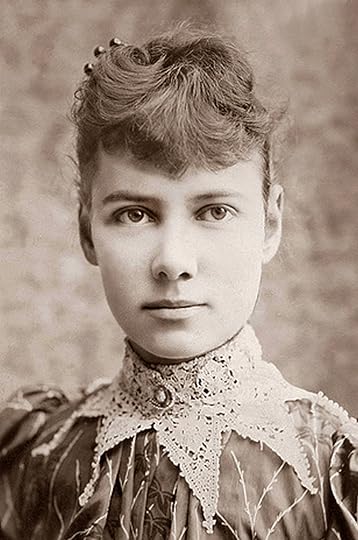
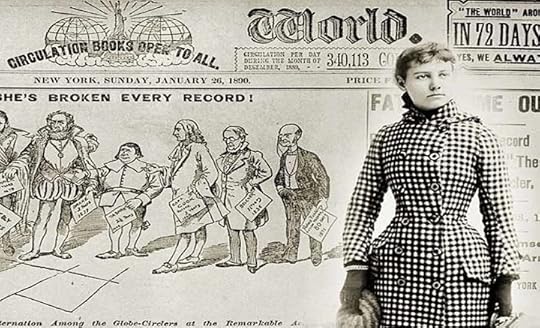
Nellie Bly (1864-1922) was the pen name of pioneer female journalist Elizabeth Jane Cochran. She remains notable for two feats: a record-breaking trip around the world, in emulation of Jules Verne's character Phileas Fogg (Bly completed the trip in seventy-two days) and an exposé, in which she faked insanity to study a mental institution from within. In addition to her writing, she was also an industrialist and charity worker. Bly died of pneumonia at St. Mark's Hospital in New York City in 1922 aged 57.

Librarian Note: There is more than one author in the GoodReads database with this name. See this thread for more information.

Ratings & Reviews

What do you think?
Rate this book

Friends & Following

Create a free account to discover what your friends think of this book!

Community Reviews

5 stars
6,446 (26%)
4 stars
9,543 (39%)
3 stars
6,595 (27%)
2 stars
1,203 (5%)
1 star
233 (<1%)
Displaying 1 - 30 of 2,697 reviews
Profile Image for Petra X.
2,455 reviews35.7k followers
May 20, 2019
If you read this book without knowing anything of Nellie Bly except that she was a journalist, you might think it was a wonderful expose of the absolute horrors of bedlam in New York.

You might doubt whether really the food was so bad that apart from a crust or two and a bowl of cold tea, it was totally inedible - the bread had spiders baked into it. You might wonder if the nurses were all nasty, brutish and extremely violent. Question if the doctors were either having public affairs with their illiterate nursing assistants or just plain blind to the extreme violence, starvation and freezing conditions all around. You might even come to the conclusion, as I did that even if half (or perhaps a quarter) of all this was true then it was outrageous and perhaps fantastical. But it was a good bit of reporting, because she was taken seriously and conditions did change for the better, or were said to, which is the same thing in a book.

However, if you knew that Nellie Bly (the pseudonym of Elizabeth Cochran) was an investigative journalist with all that implies in the modern era, and had also written, "Nellie Bly as a White Slave" and "Trying to be a Servant" you might think she was a bit of a sensationalist reporter who'd do anything for a laff and a buck and you wouldn't be far wrong. (These two pieces are available at the link above here Also some strange advertisements).

It was then my opinion of the book sunk down to a 3 star. Just a journalist assignment, pays the bills, keeps her in the public eye as a late 19thC 'celebrity'. Just as she went off on a less-than-eighty-days jaunt around the world for a newspaper.

But then, it all changed when I read that these sensationalist titles were to gain the popular eye - Nellie Bly was a fierce feminist and exposer of the terrible attitudes and sometimes treatment women faced from the completely male-driven society of her time. Nellie Bly's schtick extended to exposing prison conditions (which she also got improved somewhat), corruption in the State Legislature (you think anyone could affect political corruption more than temporarily?) So sensationalism was a means to an end. How could I give less than 5 stars to a woman who stood together with Emma Goldman and Susan B. Anthony. She should be better known now and an icon of her times and profession.

The book is free here.
Profile Image for Loretta.
368 reviews244 followers
July 4, 2018
This was a very disturbing read for me. Mental health is an illness and this book showed how horribly patients were being treated at the Women's Lunatic Asylum in 1887. It brought back the horrible images of how, in the 70's, Geraldo Rivera blew the whistle on Willowbrook State School in Staten Island where the same horrific treatment of patients was happening.

This small book is not for the faint of heart.
Profile Image for Dem.
1,263 reviews1,431 followers
February 7, 2017
3.5 Stars

Ten Days in a Mad-House is a book by newspaper reporter Nellie Bly. Nellie took the terrifying task of posing as Nellie Borwn in an undercover assisment to investigate the deplorable conditions of insane asylums. While on the assignment she feigned insanity at a women's boarding house and was involuntarily committed to the Women's Lunatic Alylum on Blackwell's Island.

Ten Days in a Mad House is a quick and insightful read into the way the mentally ill were treated or should I say mistreated in many cases during the latter part of the 19th century. What shocked me the most about this story was how quickly the doctors pronounced Nellie insane and how many sick and sane people ended up in Asylums for completely the wrong reasons. This account is told in a matter of fact style and is not dramatic in the telling but I suppose this is reflected in the fact that it was originally written as newpaper articles.

It was so upsetting to read the suffering of patients and while accounts of beatings and cruelty was difficult to read I found the patients suffering of cold and hunger and sanitary needs just heartbreaking as these people were what could only be described as tortured mentally and physically by the state and many of the employees of these institutions.

The public response to her writings was enormous and as a result and investigation was set up and a vast sum invested to improve conditions in the Asylums which was a great achievement for Nellie Bly and her time spent undercover did so much highlight the conditions of patients in Asylums.


Profile Image for VictoriaNickers.
169 reviews52 followers
November 17, 2016
Ten Days in a Mad-house, hat's off to you, Nellie Bly. My new hero. 
 
For the sake of a story, she faked insanity and she got herself admitted into an insane asylum then wrote an exposé on the Blackwell's Island women's asylum in New York. Not knowing how, or if, she or anybody else would be able to get her out. And all this before women even had the right to vote. Blows my mind. Girls got guts. 
  
The story was published in a series of articles for Joseph Pulitzer's New York City Newspaper The World in the late 1800s (Yes, dude who the Pulitzer Prize is named after) and then later in novel form. I can't help but think about what an exciting time it must have been to read newspapers in New York. This must have been the golden age of journalism. Really, it's investigative journalism at it's best. Nellie Bly could teach a thing or two to all those reporters who now write crappy commentary reports on the latest episodes of the Kardashian's. Well written journalism like this is a hard thing to come by these days. Or maybe I'm just reading the wrong websites, I dunno?!? 
 
The story is compelling, eye opening and horrifying all at the same time. The abuse of power and the conditions that these women suffered makes me think about how people who can do little for themselves are treated by others in society. What does that say for humanity? Has anything changed in the 21st century? It's a very thought provoking read. It's a must read. 
 
Wow, I'm still amazed by the story. It will be one that haunts me for a long time. 

She also wrote Around the World in Seventy-Two Days, also for The World, which wasinspired by Jules Verne Around the World in Eighty Days. I have never read Jules Verne in my life but I am definitely going to pick it up and then read Nellie Bly's account of her attempt to match it.
Profile Image for Beverly.
950 reviews467 followers
August 1, 2018
This is an extraordinary account. Nellie Bly was a force to be reckoned with as a reporter and as a person. She allowed herself to be institutionalized in a notorious insane asylum in New York to do an investigation on how the mentally ill women were treated there. Her article of that experience was written in 1887.
She also did reports on Employment Agencies for women and the treatment of female factory workers in New York. Two of these articles were included at the end of Ten Days in a Madhouse. If she wasn't a good writer, these reports would still be of interest because of the snapshot of a time when women were entering the work force and about public mental health facilities. I heard about this story from another book I read and avoided it at first, since I thought it would be a torturous read in an 1880s vernacular, but it was well written and matter of fact. The only drawback to the report was that while she said the city decided to give more money to the asylum, I would have liked to know how the money was spent and if life did improve for the poor souls.
Profile Image for Taury.
1,201 reviews198 followers
March 18, 2022
Short read about Nellie Bly going under cover in a psychiatric hospital in 1887. The horrible conditions and treatment towards the patients. Many of the patients had nothing wrong with them.
Profile Image for Alex ☣ Deranged KittyCat ☣.
654 reviews433 followers
February 20, 2018
Ten Days in a Mad-House is one amazing book! I love it. The fact that it's a real story makes it even more interesting.

Nellie Bly is a journalist who is asked to go undercover as a patient in an asylum and write about it. She does and it's amazing how easily she is declared insane. The examination mainly consists in a brief physical checkup (what's that all about looking at the tongue?) and a few questions focused on whether or not she is a kept woman.

She is finally shipped to the Women's Lunatic Asylum on Blackwell's Island, at which point she decides to start behaving normal again (without letting her true identity be known). Still she is labeled delusional and treated as such. There's an almost funny situation in which the doctor asks Nellie if she hears voices during the night. She replies truthfully that she does (the nurses were always extremely noisy).

During Bly's stay at the asylum, the doctors are ignorant and the nurses are abusive. They mock, beat and even strangle the patients. And they threaten worse if anybody complains to the doctors. Not to mention the ice-cold baths. They are administered regardless of the patient's health status. Got a fever? Here's a cold bath! Pneumonia? Even better! It's just horrible and I'm thankful for the time period I live in with its scientific progress.

And those poor women. Not all of them were mad. There were women brought in by their husbands, fathers or friends. Some of them didn't even know where they were being taken to until it was too late.

Ten Days in a Mad-House is a short, incisive book (Bly tries to keep as objective as possible) and you can read it here.
Profile Image for Paul Ataua.
2,194 reviews289 followers
May 21, 2022
Late 19th century investigative reporter Nellie Bly gets herself committed to the New York City Asylum to write an exposé on the conditions for the female patients there. Takes quite a while to actually get passed the getting in process, but it is well worth waiting for to get the horrifying but not surprising revelations. Maybe someone needs to repeat the exercise.
Profile Image for Jo .
930 reviews
November 9, 2018
Well, Nellie Bly, you have my utmost respect. What an inspirational human being. Someone that would purposely get themselves admitted into an asylum for the insane, in order to potentially uncover the inhumane treatment of the women there, has to be one amazing and passionate individual. She did this not knowing whether she'd actually be able to get out again, and, even before women received the right to vote. I've been knocked off my feet here. Just wow.

What is contained in this book is compelling, but also incredibly horrific. The people who just outrightly abused their position of power in order to make those poor women suffer, is just unforgiveable. It makes one wonder just how many women in the asylum were detained in there longer, due to the inhumane mistreatment and abuse that they suffered at the hands of these so called "Nurses" Some of those women were brought in, and they were not even ill, and by the time they figured out where they were, it was obviously too late.

This was so thought provoking, and the story itself will stay with me, and will probably haunt me for a long time.

Profile Image for Valerity (Val).
1,105 reviews2,774 followers
September 10, 2013
For its time, its quite a story and the reporter took quite a little risk when she got herself tossed into an asylum back in those days, depending on acquaintances to get her back out when the time came. I'm not sure I'd be quite so trusting, under those circumstances. She found quite a story behind the walls, and what she wrote made quite a stir when she got out.
Profile Image for ☆LaurA☆.
503 reviews148 followers
June 30, 2023
“Lasciate ogni speranza voi che entrate”

Questo è quello che Nellie ha pensato durante il suo "soggiorno" nella casa per malattie mentali di NY.
Siamo alla fine del 1800 e sembra così assurdo con quanta facilità una donna potesse essere considerata pazza e quanto tutto ciò assomigli ancora alla condotta di alcune case di cura che ospitano i nostri nonni.
Cure inesistenti, mancanza di professionalità e competenza del personale medico, abusi psicologici, percosse, malnutrizione e molto altro che rende tutto davvero agghiacciante!
Una lettura che lascia una cicatrice indelebile nell'animo, un' altra prova che la razza umana non cambia mai.

Le motivazione per essere internate in una struttura del genere erano al quanto banali. Sei depressa per il lavoro? Allora sei pazza! Hai appena subito un intervento e non riesci a ristabilirti nei tempi pattuiti? Allora hai una qualche malattia mentale! Hai un amante? Bene, tuo marito può farti rinchiudere in manicomio! Sei immigrata e non parli la lingua del paese in cui ti trovi? Ottimo motivo per farti portare in clinica da tuo figlio.
Queste erano le donne "malate di mente" che vivevano segregate a Blackwell.
Donne senza nessun tipo di problema mentale reale.

“Prendete alcune donne perfettamente sane e in salute, rinchiudetele in una stanza, dove saranno costrette a rimanere sedute dalle 6 del mattino alla 8 del pomeriggio, senza mai potersi muovere, né parlare, alimentatele con cibo scarso e avariato e costringetele a sottoporsi a bagni gelidi e terapie estremamente dure, senza mai dar loro notizie di ciò che accade nel resto del mondo e vedrete come, ben presto, le condurrete alla follia. Due mesi sono sufficienti a provocare in chiunque un vero e proprio esaurimento fisico e mentale”.


Le 5 stelle vanno al coraggio e alla determinazione di Nellie Bly
Profile Image for Don Gerstein.
754 reviews100 followers
December 16, 2017
There are a number of publishers offering this book and, of the few I have seen, I found this publication to be more enjoyable.

In any of the publications, readers will find the main story of how journalist Elizabeth Cochran Seaman (pen name Nellie Bly) posed as an insane person in order to gain entry into Bellevue hospital on Blackwell's Island. This is a revealing look not only into how people were institutionalized 130 years ago, but also the lack of knowledge of medical doctors at that time. The book also includes two short articles on employment agencies and women working in paper box factories.

I found this publication more enjoyable for a number of reasons. There are hand drawn illustrations throughout the book depicting Ms. Seaman at various stages of her investigations. The back of the book features pictures of Ms. Seaman and a list of words that might not be well-known to modern readers. The Annotations section in the back offers an overview of Blackwell's Island Lunatic Asylum as well as notes on Ms. Seaman's participation. Her other books are also listed. If this book interests you, I would recommend this publisher (Amazon - in Kindle or paperback) over the others I have seen.

Excellent book for those interested in history or just curious about this slice of life in New York over a century ago. Four stars.
Profile Image for Sara.
Author 1 book935 followers
September 30, 2017
First of all, I tried to imagine what kind of courage it took for Nellie Bly to allow herself to be committed to this kind of horrible institution from which there were no avenues of escape. I would have been too frightened of the possibility of being left there indefinitely to accept this assignment!

The writing is very straight forward and the experiences are detailed in a way that makes it ring with truth. It seems that the most cruel of people were employed in insane asylums at this time and that anyone who was sane going in would be quite insane coming out.

My father's best friend was committed against his will to a state insane asylum in the early 1960s. He went in a jovial, quite man with a drinking problem, he came out a broken man, sad and depressed. He told my father that no one would ever know what he had endured at the hands of his "keepers". He killed himself several months after his release, leaving a note that said he could not sleep for fear of being recommitted and would rather be dead. My father was inconsolable and never forgave his friend's wife for having put him there in the first place.

Those kinds of institutions are closed now and I'm sure people who go into care facilities get serious attempts at help. My concern now is that there is very little help available for people with chronic mental health issues and no money to get the help they need. At least no one can commit you without a hearing and the legal system has been vastly improved since the time when Nellie Bly could be so easily committed to an Island without any limit on the time she could be held or the treatments she could receive.
Profile Image for Coos Burton.
913 reviews1,570 followers
March 12, 2022
Una de las lecturas más duras que abordé en mucho tiempo. Todo radica en el hecho de que es real, es la experiencia en carne y hueso de Nellie. Cuesta y duele mucho pensar que hay gente que se aproveche así de los pacientes, y sobre todo, que hay prácticas que hoy en día se siguen llevando a cabo sobre aquellos más vulnerables. Muy triste. Una lectura necesaria.

- Acá les comparto mi video reseña del libro y más cosas interesantes sobre Nellie Bly: https://youtu.be/LFxqEyNstsI
Profile Image for Trish.
2,388 reviews3,744 followers
August 23, 2022
I found out about this because it happens to be the first piece of investigative journalism and I was impressed that it had been researched and written by a woman no less.

The story is that of Nellie Bly, born as Elizabeth Cochran Seaman, a journalist, industrialist, inventor, and charity worker who worked undercover to report on a mental institution from within in September 1887.
She checked herself into a temporary home for women and posed as a poor girl, then started to slowly introduce "symptoms". For example, she stayed up all night to give herself the wide-eyed look of a disturbed woman. She also made accusations and told different stories of where she was from. Eventually, the cops were called and a judge sent her to Blackwell's Island.
She spent 10 days there. Originally, she had wanted to go to all the different wards but seeing the treatment in the different halls, she decided against that.
Despite only being in a minimum security hall, she was subjugated to physical mistreatment (though not violence on the scale other inmates had to suffer), was left to hunger, thirst and almost freeze to death. All that in only 10 days!

I expected the account to reveal terrible circumstances but nothing could have prepared me for just how bad it was!
Some inmates were only sent to the asylum for being poor or not speaking English. But even those who were delusional and perhaps even violent didn't deserve the treatment they received by the hands of the nurses.

Yep, you read that correctly, the nurses, other women, were the worst. The doctors, though absolutely guilty of laziness and not giving a shit, at least never laid hands on anyone (they also didn't order the violence - they simply didn't know and believed the nurses' excuses for black eyes and other injuries the inmates had).

Beatings, forced shaving of the hair, vile and often even spoilt food, almost no water, no bathroom breaks, waterboarding (I'm not kidding, though it wasn't called that back then) and more were a daily occurrence.

Nobody cared if the woman were actually insane. They also didn't care that the state was financing the island so better bedding, food and ample supplies like soap and water could have been had.

In short: it was hell.
And Nellie Bly made sure people would hear about it. After her employer (The New York World) insisted, Nellie was released after 10 days.
Her report, later published in book form even, caused a sensation. Not least because the author reported from her own experience, which impressed a lot of people, and her writing style was such that people of all classes could read and follow it.
It not only brought the author fame but also led to a grand jury investigation as well as the financial increase in the Department of Public Charities and Corrections.
Arguably, the "reforms" weren't enough, but it was a start. We all know how long it took for mentally ill patients to be treated as something resembling human. Even now, depending on the institution, it's infuriating.

Why not more poeple know about Nellie Bly and her accomplishments (she also travelled around the world in 72 days to beat Jules Verne's account in his famous novel), I have no idea. However, I do hope "the mother of investigative journalism" will not be forgotten.

Profile Image for Dagio_maya .
1,107 reviews350 followers
September 4, 2023
” Solo quando si è in difficoltà, si realizza quanto il mondo pecchi in comprensione e rispetto"

description

Non certo la prima donna che, non per vezzo ma per vera necessità, dovette cambiare il suo nome. Travestirsi da uomo almeno nell’appellativo; giusto per non essere scartata subito, relegata tra le mura domestiche dove ogni donna dovrebbe stare.

Elizabeth Jane Cochran, questo il vero nome di una vera e propria pioniera (sostantivo che – guarda un po’- non esiste al femminile) nel mondo del giornalismo investigativo.

Una vita appassionate ed appassionata.

“Ten Days in a Mad-House” (1887) è il resoconto dell’esperienza diretta che fece infiltrandosi a Blackwell’s Island, un ospedale psichiatrico nello stato di New York.
Sorprende parecchio il fatto che la Bly non fatica per nulla a farsi passare per una malata mentale.

Qualche discorso connesso ed uno sguardo vagamente vacuo: questi gli unici trucchi che sfoggia. Il resto lo fanno i dottori avvezzi a giudicare con facilità le donne chiamando follia la loro sensibilità.
Dieci giorni di fame, freddo e violenze da parte del personale infermieristico.

L’inchiesta pubblicata sul «New York World» fece grande scalpore tanto da spingere Il Grande Giurì a fare un’accurata inchiesta.

Il giornalismo della Bly fu sempre un atto di denuncia non fine a se stesso ma volto concretamente a sanare le ferite sociali che affliggiono i più deboli.
Se poi ci mettiamo anche il fatto che fece il giro del mondo in 72 giorni ma c’è bisogno di dire altro?

Che donna!!!

”Vorrei che quegli esperti psicologi che mi hanno condannata per il mio operato – smascherando, tra l’altro, la loro presunta capacità di riconoscere una persona malata di mente – prendessero una donna perfettamente in salute e sana di mente, le ordinassero continuamente di starsene in silenzio, costringendola a rimanere seduta dalle 6 del mattino alle 8 del pomeriggio su rigide panche di legno, senza potersi muovere durante tutte queste ore, senza niente da leggere, senza farle sapere niente di cosa sta accadendo nel resto mondo, le servissero cibo putrido e avariato, la trattassero in modo duro e valutassero, infine, in quanto tempo tutto ciò la condurrebbe alla follia. Con tutta probabilità due mesi sono più che sufficienti a provocare in chiunque un vero e proprio esaurimento fisico e mentale.”
Profile Image for Sam.
166 reviews10 followers
August 19, 2019
"I always had a desire to know asylum life more thoroughly - a desire to be convinced that the most helpless of God's creatures, the insane, were cared for kindly and properly."


New York World journalist Elizabeth Cochran Seaman, aka Nellie Bly, goes undercover as "demented" Nellie Brown with a mission to investigate Blackwell's Island Insane Asylum.

Nellie Bly uncovers flaws before, during, and beyond the asylum. From admission to release, I felt frustrated and never relieved (if that's not your taste, you may not enjoy Ten Days in a Mad-House like I did). The late 1880s really does not feel distant while reading this investigation. Today, we still have cases of abuse towards, and the diagnoses of, the mentally (and non) ill at the hands of caretakers and schools.

But here was a woman taken without her own consent from a free world to an asylum and there given no chance to prove her sanity. Confined most probably for life behind asylum bars, without even being told in her language the why and wherefore. Compare this with a criminal, who is given every chance to prove his innocence.


We've heard at least one "story has it" about asylums. Rumors and ghost stories had to stem from somewhere. Well, read this and you will get a feel of why admitted "patients" would want to haunt the abandoned hallways of their prisons.
Profile Image for Britany.
1,165 reviews500 followers
September 6, 2019
This started out so strong and then ended pretty weak.

Nellie Bly gets herself committed to an insane asylum to report on the experience. She states her intentions at the very beginning of the book, taking time to set up the reader for what we are about to embark on. I was intrigued, I was eager to dive in and see what happened and if she made it out.

She spends a lot of the book focusing on getting in, which barely constitutes an exam. Once in, she easily gets by all the staff and the other patients. They are constantly cold, placed in freezing water that never gets changed between bodies and barely get served edible food. The writing is a bit disjointed the latter half and then very quickly wraps up. An interesting, quick read on her experience (which is still fascinating!)
Profile Image for Kevin.
595 reviews214 followers
October 29, 2022
I’m not sure Nellie Bly knew exactly how difficult it would be for a female journalist to find work in 1887 New York. She had left a good job in Pittsburg and moved to the Big Apple with little else but high hopes. Four months later, after numerous rejections, she was almost penniless and still unemployed. Finally, the New York World gave her an assignment; if she agreed to go undercover and write an exposé on the treatment of patients at the then-infamous Blackwell Island Lunatic Asylum for Women, she had a job. It was illegal, it was dangerous, but it was an opportunity. She agreed.

What Bly wrote changed the face of institutional mental health care in America. Her series of investigative articles shocked 19th Century sensibilities. As a result, state investigations were launched, protocols were drastically altered, and an additional $850,000 (that’s $26,556,505.26 in 2022 dollars) were allocated for New York’s mental health services.

This is a short but compelling read. Yes, it’s a little “tabloidy” and melodramatic but it suits the era in which it was written, and its historical significance is enormous. I can think of at least three films that played on the theme of Bly’s nightmarish experiences: The Snake Pit (Anatole Litvak, 1948), Shock Corridor (Samuel Fuller, 1963), and, of course, One Flew Over the Cuckoo’s Nest (Milôs Forman, 1975). Good movies all, and all have Nellie Bly to thank.
Profile Image for Tamoghna Biswas.
361 reviews148 followers
April 11, 2023
“I would like the expert physicians who are condemning me for my action, which has proven their ability, to take a perfectly sane and healthy woman, shut her up and make her sit from 6 AM until 8 PM on straight-back benches, do not allow her to talk or move during these hours, give her no reading and let her know nothing of the world or its doings, give her bad food and harsh treatment, and see how long it will take to make her insane. Two months would make her a mental and physical wreck.”

I think anyone will find it hard to start this text without a certain degree of reverence. Such a feat would have been awe-inspiring even in the 20th century, and to think that Nellie Bly did it in the 1880s, plus the way she convinced everyone of her insanity (with so little reference to go through), sounds like, at least to me, something out of the movies, so much did it rely stylistically on suspension of disbelief.

The importance of this text is undeniable: a million-dollar investment that this text resulted in back in the day was not a small feat by any means. Also, as much as the text is about the inhumane treatment facilities and incompetence of the majority of the then authorities and medical personalities in the psychiatry field, it overcomes the border of the signature-style distant perspective of literary journalism and almost becomes a personal account. After all, even ten days of going through that is a tough ordeal. And not just that, as she clearly stated, many of the women in there with her were not suffering from any psychiatric issues; most of whatever they became was because of a loss of hope and faith and the maltreatment that the authorities excused as purgatory. It is also an example of how any feminist text is, in all its essence, a universal humanist text.

Book 6 of 7 Books in 7 Days
(No pun intended but my 23rd book of the year was written by a 23yr old journalist)
Profile Image for Christy B.
344 reviews227 followers
March 2, 2010
I do not know where to even start with this. The fact that this was non fiction just blew my mind. I've read fiction books that take place in mad houses during the 19th century, but the fiction was more of a reality than I had originally thought.

Nellie Bly is a journalist and gets an assignment in 1887 to go undercover and spend ten days in a mad-house and report her findings. She goes about this by purchasing a room in a women's boarding house and acting peculiar. She says that all the other women are crazy; she sits up all night; she keeps asking where her trunks are. None of this is even remotely crazy behavior, but the other boarders become agitated and the police are called in. Just goes to show how quickly a label was placed on somebody. Eventually, she is declared mad and sent off to the Women's Lunatic Asylum on Blackwell's Island.

When Nellie is in the mad house, she discovers that absolutely nothing is being done to help anyone, and just how quickly women were admitted. Some women were just getting over physical illnesses, some women couldn't even speak English! Nellie acts perfectly sane once she arrives, but no matter what she says, it's blown over as 'ravings.' Someone women actually ask the doctors to test them to see if they are insane or not, but they are ignored. And the doctors do absolutely nothing. They do not even listen to the women. Everything they say is written off as ravings of a mad woman.

The women were fed food that wasn't even fit for animal consumption. There was absolutely no heat, so the women practically froze to death. The women were given baths in cold water that wasn't even changed until the water got thick. ICK. The nurses used physical violence, along with agitating some of the women to act mad in front of the doctors. Some women were afraid to report this to the doctors, but it was no use if they did, because the doctors didn't listen, anyhow. There were no activities to stimulate the minds of the patients, so, if anything, these so-call "hospitals' actually made most of the patients - who weren't even mad to begin with - actually mad.

When Bly left, her reports launched a jury investigation, and surprise surprise! Things started to improve.

This book was riveting. It made me angry; it disgusted me. Nellie Bly was truly an amazing woman. I suggest reading more about her.
Profile Image for Amanda.
1,199 reviews275 followers
January 10, 2016
This was amazing and horrifying. In 1887 Nellie Bly faked insanity and spent 10 days in an insane asylum so she could report on the conditions. The conditions were horrendous at best. There were beatings, cold baths in the same water as all the other "prisoners', inedible food, extreme cold conditions and the list goes on and on. Due to her bravery and reporting skills she was able to improve conditions and get more money allocated to treatment of the insane then ever had before.
Profile Image for MartaMP.
92 reviews28 followers
February 20, 2022
Nellie Bly, dopo essere riuscita a farsi rinchiudere in un manicomio nello Stato di New York per scoprire come erano realmente trattati i malati di mente, ci racconta la sua esperienza.
Spero veramente che le cose in più di cento anni siano cambiate, che la sua denuncia abbia fatto cambiare tutti i meccanismi e non solo per la quantità di fondi stanziati.
Mi viene la nausea a pensare che persone così fragili subiscano tali maltrattamenti e angerie gratuitamente.
Profile Image for Katya.
483 reviews
Read
July 1, 2024
The insane asylum on Blackwell’s Island is a human rat-trap. It is easy to get in, but once there it is impossible to get out.

Nellie Bly é uma das grandes figuras da última metade do século XIX e primeiras décadas do século XX. Uma mulher desempoada cujos feitos incluem uma corrida à volta do mundo em 72 dias (em competição direta com Elizabeth Bisland); uma série de invenções para a indústria; uma fértil carreira jornalística (e uma carreira menos conhecida na ficção), e a publicação de vários livros - cuja base foram as múltiplas reportagens de investigação para as quais se voluntariou, entre elas reportagens sobre a chamada escravatura branca (também incluída neste volume) e o seu internamento no manicómio (Hospital Psiquiátrico para mulheres) da ilha de Blackwell.

Efetivamente mais conhecida por esta publicação, Bly parte um dia da redação do New York World numa missão de se infiltrar em Blackwell*. Para isso, basta dar entrada numa pensão (um alojamento temporário só para mulheres), onde lhe é extorquido o pouco dinheiro que tem consigo, recusando-se a permanecer no quarto e dando parcos sinais de paranóia. Presente às autoridades e posteriormente ao juiz (tudo no espaço de sensivelmente 24 horas), Bly é declarada insana e transportada com grande pompa para o rochedo onde passará os dez dias seguintes:

From the moment I entered the insane ward on the Island, I made no attempt to keep up the assumed role of insanity. I talked and acted just as I do in ordinary life. Yet strange to say, the more sanely I talked and acted the crazier I was thought to be.

Do momento da chegada em diante, o seu relato é chocante: o diagnóstico é nulo (nenhum médico assume que uma paciente seja qualquer coisa menos do que neurótica) - a própria Bly foi "examinada" por quatro médicos e todos foram peremptórios a afirmar a sua insanidade -; as condições de acolhimento são atrozes...

I could not sleep, so I lay in bed picturing to myself the horrors in case a fire should break out in the asylum. Every door is locked separately and the windows are heavily barred, so that escape is impossible. In the one building alone there are, I think Dr. Ingram told me, some three hundred women. They are locked, one to ten to a room. It is impossible to get out unless these doors are unlocked. A fire is not improbable, but one of the most likely occurrences. Should the building burn, the jailers or nurses would never think of releasing their crazy patients. (...)in case of fire, not a dozen women could escape. All would be left to roast to death.

O tratamento é desumano e abjeto, as pacientes sofrem mais tratos, fome, tortura - na verdadeira aceção da palavra - passam frio, são obrigadas ao silêncio ou à pose de estátua certas vezes por mais de dez horas seguidas, e presenteadas com banhos frios (usando a mesma tina de água, uma após a outra, até que esta fique barrenta):

We were taken into a cold, wet bathroom, and I was ordered to undress. Did I protest? Well, I never grew so earnest in my life as when I tried to beg off. They said if I did not they would use force and that it would not be very gentle. At this I noticed one of the craziest women in the ward standing by the filled bathtub with a large, discolored rag in her hands. She was chattering away to herself and chuckling in a manner which seemed to me fiendish. I knew now what was to be done with me. I shivered. They began to undress me, and one by one they pulled off my clothes. At last everything was gone
excepting one garment. “I will not remove it,” I said vehemently, but they took it off. I gave one glance at the group of patients gathered at the door watching the scene, and I jumped into the bathtub with more energy than
grace. The water was ice-cold, and I again began to protest. How useless it all was! I begged, at least, that the patients be made to go away, but was ordered to shut up. The crazy woman began to scrub me. I can find no other word that will express it but scrubbing. From a small tin pan she took some soft soap and rubbed it all over me, even all over my face and my pretty hair. I was at last past seeing or speaking, although I had begged that my hair be left untouched. Rub, rub, rub, went the old woman, chattering to herself. My teeth chattered and my limbs were goose-fleshed and blue with cold. Suddenly I got, one after the other, three buckets of water over my head—ice-cold water, too—into my eyes, my ears, my nose and my mouth. I think I experienced some of the sensations of a drowning person as they dragged me, gasping, shivering and quaking, from the tub.
[...]
We numbered forty-five patients in Hall 6 (...) there were two coarse towels. I watched crazy patients who had the most dangerous eruptions all over their faces dry on the towels and then saw women with clean skins turn to use them. I went to the bathtub and washed my face at the running faucet and my underskirt did duty for a towel.
Before I had completed my ablutions a bench was brought into the bathroom. Miss Grupe and Miss McCarten came in with combs in their hands. We were told so sit down on the bench, and the hair of forty-five women was combed with one patient, two nurses, and six combs.


A posição dos médicos (sempre homens, claro, a faculdade de medicina não estava aberta a mulheres) é, no mínimo, negligente e pactuante com a bestialidade das enfermeiras - a violência psicológica, física e as ameaças de violência sexual são uma constante e revoltante ocupação destas mulheres que não merecem o nome:

“Urena,” said Miss Grady, “the doctors say that you are thirty-three instead of eighteen,” and the other nurses laughed. They kept up this until the simple creature began to yell and cry, saying she wanted to go home and
that everybody treated her badly. After they had gotten all the amusement out of her they wanted and she was crying, they began to scold and tell her to keep quiet. She grew more hysterical every moment until they pounced upon her and slapped her face and knocked her head in a lively fashion.
This made the poor creature cry the more, and so they choked her. Yes, actually choked her. Then they dragged her out to the closet, and I heard her terrified cries hush into smothered ones. After several hours’ absence she returned to the sitting-room, and I plainly saw the marks of their fingers on her throat for the entire day.


As facilidades de internamento de uma mulher são degradantes e sintomáticas de uma sociedade misógina...

Later in the afternoon a boy and a woman came. The woman sat down on a bench, while the boy went in and talked with Miss Scott. In a short time he came out, and, just nodding good-bye to the woman, who was his mother, and went away. She did not look insane, but as she was German I could not learn her story. Her name, however, was Mrs. Louise Schanz. She seemed quite lost, but when the nurses put her at some sewing she did her work well and quickly.

...a mesma sociedade que consente em práticas humilhantes como a exibição de pacientes para gáudio de visitantes, e que, num espaço que deveria primar pelo respeito e pela integridade dos sujeitos que acolhe, escolhe antes favorecer a castração da individualidade, da feminilidade, da sanidade:

According to one of the physicians there are 1600 insane women on Blackwell’s Island.
Mad! what can be half so horrible? My heart thrilled with pity when I looked on old, gray-haired women talking aimlessly to space. One woman had on a straightjacket, and two women had to drag her along. Crippled, blind, old, young, homely, and pretty; one senseless mass of humanity. No
fate could be worse.


Muitas destas mulheres, refere Bly, não são sequer doentes - nem é preciso que o diga, as conversas que descreve com várias das pacientes tornam isso evidente. Muitas, imigrantes, são apanhadas nas malhas da justiça por uma ou outra razão e, incapazes de comunicar, enviadas para o asilo como psicologicamente doentes; outras são mulheres pobres e desamparadas que procuram o asilo dos pobres e são, ao invés disso, encaminhadas para ali; outras são simplesmente internadas por familiares que as querem fora do caminho. Uma vez em Blackwell, o seu destino está traçado. Perdidas para o mundo, afastadas de tudo e todos, e submetidas a maus tratos, estas mulheres perdem qualquer esperança numa segunda oportunidade:

A long cable rope fastened to wide leather belts, and these belts locked around the waists of fifty-two women. At the end of the rope was a heavy iron cart, and in it two women—one nursing a sore foot, another screaming at some nurse, saying: “You beat me and I shall not forget it. You want to kill me,” and then she would sob and cry. The women “on the rope,” as the patients call it, were each busy on their individual freaks. Some were yelling all the while. One who had blue eyes saw me look at her, and she turned as far as she could, talking and smiling, with that terrible, horrifying look of absolute insanity stamped on her. The doctors might safely judge on her case. The horror of that sight to one who had never been near an insane person before, was something unspeakable.

Os dez dias de Nellie Bly decorrem penosamente - observadora e participante, o seu papel é duplamente cruel. Uma vez libertada (sob o pressuposto de ser acolhida e tomada à responsabilidade de um conhecido, na realidade o advogado do jornal New York World), Nellie publica a sua história. Após a publicação da reportagem (1887), um júri acompanha Bly até Rockwell para averiguar o seu relato. Todavia, alertado para a visita, o pessoal do asilo compõe o espaço e trata de afastar possíveis testemunhas, negando todas as acusações que lhe são feitas. Bly consegue, ainda assim, que uma verba muito considerável seja libertada a favor da melhoria das condições nos asilos mentais - com a ajuda da sua investigação, estes passaram a contar ainda com uma equipa de tradutores (para ajudar na integração de imigrantes).

Ten days in a mad-house é um relato brutal das condições de acolhimento das mulheres nos asilos ** e em sociedades que se estruturam para e por homens cujo objetivo único reside na supremacia pela força. Toda e qualquer forma de violência para com as mulheres é aqui explicitamente pretendida e sancionada pelos mesmos poderes que se afirmam pela justiça e pela proteção dos seus cidadãos, o que torna a sua leitura (como o foi a sua publicação) uma poderosa ferramenta de luta por direitos que estão longe de se tornar inalienáveis

(...)here was a woman taken without her own consent from the free world to an asylum and there given no chance to prove her sanity. Confined most probably for life behind asylum bars, without even being told in her language the why and wherefore.
Compare this with a criminal, who is given every chance to prove his innocence. Who would not rather be a murderer and take the chance for life than be declared insane, without hope of escape?



*Blackwell é hoje conhecida como Roosevelt Island e, à data, acolhia várias instituições, entre elas o asilo/manicómio, uma penitenciária, hospitais de doenças infecciosas e asilos de pobres.
**Bly descreve as condições de Blackwell em finais de século XIX, mas que isso não sirva de isenção já que, mesmo em 1941, uma sua conterrânea - e que conterrânea!- Rosemary Kennedy ainda seria sujeita a uma lobotomia a simples pedido do pai. Escusado será dizer que o resultado desta brincadeira levou ao seu afastamento público e apagamento deliberado da história da família.
Profile Image for Linda Strong.
3,878 reviews1,709 followers
December 9, 2017
Ten Days in A Mad-House, Was Written By Nellie Bly in 1887, after she lived, undercover, at a women's insane asylum at Blackwell's Island in 1887 for ten days. This was an assignment given to her by Joseph Pulitzer.

It is so hard to read this account in 2017 ... 130 years after Nellie Bly's report of her 10 days uncover playing the part of an insane woman. At that time there were 1600 women imprisoned.. some of them for nothing more than not being able to speak English, some were there at the behest of their husbands who had tired of them. Whatever the reasons, these women suffered on a daily basis.

There was inadequate clothing ... some women actually died of hypothermia inside the asylum. They were given cold water baths once a week ... 62 women in Nellie's quarters shared the bath water. They were given very little in the way of clothing ... no blankets, no pillows, no shawls.

The food was horrible. Cold tea (?) in the morning... piece of bread covered with a butter so rank it couldn't be eaten. Soup for lunch (cold) was served in the morning's tea cups. Meat was usually next to raw, some had worms, the inmates had no forks or knives and thus ate with their fingers if they ate at all.

Nurses and/or caregivers were mean, cruel, some seemed to border on insanity themselves. The patients were tortured in some ways ... some were choked until they were unconscious, locked in closets.

This book is the accounting of the things Nellie Bly saw and heard ... and which led to a court hearing in which she testified.

I can only say how much I appreciate her efforts to ease the lives of these poor women and those that followed.
Profile Image for Sasha.
Author 15 books5,031 followers
March 16, 2016
Nellie Bly was the world's first stunt journalist. She traveled around the world in 72 days to beat Phineas Fogg, she documented the conditions of women factory workers, and she faked insanity to get committed to the notorious Blackwell Island. This is her expose of the conditions there.


You too can practice insanity at home!

It's a great read: brisk, engaging, convincing. She describes with authority and empathy the freezing, starving, beating, choking and waterboarding of the poor women interred there, some of whom are actually crazy and some rapidly being driven so; it's easy to see why reform came immediately after the piece's publication. She also can't resist giggling a little over a handsome doctor she meets there, which is weird but charming.

It's about a hundred pages and it reads quickly. Here's the full text, complete with illustrations. There are also good cheap Kindle versions around.
Profile Image for  Cookie M..
1,436 reviews161 followers
July 18, 2021
This is the true account of how 19th Century "girl reporter" Nellie Bly actually got herself committed with very little effort to a New York City insane asylum for 10 days to investigate the treatment and conditions of the patients. What she found and endured was horrifying and it led to changes in the law and governing boards of hospitals for the mentally ill.
Yes, Nellie Bly existed, and she put herself into dangerous situations or social justice.
Profile Image for 11811 (Eleven).
663 reviews163 followers
July 2, 2015
This was excellent. A journalist fakes insanity in order to gain admittance to an insane asylum in 1887. She sees some bad shit. She reports it. A number of reforms are introduced as a result of the bad shit she reports. I can't believe I hadn't heard of this until now.

I listened to the audiobook which was only a couple hours long and the narration was outstanding. Highly recommended.

I was provided this audiobook at no charge by the author, publisher and/or narrator in exchange for an unbiased review via AudiobookBlast.com Thanks for the book!
Profile Image for Wealhtheow.
2,465 reviews605 followers
January 17, 2016
Nellie Bly was a reporter in New York who convinced the courts that she was insane and got herself locked away at Blackwell's Island. Her expose of the conditions there led to increased care and resources given to the patients. What really shocked me about this piece was not the terrible treatment the patients endured, but how easily, and on what tenuous grounds, women were declared insane.
Profile Image for Sara Dahaabović.
280 reviews96 followers
January 13, 2020
A non-fiction story by Nellie Bly (or as she calls herself in the book Nellie Brown), a reporter in the late 1880s that faked insanity in order to get committed to an asylum in Blackwell Island or as currently called Roosevelt Island in New York City.

Roosevelt Island is a very small island which mainly had hospitals where they would send patients and "the insane" who needed be isolated from the rest of the city.

description

"And then, once in, what would be my experience? And after? How to get out? Bah! I said, they will get me out."

There’s really no words to describe this, her bravery to do such an experiment in the 1880s! And the fact that she might have been stuck in there is beyond terrifying.

For some reason this reminded me of the Bell Jar by Selvia Plath, maybe because patients with mental disorders were sadly treated horribly in both books.

"I talked and acted just as I do in ordinary life.
Yet strange to say, the more sanely I talked and acted the crazier I was thought to be..."


What did I hate about this?
The NURSES! Oh God they're monsters
The physical examination and diagnosis?! It’s just completely sad that the doctor who examined her was actually flirting with the nurse while doing so, he decided that she was insane and to be put in the asylum and to be given drugs, (I’m really curious of what kind of drugs she was prescribed if she wasn’t even properly diagnosed?!)

"He gave the nurse more attention than he did me, and asked her six questions to every one of me. Then he wrote my fate in the book before him."

“take a dose of some mixture out of a glass to make me sleep, they said that if I did not take it he would put it into my arm with a needle.”

All in all it was a really good book and I highly recommend it.

description
Displaying 1 - 30 of 2,697 reviews

Can't find what you're looking for?

Get help and learn more about the design.