

What do you think?

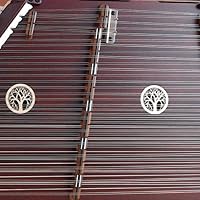
The Harp of the Spirit: Poems of Saint Ephrem the Syrian
THE HARP OF THE POEMS OF ST EPHREM THE SYRIAN is the lead title in a new series on matters of major importance to the Orthodox Christian faith, published by the Institute for Orthodox Christian Studies, Cambridge, under the imprint of Aquila/IOCS.St Ephrem the Syrian, who died in AD 373 in Edessa (modern-day Sanliurfa, south-eastern Turkey) in AD 373, has been judged comparable to Dante in stature as a religious poet and to the English Metaphysical poets for intellectual wit and paradox. His own brand of humane and humorous exposition of the mysteries of Christian doctrine is little-known in the West, yet remains a prime example for any modern Christian teacher of how to make the faith intelligible and attractive.This newly augmented collection of translations into English is by the world-renowned scholar of Syriac, Dr Sebastian Brock, formerly Reader at the Oriental Institute of the University of Oxford. The elegant precision of his versions captures the beauty and charm of the originals, which were intended to be sung by a congregation to popular melodies, with refrains.One poem added to this newly expanded collection demonstrates the unique quality of St Ephrem in expounding central doctrines of the faith. In it he compares the action of God becoming incarnated in the Man Jesus to a parrot-trainer who encourages a parrot to talk like a human by placing a mirror in its cage so it can see another parrot apparently speaking and thus learn to imitate it. God became Man so that human beings might learn to relate to Him as one of themselves and by imitation be lifted up to a divine plane of being.Razvan Porumb, Development Officer at the Cambridge Institute, says of this beautifully produced volume that every committed Orthodox Christian should have it by them. THE HARP OF THE SPIRIT is a delightful gift by which to mark an important occasion and a valuable present to any preacher seeking to refresh his or her addresses by a fresh infusion of the Spirit!
166 pages, Paperback
First published January 1, 1983
About the author
Ephrem the Syrian
161 books76 followersEphrem the Syrian was a Syriac deacon and a prolific Syriac-language hymnographer and theologian of the 4th century from the region of Syria. His works are hailed by Christians throughout the world, and many denominations venerate him as a saint. He has been declared a Doctor of the Church in Roman Catholicism. He is especially beloved in the Syriac Orthodox Church.
Ephrem wrote a wide variety of hymns, poems, and sermons in verse, as well as prose biblical exegesis. These were works of practical theology for the edification of the church in troubled times. So popular were his works, that, for centuries after his death, Christian authors wrote hundreds of pseudepigraphal works in his name. Ephrem's works witness to an early form of Christianity in which Western ideas take little part. He has been called the most significant of all of the fathers of the Syriac-speaking church tradition.
Ephrem wrote a wide variety of hymns, poems, and sermons in verse, as well as prose biblical exegesis. These were works of practical theology for the edification of the church in troubled times. So popular were his works, that, for centuries after his death, Christian authors wrote hundreds of pseudepigraphal works in his name. Ephrem's works witness to an early form of Christianity in which Western ideas take little part. He has been called the most significant of all of the fathers of the Syriac-speaking church tradition.
Ratings & Reviews
Friends & Following
Create a free account to discover what your friends think of this book!
Community Reviews
Displaying 1 - 4 of 4 reviews

October 11, 2016
Thanks to Sincerae who recommended this author to me. It was a passive recommendation. I was taken in by her enthusiastic Tweets about St. Ephrem, the Syrian.
This is a short collection in which there are just twelve poems. St. Ephrem is a Christian poet-theologian from the 4th Century A.D. who lived in Edessa (present day Urfa in Turkey). He was a Syriac speaking Oriental Christian. He sought to fight the heresies and made efforts to evangelize through his hymns which were sung by trained choirs. He is recently described as "the greatest poet of the patristic age and, perhaps, the only theologian-poet to rank beside Dante."
His poems, at least in this collection, are mostly speaking about the mysteries of Incarnation and Virginity of Our Lady. Ephrem sees from Old Testament many symbols/types that represent Christ and Mary of the New Testament. Also his usage of paradoxes is absolutely stunning. I love paradoxes and in the poems they appear in lovely hues and thrill your probing mind and your beauty seeking heart as well.
Let me give you a poem as an example:
HYMNS ON TH NATIVITY, NO 11
No one quite knows, Lord, what to call
Your mother: should we call her 'virgin'?
-but her giving birth is an established fact; or 'married woman'?
-but no man has known her. If Your mother's case
is beyond comprehension, who can hope to understand Yours?
She alone is Your mother,
but she is also Your sister with everyone else. She was Your mother,
she was Your sister, she was Your bride too
along with all chaste souls. You, who are Your mother's beauty,
Yourself adorned her with everything!
She was, by her nature, Your bride already
before You came; she conceived in a manner
quite beyond nature after You had come,
o Holy One, and was a virgin
when she gave birth to You in most holy fashion.
With You Mary underwent all that
married women undergo: conception
-but without intercourse; her breasts filled with milk
-but against nature's pattern: You made her, the thirsty earth,
all of a sudden into a fountain of milk!
If she could carry You, it was because You, the great mountain,
had lightened Your weight; if she feeds You, it is because
You had taken on hunger; if she gives You her breast
it is because You, of Your own will, had thirsted; if she fondles You,
You, who are the fiery coal of mercy, preserved her bosom unharmed.
Your mother is cause for wonder: the Lord entered into her
and became a servant; He who is the Word entered
-and became silent within her; thunder entered her
-and made no sound; there entered the Shepherd of all,
and in her He became the Lamb, bleating as He came forth.
Your mother's womb has reversed the roles:
the Establisher of all entered in His richness,
but came forth poor; the Exalted one entered her,
but came forth meek; the Splendrous one entered her,
but came forth having put on a lowly hew.
The Mighty one entered, and put on insecurity
from her womb; the Provisioner of all entered
-and experienced hunger; He who gives drink to all entered
-and experienced thirst: naked and stripped
there came forth from her He who clothes all!
------------------------------------------------------
Small Note on the second stanza: Mary as mother is a clear concept. But Mary as sister and Mary as bride is new. Mary is a sister to Jesus in the way all the baptized ones are brothers and sisters to Christ. Mary was baptized the moment Jesus took abode in her womb. Mary is considered bride in the sense that she is also member of the Church which is supposed to be the Bride of Christ.
This is a short collection in which there are just twelve poems. St. Ephrem is a Christian poet-theologian from the 4th Century A.D. who lived in Edessa (present day Urfa in Turkey). He was a Syriac speaking Oriental Christian. He sought to fight the heresies and made efforts to evangelize through his hymns which were sung by trained choirs. He is recently described as "the greatest poet of the patristic age and, perhaps, the only theologian-poet to rank beside Dante."
His poems, at least in this collection, are mostly speaking about the mysteries of Incarnation and Virginity of Our Lady. Ephrem sees from Old Testament many symbols/types that represent Christ and Mary of the New Testament. Also his usage of paradoxes is absolutely stunning. I love paradoxes and in the poems they appear in lovely hues and thrill your probing mind and your beauty seeking heart as well.
Let me give you a poem as an example:
HYMNS ON TH NATIVITY, NO 11
No one quite knows, Lord, what to call
Your mother: should we call her 'virgin'?
-but her giving birth is an established fact; or 'married woman'?
-but no man has known her. If Your mother's case
is beyond comprehension, who can hope to understand Yours?
She alone is Your mother,
but she is also Your sister with everyone else. She was Your mother,
she was Your sister, she was Your bride too
along with all chaste souls. You, who are Your mother's beauty,
Yourself adorned her with everything!
She was, by her nature, Your bride already
before You came; she conceived in a manner
quite beyond nature after You had come,
o Holy One, and was a virgin
when she gave birth to You in most holy fashion.
With You Mary underwent all that
married women undergo: conception
-but without intercourse; her breasts filled with milk
-but against nature's pattern: You made her, the thirsty earth,
all of a sudden into a fountain of milk!
If she could carry You, it was because You, the great mountain,
had lightened Your weight; if she feeds You, it is because
You had taken on hunger; if she gives You her breast
it is because You, of Your own will, had thirsted; if she fondles You,
You, who are the fiery coal of mercy, preserved her bosom unharmed.
Your mother is cause for wonder: the Lord entered into her
and became a servant; He who is the Word entered
-and became silent within her; thunder entered her
-and made no sound; there entered the Shepherd of all,
and in her He became the Lamb, bleating as He came forth.
Your mother's womb has reversed the roles:
the Establisher of all entered in His richness,
but came forth poor; the Exalted one entered her,
but came forth meek; the Splendrous one entered her,
but came forth having put on a lowly hew.
The Mighty one entered, and put on insecurity
from her womb; the Provisioner of all entered
-and experienced hunger; He who gives drink to all entered
-and experienced thirst: naked and stripped
there came forth from her He who clothes all!
------------------------------------------------------
Small Note on the second stanza: Mary as mother is a clear concept. But Mary as sister and Mary as bride is new. Mary is a sister to Jesus in the way all the baptized ones are brothers and sisters to Christ. Mary was baptized the moment Jesus took abode in her womb. Mary is considered bride in the sense that she is also member of the Church which is supposed to be the Bride of Christ.

June 15, 2017
Best thing I have read for my spiritual life in years (outside of the Holy Bible).

September 29, 2021
Who Should Read This Book – Readers who desire to sit at the feet of an ancient Christian spiritual master.
What’s the Big Takeaway – Ancient Christian poetry beautifully communicates the wonder of who God is in Jesus.
And a quote: “The shepherd of all flew down
in search of Adam, the sheep that had strayed;
on His shoulders He carried him taking him up:
he was an offering for the Lord of the flock,
Blessed is His descent!”
(Hymns on the Resurrection 1, P. 36)
Ephrem lived in the 300s , during the height of the Trinitarian debates. When we in the West study church history, we think of the East as the Eastern Orthodox Church which, in the 300s, centered on Constantinople. The names we think of are Athanasius, Basil, Gregory of Nazianzus and Gregory of Nysa. Yet Ephrem represents the church to the east of the east: the Syriac church.
Ephrem lived right on the eastern edge of the Roman Empire, which reminds us that Christianity by this pointed had expanded into Persia. Unlike the Cappadocians and those to Ephrem’s west, he wrote in Syriac. A while back I read some work of, and about, Isaac the Syrian and when I learned about Ephrem I wanted to read some of his work too. This small book is a wonderful introduction, translated by Sebastian Brock, that includes a bit of background and some of Ephrem’s best poetry. Not for nothing is Ephrem considered the greatest Christian poet prior to Dante.
For the rest of my review, here is a taste of some of his poetry:
“Your mother is a cause for wonder: the Lord entered into her
and became a servant; He who is the Word entered
-and became silent within her; thunder entered her
-and made no sound; there entered the shepherd of all,
and in her He became the Lamb, bleating as He comes forth.”
(Hymns on the Nativity 11, p. 48)
“Death finished his taunting speech
and our Lord’s voice rang out thundering in Sheol,
tearing open each grave one by one.
Terrible pangs seized hold of Death in Sheol; where light
had never been seen, rays shone out from the angels who had entered to bring out
the dead to meet the Dead One who has given life to all
The dead went forth and shame covered the living
who had hoped they had conquered Him who gives life.”
(Nisbene Hymns 36, p. 62)
”…The medicine of life has entered Sheol
And brought its dead back to life. Who is it who has introduced for me and hidden
the living fire in which the cold and dark,
wombs of Sheol melt?”
(Nisbene Hymns 36, p. 63)
”Let us wonder at how, when he became small, He made our own small state great.”
(Hymns on Faith 31, p. 88)
“He who measures the heavens with the span of His hand
lies in a manger a span’s breadth;
He whose cupped hands contain the sea
is born in a cave;
His glory fills the heavens
and the manger is filled with his splendor.”
(Hymns on the Nativity, p. 92)
”Whatever is perverse and crooked is the result of free choice,
what is straight and upright comes from Grace.
Our free will never ceases from perversity,
but His grace never ceases from putting us straight.
Free choice had made ugly Adam’s beauty
when he wanted to become a god.
Grace made fair his scars
-and God arrived to become Man!”
(Hymns on Virginity 48, p. 130)
What’s the Big Takeaway – Ancient Christian poetry beautifully communicates the wonder of who God is in Jesus.
And a quote: “The shepherd of all flew down
in search of Adam, the sheep that had strayed;
on His shoulders He carried him taking him up:
he was an offering for the Lord of the flock,
Blessed is His descent!”
(Hymns on the Resurrection 1, P. 36)
Ephrem lived in the 300s , during the height of the Trinitarian debates. When we in the West study church history, we think of the East as the Eastern Orthodox Church which, in the 300s, centered on Constantinople. The names we think of are Athanasius, Basil, Gregory of Nazianzus and Gregory of Nysa. Yet Ephrem represents the church to the east of the east: the Syriac church.
Ephrem lived right on the eastern edge of the Roman Empire, which reminds us that Christianity by this pointed had expanded into Persia. Unlike the Cappadocians and those to Ephrem’s west, he wrote in Syriac. A while back I read some work of, and about, Isaac the Syrian and when I learned about Ephrem I wanted to read some of his work too. This small book is a wonderful introduction, translated by Sebastian Brock, that includes a bit of background and some of Ephrem’s best poetry. Not for nothing is Ephrem considered the greatest Christian poet prior to Dante.
For the rest of my review, here is a taste of some of his poetry:
“Your mother is a cause for wonder: the Lord entered into her
and became a servant; He who is the Word entered
-and became silent within her; thunder entered her
-and made no sound; there entered the shepherd of all,
and in her He became the Lamb, bleating as He comes forth.”
(Hymns on the Nativity 11, p. 48)
“Death finished his taunting speech
and our Lord’s voice rang out thundering in Sheol,
tearing open each grave one by one.
Terrible pangs seized hold of Death in Sheol; where light
had never been seen, rays shone out from the angels who had entered to bring out
the dead to meet the Dead One who has given life to all
The dead went forth and shame covered the living
who had hoped they had conquered Him who gives life.”
(Nisbene Hymns 36, p. 62)
”…The medicine of life has entered Sheol
And brought its dead back to life. Who is it who has introduced for me and hidden
the living fire in which the cold and dark,
wombs of Sheol melt?”
(Nisbene Hymns 36, p. 63)
”Let us wonder at how, when he became small, He made our own small state great.”
(Hymns on Faith 31, p. 88)
“He who measures the heavens with the span of His hand
lies in a manger a span’s breadth;
He whose cupped hands contain the sea
is born in a cave;
His glory fills the heavens
and the manger is filled with his splendor.”
(Hymns on the Nativity, p. 92)
”Whatever is perverse and crooked is the result of free choice,
what is straight and upright comes from Grace.
Our free will never ceases from perversity,
but His grace never ceases from putting us straight.
Free choice had made ugly Adam’s beauty
when he wanted to become a god.
Grace made fair his scars
-and God arrived to become Man!”
(Hymns on Virginity 48, p. 130)
May 7, 2017
This is a wonderful translation and presented beautifully. There are "only" 24 poems, but a true joy to read and ponder. Then again, they ARE from St. Ephrem the Syrian, so how could they not be? Brock is my favorite translator for anything from St. Ephrem.
Displaying 1 - 4 of 4 reviews