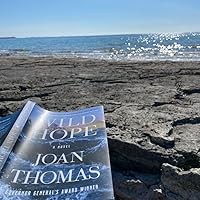
From the Governor General’s Award–winning author of Five Wives, a thrilling contemporary novel about how the past never lets us go
Isla and Jake are a couple drifting apart. She is a chef and co-owner of a farm-to-table restaurant on the brink of closing; he is a visual artist tormented by the oil-and-gas legacy of his late father. A looming figure in both their lives is Reg Bevaqua, Jake’s childhood friend-turned-enemy, turned bottled-water baron.
Reg is a demanding regular at Isla’s restaurant and a man with a seething resentment toward Jake. With good reason, the feeling is mutual, but Jake keeps their past from Isla as he follows a devastating trail to the source of Reg’s wealth. When Jake disappears following a winter camping trip, Isla starts to connect the dots, with all roads leading to Reg and his magnificent property on Georgian Bay.
Seamlessly weaving together observations on the entitlements of the wealthy, the monetization of water and the politics of art, Joan Thomas has created a layered, page-turning read about how far we will go to hold on to power and what we will do to avenge old wounds.
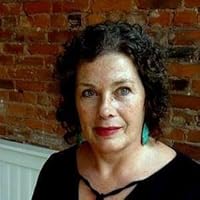
Wild Hope, my fifth novel, is a love story, a mystery, and a critique of contemporary values. Two of my previous books, Five Wives and Curiosity, were fictional dives into real events. My novels have won numerous prizes, including the Governor General's Award for Fiction, the Amazon Prize, the McNally Robinson Prize, and a Commonwealth Prize. I live in Winnipeg. You can visit me at joanthomas.ca.
DNF @ 52% on 31 Jan 2024—This wasn't AT ALL what I expected. Maybe I'm a little naïve (O.K., I'm very naïve) but I thought this book was supposed to be "climate fiction" about a rich jerk depleting an area of its water for his water-bottling company. At more than half-way through, I've seen NO mention of water except in the guy's name! It's been all hatred, vindictiveness and plans to destroy each other! I'd have avoided the book if I'd known.🙄
[arc review] Thank you to NetGalley and HarperCollins Canada for providing an arc in exchange for an honest review. Wild Hope releases September 19, 2023
2.5
“If you can envision it, can you therefore create it?”
Within a Canadian setting, we have the pov’s of Isla (a chef), and Jake (an artist).
There are a lot of layers and connections between Isla and Jake, their parents, and the both of them with Reg — personally, scholarly, and professionally.
A lot of time is spent building up the characters, and I kept waiting and waiting for the missing person element to kick in. Perhaps if this was presented in a then/now timeline, it would have kept it more engaging.
Every time someone tried to talk about Jake’s art, it felt so uninspired, and I really couldn’t see the compatibility between him and Isla.
Isla, being an autodidact, at times reminded me a lot like the character from Where the Crawdads Sing, with their similarities of writing a book — Kya with nature, and Isla with foraged food in the structure of an alphabet.
As I’m someone who has pursued a culinary degree professionally, the farm-to-table restaurant aspect of the plot was what initially drew me in, but I was left feeling a bit too detached.
I would recommend this for lit fic lovers on a slow afternoon, and would caution those hoping for more of a mystery blend to dampen their expectations.
3.5 rounded up. More of a relationship drama with a mystery tacked on to give it a bit more flavor. I wish Isla's job as a chef played into it a bit more (I don't need it to be The Bear or full of recipes, but it felt like her entire career boiled down to "So I made a full meal for 11 people, then with the rest of my day...")
This one was just not my jam. It felt incredibly slow and awkwardly written until the last quarter of the book. I likely would have not finished it if it wasn’t a book club read.
It is somehow comforting to know that in my hometown of Winnipeg there are accomplished writers like Joan Thomas offering us a window on the world that resonates with some of my particular concerns and perspectives. I liked the Thomas' novel Five Wives which delved deep into the world of evangelical missionaries in the South American rainforest. That subject matter may seem well off the beaten path of an agnostic septuagenarian man living in Winnipeg but, strangely, it checked off some of my current interests: fundamentalist Christianity, anthropology, the power of the natural world and how men and women get along in marriages.
Wild Hope investigates topics that are close to my heart and closer to home: environmental politics, wealth and inequality, friendship and materialism. Thomas has a good feel for character and her fondness for her principal character, Isla, is evident. Isla is a smart, self made woman in her twenties trying to navigate the particularities of the daunting terrain of psychological balance, love, privilege, greed, jealousy and family dysfunction.
At one level, the book is a crime procedural. Isla's boyfriend Jake has disappeared and Isla is trying to solve both the mystery of his disappearance and the mystery of relationships. The story explores the tensions between Jake and his father, a powerful conservative politician, and a childhood friend, who may have been more of a son to Jake's father than Jake was. In the course of understanding what has happened, the book explores environmental and family politics in the setting of the beautiful shoreline of Georgian Bay where rustic, isolated cottages are being bulldozed to make way for monster retreats serviced with helicopter pads.
I liked the book. Thomas is a brings her story to life with vivid scenes and believable plotting. My one minor criticism is that, at times, the characters take their place in the plot too much like set pieces in a morality play. The conservative politician oblivious to the energy industry's impact on the natural environment, the aggressive young businessman who steamrollers ethical concerns in his desire to enjoy success and wealth at all cost. But it seems that I always end my reviews with a comment on how the characters engaged my imagination or my sympathies. In Wild Hope, Isla is a character that the reader can respect and root for. That makes all the difference.
While I didn’t always enjoy reading this book as several of the characters Reg, Old Jack and Kurt were actually each in a category of their own as far as being selfish and despicable.
I did love the character of Isla her Identity as a chef and the community in which she identifies with but she too is beholden to the community she servers or relies upon which includes the likes of Reg, Old Jack and Kurt. I loved Isla for what she sees in other people their goodness, creativity, passion and how they contribute to society.
The simplicity and complexity of Jake’s character is where the “wild hope” lies he loves his clan, family, friends, the impoverished cast outs like Quinn and her family, and Isla. His art is for himself not for the notoriety or fame but for him to show his personal “blueness or blueprint” that he is drawn to and sees. While he is not a strong communicator, he is trustworthy, somewhat gullible, extremely restless yet he maintains his personal climate activism by the way he lives cycling and living meagrely and trying to do the right thing and demonstrates this through his art.
Wild hope: for what we want but cannot have, for what we had and lost, for what is ours and always will be even if others feel they can take it from us. As long as there is Hope the heart is true.
Right from the start of this novel, when we first meet Isla, who tells most of the story, we know that something is wrong. Isla is secretly observing a family on a beach and thinking about her boyfriend Jake who is missing. How do these disparate threads come together? We spend the rest of the novel finding out.
There is more to the story than a woman and the mystery of her boyfriend's disappearance. We have themes of the greediness of outrageous wealth, the disregard of environmental damage in favor of profit, father and son relationships, the art world, the anxiety of business ventures, and complicated romantic relationships. The story is told from the perspectives of both Isla and Jake and finally culminates in a discovery that takes us back to the opening setting.
The author, Joan Thomas, is a skillful writer who paints vivid word pictures and uses completely original imagery that will make you stop and reread some passages just because they are so beautifully constructed.
Very deep about and artist who hooks up with a chef lady. They move out up north of Toronto and she works with a chef that gets in trouble with her artist boyfriend while they go invade artist's childhood friend's mega rich cottage, which this rich guy took from artist's family and rebuilt a huge modern cottage. People go missing, like that owner of the restaurant who sold the it to the chef guy but the sellers want to stay on as they do organic veg and cattle. A couple. One goes to Germany after the fiasco and she (Isla) wonders if he is involved with the blow up of a side cabin, which kills the helicopter pilot. Isla has a sex fling with some guy in TO but then goes out to this restaurant area where her and Jake live. Turns out the rich friend of Jake, who loved Jake's father as his own, was doing trading quietly as Jake's father told him want to buy because he was in the government. So, it was inside trading but there was a secret. bank account they had for transferring money but then Jake's dad dies and rich dude takes the moola. Isla goes sets herself into cooking for the family and Isla, with the help of some native guys who are fixing up the blasted side cabin, helps her find Jake's body. This book took until page 175 to show that there was a death. Very fluffy new words. I wanted to put it down but I am glad I finished it to see the style of writing. Author is Canadian and there were lots of references that I knew.
This entire review has been hidden because of spoilers.
I am a big fan of Joan Thomas's writing, so this is hardly an unbiased review, however, I will try to write an objective review. Wild Hope, set in both a city and a region with which I have some familiarity, is a page turner, and I was almost late for an appointment so that I could finish the last few pages. (If you have a Goodreads account, you're likely know what I'm talking about.) Sure, it is a love story (between an artist and a cook, two of my passions!), and a mystery, but the surprise element was the underlying theme of being a responsible citizen of the world (this is dealt with through the character of a bottled-water baron), and our own Canadian responsibility to include our First Nations. I liked the way their presence was felt in this work. The characters were engaging - and in some cases dislikeable, and everybody helped the story move along. If you have suffered the ups and downs of an unhealthy friendship, this theme will be of particular interest to you. The juxtaposition of Isla and Jack's childhoods is helpful in further understanding how the two stars of the novel navigate life. Isla's upbringing is the first home-school story I can get behind, but that might not matter to most readers. It's worth reading, enjoy!
I know that Ms. Thomas is something of an icon in Canadian lit… but I’ve never really felt the love for her writing/stories. This is no different.
The most positive thing I can say about it is that it is set in a clearly identifiable and realistically celebrated Southern Ontario. If you love “The Bay” and “The Bruce” you’ll connect to the setting.
But connecting to the setting is not enough. There are far too many flaws - from doing lip service to serious environmental problems, what there was of a plot relying on coincidence and contrivance, and a poorly planned narrative structure to name but a few - for this to work for me.
As for being “thilling” - no. There was nothing even remotely mysterious - let alone thrilling - until approx 70% of the way into the book. I plodded on but solely because I already had so much invested.
I listened to the audiobook at 1.3x’s speed - and it was only tolerably paced at that speed.
I loved Wild Hope by Joan Thomas, and I think you will too! Gorgeous evocative writing, fascinating characters.
The haunting inexorable drive of the plot kept me reading faster but the beauty of the sentences demanded a second look.
Art and the land; love and loss: Wild Hope has it all: “almost impressionistic, dabs of transparent colour guiding your eye to areas of the canvas that were immaculately detailed. The scene was tender, it had an interior radiance” “as a way of seeing. Draw from the right place, as a creature of nature. Heal that breach.” Overhearing languages “realizing I’d never penetrate that elaborate labyrinth of sound” “the border where two sound fields collided like weather systems.”
I quite liked the first third or so, but I guess ultimately the book did not live up to my expectations. I like the dynamics of a three way relationship of some sort and feel there is a lot of potential for tension … secrets and rivalries and genuine connection.
The ending was a little anti-climatic … but then the whole missing person /mystery was a little understated. A fellow reader here on Goodreads suggested the story might have been more dramatic and mysterious if it had been told in two timelines. I agree, I think that would have worked better than the two narrator format the author used.
Another of my Book Club reads. It was intriguing enough to keep me interested. The characters were ok, but a little broken. The one character was off & I did not like him. But the plot was pretty predictable. I would say it was a soft murder mystery. No thrilling moments that kept you on the edge of you seat or buting your nails. But you knew what generally happened & just wanted to read to see if it happened the way you expected it did. Interesting enough to read & discuss in a book club setting.
So many wonderful themes to ponder. These include water conservation and who has ‘right’ to sell water; wealth that benefits only the company leader; end of childhood friendship and betrayal; family values and tension that occurs as adult children develop different values; friendship and materialism. This is my 2nd reading of the book. My first read was more about the plot and I missed so much. The 2nd reading picked up on the other themes. So much to discuss at the Banff Weekend Discussion Group in May 2025.
First time reading this author’s work. I appreciate that the story doesn’t neatly fit into one genre. It’s a mystery, but more overtly, a love story about a married couple, two men who were once best friends, a son and father, and she relationship between extreme wealth and our physical world. I gave it 4 stars because I wish the book had been longer - I wanted Thomas to take more time developing Jake’s character and storyline.
Isla is a chef and Jake is an artist - the story is a bit too ‘relationship heavy’ for me and I won’t spoil the events that keep the reader intrigued.
At least it was set in Toronto and parts of Ontario, so it was nice recognizing locales.
Jake’s history with his father, his very introverted and asocial nature, and his inability to move on with his art are the main causal factors of how the book progresses, so it was hard for me to relate to him.
This one took me forever to get through - it lacked plot and the main plot line didn’t come into play until 200 pages in. After that, it became unrealistic and strange - and the ending was SO underwhelming considering how much time it took to get there (I don’t know if it’s even worth calling it the build up). I really just didn’t get this book, it wasn’t enjoyable and I would have DNF’d if I wasn’t reading it to compare thoughts with someone else.
Thomas’ latest novel is set near Georgian Bay. Isla is a chef and runs an upscale, successful restaurant. Her partner, Jake, is an artist. His family had a cottage in the area and he spent his childhood summers there, often with a classmate, Reg. Reg is now a wealthy businessman who has built a magnificent lodge where the cottages used to be. The two men have had no contact for many years. This novel is a mystery with themes of greed, climate change and power.
I loved this book! It had a love story, a mystery, beautiful outdoor settings, suspense and even climate change. I really enjoyed it as it is set in Ontario and her descriptions made me feel like I was there. The characters were fascinating and it was a real page-turner for me. A real award winning novel!
I liked it well enough. Some culinary, some art interests. Climate crisis versus capitalism as the foundation, layered with relationships: the heterosexual couple, the childhood friends, business partners and agents, rich and working class. It made me yearn for summer and time outdoors with its nature scenes. Nothing profound, but decent writing and a decent story, if a bit bleak overall.
This book was quite boring for most of its length. Just good enough to keep reading. The end got more interesting when the mystery becomes more prominent. I didn't particularly care for the characters and their stories. The best part of the book was the Canadian setting - Toronto and the Bruce Peninsula.
A bit slow to begin with, but increasingly interesting as it goes along. Apparently there was some expectation that this was a climate narrative about exploiting water resources. Not even remotely true, it was essentially a mystery, and a pretty good story about two men with a tortured relationship. I enjoyed it.
I really enjoyed this book - first time reader of this author. The topics are very current - it touches on climate change, the rich 1%, the monetization of water (ie bottled water), art and there’s a mystery to be solved. .
Jake didn’t get along with his father, the oil exec and cabinet minister. But it seems his childhood friend, Reg, did - and became rich because of it. A story of jealousy and revenge told alternately through the eyes of Jake and his partner, Isla.
What the actual hell? What kind of ending was thar? I needed more. The book was SO SLOW. the last 2 chapters held all the action. All the chapters leading up really had very little to do with the plot of the book. Dumb, do not recommend.
3.5 stars. So many of the books I read are classified as mysteries, romance, thriller, historical fiction, it was a nice change to just read a non-genre story. Loved the Bruce Peninsula setting.