

What do you think?

Doktor Murkes gesammeltes Schweigen und andere Satiren
Gewiß hat man den Satiriker Böll, den Meister der kleinen Form, über dem Romancier Böll zu Unrecht übersehen. Der vorliegende Band, der die besten satirischen Erzählungen des Autors sammelt, liefert den Beweis. Bölls Humor ist Vereinfachung ins Phantastische, die Verlogenheit und Talmiglanz unbarmherzig entlarvt. Die Attacken, die er reitet, bewahren den Humor - sie belehren, ohne zu verletzen. Ihre groteske Komik trifft ins Schwarze: sie bewirkt Lachen und Schmunzeln und treibt zur Einsicht. Über dieses Buch, das 1958 zum ersten Mal erschien, fanden immer wieder neue Generationen gerade von jungen Lesern zum Werk von Heinrich Böll.
Der Band enthält neben der Titelerzählung die Satiren "Nicht nur zur Weihnachtszeit", "Es wird etwas geschehen", "Hauptstädtisches Journal" und "Der Wegwerfer". Der Text folgt dem 1994 erschienenen Band von Heinrich Bölls Erzählungen, den Viktor Böll und Karl Heiner Busse herausgegeben haben.
Der Band enthält neben der Titelerzählung die Satiren "Nicht nur zur Weihnachtszeit", "Es wird etwas geschehen", "Hauptstädtisches Journal" und "Der Wegwerfer". Der Text folgt dem 1994 erschienenen Band von Heinrich Bölls Erzählungen, den Viktor Böll und Karl Heiner Busse herausgegeben haben.
112 pages, Hardcover
First published January 1, 1958
About the author
Heinrich Böll
584 books1,694 followersDer deutsche Schriftsteller und Übersetzer gilt als einer der bedeutendsten deutschen Autoren der Nachkriegszeit. Er schrieb Gedichte, Kurzgeschichten und Romane, von denen auch einige verfilmt wurden. Dabei setzte er sich kritisch mit der jungen Bundesrepublik auseinander. Zu seinen erfolgreichsten Werken zählen "Billard um halbzehn", "Ansichten eines Clowns" und "Gruppenbild mit Dame". Den Nobelpreis für Literatur bekam Heinrich Böll 1972; er war nach 43 Jahren der erste deutsche Schriftsteller, dem diese Auszeichnung zuteil wurde. 1974 erschien sein wohl populärstes Werk, "Die verlorene Ehre der Katharina Blum". Durch sein politisches Engagement wirkte er, gemeinsam mit seinem Freund Lew Kopelew, auf die europäische Literatur der Nachkriegszeit. Darüber hinaus arbeitete Böll gemeinsam mit seiner Frau Annemarie als Herausgeber und Übersetzer englischsprachiger Werke ins Deutsche...
Heinrich Böll became a full-time writer at the age of 30. His first novel, Der Zug war pünktlich (The Train Was on Time), was published in 1949. Many other novels, short stories, radio plays, and essay collections followed. In 1972 he received the Nobel Prize for Literature "for his writing which through its combination of a broad perspective on his time and a sensitive skill in characterization has contributed to a renewal of German literature." He was the first German-born author to receive the Nobel Prize since Hermann Hesse in 1946. His work has been translated into more than 30 languages, and he is one of Germany's most widely read authors.
Heinrich Böll became a full-time writer at the age of 30. His first novel, Der Zug war pünktlich (The Train Was on Time), was published in 1949. Many other novels, short stories, radio plays, and essay collections followed. In 1972 he received the Nobel Prize for Literature "for his writing which through its combination of a broad perspective on his time and a sensitive skill in characterization has contributed to a renewal of German literature." He was the first German-born author to receive the Nobel Prize since Hermann Hesse in 1946. His work has been translated into more than 30 languages, and he is one of Germany's most widely read authors.
Ratings & Reviews
Friends & Following
Create a free account to discover what your friends think of this book!
Community Reviews
Displaying 1 - 30 of 46 reviews

October 7, 2015
It's time for a little German Lesson. Shall we?
Suppose you want to replace every occurrence of a certain noun within a German text with another noun. That's easier said than done. It's not sufficient to just replace X with Y, but you also have to take into account which grammatical case the noun X is in, and also the article (if there is one), adjectives, relative pronouns and a few other things.
Let's say we want to replace "Gott" [God] with "Wesen" [Being; in the sense of higher being]. The grammatical gender for "Gott" is male (until it's changed to neuter, but that's another story), and the gender of "Wesen" is neuter. Let's have a look at the inflections of both nouns (including the singular definite article, and – just for fun – adding the adjective "höher" [higher] to "Wesen"):
1. case: der Gott
2. case: des Gottes [or des Gotts]
3. case: dem Gotte [or dem Gott]
4. case: den Gott
1. case: das höhere Wesen
2. case: des höheren Wesens
3. case: dem höheren Wesen
4. case: das höhere Wesen
Now let's take a sentence, in which all cases of "Gott" appear (and is therefore in a rather bad style):
Der Gott sah des Gottes Kinder, die dem Gotte ergeben waren und den Gott ehrten.Let's see what we get after we replaced "Gott" with "höhere Wesen":
Der höhere Wesen sah des höhere Wesenes Kinder, die dem höhere Wesene ergeben waren und den höhere Wesen ehrten.As you can see the resulting sentence is full of grammatical errors. Here's the correct one, with the changed words emphasized:
Das höhere Wesen sah des höheren Wesens Kinder, die dem höheren Wesen ergeben waren und das höhere Wesen ehrten.Now suppose you're not working on a text, but with a tape of an hour long speech. Your task is to replace every occurrence of "Gott", the speaker made, with "höheres Wesen" by cutting out "Gott" and replace it with pieces from another tape made by the same speaker that includes the respective "höheres Wesen" parts. Of course it would have been easier to ask the speaker to read the whole text again. But that would have taken at least an hour, and the speaker refuses to spend any more of his precious time on this than absolutely necessary. Now you're in the situation of the titular Doktor Murke, who works in a broadcasting company. The way in which he deals with this problem is rather ingenious and deeply funny to read. There is actually much more to this satiric story than outlined above. But it's an important part, I think, to get the meaning.
There are editions here on Goodreads with translations of this book into these languages: English, Estonian, Finnish, Italian, Spanish, and Swedish. I don't know about the other languages, but I figure the "Gott" vs "Wesen" part of the story is hardly translatable into English without loosing much its humor. So if you decide to read this story, try the original German. I think it's worth it.

This work is licensed under a Creative Commons Attribution-NonCommercial-ShareAlike 3.0 Unported License.

August 4, 2022
Sharon made me do it. After reading Gesammeltes Schweigen – a collection of Böll's short story "Doktor Murkes gesammeltes Schweigen" and a companion essay of Otoo's – I am now a Böll stan. Like, I am utterly obsessed with this man. And mad (and grateful) that I never studied him in school. I wish I would've been introduced to his work earlier but then again, German class would've probably sucked the enjoyment right out of this brilliant writer. So be it, I discovered Böll in my mid-20s and fell in love with him!
I've struggled with German literature, especially German classics, ever since I was first assigned them in school, and so this discovery actually makes me emotional. I never thought I would be able to feel connected in such a deep way to a German writer of the past. I know this sounds nonsensical, as I read lots of classics from all over the world, and never have problems with connecting with these authors, but German literature has always been different. My school education has erected this barrier, this destain inside of me, that I thought I'd never get over. To be honest, I didn't even try. The only German classic author I consciously checked out after my school years was Kafka, and I only read his Metamorphosis. So you can't really say that I tried. But I'm definitely going to read more Böll in the future now. Can't wait to see more of what he's got in stock.
This particular book is a collection of five of his satires/ short stories: "Doktor Murkes gesammeltes Schweigen", "Nicht nur zur Weihnachtszeit", "Es wird etwas geschehen", "Hauptstädtisches Journal" and "Der Wegwerfer". I will review each satire, except for the first one, as I will review that one in my review for Gesammeltes Schweigen (the Böll/Otoo book) – so look out for that!
"Nicht nur zur Weihnachtszeit" (5 stars)
This is a story which Böll first read during the meeting of "Gruppe 47" at Berlepsch Castle in early November 1952. It is considered the writer's first satire. And it's fucking brilliant! One of the most hilarious things I've ever read!
With "Nicht nur zur Weihnachtszeit," Böll satirically takes aim at the restorative tendencies in postwar Germany. The focus is on Aunt Milla, wife of the narrator's uncle, who wants to finally celebrate Christmas in the first post-war year as she did before the war. Unfortunately, she then falls into the madness that henceforth every day is Christmas Eve punctually at 6:30 p.m., and sticks to it for over two years. In this immortalized Christmas celebration, Böll captures the atmosphere of his time, which was aimed more at preservation than renewal.
Favorite quotes: "Denn der Krieg wurde von meiner Tante Milla nur registriert als eine macht, die schon Weihnachten 1939 anfing, ihren Weihnachtsbaum zu gefährden."
"Jedenfalls wurde der Weihnachtsbaum meiner Tante ein Opfer – von anderen Opfern zu sprechen, verbietet mir der rote Faden – der modernen Kriegsführung."
This quotes, as well as the satire as a whole, is absolutely chilling. Böll captures the German unwillingness to talk about the atrocities we committed during the 30s and 40s. He is ruthless and relentless in his portrayal of this German intentional silence, the wish to keep going as if nothing had happened. This story should be assigned reading in every German class room!
"Es wird etwas geschehen" (4 stars)
In this short story, the modern working world is satirically taken to task. The protagonist is once again forced to take a job in order to earn their living. At the aptitude test, he is so overly workaholic that he gets the job right away. As the story progresses, the example of the boss's deputy and his secretary illustrates how much one person can supposedly accomplish at the same time. The protagonist learns to operate more and more telephones at the same time and takes pleasure in varying the company's key phrase (= the short story's title) in ever new linguistic ways.
This seemingly beautiful life ends when one day his boss collapses before his eyes, and the protagonist realizes at the funeral that he is the ideal mourner. In the end, he makes this his new profession. The story ends with the protagonist gladly visiting the grave of his former boss again and again, to whom he is grateful for his professional development. Only on this occasion does he ask himself what was actually produced in the factory and guesses that it must have been soap.
Not as funny as the "Nicht nur zur Weihnachtszeit", this satire packs an emotional punch nonetheless. I'm not sure if Böll was a communist but I know for sure that he wasn't a capitalist after reading this gem of a story!
"Hauptstädtisches Journal" (3.5 stars)
"Als die Armee des Marschalls […] den Rückzug antreten mußte, konnte Hürlanger-Hiß nur 8500 Mann Verluste nachweisen. Nach Berechnungen erfahrener Rückzugsspezialisten des Tapir – so nannten wir im vertrauten Gespräch Hitler, wie Sie wissen – hätte seine Armee aber bei entsprechendem Kampfesmut 12300 Mann Verluste haben müssen ..."
But, of course, the newly appointed General Machorka-Muff, speaking for the "Hürlanger-Hiß Academy of Military Memories", can present new findings with much higher casualty figures that restore the honor of that scorned marshal.
"Hauptstädtisches Journal" is an interesting look at memory, the preservation of memory, the distortion of facts, and German unwillingness to break with their old Nazi "darlings". The picture Böll paints in this story of postwar Germany is a bleak one ("Opposition", fragte ich, "was ist das? [...] Haben wir die Mehrheit oder haben wir sie nicht?"). Instead of renewal and reformation, and purge of the Nazi politicians and military officers, every crime, if possible, is hidden and people proceed working in their old jobs and retain their positions of power.
Favorite quote: "Auch ich freue mich", sagte ich warm, "dass einer meiner Jugendträume Wirklichkeit geworden ist. Und das in einer Demokratie."
"Der Wegwerfer" (4 stars)
The protagonist reports - rather bashfully and hesitantly - about his daily work routine at an honorable insurance company. In the basement of the building, the throwaway sorts out unwanted advertising from the mailbags twice a day.
The number of advertising letters is immense. Thus, one can "see the porter carrying away in a tin basket the size of a school satchel what remained of the contents of three mail sacks." Böll's protagonist has calculated - benevolently - a "concentrate" of 1:300: It takes him just one hour to destroy the result of 200 hours of work by printers, typesetters, draftsmen and copywriters in the advertising industry. Added to this are another 100 man-hours saved within the insurance company itself.
The daily destruction of other people's work nevertheless causes the throwaway to have a guilty conscience. He feels confronted with the accusation of asociality. This is also the reason why he is initially reluctant to say exactly what he does for a living.
This satire is more relevant than ever in our digital age. The digital (and physical) garbage we receive on a daily basis, in terms of advertisement that we didn't ask nor pay for, is immense. Böll's story is almost prophetic. Advertising is always associated with stress. We don't want it but we can't escape it.
I've struggled with German literature, especially German classics, ever since I was first assigned them in school, and so this discovery actually makes me emotional. I never thought I would be able to feel connected in such a deep way to a German writer of the past. I know this sounds nonsensical, as I read lots of classics from all over the world, and never have problems with connecting with these authors, but German literature has always been different. My school education has erected this barrier, this destain inside of me, that I thought I'd never get over. To be honest, I didn't even try. The only German classic author I consciously checked out after my school years was Kafka, and I only read his Metamorphosis. So you can't really say that I tried. But I'm definitely going to read more Böll in the future now. Can't wait to see more of what he's got in stock.
This particular book is a collection of five of his satires/ short stories: "Doktor Murkes gesammeltes Schweigen", "Nicht nur zur Weihnachtszeit", "Es wird etwas geschehen", "Hauptstädtisches Journal" and "Der Wegwerfer". I will review each satire, except for the first one, as I will review that one in my review for Gesammeltes Schweigen (the Böll/Otoo book) – so look out for that!
"Nicht nur zur Weihnachtszeit" (5 stars)
This is a story which Böll first read during the meeting of "Gruppe 47" at Berlepsch Castle in early November 1952. It is considered the writer's first satire. And it's fucking brilliant! One of the most hilarious things I've ever read!
With "Nicht nur zur Weihnachtszeit," Böll satirically takes aim at the restorative tendencies in postwar Germany. The focus is on Aunt Milla, wife of the narrator's uncle, who wants to finally celebrate Christmas in the first post-war year as she did before the war. Unfortunately, she then falls into the madness that henceforth every day is Christmas Eve punctually at 6:30 p.m., and sticks to it for over two years. In this immortalized Christmas celebration, Böll captures the atmosphere of his time, which was aimed more at preservation than renewal.
Favorite quotes: "Denn der Krieg wurde von meiner Tante Milla nur registriert als eine macht, die schon Weihnachten 1939 anfing, ihren Weihnachtsbaum zu gefährden."
"Jedenfalls wurde der Weihnachtsbaum meiner Tante ein Opfer – von anderen Opfern zu sprechen, verbietet mir der rote Faden – der modernen Kriegsführung."
This quotes, as well as the satire as a whole, is absolutely chilling. Böll captures the German unwillingness to talk about the atrocities we committed during the 30s and 40s. He is ruthless and relentless in his portrayal of this German intentional silence, the wish to keep going as if nothing had happened. This story should be assigned reading in every German class room!
"Es wird etwas geschehen" (4 stars)
In this short story, the modern working world is satirically taken to task. The protagonist is once again forced to take a job in order to earn their living. At the aptitude test, he is so overly workaholic that he gets the job right away. As the story progresses, the example of the boss's deputy and his secretary illustrates how much one person can supposedly accomplish at the same time. The protagonist learns to operate more and more telephones at the same time and takes pleasure in varying the company's key phrase (= the short story's title) in ever new linguistic ways.
This seemingly beautiful life ends when one day his boss collapses before his eyes, and the protagonist realizes at the funeral that he is the ideal mourner. In the end, he makes this his new profession. The story ends with the protagonist gladly visiting the grave of his former boss again and again, to whom he is grateful for his professional development. Only on this occasion does he ask himself what was actually produced in the factory and guesses that it must have been soap.
Not as funny as the "Nicht nur zur Weihnachtszeit", this satire packs an emotional punch nonetheless. I'm not sure if Böll was a communist but I know for sure that he wasn't a capitalist after reading this gem of a story!
"Hauptstädtisches Journal" (3.5 stars)
"Als die Armee des Marschalls […] den Rückzug antreten mußte, konnte Hürlanger-Hiß nur 8500 Mann Verluste nachweisen. Nach Berechnungen erfahrener Rückzugsspezialisten des Tapir – so nannten wir im vertrauten Gespräch Hitler, wie Sie wissen – hätte seine Armee aber bei entsprechendem Kampfesmut 12300 Mann Verluste haben müssen ..."
But, of course, the newly appointed General Machorka-Muff, speaking for the "Hürlanger-Hiß Academy of Military Memories", can present new findings with much higher casualty figures that restore the honor of that scorned marshal.
"Hauptstädtisches Journal" is an interesting look at memory, the preservation of memory, the distortion of facts, and German unwillingness to break with their old Nazi "darlings". The picture Böll paints in this story of postwar Germany is a bleak one ("Opposition", fragte ich, "was ist das? [...] Haben wir die Mehrheit oder haben wir sie nicht?"). Instead of renewal and reformation, and purge of the Nazi politicians and military officers, every crime, if possible, is hidden and people proceed working in their old jobs and retain their positions of power.
Favorite quote: "Auch ich freue mich", sagte ich warm, "dass einer meiner Jugendträume Wirklichkeit geworden ist. Und das in einer Demokratie."
"Der Wegwerfer" (4 stars)
The protagonist reports - rather bashfully and hesitantly - about his daily work routine at an honorable insurance company. In the basement of the building, the throwaway sorts out unwanted advertising from the mailbags twice a day.
The number of advertising letters is immense. Thus, one can "see the porter carrying away in a tin basket the size of a school satchel what remained of the contents of three mail sacks." Böll's protagonist has calculated - benevolently - a "concentrate" of 1:300: It takes him just one hour to destroy the result of 200 hours of work by printers, typesetters, draftsmen and copywriters in the advertising industry. Added to this are another 100 man-hours saved within the insurance company itself.
The daily destruction of other people's work nevertheless causes the throwaway to have a guilty conscience. He feels confronted with the accusation of asociality. This is also the reason why he is initially reluctant to say exactly what he does for a living.
This satire is more relevant than ever in our digital age. The digital (and physical) garbage we receive on a daily basis, in terms of advertisement that we didn't ask nor pay for, is immense. Böll's story is almost prophetic. Advertising is always associated with stress. We don't want it but we can't escape it.

May 2, 2022
Bu ay Okumamak kitabına ve onda geçip evde bekleyen kitapları okumaya devam ediyorum. Aslında evde bekleyen Kayıp Kentin Radyosu’ydu. Ancak Zambra yazısında Doktor Murke’nin Suskunluk Küllüyatı’nı öyle bir anlatıyor ki, dün geceyi kendisini arayarak geçirdim ve bir şekilde buldum Böll’den beklemediğim bir mizah ve hiciv ile karşılaştım kitapta. İkinci Dünya Savaşı sonrası Almanya’yı, toplumun travmalarını ortaya seriyor. Kitapta beş öykü var, bunlardan sessizlikte huzur arayan Murke ve sonduza uzanan noel gecesine hapsolmaya çalışan teyze favorilerim. Heinrich Böll’ün bu kitabına daha önceden hiç rastlamamıştım. Savaş ve çöküş sonrası toplumlardaki kaotik süreci bu kadar kısa hikayelerle bu kadar sade ve derin bir şekilde yansıtabilen çok az kitap var bence. Bu kitabın ardından yolumuza Kayıp Kentin Radyosu ile devam ediyoruz.

September 27, 2024
H. Böll’ün yazarlığını tartışmam, sadece bu öyküleri “hiciv” öyküleri olarak sınıflandırıldığından bizim bildiğimiz hiciv unsurunu bekledim okurken, biraz gülümsemeyi, biraz şeytani dokundurmaları, açıkça belirteyim mizahi anlatımı aradım. Klasik Alman otomatizması içinde donuk, soğuk, disipline edilmiş cümlelerle hiciv yapılmış yeya yapıldığına kani olunmuş. Sıkıldığımı, bir kaşık bal için bir çuval keçi boynuzu yediğimi hissettim. Okumasaydım olurdu grubundan.

Read
December 22, 2025Ich bin jetzt Böll Fan

August 8, 2021
Så himla kul och skarp satir!!

August 19, 2019
Фантастические рассказы!
June 14, 2026
Träffsäkra, fyndiga och roliga noveller, särskilt ”Dr Murkes samlade tystnad ” och den om familjetvånget att fira planenlig jul, året runt. Bra sätt att träna tyska. Den hade säkert varit ännu bättre om jag begripit allt.

April 10, 2026
Der Paternoster im Funkhaus, damit fängt das Buch an, und ich war begeistert, eine kleine Zeitreise, weil ich selbst mit dem Paternoster im Funkhaus gefahren bin. Absurd und angenehm zu lesen. Man muss sich schon an den Schreibstil gewöhnen, da der für heutige Verhältnisse altmodisch klingt.
August 22, 2025
Eine immer noch lesenswerte Sammlung von frühen Satiren Bölls, die thematisch am sozialen Klima im Nachkriegsdeutschland anknüpfen.

January 23, 2020
Cinco relatos de gran categoría.
En ellos el autor explora el derecho a la soledad, las convenciones familiares y sociales, el retorno de los nazis al poder en la democracia, la locura y la relación entre fines y medios en el capitalismo.
La prosa es equilibrada, con un estilo en el que predominan los verbos y los nombres, con adjetivos bien utilizados que sirven para apostillar. Los relatos mantienen la tensión y la atención del lector desde el principio hasta el final de una manera sostenida, no hay altibajos ni trucos para sorprender al lector. Están bien ejecutados desde el principio hasta el final.
En cuanto a los temas, Böll explora la condición del hombre desde una perspectiva alemana de posguerra, se percibe de forma sutil el peso del horror y la vergüenza. Su literatura es una pregunta constante acerca del papel de la ideología y la moral en la sociedad y cómo esta empequeñece al individuo hasta acorralarlo entre la necesidad de participar de lo social y el deseo de encontrar un lugar propio alejado de las contradicciones.
Muy bueno, altamente recomendable.
Mi nota 8,8/10
En ellos el autor explora el derecho a la soledad, las convenciones familiares y sociales, el retorno de los nazis al poder en la democracia, la locura y la relación entre fines y medios en el capitalismo.
La prosa es equilibrada, con un estilo en el que predominan los verbos y los nombres, con adjetivos bien utilizados que sirven para apostillar. Los relatos mantienen la tensión y la atención del lector desde el principio hasta el final de una manera sostenida, no hay altibajos ni trucos para sorprender al lector. Están bien ejecutados desde el principio hasta el final.
En cuanto a los temas, Böll explora la condición del hombre desde una perspectiva alemana de posguerra, se percibe de forma sutil el peso del horror y la vergüenza. Su literatura es una pregunta constante acerca del papel de la ideología y la moral en la sociedad y cómo esta empequeñece al individuo hasta acorralarlo entre la necesidad de participar de lo social y el deseo de encontrar un lugar propio alejado de las contradicciones.
Muy bueno, altamente recomendable.
Mi nota 8,8/10

July 14, 2007
I'm not sure if this is the exact book that I have. My comments pertain to a collection of his short stories, named for the title story "Dr Murkes Gesammeltes Schweigen" (Dr Murkes collected silences), which is a pretty dynamite collection. Böll was one of those German authors we had to study in high school - it is a testament to the accessibility of his work that I continued to read and enjoy it long after high school.
His short stories represent a good starting point for anyone unfamiliar with his work and - as far as I can judge - they have been translated into English very well.
His short stories represent a good starting point for anyone unfamiliar with his work and - as far as I can judge - they have been translated into English very well.
November 14, 2020
Absurd, angenehm zu lesen. Ausgezeichnet für kurze Aufmerksamkeitsspannen

May 31, 2020
Novela satírica de 160 páginas, compuesta por cinco relatos, donde los dos primeros han sido para mí más relevantes. Una escritura exquisita, con aires kafkianos y psicológicos, donde los personajes interactúan en situaciones sorprendentes y en ocasiones surrealistas.
De fácil lectura, sólo el ambiente de las tramas exige de una imaginación especial en el lector. Hallamos rasgos en muchos personajes que podríamos encontrar en nuestra vida cotidiana, pero llevados a un extremo que invita a la crítica y ofrece interesantes moralejas. Una lectura recomendada.
De fácil lectura, sólo el ambiente de las tramas exige de una imaginación especial en el lector. Hallamos rasgos en muchos personajes que podríamos encontrar en nuestra vida cotidiana, pero llevados a un extremo que invita a la crítica y ofrece interesantes moralejas. Una lectura recomendada.
March 7, 2025
Me acerqué a este libro de pura casualidad, porque estaba por ahí en mi casa y la verdad que vaya sorpresa. El primer relato, el que da nombre al libro, es una auténtica pasada. Lo recomendaría sin necesidad de que se lean el resto. Pero es que el resto también es una delicia. Un humor muy fino y una capacidad muy hábil de retratar a la sociedad alemana del crecimiento económico.

May 27, 2026
Det är något med Heinrich Böll, något jag inte riktigt kan förklara, som tilltalar mig på ett fundamentalt plan. Han är inte alls som Majgull Axelsson men deras språk och deras förmåga att använda språket kittlar ungefär samma nerver i mig.
En fantastisk samling noveller. Alla är kanske inte femstjärniga, men jag gillade varenda en.
En fantastisk samling noveller. Alla är kanske inte femstjärniga, men jag gillade varenda en.

November 25, 2023
Bölls Werke werden bis heute hochgepriesen, deshalb habe ich mich hieran gewagt. Zeitgenössisch sind die Geschichten schon interessant, aber doch eher langweilig und mit wenig Tiefgang. Mich hat das nicht abgeholt.

November 14, 2025
Tämän luin saadakseni Saksan lukuhaasteeni maailmankartalle. Usein kuulee sanottavan, että saksalaiset ovat huumorintajuttomia, mutta minusta kirja oli ihan hauska. Toisaalta suomalaisiakaan ei maailmalla tunneta hauskuudesta, ja itse nauran samoille sinätuubapaskoille varmaan kahdettakymmenettä vuotta.
Kirjan nimikkonovellista pidin eniten, osa muista tuntui vaativan sellaista historiantuntemusta ja käsitystä kirjan ajankuvasta, että en saanut niistä paljoa irti. On vaikea nauttia satiirista, jos ei ymmärrä mikä tai kuka on sen kohde. Silti ihan hauska, nopea lukukokemus.
Kirjan nimikkonovellista pidin eniten, osa muista tuntui vaativan sellaista historiantuntemusta ja käsitystä kirjan ajankuvasta, että en saanut niistä paljoa irti. On vaikea nauttia satiirista, jos ei ymmärrä mikä tai kuka on sen kohde. Silti ihan hauska, nopea lukukokemus.

December 20, 2019
"Una coscienza così sensibile e così costosa vorrei averla anch'io..."
August 16, 2021
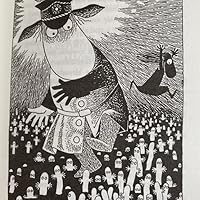
Doktor Murkes gesammeltes Schweigen 3.5/5
Nicht nur zur Weihnachtszeit 4/5
Es wird etwas geschehen 5/5
Hauptstädtisches Journal 2.5/5
Der Wegwerfer 3.5/5
Nicht nur zur Weihnachtszeit 4/5
Es wird etwas geschehen 5/5
Hauptstädtisches Journal 2.5/5
Der Wegwerfer 3.5/5
April 28, 2022
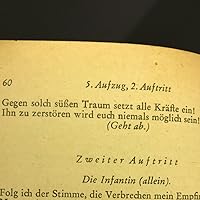
1) Hauptstädtisches Journal
2) Es wird etwas geschehen
3) Nicht nur zur Weihachtszeit
4) Doktor Murkes gesammeltes Schweigen
5) Der Wegwerfer
2) Es wird etwas geschehen
3) Nicht nur zur Weihachtszeit
4) Doktor Murkes gesammeltes Schweigen
5) Der Wegwerfer
September 12, 2022
A bit too shallow for a Boell
October 10, 2022
One of the most brilliant satires ever written

February 22, 2023
Nobel Prize in Literature 1972.
Heinrich Boll has the name to be tough, dry and boring, but this short story is light and comic. Enough reason to read his other works as well.
Heinrich Boll has the name to be tough, dry and boring, but this short story is light and comic. Enough reason to read his other works as well.

May 29, 2023
Buenísimo libro que lleva a la reflexión de la censura.
Se lee fácil, es ligero, atrapa... No pensé que me fuera a gustar tanto, genial para reflexionar sobre la crítica a la cultura mediática.
Se lee fácil, es ligero, atrapa... No pensé que me fuera a gustar tanto, genial para reflexionar sobre la crítica a la cultura mediática.

November 3, 2023
Klassiker. Jederzeit gerne wieder.

November 22, 2023
Efter att ha läst 6 noveller och bara tyckt om 2 lämnar jag denna bok åt dess öde. Fjantiga meningslösa berättelser.
July 17, 2024
aburrido de cojones

December 21, 2024
Féroce et drôle. Ce sont des nouvelles.
Displaying 1 - 30 of 46 reviews