

What do you think?

Catharine Arnold's London #5
Globe: Life in Shakespeare's London
The life of William Shakespeare, Britain's greatest dramatist, was inextricably linked with the history of London. Together, the great writer and the great city came of age and confronted triumph and tragedy. Triumph came when Shakespeare's company, the Chamberlain's Men, opened the Globe playhouse on Bankside in 1599, under the patronage of Queen Elizabeth I. Tragedy touched the lives of many of his contemporaries, from fellow playwright Christopher Marlowe to the disgraced Earl of Essex, while London struggled against the ever-present threat of riots, rebellions and outbreaks of plague.
Globe Life takes its readers on a tour of London through Shakespeare's life and work. In fascinating detail, Catharine Arnold tells how acting came of age, how troupes of touring players were transformed from scruffy vagabonds into the finely-dressed 'strutters' of the Globe itself. We learn about James Burbage, founder of the original Theatre, in Shoreditch, who carried timbers across the Thames to build the Globe among the bear-gardens and brothels of Bankside. And of the terrible night in 1613 when the theatre caught fire during a performance of King Henry VIII. Rebuilt once more, the Globe continued to stand as a monument to Shakespeare's genius until 1642 when it was destroyed on the orders of Oliver Cromwell. And finally we learn how 300 years later, Shakespeare's Globe opened once more upon the Bankside, to great acclaim, rising like a phoenix from the flames.
Arnold creates a vivid portrait of Shakespeare and his London from the bard's own plays and contemporary sources, combining a novelist's eye for detail with a historian's grasp of his unique contribution to the development of the English theatre. This is a portrait of Shakespeare, London, the man and the myth.
Globe Life takes its readers on a tour of London through Shakespeare's life and work. In fascinating detail, Catharine Arnold tells how acting came of age, how troupes of touring players were transformed from scruffy vagabonds into the finely-dressed 'strutters' of the Globe itself. We learn about James Burbage, founder of the original Theatre, in Shoreditch, who carried timbers across the Thames to build the Globe among the bear-gardens and brothels of Bankside. And of the terrible night in 1613 when the theatre caught fire during a performance of King Henry VIII. Rebuilt once more, the Globe continued to stand as a monument to Shakespeare's genius until 1642 when it was destroyed on the orders of Oliver Cromwell. And finally we learn how 300 years later, Shakespeare's Globe opened once more upon the Bankside, to great acclaim, rising like a phoenix from the flames.
Arnold creates a vivid portrait of Shakespeare and his London from the bard's own plays and contemporary sources, combining a novelist's eye for detail with a historian's grasp of his unique contribution to the development of the English theatre. This is a portrait of Shakespeare, London, the man and the myth.
320 pages, Kindle Edition
First published July 4, 2013
About the author
Catharine Arnold
15 books208 followersCatharine Arnold read English at Cambridge and holds a further degree in psychology. A journalist, academic and popular historian, Catharine's previous books include the novel "Lost Time", winner of a Betty Trask award. Her London trilogy for Simon & Schuster comprises of "Necropolis: London and Its Dead", "Bedlam: London and Its Mad" and "City of Sin: London and Its Vices".
Ratings & Reviews
Friends & Following
Create a free account to discover what your friends think of this book!
Community Reviews
Displaying 1 - 30 of 76 reviews

January 8, 2016
I love the Globe. It’s such a fantastic place. Have I said that before somewhere? I’ll probably end up saying it again.
The atmosphere is wonderful; the open-top roof spells dramatic freedom; the towering wooden beams speak of the grandeur of Shakespeare’s work, and the incense, the incense is everything. I can’t get enough of the place; I wish I could go more often. But, I suppose, going once a year will make it feel even more special. I’m digressing a bit here, but, again, it has to be said: the Globe is amazing.
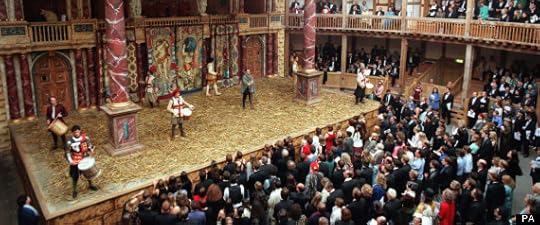
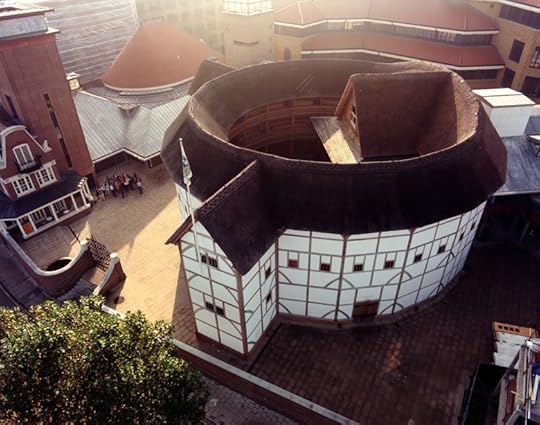
This book is a historical chronicling of the globe. It’s a good overview text of its history, but nothing is delivered in any great detail. It’s a solid spring board piece: a book that leads to more in depth research from other authors. I found the parts on the Essex Rebellion to be quite helpful; they led me to other authors such as Burgress and Shapiro, who handle the facts in a more focused way. It was a good starting point for my university essay, as it had a few quotes from historical figures of the Elizabethan age.
The thing that I liked most about this book was that it followed the Globe’s history until the present age. Books like this have a tendency to stop when Shakespeare died. At least, that’s what I found in my reading. So, it was really quite informative to read a book that followed the Globe from its origins to its current state however brief it was. It’s a good, solid, overview book which I found to be a great introduction to the topic.
The atmosphere is wonderful; the open-top roof spells dramatic freedom; the towering wooden beams speak of the grandeur of Shakespeare’s work, and the incense, the incense is everything. I can’t get enough of the place; I wish I could go more often. But, I suppose, going once a year will make it feel even more special. I’m digressing a bit here, but, again, it has to be said: the Globe is amazing.
This book is a historical chronicling of the globe. It’s a good overview text of its history, but nothing is delivered in any great detail. It’s a solid spring board piece: a book that leads to more in depth research from other authors. I found the parts on the Essex Rebellion to be quite helpful; they led me to other authors such as Burgress and Shapiro, who handle the facts in a more focused way. It was a good starting point for my university essay, as it had a few quotes from historical figures of the Elizabethan age.
The thing that I liked most about this book was that it followed the Globe’s history until the present age. Books like this have a tendency to stop when Shakespeare died. At least, that’s what I found in my reading. So, it was really quite informative to read a book that followed the Globe from its origins to its current state however brief it was. It’s a good, solid, overview book which I found to be a great introduction to the topic.

June 17, 2016
I nearly gave up eighty pages in. As a reader you are treated to a poor, implausible flight of fancy following a teenage Shakespeare through London. Several other parts of the book do the same - attempts at fictional prose which are not well written and serve only to bulk the book out slightly to stop it being too slender. It does improve after this point, though. Where it is at its best is where genuine facts are integrated into a historical, factual narrative about the Globe. However, too much repetition of a small number of facts, and some surprising historical omissions, do not make this a strong addition to the canon of work surrounding Elizabethan theatres.

May 19, 2018
I loved this.
From the days before Shakespeare arrived in London, to shortly after his death (and the dissolution of all theatres by decree), this book gives a very good accounting of politics, social mores, legal battles, theatrical changes and the growth of an industry.
All during frequent bouts of the Black Death, religious intolerance, and heavy-handed censorship.
A very enjoyable non-fiction read.
From the days before Shakespeare arrived in London, to shortly after his death (and the dissolution of all theatres by decree), this book gives a very good accounting of politics, social mores, legal battles, theatrical changes and the growth of an industry.
All during frequent bouts of the Black Death, religious intolerance, and heavy-handed censorship.
A very enjoyable non-fiction read.

October 19, 2017
I initially picked up this book because I wanted to know what London was like in Shakespeare's day and this seemed like it would discuss that. While it did give some insight into what London was like and told the history of the Globe along the way, it was more of a ramble through Shakespeare's career, some of the politics and infighting of the day, and discussions of some of Shakespeare's play.
Which would have been fine, except that the book lacked in objectivity and academic rigor. Neither was wholly missing, but several sections were biased with little attempt to give any supporting evidence for the theories put forth.
Too, the book felt like a light skim over many things rather than a deep dive on the topic promised. And while well written, the book needed another editorial polish to remove blemishes.
Overall, the book was entertaining enough to finish reading. But none of the topics are done justice, and some of the information should be taken with a grain of salt.
Which would have been fine, except that the book lacked in objectivity and academic rigor. Neither was wholly missing, but several sections were biased with little attempt to give any supporting evidence for the theories put forth.
Too, the book felt like a light skim over many things rather than a deep dive on the topic promised. And while well written, the book needed another editorial polish to remove blemishes.
Overall, the book was entertaining enough to finish reading. But none of the topics are done justice, and some of the information should be taken with a grain of salt.

September 8, 2017
Globe is a delightful read from start to finish. From an imagined scene that brings to life late Tudor London, Arnold takes us into a fascinating history of the London theatre scene, and Shakespeare's place in it. Arnold's prose is a delight to read and there is never a dull moment. While I already had a pretty good idea about theatre in the Elizabethan era, I still learnt a few new things from reading this book, and it will certainly appeal to both history lovers and Shakespeare fans thanks to its accessibility and easy reading style. This is definitely a book I plan to buy in the future, to keep a copy on my shelf.
I received this book as a free eBook ARC via NetGalley.
I received this book as a free eBook ARC via NetGalley.

January 24, 2025
This book is for those who can enjoy a play by Shakespeare, so it was pushing at an open door for me. Like many British school-kids I had to sit through two (I think) ‘set plays’ by Shakespeare during English classes at school. For many, grappling with the archaic language and events distant from our times, that experience can turn people off Shakespeare for life! I was fortunate enough to have a teacher who did better than most but it still wasn’t until I saw plays, produced with intelligence to make them accessible to the modern audience, that I began to appreciate Shakespeare properly. For me, it’s the performances that count, not reading of the texts in print.
The book gives a general background to the theatrical environment in which Shakespeare worked, in Elizabethan England of the late 1500’s, early 1600’s. It starts with the growth of medieval touring companies of actors initially performing biblically inspired plays, some humorous slapstick, then more gritty plays based on continental themes, often with more violent aspects (revenge dramas, with some stage blood and guts included for entertainment). As London grew in the late 1500’s popular male entertainment often centred around bear baiting, cock fighting, brothels, and inns for routine intoxication - all especially popular with the boisterous and large apprentice population of London’s businesses and trades. It was into the areas set aside for these activities on the outskirts of London that the first permanent theatres found themselves - often sharing floor space with some of the aforementioned. This made theatres unpopular with some, as much due to ‘guilt by association’ with the other activities as with what they performed.
The author takes us through the battles the acting companies had against the city authorities, landowners, other rival companies, the church - especially the strong Puritan elements of the Protestant church, now established over Catholicism in England. Although Shakespeare died shortly before the Mayflower, with its militant Puritan cargo, left English shores for the New World I suspect he would have been cheering on their departure for the trouble they caused early theatres in his time! Frequent small scale outbreaks of the Plague in London forced temporary closures every 2-3 years, requiring the companies to tour the regions in order to survive. It’s amazing that theatres survived at all - at least until the Puritan dominated regime following the English Civil War a few decades later.
The author gives plenty of information on Shakespeare’s contemporaries, the actors and company owners, about whose lives much more is often known than about Shakespeare’s - much of what is known about him comes from their letters. Some were rather mercurial and got into fights, dangerous and with severe consequences as most men carried a sword and a dagger. This included Christopher Marlow and Ben Jonson, authors who feature prominently in Shakespeare’s time, as well as the Burbage family of actors and theatre owners.
It’s interesting how many documents from legal cases give useful background information - lawyers were very active at the time, involved with legal disputes on the ownership of theatres, the land they were on, attempts by authorities to restrict or close theatres, etc. Although lawyers are still not often welcome in one’s life today their frequent involvement then does suggest a well established legal system and attempts to make the rule of law effective even if monarchs still had the final say. And somehow their paperwork seems to survive the centuries…
Ultimately it was Elisabeth I’s (and the subsequent James I) general approval of theatrical entertainment, inviting private performances on occasion, that guaranteed the relative freedom of Shakespeare’s company to perform and resist the other hostile forces. Other aristocrats assisted too by sponsoring companies. And, of course, he structured some of his plays to support the official histories of the time giving justification to the rule of the current monarch. The author is good at showing why Shakespeare wrote what he did at various times to reflect the circumstances he was working in, politically.
Anyway, maybe you can see I was involved in the book! This background fascinated me. It includes a chapter at the end describing the recent reconstruction of Shakespeare’s main theatre, The Globe, which now stands close to where it originally sat, and in a design similar to its original form. As many of the audience stand in a yard in front the stage, exposed to the elements, as sit on wooden benches in galleries further back. It required an American actor, Sam Wanamaker, black-listed during the 1950’s McCarthy era and subsequently resident in England, to bring the rebuilding to fruition. Also done against the odds, with few in England seeing the value of doing so. Now open for some years it’s a great success and I’ve been to a number of performances there. Its layout forces the actors to be more involved with the audience, as they were in Shakespeare’s day, when some of the themes could still be very relevant to the people of that era. I particularly recall the great contemporary stage and film actor, Mark Rylance, playing Richard III, Shakespeare’s darkest villain, trying loudly to persuade the audience standing in yard in front of the stage to support him in his civil war, as Shakespeare has him doing to the citizens of London in the play.
For Shakespeare appreciators - 5*.
The book gives a general background to the theatrical environment in which Shakespeare worked, in Elizabethan England of the late 1500’s, early 1600’s. It starts with the growth of medieval touring companies of actors initially performing biblically inspired plays, some humorous slapstick, then more gritty plays based on continental themes, often with more violent aspects (revenge dramas, with some stage blood and guts included for entertainment). As London grew in the late 1500’s popular male entertainment often centred around bear baiting, cock fighting, brothels, and inns for routine intoxication - all especially popular with the boisterous and large apprentice population of London’s businesses and trades. It was into the areas set aside for these activities on the outskirts of London that the first permanent theatres found themselves - often sharing floor space with some of the aforementioned. This made theatres unpopular with some, as much due to ‘guilt by association’ with the other activities as with what they performed.
The author takes us through the battles the acting companies had against the city authorities, landowners, other rival companies, the church - especially the strong Puritan elements of the Protestant church, now established over Catholicism in England. Although Shakespeare died shortly before the Mayflower, with its militant Puritan cargo, left English shores for the New World I suspect he would have been cheering on their departure for the trouble they caused early theatres in his time! Frequent small scale outbreaks of the Plague in London forced temporary closures every 2-3 years, requiring the companies to tour the regions in order to survive. It’s amazing that theatres survived at all - at least until the Puritan dominated regime following the English Civil War a few decades later.
The author gives plenty of information on Shakespeare’s contemporaries, the actors and company owners, about whose lives much more is often known than about Shakespeare’s - much of what is known about him comes from their letters. Some were rather mercurial and got into fights, dangerous and with severe consequences as most men carried a sword and a dagger. This included Christopher Marlow and Ben Jonson, authors who feature prominently in Shakespeare’s time, as well as the Burbage family of actors and theatre owners.
It’s interesting how many documents from legal cases give useful background information - lawyers were very active at the time, involved with legal disputes on the ownership of theatres, the land they were on, attempts by authorities to restrict or close theatres, etc. Although lawyers are still not often welcome in one’s life today their frequent involvement then does suggest a well established legal system and attempts to make the rule of law effective even if monarchs still had the final say. And somehow their paperwork seems to survive the centuries…
Ultimately it was Elisabeth I’s (and the subsequent James I) general approval of theatrical entertainment, inviting private performances on occasion, that guaranteed the relative freedom of Shakespeare’s company to perform and resist the other hostile forces. Other aristocrats assisted too by sponsoring companies. And, of course, he structured some of his plays to support the official histories of the time giving justification to the rule of the current monarch. The author is good at showing why Shakespeare wrote what he did at various times to reflect the circumstances he was working in, politically.
Anyway, maybe you can see I was involved in the book! This background fascinated me. It includes a chapter at the end describing the recent reconstruction of Shakespeare’s main theatre, The Globe, which now stands close to where it originally sat, and in a design similar to its original form. As many of the audience stand in a yard in front the stage, exposed to the elements, as sit on wooden benches in galleries further back. It required an American actor, Sam Wanamaker, black-listed during the 1950’s McCarthy era and subsequently resident in England, to bring the rebuilding to fruition. Also done against the odds, with few in England seeing the value of doing so. Now open for some years it’s a great success and I’ve been to a number of performances there. Its layout forces the actors to be more involved with the audience, as they were in Shakespeare’s day, when some of the themes could still be very relevant to the people of that era. I particularly recall the great contemporary stage and film actor, Mark Rylance, playing Richard III, Shakespeare’s darkest villain, trying loudly to persuade the audience standing in yard in front of the stage to support him in his civil war, as Shakespeare has him doing to the citizens of London in the play.
For Shakespeare appreciators - 5*.

May 15, 2020
Very profound and at the same time cordial book about Shakespearean London. The main character is not Shakespeare himself, but his theatres: The Theatre - first fixed-state theatre building created by James Burbage, The Globe (and I LOVED the meaning of Titan carrying the world on his shoulders on the Globe's sign), the Blackfriars and at last - the modern Globe build by american enthusiast Sam Wanamaker. There are so many small gems for the Shakespeare lovers: the story of Burbage family, the quicksilver life of Christopher Marlowe, the construction and behind-the-scenes anecdotes, the lawsuits and plagues (the chapters about plague quarantines are impossibly timely, who would have thought). Shakespeare himself is somewhat in the shadow, but his plays - the ideas behind them, their relevance - take the center stage of the book.
And now I want to read a book about Marlowe.
*Exits, pursued by a bear*
And now I want to read a book about Marlowe.
*Exits, pursued by a bear*

January 20, 2019
As I went to the "Globe" tour, I was fascinated by the guide (an actor at the theatre, no doubt, and with a black-eye :)) and the tale of the best days of the theatre, when no less than 3000 people could fit in and watch a performance.
The book, which I picked from the Globe gift-shop, gives a great insight into the times of Shakespeare, his closest allies and his role as raising theatre as a major art. An interesting read for any lover of literature or passionate theatre-goer.
The book, which I picked from the Globe gift-shop, gives a great insight into the times of Shakespeare, his closest allies and his role as raising theatre as a major art. An interesting read for any lover of literature or passionate theatre-goer.

September 19, 2020
2 ⭐️’s (Poor).

March 28, 2018
[I received a copy of this book through Netgalley.]
I love going to the Globe, although I can’t afford it very often (but I still try to enjoy at least a couple of plays a year, which is the least I can do considering I almost live on its doorstep by London standards ;)). My knowledge about how it came to be was a bit fragmented, so I was glad to be able to read this book.
Throughout it, you can feel the author’s passion for her subject—the device of fictionalising Shakespeare’s first visit to London isn’t what I’d expect from academic research, and I’m not sure it’s pareticularly welcome, but on the other hand, it’s definitely a window on that passion I mentioned, and is entertaining no matter what. It’s also a window on London at the end of the 16th and the early 17th centuries, and I admit I wish this window would’ve been larger, because I couldn’t get enough details on what the city must’ve looked and felt like at that time, all the more now that I can fully compare it to nowadays London (Shoreditch for Burbage’s original Theatre, Bankside for the Globe, the Rose and Blackfriars’ locations, and so on).
I appreciated that the book chronicled the building of the modern Globe, which I believe is as much part of that theatre’s history as the original one, for starters because it’s on its way to last just as long and possibly more, considering the length of its current lease. I learnt about quite a few interesting facts in both cases, from the controversy around Sam Wanamaker’s project (an American trying to resurrect the Globe! So shocking!) to how the original Globe came to be, built from the timbers of the Theatre that Burbage & Co happily scavenged to keep their dream going.
The book also sheds light on the political and social climate at the time, an interesting part since Shakespeare’s plays were often in accordance with current events for his public to better relate. On the other hand, I believe I spotted some factual mistakes that may have been corrected through more careful editing (but I’m not a specialist, so, well, for what it’s worth…).
Conclusion: A good introduction that paves the way for more reading, although not going in-depth.
I love going to the Globe, although I can’t afford it very often (but I still try to enjoy at least a couple of plays a year, which is the least I can do considering I almost live on its doorstep by London standards ;)). My knowledge about how it came to be was a bit fragmented, so I was glad to be able to read this book.
Throughout it, you can feel the author’s passion for her subject—the device of fictionalising Shakespeare’s first visit to London isn’t what I’d expect from academic research, and I’m not sure it’s pareticularly welcome, but on the other hand, it’s definitely a window on that passion I mentioned, and is entertaining no matter what. It’s also a window on London at the end of the 16th and the early 17th centuries, and I admit I wish this window would’ve been larger, because I couldn’t get enough details on what the city must’ve looked and felt like at that time, all the more now that I can fully compare it to nowadays London (Shoreditch for Burbage’s original Theatre, Bankside for the Globe, the Rose and Blackfriars’ locations, and so on).
I appreciated that the book chronicled the building of the modern Globe, which I believe is as much part of that theatre’s history as the original one, for starters because it’s on its way to last just as long and possibly more, considering the length of its current lease. I learnt about quite a few interesting facts in both cases, from the controversy around Sam Wanamaker’s project (an American trying to resurrect the Globe! So shocking!) to how the original Globe came to be, built from the timbers of the Theatre that Burbage & Co happily scavenged to keep their dream going.
The book also sheds light on the political and social climate at the time, an interesting part since Shakespeare’s plays were often in accordance with current events for his public to better relate. On the other hand, I believe I spotted some factual mistakes that may have been corrected through more careful editing (but I’m not a specialist, so, well, for what it’s worth…).
Conclusion: A good introduction that paves the way for more reading, although not going in-depth.

October 25, 2017
49/45 books read in 2017
Provided by NetGalley in exchange for an honest review.
Actual rating: 4,5 stars'
This book is a mix between fiction and non-fiction. The story is filled with factual and historical accounts, but added in are stories about what Catharine Arnold imagined life in Shakespeare's time was actually like. This might not be something everybody likes, but I loved it. I already know quite a lot about Shakespeare (I did a big project about him in my final year of high school + I study English Language and Culture at my university), but this book made it real. Like I was walking in London and hearing about Shakespeare and his fellow actors myself. There was also information in this book I didn't know, which is always a plus because that means it isn't the regular set of facts you hear so often.
The only reason I didn't round up to a 5 stars is the final chapter. Most of the facts I didn't know are in that chapter, but the pace is just slightly different and slower than the rest of the book. It therefore was less enjoyable to read than the majority of the book.
Overall this is a really good book & I definitely want a copy for my personal library :)
Provided by NetGalley in exchange for an honest review.
Actual rating: 4,5 stars'
This book is a mix between fiction and non-fiction. The story is filled with factual and historical accounts, but added in are stories about what Catharine Arnold imagined life in Shakespeare's time was actually like. This might not be something everybody likes, but I loved it. I already know quite a lot about Shakespeare (I did a big project about him in my final year of high school + I study English Language and Culture at my university), but this book made it real. Like I was walking in London and hearing about Shakespeare and his fellow actors myself. There was also information in this book I didn't know, which is always a plus because that means it isn't the regular set of facts you hear so often.
The only reason I didn't round up to a 5 stars is the final chapter. Most of the facts I didn't know are in that chapter, but the pace is just slightly different and slower than the rest of the book. It therefore was less enjoyable to read than the majority of the book.
Overall this is a really good book & I definitely want a copy for my personal library :)

June 3, 2016
I ended up enjoying this informative history of Elizabethan theater and Shakespeare. It took me a little bit of time to get into it, but once I got going I was fully engrossed. There is a lot of interesting information included. I would recommend this to any theater, Shakespeare, and/or history enthusiast.

August 14, 2016
Excellent look at both the theatre and London in general in Shakespeare's time.
An excellent and informative read.
An excellent and informative read.

March 22, 2024
While officially part of Arnold's series of London microhistories looking at a particular topic over centuries or even millenia, this one takes a rather different approach, being far more concisely focussed. Globe gives the reader a quick but informative tour through the life and works of William Shakespeare, bringing to life the London of his day on the way. Not much that was new to me, but an entertaining read all the same.

April 9, 2020
A lively and interesting look at the first 50 years of London theatre, focusing on the first Globe theatre and Shakespeare but with lots of context and other key figures including the Burbages. Some sections go too far into historical fiction, such as imagining Shakespeare’s first trip to London, but there is enough real history to compensate for these flights of fancy.

September 18, 2018
Enthralled by this quick history of the three Globe theaters -- the subtitle is a bit misleading as the book (understandably) focuses on the history and development of the Theater (complete with the Burbages, Mr. Shakespeare and friends) and not quite a description of what life was really like in the London of the time. We do get a good idea of the London of the Theater District etc. and overall I enjoyed the book very much.

April 30, 2021
I loved this book but to recommend it to you you’ll have to adore Shakespeare, the history of Elizabethan times, and the history of English Theater.

March 5, 2022
I listened to the audio books, so that features in this review.
The text is often good. The book is sometimes informative and has a lot of interesting tidbits. It's by no means scholarly. It presents at times a quasi-historical narrative that is pure speculation and at other times presents speculation as fact in a way that most people would not realize. We know less than the author wants us to think we know. But the thing that puts me off most about this book is the reader. I would be shocked to learn that the reader is a human being. It feels like a very good computer-generated voice, which is to say a very bad actual human voice. It quickly becomes annoying. That reader seems to have very little understanding, if any, of the meaning of her sentences. The voice modulates according to punctuation alone. Don't buy this book for fun. And don't trust it for information. .
The text is often good. The book is sometimes informative and has a lot of interesting tidbits. It's by no means scholarly. It presents at times a quasi-historical narrative that is pure speculation and at other times presents speculation as fact in a way that most people would not realize. We know less than the author wants us to think we know. But the thing that puts me off most about this book is the reader. I would be shocked to learn that the reader is a human being. It feels like a very good computer-generated voice, which is to say a very bad actual human voice. It quickly becomes annoying. That reader seems to have very little understanding, if any, of the meaning of her sentences. The voice modulates according to punctuation alone. Don't buy this book for fun. And don't trust it for information. .

April 24, 2019
Despite having read a LOT of historical fiction lately, I’m not a fan of stories featuring Shakespeare. Imagine the sinking feeling in my gut, therefore, when I ran into a little vignette in which young Will arrives in London for the first time, on some sort of covert mission to deliver explosively secret papers …
This was one of two slightly anachronistic episodes in what is otherwise a solid non-fiction account not just of The Globe but of theatre’s evolution from Medieval Mystery Play to Jacobean Masque.
This aside, the book is written in an easy, conversational style. There’s plenty of information about competing venues, companies and writers, and the book comes right up to date with a chapter on the new Globe: it’s genesis and place in modern Shakespearean life.
Initially, with my teacher’s hat on, I struggled to think of an audience for the book. Shakespeare students might be better advised to try Jim Bradbury, Shakespeare and his Theatre (1975, Longman), and Renaissance students could turn to Lisa Hopkins and Matthew Steggle, Renaissance Literature and Culture (2006, Continuum). That said, enthusiasts – particularly those interested in the theatre/drama – will find this enjoyable and illuminating.
This was one of two slightly anachronistic episodes in what is otherwise a solid non-fiction account not just of The Globe but of theatre’s evolution from Medieval Mystery Play to Jacobean Masque.
This aside, the book is written in an easy, conversational style. There’s plenty of information about competing venues, companies and writers, and the book comes right up to date with a chapter on the new Globe: it’s genesis and place in modern Shakespearean life.
Initially, with my teacher’s hat on, I struggled to think of an audience for the book. Shakespeare students might be better advised to try Jim Bradbury, Shakespeare and his Theatre (1975, Longman), and Renaissance students could turn to Lisa Hopkins and Matthew Steggle, Renaissance Literature and Culture (2006, Continuum). That said, enthusiasts – particularly those interested in the theatre/drama – will find this enjoyable and illuminating.

October 10, 2017
Super book about the history of the original Globe Theatre, opening with the state of theatre and drama when Shakespeare was young (almost non-existent), through plans for various theatres in London (mostly controversial, if not actively opposed), and closing with the great period of drama in London that ended with the demise of James I and the approaching Civil War/Commonwealth period.
I liked this a lot. Great on character and period detail, it's superbly written and very readable. The sights and sounds of the period are well evoked and the narrative, given in chronological order, is excellent. Highly recommended for pretty much anyone!
I liked this a lot. Great on character and period detail, it's superbly written and very readable. The sights and sounds of the period are well evoked and the narrative, given in chronological order, is excellent. Highly recommended for pretty much anyone!
December 7, 2017
Catharine Arnold's book on the Globe Theatre is a real page-turner. True to her other books on life in London, Arnold digs down deep to give the reader a close, on-the-ground look at the people and places she writes about. Although not a biography of England's greatest bard, there's plenty of Shakespeare - but even more on the Burbages (James and Richard) that gives Arnold's story more heft. Throughout Arnold's book, however, the main actor - the Globe - remains center stage.

March 12, 2018
Lot of facts squashed together that doesn’t flow right. I hated the “let’s pretend we know Shakespeare’s first time in London.” Ive never liked that sort of thing. This isn’t a book I’d recommend to ppl who want to know more about shakespeare, or are new to early modern England/shakespeare. It’s better for someone who can take this with a grain of thought and can muscle through the facts and the imaginary

March 8, 2018
This is an enjoyable, accessible read and is based on the historical facts available to the author with some imaginings of her own. I found this approach very enjoyable, logical and utterly believable. Well researched, and brings the period to life for fans of Shakespeare, the Globe Theatre or indeed those who love London.
April 28, 2018
A good filler in with details of the time, but lacking excitement.

April 5, 2020
Shakespeare is Especially Relevant Now in Time of Pandemic
Much has been written about Shakespeare, but the contribution that author Catharine Arnold makes in this small book is to place the playwright’s plays in the context of his times — political, cultural, and societal.
The best part of the book is to link lines in Shakespeare’s plays to contemporary events in the playwright’s lifetime.
Shakespeare had to consider the paranoia of a Queen (Elizabeth I) who, as a woman laboring under controversy over the legitimacy of her power, had a particular reason for the crown to sit uneasily on her head. A playwright or actors could write or speak a line that was seen as treasonous, even when that was inadvertent or seems to us today to be innocuous. The result for the accused could be long confinement in prison or even torture and execution.
What has particular resonance at the moment is the frequency with which the plague shut down not only normal life in London but in particular shut down the theater — throwing actors out of work. Disease also tested the economic survival of theaters, The Globe, Blackfriars, and The Curtain among them. Plague intervened, Arnold tells us, in 1580, 1592-1593, 1602-1603, and in particularly virulent form in 1608-1609.
As an example of Arnold’s efforts to match what we know of Shakespeare’s life and movements to influences on his plays, companies of actors would take performances to the road during time of plague in London.
One of these sojourns made by Shakespeare and company was to Scotland. Shakespeare wrote MacBeth soon afterward. Moreover, Arnold writes that King James I had ascended the throne and the Gunpowder Plot had nearly taken the lives of the King and most of Parliament. The play, Arnold notes, flattered the new king and spoke to his obsessions including witchcraft and the belief that Catholic Jesuits had been behind the Gunpowder Plot.
The author also brings into her narrative the lives of Shakespeare’s playwright contemporaries, including Christopher Marlowe, perhaps his chief rival, who was murdered, and Ben Jonson who used a legal loophole to escape the charge of another murder. A less talented contemporary, Robert Greene, wrote scathingly of upstart Shakespeare before succumbing to drink, a vice that we are told Shakespeare avoided at least to excess.
The strongest part of the narrative is the middle, comprising most of the book, in which Arnold demonstrates her knowledge of Shakespeare’s plays as well as the fruits of her research into contemporary events in Shakespeare’s time. By contrast the opening chapter, in which the author speculates about how Shakespeare might have arrived in London (in 1588?), seems weak, and the last chapter is an overly long description of efforts to construct a new Globe Theatre, beginning in the 1970s.
The larger message, which seems particularly relevant as we struggle with Coronavirus, is that we all, Shakespeare among us, are influenced by our times and by our emotional response to challenges to our society. Shakespeare’s perceptions of life around him profoundly influenced his writing and more than 400 years later speak deeply to concerns in our own times.
Much has been written about Shakespeare, but the contribution that author Catharine Arnold makes in this small book is to place the playwright’s plays in the context of his times — political, cultural, and societal.
The best part of the book is to link lines in Shakespeare’s plays to contemporary events in the playwright’s lifetime.
Shakespeare had to consider the paranoia of a Queen (Elizabeth I) who, as a woman laboring under controversy over the legitimacy of her power, had a particular reason for the crown to sit uneasily on her head. A playwright or actors could write or speak a line that was seen as treasonous, even when that was inadvertent or seems to us today to be innocuous. The result for the accused could be long confinement in prison or even torture and execution.
What has particular resonance at the moment is the frequency with which the plague shut down not only normal life in London but in particular shut down the theater — throwing actors out of work. Disease also tested the economic survival of theaters, The Globe, Blackfriars, and The Curtain among them. Plague intervened, Arnold tells us, in 1580, 1592-1593, 1602-1603, and in particularly virulent form in 1608-1609.
As an example of Arnold’s efforts to match what we know of Shakespeare’s life and movements to influences on his plays, companies of actors would take performances to the road during time of plague in London.
One of these sojourns made by Shakespeare and company was to Scotland. Shakespeare wrote MacBeth soon afterward. Moreover, Arnold writes that King James I had ascended the throne and the Gunpowder Plot had nearly taken the lives of the King and most of Parliament. The play, Arnold notes, flattered the new king and spoke to his obsessions including witchcraft and the belief that Catholic Jesuits had been behind the Gunpowder Plot.
The author also brings into her narrative the lives of Shakespeare’s playwright contemporaries, including Christopher Marlowe, perhaps his chief rival, who was murdered, and Ben Jonson who used a legal loophole to escape the charge of another murder. A less talented contemporary, Robert Greene, wrote scathingly of upstart Shakespeare before succumbing to drink, a vice that we are told Shakespeare avoided at least to excess.
The strongest part of the narrative is the middle, comprising most of the book, in which Arnold demonstrates her knowledge of Shakespeare’s plays as well as the fruits of her research into contemporary events in Shakespeare’s time. By contrast the opening chapter, in which the author speculates about how Shakespeare might have arrived in London (in 1588?), seems weak, and the last chapter is an overly long description of efforts to construct a new Globe Theatre, beginning in the 1970s.
The larger message, which seems particularly relevant as we struggle with Coronavirus, is that we all, Shakespeare among us, are influenced by our times and by our emotional response to challenges to our society. Shakespeare’s perceptions of life around him profoundly influenced his writing and more than 400 years later speak deeply to concerns in our own times.

June 25, 2024
2,5 stars; when squarely anti-stratfordian Mark Twain was asked why for heaven's sake he wrote a Shakespeare biography when so many were already available he characteristically quipped: "Because it was a subject that seemed to have been neglected." This book is well intentioned for sure and well researched I'll give the author that much, but why? why do this?; no new information, no new story angle and plenty excellent alternatives: The Genius of Shakespeare, Will in the World: How Shakespeare Became Shakespeare, The Year of Lear: Shakespeare in 1606 and my personal favorite: The Lodger Shakespeare: His Life on Silver Street.

August 14, 2019
I was put off a bit by the light fictionalization of the beginning as Arnold tried to suck us into the Shakespearean London milieu. She tries to encorporate fragments of quotes into her narrative so we can clap ourselves on the back for recognizing them. Alternative theories are brought up to be knocked down. There certainly seems to be more references to Shakespeare from contemporaries than I was previously led to believe. Might have to research that. I did actually follow up one footnote (real citation footnotes, not the parentheticals I usually read) only to find it wasn't for the original source but another analytical work, which is available online - but the pagination didn't correspond and it took some searching to track it down. But now I know!
The book ends with Sam Wanamaker's efforts to rebuild the Globe, which seems to have taken forever because of the locals' disdain for Americans. Or maybe someone else should have been in charge. Despite everything, including audience members having to stand up for 3 hours in the rain, the new Globe has been a success.
I'd consider reading more by the author.
The book ends with Sam Wanamaker's efforts to rebuild the Globe, which seems to have taken forever because of the locals' disdain for Americans. Or maybe someone else should have been in charge. Despite everything, including audience members having to stand up for 3 hours in the rain, the new Globe has been a success.
I'd consider reading more by the author.
September 2, 2024
Immersive and interesting reading on the history of one of the most famous theatre in the world! The Globe, the creation, destruction and resurrection. The genius of Shakespeare present in all his works and behind the creation of the characters present in those great shows and the help of other great men for the creation of the first idea of "Theatre" that we know now. Interesting to found out all the changes in all the different times that the Theatre and the art had, from the support and open mind at the time of the Elizabethian age, fighting against rules and plagues, and the changes during the new reign of King James with new laws and great benefits from been the official "King's men" and the destruction of the era of comedy and tragedy with the new reign of Charles I.
Fascinating book, bring you back on time, showing you the life of all this great men from the Elizabethian and modern time that worked for keep up or bring back to life this great monument to Art.
Fascinating book, bring you back on time, showing you the life of all this great men from the Elizabethian and modern time that worked for keep up or bring back to life this great monument to Art.
April 1, 2023
Shakespeare’s plays are brimming with drama, excitement, comedy, confrontation, and contemplation. However, often when taught in schools, they’re presented in a boring manner which examines the subtle nuances but overlooks the pleasure and joy of the plays. Similarly, Catharine Arnold’s ‘Globe: Life in Shakespeare’s London’ is delivered in the same way. What could have been a rollicking, bawdy expose of violent, plague-ridden London is a tedious examination of individuals and places described in a very conservative way. The book explores some facets of London, Shakespeare’s participation, and the Globe Theatre in the sixteenth and seventeenth centuries but there is little excitement and the telling is just not very interesting. The world’s greatest playwright deserves much better writing.

June 24, 2023
This time the author brings us back into Shakespeare's time in London starting in 1586. We meet all the famous dramatists (e.g. Marlowe or Kyd), the players, James Burbage. The stage is set in the first theatre in London. By the way, you can still find the site of the original Globe in Southwark. I went there some time ago and read the plaque. Of course you can also book a visit in the modern Globe and have a look at Christopher Wren's little house nearby. Lovely area for a walk along the Thames. But back to the book. You'll hear about all of Shakespeare's major works (and that of the others). Even Guy Fawkes is written about. Absolutely worth your time. A good companion for your next trip to London. Highly recommended!
Displaying 1 - 30 of 76 reviews