

What do you think?
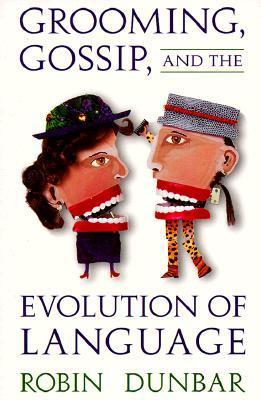
Grooming, Gossip, and the Evolution of Language
What a big brain we have for all the small talk we make. It's an evolutionary riddle that at long last makes sense in this intriguing book about what gossip has done for our talkative species. Psychologist Robin Dunbar looks at gossip as an instrument of social order and cohesion--much like the endless grooming with which our primate cousins tend to their social relationships.
Apes and monkeys, humanity's closest kin, differ from other animals in the intensity of these relationships. All their grooming is not so much about hygiene as it is about cementing bonds, making friends, and influencing fellow primates. But for early humans, grooming as a way to social success posed a given their large social groups of 150 or so, our earliest ancestors would have had to spend almost half their time grooming one another--an impossible burden. What Dunbar suggests--and his research, whether in the realm of primatology or in that of gossip, confirms--is that humans developed language to serve the same purpose, but far more efficiently. It seems there is nothing idle about chatter, which holds together a diverse, dynamic group--whether of hunter-gatherers, soldiers, or workmates.
Anthropologists have long assumed that language developed in relationships among males during activities such as hunting. Dunbar's original and extremely interesting studies suggest that language in fact evolved in response to our need to keep up to date with friends and family. We needed conversation to stay in touch, and we still need it in ways that will not be satisfied by teleconferencing, email, or any other communication technology. As Dunbar shows, the impersonal world of cyberspace will not fulfill our primordial need for face-to-face contact.
From the nit-picking of chimpanzees to our chats at coffee break, from neuroscience to paleoanthropology, Grooming, Gossip, and the Evolution of Language offers a provocative view of what makes us human, what holds us together, and what sets us apart.
Apes and monkeys, humanity's closest kin, differ from other animals in the intensity of these relationships. All their grooming is not so much about hygiene as it is about cementing bonds, making friends, and influencing fellow primates. But for early humans, grooming as a way to social success posed a given their large social groups of 150 or so, our earliest ancestors would have had to spend almost half their time grooming one another--an impossible burden. What Dunbar suggests--and his research, whether in the realm of primatology or in that of gossip, confirms--is that humans developed language to serve the same purpose, but far more efficiently. It seems there is nothing idle about chatter, which holds together a diverse, dynamic group--whether of hunter-gatherers, soldiers, or workmates.
Anthropologists have long assumed that language developed in relationships among males during activities such as hunting. Dunbar's original and extremely interesting studies suggest that language in fact evolved in response to our need to keep up to date with friends and family. We needed conversation to stay in touch, and we still need it in ways that will not be satisfied by teleconferencing, email, or any other communication technology. As Dunbar shows, the impersonal world of cyberspace will not fulfill our primordial need for face-to-face contact.
From the nit-picking of chimpanzees to our chats at coffee break, from neuroscience to paleoanthropology, Grooming, Gossip, and the Evolution of Language offers a provocative view of what makes us human, what holds us together, and what sets us apart.
240 pages, Paperback
First published January 1, 1996
Ratings & Reviews
Friends & Following
Create a free account to discover what your friends think of this book!
Community Reviews
Displaying 1 - 30 of 73 reviews

Read
June 4, 2020An absolutely fascinating look at human behavior, social connection, and language. A pleasure to read, too. If you've heard of "Dunbar's number," it's explained here.

March 5, 2013
The central argument of the book goes as follows (summarized on the first page of the final chapter): for primates, the social group size is limited by the neocortex size; for humans the value is around 150; there is a direct relationship between the grooming time and the group size; language evolved among humans to replace grooming because "the grooming time required by our larger groups made impossible demands on our time". I find this logic strange because it sounds like first there appeared large brains and and correspondingly large groups out of the blue, then came the language with all its remarkable properties. As far as I can tell, this theory is not taken seriously by the researchers in the language evolution community. Firstly, because one can replace grooming with something less time-demanding. Secondly, because it offers no explanation to why we have such an expressive tool as language and how it evolved. It appears Dunbar does not understand the complexity of the problem. For him, the three signal system of the vervet monkeys is "an archetypal proto-language" (p. 141) which is an overstatement (see Bickerton or Hurford).
The book is full of stories about all kinds of experiments with primates and modern humans. Some are amusing, some are not, few are truly revealing. At times, the logic is quite flawed. One example: for modern humans, the mean group size is 150 (ok). The "natural" size of a conversation group (think of a party conversation) is four -- one speaker and three listeners (ok). In a conventional grooming interaction, there are two primates -- one groomer and one groomee, the mean group size is about 55 (ok). 150 is about three times 55 (okay...). Now, "the ratio between group sizes is exactly the same as the ratio between the number of individuals you can interact with at any one time: one for grooming monkeys, three for talking humans. My view is that human groups are three times larger than those of chimpanzees precisely because humans can reach three times as many social contacts as chimps for a given amount of social effort" (pp. 121-122) Does it sound convincing to you? To me it doesn't. Imagine a village with 100 men, each married to a woman, 200 people in total. If in another village there are also 100 men but each married to exactly two women (300 people in total), the ratio between the number of wives per man is not the same as the ratio between village sizes (2 vs. 1.5). Another example of hasty conclusions: Dunbar and his students kept track of what people around them (at parties or cafes) talk about. It turned out they talk about other people! Hence, language appeared for that reason. I've listened to plenty conversations where people talked about gadgets for hours, does it prove or disprove anything? Such evidence is anecdotal and in my view cannot be taken seriously to explain why such a complex system as human language evolved some time in the distant past.
The book is full of stories about all kinds of experiments with primates and modern humans. Some are amusing, some are not, few are truly revealing. At times, the logic is quite flawed. One example: for modern humans, the mean group size is 150 (ok). The "natural" size of a conversation group (think of a party conversation) is four -- one speaker and three listeners (ok). In a conventional grooming interaction, there are two primates -- one groomer and one groomee, the mean group size is about 55 (ok). 150 is about three times 55 (okay...). Now, "the ratio between group sizes is exactly the same as the ratio between the number of individuals you can interact with at any one time: one for grooming monkeys, three for talking humans. My view is that human groups are three times larger than those of chimpanzees precisely because humans can reach three times as many social contacts as chimps for a given amount of social effort" (pp. 121-122) Does it sound convincing to you? To me it doesn't. Imagine a village with 100 men, each married to a woman, 200 people in total. If in another village there are also 100 men but each married to exactly two women (300 people in total), the ratio between the number of wives per man is not the same as the ratio between village sizes (2 vs. 1.5). Another example of hasty conclusions: Dunbar and his students kept track of what people around them (at parties or cafes) talk about. It turned out they talk about other people! Hence, language appeared for that reason. I've listened to plenty conversations where people talked about gadgets for hours, does it prove or disprove anything? Such evidence is anecdotal and in my view cannot be taken seriously to explain why such a complex system as human language evolved some time in the distant past.

October 22, 2013
A fascinating book that is well argued, and that has a compelling thesis. Robin Dunbar argues that language evolved, ultimately, from the grooming behavior of primates, which was used to give pleasure and to establish social bonds, as well as to cement social alliances. This enabled primates to survive by being able to distinguish friend from foe, and create cohort groups. In the meantime, the size of larger primates grew as primates traveled further afield in the search for food and, therefore, faced greater risk from predators. Dunbar discovers that the maximum number of other primates primates could deal with in a group was 150; this was because of the large amount of time that was required to engage in grooming behaviors. Dunbar argues that language developed as a substitute for grooming as the size and complexity of groups made grooming an inefficient and too-time consuming activity. The members of society who first began using language were women, as they tended to stay in the same groups and develop the strongest alliances. Fascinating stuff.

May 20, 2011
I admit to only skimming large portions of this book. I was intrigued by the "evolution of language" promise in the title because I am fascinated by the way language operates in communities. However, most of the book was dedicated to building a foundation of general evolutionary knowledge which, while interesting, was not what I was looking for. It seemed like just when the topic fully turned to language, the credits were rolling, and the next page was the bibliography.
In the last chapter of the book, I did find some things of interest. One is the way we use language to develop the close social ties that help us live together in groups. Kinship networks supported by a shared language were once crucial to our very survival, but today they are more of a way to add to our happiness and security because they help us understand who to trust. Fortunately, the use of language for deliberate deception in modern times is more of an annoyance than a true threat, but annoyance is annoying, right?
The author of the book surmises that the main use of language in pre-industrial societies was to gossip. The information gathered from gossip helps us understand our placement in a social group. At the time when I added this book to my to-read list, I had just heard about a new academic study that determined that people who gossip do better in life because gossip helps us understand whom to partner with and whom to avoid. I was curious about this idea because I always considered gossip as petty and small and people who gossip as judgmental and negative. But this study implied that they were better off, so I went searching for books on the subject.
I still have more questions than answers about gossip, so for now, I'll stick with my original opinions.
In the last chapter of the book, I did find some things of interest. One is the way we use language to develop the close social ties that help us live together in groups. Kinship networks supported by a shared language were once crucial to our very survival, but today they are more of a way to add to our happiness and security because they help us understand who to trust. Fortunately, the use of language for deliberate deception in modern times is more of an annoyance than a true threat, but annoyance is annoying, right?
The author of the book surmises that the main use of language in pre-industrial societies was to gossip. The information gathered from gossip helps us understand our placement in a social group. At the time when I added this book to my to-read list, I had just heard about a new academic study that determined that people who gossip do better in life because gossip helps us understand whom to partner with and whom to avoid. I was curious about this idea because I always considered gossip as petty and small and people who gossip as judgmental and negative. But this study implied that they were better off, so I went searching for books on the subject.
I still have more questions than answers about gossip, so for now, I'll stick with my original opinions.

June 24, 2007
I read this book four years ago and I'm still all of a sudden getting whipped into a frenzy when something reminds me of it and then falling all over myself to explain some concept from the book to someone. Gossip: it's the glue holding social groups together! Also: notice how five people can hold one conversation but when a sixth joins, the group usually cleaves into two conversations.
Read "Chimpanzee Politics" first.
Read "Chimpanzee Politics" first.

November 3, 2012
Among all your friends and acquaintances in real life, how many exactly are those with whom you carry close social relationships: those whom you know well enough that you can ask of them a favor, or whose discussion you can join uninvited without fear of getting shunned as epal or obtruder? Our individual answers will no doubt vary, but the eminent anthropologist Robin Dunbar would bet on an average that now carries his name – 150. Dunbar’s number.
There is nothing to read into the number by way of superstition, although it does tell us much about our fortune in evolutionary terms. That figure turned up when Dunbar, using a statistical equation, tried to find out what size of social group correlates with another figure on hand – that for the relative brain size of humans. He takes “brain size” as the ratio of the size of the neocortex – the newest, reasoning part of the brain – to the size of the rest of the brain. The ratio for humans is 4:1 – meaning, the neocortex amounts to 80% of the whole human brain. It happens to be the highest among all mammalian species, and its matching social group size too is the biggest.
But there’s more to Dunbar’s number than its number alone. For Dunbar, it serves to measure the complexity of handling and sustaining genuine social relationships: knowing who your friends are and how they relate among themselves, while keeping all these and related knowledge in mind to guide your relationships with each one of them – balancing conflicting interests, pleasing them, making them happy.
As group size grows, social complexity increases dramatically. If you’re in a group of 10 people, you would need to keep track of 45 two-way relationships. If group size doubles to 20, however, two-way relationships jump four times to 190. The capacity to process the information churned out by these relationships has to grow accordingly. From human evolution’s point of view, the adaptive pressure for the neocortex to grow bigger seems to stem from the need to “weld” bigger groups together. Meet the social brain hypothesis.
The key idea underlying the correlation is less about the number of relationships in a group than about their quality. What then lends quality to group size? How do you come to know it if it’s there? Dunbar turns first to other species of primates – chimps, apes, monkeys – for insights and looks into one of their observable traits, grooming. Primates groom their friends, and do so enthusiastically, but not mere acquaintances. Grooming partners help each other mutually and demonstrate stronger bonds among themselves than with non-grooming ones. Grooming is bonding, a way of connecting.
Existing studies on primates yielded data on grooming frequencies in 24 species, which allowed Dunbar to derive the mean size of grooming cliques (sets of individuals with high grooming frequencies). The grooming clique size matched up well with neocortex size and total group size. This suggests that as group size grows bigger, the animals find themselves forming bigger grooming cliques too, for which a bigger capacity for processing information is needed, leading to a strongly bonded coalition. Partners get to enjoy protection in return and an improved chance of survival, on top of the apparent hygienic and feel-good benefits derived from grooming.
As a one-on-one activity, however, there’s a limit to the number of partners one can groom given a time budget for a day, which cannot be stretched without cutting the time needed for getting food and eating. Researches show, for example, that chimps spend no more than 20 percent of their day for social grooming, given a social group size of 55 at the most. Against the backdrop of a relentlessly growing size of social group, which puts a pressure for expanding one’s circle of allies, grooming time would increase perilously close to eating up the time allotment for earning a living. Evolution presents primates with a problem: how do you keep on servicing your expanding relationships while giving yourself enough time for foraging and eating? An ingenious adaptive mechanism is one that lets you groom, say, three friends at the same time; ergo, your group size could grow to 150 with no risk of starving your species into extinction.
That mechanism, Dunbar speculates, is “vocal grooming,” which saw the need for language and brain to coevolve, and along with them, speech. Strongly hinting at this mechanism are the richly varied alarm and contact calls – hoots, screams, moans, grunts, whinnies – that apes and monkeys raise when in danger or to warn others of it.
Language overcomes the constraints of physical grooming by letting you “groom” – chat, talk with – several others at the same time. (FYI: The word chat comes from the chattering sound that monkeys make as they dispose of parasites with their teeth while grooming each other.) It also lets you “groom” from a distance and serves to substitute for physical grooming in replicating the feel-good (opiate release ) effect it gives to the groomed, and in building trust and knowing your allies indirectly through others, like knowing Juan through Maria. In place of vocal grooming, Dunbar prefers the more familiar word, gossip. Dismissing the existing theories on the origin of language, he offers his own: “Language evolved to allow us to gossip.”
Language is the social tie that binds. It facilitates the exchange of information on group members; it lets you keep track of them. But not all is rosy. At the very base of group relationships is the Golden Rule or reciprocity: you groom me, I’ll groom you back. A heavy investment of trust is needed for the trade to happen, and risk goes with it. Untrustworthy are the cheats who refuse to groom you back when their turn comes; they won’t be there to return a favor when you’re in trouble. In physical grooming, the actual investment of time would tend to hold one back from cheating. Besides, you can’t fake picking nits or combing the fur of another. Cheating is directly observable.
With language, however, you can lie. You can build yourself up with fake stories; you can manage your reputation (self-advertisement) if you can work on others’ perception. Vocal grooming makes it more difficult to keep tabs on cheaters as social groups grow larger and larger. But language holds the counterpoise of sharing information about cheats through the grapevine. Experimental evidence points to the power of gossip as a mechanism for deterring cheats. Mathematical models show that “free riders would be less successful in a community of gossiping co-operators.”
Language facilitates group bonding by replacing contact grooming with gossiping. How does this hypothesis fare against the reality of social groups today? Studies show that indeed the size of casual conversation groups is limited to four persons: one talks and three listens, or 1 grooms 3. And what are they talking about? Over two-thirds of the time they are into social topics – personal relationships, likes and dislikes, experiences, other people. No other single topic – politics, sports, religion, etc. – takes 10% of the time.
Talk marks us out as humans. But it’s not the talk of the wise that makes the world go round; it’s the small talk, the chattering, the tittle-tattle of life that do it. “We are social beings,” writes Dunbar, “and our world - no less than that of the monkeys and apes - is cocooned in the interests and minutiae of everyday social life. They fascinate s beyond measure.”
There is nothing to read into the number by way of superstition, although it does tell us much about our fortune in evolutionary terms. That figure turned up when Dunbar, using a statistical equation, tried to find out what size of social group correlates with another figure on hand – that for the relative brain size of humans. He takes “brain size” as the ratio of the size of the neocortex – the newest, reasoning part of the brain – to the size of the rest of the brain. The ratio for humans is 4:1 – meaning, the neocortex amounts to 80% of the whole human brain. It happens to be the highest among all mammalian species, and its matching social group size too is the biggest.
But there’s more to Dunbar’s number than its number alone. For Dunbar, it serves to measure the complexity of handling and sustaining genuine social relationships: knowing who your friends are and how they relate among themselves, while keeping all these and related knowledge in mind to guide your relationships with each one of them – balancing conflicting interests, pleasing them, making them happy.
As group size grows, social complexity increases dramatically. If you’re in a group of 10 people, you would need to keep track of 45 two-way relationships. If group size doubles to 20, however, two-way relationships jump four times to 190. The capacity to process the information churned out by these relationships has to grow accordingly. From human evolution’s point of view, the adaptive pressure for the neocortex to grow bigger seems to stem from the need to “weld” bigger groups together. Meet the social brain hypothesis.
The key idea underlying the correlation is less about the number of relationships in a group than about their quality. What then lends quality to group size? How do you come to know it if it’s there? Dunbar turns first to other species of primates – chimps, apes, monkeys – for insights and looks into one of their observable traits, grooming. Primates groom their friends, and do so enthusiastically, but not mere acquaintances. Grooming partners help each other mutually and demonstrate stronger bonds among themselves than with non-grooming ones. Grooming is bonding, a way of connecting.
Existing studies on primates yielded data on grooming frequencies in 24 species, which allowed Dunbar to derive the mean size of grooming cliques (sets of individuals with high grooming frequencies). The grooming clique size matched up well with neocortex size and total group size. This suggests that as group size grows bigger, the animals find themselves forming bigger grooming cliques too, for which a bigger capacity for processing information is needed, leading to a strongly bonded coalition. Partners get to enjoy protection in return and an improved chance of survival, on top of the apparent hygienic and feel-good benefits derived from grooming.
As a one-on-one activity, however, there’s a limit to the number of partners one can groom given a time budget for a day, which cannot be stretched without cutting the time needed for getting food and eating. Researches show, for example, that chimps spend no more than 20 percent of their day for social grooming, given a social group size of 55 at the most. Against the backdrop of a relentlessly growing size of social group, which puts a pressure for expanding one’s circle of allies, grooming time would increase perilously close to eating up the time allotment for earning a living. Evolution presents primates with a problem: how do you keep on servicing your expanding relationships while giving yourself enough time for foraging and eating? An ingenious adaptive mechanism is one that lets you groom, say, three friends at the same time; ergo, your group size could grow to 150 with no risk of starving your species into extinction.
That mechanism, Dunbar speculates, is “vocal grooming,” which saw the need for language and brain to coevolve, and along with them, speech. Strongly hinting at this mechanism are the richly varied alarm and contact calls – hoots, screams, moans, grunts, whinnies – that apes and monkeys raise when in danger or to warn others of it.
Language overcomes the constraints of physical grooming by letting you “groom” – chat, talk with – several others at the same time. (FYI: The word chat comes from the chattering sound that monkeys make as they dispose of parasites with their teeth while grooming each other.) It also lets you “groom” from a distance and serves to substitute for physical grooming in replicating the feel-good (opiate release ) effect it gives to the groomed, and in building trust and knowing your allies indirectly through others, like knowing Juan through Maria. In place of vocal grooming, Dunbar prefers the more familiar word, gossip. Dismissing the existing theories on the origin of language, he offers his own: “Language evolved to allow us to gossip.”
Language is the social tie that binds. It facilitates the exchange of information on group members; it lets you keep track of them. But not all is rosy. At the very base of group relationships is the Golden Rule or reciprocity: you groom me, I’ll groom you back. A heavy investment of trust is needed for the trade to happen, and risk goes with it. Untrustworthy are the cheats who refuse to groom you back when their turn comes; they won’t be there to return a favor when you’re in trouble. In physical grooming, the actual investment of time would tend to hold one back from cheating. Besides, you can’t fake picking nits or combing the fur of another. Cheating is directly observable.
With language, however, you can lie. You can build yourself up with fake stories; you can manage your reputation (self-advertisement) if you can work on others’ perception. Vocal grooming makes it more difficult to keep tabs on cheaters as social groups grow larger and larger. But language holds the counterpoise of sharing information about cheats through the grapevine. Experimental evidence points to the power of gossip as a mechanism for deterring cheats. Mathematical models show that “free riders would be less successful in a community of gossiping co-operators.”
Language facilitates group bonding by replacing contact grooming with gossiping. How does this hypothesis fare against the reality of social groups today? Studies show that indeed the size of casual conversation groups is limited to four persons: one talks and three listens, or 1 grooms 3. And what are they talking about? Over two-thirds of the time they are into social topics – personal relationships, likes and dislikes, experiences, other people. No other single topic – politics, sports, religion, etc. – takes 10% of the time.
Talk marks us out as humans. But it’s not the talk of the wise that makes the world go round; it’s the small talk, the chattering, the tittle-tattle of life that do it. “We are social beings,” writes Dunbar, “and our world - no less than that of the monkeys and apes - is cocooned in the interests and minutiae of everyday social life. They fascinate s beyond measure.”

March 20, 2025
Brakowało mi głębszego wejścia w niektóre tematy i spojrzenia na nie z innej strony. Np. autor przytacza, że kiedyś kobiety szukały bogatego męża i wymienia powody (dużo pieniędzy = lepsze życie dzieci, większa ich przeżywalność), ale według mnie stawianie ludzi i zwierząt w jednym rzędzie pod względem tego, co wpływa na decyzje kobiet, nie jest w porządku, bo zachowanie kobiet nie jest czymś wynikającym naturalnie, ale czymś, co MUSIAŁY praktykować, żeby przetrwać w patriarchalnym świecie, w którym same nie mogły się utrzymać, ponieważ nie mogły się kształcić ani zarabiać własnych pieniędzy. Potem autor w kilku zdaniach wyjaśnia, że te tendencje się zmieniają, ale nadal – opowiada o tym, jak o naturalnej zmianie, co jest totalnie niesatysfakcjonujące, bo w tym myśleniu widnieją ogromne dziury. Jedynie wniosek mi się podoba, bo autor podaje, że w dzisiejszych czasach kobiety szukają w mężczyznach czegoś innego – nie pieniędzy czy władzy, ale udzielania się w życiu rodzinnym (czyli zajmowania się dziećmi itp.) na równi z żoną, a to coś, czego mężczyźni jeszcze nie zaakceptowali.
Albo inny fragment – autor pisze o tym, że w grupach mieszanych kobiety wypowiadają się o wiele mniej niż mężczyźni. Wyjaśnia to tym, że a) kobiecy głos ma większą trudność przebić się przez harmider, i b) kobiety wolą słuchać, bo w ten sposób mogą sobie wybrać najbardziej dominującego partera. Trzeciego wyjaśnienia, jak dla mnie o wiele bardziej logicznego, niż to drugie, nawet nie bierze pod uwagę. A mianowicie na takie sytacje ma ogromny wpływ patriarchat i związane z nim wychowywanie dzieci – od dziewczynek oczekuje się spokoju, uległości i posłuszeństwa, gdy chłopcy są traktowani o wiele bardziej pobłażliwie i od nich oczekuje się cech odwrotnych.
I dlatego mam taki problem, kiedy naukowcy próbują zachowania zwierząt nałożyć 1:1 na ludzi. Teoretycznie to pasuje, praktycznie – żeby to pasowało, pomija się szereg rzeczy, które tę teorię psują. Autor, jako mężczyzna, po prostu może nie zauważać drugiego dna i stawia znak równości pomiędzy obiema płciami, a tak to nie działa.
Niemniej książka jest bardzo ciekawa, tylko właśnie, wydaje mi się momentami zbyt powierzchowna, płytka.
Albo inny fragment – autor pisze o tym, że w grupach mieszanych kobiety wypowiadają się o wiele mniej niż mężczyźni. Wyjaśnia to tym, że a) kobiecy głos ma większą trudność przebić się przez harmider, i b) kobiety wolą słuchać, bo w ten sposób mogą sobie wybrać najbardziej dominującego partera. Trzeciego wyjaśnienia, jak dla mnie o wiele bardziej logicznego, niż to drugie, nawet nie bierze pod uwagę. A mianowicie na takie sytacje ma ogromny wpływ patriarchat i związane z nim wychowywanie dzieci – od dziewczynek oczekuje się spokoju, uległości i posłuszeństwa, gdy chłopcy są traktowani o wiele bardziej pobłażliwie i od nich oczekuje się cech odwrotnych.
I dlatego mam taki problem, kiedy naukowcy próbują zachowania zwierząt nałożyć 1:1 na ludzi. Teoretycznie to pasuje, praktycznie – żeby to pasowało, pomija się szereg rzeczy, które tę teorię psują. Autor, jako mężczyzna, po prostu może nie zauważać drugiego dna i stawia znak równości pomiędzy obiema płciami, a tak to nie działa.
Niemniej książka jest bardzo ciekawa, tylko właśnie, wydaje mi się momentami zbyt powierzchowna, płytka.

February 19, 2016
Brilliant theory. Well told.
Definitely incomplete in terms of evolutionary mechanics (sort of like theories of natural evolution before natural selection was added). Of the various theories on human language's evolution (that I've read about), this one seems the most plausible to me. Still missing a key ingredient, but feels right (which of course is a terrible metric for scientists; though as a layman, I'm okay with it).
This book is for a lay audience. I've tried reading his academic papers. Very tough going.
In this book Dunbar has an easygoing, readable style. Reminds me a bit of The Selfish Gene. He anthropomorphizes well (which is okay as long as you don't actually believe plants can be enthusiastic)
And it's pretty short: 200+ pages.
Decent synopsis of thesis and criticisms at Wikipedia: https://en.wikipedia.org/wiki/Groomin...
Definitely incomplete in terms of evolutionary mechanics (sort of like theories of natural evolution before natural selection was added). Of the various theories on human language's evolution (that I've read about), this one seems the most plausible to me. Still missing a key ingredient, but feels right (which of course is a terrible metric for scientists; though as a layman, I'm okay with it).
This book is for a lay audience. I've tried reading his academic papers. Very tough going.
In this book Dunbar has an easygoing, readable style. Reminds me a bit of The Selfish Gene. He anthropomorphizes well (which is okay as long as you don't actually believe plants can be enthusiastic)
And it's pretty short: 200+ pages.
Decent synopsis of thesis and criticisms at Wikipedia: https://en.wikipedia.org/wiki/Groomin...
October 14, 2019
I've been looking for something like this since I first read Morris's Naked Ape to dig deeper into the nature of language from an evolutionary perspective. This is an adequate first stop despite how dated it reads without many of the more recent insights into human behavior. I would have loved to see an analysis of language through a slow mind/fast mind model.
There is some discussion of the evolutionary development of the brain but no clear connection to language's uses and purposes. More time is spent on a sociological analysis of language that though effective does not satisfy my need to understand language behaviorally. Dunbar's extended analysis of the origins of language alone makes this worth the time and effort to read.
There is some discussion of the evolutionary development of the brain but no clear connection to language's uses and purposes. More time is spent on a sociological analysis of language that though effective does not satisfy my need to understand language behaviorally. Dunbar's extended analysis of the origins of language alone makes this worth the time and effort to read.
This entire review has been hidden because of spoilers.

June 21, 2024
This was an excellent book on the development of larger brains in animals due to their collective reliance... grooming, gossip and language creating larger neocortex in their frontal lobe of their brain with language being (in humans) the key to our big brains. All the time, the book refers to theories about foods eaten and collective strategies for survival of the species.
May 24, 2021
Interesting but not wholly persuasive. Some fanciful ideas.

July 30, 2024
Super interesting but incredibly outdated. The parts about autism are downright offensive.

May 9, 2022
Grooming, Gossip, and the Evolution of Language is a fascinating, comprehensive account of how human beings got language and what it’s good for.
Hint: our ape-like ancestors figured out that grooming wasn’t enough to maintain their social relationships in their reproductive groups, and language made it possible to increase group size (for safety) by substituting for the physical contact of grooming.
Dunbar offers detailed and persuasive guidance on how we manage our social and political (organizational) relationships, and shows that groups that are larger than 150 individuals are extremely difficult, if not impossible, to thrive in and manage. If your work group comprises more than 150 persons, roughly speaking, your boss can’t manage the group and team work isn’t feasible.
Read more of my book reviews and poems here:
www.richardsubber.com
Hint: our ape-like ancestors figured out that grooming wasn’t enough to maintain their social relationships in their reproductive groups, and language made it possible to increase group size (for safety) by substituting for the physical contact of grooming.
Dunbar offers detailed and persuasive guidance on how we manage our social and political (organizational) relationships, and shows that groups that are larger than 150 individuals are extremely difficult, if not impossible, to thrive in and manage. If your work group comprises more than 150 persons, roughly speaking, your boss can’t manage the group and team work isn’t feasible.
Read more of my book reviews and poems here:
www.richardsubber.com
March 6, 2021
Robin Dunbar’s book, “Grooming, Gossip, and the Evolution of Language”, though now 25 years old, remains one of the best introductions to understanding our current political, cultural, and social paralysis in the face of unprecedented disaster, looming just over the horizon. It is our inability to act collectively, even when the common good is manifestly obvious, that lies behind this stagnation, but why should this be happening now when we have always been able to muddle through before? It is as if a new virus has been unleashed on the world, infecting our brains and preventing us from finding common ground and cooperating to solve problems. And in a way, that is exactly what has happened. The virus is not constructed of nucleic acids but its action is wholly biological, parasitizing systems that are the result of evolutionary development; systems that have no inherent immunity from this disease vector. The virus is social media, unleashed on the entire population of the planet. We dismiss it as mostly innocuous because we do not yet have a good understanding of what it means to be a social animal. Dunbar’s book allows us to discover how this disease prevents us, at scale, from seeing what is right in front of our faces.
The reason that social media is so alarmingly effective at spreading disinformation is because it has unwittingly hacked into an innate, biological mechanism of human social processing. Humans are a hyper-social species, despite the dreams of libertarians, and we have evolved to have instinctual mechanisms for managing our social milieu. Our instinct for language acquisition is the best known, but by no means the only such mechanism. Another is the behaviour that is colloquially known as gossiping. Although derided as a cant pleasure of busybodies who have nothing better to do, gossip is actually a fundamental mechanism for measuring and maintaining trust relationships within a group. An extension of grooming behaviour in apes, gossip involves intimate discussions between individuals about the behaviour of other group members who are not present. It is the critical instrument for creating, maintaining, or destroying the social reputation of group members through a consensus that develops as various threads of gossip spread throughout a society. The “will of the people” actually starts with the reputations of individuals within a group.
In order to develop and sustain cooperative efforts within a group, it is necessary to confront the dilemma of cooperation – that the interests of individuals are often at odds with the interests of the group, in the creation of public goods through cooperative efforts. Ideally, each member of the group would spend enough time with each other member of the group to know them well enough to be able to predict exactly how well they could be trusted in any given situation. That’s the ideal, but nobody has that kind of time. Gossip and reputation allows a shortcut so that a large group can still engage in cooperative ventures without the burden of free riders or saboteurs (disruption of cooperation through jealousies and score-settling can be even worse than free-riding). Those initiating sanctions through gossip risk their own reputation if they do so based on false information, so it is a very democratic mechanism for social evaluation.
Although the purpose of gossip is to continually re-evaluate the reputation of others, one of the primary ways it is carried out is through the spreading of news: a re-telling what some individuals have been getting up to recently and the events that shaped their behaviour. Humans are actually hard-wired to concentrate on the facts presented as gossip and commit them to memory since a situational awareness is so crucial to behavioural evaluation. Critically, though, gossip must be conveyed in face-to-face conversation, with all the unnoticed emotional clues that are also communicated in addition to raw speech, for that evaluation to be fair.
Social media co-opts the trust we instinctively give to those who provide gossip while bypassing the checks and balances that evolution has built in to prevent fraudulent or malevolent actors from misusing gossip for their own ends. That misuse is compounded by the ability of social media to target particular messages to individuals in secret, so that there are no backstops where the passing of bad information can be flagged and countered through public rebuttal. A further problem with secrecy is due to the phenomenon of “risky shift”, studied by psychologists in the 60s, whereby isolated groups have a tendency to develop more extreme views than would be expressed by any of the individual group members.
By watching what people decide to share on social media, and who they follow, social media companies are able to measure an individual’s degree of belief in any number of memes or narratives that are circulating through their platform. When people go on to share “gossip” that they have received through social media, cognitive dissonance strongly reinforces their beliefs because they are putting their own reputation on the line by spreading gossip themselves. The whole social media ecosystem becomes a self-reinforcing feedback loop for indoctrination, but one where the gods who run the system are able to stick their fingers in and manipulate the beliefs and convictions of people who genuinely believe themselves to be following their own free will.
In “Grooming, Gossip, and the Evolution of Language”, Robin Dunbar walks us through the evolutionary path where primate grooming, as a mechanism for solidifying coalitions within large groups, morphed into language and gossip, used for the same purpose. With language, we were able to form even larger groups, such that cooperation between individuals became the overwhelming strategy for human dominance. Though “cooperation” often brings forth the nakedly economic idea of two or more individuals combining their skills and labour to bring forth some product, it really refers to the unspoken assumptions that govern our lives. The collective agreement on what words mean, on the social structures, institutions, and facts that we take to be objectively true, even though they only exist due to our collective belief. It is a fascinating story, backed by convincing evidence, and Dunbar tells it extremely well.
The reason that social media is so alarmingly effective at spreading disinformation is because it has unwittingly hacked into an innate, biological mechanism of human social processing. Humans are a hyper-social species, despite the dreams of libertarians, and we have evolved to have instinctual mechanisms for managing our social milieu. Our instinct for language acquisition is the best known, but by no means the only such mechanism. Another is the behaviour that is colloquially known as gossiping. Although derided as a cant pleasure of busybodies who have nothing better to do, gossip is actually a fundamental mechanism for measuring and maintaining trust relationships within a group. An extension of grooming behaviour in apes, gossip involves intimate discussions between individuals about the behaviour of other group members who are not present. It is the critical instrument for creating, maintaining, or destroying the social reputation of group members through a consensus that develops as various threads of gossip spread throughout a society. The “will of the people” actually starts with the reputations of individuals within a group.
In order to develop and sustain cooperative efforts within a group, it is necessary to confront the dilemma of cooperation – that the interests of individuals are often at odds with the interests of the group, in the creation of public goods through cooperative efforts. Ideally, each member of the group would spend enough time with each other member of the group to know them well enough to be able to predict exactly how well they could be trusted in any given situation. That’s the ideal, but nobody has that kind of time. Gossip and reputation allows a shortcut so that a large group can still engage in cooperative ventures without the burden of free riders or saboteurs (disruption of cooperation through jealousies and score-settling can be even worse than free-riding). Those initiating sanctions through gossip risk their own reputation if they do so based on false information, so it is a very democratic mechanism for social evaluation.
Although the purpose of gossip is to continually re-evaluate the reputation of others, one of the primary ways it is carried out is through the spreading of news: a re-telling what some individuals have been getting up to recently and the events that shaped their behaviour. Humans are actually hard-wired to concentrate on the facts presented as gossip and commit them to memory since a situational awareness is so crucial to behavioural evaluation. Critically, though, gossip must be conveyed in face-to-face conversation, with all the unnoticed emotional clues that are also communicated in addition to raw speech, for that evaluation to be fair.
Social media co-opts the trust we instinctively give to those who provide gossip while bypassing the checks and balances that evolution has built in to prevent fraudulent or malevolent actors from misusing gossip for their own ends. That misuse is compounded by the ability of social media to target particular messages to individuals in secret, so that there are no backstops where the passing of bad information can be flagged and countered through public rebuttal. A further problem with secrecy is due to the phenomenon of “risky shift”, studied by psychologists in the 60s, whereby isolated groups have a tendency to develop more extreme views than would be expressed by any of the individual group members.
By watching what people decide to share on social media, and who they follow, social media companies are able to measure an individual’s degree of belief in any number of memes or narratives that are circulating through their platform. When people go on to share “gossip” that they have received through social media, cognitive dissonance strongly reinforces their beliefs because they are putting their own reputation on the line by spreading gossip themselves. The whole social media ecosystem becomes a self-reinforcing feedback loop for indoctrination, but one where the gods who run the system are able to stick their fingers in and manipulate the beliefs and convictions of people who genuinely believe themselves to be following their own free will.
In “Grooming, Gossip, and the Evolution of Language”, Robin Dunbar walks us through the evolutionary path where primate grooming, as a mechanism for solidifying coalitions within large groups, morphed into language and gossip, used for the same purpose. With language, we were able to form even larger groups, such that cooperation between individuals became the overwhelming strategy for human dominance. Though “cooperation” often brings forth the nakedly economic idea of two or more individuals combining their skills and labour to bring forth some product, it really refers to the unspoken assumptions that govern our lives. The collective agreement on what words mean, on the social structures, institutions, and facts that we take to be objectively true, even though they only exist due to our collective belief. It is a fascinating story, backed by convincing evidence, and Dunbar tells it extremely well.
November 14, 2023
Dunbar sets out to explain how we evolved language, and barely does so. While he spends a lot of time explaining the need for language in humans, what he does not explain is how we developed, for example, grammar. Intead, most of the book is dedicated to the social lives of primates, which, while interesting, is not always relevant. He also would have benefitted from a better understanding of linguistics. At one point he points out that women tend speak more formally than men, and he explains this as being due to women wanting to marry rich men, rather than being due to differences in social networks. This is especially disappointing since social networks already play such a major part in the book. He again ignores the effects of social networks when discussing how some languages have different rates of language change (strong social ties reinforce language norms), instead chalking language change up to groups not wanting anyone to take advantage of them.

August 27, 2021
I saw this book as one of the references in Yuval Noah Harari's Sapiens, and I became interested due to the claims it made with what, at the time, I believed to be little-to-no evidence. I must say I started reading it with a somewhat skeptical attitude, but I was immediately pleasantly surprised by how well the author presented his theories, methods, and conclusions. Not only that, the second half of the book explores a wide array of topics that I simply hadn't thought about that way before. Not to mention the impressive amount of references the author provides for further exploration.
The book is (comprehensively) slightly outdated, given the fact that it was written well over 20 years ago, but still a great read. I'll probably end up reading it again eventually.
The book is (comprehensively) slightly outdated, given the fact that it was written well over 20 years ago, but still a great read. I'll probably end up reading it again eventually.

June 28, 2024
'ডানবার নাম্বার' এর জনক বিখ্যাত নৃবিজ্ঞানী রবিন ডানবারের সবচেয়ে গুরুত্বপূর্ণ কাজ খুব সম্ভবত এই বইটা। বিবর্তন, শারীরতত্ত্ব আর নৃতত্ত্বের আলোকে লেখক জানতে চেয়েছেন ভাষার উৎপত্তি, কারণ আর তার সুদূরপ্রসারী ফলাফল। আদতে বিবর্তনের ইতিহাস এতোটাই চমকপ্রদ যে আপনি যেকোনো একটি প্রশ্ন ধরে যদি পেছনে ফেরত যান তবে ইতিহাসের এই পদচারণা পুনর্লিখিত হয় ভিন্ন আঙ্গিকে। আর প্রতিটি উপাখ্যানই সেইটা করতে গিয়ে ইতিহাসের ক্রমধারার অন্যান্য গিট্টু খুলতে থাকে ভিন্ন আঙ্গিকে৷ থিসিস-এন্টিথিসিস এবং পরিশেষে সিন্থেসিস দিয়ে বিজ্ঞান এগোয়, পরিশীলিত হয় মানুষের কৌতূহল আর জ্ঞানের আলেকজান্দ্রিয়া আরো সমৃদ্ধ হয়।
কথা আর না বাড়িয়ে তবে শুরু করা যাক ডানবারের চোখে ভাষার জন্মকথা...
আজ থেকে প্রায় সাড়ে ৬ কোটি বছর আগের কথা। ডাইনোসরদের দাপটে পৃথিবীতে টিকে থাকা দায়। কাঠবিড়ালির সমান সাইজের আমাদের পূর্বসূরি প্রাইমেটরা তাই আশ্রয় নেয় ট্রপিক্যাল বনের গাছগাছালির ঝোপঝাড়ে আর গর্তে৷ তাদের পৃথিবীতে আধিপত্য বিস্তার করার প্রশ্নই আসে না।
এরপর, ধুম ধাম ধিরিম তাস... শিকশুলুব উল্কার দুনিয়াতে পদার্পণ আর ডাইনোসরদের আলবিদায়।
প্রসিমিয়ান প্রাইমেটরা সদ্যপ্রাপ্ত এই স্বাধীনতায় বিবর্তিত হতে থাকে তাদের নিজস্ব গতিতে, পৃথিবীর উত্তর গোলার্ধে ছড়াতে থাকে নিজস্ব মর্জিতে। মস্তিষ্ক বড় হতে থাকে, মুখ হতে থাকে গোল। এন্টার: অ্যানথ্রোপয়েড প্রাইমেট ( এইপ এন্ড মঙ্কে)। প্রায় ৩০ মিলিয়ন বছর আগে তারা পুরোপুরি দুটো পরিবারে আলাদা হয়ে যায়। এরই পাশাপাশি পৃথিবীও কিন্তু শীতল হচ্ছে।
প্রায় ১ কোটি বছর আগের কোনো এক সময়ে ধীরে ধীরে মঙ্কেরা জঙ্গলের আধিপত্যে এইপদের হারিয়ে দিতে থাকে৷ কীভাবে? মঙ্কেরা গাছের অস্তিত্ব রক্ষাকারী ট্যানিন বিষ (পাওয়া যায় গাছের পাতায়, কাঁচা ফলে) হজম করা শিখে ফেলে। এতে কাঁচা ফল হজম করে ফেলতে পারা মঙ্কেদের কাছে খাদ্যযুদ্ধে হেরে যেতে থাকে এইপরা। ফলাফল? এইপদের জঙলা জীবনের পরিসমাপ্তি। আয় হায় এখন? বাইর হও উন্মুক্ত সাভানা প্রান্তরে।
কিন্তু উন্মুক্ত সাভানাতে তো খালি শত্তুর আর শত্তুর। দুই কদম দিতে না দিতে হিংস্র স্যাবারটুথ বিড়ালের শিকার হতে শুরু করলো এইপরা। এই বিপত্তির সমাধান কী? গতরে সাইজে বড় হও, আর দলবল নিয়ে জীবনযাপন করা শুরু করো। এই দলবল কিন্তু হরিণ কিংবা মহিষের দলবল টাইপ না, এখানে আছে সহযোগিতা, সহমর্মিতা - মোদ্দা কথা: সামাজিকতা।
কিন্তু সামাজিকতা তো চাইলেই হয়ে যায় না, এর জন্য চাই এফোর্ট, আরো চাই কমিটমেন্ট। তাহলে উপায়? এন্টার: গ্রুমিং। এহেম এহেম... এইটা কিন্তু আবার অপ্রাপ্তবয়স্কদের যৌনসহিংসতা টাইপ গ্রুমিং না। এইটা হচ্ছে সামাজিকতা রক্ষার গ্রুমিং। আসো, তোমার শরীরের পশম বেছে দেই, দেখি মাথায় উকুন হয়েছে নাকি...। গ্রুমিং এর আরো অন্যান্য উপযোগিতাও আছে। পরিষ্কার-পরিচ্ছন্নতা, গোষ্ঠীতে টেনশন বাড়লে সেইটা প্রশমিত করা, নিপীড়িতদের মানসিক প্রশান্তিদান সহ আরো অনেক কিছু। একধরনের নিদ্রাকর্ষক এন্ডোরফিন নিঃসরণের ফলে গ্রুমিং চিত্তাকর্ষক হয়ে ওঠে প্রাইমেটদের জন্য।
গ্রুমিং এর দরুন এই যে বৃহৎ একটি সামাজিক গোষ্ঠী রক্ষণাবেক্ষণ - এটা কিন্তু যা তা কথা না। এখন সামাজিকতার অনেক সূক্ষ্ম দাবিও পাশাপাশি তৈরি হচ্ছে। আর সবকিছুর জন্য দরকার হাইলি ফাংশনিং মস্তিষ্ক।
হাইলি ফাংশনিং মস্তিষ্ক? ফলখেকো এইপ এই দাবি পূরণ করলো মাংসাশী হয়ে। কারণ, অল্প একটু মাংসে যেই পুষ্টি তা সমপরিমাণ ফলের চেয়ে অনেক বেশি। এই সমাধান এইপদের মস্তিষ্কের বিবর্তনে এনে দেয় ত্বরণ। আয়তনের অনুপাতে আমাদের মস্তিষ্ক বাড়তে থাকে (যেকোনো স্তন্যপায়ী প্রাণীর তুলনায় ৯ গুণ আর ডাইনোসরের তুলনায় ৩০ গুণ বড় আমাদের মস্তিষ্ক)। আর তার খিদে? ২ শতাংশের মস্তিষ্কের চাহিদা ২০শতাংশ শক্তি।
এর পাশাপাশি এইপরা উন্মুক্ত সাভানা প্রান্তরের উত্তাপ থেকে বাঁচতে দুই পায়ে ভর দিয়ে হাঁটতে শিখেছে। সামনের দুই হাতের যেহেতু ঝুলাঝুলি করতে হয় না তারা আস্তে আস্তে শরীরের পাশে চেপে যায়। এতে শ্বাস-প্রশ্বাসে আসে গভীরতা। এই শারীরতাত্ত্বিক কারণে আমরা যেমন এক শ্বাসে চার-কদম হাঁটি পাশাপাশি কথা বলি, মঙ্কেরা কিন্তু সেটা পারে না। প্রতি পদক্ষেপে তাদের শ্বাস নিতে হয়।
উন্নত মস্তিষ্ক, গভীর শ্বাস-প্রশ্বাস : মোটে মিলিয়ে ভাষার জন্য আমাদের শরীর রেডি। এরপর আস্তে আস্তে ভাষা বিবর্তিত হতে শুরু করে।
শেষ।
শেষ? মানে কী? ভাষা আসলো কেন সেইটাই তো বুঝলাম না।
ওহ! ঐ যে শুরুতে গ্রুমিংএর কথা বলেছিলাম না। ভাষা আসলে আমাদের এই অতি দরকারী গ্রুমিং এর পদ্ধতি সহজ করে দিয়েছে। ইউ সি পশম বাছা গ্রুমিং এ সময় লাগতো বেশি, গ্রুমিং করা যেতো কম। কিন্তু স্যাপিয়েন্সরা ভাষার মাধ্যমে গ্রুমিং করে পুরো বিষয়টা অনেক বেশি কার্যকরী করে তোলে। ভাষার মাধ্যমে গ্রুমিং করা যায় বেশি, সময় লাগে কম, সামাজিকতার মাত্রা বাড়ানো যায় আরো। চুপি চুপি বলে রাখি, আমরা আমাদের দৈনন্দিন জীবনে যেই দুনিয়াবী গসিপ করে থাকি সেইটাই কিন্তু আসলে গ্রুমিং। ক্যায়া হালচাল, দুনিয়াদারী কেমন, বিয়ে করছো কবে? ইত্যাদি ভাগেরা ভাগেরা।
সবই তো বুঝলাম কিন্তু ডানবার নাম্বারের প্রসঙ্গই তো আসলো না।
পশম বাছা প্রাইমেটদের মধ্যে সবচেয়ে বড় গোষ্ঠী শিম্পাঞ্জিদের। এদের গোষ্ঠীর গড় আকার ৫৫ জন। কিন্তু মানুষের সামাজিক সার্কেল দেখা যায় ১৫০ জনের আশেপাশে। এটার কারণ কী? কারণ দেখা গেলো মানুষ ভাষা দিয়ে স্বতঃস্ফূর্তভাবে ৩ জনকে গ্রুম করতে পারে৷ আলাপচারিতায় মানুষের সংখ্যা বেড়ে গেলে দেখা যায় স্বতঃস্ফূর্ত মনোযোগ আর থাকছে না, কিছু মানুষ ভিন্ন আলাপ শুরু করেছে (সভা বক্তৃতা ব্যতিক্রম। সেইখানে কিছু নিয়মকানুনের মাধ্যমে বক্তব্য শুনতে বাধ্য করা হয়)। আর এইজন্যই কথা বলতে পারা মানুষের সামাজিক বলয় কথা না বলতে পারা শিম্পাঞ্জিদের চেয়ে প্রায় ৩গুণ। এই ১৫০ জন সামাজিকতার ম্যাজিকসংখ্যা। দেখা যায়, কোনো গোষ্ঠী বা কম্যুনিটি এই সংখ্যার আশেপাশে থাকলে তাদের মধ্যে বোঝাপড়া, আবেগীয় চাহিদাপূরণ সবকিছুই ভালোভাবে ফাংশন করে। সংখ্যা বেড়ে গেলে তখন হায়ারার্কির মাধ্যমে আরোপিত নীতিতে গোষ্ঠী চালাতে হয় (বড় বড় কর্পোরেশন, দেশ, সমাজ দ্রষ্টব্য)।
মানুষের এই কম্যুনিটি সচেতনতা পরবর্তীতে জন্ম দিয়েছে হাজারো উপভাষা। যদিও সেখানে ভূতাত্ত্বিক, জলবায়ুগত ব্যাপার-স্যাপারও আছে। সব মিলিয়ে একেক উপভাষা সাথে নিজস্ব বাচনভঙ্গি একেক কম্যুনিটির টোটেম। "আরে তুমি তো দেশিবাসী লোক," এই কথার মধ্যে যেই আত্মীয়তাবোধ তাকে ট্রিগার করার প্রথম পয়েন্টই হচ্ছে সেই বাচনভঙ্গি আর ভাষা।
গ্রুমিং এর দাবিতে সৃষ্ট হওয়া এই ভাষা পরবর্তীতে স্যাপিয়েন্সদের দিয়েছে পুরো দুনিয়ার আধিপত্যের চাবিকাঠি। আমরা আরো বেশি সামাজিক হতে শিখেছি, লব্ধজ্ঞানকে ভাগাভাগি করতে শিখেছি, গল্প বানাতে শিখেছি, আরো কত কী!
কথা আর না বাড়িয়ে তবে শুরু করা যাক ডানবারের চোখে ভাষার জন্মকথা...
আজ থেকে প্রায় সাড়ে ৬ কোটি বছর আগের কথা। ডাইনোসরদের দাপটে পৃথিবীতে টিকে থাকা দায়। কাঠবিড়ালির সমান সাইজের আমাদের পূর্বসূরি প্রাইমেটরা তাই আশ্রয় নেয় ট্রপিক্যাল বনের গাছগাছালির ঝোপঝাড়ে আর গর্তে৷ তাদের পৃথিবীতে আধিপত্য বিস্তার করার প্রশ্নই আসে না।
এরপর, ধুম ধাম ধিরিম তাস... শিকশুলুব উল্কার দুনিয়াতে পদার্পণ আর ডাইনোসরদের আলবিদায়।
প্রসিমিয়ান প্রাইমেটরা সদ্যপ্রাপ্ত এই স্বাধীনতায় বিবর্তিত হতে থাকে তাদের নিজস্ব গতিতে, পৃথিবীর উত্তর গোলার্ধে ছড়াতে থাকে নিজস্ব মর্জিতে। মস্তিষ্ক বড় হতে থাকে, মুখ হতে থাকে গোল। এন্টার: অ্যানথ্রোপয়েড প্রাইমেট ( এইপ এন্ড মঙ্কে)। প্রায় ৩০ মিলিয়ন বছর আগে তারা পুরোপুরি দুটো পরিবারে আলাদা হয়ে যায়। এরই পাশাপাশি পৃথিবীও কিন্তু শীতল হচ্ছে।
প্রায় ১ কোটি বছর আগের কোনো এক সময়ে ধীরে ধীরে মঙ্কেরা জঙ্গলের আধিপত্যে এইপদের হারিয়ে দিতে থাকে৷ কীভাবে? মঙ্কেরা গাছের অস্তিত্ব রক্ষাকারী ট্যানিন বিষ (পাওয়া যায় গাছের পাতায়, কাঁচা ফলে) হজম করা শিখে ফেলে। এতে কাঁচা ফল হজম করে ফেলতে পারা মঙ্কেদের কাছে খাদ্যযুদ্ধে হেরে যেতে থাকে এইপরা। ফলাফল? এইপদের জঙলা জীবনের পরিসমাপ্তি। আয় হায় এখন? বাইর হও উন্মুক্ত সাভানা প্রান্তরে।
কিন্তু উন্মুক্ত সাভানাতে তো খালি শত্তুর আর শত্তুর। দুই কদম দিতে না দিতে হিংস্র স্যাবারটুথ বিড়ালের শিকার হতে শুরু করলো এইপরা। এই বিপত্তির সমাধান কী? গতরে সাইজে বড় হও, আর দলবল নিয়ে জীবনযাপন করা শুরু করো। এই দলবল কিন্তু হরিণ কিংবা মহিষের দলবল টাইপ না, এখানে আছে সহযোগিতা, সহমর্মিতা - মোদ্দা কথা: সামাজিকতা।
কিন্তু সামাজিকতা তো চাইলেই হয়ে যায় না, এর জন্য চাই এফোর্ট, আরো চাই কমিটমেন্ট। তাহলে উপায়? এন্টার: গ্রুমিং। এহেম এহেম... এইটা কিন্তু আবার অপ্রাপ্তবয়স্কদের যৌনসহিংসতা টাইপ গ্রুমিং না। এইটা হচ্ছে সামাজিকতা রক্ষার গ্রুমিং। আসো, তোমার শরীরের পশম বেছে দেই, দেখি মাথায় উকুন হয়েছে নাকি...। গ্রুমিং এর আরো অন্যান্য উপযোগিতাও আছে। পরিষ্কার-পরিচ্ছন্নতা, গোষ্ঠীতে টেনশন বাড়লে সেইটা প্রশমিত করা, নিপীড়িতদের মানসিক প্রশান্তিদান সহ আরো অনেক কিছু। একধরনের নিদ্রাকর্ষক এন্ডোরফিন নিঃসরণের ফলে গ্রুমিং চিত্তাকর্ষক হয়ে ওঠে প্রাইমেটদের জন্য।
গ্রুমিং এর দরুন এই যে বৃহৎ একটি সামাজিক গোষ্ঠী রক্ষণাবেক্ষণ - এটা কিন্তু যা তা কথা না। এখন সামাজিকতার অনেক সূক্ষ্ম দাবিও পাশাপাশি তৈরি হচ্ছে। আর সবকিছুর জন্য দরকার হাইলি ফাংশনিং মস্তিষ্ক।
হাইলি ফাংশনিং মস্তিষ্ক? ফলখেকো এইপ এই দাবি পূরণ করলো মাংসাশী হয়ে। কারণ, অল্প একটু মাংসে যেই পুষ্টি তা সমপরিমাণ ফলের চেয়ে অনেক বেশি। এই সমাধান এইপদের মস্তিষ্কের বিবর্তনে এনে দেয় ত্বরণ। আয়তনের অনুপাতে আমাদের মস্তিষ্ক বাড়তে থাকে (যেকোনো স্তন্যপায়ী প্রাণীর তুলনায় ৯ গুণ আর ডাইনোসরের তুলনায় ৩০ গুণ বড় আমাদের মস্তিষ্ক)। আর তার খিদে? ২ শতাংশের মস্তিষ্কের চাহিদা ২০শতাংশ শক্তি।
এর পাশাপাশি এইপরা উন্মুক্ত সাভানা প্রান্তরের উত্তাপ থেকে বাঁচতে দুই পায়ে ভর দিয়ে হাঁটতে শিখেছে। সামনের দুই হাতের যেহেতু ঝুলাঝুলি করতে হয় না তারা আস্তে আস্তে শরীরের পাশে চেপে যায়। এতে শ্বাস-প্রশ্বাসে আসে গভীরতা। এই শারীরতাত্ত্বিক কারণে আমরা যেমন এক শ্বাসে চার-কদম হাঁটি পাশাপাশি কথা বলি, মঙ্কেরা কিন্তু সেটা পারে না। প্রতি পদক্ষেপে তাদের শ্বাস নিতে হয়।
উন্নত মস্তিষ্ক, গভীর শ্বাস-প্রশ্বাস : মোটে মিলিয়ে ভাষার জন্য আমাদের শরীর রেডি। এরপর আস্তে আস্তে ভাষা বিবর্তিত হতে শুরু করে।
শেষ।
শেষ? মানে কী? ভাষা আসলো কেন সেইটাই তো বুঝলাম না।
ওহ! ঐ যে শুরুতে গ্রুমিংএর কথা বলেছিলাম না। ভাষা আসলে আমাদের এই অতি দরকারী গ্রুমিং এর পদ্ধতি সহজ করে দিয়েছে। ইউ সি পশম বাছা গ্রুমিং এ সময় লাগতো বেশি, গ্রুমিং করা যেতো কম। কিন্তু স্যাপিয়েন্সরা ভাষার মাধ্যমে গ্রুমিং করে পুরো বিষয়টা অনেক বেশি কার্যকরী করে তোলে। ভাষার মাধ্যমে গ্রুমিং করা যায় বেশি, সময় লাগে কম, সামাজিকতার মাত্রা বাড়ানো যায় আরো। চুপি চুপি বলে রাখি, আমরা আমাদের দৈনন্দিন জীবনে যেই দুনিয়াবী গসিপ করে থাকি সেইটাই কিন্তু আসলে গ্রুমিং। ক্যায়া হালচাল, দুনিয়াদারী কেমন, বিয়ে করছো কবে? ইত্যাদি ভাগেরা ভাগেরা।
সবই তো বুঝলাম কিন্তু ডানবার নাম্বারের প্রসঙ্গই তো আসলো না।
পশম বাছা প্রাইমেটদের মধ্যে সবচেয়ে বড় গোষ্ঠী শিম্পাঞ্জিদের। এদের গোষ্ঠীর গড় আকার ৫৫ জন। কিন্তু মানুষের সামাজিক সার্কেল দেখা যায় ১৫০ জনের আশেপাশে। এটার কারণ কী? কারণ দেখা গেলো মানুষ ভাষা দিয়ে স্বতঃস্ফূর্তভাবে ৩ জনকে গ্রুম করতে পারে৷ আলাপচারিতায় মানুষের সংখ্যা বেড়ে গেলে দেখা যায় স্বতঃস্ফূর্ত মনোযোগ আর থাকছে না, কিছু মানুষ ভিন্ন আলাপ শুরু করেছে (সভা বক্তৃতা ব্যতিক্রম। সেইখানে কিছু নিয়মকানুনের মাধ্যমে বক্তব্য শুনতে বাধ্য করা হয়)। আর এইজন্যই কথা বলতে পারা মানুষের সামাজিক বলয় কথা না বলতে পারা শিম্পাঞ্জিদের চেয়ে প্রায় ৩গুণ। এই ১৫০ জন সামাজিকতার ম্যাজিকসংখ্যা। দেখা যায়, কোনো গোষ্ঠী বা কম্যুনিটি এই সংখ্যার আশেপাশে থাকলে তাদের মধ্যে বোঝাপড়া, আবেগীয় চাহিদাপূরণ সবকিছুই ভালোভাবে ফাংশন করে। সংখ্যা বেড়ে গেলে তখন হায়ারার্কির মাধ্যমে আরোপিত নীতিতে গোষ্ঠী চালাতে হয় (বড় বড় কর্পোরেশন, দেশ, সমাজ দ্রষ্টব্য)।
মানুষের এই কম্যুনিটি সচেতনতা পরবর্তীতে জন্ম দিয়েছে হাজারো উপভাষা। যদিও সেখানে ভূতাত্ত্বিক, জলবায়ুগত ব্যাপার-স্যাপারও আছে। সব মিলিয়ে একেক উপভাষা সাথে নিজস্ব বাচনভঙ্গি একেক কম্যুনিটির টোটেম। "আরে তুমি তো দেশিবাসী লোক," এই কথার মধ্যে যেই আত্মীয়তাবোধ তাকে ট্রিগার করার প্রথম পয়েন্টই হচ্ছে সেই বাচনভঙ্গি আর ভাষা।
গ্রুমিং এর দাবিতে সৃষ্ট হওয়া এই ভাষা পরবর্তীতে স্যাপিয়েন্সদের দিয়েছে পুরো দুনিয়ার আধিপত্যের চাবিকাঠি। আমরা আরো বেশি সামাজিক হতে শিখেছি, লব্ধজ্ঞানকে ভাগাভাগি করতে শিখেছি, গল্প বানাতে শিখেছি, আরো কত কী!

to-keep-reference
August 28, 2018Robin Dunbar has demonstrated that within a given group of vertebrate species—primates, carnivores, ungulates, birds, reptiles, or fish-—the logarithm of the brain size is almost perfectly proportional to the logarithm of the social group size. In other words, all over the animal kingdom, brains grow to manage larger and larger groups. Social animals are smart animals.
The Happiness Hypothesis Pág.53
The Happiness Hypothesis Pág.53

January 20, 2024
Been wanting to read this for a while and it didn’t disappoint. Fascinating and full of convincing arguments for the evolution of language. I’m sure there are other theories but these for the moment seem sturdy and contrasted with evidence although there’ll always be gaps and the theoretical bridging to cover them. Recommended.

August 30, 2017
Fascinating subject that does a deep dive into how and why we use language. Really makes you think about what we spend you time talking about with others and why. The correlations to other primate societies are very interesting and encourage you to look at language a different way.

January 18, 2020
Usually when I read non-fiction, research type books like this I read the first chapter with interest but the quickly get bored by the details. Not this one. I read the whole thing and thought it was fascinating.

March 9, 2021
The book could have been cut down in a simple essay, I enjoyed reading parts of it since it explained well Dunbar's number and gave interesting insight into social research of primates
The last chapters however were very sexist so I did not finish the book
The last chapters however were very sexist so I did not finish the book

July 27, 2024
I suspect that you wonder whether I realize how hard it is for you to be sure, that you understand whether I mean to be saying that you can recognize that I can believe you to want me to write a review..

November 11, 2024
!!!lovely lil combo of evolutionary biology/ neurology anthropology !!!
May have its mildly archaic flaws but you can’t read that final chapter and tell me Robin didn’t perfectly take down how we live today (1996 mind you)
May have its mildly archaic flaws but you can’t read that final chapter and tell me Robin didn’t perfectly take down how we live today (1996 mind you)

July 16, 2023
it was not what i was expecting. maybe i had watched lot of bbc series about the animals behaviors and it seemed to bring nothing new to me.
December 22, 2024
Some good ideas on the role of language as a grooming tool to overcome group size limits. A bit overfocused on the concept to the exclusion of others IMO.

December 30, 2024
Love her but defs has a lot of the classic shortcomings of evolutionary psych
November 30, 2025
Interesting read, I think some of it went over my head but definitely engaging.
May 1, 2026
Super interesting, but would be interested in furthering reading on how Dunbar's theories hold up today.

December 6, 2022
This had some fairly interesting ideas. It was the usual evolutionary psychology schtick. Why are we attracted to certain traits? Where do our big brains come from? Why did language develop? I picked up one or two thought-provoking things here and there but it was rare for me to feel like I was reading something that was really gripping or fascinating. I feel like this was a middling, well written science book.
Language supposedly developed because apes used grooming to build alliances, but humans need something with a wider reach than grooming if they are to develop alliances with larger communities i.e. talking, joking etc. The brain size to body size ratio (I think I have that right) in apes and humans correlates directly with the number of individuals that tend to comprise the groups of that species. We need big brains to keep track of who's he, where did she come from, can I trust these guys, I've heard this family are honest, does he know that I know what he knows etc. Humans seem to be designed for close groups of 10 and broader groups of around 150. People tend not to feel strongly connected to anyone outside of their top 10 closest people and organisations larger than 150-200 seem to suffer communication breakdown and need artificial structures in place to ensure that the various parts are communicating effectively.
Much of this stuff is speculative but there is a decent amount of evidence and logical arguments to support the claims.
I think I'll come away from this book with a few of the more intriguing ideas. I can't say that it's a huge eye-opener or anything...
Language supposedly developed because apes used grooming to build alliances, but humans need something with a wider reach than grooming if they are to develop alliances with larger communities i.e. talking, joking etc. The brain size to body size ratio (I think I have that right) in apes and humans correlates directly with the number of individuals that tend to comprise the groups of that species. We need big brains to keep track of who's he, where did she come from, can I trust these guys, I've heard this family are honest, does he know that I know what he knows etc. Humans seem to be designed for close groups of 10 and broader groups of around 150. People tend not to feel strongly connected to anyone outside of their top 10 closest people and organisations larger than 150-200 seem to suffer communication breakdown and need artificial structures in place to ensure that the various parts are communicating effectively.
Much of this stuff is speculative but there is a decent amount of evidence and logical arguments to support the claims.
I think I'll come away from this book with a few of the more intriguing ideas. I can't say that it's a huge eye-opener or anything...
Displaying 1 - 30 of 73 reviews