Objective Summary
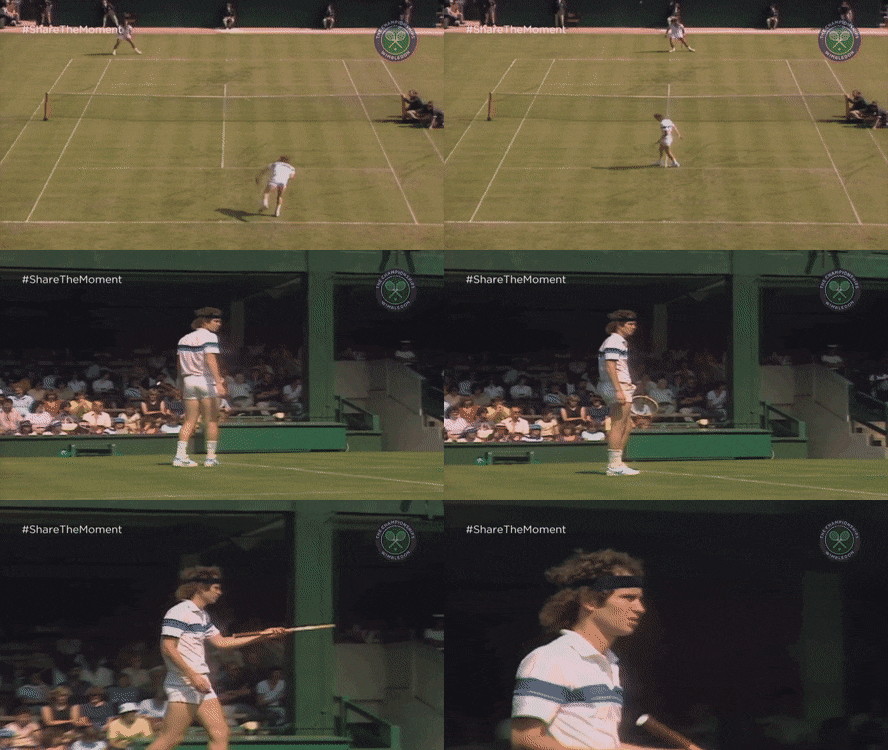
John McEnroe was born and raised in New York City. He began playing tennis at a young age and succeeded as a junior. He rose to the top of the tennis world and was ranked #1 for a few years, winning multiple major championships. He was known for his temper on the court and yelling at officials for what he perceived to be bad calls. He made millions of dollars. He married Tatum O’Neal, who was a child actress, and they had three kids together before divorcing because of his travel and her drug problems. He traveled the world playing major tennis tournaments, exhibitions, and the Davis Cup. He played both singles and doubles. He was a left-handed serve and volleyer. He was quick on his feet and had great hands. He tried drugs. He partied with A-list celebrities, jammed with musicians, and chatted with politicians. He became an announcer covering tennis tournaments, continued playing seniors tennis, tried to make it as a musician playing guitar, and opened an art gallery in New York City. He remarried Patty Smyth, a singer and songwriter, and they had kids together too.
Subjective Thoughts
Celebrity memoires are an easy read, so the book was an enjoyable distraction. Not exactly overflowing with durable insights though, I’m afraid. It takes a lot to be the best in the world at anything. And it’s impressive. It also sounds exhausting and repetitive. McEnroe himself stated it was unfulfilling and left him unhappy at times. That’s undoubtedly true for everyone to some degree. His life generally sounds more exciting than that of an accountant. It was interesting that he said raising kids was the hardest thing he had done, and his family seems to be the thing that he believes brings him the most lasting happiness. I guess his curmudgeonly Catholic parents were on to something.
I found myself a bit saddened when McEnroe fell from the top spot and his hopes of ever returning faded ever into the distance. That’s the thing about life: You’ll frequently have your last time to do something (win Wimbledon, play competitive sport, or change a diaper) and not even realize it as it happens. Your life changes and moves on.
Being the best in the world at anything was never in the cards for me. It’s not for most people. That bothered me for about a week when I was about 16 and for briefer flashes in my twenties. But reading McEnroe’s life leads me to believe I haven’t really missed much. It would be cool to meet accomplished people, and very satisfying to the ego to be the best at something. But I’m not at all willing to make the sacrifices necessary to get there. It sounds miserable. I’ve never loved any activity that much. And partying and drugs just aren’t appealing to this introvert.
Celebrity is a weird concept. McEnroe was before my time. I recognized some of the later tennis players he mentioned like Pete Sampras and Andre Agassi. But his references to TV stars and musicians meant nothing to me. It all fades, like a worn tennis ball lying abandoned on a court.
Revealing Quotes
I believe firmly that players at every level should practice every shot from any position on the court, using a variety of paces and spins, lobs, drop shots and half volleys—all shots that are too seldom paid attention to by recreational players—can change the outcome of a match.
That was when it all came together for the first time. My style of play was very high percentage—short back swings, no wasted energy, no unnecessary chances. I believed that my quickness and anticipation and hand-eye coordination were better than any baseline player’s—that playing my style against theirs, I could win.
Arthur Ashe once said that there was as much difference between #10 in the world and #5 as there was between #100 and #10. Going from #5 to #4, he said, is like going from 10 to 4. And from 3 on up is inconceivable.
I sucked it up. I firmly believe that one of the hallmarks of a champion, any champion, is the ability to absorb losses and regain confidence immediately.
I wouldn't have told this to his soul back then, but as early as my first Wimbledon in ‘77, I realized I had the potential to be the very best: the best tennis player in the world. I confirmed it for myself as I rose through the rankings—but then, more and more, the problem became that almost everybody was somebody I shouldn't lose to. The pressure became incomprehensible. I countered it by building defenses that almost nothing and nobody could get through.
For me, the relief of not failing has always been just as strong as, if not stronger than the joy of winning
Some people don't want to rehearse; they just want to perform. Other people want to practice 100 times first. I'm in the former group: I've always felt that if I practiced too much, I'd get stale, that the thrill of hitting tennis shots would go flat. Practice has always felt like a chore to me. Sometimes I'll say, “God, I'm looking forward to practicing”—and then within a couple of minutes, I'm bored. Then I want to play games or sets, to make it more interesting.
I did spend a lot more time practicing than most people thought I did, however, and a lot more time thinking about tennis. That may sound like a cop-out, but it's not. I've always thought constantly about the game, almost the way chess players think about chess. Tony Palafox drilled it into me: Be ready for the next shot. Know what you're going to do next.
Nobody will be surprised to hear that number one in the world requires a major-league ego. You need ego to get there, and ego to stay there.
As I moved to the top of pro tennis though, cockiness became a survival mechanism. I don't care who you are—Borg or Sampras or Michael Chang—you can't exist at the top without it. Self-confidence is a must, and so is selfishness.
I always had to fight to find my best self, to be aware of other people's feelings—and the devil's bargain of it is the players who are more aware of others struggle more.
Girls tennis players were also an option. I never had to try too hard wherever I was. When you're #1 everything comes to you. But I wasn't very happy.
To have a child out of wedlock! My parents were churchgoing Catholics: My brothers and I had all been baptized and confirmed and had gone to Mass every week until I was 18. Even though I had decided for myself that organized religion was a sham and that God, if He exists, must be deaf, dumb, and blind—Catholic guilt doesn't go away easily.
What happened to me is more or less the same thing that's happened to everyone who's been on top. Once you've lost it, everything spirals out of control and it's difficult to find your way back. The process is gradual rather than sudden, and the whole way down you keep telling yourself that things are going to change. Little by little, however, the bad days at the office start to outnumber the good ones, and pain begins to replace the pleasure you once took in your profession.
What I didn’t realize was this: It’s never possible to be prepared when the future takes over from the past.
Having children outside of wedlock is complicated. But Patty and I were committed to each other. What wasn’t complicated was my absolute determination to stay faithful. It seemed to me that there was no other way. If that made me an anomaly in the world of macho, married tennis players, so be it.
I loved being a father. It was the hardest work by far that I'd ever done. . . . Every day seemed to bring situations that would try the patience of a saint—let alone John McEnroe. Of course, there were times I lost it (there still are), but when you're responsible to other people, and especially very young people, you quickly learn that you have to find ways to control yourself. However much you may feel the need to let off steam, the needs of people who depend on you for everything come first.
Inside was a letter from Mr. Promoter himself, Donald Trump—his box was right next to the broadcast booth—offering me $1,000,000 to play either one of the Williams sisters at one of his hotels. Because the Williamses had been going around for a couple of years claiming they could beat ranked male players, Tompkins had asked me if I thought it was true. I responded that I felt any respectable male player, be it a top college competitor, a seniors player, or a professional, could beat them. I’d always thought that men’s and women’s tennis were simply apples and oranges.
It's very strange. You reach these highs at a young age, then part of you keep searching forever to recreate them. That's why bad things happen with athletes more often than other people. They can't reach that high anymore, so they have to get it artificially—or if they don't succeed, feel empty. My life feels good and better all the time, but as good as it gets, sometimes it's hard to forget those tremendous victories. That's when I have to remind myself that I really had no one to share those victories with. That's when I remember how cold the top of the mountain was.