Jump to ratings and reviews
Rate this book

The Other Victorians: A Study of Sexuality and Pornography in Mid-Nineteenth-Century England

Rate this book
Taking as his point of departure the authors, the audience, and the texts of Victorian writings on sex in general and of Victorian pornography in particular, Steven Marcus offers a startling and revolutionary perspective on the underside of Victorian culture. The subjects dealt with in The Other Victorians are not only those to have been "shocking" in the Victorian period. The way these subjects were regarded--and the way our notions of the Victorians continue to change, as the efforts of contemporary scholarship restore them to their full historical dimensions--are matters today of some surprise and wonder.

Making use, for the first time, of the extensive collection of Victoriana at the Kinsey Institute for Sex Research, Marcus first examines the writings of Dr. William Acton, who may be said to represent the "official views" of sexuality held by Victorian society, and of Henry Spencer Ashbee, the first and most important bibliographer-scholar of pornography. He then turns to the most significant work of its kind from the period, the eleven-volume anonymous autobiography My Secret Life. There follows an analysis of four pornographic Victorian novels--an analysis that throws an oblique but fascinating light on the classics of Victorian literature--and a review of the odd flood of Victorian publications devoted to flagellation. The book concludes with a chapter propounding a general theory of pornography as a sociological phenomenon.

With the publication of The Other Victorians, understanding of this period took a giant stride forward. Most of the writers and writings discussed by Marcus belong to Victorian sub-literature rather than to literature proper; in this way the work remains connected to a consideration of the exotic sub-literature. A brilliantly written book in its own right, this work transformed the study of the Victorian period as did no other.

294 pages, Hardcover

First published January 1, 1966

23 people are currently reading
752 people want to read

About the author

Steven Marcus

13 books7 followers
Steven Marcus is George Delacorte Professor Emeritus in the Humanities at Columbia University and was Dean of Columbia University from 1993-1995. He is also the author of Dickens: From Pickwick to Dombey and Freud and the Culture of Psychoanalysis and has edited, together with Lionel Trilling, the one-volume edition of Ernest Jones's The Life and Works of Sigmund Freud. His essays and reviews have appeared in many periodicals, including Commentary, The New York Review of Books, Partisan Review, and The New Statesman.

Ratings & Reviews

What do you think?
Rate this book

Friends & Following

Create a free account to discover what your friends think of this book!

Community Reviews

5 stars
32 (18%)
4 stars
60 (34%)
3 stars
54 (30%)
2 stars
21 (12%)
1 star
8 (4%)
Displaying 1 - 28 of 28 reviews
Profile Image for Ian "Marvin" Graye.
948 reviews2,783 followers
August 8, 2020
CRITIQUE:

This is a study of sexuality and pornography in Victorian-era England.

Like readers and critics of Susan Sontag's “On Photography", it's tempting to complain that there are no illustrations. The book is entirely verbal, and leaves everything else up to your imagination.

Steven Marcus (at the time, best known for his literary criticism of the novels of Charles Dickens) was invited and granted access to research the archives of the Institute for Research in Sex, Gender and Reproduction (the Kinsey Institute). He had studied under Lionel Trilling, and would later become an editor of “Partisan Review" around the time Philip Rahv ceased to be a co-editor with William Phillips. Marcus and Trilling jointly edited Ernest Jones' biography of Sigmund Freud, so Marcus was conversant in Freudian psychology.

The book is relatively serious, despite its subject matter. The only real evidence of a sense of humour derives from a quote in which Philip Rahv describes pornography as concerned with “organ grinding".

Male Sexuality

The reputation of the Victorians is that they were morally strict and both sexually ignorant and repressed. The “Other Victorians" of the book's title are less strict and more liberated in their sexual attitudes, even by today's standards.

Marcus based his book on the analysis of a number of different works, some scientific, some literary and some unashamedly pornographic.

One scientific work, the physician William Acton’s “The Functions and Disorders of the Reproductive Organs", he notes, is “entirely about men and male sexuality". Written before Freud, it “serves to introduce us to a world that is part fantasy, part nightmare, part hallucination, and part madhouse...Roughly speaking, it is the moral world of the Victorian novel.”

Marcus says of the views expressed in Acton's book that they “represent the official views of sexuality held by Victorian society...or the views held by the official culture.”

There is relatively little discussion of the fact that some people who espouse the Victorian morality might also indulge in Other Victorian practices and behaviour. Marcus seems to be less interested in the hypocrisy than the nature of the conduct.

The Power of Continence

Like other Victorians, Acton singles out masturbation for particular condemnation:

“Masturbation causes insanity...[Acton recommends] continence, which consists not only in sexual abstinence, but in controlling all sexual excitement...True continence is ‘complete control over the passions, exercised by one who knows their power, and who, but for his steady will, not only could, but would, indulge them...[The first requisite of continence is] that power of the mind over outer circumstances which we call ‘a strong will.’ ”

Acton argues that “sex is a curse and a torture, and that the only hope of salvation for man lies in marriage to a woman who has no sexual desires and who will therefore make no sexual demands on her husband.”

The Vital Force of the Workers

Sperm is to be spent on procreation: “To Acton, the ‘excitement of the sexual feelings when not followed by the result which it should produce, is...an unmitigated evil.’ "

It doesn't matter whether the evil is masturbation or “uninhibited sexual indulgence". The problem is that it detracts from the Protestant work ethic upon which the Victorian economy was based. Both practices might prevent people going to work and contributing to the growth of the economy. Sexual activity makes an inordinate call on the “vital force" of all people.

Marcus effectively concludes that Acton's work is not genuinely scientific, but a pseudo-scientific adjunct to conventional moral dictates:

“Received opinion is offered in the form of observation, an unadorned instance of ‘ideology’ – that is, of thought which is socially determined yet unconscious of its determination.”
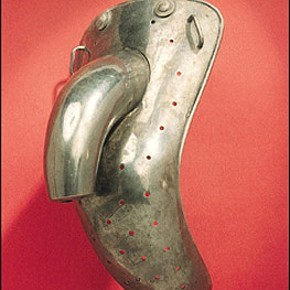
description

Male anti-masturbation device, 1880-1920. © Science Museum, London

My Secret Life of Sexuality

Marcus devotes two lengthy chapters to an eleven volume encyclopaedia of sexual knowledge called “My Secret Life". It runs to 4,000 pages and purports to be a memoir of a gentleman who had sex with at least 1,200 women and who observed and described the genitalia of another 200.

Marcus says of it that the book “shows us that amid and underneath the world of Victorian England as we know it – and as it tended to represent itself to itself – a real, secret social life was being conducted, the secret life of sexuality...Within and beneath official Victorian culture, a subversive and counter-tendency can be made out at work."

"Fucking on the Sly"

The author states: “The oddest incidents, I am convinced, are taking place daily everywhere, between men and women, who are, or who are going to, or have been fucking on the sly, but of which the world can know nothing. Such are my conclusions after the experience of nearly a quarter of a century intriguing and fucking women, including all classes, from marchioness to well nigh a beggar.”

Marcus is content to rely on this work as the work of a social historian. Paradoxically, he then proceeds to subject it to a process of literary criticism. In effect, he argues, that the work incorporates “what was by common consent and convention left out or suppressed" by the Victorian novel:

“One achieves a renewed sense of how immensely humane a project the Victorian novel was, how it broadened out the circle of humanity, and how it represented the effort of Victorian England at its best.”

Poor Girls, Cheap Whores and Domestic Servants

Marcus draws these inferences from the author's “many dealings with poor girls, cheap whores, and domestic servants.”

When Marcus comes to assess the book's style, he describes it as “superb in its observingness and authenticity.” He takes if for granted that the author is sincere when he says, “I simply narrate facts...I am telling facts as they occurred, as far as I can recollect them; it is all I can do.” Marcus concludes that the book has been written “from the very underbelly of the Victorian world.”

Fiction or Non-Fiction?

Ironically, Marcus judges it like he would judge a novel, without questioning whether in fact it was a work of fiction or sexual fantasy. It's assumed to be true, because it sounds true. He assumes that it isn't a novel, because people weren't allowed to write novels like this. Again, the book was prosecuted as an obscene publication, just as it would have been if it was a novel. Nevertheless, Marcus concludes “we are confronted in this book with a remarkable novelistic talent.” In effect, the author writes non-fiction (if that's what it is) like an author of fiction.

Sex, Class and Money

Marcus also examines the nexus between sex, class and money. “The vast majority of the author's experiences are had with three kinds of women – domestic servants, girls from the working or lower classes, and prostitutes of varying degrees of expensiveness.” The servants were seen as “fair game", whereas all three categories of woman were prepared to engage in sexual activity for a modest financial reward, because of their own financial circumstances. There was no shortage of “quite nice" women or girls who were prepared to exchange five or ten shillings for a poke. As a result, a gentleman (so-called) could indulge in his favourite fantasies at minimal financial cost.

The author argues that “there can be no indecency or impropriety in women or men amusing themselves any way they like in private – objections arise from prejudice and custom.”

A girl's virginity was highly valued. The author justifies his predilection because he pays for the privilege – “It is not the gentlemen who get the virginities of these poor little bitches, but the street boys of their own class.”

Thus, men win their sexual liberty at the expense of the continued economic subjugation of women.

Sexual (Without Social) Revolution

Marcus recognises that the book documents a sexual revolution that at least liberated male sexuality, if not female sexuality. Women were little more than commodities and the object of male sexuality and “uninhibited promiscuity". However, he bemoans that, like the twentieth century, we have witnessed “a sexual revolution which has also been split off from what might have been expected to accompany it – impulses of a social revolutionary kind...It would be far too simple to say that the sexual revolution has taken place only because a social revolution did not, or that one is the substitute for the other...

"What seems to have happened is that in our society, sexual beliefs, practices, and institutions were more susceptible to radical alteration than their counterparts in economic and social activity; another way of putting it is to say that in our society the fundamental organisations of economic and social behaviour have been more resistant to radical change than have the institutions which govern and express sexual beliefs and behaviour.”


A social revolution might have abolished gender and class distinctions. But it was not to be.

Marcus argues that the book “was subversive of that characteristic Victorian arrangement in which the existence of a whole universe of sexuality and sexual activity was tacitly acknowledged and actively participated in, while at the same time one's consciousness of all this was, as far as possible, kept apart from one's larger, more general, and public consciousness of both self and society.”

A Compulsive Need for Variety and Repetition

Marcus finds in the book “a compulsive need for variety, for having many different women all the time.” The author admits that he is one of those men who is “insatiable and could look at a cunt without taking their eyes off for a month.” He adds, “Fucking is always much the same, the preliminaries alone vary.”

This explains the length of the book. The author has “a compulsion to repeat – [a] need to repeat everything all the time everywhere.” His life consists “largely of fantasies actively dramatized in reality.”

As for the purpose of the book, Marcus says, “It may not be his object to stimulate the passions of others, but it is certainly his object to stimulate his own.”

The author admits, “I revelled in the detail as I wrote it, for in doing so I almost had my sexual treats over again...I described them as they had occurred at the time, and the pleasure of doing so was nearly the same...Writing indeed completed my enjoyment.”

The Sexualisation of Reality

Marcus concludes, “His accumulated fantasies, written down in the form of recollections of his experiences, now feed back into the reality of the present, heighten that reality, infuse it with further fantasies, and stimulate him to act out everything all over again in a frenzy of reading, feeling, acting, imagining, and going on and on. How much further, one wants to ask, can the omnipotence of thought take one?”

From a Freudian perspective, “when it comes to sexuality, what we mean by experience usually turns out to be the repeated confirmation of our fantasies, and little more.” The author has succeeded in totally sexualising his reality. His world has become a “pornotopia" made from his fantasies:

“The whole process culminates in the desire for totality and the effort to achieve it, either in action or fantasy; in this culminating expression of infantile megalomania, we have the beginning, and the desire to return to the beginning, making itself felt at the very end...Obsessed with the idea of infinite pleasure, the author does not permit the counter-idea of genuine gratification, and of an end to pleasure, to develop...The ideal pornographic novel, as everyone knows, would go on forever – it would have no ending.”

Marcus concludes that “what we have in ‘My Secret Life' is the record of a real life in which the pornographic, sexual fantasy was acted out.”

Marcus then discusses a number of examples of genuine pornographic fiction from the Victorian era.

The role of the woman isn't always that of a sex object alone. One woman in “The Lustful Turk" reflects after sex: “I was fully sensible of my deviation from strict virtue in the return I made to his pleasure.” Later, she describes “the delicious transports that followed the stiff insertion...and his luxurious movements, fiery kisses, and strange touches of his hand to the most crimson parts of my body,” all of which reduced her to “a voluptuous state of insensibility.” Sexual conduct had overpowered “reason’s empire".

Marcus argues that “almost all pornography is written by men and for men – that the point of view is entirely masculine.” He doesn't explain whether the woman's point of view here is just ego-gratification for the male subject and, by extension, the male reader.

Subverting Moral Norms

“Rosa Fielding" is a novel that fuses Charles Dickens and pornography. One of the female characters writes a letter in which she says of a shop girl and a customer: “If he would only give her a fucking and a five pound note, there would be no harm done.”

Marcus argues that this is “a reversal of our conventional moral expectations” of the characters, rather than a parody. Whatever, it is still subversive, “in the sense that it reveals the discrepancy which exists in society between openly professed ideals and secretly harboured wishes or secretly practised vices.”

He also says of pornography in general that “If it is to remain pornography and not transform itself into something else...it cannot explicitly state that it is only a bit of fantasy; it must remain within its self-enclosed universe, wherein it repeats, reconstructs, and spins out yet once again those immemorial fantasies which it cannot relinquish.”

Beneath and Behind Language

In relation to the novel, “The Amatory Experiences of a Surgeon", Marcus adds that “pornography moves ideally away from language. In its own way, and like much modern literature, it tries to go beneath and behind language; it tries to reach what language cannot directly express but can only point toward, the primary processes of mental energy.”

This novel forms part of what Marcus calls "pornotopia" – “the imagination of the entire universe beneath the sign of sexuality.”
Profile Image for James.
504 reviews19 followers
December 7, 2012
This has been on my to-read list since I was an undergraduate, when it was recommended by my cultural anthropology TA, on whom I had a huge crush. Ironic, in a way, since I found Marcus's 'evolved, 'self-consciously 'feminist' prudery highly evocative of the progressively puritan Berkeley I remember from the 80s . Whenever someone starts making distinctions between 'infantile' and 'mature' sexuality, I reach for my revolver. As The Other Victorians goes on, Marcus feels less and less constrained to confine his sweeping generalizations about pornography and sexuality to the period under study. This exercise in finger-wagging was written back in the dirty book store era -one can only imagine the vapors such a prig would have gotten from the premium filth now available on the Interweb. Watching a few dirty movies,though, might have alerted Marcus to some of the realities of human sexual response. At four points in this book he is incredulous that Victorians were so sexually clueless as to believe in female ejaculation. "The women themselves believed that they ejaculated, experienced this 'fact,' and described it to and discussed it with [Anonymous]." Since Marcus has never seen it (I would imagine there's a lot he hasn't seen - I get the distinct impression of someone who only does it with the lights off) it can't exist, and a woman who reports such an event happening in her body can only be colluding in an infantile male fantasy.
On the up side, The Other Victorians did make me want to read more Freud. And I DEFINITELY want to read My Secret Life.
Profile Image for Dfordoom.
434 reviews125 followers
August 29, 2011
This is supposedly a study of sexuality and pornography in Victorian Britain but it's immediately apparent Steven Marcus doesn't approve of sexuality and he doesn't approve of the Victorians. Except for Freud and Marx. He approves of them. In fact his attitude towards Marx is closer to hero-worship. Being an American university professor Marcus is of course a good Marxist.

This was an early book by him, originally published in the 60s, but apparently Marcus's enthusiasm for Marxism remains as strong as ever. It's fun being a Marxist when you spend your whole life in the nice safe womb of an American university campus.

If you enjoy dreary and silly Marxist-Freudian blatherings you might get off on this. Otherwise avoid this one like the plague.
Profile Image for Chris Fellows.
192 reviews35 followers
May 8, 2012
Where have you gone, George MacDonald Fraser? A nation turns its lonely eyes to you...

The title implies this is a wide-ranging study, but it relies unduly on a single source. It is almost entirely composed of extracts from something called "My Secret Life", embedded as nuggets in a starchy matrix of academic commentary; it is like the "Flashman Papers" edited by someone really humourless and prolix.

Now, the anonymous Victorian author of this secret diary may have been the appalling cad and enthusiastic libertine he claims to be; or, equally likely, he may have been a pathetic Victorian dweller in his parents' basement. I am thinking that, even if he was the first, internal evidence suggests he shared the natural human tendency to make all sorts of crazy stuff up.

Best to be very careful using this sort of thing to draw conclusions about sexual behaviour in Victorian England.

IMHO.
Profile Image for Kara.
Author 27 books95 followers
January 21, 2009
Not what I was expecting - instead of a thoughtful examination of how the Victorians viewed sexuality, it was largely just excerpts from one man's 19th century diary, detailing all the times the times he came. Gross.
Profile Image for Emily Joyce.
502 reviews22 followers
Read
February 21, 2012
As a product of the sixties, The Other Victorians really was a groundbreaking study on the history of British pornography from the previous century. It is also incredibly dated in its view of homosexuality and women's sexual experiences.
Profile Image for Bill FromPA.
703 reviews47 followers
October 26, 2014
Marcus looks at Victorian sexual attitudes and practices by considering a series of books from the period: William Acton’s “The Functions and Disorders of the Reproductive Organs”, H. C. Ashbee’s 3 volume bibliography of pornographic literature, the 11 volume anonymous sexual memoir “My Secret Life”, and several pornographic novels. In this work from the 1960s, reprinted in a second edition of 1974, Marcus’ own sexual attitudes, heavily influenced by Freudianism, can seem almost as antiquated as those he discusses, but fortunately the text primarily concentrates on understanding the beliefs and practices of the Victorians in their own terms, with only limited attempts at providing a “modern” understanding of their behavior.

Marcus seems most taken with “My Secret Life” and devotes 2 of his 7 chapters to this work. He sees it as a basically truthful memoir (overusing the word “authentic” and its derivatives in his discussion of the book) which in its frankness provides information about what is happening behind the scenes and between the lines of canonical Victorian novels by Dickens and Eliot, information about human sexual and excretory behavior of necessity known to the novelists but incapable of being presented in direct descriptions. Marcus makes “My Secret Life” sound very interesting in its presentation of otherwise hidden behavior, but I can only imagine that actually reading the work would be tedious in the extreme. Marcus’ chapters on this and on Acton’s medical treatise constitute the most worthwhile part of the book in that these analyses contribute to our understanding of the great works of Victorian fiction. The chapters on the more frankly pornographic works may add something to our image of the era but do little to enhance our understanding of its literature, which is Marcus’ main interest. Contrasting “Rosa Fielding, or, A Victim of Lust” with the works of Dickens and Thackeray to which it alludes, throws no light on the works of the greater authors, but only highlights the obvious faults of the anonymous work of pornography.

I have seen the final chapter, titled “Pornotopia”, published as a separate essay. In it, Marcus pretty much leaves the Victorians and attempts to create a literary definition of pornography, a sort of semi-objective alternative to the “I know it when I see it” approach. This does not form a satisfying conclusion to the book; although this chapter is apparently the fruit of Marcus’ extensive reading of Victorian pornography undertaken as research for “The Other Victorians”, its arguments apply generally to pornography as a literary product and it contains very little on specifically Victorian matters.
Profile Image for DoctorM.
842 reviews2 followers
September 17, 2011
One of the pioneering looks at the Victorian underworld and at how the Victorians dealt with with erotica. Marcus looks at a series of authors--- Dr. Wm. Acton, medical man and social reformer; Henry Spencer Ashbee, bibliographer of pornography; and the anonymous author of the multi-volume "My Secret Life" ---and how sex was presented to audiences both official and clandestine. He discusses Acton's strange (and yet perfectly Victorian) blend of willful ignorance about female sexuality and deep commitment to reforming the way society treated prostitutes and prostitution and then moves on to the world of high-end erotica, a world where lavish, privately published and clandestine editions of works like "My Secret Life" or Ashbee's baroquely erudite annotated bibliographies of classic porn ("lost" or "forbidden" books) might cost the equivalent of three or four months' wages for a skilled worker. Marcus' style is witty, dry, and incisive, and his long essay on "My Secret Life" and its obsessions and layers of truth and fantasy is a classic. "The Other Victorians" is a classic of social history, and an old favourite. Very much worth finding. (After all--- where else would you learn that "Rosa Fielding, Victim of Lust" was a pastiche of Dickens?)
72 reviews6 followers
June 14, 2010
The Sub-title: A Study of Sexuality and Pornography in Mid Nineteenth Century England, tells it all. Victorians were deviates? You bet. Some of the most raunchy and bawdy novels ever written came from this period, many authored by Anonomus. These authors didn't use nicetyes like intercourse. List all the crudities you can and I bet their list would be longer. Read the two chapters, The Secret Life. Prostitution and rape were common, after all it involved the lower classes.

Not a pleasant read but an eye-opener for most people.
Profile Image for Stacy.
Author 55 books218 followers
October 25, 2013
Interesting survey of a few key figures and works in Victorian-era pornography. Steven Marcus is clearly anti-pornography, but in a witty and snarky manner that gave an amusing edge to an otherwise fairly dry academic-styled text. Lots of useful information, so long as you can take the author's biases with a grain of salt.
Profile Image for Thorlakur.
276 reviews
March 3, 2016
Mr. Marcus presents a rather unremarkable piece of writing. He recounts the plots of some pornographic literature, chosen at random as it seems, and throws a bit of Freud around to add depth. His work is poorly lacking in research, and gives little indication how pornography was at odds with common morality of the Victorian era.
Profile Image for Beatrix Conti.
Author 2 books22 followers
November 15, 2017
As a historical study of Victorian sexuality, this work is lacking in many departments. It jumps around without any continuity and often divulges into purely literary criticism instead of contextualizing pornography in the Victorian period. The only chapters of worth are the first two, as they contextualize the history thoroughly.
Profile Image for Jadin.
68 reviews2 followers
August 26, 2010
This one starts off kind of slow but once he gets into the discussion of pornography, literature, and society, it perks right up. Some amazing insights and a must-read for the grad student and the casual student of Victorian era.
Profile Image for Jade.
155 reviews16 followers
September 28, 2020
The source material for this book is as fascinating as its author is ignorant, judgemental and peremptory. To put it simply, the person who says "This vision of a grim, gray, and spiritless universe is common to pornography" is really not the person I want to be writing a book about pornography.

My main grievances against Steven Marcus are as follows:

One, needless and constant references to Freud and psychoanalysis. This is pretty self-explanatory.

Two, complete ignorance of female sexuality -- which is all the more infuriating since he actually pretends to care about it, frequently points out that men were (thought to be) the main readers of pornography, etc. His crusade against the existence of female ejaculation, in particular, was the cause of much second-hand embarrassment. I know this was written in the 1960s, but let's just say that Marcus could have made, and chose not to make, use of his 2009 foreword to rectify his... "mistake."

Three, possibly more embarrassing still, complete lack of knowledge about pornography. I understand that this was not his area of expertise, and that at the time of writing there were very few other works about the subject. But you know what's a good thing to do, when you don't know much about something? Just shut up. Alternately, if your book project is already well underway, let your source material do the talking. Avoid moralising. Understand that humour, contrarily to what you've been led to believe (but by whom? your boy Freud again?), is often found within pornography, and that those passages you deem to be "ridiculous" are actually just meant to be funny.

In short, Victorian pornography is a fascinating subject, but please do not read this book unless you want to have it explained to you by Don Draper.
Profile Image for Kiri Johnston.
265 reviews12 followers
Read
January 25, 2023
Hmm, it was difficult to rate this one. On one hand, this leans on Freud too much and isn’t really about Victorian sexuality as much as it is about Victorian *erotica*, namely ‘My Secret Life’. Your tolerance for this therefore depends on how much you enjoy reading about one dodgy man’s ye olde sexual exploits, and how the author believes it’s a commentary on the sexual mores and societal structure of the era. It’s all Marcus’s personal opinion, for the most part, so it reads like a conversation with an academic mate who’s determined to convince you that a man’s erotic diaries are worth more critical acclaim; more lit crit than a serious study of history.

On the other hand, I found a lot of this genuinely insightful. As a person who does, shockingly, enjoy reading about weird sexual antics, the passages from ‘My Secret Life’ were mostly hilarious - and the ones that weren’t were explained in a critical enough manner by Marcus. He makes some good points about class and how it relates to sex and money - probably nothing new but we love a good Marxist analysis in this house, so 4.5 stars for that. He also addresses the dangers of pornography rather than asserting sex itself was the problem, though doesn’t get too deep into the real meat of the Victorian era - its hypocrisy.
Profile Image for Lorraine.
58 reviews5 followers
January 1, 2019
It’s frankly remarkable that a seminal work in the study of Victorian porn, which goes to great lengths to critique the sexual blind spots of the authors it studies, should be so phenomenally locked into the sexual and artistic preconceptions of its author. Among these: there is a specific definition of “literature” to which porn does not belong. Porn is unilaterally written by and for men, and any representations of women, in any pornographic setting, are male fantasies that oppose actual womanhood. Marcus mentions the existence of female porn writers - only once, if favourably - in a footnote in the conclusion, but doesn’t do us the service of naming them, nor is he able to offer anything more than the not unreasonable but far from certain assumption that the anonymous authors in the texts he mainly analyzes are male. Women are inherently less sexual than men. Also, they don’t ejaculate in any way, shape, or form.

I strongly recommend this book to people interested in the sexual hangups and prejudices of the 1960s as well as the 1860s.
Profile Image for Stephen Dedman.
Author 104 books51 followers
May 2, 2023
A detailed examination of a rather small number of 19th century pornographic texts and what they say about 19th century British classism (if less consciously than the more serious novelists of the time) as well as about male sexual fantasies and how little they've changed since then. It's almost as interesting as a study of the mid 1960s when it was written: Professor Marcus correctly anticipated how video would become a more suitable medium for porn than writing, and expressed the hope that he would not live to see computer-written porn (he died in 2018, so if he got his wish, it was a near thing: I will be astonished if people aren't using AI programs such as ChatGPT to write porn). Very readable, if a little heavy on Freudian theory.
Profile Image for James S. .
1,436 reviews17 followers
September 30, 2025
Great topic, bad book. The author is a dedicated Freudian, so everything is analyzed through that lens. Since Freud's theory has as much value and descriptive power as the theory of any random schizophrenic, all of this analysis is worthless. Additionally, the author is strangely prurient, even taking into account the publication date of this book (1966). Not recommended except as part of a historiography of this subject.
Profile Image for Karl Andersson.
Author 3 books1 follower
September 24, 2023
Interesting about Victorian culture in general, and its view on sex and porn in particular. I had no idea spanking was so popular.

I know the book has been criticized (at least by Kincaid in Child-loving) for drawing on too few sources, and I can understand that, almost half of it is about My Secret Life.
Profile Image for Matěj.
279 reviews16 followers
April 1, 2025
A flawed, yet interesting (and dated) view on Victorian attitudes to sexuality through Freudian lens. A lot of virile upper class boys and men have sex with servants (that power dynamic is not lost on Marcus) and there was a bit too much rape involving minors for my taste. Contrary to Marcus I have a feeling a lot of My Secret Life was just fantasy.
Profile Image for Oscar.
14 reviews
Read
April 19, 2024
Incredibly dated and deeply stupid academic posturing. Is not only uninterested in the supposed subject of the book, but seemingly feels active contempt towards it, and the concept of pornography as a whole. But you know what Steven loves, more than anything in the whole wide world? Sigmund Freud.
Profile Image for Ashley.
26 reviews2 followers
August 6, 2020
A fascinating exploration into the vices of the Victorians.
Profile Image for Siena.
23 reviews
October 29, 2024
Basically wbasically a philosophical explanation for why sexting is cringey, but also Jesus everything interesting culminates in the 1890s I swear
Profile Image for Jakob Myers.
100 reviews3 followers
Read
December 4, 2021
Great book. You can see how this guy advised Kate Millett's doctoral thesis.
32 reviews
August 26, 2017
The Times review of books circa 1890 by way of 1960s Freudian psychology. The author's tone of moral and mental superiority spoils whatever interesting and insightful connections are made between the literature of the period and the reality of life that inspired it.
Displaying 1 - 28 of 28 reviews

Can't find what you're looking for?

Get help and learn more about the design.