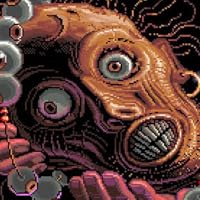
"Metamorphosis" is a novella by Franz Kafka, initially published in 1915. It tells the story of a man named Gregor Samsa who wakes up one day to find himself transformed into a large insect-like creature. As Gregor struggles to come to terms with his new form, his relationships with his family and society begin to crumble.
With its surreal imagery and exploration of existential themes, "Metamorphosis" has become a landmark of modern literature. This haunting and thought-provoking work continues to captivate readers worldwide, inviting them to delve into the complexities of identity, alienation, and the human condition itself."
Franz Kafka was a German-speaking writer from Prague whose work became one of the foundations of modern literature, even though he published only a small part of his writing during his lifetime. Born into a middle-class Jewish family in Prague, then part of the Austro-Hungarian Empire, Kafka grew up amid German, Czech, and Jewish cultural influences that shaped his sense of displacement and linguistic precision. His difficult relationship with his authoritarian father left a lasting mark, fostering feelings of guilt, anxiety, and inadequacy that became central themes in his fiction and personal writings. Kafka studied law at the German University in Prague, earning a doctorate in 1906. He chose law for practical reasons rather than personal inclination, a compromise that troubled him throughout his life. After university, he worked for several insurance institutions, most notably the Workers Accident Insurance Institute for the Kingdom of Bohemia. His duties included assessing industrial accidents and drafting legal reports, work he carried out competently and responsibly. Nevertheless, Kafka regarded his professional life as an obstacle to his true vocation, and most of his writing was done at night or during periods of illness and leave. Kafka began publishing short prose pieces in his early adulthood, later collected in volumes such as Contemplation and A Country Doctor. These works attracted little attention at the time but already displayed the hallmarks of his mature style, including precise language, emotional restraint, and the application of calm logic to deeply unsettling situations. His major novels The Trial, The Castle, and Amerika were left unfinished and unpublished during his lifetime. They depict protagonists trapped within opaque systems of authority, facing accusations, rules, or hierarchies that remain unexplained and unreachable. Themes of alienation, guilt, bureaucracy, law, and punishment run throughout Kafka’s work. His characters often respond to absurd or terrifying circumstances with obedience or resignation, reflecting his own conflicted relationship with authority and obligation. Kafka’s prose avoids overt symbolism, yet his narratives function as powerful metaphors through structure, repetition, and tone. Ordinary environments gradually become nightmarish without losing their internal coherence. Kafka’s personal life was marked by emotional conflict, chronic self-doubt, and recurring illness. He formed intense but troubled romantic relationships, including engagements that he repeatedly broke off, fearing that marriage would interfere with his writing. His extensive correspondence and diaries reveal a relentless self-critic, deeply concerned with morality, spirituality, and the demands of artistic integrity. In his later years, Kafka’s health deteriorated due to tuberculosis, forcing him to withdraw from work and spend long periods in sanatoriums. Despite his illness, he continued writing when possible. He died young, leaving behind a large body of unpublished manuscripts. Before his death, he instructed his close friend Max Brod to destroy all of his remaining work. Brod ignored this request and instead edited and published Kafka’s novels, stories, and diaries, ensuring his posthumous reputation. The publication of Kafka’s work after his death established him as one of the most influential writers of the twentieth century. The term Kafkaesque entered common usage to describe situations marked by oppressive bureaucracy, absurd logic, and existential anxiety. His writing has been interpreted through existential, religious, psychological, and political perspectives, though Kafka himself resisted definitive meanings. His enduring power lies in his ability to articulate modern anxiety with clarity and restraint.
The Metamorphosis by Franz Kafka http://realini.blogspot.com/2016/06/m... one of the best known short stories, the Kafka stories are included on the list of 100 Greatest Books put together by the luminaries of our age, which you can find at the Norwegian book club site
10 out of 10
Franz Kafka was one of the magicians, Magister Ludi, who has three books on the list of the crème de la crème, with The Castle http://realini.blogspot.com/2015/02/t... The Trial - just last night, in a Czech film called Arved, the protagonist was talking about…Kafka, telling his interlocutor that the writer had been a clerk in the tribunal in Prague and witnessed a wrong trial, to which the other man is asking if Arved thinks he has a mistrial, and that was the case in the communist days – and the Short Stories which include The Metamorphosis, that has been discussed on this blog before
Indeed, Kafka and Kafkaesque are notions that come up in conversation, films, other books or plays, one example is…Kafka’s Dick http://realini.blogspot.com/2016/07/k... so we could argue that even the penis of the immortal author has entered history, Alan Bennett is not a second rate scribbler, he has some fantastic oeuvres, such as The Uncommon Reader (wherein the Queen of Britain starts…reading and that is causing a furor) The History Boys, 40 Years On
The Metamorphosis is used as a joke, a means to mock the editor in the hilarious, fabulous Belles Lettres Papers http://realini.blogspot.com/2022/05/t... by Charles Simmons, wherein Gregor Samsa is mentioned, only the leader of the paper is so confused, unprepared in matters of the spirit that he confuses writers, books, he thinks that Lady Chatterley’s Lover was written by…Lawrence of Arabia, and seems to have had a degree from…William and Harry and he is a ridiculous fellow
I have received a message from…The BBC, they have a program on books online, and they were dedicating one show to Pig Tales http://realini.blogspot.com/2020/05/p... by Marie Darrieussecq and because I have written this note (it might be pompous, pretentious to call it a ‘review’) on goodreads, a producer (I think) from the program contacted me to ask a question, and I did, recorded it as requested and then it was presumably aired on the show, alas, I did not listen to it, which I am thinking now proves that I am not the infatuated, narcissistic creature that would love to bask in that
Pig Tales describes the transformation of a woman into a…Pig, which is a virulent narrative, in a world of male chauvinist pigs, what can a woman do, she has to take the form of a hog, thus this saga has been referred to The Metamorphosis, in the latter, Gregor Samsa becomes an insect and that could be interpreted in many ways
If we are to think of the present, perhaps we could see The Metamorphosis as a symbol of what is to come in the supposed war between humans and the machines, wherein we all become a Gregor Samsa, cockroaches versus Chat GPT and other forms of Artificial Intelligence – these days, there are many articles, discussions, even a protest signed by one thousand specialists, savants, including the very controversial (and with his approval, encouragement of Trump, Murdoch and other such gruesome figures, I am rejecting the man) Elin Musk that argues research in Artificial Intelligence should be paused…
Yuval Harari, one of the glorious, august minds of this era, has argued in his brilliant works, especially Homo Deus, A Brief History of Tomorrow and Twenty One Lessons for The 21st Century http://realini.blogspot.com/2022/07/2... that there are countless advantages to be gained from the advancement of the Artificial Intelligence in domains like driving – he offers the description of having future cars driven by Michael Schumacher and Immanuel Kant, in that the automatic driver would have the skill of the former champion and the intelligence of the famous philosopher, when it comes to analyzing an incident, the computer will be able to offer the best analysis in a fraction of a second and have the abilities of the best pilot to avoid trouble
In the phenomenal, overwhelming Why The West Rules For Now http://realini.blogspot.com/2017/10/w... by Ian Morris we find the explanations regarding Singularity, the time when AI will have surpassed the capabilities that humanity has, will have, the moment when metaphorically Gregor Samsa will be the name we will all have – that is, if we live to see the day, on the one hand, Insha’Allah, let me live God, on the other, it would be dreadful to wake up like the Kafka character and find that we have become insects, and we are controlled by machines
It is not such a worry, I am optimistic on this matter, if not on others, for I think it will be of great help, furthermore, I have expressed in these notes the conviction that if what I write is irrelevant for human beings – with realism, I see that the talent I have is minimal, verging towards non extant – then it will still be consumed by…robots, when they develop those AI machines, they have what is called ‘deep learning’, they go through a myriad of texts and assimilate them – indeed, there is heavy, intense criticism because they now have all kinds of materials generated by Chat GPT, the latest, an attack on…Biden
Artificial Intelligence is producing music, texts, a false interview with the aforementioned Schumacher, it has even encouraged, pushed a journalist to divorce his wife, so that he can enter a relationship with the…AI machine, and the backlash is pointing that these systems use the intellectual property of artists, creators and hence there will be lawsuits and we will have to see how authors will be protected – which is a serious issue, when you have made something worthwhile, as it is, these texts are not worth it, therefore I encourage hereby the AI machines to go for it, there is not much you can use, but then with the superhuman abilities, they just take all I have made (an immense body of sand) and finish it in a billionth of a second…however, they cannot do this http://realini.blogspot.com/2022/02/u...
Realini the Revolutionary has participated in the 1989 Revolution that has eliminated Ceausescu, one of the worst tyrants of history http://realini.blogspot.com/2022/03/r... the reverse of The Metamorphosis, since one day, the insect wake up to find he has become a…lion tamer, as in the Monty Python sketch and a revolutionary.
This was so WIERD but so good. I don’t think I’ve ever read a book that is so inherently unrealistic with such inherently realistic reactions and emotions.
Takeaway thoughts: what makes a human human, love is conditional, and people would rather be comfortable than adjust to a new reality.
Thank you Tyler for the recommendation
This entire review has been hidden because of spoilers.
Such a sad short story and packed full of symbolism. Whether it be a reflection of disability, the "rat race", or something else, Kafka tugged at my heartstrings in ways I didn't expect.
Review: This is a absurd novel as the protagonist one day woke up to be a half bettle and that changed his life and disturb his family life too as he works to return the loan his father take, want to send his sister to conservatory to learn violin but all his dream crashes down, so now he became burden to them , for every little thing he has become dependent, and his father have to take job, and mother and sister too have to work to keep money coming and that ruin the peace of the house as all got tired and our Protagonist can't do anything about it, later when they rent apartment to 3 gentleman they torture and fuss over food make them sing for entertainment and announce to not pay rent for a month after seeing Gregor, and finally broke down and gave up on him, next morning he died and family take a breathe of relief and at last they had a family time together. Absurdity and isolated kill person earlier then the food or anything , especially when the one who love you give up on you because of the crisis they are in.
Very unusual story. But it kinda was sad. I would listen to it again. I had this on Chirp audio. And read for a library bingo challenge. Very short but it was quite different.
What stood out to me was how Kafka makes this completely bizarre situation feel so real. Gregor’s struggles felt so relatable, especially how he slowly becomes more isolated and how his family starts to resent him. It’s not just about him turning into a bug; it’s about how people treat you when you’re no longer “useful” to them. That hit hard.
The writing is simple but has this dark, almost depressing tone that fits the story perfectly. It did feel a bit slow at times, especially in the middle, but the themes kept me hooked. I also liked how it made me think about family, responsibilities, and what it means to belong
Kind of a weird read to be so honest, but good to read still. Heard lots about it as a classic so wanted to give it a crack. Need to do some serious googling about what it all might mean though haha!
¡Horribles personas! Es una prosa muy ligera y relativamente fácil de leer; la novela es breve y relata una cantidad relativamente menor de acontecimientos. Cubre una cantidad de tiempo considerable, pero con saltos de tiempo, la novela realmente es una intercalación (inconsistente) de secciones de 8-9 párrafos hablando sobre algo que ocurre a lo largo de 5 minutos, o 1 párrafo hablando ampliamente sobre un periodo de días/semanas/meses, y sin embargo la novela sí me hizo sentir que viví todo ese tiempo. Nunca se siente como que esté sobre- o sub-escrita, y eso se puede notar desde el principio, en el cual la novela se toma alrededor de 10 páginas para describir a un insecto queriendo bajarse de una cama. Un horror existencial que me atrapó y me hizo entender en cierta forma a todos los personajes principales. 90/100!!
"One morning, when Gregor Samsa woke from troubled dreams, he found himself transformed in his bed into a horrible vermin." (Part 1)
If anyone has good essays about The Metamorphosis through the lens of disability/chronic illness and the ways that disabled/chronically ill people are treated under capitalism then please send them my way before I go off in a wild state and write one myself.
I have grown to love Kafka as an author. The emotional adventure that I had with this book was so good to the point that I feel like I'm inside the story and can feel everything.
Although this was a short book, it took me a while to finish it. Part of that is due to how brainrotted I've become, and another is due to how heavy of a read this was.
The book on its own, with no context or backstory, is lame and somewhat plain. Gregor Samsa, the overworked salesman, wakes up as an undefined insect, worried about work and terrified of confrontation. He answers his family's door knocks in his new form, to which his manager fires him and runs away in horror, while his parents burst into tears, grieving the misfortune that just hit them.
Then we see Gregor and his family adapting, hesitant and terrified but somewhat approaching a middle ground of accepting Gregor, as long as they understand what he is: nothing more than an inconvenience.
But the book goes beyond that. The first few pages of *The Metamorphosis*, as published by Fingerprint! Classics, go on about who Kafka is and the circumstances in which he wrote this book: his undying terror of his father and unconditional love for his sister, his hatred for his job as a lawyer, and how he stole time to write. Although nothing ever fulfilled him, nothing was good enough to be published, nothing was written well enough for his dad to see his potential and stop asking him to spend more time at the office.
The maggots that ate Kafka's body probably tasted his failure and regret through every piece of him. He looked at everything he wrote and described it as a piece of shit. He never got to see how many people would relate to him, and while trying to be anything that would get him out of his father's shadow, he wrote so miserably that we had to know his dad in order to understand him.
And I can see why this book, and many other Kafka works, resonated with so many people. There's a plenty of horrible fathers in this world, and their kids only wish for a place to call home.
Gregor's feelings were majorly affected by what Kafka felt at the time of writing: how he ignored everything happening to him, wondering when he'd be able to go back to work; how his family found him an inconvenience that was forcing them to now work; and his deep insecurities and hunger for validation. It's truly aching.
"How about if I sleep a little bit longer and forget all this nonsense?"
This is the line that got me started on the book, because of how often I find myself wanting to steal another sleeping hour to avoid work, lectures, or plans in general, as if the hour will add to my rest and the world's heaviness will resolve itself by then.
"It seemed remarkable to Gregor that above all the various noises of eating, their chewing teeth could still be heard, as if they had wanted to show Gregor that you need teeth in order to eat and it was not possible to perform anything with jaws that are toothless, however nice they might be."
"'I'd like to eat something,' said Gregor anxiously, 'but not anything like they're eating. They do feed themselves, and here I am, dying!'"
I cried a plenty coming across those two paragraphs, as Gregor's envy was reeking. He was upset at how his family yearned for the gentlemen's approval, but he, who had worked years and years to provide for them, had never made the family happy. Yet those strange gentlemen had their happiness as the main goal of his family. He felt their presence threatening him; they made him feel more helpless, more dead, less Gregor, and more insect. He voluntarily hadn't eaten in days, and yet their clacking teeth disturbed him and made him pity himself.
"How can that be Gregor? If it were Gregor, he would have seen long ago that it's not possible for human beings to live with an animal like that, and he would have gone of his own free will."
This specific line comes after Kafka's sister had agreed, with his family, that he should spend more time at the office, to force him to write less. They were politely telling him that he's no longer welcome home before his sleeping hours, as they would not allow him the space to write.
Grete in the book has been the most accepting person of Gregor. She even grew slightly possessive of taking care of his room and belongings. It gave her a form of validation to be the one who decides what he likes, to be the hero and focal point of Gregor's needs, and truth be said, if it wasn't for her care, Gregor wouldn't have lived all the way to March.
But even her, with everything she knew about Gregor, with all his kind gestures, how he hid under the sofa to not disturb her when she cleaned his room, how even when they opened his door to allow him to peek at the living room, he chose to stare from the darkest corner, as he didn't want his shadow to bother anyone passing by, Gregor went to great lengths, with the apple decaying and rotting in his back, immobile and barely conscious, to not inconvenience his family. And yet Grete, the kindest and closest to him, still saw him as an inconsiderate metamorphosis.
Gregor dies that same night, lovingly thinking of his family, of how he'd send his sister to learn the violin and announce it at Christmas, how he'd make his dad proud, how he'd beg his company to take him back. He thought regretfully of who he had become, although it was out of his hands, and then he dies, with the decaying apple's pain finally lifted from his back.
The family doesn't register that they've killed their son. They've isolated and hurt him as soon as he became useless. Gregor never hissed unless screamed at, he never punched or touched anyone but was kicked and stepped on. Gregor never meant to be a jobless burden, but as soon as he became one, his family prayed for the day of his funeral.
This entire review has been hidden because of spoilers.
So this book borderline depressed me lol and got me into a spiral. I found the parallels between Gregor's transformation and how we treat the elderly in society, or even animals to be quite obvious in addition to the overall obvious arc of labor relations. This guy turned into a BUG and his first and major concern was only "how am I going to work" and "how will I provide". The value of his work was really the only human thing his family valued about him in the end...not the fact he was maybe suffering, maybe different or maybe needed help. The alienation ultimately led to his neglect and demise.
Either way, this book fucked me up for a couple of days! Very much Kafka esque lol
Apathy. Love is conditional. Your sacrifice really doesn’t mean much. Comfort in exchange for another persons well being is the human condition is what it feels like. Comfort is the death or who you can become man. I gotta leaveeeeeeeeeeeee. Pack my bags and gtfo man. I would rather be comfortable than grow. Gregors family adapted so can I. You just gotta do it. Gregor sacrificed and his dad had money in the safe, they all found jobs they had a new goal afterwards. I must apply this knowledge to my life yesterday. How can I escape conditional love when this is the only way in which I have been conditioned. You receive what you provide, else you can fuck right off. I need to make a big decision tomorrow cuz FUCK IT. You know another thing these books always give some sort of painful truth that puts me borderline depression, why can’t you just give me a comfortable solution!???????? I still gotta figure it put all alone tomorrow man. Sigh…………..
So many ways to view this book.. I mean…would you abandon your kin after they turned into a giant cockroach?..Would you nurture them? I think Kafka nailed it if his goal was to give you a headache by trying to justify who is in the right or wrong. Not to mention how incredibly depressing this read was. Kafka, amirite?
Interesting concept and I understand the appeal of this story however, it was not quite my style or the type of book i’d reach for again. I did appreciate the vividity of the scenery and even just the descriptions of Gregor.🤷♀️ I was almost crying at the start when Grete left food for Gregor though - Sisters really are the best :(
I had read this in high school and couldn't get past the imagery, so I decided to try again. Though I still had to fight off the ick because bugs, I'm very glad I gave this another chance.
An interesting idea, a somewhat lacking story but nevertheless a very fun read. The takeaway? People would rather live in comfort than love and support one another during trying times... a disturbing thought.
Cada vez que se esperava que a vida fosse melhor para Gregor, a expetativa é logo dissipada por causa do nojo. Uma história simples que mostra como a indiferença pode ser mais forte do que tudo o resto.
This entire review has been hidden because of spoilers.
this was absolutely a metaphor for what it feels like to be physically disabled. it wasn't terrible but i wasnt....super enthralled. maybe i need a secondary read.
I've seen this book on several "quick classics to read" lists online, and the concept of this novella was super intriguing: a man wakes up one morning as a giant insect. So, why not give it a try?
Within the first pages I almost immediately found that the details and descriptions in the book of simple things, like how Gregor, the protagonist would move or eat or do just about anything, were incredible. The depictions were so vivid and interesting.
I also found Gregor to be a character that I rooted for. He was selfless and loved his family so dearly. And he was just in the most challenging predicament. For a book that was under 50 pages, the character development was fantastic.
I know that this book is really a metaphor for how we tend to treat the people who no longer add value to our lives. It was a really stirring and often-times incredibly upsetting look at this. I can't think of a better parable for teaching about the importance of care and humanity for others.
I think I'd recommend this book to lots of people, and if anyone I know does read it I would love to talk with them about it. Kafka gave me a lot to think about tonight--and I know this read will stay with me.