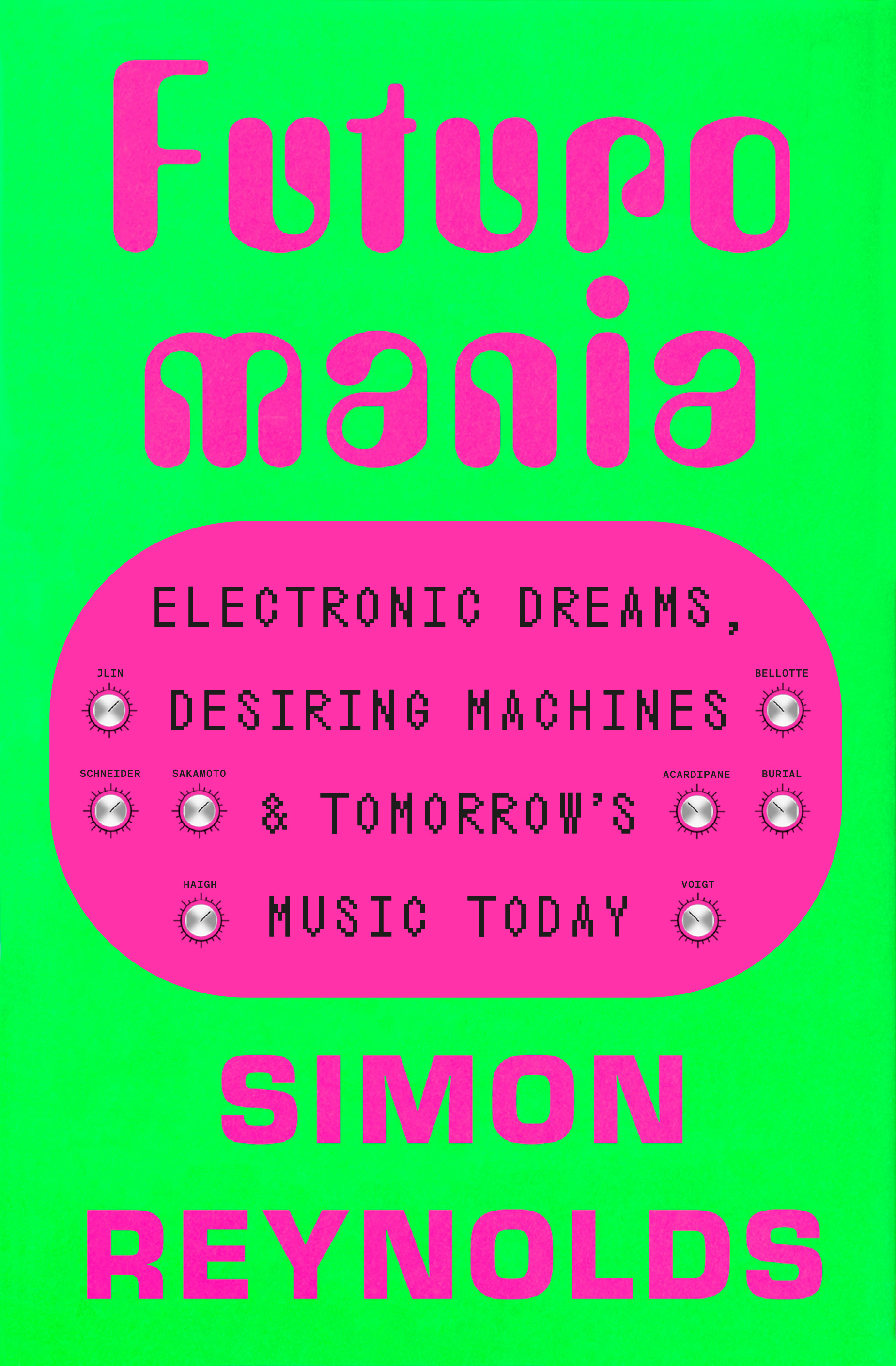
From celebrated music journalist Simon Reynolds, a collection of thought-provoking essays that explore how ideas of the future are articulated in modern music
In music journalist Simon Reynolds' previous book, Retromania , Reynolds explored what he dubbed "a culture-wide malaise with a particularly anguished focus on the music scene’s preoccupation with recycling and reenacting its own recent past." In contrast, this book--and the phenomenon known as "Futuromania"--explores retromania's positive "not a malaise, but perhaps a dangerously excessive vigour, a morbidly agitated state of excitation about anything and everything in the present that could be plausibly described as 'tomorrow’s sound today.'"
Through a series of thought-provoking essays, Reynolds reflects on influential and innovative music that "prefigured" the Future, exploring the then-futuristic electronic and digital sounds that provided a glimpse of what would one day become mainstream pop music. From Donna Summer and David Bowie to Daft Punk, from Afrobeats and Atlanta trap to Autotune and Ambient Noise, FUTUROMANIA invites us to reflect on how boundary-pushing music of the past became the popularized beat of the present, and how today's experimentation might hint at the sounds of the future.
Engagingly written, thoughtfully organized, and utterly compelling, FUTUROMANIA is required reading for anyone who dares to think about tomorrow's soundscape.
Simon Reynolds is one of the most respected music journalists working today, and his writing is both influential and polarizing. He draws on an impressive range of knowledge, and writes with a fluid, engaging style. His books Rip it Up and Start Again and Generation Ecstasy are well-regarded works about their respective genres, and RETROMANIA may be his most broadly appealing book yet. It makes an argument about art, nostalgia, and technology that has implications for all readerswhether diehard music fans or not. Its an important and provocative look at the present and future of culture and innovation."
Rispetto ad altri volumi del critico musicale, non si tratta di un testo unico ma di un insieme di articoli precedentemente pubblicati che hanno a che fare con il mondo della musica elettronica e le sue sfaccettature. Questo comporta che ci sianoripetizioni, che in alcuni casi ci siano riferimenti a "dischi appena usciti" che in verità sono stati pubblicati negli anni '90 e che non tutti gli artisti di riferimento vengano presi in considerazione. Reynolds inoltre dedica gran parte della sua attenzione sulla cultura rave, come era già avvenuto nel suo "Energy Flash", tralasciando o semplicemente citando altri sottogeneri musicali quali trip hop, glitch etc.
Si tratta comunque, come al solito, di una lettura estremamente appassionante (sempre bello leggere dell'influenza che ha avuto "I Feel Love" di Donna Summer come canzone-simbolo del futuro o di come l'autotune nella musica trap sia usato con specifiche intenzioni) e le oltre 500 pagine che la compongono volano via in un battibaleno.
Reynolds sigue siendo, a 20 años de Rip it Up and Start Again, quien mejor escribe sobre música. No todos los ensayos que componen este libro sobre electrónica y música digital tienen el mismo nivel, pero es la totalidad lo que hace de este libro una nueva maravilla del catálogo de Reynolds. Nadie teoriza como él sobre la dimensión política y social de la música, sin perder de vista los componentes libidinales y estéticos que la nutren.
A better-than-average example of the sort of music writing I hate. Including a clutch of essays published over decades with little editing didn’t do Reynolds any favors—in the churn of music-related-content-creation, he reuses ideas and even phrases. Discussing industrial and acid house years apart, he called both “no-escapism.”
The book works best when he is trying to get you to love something he loves. He drove me to reconsider—and begin to like—the artist Burial. But the music-critic “clever” turns of phrase and the need to constantly make up new genres and subgenres really wore me down.
I have liked Reynolds’ writing for a long time, having grown up on it as a consumer of music reviews and criticism. This book is a collection of older essays which looks backwards in search of music’s future-facing orientation. It’s fine. The chapter on Burial was probably the best thing here, followed by the autotune chapter, then the Daft Punk Random Access Memories one.
Libro de nicho donde los haya y, aunque hubiera preferido que se enfocase en artistas o situaciones más actuales, ha estado bien leer sobre cómo empezó y las influencias que tiene y da la música electrónica
Entre una primera parte que a veces falla y una segunda que crece hasta la pieza sobre el autotune es un buen libro con momentos que me parecieron brillantes. + Los codas también fueron interesantes.
I won this in a giveaway. Normally this is not what I would seek out to read but I figured it was free so it was worth a read. I thought the topics were interesting and quite informative. Overall pretty decent.
Futuromania: Electronic Dreams, Desiring Machines & Tomorrow’s Music Today is een onvermijdelijk boek, dat misschien wat aan de late kant verschijnt. In 2011 schreef Simon Reynolds Retromania (2011) een intrigerende studie over de culturele draai naar het verleden waarbij hij eindigde met een kloeke conclusie die na het voorafgaande betoog eigenlijk uit de lucht kwam vallen: “I still believe the future is out there.” In het nawoord van zijn nieuwe boek noemt hij Futuromania “een omgekeerd spiegelbeeld” van Retromania. Dan toch eindelijk het mogelijke antwoord, een uitweg uit de verstikkende grip van het verleden op de 21ste eeuwse cultuur. Is Futuromania, de titel gebruikt hetzelfde lettertype als Alvin Tofflers Future Shock (1970), dat boek? Gedeeltelijk, al zal je als oplettende lezer snel concluderen dat het nooit een gedegen antwoord kan zijn. Futuromania is namelijk een bundel die artikelen verzamelt uit verschillende periodes met als overkoepelend thema elektronische muziek en het idee van futurisme. Het boek lost in die zin niets op maar presenteert een zeker enthousiasme over muziek die het nieuwe aankondigt, veranderingen veroorzaakt, sciencefiction als geluid. En niemand kan zo enthousiasmeren als Reynolds, omschrijft muziek op zo’n manier dat je het meteen wilt horen. In de jaren negentig kocht ik lange tijd platen blind naar aanleiding van zijn Melody Maker-recensies en kan me eigenlijk geen misstap herinneren.
De reden voor dat vertrouwen was zijn eerste en nog steeds onovertroffen boek Blissed Out: The Raptures of Rock (1990) een subliem geschreven collectie essays over rock en pop in de jaren tachtig die voor mij alles veranderde: hoe je over muziek kon schrijven en denken, een introductie van artiesten waar ik nog nooit van had gehoord en in de laatste hoofdstukken een fascinerende richting aanwijzend waar popmuziek naar toe bewoog, namelijk dansmuziek als een soort “einde” van muziek. Het stuk over acid in Futuromania is het enige wat overlapt met Blissed Out, al staat het nu redelijk aan het begin. Wat dat stuk met een aantal anderen duidelijk maakt is dat Reynolds in het moment zelf op zijn best is. Wanneer hij geconfronteerd wordt met nieuwe muziek waar hij enthousiast over is ontstaat een worsteling om de muziek te begrijpen en aan anderen te omschrijven waarbij hij het mysterie, het genot van het geluid intact tracht te houden.
Aan de andere kant is hij, haast onvermijdelijk, door de jaren heen meer retrospectieven gaan schrijven. Een van de redenen dat Ian Penman hem ooit, zonder al teveel kwaadaardigheid, omschreef als “de aardrijkskundeleraar van de rockjournalistiek”. Minder overrompelend, meer analytisch, op zoek naar verbanden en met een neiging naar volledigheid. Maar, zoals Futuromania regelmatig bewijst, altijd leerzaam en ook dan wil je de muziek meteen weer luisteren. Het boek krijgt door de opzet en de chronologische presentatie van de muziek een eigen karakter al wreekt het gemis van een eenduidig argument voorbij het thema van de toekomst zich. Halverwege hebben we de jaren negentig al verlaten en ik had het gevoel dat dit te vroeg was, dat wat de 21ste eeuw heeft gepresenteerd zich nooit qua aandacht kan meten met het voorgaande traject dat van disco tot jungle loopt. Ik had nog wel een verhandeling over darkside jungle kunnen lezen en vreemd genoeg is er geen plek voor het zachte futurisme van shoegaze met zijn verdekte elektronische invloeden.
Niet dat de 21ste eeuw een gebrek aan futuristische muziek heeft gekend. Zo snel kom ik op Fennesz, Qebrus, Dopplereffekt, The Avalanches, Rosalia, MF Doom, K-pop, James Holden, Wighnomy Bros, Ricardo Villalobos, de Joris Voorn mixen, het bescheiden modernisme van Richie Hawtin of The Black Dog van Music for Reel Airports en Music for Photographers. In plaats van hier aandacht aan te besteden (hoogstwaarschijnlijk omdat hij er nooit op dat moment over heeft geschreven) verdoet Reynolds veel van de tweede helft aan geforceerde stromingen als maximalism en conceptronica of artiesten als Jlin die zich niet kunnen meten met wat er aan voorafging. In die zin is duidelijk een tweedeling aan te wijzen, die ik al jaren geleden observeerde: het is niet dat muziek vernieuwing mist maar het is een verspreid futurisme, er is geen cultuur meer met een richting, een collectieve overrompeling en verwondering of focus. Alles is tegelijkertijd mogelijk in atemporaliteit. Elk opvolgend post-acid-genre vormde een versplintering waarbij muzikanten en luisteraars achter bleven in het vorige genre en de instroom van nieuwe mensen gecombineerd met de eclectici nooit de achterblijvers kon aanvullen. De futuristische energie werd op deze manier langzaam verdund in niches en is denk ik vrijwel onmogelijk te herstellen.
De ambivalentie die het boek oproept wordt belichaamd door het lange hoofdstuk over Auto-tune dat Reynolds omschrijft als het karakteristieke geluid van de 21ste eeuw. Ik begon er met tegenzin aan maar las gefascineerd over het ontstaan van Auto-tune en realiseerde me hoe wijdverbreid het gebruik is voorbij dat guitige ‘Believe’-geluid. Nu snap ik eindelijk waarom de stemmen van Kate Perry en Rhianna abject voelen zonder dat ik precies kon uitleggen waarom, alsof je lichaam de door artificialiteit geinfecteerde stem onbewust herkent en afstoot. Reynolds is provocatief, anti-rockistisch, prijst de creativiteit van het “verkeerd gebruik” van Auto-tune en strooit met wonderbaarlijke beschrijvingen van tracks van rappers als Young Thug, Future en Travis Scott. Totdat je de muziek luistert en snel concludeert: this ain’t it, chief. Auto-tune vormt uiteindelijk het eindstation van de Amerikaanse popcultuur, de complete overgave aan de hyperrealiteit. In combinatie met trap vormt het een geestdodende monotonie, de Amerikaanse droom als verveelde wil tot macht die gevangen zit in het zwarte gat van terminaal kapitalisme. Iets waar instinctief afstand van moet worden gehouden als een plaag die de ziel rot. En in die zin inderdaad het geluid van een teleurstellende toekomst.
In een tweedelige coda analyseert Reynolds twee interessante vragen: hoe heeft sciencefiction de muziek van de toekomst omschreven? En wat is het geluid van de toekomst in sciencefictionfilms? Ook hier overheerst de aardrijkskundeleraar in wat eigenlijk overzichtsartikelen zijn. Wat hier vooral opvalt is dat Reynolds gretig concludeert dat sinds de jaren ‘80 filmsoundtracks niet meer futuristisch klinken. Er was inderdaad een moment dat men zich kon afvragen waarom filmmuziek ouderwets bleef klinken en eerlijk is eerlijk, na de oorspronkelijke publicatie van het artikel in 2009 beleven we een ware hausse aan spannende futuristische soundtracks, denk aan Under the Skin (2013), ex_machina (2015), Annihilation (2018), Aniara (2018), Strawberry Mansion (2012), Crimes of the Future (2022) en Mars Express (2023). Maar zelfs dan weet de shinnichi (en wie, die ook maar enigszins in de toekomst is geïnteresseerd, leeft niet met zijn gedachten in Japan) dat er altijd een continuüm in cinema is geweest waar beeld en geluid je overrompelen met future shock: Akira, de films van Shinya Tsukamoto, Ghost in the Shell en het oeuvre van Satoshi Kon zijn wat dat betreft net zulke intense breuken als de eerste keer dat je 'Pump Up the Volume', acid house of jungle hoorde. En op die manier vertelt Futuromania, Yellow Magic Orchestra uitgezonderd, eigenlijk maar de helft van het verhaal. Een Japanse variant, vanuit de Japanse cultuur verklaart, zou pas echt de volledige routekaart richting de toekomst uitklappen.
Simon Reynolds, che ho conosciuto e letto per la prima volta adesso grazie al consiglio di un utente di Facebook, è un esperto e informato musicologo inglese che presta particolare attenzione alla musica odierna di ambito, per capirci, non-accademico (quindi tutto quello che ha luogo fuori da conservatori e auditorium, per quanto il confine sia ormai piuttosto sfumato). Fin dalle prime pagine di questa lunghissima cavalcata di ciò che è accaduto negli ultimi tre decenni mi ha piacevolmente sorpreso la sua visione ampia, accogliente, priva di pregiudizi, e per certi versi, se significa qualcosa, anti-adorniana (lo dico io, non lui) nel senso che non sente il bisogno di dare giudizi morali sul valore degli eventi musicali in funzione del loro ipotetico avvicinamento o allontanamento dall’obbligo di veicolare il disagio (ovviamente politico ed economico) del mondo in cui viviamo.
Il tema è quello della musica elettronica, nella sua accezione più ampia, peraltro al di fuori delle esperienze di autori accademici come Stockhausen, Messiaen e simili; le direttrici sono quelle che partono dal cosiddetto Kraut-Rock (come veniva chiamato in ambito anglosassone, in Italia si preferiva la denominazione di “corrieri cosmici”, e comunque col rock vero e proprio aveva poco a che fare) per arrivare alle più ampie ramificazioni che l’elettronica prima e poi l’uso del computer per fare musica hanno avuto dei decenni successivi. Le danze vengono aperte addirittura parlando di Giorgio Moroder e di Donna Summer, e per di più parlandone bene (roba che nella cultura musicopolitica di quegli anni era pressappoco un’eresia: musica narcotica, priva di consapevolezza sociopolitica, eccetera…). Poi nei ramificati cammini che seguono si incontra letteralmente di tutto, ambient, techno, house, new age… Non si parla invece molto, invece, di progressive (in Italia chiamato anche rock sinfonico), e il perché viene anche spiegato: i “progressivisti” - Genesis, EL&P eccetera - facevano un uso degli strumenti elettronici assolutamente tradizionale e per niente sperimentale, non spingevano sintetizzatori e simili al limite delle loro possibilità espressive come invece facevano appunto i kraut-rockisti e quelli che ne hanno seguito le tracce.
Leggendo questo esaurientissimo libro, che di fatto è una collazione di articoli apparsi su svariati giornali di area anglosassone (The Guardian, Wired, Vice e molti altri) colpisce, oltre alla totale mancanza della velleità di separare il grano dal loglio, classico vizio di tanta critica (l’unico autore che viene giudicato causticamente è uno che non la musica non c’entra nulla, Quentin Tarantino), e più ancora la mancanza di moralismi verso l’uso di sostanze stupefacenti in ambito dance (per l’autore non è cosa buona né cattiva; è, e basta), colpisce, dicevo, l’incredibile classificazione di generi, sottogeneri e sotto-sottogeneri, roba che Linneo può tranquillamente andarsi a nascondere. Dopo aver letto di synthpop, technorave, eurodisco, hip-hop, elettropop, trip-hop, drum’n’bass, lo-fi, hipster-house, gangsta, indie, trap e infiniti altri, viene il dubbio che l’atteggiamento dell’autore nell’infilare queste sequenze di etichette sia vagamente ironico. Invece no, fa sul serio; anche se a me questa smania classificatoria muoverebbe un sorriso, mi viene subito in mente che forse fuori di qui potrebbe esserci qualcuno, non necessariamente lo stesso Reynolds, che potrebbe dirmi “cazzo ridi, ignorante”, un po’ come sarebbe da ignoranti ridere di Dante perché scrive in modo strano. In realtà i motivi di questa smania classificatoria sono svelati a un certo punto nello stesso libro: dato che nelle produzioni degli ultimi anni il concetto di autorialità è, se non proprio perso, almeno finito sottotraccia, con autori che non si mostrano pubblicamente, si danno pseudonimi e poi li cambiano più volte, e contenuti che vengono sistematicamente citati, ricampionati, clonati, l’unico modo di capire che cosa si ha di fronte è quello appunto di ricorrere alle categorie. Ok, ho capito e chiedo scusa.
Poi si parla di esperienze di cui non sapevo assolutamente niente; il BBC Radiophonic Workshop, praticamente un laboratorio di musica elettronica nato presso la BBC verso metà del secolo scorso che però, a differenza di quelli coevi di Parigi, Milano e Colonia, non era dedito alla sperimentazione pura, bensì a creare effetti sonori e musicali per le trasmissioni radiotelevisive, col risultato anche di fomentare un certo tipo di creatività (e anche, per il tipo di attività pratica che vi si svolgeva, di accogliere donne interessate all’argomento, che generalmente venivano rimbalzate da qualsiasi laboratorio un po’ in tutta Europa, dato che in quanto donne di elettronica non avrebbero potuto capirci niente - vedi l’interessante documentario “Girls with transistors”); di Jean-Jacques Perrey, un musicista francese che già negli anni Sessanta proponeva l’idea di una musica elettronica che non fosse solo facile, ma anche divertente (a sentire i suoi pezzi in effetti è difficile non mettersi a ridere, ma per lui, non di lui); e molto altro. Senza cercare polarizzazioni emerge comunque una diade tra coloro per cui la musica (nella fattispecie elettronica) è un modo di esprimere un disagio sociale o personale e quelli per cui è un modo per stare meglio e guardare a un futuro migliore; oppure quelli per i quali il meglio deve ancora venire e quelli per i quali il meglio sta dietro le spalle, e allora vai di revival. A questo proposito è curioso, e divertente, il caso di una musicista elettronica degli anni Settanta o Ottanta, di cui si sono ritrovati vecchi nastri, documentazioni, foto, e ne è stata ricostruita una biografia. Tutto finto; l’equivalente musicale di scrivere un libro fingendo il ritrovamento di un antico manoscritto. Solo che non sono secoli, ma pochi decenni, e sembrano ere geologiche.
Comunque sia, grazie a questo libro ho scoperto un sacco di musica di cui non sapevo nemmeno dell’esistenza, e che ho potuto esplorare con Amazon Prime Music dove, se non tutto, c’è comunque molto (probabilmente anche servizi come Spotify offrono la stessa scelta).
Per finire, non posso non rilevare che la traduzione in italiano del libro mi è parsa, più che buona, eccellente (traduttore Michele Piumini); buona anche la scelta di lasciare in lingua originale molte espressioni che non avrebbe avuto senso tradurre.
My thanks to both NetGalley and Hachette Books for an advance copy of this new musical history dealing with electronic music, its creators, and why trying to be ahead of the music of the future is so hard.
Blade Runner was probably the first place that I became aware of electronic music. From the opening the slow almost whine along with the visuals and I was enthralled. I started looking though all the music racks looking for more, probably starting a love of soundtracks that has continued to this day. To my father, electronic music was something else. I remember the first time he head some techno, from a sampler disc I had brought home from work at the music store. My dad was enthralled. "This", he told me in all honesty, "Was how I used to think." At the time he was dealing with cognitive issues and migraines, for some reason really hard and fast techno gave him some respite. For that reason alone I would be a fan, but it is the sound, the beats and skill that keep bringing me back. From the earliest experiments, to the music of tomorrow. And now I know alot more about where electronic music came from, and where it is going. Futuromania:Electronic Dreams, Desiring Machines, and Tomorrow's Music Today by music writer Simon Reynolds is not only a good introduction to electronic music, a guide to many of the innovators, and even more a look at what might be coming.
The book features articles written over the years by Reynolds featuring different genres, creators, trends, and styles. Some are straight articles, some are even obituaries, and two essays. The book follows a rough chronological order from the early days, up to tomorrow. Reynolds starts with an introduction to the producer Giorgio Moroder whose work with Donna Summer especially on the song I Feel Love, changed much in the music industry. Reynolds has an interview with Moroder, and some of his partners, explaining where the ideas came from how the songs came about. And of course it's influence on people like Brian Eno and David Bowie, who would almost change career courses, working with electronics in their own music. There are profiles on Ryuichi Sakamoto, Tangerine Dream, of course Kraftwerk, and others. The rise of synths, and the problems that many of these bands had with these burgeoning technology, how easily they were to fail, or perform with. The final essays were very interesting to me, dealing with electronic music and even music in science fiction. One essay dealt with movie soundtracks, the other about how hard it is to write about music of the future especially for science fiction, as most trends just start in experimentation, and roll out from there.
Something else I liked about Reynolds is that he admits he is not a musician, doesn't get how these things make sound and just writes about the music itself. I find that in alot of music books my eyes tend to glaze on the studio discussion, this was quite a relief. Reynolds has a real gift for bringing different ideas together, discussing music, art, history and linking works by different people in ways that I had not thought of. Reynolds is a very good writer, and brings a lot of things I never knew, or put together on almost every page. One can tell he knows his subject, and enjoys writing and sharing what he knows. Another treat is the Spotify playlist at the end sharing most of the music discussed in this book. I have a lot of music to listen to now.
Recommended for music fans of course, or those who have heard a few songs, liked it and want to know a lot more. This is a great place to start, as one meets the creators and through the playlist gets to hear their creations. A really fun book, and one I know my dad would have liked to have heard also.
At the very least, I know what “mise en scene” means now (actually I still don’t).
I certainly know more about electronic music after reading this than I did before, even if not everything stuck. The downside of this assorted history of the genre being an essay collection and not a written-through book is that you’re kind of dropped in to whatever the topic at hand is without much prep. The nouns really start to stack up and swim. The writing is obviously sharp and vivid but it’s tough to grasp all the intricacies without a foundation (which is a flaw in my knowledge and not Simon Reynolds’ style, but it skewed my reading experience nonetheless).
Highlight was the autotune chapter, mostly because it engaged with mainstream music more than any other section. Low point was, unfortunately, the extended final chapter about the relationship between music and science fiction. Cool concept, just not my thing at all. I think there’s so much potential to dissect how electronic production has come to dominate pop music, so much so that it’s basically the de facto sound of the 21st century. Every era and genre of the last 25 years has a synthetic tint to it - that’s an idea rife for examination. Chapters on fringe artists and sounds like Burial (great profile) and UK grime and Kraftwerk were super cool to read. I just wish there were one or two more sections that brought electronic music into the realm of the average reader and not vise versa.
I know it’s not totally fair to critique this well-written, thoroughly researched passion project based on my own whims and opinions, but it’s my review, so fairness be damned (and no one’s reading this anyway). As someone whose listening profile skews largely feminine, I find myself particularly sensitive to when any kind of music space leans especially masculine. Futuromania kind of hit that. Only one chapter is explicitly dedicated to women in the genre, and men pretty much dominate the rest. I know a lot of it is sample size and the (completely valid, well-intentioned) perspective of the author, plus the way a book is inevitably dated, but women are mentioned pretty sparsely here, if not relegated to the margins entirely.
ALL that to say, Simon Reynolds is clearly a brilliant writer and a real fiend for the scene. To chronicle a pretty comprehensive history of an entire genre is a massive ordeal, and it’s unrealistic to think the whole book would be tailored to Heather’s Music Taste. I was lost about as often as I was totally locked in, but I’ll take that trade off. Any kind of music criticism or analysis existing in the world is a win.
(And “2 On” in the book’s companion listening recommendations sent me through the roof.)
No muchos autores abordan el tema de la escena de la electrónica y su cantidad ingente de subgéneros con tanto rigor como Reynolds. Los artículos compilados siguen un orden cronológico aproximado de la historia de la electrónica, desde Kraftwerk y su influencia en la EDM (así como cada una de las variedades musicales: el house, techno, d&b y dubstep) hasta lo más nicho, como el gabber o el gloomcore. Si bien me parece importante conocer de cada género su historia y sus orígenes (hablar sobre la música musicalmente, pero también subculturalmente), considero que el enfoque en ocasiones tan específico del autor oscurece la experiencia emocional que supone la música. Creo que en el afán de defender la profundidad y la importancia de, por ejemplo, la cultura rave y la música habitualmente reducida a “solo ruido”, cuando se centra demasiado en aspectos técnicos, el texto se termina pareciendo a las especificaciones de un medicamento. Con esto no quiero decir que me parezca mal que un tío esté bailando en un festival mientras toma apuntes en su libreta (alguien tiene que hacerlo, y siempre es mejor que quien hable sobre música forme parte de la escena); de hecho, sostengo que el autor hace un trabajo excepcional que redefine los parámetros con los que hasta ahora se había comprendido la electrónica. Pero para mí hay un gran peligro en teorizar o intelectualizar en exceso la música. Es más: el propio Reynolds habla de la parálisis artística en la que los compositores pueden verse atrapados cuando las expectativas teóricas y las combinaciones infinitas interrumpen su libertad expresiva y la evolución orgánica de su trabajo. Me parece que con estos artículos a veces pasaba un poco lo mismo. Con todo y en general, agradezco la rigurosa y organizada información, la infinitud de referencias y recomendaciones y el cuidado con la que aborda la materia ☺ Siempre es de agradecer que alguien tan experto comparta sus conocimientos.
The idea of music pushing toward the future is one that drives many genres that I enjoy, most notably the post-punk of the early 80s, and techno of the 80s/90s. With the advent of streaming, though, all of the world's past music has suddenly become easily accessible. As a result, current musical trends seem to largely be some form of either recreation of the past or, more imaginitively, a pastiche of previous styles. With that in mind, I was happy to pick up a book examining times when music was more future-oriented.
In the afterword (yes, let's begin at the end), Reynolds notes his proclivity for seeking out those future-oriented sounds. This book is not a full narrative, but instead, a collection of articles, essays, and musings, about electronic music. It is arranged chronologically in terms of the music discussed, which is a wonderful choice. That said, the consistency between pieces is lacking. One chapter will be an essay analyzing the effect of the internet (and access to music) on the entirety of then-current music. The next will focus specifically on a single artist and their most recent album. The format makes for interesting, bite-sized pieces, but has trouble supporting an over-arching narrative.
The writing itself is Reynolds' usual mix of critical analysis, personal experience, and academic thought. If you enjoy that style, I wager that you'll enjoy this book. Clearly, though, it won't be for everyone. That's what ultimately pushed me to the 3-star rating.
A few of the chapters, though, are 5-star for me. I would single out the chapters on Burial and Jlin as ones that I'll go back to in the future.
These essays connected a lot of dots for me among pop culture discourse, art history, and my (relatively low) familiarity with electronic music. Good stuff.
“A key influence here is the rhetoric of the Italian Futurists and Soviet Constructionists, with their faith in technology, their formal brutalism, and their suspicion of the ‘feminising’ aspects of civilisation. Industrial dance music particularly resembles Futurism in its worship of speed: not the illicit drug but the tempo of the twentieth century as it hurtles towards the apocalypse.” (82)
“Deep in our bones, we know that in 2050 businessmen will still wear ties and suits. That the top speed for vehicular transport will be within the current range. And the same goes for air travel, too. There is an awful dawning suspicion that popular music might actually be rather similar in 2050 to how it is now.” (226)
“One layer lower than the ad-libs, there are gurgling ripples of wordless vocal, Auto-Tuned for zero-speed pitch-correction. This Migos trademark has a medieval flavour, a holy rolling drone faintly redolent of the chanting of Benedictine monks. Where Migos lyrics conjure a profane cartoon of bitches, brutality and boasting, these blissed-out backing vocals create an effect like stained glass, transforming lowlife into highlife.” (258)
“As with much of the past decade’s hipster embrace of New Age sounds, the Getty event hovers in a blurry zone between iconic and earnest.” (263)
Intriguing, but not compelling. I read this more like an encyclopedia. I've been listening to electronic music (the genre, not music produced with electricity) for over 12 years now, beginning with the golden ear of big room house. I think there were some good references: I got to revisit Daft Punk and some of the Random Access Memories songs I hadn't listened to before. I got to revisit Kraftwerk and listen to Tour de France, Autobahn, and Neon Lights. Considering that it is 2026, it feels more like music history at this point: a lot of the cited songs are 40-60 years old. I've been curious about anemoia and retro-futurism, so this was a good opportunity to listen to music trying to embody that vibe. I was hoping to learn about some of early Tiësto's contemporaries, Armin van Buuren, Robert Miles, and techno. Overall, the book felt broad but very shallow, with several of genres only having a handful of pages and a few artists. Since I hadn't been exposed to many of the artists, playing some of the songs helped me understand what was being talked about. I think a longitudinal exploration of a few key electronic / dance music would have been more interesting.
Si Retromania es un libro referencial sobre la adicción del pop y la música rock que se hace a principios del siglo XXI a un pasado que parece tener muy presente, Futuromania tiene qué ver con el futuro y como la música electronica o por lo menos cierto tipo de música ha apostado por ello. Desde los años 70 con I feel love de Donna Summer se han ido incorporando novedades electronicas qué han enriquecido o cambiado el sonido que se hacía en cada momento. Futuromania es un repaso a cada una de esas bandas, a sus deudas y proyecciones, a sus novedades y avances. Leerlo es poner interés en la música electronica y en aquellos grupos que bien te sonaban o que hace mucho tempo que no escuchabas y quieres rememorar. Todo ello junto a nuevos descubrimientos. Os comparto una playlist de grupos y canciones citadas en el libro: https://music.apple.com/es/playlist/f...
An audiobook listen, this collection of articles and essays by Reynolds documents a kind of history of electronic music over the last half century. It’s very well written and Reynolds, although disliked by some, is a good critic. The music covered (everything from early synthesiser works, through German Kosmik Music with the likes of Kraftwerk, Neu! And La Düsseldorf, disco, synth pop on up to techno, rave, various forms of rap and house) is comprehensive in scope and I certainly learned a few things along the way.
The only parts of the book that dragged for me were the chapters on rap purely because I’m not really that interested in it.
Taken with his other works, such as Rip It Up and Start Again, Reynolds has built a hugely entertaining and informative critique of popular music over the last few decades.
Got this from the library and I was so excited to find it randomly that I suppose I didn't read the back closely enough. If I'd realized this was more of a compilation of existing pieces that something specifically written as a book, I'd still have been interested, but yeah on some level I was expecting it to hang together as well as Rip It Up and Start Again did. That doesn't mean it's bad, or uninteresting; and in fact I'd argue having a record of what people were thinking about saying about this music at the time is a valuable thing. It's just not what I was looking for! (Yeah, this is another 3.5, but because of that mismatch I'm rounding it down, sorry.) Still a good, solid read on good, interesting music; particularly enjoyed the sections on conceptual music and science fiction.
Futuromania is a brilliant post-mortem of our collective imagination, tracing how music shifted from a "forward surge" of optimism into a loop of haunted nostalgia. Reynolds captures the exact moment society stopped trying to sound like the future and started erasing it, replacing the "shock of the new" with a high-definition remix of the past. It’s a sobering look at a cultural "permanent present" where, because we can no longer imagine a better or different tomorrow.
A great chronology of futuristic music focusing on how with new technology new music sounded genuinely futuristic whether it's the invention of the syntheizier, or the development of sample software which created otherworldly compositions.
For any music fan, this feels like an essential read.
Lubię jak pisze Reynolds i jest to wszystko ciekawe, ALE jednak rozczarowała mnie ta książka. Po pierwsze, tytuł sugeruje, że jest to jakiś rewers Retromanii, ale o ile tam była jakaś ciekawa myśl przewodnia, która spajała książkę, tutaj mamy w zasadzie luźno powiązany ze sobą zbiór starych tekstów. Niektóre są ciekawe (Ksenomania, Życiorys Auto-Tune, Koda: Sonic Fiction), inne zupełnie do pominięcia. Po drugie, lubię jak tłumaczy Filip Łobodziński, ale mam wrażenie, że tutaj nie zawsze jest w najlepszej formie, a co gorsza, mamy tu setki (dosłownie!) przypisów od tłumacza, w zdecydowanej większości zbędnych, w których Łobodziński wrzucając swoje trzy grosze w trybie "Um, akshually...", wraca do roli Dudusia z "Podróży za jeden uśmiech".
The book alternates between fascinating and boring on a chapter by chapter basis. I think much of this lies in how the book was assembled, this a collection of previously published writings that are all vaguely bound by the concept of “music of the future”. The most interesting chapters are when the author gets a little more philosophical or goes into the history of the creation of a piece. Mixed among that you get some decade plus old reviews of albums you likely have not heard. Overall I would recommend the book but suggest that due to its nature some chapters are quite skippable.
Originally, I assumed this was a companion piece to "Retromania", Reynold's brilliant book-length study of recent music culture's propensity to escape into the past. But it's not.
Instead of being study of a converse trend for music artists to escape into dreams of the future, it's a collection of previously published pieces that loosely follow this theme. They're all well-written and interesting. I particularly liked the pieces on New Age, 'Conceptronica', and sci-fi movie soundtracks.
⭐️⭐️⭐️⭐️⭐️ I received an advance review copy for free, and I am leaving this review voluntarily.
Futuromania is a thrilling, brainy ride through the sonic landscapes of past, present, and future, as Simon Reynolds masterfully traces how futuristic dreams have shaped—and continue to shape—the music we listen to. With sharp insight and deep passion, this collection challenges readers to reconsider what it really means to hear “tomorrow’s sound today.”
Reynolds serves up a great collection of essays here, thematically all relevant, well-researched, and thought-provoking. He nicely draws parallels and influences across genres and artists and digs into the obscure which allows for exploration of new tunes. There’s redundancy, and not everything is chronological (which can be disorienting at times), but this is a great collection. Downside: I’ve quickly gone down the rabbithole of seeking out MORE music.
Simon Reynolds has an incredibly captivating prose that dissects music in a way that I’ve never seen before. Recounting everything from the birth of modern electronic music to examining the use of auto tune in ATL trap, Reynolds provides a thought provokingly cerebral illustration of (digital) music’s transformation from the 70s until now.
Would definitely recommend this to anyone who considers themselves a ‘music buff,’ but buckle up, it’s a college seminar level ride!
It's always good to read a new Reynolds, although this is far from his best. Collecting pieces across more than thirty years, there's some repetition and redundancy, and essays I'm just not interested in. But there's some great stuff too - on Burial, on jungle and grime, on ambient. Patchy but worthwhile.
Bastante decepcionado con Reynolds, así en general. Como casi cualquier buen periodista, mal escritor. Apenas es una compilación de artículos, muchos desactualizados, muchos trágicamente superficiales, con tres o cuatro buenas ideas, ninguna profundidad y un par de momentos sonrojantes. Tampoco es interesante en la forma. Al menos es… informativo?