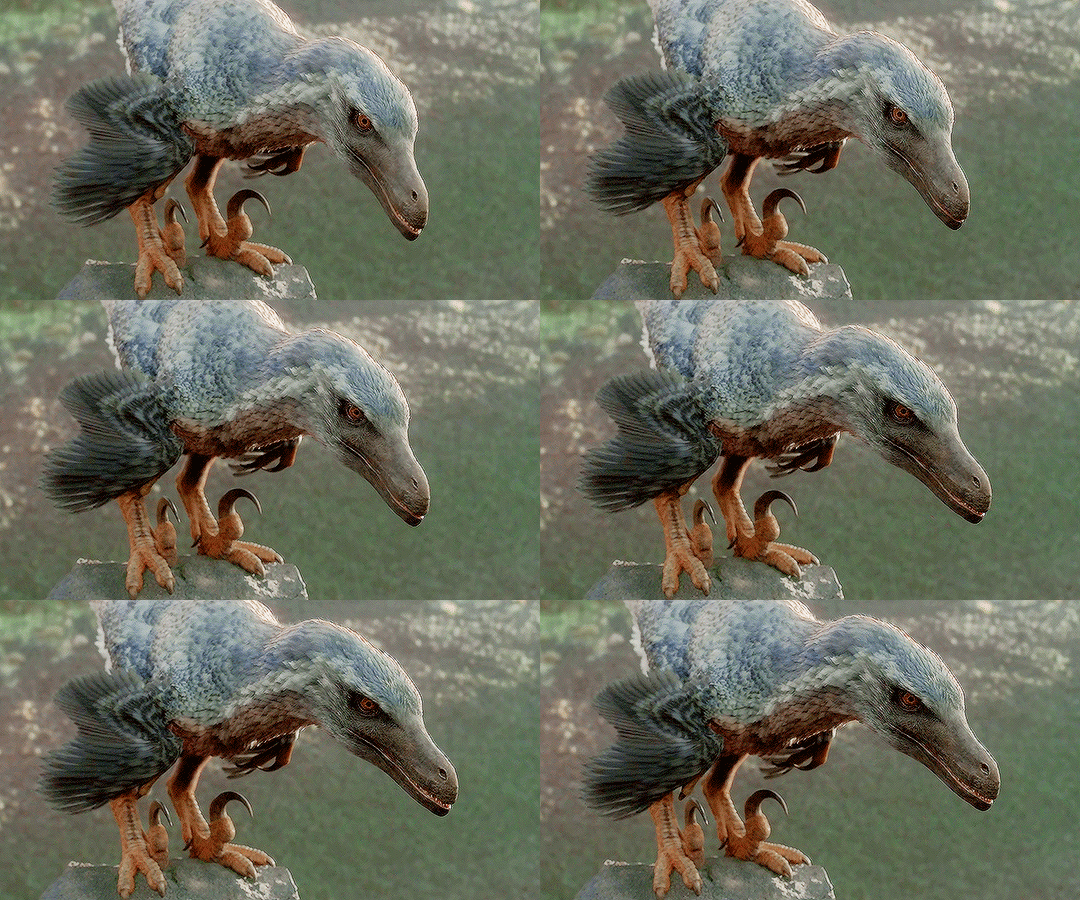
Reading Michael J. Benton’s 2019 book Dinosaurs Rediscovered: The Scientific Revolution in Paleontology is as exciting as making a new discovery. In only nine chapters, Benton takes his readers behind the scenes of paleontological research, telling not only the story of the rise and fall of the dinosaurs, but also of the discoveries and methods that have opened new horizons in paleontology since the time Benton was taking his first steps in the field. The book, like paleontology, begins with assumptions and speculations on the origin of the dinosaurs to then take the reader on a journey through the scientific advancements that brought us to our current understanding of paleontology. Chapter by chapter, Benton explains how advances in technology such as CT scans, 3D modelling, magnetostratigraphy, and computational research methods in macroevolution have helped paleontology gain significant ground towards being a “highly technical, computational, and thoroughly scientific field today.”
The first chapter narrates the story of dinosaurs’ origins, both in the Early Triassic and since the 1800s, when people started uncovering fossils and natural historians and scientists pieced together hypotheses on dinosaur evolution. For years, the consensus was that dinosaurs arose about 230 million years ago. Fossils found in Tanzania in 2010 pushed the date of dinosaur origins back 15 million years, situating them in the Early Triassic. This discovery fundamentally changed the assumptions around evolution. If dinosaurs were around in the Early Triassic, it means they did not develop as fierce competitors from the beginning. Rather, they had been around before they rose to dominance, prompting a new understanding of evolutionary forces. Instead of the competitive model for dinosaur success, widely accepted until the early 2000s, a new ecological model based on opportunism could be considered.
Just like hypotheses on the origins of dinosaurs were proven wrong by fossils found in 2010, chapter two focuses on the drastic changes brought by new fossils and methods in phylogenetic classifications of dinosaurs. From 1984 to 2017, when a new paper by Matt Baron, Dave Norman, and Paul Barrett put the old hypothesis into doubt, Dinosauria were thought to be comprised of Saurischia – further divided into theropods and sauropodomorphs – and Ornithischia. The 2017 paper, however, argued for a different subdivision, with Theropoda and Ornithischia forming one clade, and Sauropoda another. What the 2017 paper led to, finally, is the consensus that more work still needs to be done in understanding dinosaur phylogeny. Despite the substitution of a clear hypothesis for an unclear one, the lesson of the 2017 paper is, for Benton, the importance of reevaluating old assumptions.
To freshen up the cycle of change and uncertainty of the previous two chapters, chapter three illustrates the long-established methods for “digging up dinosaurs” (85), which have remained substantially unchanged because of the fundamental irreplaceability of human hand-eye coordination in fossil excavation and clean-up.
Chapter four continues the themes of chapter three by showcasing how important fossil excavation is. Fossils found in China in the 1990s, in fact, completely changed the view of dinosaurs’ life functions, shedding light on dinosaurs’ similarity with extant bird groups. Feathered dinosaur specimens opened up the dialogue around functions and behaviors of dinosaurs to new questions and therefore new discoveries. Thanks to modern technologies applied to new and old fossils, “we have learned more in the past decade about thermoregulation, colour, and behaviour than in the previous century.”
While chapter five speculates on the (im)possibilities of cloning dinosaurs using DNA like in Jurassic Park, chapter six wonders about dinosaur sizes, establishing the large size of dinosaurs as “one of the key conundrums in palaeontology” (184). Chapters seven and eight then delve deeper into dinosaurs’ foraging behavior and locomotion, highlighting how engineering tools can be applied to paleontology to learn about the possibilities of morphology in foraging and movement.
Finally, chapter nine explains various hypotheses regarding the extinction of dinosaurs, commenting on their plausibility and the history of their acceptance and rejection. The key take-away of chapter nine, I believe, is that scientific understandings have a lot to do with beliefs. In the 1970s, in fact, despite the fact that the fossil record proved that a mass extinction had happened at the end of the Cretaceous, scientists were skeptical of the theory for “fear of catastrophe, fear of numbers, and fear of ridicule” (257). The understanding of the fall of the dinosaurs is a long history, and a useful appendix, where extinction hypotheses are listed together with their year of conception, concludes the book.
Overall, Benton’s book was much easier to read than I had anticipated. Since dinosaurs are not my primary interest, I was not too excited to read a book heavily focused on their evolutionary history. I have to say, however, that I learned a lot from Dinosaurs Rediscovered, and I believe anybody with an interest in science or natural history will find this book highly entertaining and insightful. For dinosaur-enthusiasts, this book will be that and more, but I think the strength of Benton’s writing is its ability to captivate the attention of readers who are not already truly interested in paleontology. Every chapter includes anecdotal narrations, which make the book more pleasurable to read. The human aspect of paleontological research is key in Benton’s book, with accounts of how he and his colleagues have thought through hypotheses and evidence to lead us to today’s understanding of the past.
I do believe that throughout the book, however, Benton could have done a better job at highlighting the exclusionary aspects of paleontology. Although mentions of paleontological work done by women appears at times, nowhere in his book does he acknowledge the white- and male-dominated nature of the field.
I encourage anybody interested (or not) in the history of scientific and paleontological research to read Benton’s book. It was honestly an exciting read which made me feel like I can take on any read in scientific fields I do not have much knowledge in and find an interest in it. I would rate Dinosaurs Rediscovered 4.5/5 stars.