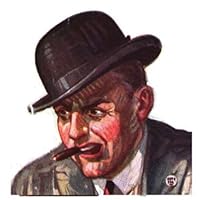
Jerome Weidman’s enduring classic novel about life in New York’s cutthroat garment district
Just south of Times Square, more than six thousand manufacturers of dresses are crammed into the few blocks that make up Manhattan’s garment district. Their factories are cramped, noisy, and incredibly profitable—and Harry Bogen is going to take them for all they’re worth. A classic conniver, he knows that it’s easier, and a hell of a lot more fun, to turn a buck by lying than by telling the truth. First he convinces the shipping clerks—the pack animals of the garment industry—to go on strike. With the dress manufacturers brought to their knees, Harry will be there to pick them up again. His conscience might be conflicted, if he had one in the first place. A bracing comic sensation when first published, I Can Get It for You Wholesale remains a timeless masterpiece—its hero still a scoundrel, and his charm as irresistible as ever.
Jerome Weidman was an American playwright and novelist. He collaborated with George Abbott on the book for the musical Fiorello! with music by Jerry Bock, and lyrics by Sheldon Harnick. All received the 1960 Pulitzer Prize for Drama for the work.
The first generation of 20th century immigrants to New York City underwent a remarkably difficult transition to ‘The American Way’. By grit and luck they survived and clawed their way out of their Lower East Side slums to the relative splendour of The Bronx. They didn’t get rich but they were on the ladder of at least modest prosperity. They had lost only a nominal, often hostile, homeland and perhaps the stifling culture of an isolated shtetl. Their new life more than compensated for the loss.
The cultural calculus for the next generation, however, is less than clear cut. These children of immigrants know nothing of the historical community that produced and sustained their parents. What they do know is what it’s like to be on the bottom of an economic and social system which offers ‘opportunity’ but only at the price of cultural identity. They have assimilated the disdain for the foreigner that they have experienced for their entire lives.
And that includes the foreigner that they know themselves to be when they look at their own families. Their parents survival is not something they can hold as a success. They refuse to settle for lower middle class respectability. They hate the system that demands that they conform to its ethos of the moral and economic jungle. But they also hate being considered less than worthy of being part of that system.
This is the point at which the immigrant family becomes truly naturalized - when it’s children become alienated from whatever residue of culture they may have received and embark on pursuing the ambitions they perceive America wants them to have. These they adopt along with the ruthless guile appropriate to their reality. They scheme, lie, cheat, and double-deal because those are the practical skills required.
Harry Bogen is Weidman’s second generation protagonist. He is a clever, sarcastic, entirely amoral entrepreneur whose aim is to beat the system by exploiting every weakness he can find in everyone he knows. He exploits his business partners without mercy; hates the children of all other immigrants equally, including those of fellow-Jews; spouts casual racism as a mark of American sophistication; and is pathologically misogynistic to all women.
Except that Harry apparently loves his mother. He is devoted to her with a Freudian intensity that is disturbing. Interestingly, Harry never mentions why; he never mentions his childhood at all except to lament his father’s lowly position. Harry’s mother is for the reader an entirely symbolic being whom Harry adores and showers with presents. He buys her stylish dresses and fur coats. He wants her to frequent the beauty parlour and keep herself looking young. He wants to bask in her loving presence while she feeds him blintzes (his only cultural connection to the family’s past). She worries about how he’ll cope when she’s gone. She fusses over him continuously; waits for him returning from work while leaning on a pillow on the windowsill; criticises his business morals, gripes about his lack of suitable women-friends.
There are clues that this mutual devotion masks something deeper though. Why does Harry despise women so intensely? Why does the facial similarity to his mother of a girl he’s introduced to by her generate incipient violence against her? Why does Harry feel it necessary to buy his mother’s affection with such overt bribery? To what extent is his mother complicit in his alienation from the very culture and history she represents? There are layers of personal history that Weidman doesn’t reveal explicitly. But these too are part of Harry’s second generation neuroses. His relationship with his mother is the flip side of his business maliciousness; both have the same hidden source.
Weidman has written a very sophisticated fictional case study of this second generation condition. The book is almost entirely dialogue, mostly involving Harry’s nefarious schemes about either business or sex, interspersed with his real thoughts, always sarcastic and demeaning, about the people he comes in contact with. His slipping in and out of Yiddish-English idiom to demonstrate the gap in experience between Harry and his mother is masterful. And Weidman’s knowledge of the New York rag trade of the 30’s creates a social commentary of considerable worth in its own right.
This is a sort of Jewish Noir version of Dreiser’s An American Tragedy. It is a better book than Dreiser’s in technique, development and implicit themes. Weidman seems to be one of those writers who have been largely forgotten because they are simply too painful to remember. Harry Bogen is not merely a second generation immigrant corrupted by ‘the system’. He is an American Everyman who perceives in some way that what was lost in becoming assimilated was perhaps worth more than what had been realised at the time
Harry Bogen has to be one of the most loathsome characters I have encountered in fiction in a long time. A transformed Gregor Samsa seems more appealing. But in the age of Trump, no doubt there is an abundance of Bogens around, including in the Administration.
Well maybe not "neglected". People who have read pre-war Depression-era American fiction know this book. Heck, Hemingway and F. Scott Fitzgerald knew this book. People who treasure "New York business noir" movies and plays, and the books they're based on, from "Sweet Smell of Success" to "Man in the Grey Flannel Suit" to Rod Serling's "Patterns", to John O'Hara's "From the Terrace", know the dramatized version of this book.
So, maybe the caption of this book review should be "Books That Still Resonate". Because even though this book is set in New York's garment district in the 1930's, its lessons, insights, humor and dramatic power can easily make the jump to Silicon Valley. Just change street-hustler-businessman-salesman to "entrepreneur" and you're almost there. This book made a strong impression on me when I read it as a young man in the 1950's; its message fits the Facebook generation just as well.
Harry Bogen, unscrupulous heal, conniver, back stabber and almost gleefully unethical shark, is a man for our times. In 1937 the garment district was a powerful engine behind New York city's prosperity. Today the juice has switched to Wall Street, but the players remain remarkably close to type. You can read this as a nostalgia piece I guess, but I suggest that it is as pertinent to today as the morning headlines.
There is a reason why this book has survived while others like it have languished and drifted out of memory. The writing is sharp; dialogue is crisp and loaded with meaning and color. Harry Bogen may be the villain, but as the central character his energy and lust for power and success jumps off the page and drives the narrative. Because the characters and themes are authentic and because the tale is timeless, this book is important, relevant and valuable. It is good to have it available again.
Please note that I received a free advance ecopy of this book in exchange for a candid review. Apart from that I have no connection at all to either the author or the publisher of this book.
Set in New York's garment district. The main character, Harry Bogen, is a total schmuck. The sexism and sexual harassment in this book are amazing. He'd fire any secretary that wouldn't put out in a heartbeat. He makes quite a lot of money running crooked businesses and spends it all on shiksas. His good Jewish mother wants him to marry a nice Jewish girl, Ruthie Rivkin, but Harry seems to be determined to rid himself of all signs of his Jewishness. To the point where he even calls his business partner a hebe at one point. He is the definition of unscrupulous, incarnate. I must say, after I got used to it, I really started to enjoy the language though. He has an amazing, over-the-top, comic dialogue style that makes the book really move. They apparently made it into a musical with Barbra Streisand and Elliott Gould in 1962, before they were famous.
Written in 1937, I Can Get It for You Wholesale remains as fresh today as when it was first published. Set in New York's garment district, it chronicles the rise of Harry Bogen, who will stop at nothing to make as much money as he possibly can often crookedly, and in doing so betraying those closest to him.
Although Harry is not the most likeable of characters, we are drawn to him through the fast paced, witty, first person narrative. The novel is as relevant today as it was in the 30's, dealing with a man's greed and lust for money and power, which overrides anything else in his life. A classic read.
Well, apart from the fact that the protagonist was a wee bit of a sociopathic conman, and the archaic slang was wearing, hey, not a bad book. I can see how this style of writing was a departure from the style of the time and led to the modern novel, and that was interesting. I'm not interested in reading more about Harry.
So well written. Both funny and incredibly sad. Harry Bogen is the ultimate con man. Such a fascinating examination of the American Dream and the lengths that someone will go to achieve it.
I Can Get It For You Wholesale by Jerome Weideman – not as majestic, august as Kingsley Amis http://realini.blogspot.com/2022/06/t... but a wonderful comedy nonetheless
9 out of 10
It might be of some of interest to look for the recommendation, where was it that Jerome Weideman and this mirthful volume were suggested as reading material…it could be on the Ninety Nine Best Novels as complied by Anthony Burgess, creator of that monumental, divine Clockwork Orange http://realini.blogspot.com/2014/06/a... and this is the moment to make a note and take this magnum opus again, for it is sublime and one of the best books you can read.
However glorious Anthony Burgess was as a novelist, it appears that as a critic he might have been too generous, as stated in another superb work, The Belles Lettres Papers http://realini.blogspot.com/2022/05/t... by Charles Simmons, which gives readers an insight into a hilarious publication, where degrees are from William and Harry, a Parvenu editor thinks Women in Love was written by…Lawrence of Arabia, no I think he confused the author of Lady Chatterley’s Lover with the famous adventurer, the central figure in one of the best films ever, actually, one of the best five
Harry Bogen is the hero aka antihero of I Can Get It For You Wholesale, a young man that had worked as a shipping clerk in the garment industry, but seeing that he is extremely intelligent, brave, resilient, creative – he actually has most of the Character Strengths identified by the co-founder of Positive Psychology, Martin Seligman http://realini.blogspot.com/2023/04/m... - he decides to open a business to deliver packages for the companies that make clothes.
In order to get his foot in the door, he organizes a strike of the shipping clerks, so that he can take advantage of the pressure that will mount, the garment industry bosses need to ship their creations, but the men that had done that, have stopped work, following the cunning, but also ruthless, cruel plan of our main character, which will make hundreds of men (there was no woman doing this kind of thing, we are talking about one hundred years ago, or more) redundant, losing their jobs because they have been cheated by Bogen.
There is another side to the hero, he loves his mother with incredible devotion…in fact, as this is placed on the screen, the word incredible does not look appropriate anymore, because there is that ‘balance’, if one is munificent and writes masterpieces that stand the test of time (so far, but what with Woke, Cancel Culture, many of the imperil names might be thrown at the dustbin) we could also find that he (mostly men, again, and they were the monsters) some of the giants were ferocious http://realini.blogspot.com/2014/06/i... this is the book to read, if one likes horror stories.
Leo Tolstoy, Henrik Ibsen, Ernest Hemingway, Jean Jacques Rousseau have been atrocious in their private lives, the latter left his children at the door of the orphanage at a time when nine out of ten died in this situation – Harry Bogen has the entrepreneurial instinct, he can play around with complex schemes, makes money out of the delivery business that he opens, also sees when the competition will move in and kill his profits, only he is heartless when dealing with partners, anyone to do with business…
Just as he is tender, caring, devoted to his mother, there is no feeling in his relationship with Tootsie Maltz, furthermore, when the writing is on the wall, and Bogen understands that the delivery firm will enter tempestuous waters, and then it will sink, so he does not just abandon his partner, a loyal ‘chump’, but he takes all the latter has as savings, for his share of the company, lying that the doctor has diagnosed a serious, terminal disease, only to work on a new scheme, launch another venture, with two other fellows.
Understanding that the big profits go to the manufacturing outfits (until of course cloths making moved to China, then to places like Bangladesh, Vietnam and other hubs for the industry over the past decades) Harry Bogen talks to Meyer Babushkin, who is the best designer in the city, and to Teddy Ast, the latter being the top salesman and with the two of them, Apex is opened, to fantastic success
Nonetheless, Harry Bogen makes awful decisions, in his personal life, he rejects the nice girl that his mother has introduced, apparently because she looks…Jewish in large part, then he seems to want to keep his independence (he is also Jewish and has a perspective that share, that Semites are born smart) and opts for an actress that is interested mostly, if not exclusively in his money, and on the financial side, disaster is looming.
The garment business is flourishing, for the hero has a knack for what works, he soon has the insight that they need to move into what we call today haute couture, more expensive clothes, where the ‘real’ profits are made, but once this success is guaranteed (if anything is) Harry Bogen takes the wrong turns, spending a fortune – we have the wisdom of Charles Dickens http://realini.blogspot.com/2021/01/a... - who said Annual income twenty pounds, annual expenditure nineteen pounds nineteen and six, result happiness…Annual income twenty pounds, annual expenditure twenty pounds nought and six, result misery…”
The firm brings in a lot of revenue, but our protagonist pours out cash even faster, aiming at diamond bracelets, a super car for himself and another one for Martha Mills, a life style is beyond the possibility of a still new enterprise, and furthermore, Bogen resorts to illegal machinations (Trump comes up as a real life example) and he transfers money out of the company, into the personal account of Meyer, so that the time comes when the contractors are not paid and they initiate drastic measures (spoiler alerts were needed maybe) and the adventures of the extremely smart Harry Bogen may entail some very nasty outcomes http://realini.blogspot.com/2022/02/u...
A note by Realini the Revolutionary – the link to the Newsweek article about the rebellion that took down Ceausescu is here http://realini.blogspot.com/2022/03/r...
I was very disappointed in this. I went into it thinking it was going to be an expose of the garment industry similar to what Upton Sinclair's The Jungle was to the meat industry. It wasn't. It was page after page after page of smart-alec remarks spewing from the mouth of a psychopathic, misogynistic, money-grubbing huckster.
I realize it is a story of its time. There are many good stories of this time. This is not one of them. This is a story with a main character I don't care to spend time with, a story with a writing style that borders on the inane, and a plot that is predictable, boring, and ultimately pointless. In short, it is not a story worth reading.
There's a second in the series. I will save myself the bother and eye-time by not reading it.
I revisit the music of this show every so often, but never read its book. Predictable scenario. I was more interested where the Streisand character fits in the show.
Harry Bogen is an awful, awful man, yet that manner in which the author presents the workings of his mind motivates the turning of the pages. Passages I enjoyed below.
"...and walked toward me like his ass was made of cake and he was afraid to crack the icing" (49). "It was always that way when she was around. It was like putting your arm on a log after a tough swim. That's why I didn't like to see the gray hair. It scared me a little to think that some day there wouldn't be a place to reach out and touch and draw a deep breath and rest a while" (79). *Thoughts on his aging mother. "...he looked like something the cat forgot to drop at the door" (91). "He was just yellow, that's all. And I was playing substitute for a backbone" (107). "He had a breath that an exterminator would have paid to bottle" (174). "If it didn't add up, then the hell with arithmetic, that's all" (231).
If the author's motive was to try the reader's patience, he succeeded. Assuming it would get better soon, I read this entire waste of good ink! I hope this will save you the time investment!
An oldie but a goodie - a rags-to-riches story set in the NY rag trade in the 40s. Brilliant insight into the corrupting nature of greed. It had overtones of that excellent noir movie "The Sweet Smell of Success" (Burt Lancaster, Tony Curtis).