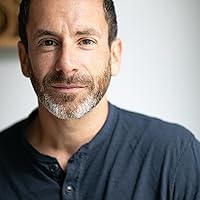
Andrew Wilkinson, touted as the Warren Buffett of tech, pulls back the curtain on the lives of the ultra-rich in this memoir outlining Wilkinson’s rapid rise from barista to successful entrepreneur.
Readers will get fresh insights into building a successful business and a surprising, first-person account of what it’s actually like to become a billionaire.
By the age of thirty-five, Andrew Wilkinson had built a business worth over a billion dollars, but his path to success was anything but a straight line. Never Enough shares both the lessons Wilkinson has learned as well as the many mistakes made on the road to wealth—some of which cost him money, happiness, and important relationships.
Taking a “no secrets” approach to the story billionaires rarely tell, Wilkinson is unwaveringly honest about some of the unexpected downsides of wealth. Money’s toxic effect on personal relationships, how the lifestyles of the rich and famous aren’t all they’re cracked up to be, and how competition with peers leaves everyone—even billionaires—feeling like they never have enough.
In this rare and deeply honest glimpse into the life of a billionaire, Wilkinson examines not only his journey to nine zeros but also what comes after that pinnacled number—something, as Wilkinson has come to realize, that money can’t buy.
Andrew Wilkinson is the founder of Tiny, a Canadian holding company that owns over 40 businesses ranging from Dribbble, a social network for designers, to the AeroPress coffee maker. Tiny buys wonderful businesses from founders and holds them for the long-term. Andrew successfully bootstrapped the business from zero to hundreds of millions of dollars in value and still holds majority ownership. He has committed to give away at least half of his fortune via his foundation, Tiny Foundation, which is primarily focused on global health, investigative journalism, non-profit reform, and medical research. He lives in Victoria, Canada.
This is not a business or investing book. It's not a self-help or life philosophy book, for sure. It's an autobiography written by a 38 year old. Elegant tight prose about a life story that stands out, entertains and has few lessons to teach along the way.
A flawed childhood, money-related anxiety, fragile relationships and spending insecurity - there is some misery in everyone's life and wealthy are not different.
We, humans, evolved to push, to strive, to stress and rarely be satisfied. Dial it up to eleven and you'll get a seasoned entrepreneur - a mad squirrel with dozens of trees full of nuts and yet still freaking out about the upcoming winter.
After all those tribulations, the book ends on a constructive, bright note (no spoilers!).
Nothing groundbreaking in here, but absolutely worth reading. Main takeaway is that more money / success / stuff / fame, etc. won’t make you happy. In fact, these things come with real cost (like maintaining all the stuff, everything you do in the public eye, and needing to hire security to protect yourself). You won’t be happy until you decide that you truly have enough.
I probably would not have bought this book if not for my personal connection to MetaLab as the place I jumpstarted my career as a teenager many years ago. In all honesty, I expected to poke fun at it. An autobiography from this guy from my hometown that made a bunch of money? Really?
Well, then I read it in its entirety over the course of two consecutive days.
Maybe it was the "barista to billionaire" title that made me think this was going to be some self-aggrandizing manifesto. But this book was not what I expected at all. It's is a winding road through the inner monologue of someone grappling with the burdens of success, recounting the wins, sure, but also the failures--the low points, the struggles, the stress, the guilt of inequity... Mistakes laid bare so the wisdom can be shared.
I actually enjoyed it.
The first half of the book was interesting for me mostly for the lore -- the origin story that intersects my own. What really captured me, however, was the latter half...
All in all, "Never Enough" surprised me. I came in a skeptic, and left with sympathy. Maybe there can be some good billionaires after all.
However, I lost $21.60 on my $40 investment in Tiny's stock when they went public. Ignore everything I said above; I can never forgive Andrew for this.
Simply put, this is a book about what to do when you dont have enough money! And then, what to do when you think you have too much! Duh!!
What makes it read-worthy is the story of Andrew Wilkinson, the author and a Canadian tech investor who likes to style himself ala Buffet-Munger, which happens in between!
Born in a middle-class family, Andrew goes through childhood with the knowledge that he and his family (are not poor) just dont have enough money to enjoy the privileges of life that they’d want to. He sees his hard-working father’s internal and external struggles between desires and financial ability contrasted with his mother’s strong constitution - meticulous to a fault when it comes to managing the family’s finances.
Someone told me recently that the ‘feeling of denial’ is a much more powerful motivator than the desire for achievement. It is that ‘feeling of denial’ combined with a fear that he may end up like his father / family - just not having enough - that drive Andrew as he traverses from a $6.5 / hour barista to a web-developer to a business owner and then owner of many businesses (from nothing to too-much!).
As successful entrepreneurs, Andrew (and his accidental yet permanent partner, Chris) realise that the key to any business is a certain amount of laziness - i.e. figuring out a better (more efficient) way to deliver on a customer’s need!
“A business, even one run by a twelve-year-old, is at its core about solving problems for other people.”
As Andrew struggles with managing his venture, he is miserable as CEO doing the same things that he abhors, day after day, including wining and dining with clients, following up on project delivery, ensuring clients pay up on time, and so on.
A forced vacation leads Andrew to an epiphany:
“…there is always somebody else who loves the job you hate.”
You just gotta find them!!
As he makes more and more money, Andrew finds himself on the ‘hedonic treadmill’ (love the phrase!!) - one that you get on when you start seeing more money than your immediate needs are! He tries to buy his way to happiness, but ends up with the empty stomach feeling constantly!
Faced with the vagaries of business, he realises the need to learn about saving and investing, marking the entry of Munger and Buffet (their books and writings initially) into his life!
Even before Andrew meets Munger, Munger’s advice changes their life - “invert, always invert!” Munger said “problems are often easiest solved in reverse” and explained that it’s much easier to think about what you don’t want than what you do. So they follow Munger’s advice and remove (reduce) things from their life that they hate. When I say remove, i just mean they find someone else who ‘loves’ to do those things!
“It’s not enough to do what you love. You also have to stop doing what you hate.”
And then they meet Munger! This is truly the twist in the plot though not in the manner Andrew would have ever imagined! They follow-through on the process of inversion and decide to decline Munger’s business proposition. Who does that!!!
The story starts with his childhood anxiety of ‘not having enough’. The story ends when Andrew loses this anxiety and realises that he finally has more than enough.
Herein comes the guilt-trip - of having made it while others along the road didn’t!
This is when Bill Ackman, a well-known hedge-fund investor and their friend, introduces Andrew to Warren Buffet. And with Ackman and Buffet’s guidance, Andrew decides what to do with his ‘more than enough’ wealth!
Overall, the book is quite fast paced and very engaging. Andrew paints a vivid picture of his early life and of key moments in his journey to ‘more-than-enough’. He brings out his own shortcomings and naïveté through the process. Every chapter has some insight and learning for the reader.
The book falters a bit in the last chapter when it becomes prescriptive on what one should do when they have ‘more-than-enough’. Maybe that’s because one is not in the shoes of Andrew Wilkinson or maybe one has different views of these matters.
But let that not take away from an absolutely delightful read for people in the world of business, finance or otherwise.
I was very disappointed in this book. Most of it is a humble-brag: •”I know Charlie Munger, Bill Ackman, and Warren Buffett” •”I have it all; don’t you wish you were me?” •”I bought my poor dad an airplane.” •Yada yada yada
At the end of it all, he’s just like them; divorces his wife, gets a hot new girlfriend, has a jet and 4 houses, etc
Then, his new buddy Warren Buffett talks him into giving it all away, so we’re all supposed to now worship him.
Couldn’t wait for this book to end.
This entire review has been hidden because of spoilers.
Andrew Wilkinson (b. 1985-6) is a Canadian businessman and former billionaire now in his "wealth redistribution" phase. His memoir Never Enough tells about how he got his start in business founding many startups, failing a lot, succeeding massively sometimes, getting screwed over a few times, and being stupid with how he spent money and treated important people in his life a lot of other times. Unlike the subtitle's assertion, the "barista" stage of his career was quite short; by Wilkinson's early 20s he was already a startup founder making bank, and could have been set for life if he had made better financial choices and had clearer priorities then. Wilkinson narrates his tale with blustery bravado usually akin to the most egotistical contestants and shark investors on the Shark Tank franchise before coming to the realization in his mid-30s and after divorcing his first wife that money isn't, in fact, the end-all-be-all, and that the more one inflates their lifestyle, the more money and frustration it takes to sustain it (basically, "mo money, mo problems"). In the end, he discovers Peter Singer's effective altruism (because it went so well for Sam Bankman-Fried) and claims he's a reformed billionaire now. We'll see if it sticks or not. For any fellow MBTI aficionados here, this book reads like a classic ENTJ character arc reaching a midlife crisis point of discovering their feelings.
Money is a funny thing. The skills needed to make it, grow it, and spend it are entirely different, yet we're mostly taught to work hard/smart and hustle to earn it. Once you start making money, you learn about growing it through investments/savings. blah blah. But we're rarely taught how to spend it, other than receiving generic advice like "be frugal" and "don't spend beyond your means."
When it comes to spending, I often find myself deep in Internet rabbit holes, exploring how wealthy people manage and spend their money. Andrew Wilkinson is one such figure I've frequently encountered in the podcast circles of Shaan Puri, Tim Ferriss, Ramit Sethi, Sam Parr, and others. Curious about his story, I picked up this book, and it turned out to be a damn good read.
Andrew has rubbed shoulders with some of my favourites, like Charlie Munger, Warren Buffett, and Derek Sivers. The book is well-produced, with a smooth narrative, the right hooks, and a tone of authenticity and groundedness. I sense that the real truth lies between the lines, in what’s left unspoken. For example, the book doesn’t delve much into his divorce, the perspectives of his critics or any flaws. Narrative fallacy is an in-built feature of memoirs, so we must trust our taste and intuition to make sense of what's presented.
Knowing all these, I still found the book interesting and enjoyable. Your mileage may vary, but if you enjoy business-related stories and memoirs, try it.
I have followed Andrew Wilkinson on twitter for a long time and have greatly admired his business insights and thoughts. His book is a self-bio on lessons learned from his insane business career and the realization that, despite becoming a billionaire, money cant solve happiness or fulfillment.
This was a good book for me to read, as the way he approaches his business career is often how I think I would like my own career to be. But, similar to a lot of other books Ive read in the last two years about great business people, it seems very challenging to get both a great family and social life, and a great and successful business life. There seems to only be room for 1 or the other!
I do like his philosophy of organizing your life not just around the things you love, but also specifically avoiding things you hate as well. Doing everything you can to optimize and build around both of those things.
It was a good memoir-style book with a couple business tips. For the most part it’s an enjoyable read. But felt out of touch when he described the woes of being a multi-millionaire.
I appreciate the general arc of his journey, from insecurity and superficiality to basic self reflection and a hint of morality, but mostly it is an ego stroking humble brag.
I just happend to accidentally meet this book and not sure what made me buy it. The story from the title and the blurb sounded too sensational.
I am so glad I came across this book. Andrew has been open , quite honest ( a little more than many ) and very vulnerable, about his journey. You can see all shades of him being hardworking, risk taking, big bets. Tough times, being stupid , jealousy , anger and even when he was a prick and you hate him for his actions .
A story worthy of your time and will make you think and reflect on your journey. His success is real and so are his failures and insecurities. Personally Andrew is one of those people who I would like to meet someday and have a conversation with . I enjoyed the read.
"Така лъсна една важна истина за интернет – че всеки, абсолютно всеки с малко пот и кръв, някоя и друга лъжа и голяма доза късмет може да основе компания."
Всъщност едва ли щях да обърна внимание на „От бариста до милиардер“ на Андрю Уилкинсън, не ми бе познато името му, но подзаглавието ме подмами: „Истината за амбицията, парите и празнотата след успеха“. Звучеше… искрено, което не е точно думата, с която бих свързал повечето привидно скромни мемоари на успели бизнесмени. И добре че я зачетох – това е една от най-добре разказаните лични истории, на които съм попадал, пълна не само с разкази за успеха, но и за неговата в крайна сметка наистина висока цена, както и доволно количество примери за така нужни и балансиращи самохвалебствията провали. Книгата дори толкова ме увлече, че по време на премиера, на която трябваше да присъствам, се измъкнах тихомълком от залата, свих се на един стол в коридора и си четох в захлас до края на събитието, не се случва често нехудожествена книга да ме увлече чак толкова.
"Откакто се помня, искам да съм някой. Някой, който има достатъчно."
I love a good founder story, and Never Enough didn't disappoint. Some points resonated, like him being one of the first to create Shopify themes. I bought these before and use Shopify daily.
The part about billionaire competition really stuck with me. On a fundraising tour, he met millionaires unhappy because their house was smaller than their neighbor’s, and billionaires comparing themselves to Jeff Bezos. All unhappy, with not the slightest bit of satisfaction. We all have a bit of “mimetic desire,” but it’s also good to “look down” and appreciate how far you’ve come.
What I appreciated most was how he later rewarded his early team. Back then, choosing a slightly bigger paycheck over equity made sense—none of them could have known the company would file for IPO years later. But after reflecting on his own wealth, he made a list, went back and gave them life-changing money. He didn't have to, so that stood out.
Honest book with the struggles and good reflection.
I never heard of Andrew before reading this book. The premise sounded interesting - self made billionaire realizes he’s tired of chasing money for moneys sake, advocates philanthropy and luxury minimalism. Cool journey, but I found the individual chapters (especially the early ones) hard to get into because I didn’t know anything about his companies or business partners. I found myself trying to Google for additional context or back story, especially with partners you have a bad feeling about as they’re introduced but then wait a few chapters to find out if you’re right. I had this on digital loan from the library and it expired 3x before I finally finished it.
Unless you have a keen interest in the life and becomings of Andrew Wilkinson, or are very interested in anecdotal experiences of entrepreneurship wins and losses, I didn't find a whole lot to connect to in this book. There were small bits and pieces that touched on the psychology of wealth, upsides and downsides it can have on one's life, and less-that-fleshed out ideas of what it means to be ethical when one's net worth becomes atypically inflated, but nothing that requires a full book to understand and/or appreciate.
Didn't love it. A lot of bland anecdotes about meeting famous business people, figuring out how to make a lot of money without sharing much of the details, getting really wealthy really quickly, deciding the love of money was gross, giving money away, and then it's over. One mild takeaway was that the pursuit of money for money's sake is not healthy or rewarding.
Self-congratulatory story disguised as a cautionary tale. The author says he's learned how there's more to life than work / success, then spends the whole book humble-bragging about how rich and successful he is. I dont understand why this book has 4 stars and I would not recommend it
Audiobook: episode 2 of my billionaire memoir arc. Though, I believe that wealth inequality is getting out of control, I also want to have a long successful career in business. These two ideologies seem to be in opposition.
I started reading these memoirs of hyper-successful people to help satisfy this dichotomy. Is this level of success achievable while still maintaining a fulfilling personal life? Are all billionaires greedy psychopaths who are willing to do anything to get rich? This book has been very influential in helping answer these questions.
The common theme between the two memoirs i’ve read (Wilkinson and Caudwell) is they both started doing business in their late teens/early 20s and as they started becoming successful their personal live suffered drastically. My theory is that because they spent so much time working, they didn’t have much opportunity to develop themselves which may have lead to the issues they had in their personal lives. Both success and personal life need to be nurtured, if you go for one at the expense of the other then the neglected one will suffer.
Perhaps you believe that somebody who sacrifices their personal life is a psychopath. I would argue, after reading this, that this is not the case. From what I could tell, Wilkinson is a mostly normal person who stumbled into success. Right place, right time. And though he did spend his money selfishly, he was mostly driven by the same things most people are i.e to escape anxiety around money.
But I didn’t give this a 5 because it gave insight to the two questions I posed earlier. I gave it 5 because of how it frames business and money as tools to help people and solve problems. Pursuing things selfishly is not the optimal strategy nor is chasing hyper-success for successes sake. This frame is pivotal. I want to be the kind of entrepreneur that makes things better for everyone i’m involved with and I do not have to sacrifice integrity to do so. This is a key piece to my thinking I want to take moving forward.
Well written, entertaining and vulnerable memoir - it made me reflect quite a bit on my underlying motivations for pursuing wealth. It also served as a good reminder that money doesn’t solve all problems and can often make life a lot more complicated.
Andrew delicately balances the joys of business and investing, offering valuable insights into the fulfillment they can bring while carefully warning against the pursuit of money for its own sake.
My first impression when reading the title was something along the lines of: “Ugh, I guess it’s another self-help book in an over-saturated genre”. However, something nudged me to give it a chance, and I am very glad that I did.
It’s an autobiography of someone who went from having little to having a lot, all before turning 40. It felt very human and authentic: the humble beginnings, the financial anxiety and persistent grind to escape it; the increasingly bigger paydays, and dealing with the question of how to live with a newfound abundance - finding the way to live and figuring out when enough actually is enough. As the story of Andrew’s life unfolds, it shows both the ups, the downs, and demonstrates over and over again that big money does not really solve everything (and somehow can brings it’s own flavor of personal misery).
Overall, it was enjoyable, well written, and inspiring read.
Amazing book. Not sure if I ever finished a book in 5 days, but could not stop reading this one. I now feel even more energized to work on my own projects and myself, while in the process improve the world around me.
As a fellow Buffett-ist and Munger-ite (😆😭), I’ve followed Andrew and Tiny for some time now. But this much more personal and intimate perspective of the man. Andrew lays it all out. His insecurities, trauma, fears. Everything. And within him i think you’ll find a reflection yourself. Maybe you find peace in the message, maybe youll see turmoil.
While personally i think id already came to much of the revelations dished in the book by the time of reading it, it still is an entertaining read, as you follow andrew on his adventures of building to more zeros behind his name.
Much in line with other books like ‘Private Equity’ by Sun, ‘The Trading Game: A Confession’ by Stevenson or ‘The Counting House’ by Sernovitz.
This is an incredibly relatable and thought-provoking read that speaks to the modern struggle of chasing "more" while trying to find balance in life. As I turned the pages, I found myself nodding in agreement and occasionally pausing to reflect on my own experiences.
Wilkinson’s candid storytelling and vulnerability make the book feel like a conversation with a friend who gets it—someone who has been through the highs and lows of ambition, success, and the elusive quest for contentment. The narrative isn’t just insightful; it’s refreshingly honest, filled with moments that make you feel seen.
What sets this book apart is its ability to resonate on such a personal level without feeling preachy or formulaic. It’s not a guide to perfection but a reminder that life is often messy, and that’s okay. For anyone who has ever felt like their achievements are never enough, this book offers a comforting yet eye-opening perspective.
I truly enjoyed the read—both for its relatability and the gentle push it gave me to rethink my priorities. Never Enough is more than a book; it’s a mirror reflecting the realities of modern life, leaving you inspired to seek balance and fulfillment.
Werd mij door ik-weet-niet-meer-wie aangeraden als een atypisch managementboek en dat ik dit, ongeacht mijn kolossale scepsis voor het genre, toch eens moest proberen.
Het boek is ok geschreven, bevat voor ondernemers ongetwijfeld hier en daar een handige tip, maar tegelijk lijdt het ook aan alle symptomen die ik in de rest van het genre aantref: Jezus Christus, moet je miljardair of succesvol antreprenoer zijn om sommige van deze openbaringen mee te maken of interessant te vinden?
Ik denk oprecht dat Andrew Wilkinson een fijne mens is, fijner dan veel van de sociopaten die hij ontmoet en beschrijft doorheen zijn carrière. Ik denk zelfs dat de centrale boodschap van het boek gebracht is op een manier die zeer welvarende mensen kan doen nadenken over hoe ze moeten omgaan met die welvaart. Maar uiteindelijk maakt Wilkinson duidelijk dat hij zijn lessen moest krijgen, enerzijds uit een ander boek, één van Peter Singer, en anderzijds van zijn working-class vriendin.
Rijke mensen kijken steeds naar nog rijkere mensen en zijn niet gelukkiger dan andere mensen. Zo, dat bespaart u alweer een luchthavenboekenwinkelaankoop.
A compelling journey from ambition to introspection. I really enjoyed this book—the storytelling was engaging, and Andrew’s journey felt both personal and insightful.
I especially appreciated: • His motivation to build wealth, rooted in a childhood marked by financial struggle. • The evolution of his thinking—from the thrill of starting companies from scratch to the satisfaction of investing in great businesses and helping them reach their full potential. • His practical framework for designing a fulfilling work life, using a list of “anti-goals” to eliminate what he didn’t want and focus on what he truly enjoyed. • His honest reflection on the moving goalposts of success, and how—even after surpassing his wildest dreams—he struggled with the feeling of never having “enough.”
It’s a thoughtful read for anyone interested in the intersection of entrepreneurship, ambition, and self-awareness.
Is it possible to be a good billionaire? Andrew wants you to think so, but I’m not convinced. The writing was way better than I expected, and the first half riveting. But I left the book feeling mostly empty with the same resentments (not aspiration) towards billionaires. It’s not that I don’t think they have problems (obviously they do) but the system is so brooooooken. And this book just sort of makes me sad, despite how he tried to end the book.