Fighting Nathan Bedford Forrest in North Mississippi During the summer of 1864, a Union column commanded by Maj. Gen. Andrew Jackson Smith set out from Tennessee with a goal that had proven impossible in all prior attempts―to find and defeat the cavalry under the command of Confederate major general Nathan Bedford Forrest. Forrest’s cavalry was the greatest threat to the long supply line feeding Sherman’s Union armies as they advanced on Atlanta. Joined by reinforcements led by Lt. Gen. Stephen Dill Lee, Forrest and his men were confident, and their morale had never been higher. However, for two weeks, Smith outmarched, outfought, and outmaneuvered the team of Lee and Forrest. In three days of bitter fighting, culminating in the battle at Harrisburg, the Confederates suffered a staggering defeat. Work for Giants focuses on the details of this overlooked campaign and the efforts, postbattle and postwar, to minimize the outcome and consequences of this important Union victory.
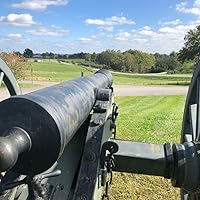
In the summer of 1864, A. J. Smith took a little army into Mississippi where he spent several days engaging with a large force of cavalry under S. D. Lee and Nathan Bedford Forrest. Unless you're a serious Civil War buff or a Forrest fanboy, you've probably never heard of the Battle of Tupelo, which was actually fought in what was then the ghost town of Harrisburg. The latter had been practically abandoned when the railroad bypassed it shortly before the war. The battlefield isn't preserved, though there is a little park at an intersection in Tupelo (which has expanded substantially since 1864) with a few cannons and monuments.
Although this book does not cover the Battle of Brices Crossroads which preceded it (a battle that very much needs a modern study like this one), I've never read a book about one campaign where a preceding campaign looms so large over it. An even bigger constant for this campaign is the brutal Mississippi summer heat.
The titular battle covers less than a third of the book. However, the climactic battle, which was a bloody disaster for the Confederates due to a series of uncoordinated assaults by dismounted cavalry against infantry in good defensive positions, mostly took place on a single day. But the middle act is really a series of skirmishes, feints, attacks, and rear guard actions covering five days and at least 25 miles.
The author thinks highly of Smith's performance, especially in the face of logistical issues (ammunition and food) that cut the campaign short. Forrest's performance, particularly during the main battle, is perplexing. At best, he was physically unwell (he suffered from boils). At worst, he was sulking, surly, and deliberately obtuse because he resented Lee's presence. Whatever the issue, he ended being very painfully shot in the foot near the end of the final day of fighting.
The author takes specific issues with the historiography. He points out how some Confederate memoirs seem to be lies when compared with the full body of evidence. He also addresses how Forrest's blameshifting and his postwar hagiographers, plus general Confederate copium, distorted our understanding of this campaign for a long time. The author lets the sources say their piece, then clearly explains how and why he disagrees. The last chapter summarizes the major issues. This is a refreshing level of directness as too often Civil War writers seem reluctant to outright say a source is simply wrong, though in this case everyone he's taking issue is long dead, rather than any living historians.
This is a very well-written book about a little-known campaign that goes to great lengths to tell a complete story rather than rushing to get to the shooting. It lives up to its high reputation.
The particular charm of this campaign study, which examines the battle that broke Nathan Bedford Forrest's cavalry corps, is how the author painstaking details how Forrest played down to his worst tendencies of insubordination and how his usual virtues of improvisation failed against the generalship of Andrew Jackson Smith; a flinty professional who left nothing to chance and who was indifferent to reputations.
What is grimly amusing is that the "Lost Cause" enthusiasts still try to make excuses for Forrest regarding the Tupelo Campaign, and Stephen Lee as the senior Confederate commander on the spot does bear ultimate responsibility. But, at the end of the day, Forrest was commander of his corps and he chose to duck his responsibility. Had he really taken his job seriously and not engaged in a self-indulgent snit (so like the the Southern gentry class at its worst), there were opportunities to be exploited even in a very strong Union defensive position; instead of piecemeal attacks against the hard core of Smith's forces.
One thing that strikes me, in the light of what I know of Forrest's career, is that this battle might have been one of few times that he was confronted with a fair fight. Most of his actions involved taking advantage of "line-of-communication" troops who were not what one would call "first team." Smith's wing of the Union 16th Corps were as hard they came in the Union Army of 1864, and Smith already had a reputation as a "fireman," being assigned to deal with emergencies out of nowhere.
Anyway, a useful debunking of a legend on one hand, and an interesting campaign study in and of itself.
A competently done history of the Tupelo campaign, one of the forgotten 1864 operations. Parsons offers a clear narrative of operations by both the US and CS forces and of the battle and skirmishes. The provided maps are well done and useful in tracking movements. The postscript covering the major controversies of the campaign and the post-war depictions of it was very good. The one thing lacking would be a few pages on subsequent operations that summer.
An exhaustive account of a little discussed battle. At Tupelo, Forrest was at his worst as a commander. A. J. Smith comes across as easily one of the war's top 10 best commanders.
A very well done and balanced study of AJ Smith’s 1864 campaign into northeast Mississippi. Keeping with the theme of reading about under appreciated or lesser known campaigns and battles in the West, I found the author’s approach, narrative, and ultimate analysis very insightful and refreshing. Adherents of the Lost Cause will undoubtedly find this book blasphemy as it effectively makes multiple arguments dispelling the aura of invincibility often associated with Nathan Bedford Forrest and his vaunted cavalry corps. I’ve gained a new appreciation for AJ Smith’s stoic, yet decisive personality and also for the hardships endured by the men of the Federal Sixteenth Corps. The final chapter, titled “A Second Battle”, does a fantastic job of framing why reality often conflicts with what we assume to be fact. Post war writings from privates and generals alike encompass all sorts of jockeying, political wrangling, absolution and appropriation of blame, saving face, and justifying losses in battle. Many of these accounts were taken at face value in the years following the war, and the author does a great job of addressing and sifting through the multitude of falsities that have historically labeled this campaign a costly Confederate victory. The author convincingly determines the opposite is true; the campaign achieved its strategic and operational goals while tactically whipping a veteran Confederate force in a lob sided battle. I tend to agree, and thought the final sentence fitting: “It is up to the diligent researcher to pursue the facts, reject the lies, and hold fast to the truth.”
Parson has brought to light one of the forgotten campaigns that probably won the war for the Union. In a thoroughly researched, detailed, and wonderfully readable book, Parson reveals the secrets of the campaign that protected Sherman's flank in his march to the sea and sealed the fate of the Confederacy. As the descendant of CSA soldiers myself, I found the work fascinating and more than a little enlightening. Highly recommended reading for anyone interested in the real War Between the States.
I read the book producing it for Audible. This is a very detailed but very interesting account of a civil war battle in the Corinth theater. It details how General Stephen D. Lee (USA) kept Confederate General Nathan Bedford Forrest occupied in North Mississippi so as to keep him from following after General William T. Sherman and literally derailing his supply line from Nashville to Atlanta.
I think the reader gets some new perspectives on the major players: Lincoln and Davis, Grant and Forrest and Sherman, et al.
I was especially impressed by his descriptions of how both armies were affected by the July heat. General Summer was as great a factor in determining the outcome of the battle as General Winter was in Napoleon's downfall. Lots of accounts by regular soldiers as well as memoirs and battle records from officers.