Jump to ratings and reviews
Rate this book

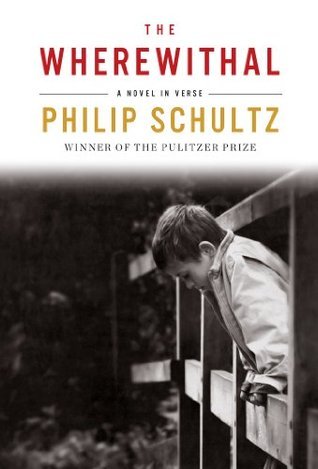
The Wherewithal: A Novel in Verse

Rate this book
“One of the strongest literary renditions of the Shoah I know.”—Saul Friedlander, Pulitzer Prize–winning author of The Years of Extermination

I, oneHenryk Stanislaw Wyrzykowski,Head Clerk of Closed Files,a department of one,work…in a forgotten well of ghostly sighsThis astonishing novel in verse tells the story of Henryk Wyrzykowski, a drifting, haunted young man hiding from the Vietnam War in the basement of a San Francisco welfare building and translating his mother’s diaries. The diaries concern the Jedwabne massacre, an event that took place in German-occupied Poland in 1941. Wildly inventive, dark, beautiful, and unrelenting, The Wherewithal is a meditation on the nature of evil and the destruction of war.

193 pages, Kindle Edition

First published February 3, 2014

3 people are currently reading
115 people want to read

About the author

Philip Schultz

17 books47 followers
Philip Schultz is the author of seven collections of poetry, including the Pulitzer Prize-winning Failure. He is the founder and director of the Writers Studio and lives in East Hampton, New York.

Ratings & Reviews

What do you think?
Rate this book

Friends & Following

Create a free account to discover what your friends think of this book!

Community Reviews

5 stars
18 (25%)
4 stars
34 (47%)
3 stars
15 (20%)
2 stars
4 (5%)
1 star
1 (1%)
Displaying 1 - 11 of 11 reviews
Profile Image for Roger Brunyate.
946 reviews741 followers
June 10, 2016
A Novel in Verse

I have read a number of novels in verse recently. There have been some classics, Byron's Don Juan and Browning's The Ring and the Book among them, and some modern examples such as Vikram Seth's The Golden Gate, James Merrill's The Changing Light at Sandover, and Derek Walcott's Omeros. And the question arises with each of them: why verse? What does poetry add that prose cannot? One obvious factor is resonance: the sense of something larger than life conjured up by the fullness of language and scope of allusion; this is true of all the examples above, although Merrill also has some rather campy fun by working against the vast range of his mythological references to play with domestic trivia. A second factor is wit; this is especially true of the rhymed verse used by Byron and Seth and occasionally by Merrill, where a finely turned phrase can skewer a point or add a sly authorial comment. And a third, though linked to the other two, is the freedom of verse to escape from the linear narrative of prose and build up a tissue of echoes and allusions in three-dimensional space. This is especially true of the more modern writers. Schultz goes farther than any of the authors mentioned above in exploring what can be achieved by largely abstract form. He is also the only one to abjure rhyme entirely. Of all of them, the term "novel in verse" is here tilted most strongly away from the traditional novel in favor of meanings that can only be achieved through poetry. Here is a tiny sample:
Down here
hidden from the world above,
wallowing in a phantasmagoria of wounds,
insults, silent and grotesque,
the Fisks and Forrios, lost
in an infinite forest of inhospitable
and ghostly echoes,
where I too find myself
alone
at the intersection of luck and disgrace,
waiting indefinitely
for a light to change.

The "I" here is Henryk Stanislaw Wyrzykowski, a Polish-American immigrant. Formerly a graduate student of philosophy at some Midwestern university until he got involved with his Professor's wife, he now works for the San Francisco Department of Social Services as Head Clerk of Closed Files, buried in a basement and hoping to avoid the draft. The year is 1968, and icons of the period reverberate in the air: Vietnam, protest marches, the Zodiac Killer, Allen Ginsberg and Timothy Leary, the Beatles. Henryk's subterranean existence is further reflected by Piranesi's engravings of prisons printed as frontispieces to each of the book's six chapters. Although the book as a whole is quite short, each chapter contains sixteen sections of various lengths, that can be aligned vertically in a kind of grid. Each section 13, for instance, refers to the Zodiac Killer. Sections 3 and 11 have to do with Henryk's accidental killing of a childhood friend named Rossy, whose father was a Holocaust Survivor. Section 15 in each chapter contains excerpts from Henryk's mother's diaries, though she herself is suffering from Alzheimer's and is becoming less and less coherent.

These last topics speak to the second major purpose of the book, to mourn the Holocaust. Henryk was born in Jedwabne, Poland, site in July 1941 of:
…the pitchforking, raping, clubbing
and stabbing to death of 1,600 Jewish men,
women and children by their Polish neighbors.
Henryk was two at the time, witness not to the massacre, but to his mother's bravery in hiding seven fugitive Jews in a pit dug under their barn. This had especial resonance for me after reading the late Peter Matthiesen's In Paradise, which also emphasizes the guilt of many Polish (and other) Christians in aiding and abetting the extermination of their Jewish compatriots, and in instances like these doing the Germans' work for them. The cumulative power that Schultz obtains by interspersing these fragments with references to America's war in Vietnam—though without any facile attempt to equate one with the other—is quite extraordinary, and could only be achieved in the verse medium. Fittingly, the poem ends with the text of the mourner's Kaddish in Hebrew.
Profile Image for Erin (Historical Fiction Reader).
447 reviews725 followers
October 23, 2025
1968 finds Henryk Stanislaw Wyrzykowski hiding out as a clerk in the basement of a San Francisco welfare office. Secure in his clandestine sanctuary, Henryk spends his days filing paperwork and translating his mother’s diaries while dodging Uncle Sam and the horrors of service in Vietnam. What unfolds is an increasingly disordered and bizarrely attractive illustration of personal delirium and the human condition.

The parallel story lines - the mental deterioration Henryk suffers in his solitary existence and that recognized in his mother’s memories of the Jedwabne pogrom – struck me in a way that is difficult to describe. The delusions these characters construct within their minds are powerful and somewhat disturbing, but they take on an almost hallucinatory quality, as they are rendered in Schultz’s disordered and haunting prose.

A deliciously dark commentary, The Wherewithal is an extraordinary allegory that deftly elucidates the nature of evil, the impact of war, the power of the human mind, and the unsettling idea that we are each our own devil and we make this world our hell.
Profile Image for Adam.
105 reviews14 followers
August 12, 2016
There's an old story by Stephen King, I forget its title exactly, in which a woman experiences the same tragic event--the crash of an airplane--over and over again, unable to recognize the eternal hell into which she's fallen. Instead, she thinks of the repeated event as an extreme case of deja vu, rendering her not only damned but oblivious--a small comfort, we tell ourselves, for anyone who is now both ghost and victim. King's story--brief, poorly written, and wholly substandard--has haunted me for years. The idea of being caught in a cycle of which we are unaware and from which we cannot extricate ourselves is a kind of horror that doesn't involve any of the usual tropes or cliches, and taken in tandem with our world's religious and mythological dependency on a cyclical universe--the Hindu belief in samsara, the Mesoamerican ages of creation--it makes for possibilities both rich and unsettling.

For Henryk Wyrzykowski, the narrator of Philip Schultz's new novel-in-verse, the comforts inherent in this cycle, not to mention the cluelessness of King's protagonist, are cold and unseen. The life in which he finds himself now--a basement file clerk in a Kafkaesque welfare agency--is viewed by Henryk himself as a necessary refuge from the world raging outside. It is 1968, Uncle Sam is in need of able young men, and Henryk is dodging. In fact, he has been dodging threats like this much of his life, only now there is little to protect him beyond his self-imposed exile: the mother who shielded him from the horrors of the Holocaust now sits in a nursing home, her mind pocked by Alzheimer's; his predecessor has disappeared, fed up with the bureaucracy in which he conducted his own lewd business; and his two lovers, a woman who ended her marriage for him and an unstable welfare recipient named Heddi, are both distant, like dreams that blue unbeautifully when seen close-up. He had a friend once, a young boy named Rossy, but memories of their time together reveal a stark crime--a failed game of William Tell--and he is now alone.

Instead, Henryk has records. His mother's diaries from the war--more than twenty volumes--recounts her attempts to hide Jews in a barn pit while neighbors massacred innocents, a harsh reality she faced head-on. He has notebooks left by his predecessor, all of which rage against the other agency employees and the heartless ways in which they strip the needy from their rolls or make them choose between receiving money or keeping their children. His memories--of driving a cab in San Francisco, of teaching Vietnam vets proper grammar, of playing William Tell with his long-gone friend--sit alongside him among the thousands of files in the basement, each relating the story of another case closed, another person in desperate need of help. Eventually, Henryk's present and past begin to seem uncomfortably similar, and as the novel closes, we understand that this is his hell, his deja vu masquerade, his universal cycle spiraling further and further down into the abyss.

Because, as he sits among his files, Henryk suddenly becomes the archivist of a modern Holocaust. Each document tells the story of a powerful government looking down on someone deemed unworthy, stripping them of their dignity and humanity, and casting them into a world being torn apart by war. There are no camps here, no trains or commandants, but the mindset is the same, and the eradication is done slowly and methodically, not in the interest of purification but in the pursuit of a balanced budget. This is a pogrom waged with statistics rather than guns, with waiting rooms rather than gas chambers, and Henryk finds himself keeper of the evidence--the list of those who have been cast aside and quickly forgotten. The basement is his own pit, where he shelters himself from the reality of the world above--the very same world in which he plays no part, affects no change, saves no people. And while his mother fades away, her mind shucking memories of her bravery and preserving only the horrors she witnessed, Henryk has saved himself from the same fate by becoming the kind of bystander who made the Holocaust so easy to carry out.

At the same time, he is surrounded by deadly events over which he has no control--the Zodiac Killer terrorizing the Bay Area, his deciphered letter speaking of slavery in the afterlife, and young men being deployed en masse to hunt other young men in the jungle--and this calls forward the memory of Rossy' grieving father, a survivor of the concentration camps, who was devastated by Rossy's death in a way far beyond what the Holocaust ever did to him. At first Henryk wants to believe in the accidental nature of his friend's death, but even as others proclaim his innocence he knows there was more to their game: a look in Rossy's eyes that spoke of giving in, a warning called to late. These thoughts are inescapable, and they creep into Henryk's everyday life until his world is only these thoughts and nothing more. This is his hell, true and simple, draped over him like a patchwork of nightmares, and the very people who could easily walk him through this Inferno are unavailable.*

In the final section of the novel, Henryk's narration breaks, and he offers up his thoughts on suffering--its pains but, more importantly, its permanence:

The unspeakable things we do,
the vicious lies we tell ourselves and others,
the innocence we beat to death
with and without shame, is always there
in the smallest gestures of our eyes
and hands and tongues. There
[is] the only wealth and meaning
we possess, the fragile filament
of our humanity, which perhaps
is what we envy and suspect and fear
and want to kill in others.
Without it there is nothing
but infinite black space,
ripples on a lake, screams no one hears.
Is this why we speak and listen,
suffer grief and fear,
and seek forgiveness
even while living in a hole?

In depicting the violence of his life--the Holocaust, the Vietnam war, the death of his friend--Henryk is attempting to make a commentary on what it's like to be a human, always bound by the need to lie and cheat and hurt. What he reveals, however, is how bound we all are to forces beyond even our own control, when even a movement of the eye unveils a history of the wrongs we've committed against one another. We are, in essence, caught in an unending cycle, not just as individuals--a simple clerk reliving the sins of the past, for example--but as a species, forever trapped inside a hell of our own making.


*There is a case to be made that Henryk is, in fact, delusional, or at least lying to himself about his own culpability in the events around him. For a further look at the strange chronology in Schultz's book, see David L. Ulin's review for the Los Angeles Times.


This review was originally published at There Will Be Books Galore.
Profile Image for Evelyn.
1,365 reviews5 followers
February 2, 2018
This plodding novel in verse is populated by wicked, evil, unlikeable characters. One wonders why one continued reading the book until one reached the end because the story is so abhorrent and repulsive, and the characters and the plot are utterly devoid of any redeeming qualities.

If the rating system had permitted me to give this book zero stars, then this book would qualify for that rating!
271 reviews3 followers
March 20, 2018
Giving this a star rating really cheapens the book. It is a tough read, but rewarding. It moves through 6 different hells of the 20th century. The words and images will stay in your mind - remarkable poetry - truth laid bare.
56 reviews
August 25, 2024
Beautiful - meaningful. Ties together the hatred that lead to the Holocaust and the American austerity policies that hurt poor people and minorities into one thread. Beautiful and haunting
270 reviews55 followers
June 18, 2014
If you like Schultz, you'll love his new novel, which captures his flippant poignancy perfectly. But if you're not a fan of his to begin with, I suspect you would find The Wherewithal to be somewhere between trite and forced.
Profile Image for Randy Girer.
22 reviews
January 22, 2016
Poetry telling of the Polish burning of Jews during WWII, of a government working in a dank basement, relationship with his mother, a haunting pastiche of imagery, beautiful words, dark memories
Displaying 1 - 11 of 11 reviews

Can't find what you're looking for?

Get help and learn more about the design.