

What do you think?

Ultimate Invasion #1-4
Ultimate Invasion
Revered writer Jonathan Hickman brings forth the creation of an all-new Marvel Universe!
The Illuminati, a secret group of the smartest heroes in Marvel, must form once again to stop the Maker from his plans to destroy — or perhaps rebuild — the universe, with Miles Morales at the center of it all! The Maker plans to make sure Earth’s Mightiest Heroes never become heroes at all. And then he can reshape the universe into exactly what he wants it to be…
Ultimate Invasion (2023) 1-4
The Illuminati, a secret group of the smartest heroes in Marvel, must form once again to stop the Maker from his plans to destroy — or perhaps rebuild — the universe, with Miles Morales at the center of it all! The Maker plans to make sure Earth’s Mightiest Heroes never become heroes at all. And then he can reshape the universe into exactly what he wants it to be…
Ultimate Invasion (2023) 1-4
192 pages, Paperback
First published March 26, 2024
About the author
Jonathan Hickman
1,277 books2,145 followersJonathan Hickman is an American comic book writer and artist. He is known for creating the Image Comics series The Nightly News, The Manhattan Projects and East of West, as well as working on Marvel Comics' Fantastic Four, FF, and S.H.I.E.L.D. titles. In 2012, Hickman ended his run on the Fantastic Four titles to write The Avengers and The New Avengers, as part the "Marvel NOW!" relaunch. In 2013, Hickman wrote a six-part miniseries, Infinity, plus Avengers tie-ins for Marvel Comics. In 2015, he wrote the crossover event Secret Wars. - Wikipedia
Ratings & Reviews
Friends & Following
Create a free account to discover what your friends think of this book!
Community Reviews
Displaying 1 - 30 of 330 reviews

May 5, 2024
The Maker, Miles Morales, and Sam Jackson as Nick Fury.
Those are the best and most enduring parts of the Ulitmate Universe.
While it started out as a fun what-if universe it quickly got weird, and eventually, Marvel burned it to the ground and supposedly salted the earth.
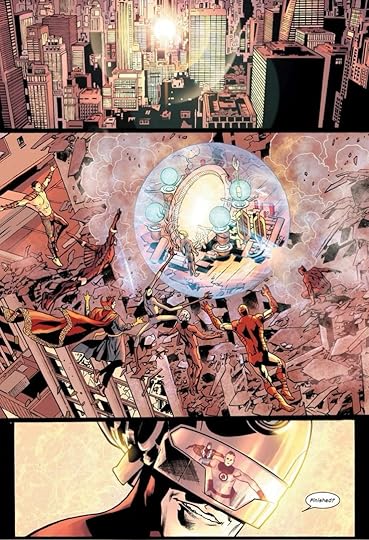
Now Hickman is introducing us to a new Ultimate Universe.
And it makes me glad I did that deep dive into the Ultimate Fantastic Four a few years ago because I've got all this useless information about The Maker sloshing around in my head, and now it's going to come in handy!
Why, you ask?
Well, I'll tell you. Because Maker is going to escape from 616, grab a whole bunch of crap and make some kind of wormhole/time machine/something weird, and then proceed to create a world exactly to his liking. One without the superheroes in it who tend to challenge him.
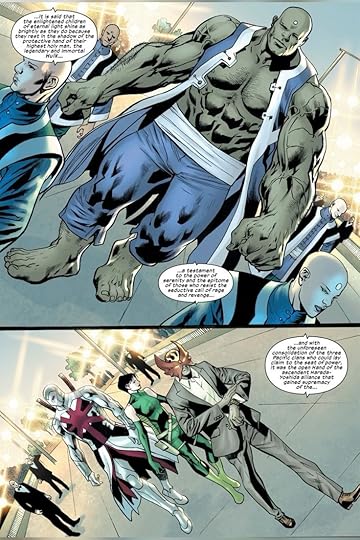
But that wouldn't actually be any fun to read about, would it?
You're right, random Goodreader, it wouldn't.
So what ends up happening is that you've got familiar but different characters, all poised to {spoilers redacted}.

I liked this. A lot.
And I'm looking forward to seeing where all of this goes.
Recommended.
Those are the best and most enduring parts of the Ulitmate Universe.
While it started out as a fun what-if universe it quickly got weird, and eventually, Marvel burned it to the ground and supposedly salted the earth.
Now Hickman is introducing us to a new Ultimate Universe.
And it makes me glad I did that deep dive into the Ultimate Fantastic Four a few years ago because I've got all this useless information about The Maker sloshing around in my head, and now it's going to come in handy!
Why, you ask?
Well, I'll tell you. Because Maker is going to escape from 616, grab a whole bunch of crap and make some kind of wormhole/time machine/something weird, and then proceed to create a world exactly to his liking. One without the superheroes in it who tend to challenge him.
But that wouldn't actually be any fun to read about, would it?
You're right, random Goodreader, it wouldn't.
So what ends up happening is that you've got familiar but different characters, all poised to {spoilers redacted}.
I liked this. A lot.
And I'm looking forward to seeing where all of this goes.
Recommended.

August 30, 2025
What's The Maker been up you. Well he's been in captivity under intense and extremely limited conditions. But this is The Maker, possibly the smartest villain in the Marvel universe. The Maker has been making plans, and now it's time to execute them. This time he's looking to recreate the Ultimate Universe! It's up to Miles Morales and the Illuminati (yes they're back) to try and stop him. Not that novel an idea, and it turned out well confusing, so much so I couldn't even work out what universe they fought in! Another Two Star, 5 out of 12 read.
2025 read
2025 read
July 3, 2024
Like many Hickman books, this left me feeling occasionally confused, often perplexed, periodically stimulated, and mentally inadequate.
So, it was basically like experiencing a Tuesday.
So, it was basically like experiencing a Tuesday.
July 8, 2026
I cackled hard when evil Reed Richards went to Miles Morales and seriously said "We're brothers". Yall gotta see Miles' facial expression after that😭💀
Also in Avengers Age Of Ultron, Ultron says “Keep your friends rich, and your enemies rich, and wait to find out which is which"
I always loved that quote because of the rhyming and meaning of it. There's a lot of quotes like this in the book and i just enjoy a good writing
With this book i am sure about Hickman is literally best person to write Reed Richard and his variants. Guys is so smart that he can give you the feeling of Reed Richards is the smartest person in the Marvel universe
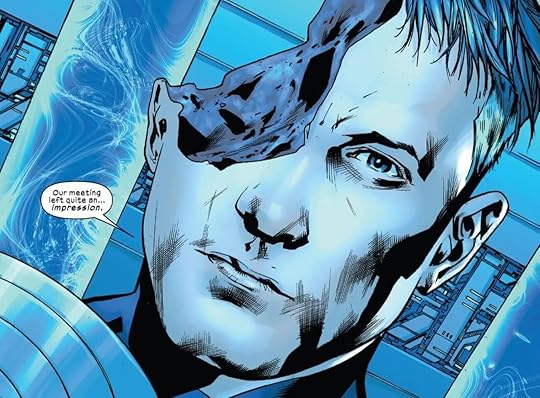
Lastly i ADORED Bryan Hitch's artwork. There's a lot drawing of heroes who reflected from The Maker's helmet and oh my god... it is sooooooooooooo good
Also in Avengers Age Of Ultron, Ultron says “Keep your friends rich, and your enemies rich, and wait to find out which is which"
I always loved that quote because of the rhyming and meaning of it. There's a lot of quotes like this in the book and i just enjoy a good writing
With this book i am sure about Hickman is literally best person to write Reed Richard and his variants. Guys is so smart that he can give you the feeling of Reed Richards is the smartest person in the Marvel universe
Lastly i ADORED Bryan Hitch's artwork. There's a lot drawing of heroes who reflected from The Maker's helmet and oh my god... it is sooooooooooooo good

January 16, 2025
6.3/10
Marvel wanted a new Ultimate universe and a reason for it's creation. Well, this is it.
This is a perfectly fine, serviceable story. It shows how and why the Maker created this new universe. We also get to see how the world is being divided and who is in power.
I only read this one because i really liked Ultimate Spider-man vol.1. and wanted to know more about how and why we see Peter's life and world, be the way it is. Now, maybe I'm going to invest more time and read some of the other "Ultimate" titles.
Marvel wanted a new Ultimate universe and a reason for it's creation. Well, this is it.
This is a perfectly fine, serviceable story. It shows how and why the Maker created this new universe. We also get to see how the world is being divided and who is in power.
I only read this one because i really liked Ultimate Spider-man vol.1. and wanted to know more about how and why we see Peter's life and world, be the way it is. Now, maybe I'm going to invest more time and read some of the other "Ultimate" titles.

October 3, 2025
PT Jonathan Hickman regressa para fazer aquilo em que é mestre — o que já demonstrou nos Vingadores, nos X-Men e no seu próprio projeto East of West — desta vez, no universo Ultimate. Em suma, regressa para reinventar este mundo.
No centro da narrativa está uma figura enigmática conhecida como “O Criador”, uma personagem que, embora não seja nova, tem um passado com o qual ainda não estou totalmente familiarizado.
Confesso que, apesar de ter apreciado a leitura, esta obra não me cativou tanto como é habitual nos projetos de Hickman. Suspeito que o estilo artístico, mais cartoonesco, possa ter contribuído para isso.
Ainda assim, este é apenas o primeiro passo na construção de um novo universo — e estou genuinamente curioso para ver o que virá a seguir.
--
EN Jonathan Hickman returns to do what he does best — as he has already shown with the Avengers, X-Men, and his own project East of West — this time within the Ultimate universe. In short, he’s back to reinvent this world.
At the center of the narrative stands an enigmatic figure known as “The Maker,” a character who, while not new, has a past I’m not entirely familiar with.
I must admit that, although I enjoyed reading this, it didn’t captivate me as much as Hickman’s other projects usually do. I suspect that the more cartoony art style may have played a role in that.
Even so, this is only the first step in building a new universe — and I’m genuinely curious to see what comes next.
No centro da narrativa está uma figura enigmática conhecida como “O Criador”, uma personagem que, embora não seja nova, tem um passado com o qual ainda não estou totalmente familiarizado.
Confesso que, apesar de ter apreciado a leitura, esta obra não me cativou tanto como é habitual nos projetos de Hickman. Suspeito que o estilo artístico, mais cartoonesco, possa ter contribuído para isso.
Ainda assim, este é apenas o primeiro passo na construção de um novo universo — e estou genuinamente curioso para ver o que virá a seguir.
--
EN Jonathan Hickman returns to do what he does best — as he has already shown with the Avengers, X-Men, and his own project East of West — this time within the Ultimate universe. In short, he’s back to reinvent this world.
At the center of the narrative stands an enigmatic figure known as “The Maker,” a character who, while not new, has a past I’m not entirely familiar with.
I must admit that, although I enjoyed reading this, it didn’t captivate me as much as Hickman’s other projects usually do. I suspect that the more cartoony art style may have played a role in that.
Even so, this is only the first step in building a new universe — and I’m genuinely curious to see what comes next.

May 14, 2024
This was dope. The Maker has escaped. ( I wonder when he was locked up in the first place ) That escape sequence was pretty bad ass also. The Maker has some ambitious plans. He has gone to another universe and began shaping it to his liking. Loved the spins on different characters Hickman used and the main characters, Howard Stark, Reed Richards and the leaders of each country. Don’t want to spoil too much but there were some juicy questions set up here that I’m sure Hickman will address in the coming Ultimate comics. Can’t wait.

November 12, 2023
this would easily have been a five star but i feel like this was a little short and fast paced for all the concepts and world building being introduced to us but what we got was fantastic marvel letting hickman have a sandbox universe to just do whatever he wants in is genius

May 9, 2025
6160!
September 3, 2025
3,5🌟
Marvel universo Ultimate é uma nova iniciativa da Marvel para resgatar uma ideia lá do começo dos anos 2000, com uma linha regular de publicação dos personagens, mas sem amarras cronológicas, pois é um universo novo, criado do zero por Jonathan Hickman para explorar novas facetas dos personagens da Casa das Ideias. Embora esse universo seja novo, é importante ressalvar que o vilão, o Criador, é um sobrevivente do universo Ultimate anterior, mas tudo isso é explicado de maneira bem prática no começo da HQ. Assim, não é necessário conhecimento prévio para realizar essa leitura.
Dessa forma, somos apresentados ao Criador logo de início, que com um plano envolvendo muita ação, consegue escapar de sua cela no universo 616. Depois de escapar, ele rouba alguns itens preciosos de alguns personagens da Marvel que formam os Iluminati, e constrói um dispositivo para ele viajar para outro universo. E é com essa premissa que a história realmente começa, pois o objetivo do Criador é criar um universo em que ele seja o soberano.
Dessa forma, para atingir tal objetivo, o Maker cria um universo em que nenhum herói existe, ou pelo menos nenhum que ele queira, porque como ele conhece a história dos personagens de outros universos, ele se utiliza desse conhecimento para impedir que no momento em que os heróis ganhariam seus poderes, ele surge para interferir de alguma maneira. Assim, ele se torna um governante e escolhe quem são os outros indivíduos poderosos que podem influenciar o mundo de alguma maneira.
É interessante notar que o Hickman cria um mapa para exemplificar como a organização desse mundo criado pelo Maker funciona, sendo que os continentes são divididos entre clãs de sua escolha, que controlam o mundo de acordo com suas vontades, sem que a população saiba dessa conspiração, mostrando que a população são marionetes moldadas pelas vontades dos governantes. Essa crítica, apesar de não ser muito aprofundada e servir apenas como uma explicação breve do egocentrismo do Maker, reflete muito a realidade do nosso mundo, em que a população é manipulada digitalmente pelos bilionários e pelas big techs, a ponto de acreditarem em coisas que andam na contramão de fatos e da ciência.
Por fim, é interessante ver esse novo universo sendo criado com o pessimismo e sem heróis, fazendo com que os heróis que surgirem a partir daqui, estejam em desvantagem e precisem lutar para acabar com o paradigma vigente.
Marvel universo Ultimate é uma nova iniciativa da Marvel para resgatar uma ideia lá do começo dos anos 2000, com uma linha regular de publicação dos personagens, mas sem amarras cronológicas, pois é um universo novo, criado do zero por Jonathan Hickman para explorar novas facetas dos personagens da Casa das Ideias. Embora esse universo seja novo, é importante ressalvar que o vilão, o Criador, é um sobrevivente do universo Ultimate anterior, mas tudo isso é explicado de maneira bem prática no começo da HQ. Assim, não é necessário conhecimento prévio para realizar essa leitura.
Dessa forma, somos apresentados ao Criador logo de início, que com um plano envolvendo muita ação, consegue escapar de sua cela no universo 616. Depois de escapar, ele rouba alguns itens preciosos de alguns personagens da Marvel que formam os Iluminati, e constrói um dispositivo para ele viajar para outro universo. E é com essa premissa que a história realmente começa, pois o objetivo do Criador é criar um universo em que ele seja o soberano.
Dessa forma, para atingir tal objetivo, o Maker cria um universo em que nenhum herói existe, ou pelo menos nenhum que ele queira, porque como ele conhece a história dos personagens de outros universos, ele se utiliza desse conhecimento para impedir que no momento em que os heróis ganhariam seus poderes, ele surge para interferir de alguma maneira. Assim, ele se torna um governante e escolhe quem são os outros indivíduos poderosos que podem influenciar o mundo de alguma maneira.
É interessante notar que o Hickman cria um mapa para exemplificar como a organização desse mundo criado pelo Maker funciona, sendo que os continentes são divididos entre clãs de sua escolha, que controlam o mundo de acordo com suas vontades, sem que a população saiba dessa conspiração, mostrando que a população são marionetes moldadas pelas vontades dos governantes. Essa crítica, apesar de não ser muito aprofundada e servir apenas como uma explicação breve do egocentrismo do Maker, reflete muito a realidade do nosso mundo, em que a população é manipulada digitalmente pelos bilionários e pelas big techs, a ponto de acreditarem em coisas que andam na contramão de fatos e da ciência.
Por fim, é interessante ver esse novo universo sendo criado com o pessimismo e sem heróis, fazendo com que os heróis que surgirem a partir daqui, estejam em desvantagem e precisem lutar para acabar com o paradigma vigente.

October 22, 2023
I remember when Hickman was the best writer in comics and I would pick up any book with his name on it. But I’m just not interested in any more incredibly dialogue-dense comics whose sole purpose is the writer trying to prove his own intelligence.

September 30, 2024
Quando fiquei sabendo da volta do Universo Ultimate, pensei que se tratava de um revival daquilo que já conhecíamos sobre essa realidade que foi destruída durante as Guerras Secretas por Jonathan Hickman e cia. Mas o mesmo Hickman trouxe um Universo Ultimate de volta ao lado de Bryan Hitch, um Universo Ultimate diferente, forçado por Reed Richards maligno que, dentro de seu plano, dividiu o mundo em facções que dominam determinadas partes do mundo. Assim, os Rasputin dominam parte da Ásia, enquanto os Yoshida dominam outra parte, os Da Costa dominam a América do Sul, os deuses Rá e Konshu são responsável pela África; o Capitão Bretanha, um francês, manda na Europa, enquanto a Latvéria é do Criador, Reed Richards. A América do Norte é de responsabilidade de Howard Stark, o Homem de Ferro. Assim, temos um Universo Ultimate uma espécie de jogo de War com superpoderes da Marvel. Gostei bastante dessa inciativa para continuar comprando suas edições subsequentes, mas não o suficiente para dar cinco estrelas para esta edição.

March 16, 2025
In the year 2000, the original Ultimate Universe was conceived when Brian Michael Bendis and Mark Bagley updated the Spider-Man story for the present day with Ultimate Spider-Man. The success of that title paved the way for this universe to expand and create new versions of other iconic Marvel characters. For better and worse, the Ultimate Universe was an interesting experiment that ran for fifteen years, before getting destroyed in 2015’s Secret Wars by Jonathan Hickman and Esad Ribić. Beginning in 2023, Marvel would revive the Ultimate Universe, albeit in a new direction with the aforementioned Hickman kickstarting a new era with Ultimate Invasion.
Considering that Hickman had previously relaunched the lineup of X-Men comics with The First Krakoan Age, which he would depart from before the era reached its conclusion, it is surprising that Hickman would be given the keys to another comics property from Marvel. It’ll be interesting to see in a long run on whether Hickman will stick with this alternate universe to its own conclusion. While there are some references to the original Ultimate Universe, Hickman – who was involved in that incarnation – didn’t want to do the same thing as before, which is a streamlined, modernized version of the decades-long Marvel Universe that we all know.
It all starts with Ultimate Invasion, a four-issue miniseries that sees the return of the Maker, the evil Reed Richards that was introduced in the original Ultimate Universe. After escaping from the Illuminati, the Maker starts to rewrite the history of another universe and averting the origins of many of its heroes. From the first issue which concludes with the Maker killing the radioactive spider that would have bitten a 15-year-old Peter Parker and thus obtaining powers, Hickman establishes how this universe is different from others as the world-building is often showcased through the data pages that he is best known for throughout his work.
While the Maker shows off his evil genius, trying to create a world without heroes, there are also events he isn't able to prevent, such as Bruce Banner becoming the Hulk and being unable to locate the frozen body of Captain America. In terms of a main protagonist, it would be Howard Stark, the Iron Man of this universe, who is invited to “The City” at Latveria for an international event of incorporated nation-states, where he meets other super-powered people from mutant groups to an "enlightened" Hulk and his fellow monks. It is also here where Howard learns some revelations about the Maker and himself, leading to a moral dilemma on whether the Maker should rule this world.
As much as one can appreciate with Hickman’s world-building whilst touching upon his previous work like New Avengers and the Krakoan Age, this storyline could have benefitted from having more issues. Whereas House of X/Powers of X had twelve issues, Ultimate Invasion has only four, each of which are densely packed with Hickman’s grand sci-fi ideas, which can be hard to follow. That density is also reflected in the art by Bryan Hitch, who had previously drawn The Ultimates, and brings his approach to widescreen comic book storytelling here. Whether it is a group conversation or an action sequence that throws in many super-powered characters into the mix, Hitch’s art makes everything look grand with a high level of detail.
Very much a prelude that is all about setting up this new Ultimate Universe, whilst also setting up future titles like Hickman’s Ultimate Spider-Man and Deniz Camp's The Ultimates, Ultimate Invasion is a great read in its own right and does something different that will excite readers who want something newer than the traditional Marvel fodder.
Considering that Hickman had previously relaunched the lineup of X-Men comics with The First Krakoan Age, which he would depart from before the era reached its conclusion, it is surprising that Hickman would be given the keys to another comics property from Marvel. It’ll be interesting to see in a long run on whether Hickman will stick with this alternate universe to its own conclusion. While there are some references to the original Ultimate Universe, Hickman – who was involved in that incarnation – didn’t want to do the same thing as before, which is a streamlined, modernized version of the decades-long Marvel Universe that we all know.
It all starts with Ultimate Invasion, a four-issue miniseries that sees the return of the Maker, the evil Reed Richards that was introduced in the original Ultimate Universe. After escaping from the Illuminati, the Maker starts to rewrite the history of another universe and averting the origins of many of its heroes. From the first issue which concludes with the Maker killing the radioactive spider that would have bitten a 15-year-old Peter Parker and thus obtaining powers, Hickman establishes how this universe is different from others as the world-building is often showcased through the data pages that he is best known for throughout his work.
While the Maker shows off his evil genius, trying to create a world without heroes, there are also events he isn't able to prevent, such as Bruce Banner becoming the Hulk and being unable to locate the frozen body of Captain America. In terms of a main protagonist, it would be Howard Stark, the Iron Man of this universe, who is invited to “The City” at Latveria for an international event of incorporated nation-states, where he meets other super-powered people from mutant groups to an "enlightened" Hulk and his fellow monks. It is also here where Howard learns some revelations about the Maker and himself, leading to a moral dilemma on whether the Maker should rule this world.
As much as one can appreciate with Hickman’s world-building whilst touching upon his previous work like New Avengers and the Krakoan Age, this storyline could have benefitted from having more issues. Whereas House of X/Powers of X had twelve issues, Ultimate Invasion has only four, each of which are densely packed with Hickman’s grand sci-fi ideas, which can be hard to follow. That density is also reflected in the art by Bryan Hitch, who had previously drawn The Ultimates, and brings his approach to widescreen comic book storytelling here. Whether it is a group conversation or an action sequence that throws in many super-powered characters into the mix, Hitch’s art makes everything look grand with a high level of detail.
Very much a prelude that is all about setting up this new Ultimate Universe, whilst also setting up future titles like Hickman’s Ultimate Spider-Man and Deniz Camp's The Ultimates, Ultimate Invasion is a great read in its own right and does something different that will excite readers who want something newer than the traditional Marvel fodder.
November 10, 2024
Packed full of ideas, occasionally a bit complex for its own good, but entertaining on the whole and promising an epic tale to come. So, in other words, a Hickman book. Bryan Hitch’s art brings it all to life in bombastic style. And so it begins!

September 29, 2023
Perfection

April 10, 2024
I found this to be a decent enough read with some nice artwork, and it serves as a nice jumping off point for Marvel's new Ultimate universe. I've always enjoyed Marvel's (and DC's as well) alternate takes on their characters and short-term runs of interesting ideas; these playgrounds for different takes on characters and stories are always fun to me when executed well. Characters, such as the Maker and Gwen Stacy's Spider-Woman have always fascinated me, and I'm looking forward to seeing where this new Ultimate universe goes.
Probably my favorite thing about this limited run was the Maker himself. He was such an interesting character in the original Ultimate FF run, and it was a joy to see more of him and his machinations here. It'll be interesting to see what else he'll be up to going forward after the climactic scenes in Issue #4 of this run. I also found the concept of a world divided by the powers at be into a constant state of organized supremacy and conflict to be fascinating, and something I'll be interested in seeing played with in the Ultimate universe. The way the world is set up into kingdoms/fiefdoms leaves open plenty of interesting narrative paths. Along with these narrative ideas, I quite enjoyed Hitch's artwork throughout. Plenty of the action scenes were great, and I found the facial/character work to be done well for the more emotional scenes.
Really the one thing that knocks this miniseries down to three stars for me is the pacing/fleshing out of the story. I know that it's an introduction to a new universe where they'll have plenty of stories to tell, but I found this story to move too quickly and to build too shallow of a foundation for this new Ultimate universe. Ultimate Invasion lays out plenty of interesting ideas, but never really has the time to explore them or use them to build as solid of a foundation as it could. I feel like fewer, more explored ideas, or a longer run would've helped to set things up better. Something more along the lines of House of X/Powers of X would've been more beneficial for setting up what is to come in the future.
But nonetheless, I found this to be a decent enough experience that has me looking forward to digging into more of this new Ultimate Universe in the future!
Probably my favorite thing about this limited run was the Maker himself. He was such an interesting character in the original Ultimate FF run, and it was a joy to see more of him and his machinations here. It'll be interesting to see what else he'll be up to going forward after the climactic scenes in Issue #4 of this run. I also found the concept of a world divided by the powers at be into a constant state of organized supremacy and conflict to be fascinating, and something I'll be interested in seeing played with in the Ultimate universe. The way the world is set up into kingdoms/fiefdoms leaves open plenty of interesting narrative paths. Along with these narrative ideas, I quite enjoyed Hitch's artwork throughout. Plenty of the action scenes were great, and I found the facial/character work to be done well for the more emotional scenes.
Really the one thing that knocks this miniseries down to three stars for me is the pacing/fleshing out of the story. I know that it's an introduction to a new universe where they'll have plenty of stories to tell, but I found this story to move too quickly and to build too shallow of a foundation for this new Ultimate universe. Ultimate Invasion lays out plenty of interesting ideas, but never really has the time to explore them or use them to build as solid of a foundation as it could. I feel like fewer, more explored ideas, or a longer run would've helped to set things up better. Something more along the lines of House of X/Powers of X would've been more beneficial for setting up what is to come in the future.
But nonetheless, I found this to be a decent enough experience that has me looking forward to digging into more of this new Ultimate Universe in the future!
This entire review has been hidden because of spoilers.
January 28, 2024
Spoiler alert.
I was really impressed by this four issue miniseries, Jonathan Hickman writes as it could have been Mark Millar.
He did write several of the relaunched Ultimate Comcs titles back in 2010 to 2012. And he wrote Secret Wars ending the 1610 Ultimate Universe. However he never wrote the Ultimate Universe like this, with a flavor, the tone, style and depravity of Mark Millar.
Sure Bryan Hitch helps bringing this sort of full circle, but Jonathan Hickman just nails it in this miniseries. For Bryan Hitch this must be like coming back home, going back to the tone and style of the Ultimates series way back in 2002.
The Reed Richards of 1610, now going by The Maker, has invaded 6160 and has changed it to his liking. He has changed history and has perversed it into, what he wanted happening to 1610 and 616, in various 616 stories since Secret Wars.
In #1 he tries to get Miles Morales to go with him, telling him they have a shared history, and are brothers. Miles decline and the 616 lead by the 616 Reed Richards try to stop The Maker, but fails capturing him.
on 6160 Howard Stark and another Reed Richards wearing a Doctor Doom mask escape captivity and go against The Maker. In #3 and 4 Kang invades, and is revealed to be none other than Tony Stark in this story/universe.
Tony in this age is wearing a similar suit, but in diffent color scheme than, and wants to be called Iron-Lad.
The Ultimate Universe one-shot didn't quite live up this four issue miniseries, but be sure to pick up this one.
https://en.wikipedia.org/wiki/Ultimat...
https://en.wikipedia.org/wiki/Jonatha...
https://en.wikipedia.org/wiki/Maker_(...
I was really impressed by this four issue miniseries, Jonathan Hickman writes as it could have been Mark Millar.
He did write several of the relaunched Ultimate Comcs titles back in 2010 to 2012. And he wrote Secret Wars ending the 1610 Ultimate Universe. However he never wrote the Ultimate Universe like this, with a flavor, the tone, style and depravity of Mark Millar.
Sure Bryan Hitch helps bringing this sort of full circle, but Jonathan Hickman just nails it in this miniseries. For Bryan Hitch this must be like coming back home, going back to the tone and style of the Ultimates series way back in 2002.
The Reed Richards of 1610, now going by The Maker, has invaded 6160 and has changed it to his liking. He has changed history and has perversed it into, what he wanted happening to 1610 and 616, in various 616 stories since Secret Wars.
In #1 he tries to get Miles Morales to go with him, telling him they have a shared history, and are brothers. Miles decline and the 616 lead by the 616 Reed Richards try to stop The Maker, but fails capturing him.
on 6160 Howard Stark and another Reed Richards wearing a Doctor Doom mask escape captivity and go against The Maker. In #3 and 4 Kang invades, and is revealed to be none other than Tony Stark in this story/universe.
Tony in this age is wearing a similar suit, but in diffent color scheme than, and wants to be called Iron-Lad.
The Ultimate Universe one-shot didn't quite live up this four issue miniseries, but be sure to pick up this one.
https://en.wikipedia.org/wiki/Ultimat...
https://en.wikipedia.org/wiki/Jonatha...
https://en.wikipedia.org/wiki/Maker_(...
This entire review has been hidden because of spoilers.

April 16, 2024
Колись, щоб не починати розбиратися у всій тій катавасії із всесвітом Marvel, вирішив почитати Людину-Павука від Браяна Майкла Бендіса з альтернативного всесвіту Ultimate. І це єдине, що читав направду звідти. І мені воно дуже сподобалося. Й ось Marvel вирішили перезапустити цей всесвіт, що у свою чергу є гарною відправною точкою для знайомства із коміксами про супергероїв у Marvel. Та й мені цікаво, куди ж піде цей новий всесвіт Ultimate. Тому розпочав знайомство із лімітованою серією коміксів «Ультимативне вторгнення» Джонатана Гікмена і Браяна Гітча.
Сюжет починається з того, що Творець втікає з ув’язнення та після короткого зіткнення з Ілюмінатами телепортується в новий всесвіт. Творець — злий Рід Річардс із Всесвіту 1610 — почав збирати ресурси, щоб створити власний всесвіт. А все для того, щоб переробити його під свій лад, де супергерої ніколи не з’явилися. Ми маємо таку собі гру в “кішки-мишки” між Рідами Річардсами з різних реальностей. Де один хоче зупинити іншого.
Історія, яку Гікман приготував для нас, мала б бути набагато глибшою, аніж вийшла насправді. Хоча ідея мені імпонує загалом. Але основною причиною, чому мені комікс не сподобався, — темп і глибина історії. Це вступ до нового всесвіту чи пак перезапуску. Він має бути потужним. Та мені здалося, що ця історія розвивається надто швидко й не заклала достатньо міцного фундаменту для подальших подій в інших серіях. Тут представлено багато цікавих ідей, але не вистачає часу, щоби повністю дослідити їх. Отак пробіглися й усе. Але це хоч дало якесь розуміння, що нас чекає в цьому перезапуску. Це, мабуть, єдиний плюс цієї лімітки. І ще, звісно, малюнок Браяна Гітча.
Сюжет починається з того, що Творець втікає з ув’язнення та після короткого зіткнення з Ілюмінатами телепортується в новий всесвіт. Творець — злий Рід Річардс із Всесвіту 1610 — почав збирати ресурси, щоб створити власний всесвіт. А все для того, щоб переробити його під свій лад, де супергерої ніколи не з’явилися. Ми маємо таку собі гру в “кішки-мишки” між Рідами Річардсами з різних реальностей. Де один хоче зупинити іншого.
Історія, яку Гікман приготував для нас, мала б бути набагато глибшою, аніж вийшла насправді. Хоча ідея мені імпонує загалом. Але основною причиною, чому мені комікс не сподобався, — темп і глибина історії. Це вступ до нового всесвіту чи пак перезапуску. Він має бути потужним. Та мені здалося, що ця історія розвивається надто швидко й не заклала достатньо міцного фундаменту для подальших подій в інших серіях. Тут представлено багато цікавих ідей, але не вистачає часу, щоби повністю дослідити їх. Отак пробіглися й усе. Але це хоч дало якесь розуміння, що нас чекає в цьому перезапуску. Це, мабуть, єдиний плюс цієї лімітки. І ще, звісно, малюнок Браяна Гітча.

December 27, 2024
3.5 Stars.
The Maker, originally from Marvel's previous Ultimate universe (Earth-1610) escapes his prison on Earth-616 (the standard Marvel Comics universe) and gets to Earth-6160 (a current time and modern version of 1610, now known as the Ultimate Universe) where he begins altering timelines and preventing heroes from being born or created. He is trying to create a world where he rules.
A few points of interest to remember:
- Howard Stark had formed a company with Obadiah Stane, and the Iron Man suits were created. He was the only world leader to stand up to The Maker, and it got him killed, leaving Tony to become Iron Lad and lead a team of Ultimates against The Maker's Council
- The Maker's Council is made up of Emmanuel Da Costa (Father of Roberto AKA Sunspot), Omega Red, Colossus, Hulk (Bruce Banner), Children of Eternal Light, Sun Emperor (Shiro Yoshida), Viper (Aida), Silver Samurai, Lord Khonshu, Lord Ra, Henri Dugarry (6160's Captain Britain), and Magik. They are the hidden powers that rule over the Earth.
- Doctor Doom (Reed Richards) and Iron Lad (Tony Stark) are going to recruit heroes to fight against the Maker.
Very happy to see a relaunch of the Ultimate Universe. Looking forward to reading more.
Recommend!
UP next: Ultimate Spider-Man!
The Maker, originally from Marvel's previous Ultimate universe (Earth-1610) escapes his prison on Earth-616 (the standard Marvel Comics universe) and gets to Earth-6160 (a current time and modern version of 1610, now known as the Ultimate Universe) where he begins altering timelines and preventing heroes from being born or created. He is trying to create a world where he rules.
A few points of interest to remember:
- Howard Stark had formed a company with Obadiah Stane, and the Iron Man suits were created. He was the only world leader to stand up to The Maker, and it got him killed, leaving Tony to become Iron Lad and lead a team of Ultimates against The Maker's Council
- The Maker's Council is made up of Emmanuel Da Costa (Father of Roberto AKA Sunspot), Omega Red, Colossus, Hulk (Bruce Banner), Children of Eternal Light, Sun Emperor (Shiro Yoshida), Viper (Aida), Silver Samurai, Lord Khonshu, Lord Ra, Henri Dugarry (6160's Captain Britain), and Magik. They are the hidden powers that rule over the Earth.
- Doctor Doom (Reed Richards) and Iron Lad (Tony Stark) are going to recruit heroes to fight against the Maker.
Very happy to see a relaunch of the Ultimate Universe. Looking forward to reading more.
Recommend!
UP next: Ultimate Spider-Man!

August 31, 2025
Eu não conhecia o universo ultimate anterior, mas vi muitos vídeos falando sobre essa nova proposta e consegui entender o conceito desse universo. Não é nada tão complicado, tanto que tem uma página que fez um resumão do universo anterior.
Um universo onde o Criador foi interferindo na criação de vários heróis, fazendo com que suas origens nunca tivessem acontecido, então eles não existem.
Eu adorei essa proposta, e como foi feita a execução aqui me deixou extremamente curioso para ler os outros volumes.
Claro, tiveram momentos um pouco convenientes, mas faz parte do roteiro. Também queria ter visto mais interferência dele em outras origens, além do Homem-Aranha.
Mas o roteiro está muito bom. Meu primeiro contato (e único) com o Hickman foi em X-Men, na Era Krakoa, e eu gosto muito quando ele vai inserindo aqueles arquivos no meio da história.
Esse volume é uma introdução para o universo, e fez isso muito bem. Deu aquele pontapé inicial que me deixou animado para ver o que vai acontecer no futuro.
Um universo onde o Criador foi interferindo na criação de vários heróis, fazendo com que suas origens nunca tivessem acontecido, então eles não existem.
Eu adorei essa proposta, e como foi feita a execução aqui me deixou extremamente curioso para ler os outros volumes.
Claro, tiveram momentos um pouco convenientes, mas faz parte do roteiro. Também queria ter visto mais interferência dele em outras origens, além do Homem-Aranha.
Mas o roteiro está muito bom. Meu primeiro contato (e único) com o Hickman foi em X-Men, na Era Krakoa, e eu gosto muito quando ele vai inserindo aqueles arquivos no meio da história.
Esse volume é uma introdução para o universo, e fez isso muito bem. Deu aquele pontapé inicial que me deixou animado para ver o que vai acontecer no futuro.

January 9, 2025
An excellent introduction to a new universe. Hickman is one of the best current comic book writers, and he proves it again with this. I couldn't put it down and read it in one sitting. The only reason it doesn't get 5 stars is because it's not the full story and is purely setup.

January 19, 2024
This was fresh. The marvel universe has been stale for a long time, so a new take by Hickman to do something different has certainly got me invested.

April 9, 2024
I grew up on the Ultimate universe. I was pumped to see that they're bringing it back. This 4 episode mini-series kicks off the process with a story about The Maker escaping custody and finding his way to a new reality.
I thought this was just really entertaining. It was weirdly nostalgic for a book that doesn't actually feature that many ties to the actual Ultimate universe beyond the Maker being here. A lot of it comes down to a perfect visual feel. They couldn't have done this kickoff without Hitch. That they got him to do it and gave him time to do every page was absolutely necessary. It worked extremely well to throw me back into the Ultimate vibe.
It did very much feel like an Ultimate-style story. I enjoyed reading it a lot. Hickman laid a lot of seeds to grow the universe from the ground up again. I'm excited to see where it goes and if my nostalgia will live on in books that don't feature Bryan Hitch.
If you aren't familiar with the previous Ultimate universe, you don't need the background for context but I really doubt your experience will be quite as enjoyable as mine was here. It's not going to be 5-stars for most.
I thought this was just really entertaining. It was weirdly nostalgic for a book that doesn't actually feature that many ties to the actual Ultimate universe beyond the Maker being here. A lot of it comes down to a perfect visual feel. They couldn't have done this kickoff without Hitch. That they got him to do it and gave him time to do every page was absolutely necessary. It worked extremely well to throw me back into the Ultimate vibe.
It did very much feel like an Ultimate-style story. I enjoyed reading it a lot. Hickman laid a lot of seeds to grow the universe from the ground up again. I'm excited to see where it goes and if my nostalgia will live on in books that don't feature Bryan Hitch.
If you aren't familiar with the previous Ultimate universe, you don't need the background for context but I really doubt your experience will be quite as enjoyable as mine was here. It's not going to be 5-stars for most.

November 17, 2024
Marvel son yıllardaki durgun gidişatını değiştirmek için yeniden Ultimate Universe denilen alternatif bir evren kurmaya karar vermiş. Bu iş için de benim favori yazarlarımdan Hickman'ı uygun görmüş ki bence harika olmuş. Hickman'ın yazdığı çizgi romanlarda okuyucuya ilk etapta karışık gelen bir anlatı söz konusu olsa da okuyucu sabırlı davranıp olayları takip ederse büyük mükafat ile karşılaşıyor. Burada da benzer bir durum söz konusu.
2000'lerdeki Ultimate Universe yok olduğunda sadece Maker ve Miles Morales kurtulmuştu. Şimdi de Maker yeniden kendisine ait bir evren yaratmak istiyor ve bunu Illuminati'ye duyurarak gerçekleştiriyor. Kahramanların çabası yetersiz kalıyor ve Maker amacına ulaşıyor. Kahramanların birçoğundan arınmış bu evrende kalan kahramanlar ise çarpık bölgesel yönetimler kurmuş vaziyette.
Bu kitap özünde bir evren kurma hikayesi olduğundan bundan sonra yayınlanacak olan ultimate serileri için olmazsa olmaz bir temel niteliğinde diyebiliriz. Bu cilt Iron Man, Dr. Doom, Kang, War Machine, Reed Richards gibi karakterlere alternatif bir bakış açısı sunması ve yeni bir soluk getirmesiyle sonrasında çıkacak olan seriler adına da heyecan uyandırıyor.
2000'lerdeki Ultimate Universe yok olduğunda sadece Maker ve Miles Morales kurtulmuştu. Şimdi de Maker yeniden kendisine ait bir evren yaratmak istiyor ve bunu Illuminati'ye duyurarak gerçekleştiriyor. Kahramanların çabası yetersiz kalıyor ve Maker amacına ulaşıyor. Kahramanların birçoğundan arınmış bu evrende kalan kahramanlar ise çarpık bölgesel yönetimler kurmuş vaziyette.
Bu kitap özünde bir evren kurma hikayesi olduğundan bundan sonra yayınlanacak olan ultimate serileri için olmazsa olmaz bir temel niteliğinde diyebiliriz. Bu cilt Iron Man, Dr. Doom, Kang, War Machine, Reed Richards gibi karakterlere alternatif bir bakış açısı sunması ve yeni bir soluk getirmesiyle sonrasında çıkacak olan seriler adına da heyecan uyandırıyor.

November 24, 2024
Paying off the unpaid debts of the original Ultimate Universe - the one Hickman was called in late to try to rescue, but couldn’t un-fuck - is a pretty lofty goal from a guy I’ll accuse of being one of the most foundational architects in comics today.
Not just literally - pulling out his draftsman tools to shape the look and feel of whatever corner of a world he’s too dumb not to try to refactor and reformulate - but also in letting his imagination and BOLDNESS take the stories way beyond where any of the predecessors let it drift along the grey, moldy (moody?) tides.
And this one is just as big a task as he’s ever engaged - What If the Maker had a second chance? Who would he keep, who would he lock in carbonite? What would his ultimate world-in-his-image look like?
Pretty impressive if you ask me. I’ll definitely join for the ride, for however long he has the stomach to see this through.
Not just literally - pulling out his draftsman tools to shape the look and feel of whatever corner of a world he’s too dumb not to try to refactor and reformulate - but also in letting his imagination and BOLDNESS take the stories way beyond where any of the predecessors let it drift along the grey, moldy (moody?) tides.
And this one is just as big a task as he’s ever engaged - What If the Maker had a second chance? Who would he keep, who would he lock in carbonite? What would his ultimate world-in-his-image look like?
Pretty impressive if you ask me. I’ll definitely join for the ride, for however long he has the stomach to see this through.

October 7, 2023
Marvel are relaunching the Ultimate Universe with a bunch of new titles and new number 1’s, but you gotta read this first! (As well as a one shot issue due out in November)
Looking past the price what these now cost individually, and the fact we’re getting ANOTHER Ultimate relaunch, this was pretty good
It was a follow up of sorts to Hickmans Secret Wars. I feel like if you’ve read that, you could go straight into this, even though Secret Wars is a good few years old now and I’m sure stuff has happened in-between in the Marvel Universe
The Maker is back and up to his devilish evil ways. I have always liked him as a villain, I’ve always been into the idea of an evil Reed Richards
There’s also a future Kang, but it’s never really clear who this Kang is? It’s potentially (spoiler alert) Tony Stark, if I’ve read this correctly?
Looking past the price what these now cost individually, and the fact we’re getting ANOTHER Ultimate relaunch, this was pretty good
It was a follow up of sorts to Hickmans Secret Wars. I feel like if you’ve read that, you could go straight into this, even though Secret Wars is a good few years old now and I’m sure stuff has happened in-between in the Marvel Universe
The Maker is back and up to his devilish evil ways. I have always liked him as a villain, I’ve always been into the idea of an evil Reed Richards
There’s also a future Kang, but it’s never really clear who this Kang is? It’s potentially (spoiler alert) Tony Stark, if I’ve read this correctly?
This entire review has been hidden because of spoilers.

November 22, 2024
Hickman is cooking. The Ultimate universe in Marvel is really taking off in popularity these days. I slept on it for the first year, but I can't ignore the hype any longer.
This Maker character is excellent, and the device to reset the Marvel universe is great. Things do get very heady at times, though, but it's worth sticking it out imo.
As if I didn't already have too many comics to dig through, I'll have to add another giant universe to my backlog...
This Maker character is excellent, and the device to reset the Marvel universe is great. Things do get very heady at times, though, but it's worth sticking it out imo.
As if I didn't already have too many comics to dig through, I'll have to add another giant universe to my backlog...

October 6, 2023
I didn’t know much about the Ultimate Universe when it was around other than how dark and twisted it was. I guess it’s coming back though. Now I have to decide if I want to read a whole other universe of stories. Not a bad read, but kind of boring

Read
July 8, 2024The Ultimate Universe was launched in 2000 as an introductory version of Marvel, one where the classic characters were retooled for the present day and you could get in at the beginning of their stories, rather than having to worry about references back to the time a decade ago when the lead had been a clone, or been married to a clone, or possibly both. But the comics were done well enough, by the hot new creators of the time, that while they did attract new readers, people who already knew the previous versions of the heroes got on board too, enjoying the hits, but also the twists. In that and other ways, it was a model for the MCU, and much like the MCU it was a huge success, until it wasn't.
This 23rd anniversary revisit is nothing like that.
There was a certain fundamental misunderstanding as the Ultimate books continued (and they did continue; Bendis did well over a hundred issues of Ultimate Spider-Man, one of the longest runs by a given creator in comics full stop, never mind by modern standards). The books accumulated their own continuity, and as such stopped being quite so entry-level. Some people took that as superhero publishers being unable to stop falling back into their old bad habits, when really it's just how stories work, unless you want the utter weightlessness of a Saturday morning cartoon. Which is fine in its place, but the idea here was that the stories would have stakes, and if anything more of a free hand to make changes to the world. Sure, that didn't always work out, especially once lesser creators got let into the game and started having characters eaten and cities trashed just because they could. But as the most obvious example, if Ultimate Peter Parker* hadn't been killed off there'd never have been Miles Morales, now beloved by millions. So for all that the promotion of this miniseries teased a revival of the Ultimate Universe, that was never entirely a viable prospect. Revive it when? Right before the end, despite its demise in Secret Wars by that point feeling like a mercy killing? Rewind it to the start and wipe out all the experiences that made us care about these versions of the characters? Some particular point in between, where everyone will quibble over the exact choice of issue to do over from? A smooshed-together greatest hits?
As such, the approach taken here probably makes as much sense as anything, but any notion of accessibility has been left far, far behind. So: when the Ultimate Universe died, Miles Morales survived, relocated to the main Marvel Earth (as did his supporting cast, including ones who'd previously died), on account of the obliteration of worlds in multiversal cataclysms being as nothing in the face of crossover appeal. He only makes a cameo here, regardless of that prominent spot on the cover. The other main escapee was Ultimate Reed Richards, by this point firmly into a villain era much more convincing than the social media sort, who has since been knocking around under the alias the Maker. Here, he escapes from science gaol, mugs off the Illuminati (don't know who the Illuminati are in a Marvel context? Then this book is probably not aimed at you), and escapes to another, prototypical iteration of Marvel Earth - or possibly of Ultimate Earth specifically, it's never wholly clear - where he proceeds to shape it to his requirements. What we see of that largely involves interrupting origin stories - plucking the spider off young Peter Parker a moment before it bites, that sort of thing - but somehow this ends up with a present day where the world (or at least New York, which in most Marvel comics amounts to the same thing) is divided between seven spheres of influence, each run by versions of familiar Marvel faces, each ultimately answerable to the Maker. Now, an America openly run by Howard Stark and Obadiah Stane might work as satire on the current tech bro ascendancy, if the story paused to do anything with it, but some of the others are iffier: the East run by Sunfire and the Hand? Russia by Magik and Colossus? How does any of this feel on the ground? Unlike the original Ultimate line, all about getting back to that initial Marvel selling point of 'the world outside your window', Ultimate Invasion couldn't care less; this is all time loops, grand conspiracies, and nods to decades of previous stories across at least two universes. It's not even that I necessarily object to comics about comics - Flex Mentallo is one of my all-time favourites. But they're tough to carry off without feeling like insular wank, need top tier creators with something to say, maybe even ones with a bit of an outsider perspective. Whereas this... It reads a lot like Hickman is tired, halfheartedly reaching into his usual bag of tricks (grand schemes, data pages, portentous pronouncements) without much of it landing properly. Hell, the revelation that the supposed enemy is part of the same unseen higher conspiracy goes back literally to his first Marvel series, except there it felt shocking because it upended years of prior stories, whereas here it's two issues into a world we've barely seen, so who's bothered? Hitch on art...well, he makes perfect sense when you consider how key that first volume of The Ultimates was, the screen Avengers as good as laid out on the page once Hollywood smoothed off a few edges. And compared to some once-feted artists this far into their careers, he certainly hasn't lost it a la Miller or got sketchy like Yeowell. But perhaps because he hasn't got the same support staff, or the times have changed, or simply because nobody gets to catch the lightning for long, it doesn't have the same thrill, feels hollow and cluttered where once it awed. The overall effect is like going to see the Stones because you were reminded how good they used to be, and then seeing the Stones now, and also they insist on playing the new stuff.
*Still the only Peter Parker who doesn't annoy me - even Tom Holland finally fell prey to the self-flagellating crap in that last film.
This 23rd anniversary revisit is nothing like that.
There was a certain fundamental misunderstanding as the Ultimate books continued (and they did continue; Bendis did well over a hundred issues of Ultimate Spider-Man, one of the longest runs by a given creator in comics full stop, never mind by modern standards). The books accumulated their own continuity, and as such stopped being quite so entry-level. Some people took that as superhero publishers being unable to stop falling back into their old bad habits, when really it's just how stories work, unless you want the utter weightlessness of a Saturday morning cartoon. Which is fine in its place, but the idea here was that the stories would have stakes, and if anything more of a free hand to make changes to the world. Sure, that didn't always work out, especially once lesser creators got let into the game and started having characters eaten and cities trashed just because they could. But as the most obvious example, if Ultimate Peter Parker* hadn't been killed off there'd never have been Miles Morales, now beloved by millions. So for all that the promotion of this miniseries teased a revival of the Ultimate Universe, that was never entirely a viable prospect. Revive it when? Right before the end, despite its demise in Secret Wars by that point feeling like a mercy killing? Rewind it to the start and wipe out all the experiences that made us care about these versions of the characters? Some particular point in between, where everyone will quibble over the exact choice of issue to do over from? A smooshed-together greatest hits?
As such, the approach taken here probably makes as much sense as anything, but any notion of accessibility has been left far, far behind. So: when the Ultimate Universe died, Miles Morales survived, relocated to the main Marvel Earth (as did his supporting cast, including ones who'd previously died), on account of the obliteration of worlds in multiversal cataclysms being as nothing in the face of crossover appeal. He only makes a cameo here, regardless of that prominent spot on the cover. The other main escapee was Ultimate Reed Richards, by this point firmly into a villain era much more convincing than the social media sort, who has since been knocking around under the alias the Maker. Here, he escapes from science gaol, mugs off the Illuminati (don't know who the Illuminati are in a Marvel context? Then this book is probably not aimed at you), and escapes to another, prototypical iteration of Marvel Earth - or possibly of Ultimate Earth specifically, it's never wholly clear - where he proceeds to shape it to his requirements. What we see of that largely involves interrupting origin stories - plucking the spider off young Peter Parker a moment before it bites, that sort of thing - but somehow this ends up with a present day where the world (or at least New York, which in most Marvel comics amounts to the same thing) is divided between seven spheres of influence, each run by versions of familiar Marvel faces, each ultimately answerable to the Maker. Now, an America openly run by Howard Stark and Obadiah Stane might work as satire on the current tech bro ascendancy, if the story paused to do anything with it, but some of the others are iffier: the East run by Sunfire and the Hand? Russia by Magik and Colossus? How does any of this feel on the ground? Unlike the original Ultimate line, all about getting back to that initial Marvel selling point of 'the world outside your window', Ultimate Invasion couldn't care less; this is all time loops, grand conspiracies, and nods to decades of previous stories across at least two universes. It's not even that I necessarily object to comics about comics - Flex Mentallo is one of my all-time favourites. But they're tough to carry off without feeling like insular wank, need top tier creators with something to say, maybe even ones with a bit of an outsider perspective. Whereas this... It reads a lot like Hickman is tired, halfheartedly reaching into his usual bag of tricks (grand schemes, data pages, portentous pronouncements) without much of it landing properly. Hell, the revelation that the supposed enemy is part of the same unseen higher conspiracy goes back literally to his first Marvel series, except there it felt shocking because it upended years of prior stories, whereas here it's two issues into a world we've barely seen, so who's bothered? Hitch on art...well, he makes perfect sense when you consider how key that first volume of The Ultimates was, the screen Avengers as good as laid out on the page once Hollywood smoothed off a few edges. And compared to some once-feted artists this far into their careers, he certainly hasn't lost it a la Miller or got sketchy like Yeowell. But perhaps because he hasn't got the same support staff, or the times have changed, or simply because nobody gets to catch the lightning for long, it doesn't have the same thrill, feels hollow and cluttered where once it awed. The overall effect is like going to see the Stones because you were reminded how good they used to be, and then seeing the Stones now, and also they insist on playing the new stuff.
*Still the only Peter Parker who doesn't annoy me - even Tom Holland finally fell prey to the self-flagellating crap in that last film.
August 10, 2024
The Maker is an interesting villain and I like the idea of creating an alternate universe and changing some characters. Read this before starting the new Ultimate Spider-Man to get a little bit of a backstory/setup for what’s going to happen in that run + for Black Panther as well.
Displaying 1 - 30 of 330 reviews