Shows why diversity workshops fail and offers concrete solutions for a path forward
Despite decades of anti-racism workshops and diversity policies in corporations, schools, and nonprofit organizations, racial conflict has only increased in recent years. “Are You Calling Me a Racist?” reveals why these efforts have failed to effectively challenge racism and offers a new way forward.
Drawing from her own experience as an educator and activist, as well as extensive interviews and analyses of contemporary events, Sarita Srivastava shows that racial encounters among well-meaning people are ironically hindered by the emotional investment they have in being seen as good people. Diversity workshops devote energy to defending, recuperating, educating, and inwardly reflecting, with limited results, and these exercises often make things worse. These “Feel-Good politics of race,” Srivastava explains, train our focus on the therapeutic and educational, rather than on concrete practices that could move us towards true racial equity. In this type of approach to diversity training, people are more concerned about being called a racist than they are about changing racist behavior.
“Are You Calling Me a Racist?” is a much-needed challenge to the status quo of diversity training, and will serve as a valuable resource for anyone dedicated to dismantling racism in their communities, educational institutions, public or private organizations, and social movements.
The Publisher Says: Shows why diversity workshops fail and offers concrete solutions for a path forward
Despite decades of anti-racism workshops and diversity policies in corporations, schools, and nonprofit organizations, racial conflict has only increased in recent years. “Are You Calling Me a Racist?” reveals why these efforts have failed to effectively challenge racism and offers a new way forward.
Drawing from her own experience as an educator and activist, as well as extensive interviews and analyses of contemporary events, Sarita Srivastava shows that racial encounters among well-meaning people are ironically hindered by the emotional investment they have in being seen as good people. Diversity workshops devote energy to defending, recuperating, educating, and inwardly reflecting, with limited results, and these exercises often make things worse. These “Feel-Good politics of race,” Srivastava explains, train our focus on the therapeutic and educational, rather than on concrete practices that could move us towards true racial equity.
In this type of approach to diversity training, people are more concerned about being called a racist than they are about changing racist behavior.
“Are You Calling Me a Racist?” is a much-needed challenge to the status quo of diversity training, and will serve as a valuable resource for anyone dedicated to dismantling racism in their communities, educational institutions, public or private organizations, and social movements.
I RECEIVED A DRC FROM THE PUBLISHER VIA EDELWEISS+. THANK YOU.
My Review: Read this: Is the assignment for November 5th, 2024, clear now? Choosing to stay rooted in the conflict over "race" as we so wrongly call differences in skin color and/or ethnicity is choosing to feel good about being Right over making substantive progress. Harris, imperfect and politically impure as she is (and must be in order to get a shot at the US President's chair) will not drag the country back into a dead, disgusting past of unchallenged racism, sexism, homophobia, and unchecked capitalism.
Will everything be perfect? No. When has it ever been? It *will* be better than a Vance presidency that will usher in the Nerd Reich of unchecked, surveillance-happy corporate fake people to then unfetter their squads of tech scum to set about further enshittifying our lives at an increasing rate. That hegemony already makes tech work more poorly for non-whites, and limits the benefits of tech to a very elite group.
These are the stakes. Understand the assignment. Vote for the lesser of the evils because you have no options but the ones we're given. Stop whining about the way the world is and do something to make it better.
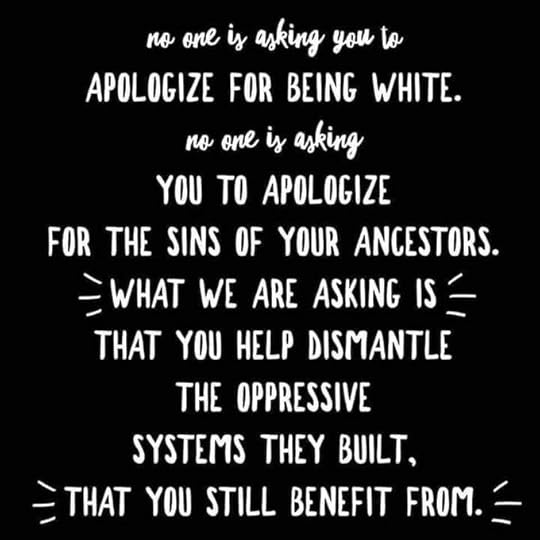
A Harris presidency won't magically do anything at all. It might, depending on her actions, renew the DEI conversation, and refocus it on reparative justice instead of on how we, white people, "feel" when racism is brought up; on the enforced sharing of Black and other non-white people's lived experience in some mystical communion of getting to know "the other side;" on burying and distracting attention from action in the real world, not the therapy arena of workshops.
I'm big on therapy, y'all, don't come at me! It's just that therapy is mental masturbation if it doesn't turn into actual behavioral change. If you as an individual need therapy, go find it. It's never been easier with the multiple online sources readily available at a big variety of out-of-pocket costs. We as a society, however, need action to build back better. (Biden's woefully underused and succinct catchphrase; especially useful when "race" is the subject) The world is on literal fire. No woman, of any skin color or native tongue, can be wasted on a stunted uneducated life of sexual and social servitude. We need literally every single person alive today to take this challenge to change as an instruction not an invitation that can be declined.
This book is a great way to change the prescription in your social glasses.
NB This review is full of links because I realized everything I'm saying in it needs backup, sources, and definitions
This book has inspired me, after 15+ years working for diversity, equity, and inclusion efforts, to reconsider my whole approach - for which I'm deeply grateful. Srivastava's main premise is that the "Let's Talk" therapy-esque approach for antiracist workshops, DEI trainings, etc, is flawed: it forces participants of color to offer their lived experiences for white participants' consumption, it prioritizes 'confessional' and individualistic monologues from white participants, it derails group efforts toward antiracism by dropping everything to console white participants' who cry and/or declare their feelings hurt, and it centers individual thoughts and feelings as Step One and the only step - without making the crucial next step toward interrogating organizational and systemic attitudes that perpetuate white supremacy, and then dismantling those attitudes and structures with concrete actionable change.
SO much of DEI training and workshops focus on talking and feelings. That work is important, but that work is just the first step - not the only step, as "Let's Talk"-style sessions argue. We need to move toward concrete changes and do so in a way that honors the dignity of participants of color.
This book is marketed as more trade/broad audience but is written as more academic audience, which makes the reading a bit dense at times. I read the first section, then the final chapter on actionable changes, before returning to read cover-to-cover. Take your time with this book. While it's repetitive at parts (yes, Robin DiAngelo is a major proponent of "Let's Talk," but so are others, and we don't quite need to hear about her in every chapter) and could at times use more citations from scholars of color who have already argued to stop the talk and move into action, this book is such a valuable and, importantly, change-making read.
This book tackles a fundamental problem of white people wanting to appear not racist rather than actually doing anti-racist work. It's a very important piece of writing that I think any person who has ever caught themself performing "good" behavior instead of working to dismantle inherently discriminatory systems. It's very academic, however, which made it very difficult to get through. A ver important, but difficult read.