Jump to ratings and reviews
Rate this book

‫ملكات الفلسفة: سيرة النساء المهملات في الفلسفة وإرثهن‬

Rate this book
'This is brilliant. A book about women in philosophy by women in philosophy – love it!' Elif Shafak

Where are the women philosophers? The answer is right here.

The history of philosophy has not done women you’ve probably heard the names Plato, Kant, Nietzsche and Locke – but what about Hypatia, Arendt, Oluwole and Young?

The Philosopher Queens is a long-awaited book about the lives and works of women in philosophy by women in philosophy. This collection brings to centre stage twenty prominent women whose ideas have had a profound – but for the most part uncredited – impact on the world.

You’ll learn about Ban Zhao, the first woman historian in ancient Chinese history; Angela Davis, perhaps the most iconic symbol of the American Black Power Movement; Azizah Y. al-Hibri, known for examining the intersection of Islamic law and gender equality; and many more.

For anyone who has wondered where the women philosophers are, or anyone curious about the history of ideas – it's time to meet the philosopher queens.

258 pages, Kindle Edition

First published September 17, 2020

217 people are currently reading
3505 people want to read

About the author

Rebecca Buxton

2 books19 followers

Ratings & Reviews

What do you think?
Rate this book

Friends & Following

Create a free account to discover what your friends think of this book!

Community Reviews

5 stars
394 (37%)
4 stars
431 (41%)
3 stars
197 (18%)
2 stars
25 (2%)
1 star
3 (<1%)
Displaying 1 - 30 of 170 reviews
Profile Image for s.penkevich [hiatus-will return-miss you all].
1,573 reviews14.8k followers
May 12, 2025
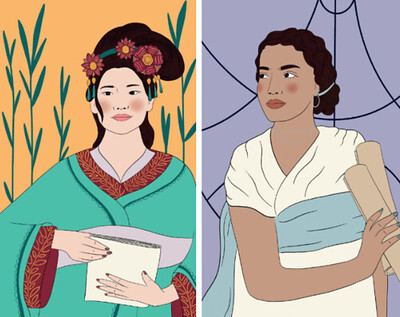
In his Republic, Plato proposed that women were just as capable as men in leading his ideal city and should be chosen to work alongside men in governance and philosophy. Throughout history women have proven this to be true yet their voices have often been dismissed, silenced, overshadowed, or ignored while men continuously take the spotlight. Edited by Rebecca Buxton and Lisa Whiting, The Philosopher Queens is a wonderful book that gives the unsung or overlooked women of philosophy a space to shine. Across 20 chapters each detailing a different woman from ancient antiquity to modern times with each biographical essay by a different writer, The Philosopher Queens offers a blissfully intelligent and accessible overview of the lives, works, and major ideas of each woman. From Diotima in 400 BCE through more recognizable names like Hannah Arendt, Simone de Beauvoir, Iris Murdoch, or overlooked thinkers like Mary Astell, Mary Astell, Sophie Bósèdé Olúwolé and more up to the present day, this is a great book that beautifully reshapes the idea of what a “philosopher” is and can be. Plus the artwork by Emmy Smith that accompanies it is outstanding.
Screenshot 2025-05-07 130932
Ban Zhao (left) & Hypatia

The editors do a marvelous job of bringing together an interesting variety of women and each of the individual essayists do well through their accessible overviews that discuss the advancements and achievements of these women without shying away from problematic aspects or controversial elements too. It is a rather empowering collection that highlights how women have been just as central to philosophical thought across history yet are often denied equal credit.

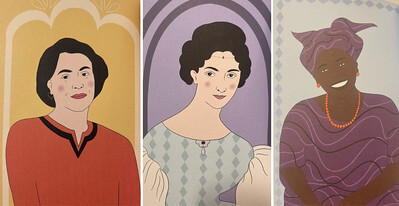
There are some wonderful essays in here such as Hypatia, of whom it was said was ‘a person so renowned her reputation seemed literally incredible,’ and several were completely new to me. Such as protofeminist author Mary Astell, who’s philosophical treatise A Serious Proposal to the Ladies appeared a century before A Vindication of the Rights of Women by Mary Wollstonecraft (who also gets a chapter in here), or bioethicist Anita L. Allen and Yoruba philosopher Sophie Bósèdé Olúwolé.
Untitled
Left to right: Azizah Y. al-Hibri, Harriet Taylor Mill, Sophie Bósèdé Olúwolé

There is also a lot of really insightful looks at the ways these women have been pushed out of the spotlight or denied proper credit for their work. I found the chapter on Harriet Taylor Mill particularly interesting and how she has been unfairly overshadowed by her second husband, John Stuart Mill, ‘despite his best efforts to credit her work as inspirer, discussant, collaborator and co-author.’ Or there is Edith Stein, who’s work on On the Phenomenology of the Consciousness of Internal Time was disregarded and credited entirely to Edmund Husserl and editor Martin Heidegger. This all makes for a really fascinating book that covers a lot of history.
Untitled
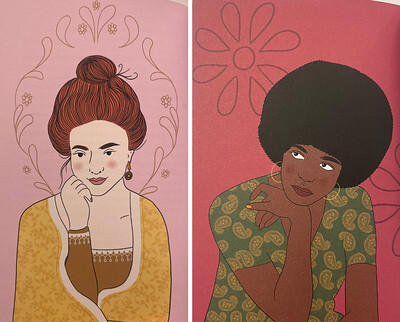
Mary Astell & Angela Davis

I would certainly recommend The Philosopher Queens to anyone as it is a really accessible and interesting overview of unsung thinkers that also does well to emphasize why women have been denied the same credit as men in academics. It was also fascinating to see how during WWII many women were able to make their work known as philosophers, particularly at Oxford where men were significantly absent due to the war. This is a great book and one I will certainly return to often.

4.5/5
Profile Image for Rachael.
216 reviews23 followers
September 7, 2020
I read this book slowly, savouring it - an entry each day (first thing in the morning, accompanying my breakfast). Before I started reading, I had only heard of 7 of the philosophers covered in this book. Of them, I could probably give a semi-detailed account of only 2.
This is a great introduction to a diverse bunch of women across time and the globe, and their various notable contributions to various areas of philosophy (including feminism, political theory, metaphysics, phenomenology, morality and more).

I like the care taken to choose and describe how each woman contributed to philosophy – what they wrote (if they did) and what they taught to others – their ideals and values and theories, their commentaries and developments on previous thoughts and their messages to others and influences on those following them.
This book isn't just a collection of woman philosophers, it also carries undertones throughout speaking of the lack of recognition and injustice against women and their work, and is arguing for us to look out for and take female academics and philosophers more seriously, because unfortunately that bias is still prevalent today.

The entries are written quite passionately. They read not incredibly formally and aloof, but lighter and more accessible, and, importantly, genuine and sincere. The authors are not coming from a neutral factual stance but a position of admiration - they express how good each woman philosopher was, how important their thoughts and work was (and is). Sometimes, with its use of metaphors and at times almost flowery language, the book reads as more descriptive and literature-like than most straight non-fiction. It's a different tone from most other books I've read, but I think I like it that way. The authors aren't trying to be something they're not, but writing in a way true to them. It's as if they are telling you in person about these philosophers (and I admire that).
And despite every entry being written by a different author, they don’t read jarringly different at all – there's actually a really nice flow to the book as a whole.

The only thing is, I want more. These are lovely little introductions, and after each entry I wanted to read more! But that's the point of the book of course - to introduce the reader to a number of women philosophers and their work. This is a starting point opening up all sorts of roads to explore further. (Though, it would be awesome if they made a 2nd version - 20 more Philosopher Queens, exploring some of the additional names listed in the back!)

Oh, and have I not mentioned the artwork yet? It is beautiful, and really adds to the book. Love it.
Profile Image for Matt.
466 reviews
September 5, 2021
This book is written for people like me. Having read a considerable number of “great” books, it is understood that it means I have read a lot of writing from white dead dudes. When confronted with the obvious dismissive criticism due to lack of diversity, I am left with the feeble response that I can only read what is extant and published. Which is true, but also lazy.

Rebecca Buxton and Lisa Whiting compiled Philosopher’s Queens to showcase the published writings of women from various times and parts of the world. They bring the chairs to the table and ensure this collection of brilliant, and often times iconoclastic, women are part of the conversation. Sometimes, they were in the background of their more famous male counterparts, as inspiration, editors, or sounding boards, but often they stand alone. Depending on their time, some were more well-known than others. Thinkers whose ideas also deserve their place among their culture’s respective canons.

Written as short biographies, each by a different author who is part a new generation of women philosophers, this book achieves exactly what it sets out to do. It provides an introduction and map to some of the great women thinkers who have often been sidelined and at risk of being forgotten. As the back jacket succinctly states:
For anyone who has wondered where the women philosophers are, or anyone curious about the history of ideas – it’s time to meet the philosopher queens.

Reducing thinking by dismissing thinkers should not be the goal. The traditional great books from history don’t necessarily need to be disregarded due to their lack of diversity, however, they cannot exist in a vacuum. Rediscovering thinkers marginalized in their own time helps us expand thinking in our time and become better thinkers ourselves. Books like these serve a critical role in that admirable goal.
Profile Image for Raya راية.
845 reviews1,642 followers
November 25, 2023
يحكي الكتاب عن عدد من الفيلسوفات، منهن الكثير لا أعرفهن.
Profile Image for iina.
470 reviews142 followers
July 31, 2020
An excellent introduction into the contributions women have made in philosophy and political thought.

[I received a free copy of this book from the publisher, but all views here are my own.]

This book showcases a selection of female philosophers from Ancient Greece to modern day, with a few pages for each. I knew about some of these women, but most were quite unknown to me. The text is accessible to non-experts but enjoyable to those who know more about the topic; I was transported back to my student days (in the best way, I loved reading and studying these sorts of things).

There is a good variety and diversity in the philosophers selected, and at the back of the book there are resources for further reading, and a longer list of other female philosophers one can research.

Profile Image for LynnDee (LynnDee's Library).
655 reviews42 followers
July 2, 2021
3.5/5

I'm definitely down to read about forgotten women of history, especially in fields like philosophy where I only knew about male philosophers. My issue, which is more me than the book, is that my brain is just not wired to really get philosophy. So I appreciated this for the historical aspect but the philosophies these women were known for just went over my head. I would still recommend it though for anyone interested in either women's history, philosophy, or both.
Profile Image for Nadia.
1,530 reviews529 followers
December 30, 2024
عمل ملهم عن الفلسفة في صورتها النسائية .
Profile Image for Dunya Al-bouzidi.
695 reviews84 followers
July 2, 2025
The review in English is below.

ضمّ الكتاب نُبذٌ تعريفية مبسترة ل��دد (20) فيلسوفة من مختلف أصقاع الأرض والحضارات، كتب كل مقال بواسطة باحثة مختلفة، ثم اختتم بقائمة انضوى تحتها ما يربو عن التسعين فيلسوفة مكتفين بذكرهن اسمًا فحسب تاركين للقرّاء مهمة البحث حولهن أكثر، و��عضهن مفكرات شهيرات مثل: سونتاغ، ڤيل، نوسباوم، باتلر، بن حبيب، القديسة تيريزا الأڤيلية... وغيرهن عديدات.

منحتُ الكتاب تقييمًا متوسطًا لدواعي جمّة بوسعي إيجازها ضمن قسمين:

1) أمور شخصية لا تتعلق بالكتاب عينه

أ. وجدت الأسلوب الكتابي المتّبع بمعظم المقالات باهتًا ومُضجرًا ولا يتلاءم وذائقتي.

ب. معرفتي القليلة رأت بعض النصوص عادية من حيث معطياتها كوني على دراية بها، نظرًا لاهتمامي الطويل بالفلسفة الأنثوية أو الذات المفكرة الأنثوية، إذ وجدتُّ كتاب (الفلسفة بصيغة المؤنث) أكثر إمتاعًا ونفعًا ولعلّ ذلك مردّه أنّ المؤلِّف خصصه للتعمق في حياة وأعمال عدد (08) فيلسوفة فحسب، لذا فقد امتلك مساحة أكبر للغوص في كل واحدة منهن، ما مكّن القارئ -أنا على الأقل- من الاندماج والتّماهي مع فلسفتهن بصورة أفضل مما فعلت مع هذا الكتاب الذي كان تمهيدًا ربما نافعًا لمن يفتقر لمعرفتهن أو يمتلك الحد الأدنى فحسب منها.

ج. رغم أنّي أحببت بعض المقالات أكثر من سواها في الطرح أو الموضوع ذاته إلّا أنّي إجمالًا رجوت لو كتبن الباحثات حول بعض ممن ذكرتهن أعلاه واللائي اكتفين بالإحالة عليهن دون أي تفصيل، فسونتاغ مثلًا مفكرة جليلة بُخس حقها وفلسفتها وكان حريٌّ لو أنصفت في متنه إلى جانب ڤيل أيضًا.

د. ما رأيته كمحاولة لتلميع صورة فيلسوفة صينية 'بان تجو' تقول بعبودية المرأة باستعمال لغة محبّبة وضمنيّة أمر أرفضه على نحوٍ شخصيٍّ ولم أحبذه من مؤلفة هذه المقالة تحديدًا.

2) أمّا المآخذ المتّصلة بالكتاب ذاته كما وجدتها فهي:

أ. ورود أخطاء قليلة بمتنه، سواء حول عدد أشقّاء فيلسوفة لا تستحضرها ذاكرتي الآن -بيْد أنّ المراجع استدرك الخطأ بتوضيحٍ في الهامش- أو أخطاء تاريخية وردت حصرًا -بحسب علمي- في مقالة 'إيدت شتاين' (1891-1942) حيث تكتب الباحثة أنّ إيدت ألّفت كتابها (المتناهي والكائن اللانهائي) "عام 1950 حين كانت راهبة" أي بعد قرابة ثماني سنوات من وفاتها، وقد وقع الخطأ ثانية حينما كتبت "أصبحت [تقصد شتاين] مساعدة لدى هوسرل في جمع نصوصه حول فينومنولوجيا الزمن والعمل عليها وتحويلها إلى مخطوطة جاهزة للنشر، وقد كانت تلك النصوص بمثابة مجموعة متباينة قوامها: قائمة من المحاضرات تتأرخ بدءًا من عام 1950 فصاعدًا."

ب. من أجلّ المآخذ -بتقديري- على الكتاب تجاهله التّام لشخصية فلسفية عظيمة وذات سطوة وتأثير فلسفي وتعليمي مثل 'أريتي القورينية' وليس زعمي مردّه انتماءها إلى ليبيا أو كونها فيلسوفة أمازيغية، بل كونها واحدة من أهم الفيلسوفات الأوائل المعاصرة لسقراط، حيث أسست أسرتها بدءًا من والدها "أريستبوس" رفيق سقراط وصولًا بها ثم ابنها مدرسة فلسفية بمدينة قورينا -شحات حاليًا- وقد كانت المدرسة القورينية القائمة على الفلسفة الهيدونية ومبدأ اللّذة لها مرتكزاتها، ومبادئها المتينة، وشخوصها المكينة. (للاستزادة حول الفلسفة القورينية أقترح مطالعة كتاب 'ميشيل أونفري' الموسوم "اكتشاف اللّذة: شذرات قورينية").
فضلًا عمّا سلف فإنّ أريتي درّست الفلسفة لسنوات جمّة وللعديدين قبل هيپاتيا بقرون عديدة فبينما كانت الأخيرة فيلسوفة خلال القرن الثالث - الرابع ميلادي، كانت الفيلسوفة القورينية تؤدّي المهمة عينها ولربما أكبر بالقرن الرابع قبل الميلاد، فالمسافة الكرونولوجية الفاصلة بينهما عميقة، وقد حظيت هيپاتيا في الكتاب بمكانتها المستحقّة فيما لم تُذكر المفكرة الجليلة صاحبة الإسهامات البارزة أريتي حتى في قائمة ثلّة الفيلسوفات بأواخر الكتاب.

ج. إنْ كان إغفال أريتي القورينية قابل ولو بصورة ضئيلة للغفران فإنّي -بلا ريب- لا أفهم كيف يغتفر إغفال فيلسوفة جليلة بإسهامات كتابية وفلسفة مؤسسة حصرًا باسمها وضلوع كبير في عالم الفلسفة وعالم الأدب على السواء، أقول لا أفهم كيف أغفلت فيلسوفة بحجم وعقل وفكر "آين راند". حتى من قائمة الكتاب الاستدراكية في آخره، رغم ضمّها لقرابة المئة مفكرة!

د. كون الكتاب اعتمد تعريفًا موسّعًا لمفهوم الفيلسوف في كثير من إدراجاته فإنّ إغفال بعض مفكرات العرب المائزة في الفلسفة لا سيما النسوية منها مثل: مي زيادة، هدى الشعراوي، نوال السعداوي، مثلبة إضافية.

وبالمجمل فإنّ العمل تمتّع بمآثره أيضًا ولعلّ أوّلها بالنسبة لي كقارئة عربية عمل المترجم الحسن، البديع واللائق الذي يستأهل الثناء والإشادة.

فضلًا عن انتفاعي من بعض المقالات بالنظر لعدم معرفتي ببعض الفيلسوفات المدرجات ضمنه وكذا بعض المعلومات النافعة لي كباحثة قانونية لا سيما المقال المتعلق بالمفكرة 'أنيتا ل. آلن'.

كما أحببت للغاية فصل 'جورج إليوت' وأعدّه أفضل النصوص بحسب ذائقتي. وساعدني العمل على الانتقال من مستوى الجهل التّام بفيلسوفات مثل: 'بان تجو'، 'لالّا'، 'ماري وارنك'، 'آيرس يونغ'، إلى المعرفة الموجزة لأهم محطّاتهن الفكرية والحياتية.


The book offers concise and simplified profiles of twenty female philosophers from various parts of the world and across different civilizations. Each essay is written by a different female scholar. The book concludes with a list of more than ninety additional philosophers, whose names are merely mentioned, leaving readers to further explore them on their own. Some of these are well-known thinkers such as Susan Sontag, Simone Weil, Martha Nussbaum, Judith Butler, Seyla Benhabib, Saint Teresa of Ávila, and many others.

I gave the book an average rating for reasons I can summarize in two main sections:

1) Personal considerations unrelated to the book itself:

a. I found the writing style adopted in most essays bland and tedious, and it didn’t suit my personal literary taste.

b. Due to my modest familiarity with feminist philosophy and the concept of the female thinking subject, I found some essays to be rather basic in their content, as I was already familiar with much of the information. In contrast, I found the book Philosophy in the Feminine more enjoyable and beneficial—perhaps because its author focused in depth on just eight philosophers, allowing more room to explore each one thoroughly. This made it easier—at least for me as a reader—to connect with and immerse myself in their philosophies. This book, by contrast, felt more like a general introduction, which may be useful for those who lack prior knowledge or have only minimal familiarity with the subject.

c. While I appreciated some essays more than others, either for their presentation or the subject itself, I overall wished the authors had written about some of the thinkers only mentioned by name at the end of the book. For example, Sontag is a remarkable thinker whose intellectual legacy and philosophy were not done justice here. The same applies to Simone Weil.

d. I personally objected to what I saw as an attempt to soften or polish the image of the Chinese philosopher Ban Zhao, who advocated for the subservience of women. The author of that essay employed language that was overly sympathetic and implicitly endorsing, which I found problematic.

2) Issues directly related to the book itself:

a. The book contains a few factual inaccuracies. One involved the number of siblings of a philosopher—though I can’t recall exactly who, and the editor did correct the error in a footnote. However, more serious historical inaccuracies appeared in the essay on Edith Stein (1891–1942). The scholar writes that Stein authored her book Finite and Eternal Being "in 1950 while she was a nun"—that’s nearly eight years after her death. The same error appears again when the author claims that Stein helped Husserl collect and prepare his lectures on the phenomenology of time, which are said to date “from 1950 onward,” again incorrectly attributing work to her posthumously.

b. One of the most serious omissions, in my view, is the complete neglect of a great philosophical figure with immense influence and educational impact: Arete of Cyrene. My objection isn’t due to her Libyan or Amazigh identity, but rather because she was one of the earliest known female philosophers and a contemporary of Socrates. Her family—including her father Aristippus (a companion of Socrates) and later her son—founded a philosophical school in Cyrene (modern-day Shahhat, Libya). This Cyrenaic school, built on the philosophy of hedonism and the principle of pleasure, had its own firm foundations, principles, and prominent figures. (For more on Cyrenaic philosophy, I recommend Michel Onfray’s book The Discovery of Pleasure: Cyrenaic Fragments.)

Moreover, Arete taught philosophy for many years and to many students, centuries before Hypatia. While Hypatia was active in the 3rd–4th century CE, Arete was doing the same—perhaps to an even greater extent—in the 4th century BCE. The chronological distance between them is considerable. Hypatia rightly received her due place in the book, yet Arete, despite her significant contributions, wasn’t even mentioned in the appendix list of philosophers.

c. If the omission of Arete of Cyrene is even remotely forgivable, I truly cannot understand the exclusion of a philosopher as prominent and influential as Ayn Rand. With her extensive written contributions, a fully developed philosophical system that bears her name, and her significance in both philosophy and literature, it’s baffling that she was entirely left out—even from the book’s supplementary list at the end, which includes nearly a hundred thinkers!

d. Given that the book adopts a broad definition of “philosopher” in many of its entries, I find it additionally disappointing that it excluded prominent Arab female thinkers who made significant philosophical contributions—especially in feminist thought. Figures such as May Ziadeh, Huda Shaarawi, Nawal El Saadawi deserved to be included.


In conclusion:

Despite its shortcomings, the book has its strengths. For me as an Arab reader, the most notable merit was the excellent, elegant, and dignified translation, which deserves praise and recognition.

I also benefited from certain essays, especially those introducing philosophers I hadn’t previously encountered, along with useful information that aided me in my legal research—particularly the essay on Anita L. Allen.

I especially loved the chapter on George Eliot, which I consider the best in the collection according to my taste. This book also helped me move from total unfamiliarity to at least brief knowledge of the intellectual and biographical highlights of figures such as Ban Zhao, Lallā, Mary Warnock, and Iris Young.
Profile Image for Busra.
229 reviews37 followers
December 20, 2022
Though introductory, this book gives enough of an insight — in a very palatable way — into many impressive philosophers whose work I now feel obliged to look into
38 reviews1 follower
January 22, 2022
before reading i knew maybe 4 of the women in here, these women are so underrated and their ideas are so integral to so many facets of philosophy.
Profile Image for Emma.
956 reviews44 followers
September 21, 2020
The Philosopher Queens is a beautifully illustrated non-fiction book that introduces the reader to the forgotten female voices of philosophy. A subject long dominated by the works of men, the author's of this book decided it was time to bring those forgotten voices into the light for all to hear and finally give them the credit for their contributions they deserve.

The book is written as a series of essays that each focus on a different woman. The essay outlines the key points of her ideas and influence on philosophy, as well as personal details such as her upbringing, education, personal life and character. At the end of the book there is information about where you can read more about them should you wish to further explore their ideas. For me, it was the personal details combined with the stunning portrait of each woman that accompanies each essay, that brought each woman to life and made them leap from the pages in vivid technicolour.

I am not a philosopher. I've never studied it, and know very little about the subject. But I found this to be a fascinating read that educated me without feeling too heavy or academic. It surprised me to see some familiar names in this book, like George Eliot (Mary Anne Evans, to give her non-pen name), Iris Murdoch and Angela Davis, and I will certainly look at them, and their impact on our society, differently after reading this book.

If you're looking for something different that you can pick up and read a little of when you have some time here or there, something educational or a book about amazing women and their ideas, then this is a book for you. It is in an important book that I hope will come to be studied in schools and universities for many years to come so that the future generations never forget the Philosopher Queens.
Profile Image for Suhail.
37 reviews11 followers
July 4, 2021
As a student-turned-teacher of philosophy, this is such an important book. When I studied philosophy, I was lucky enough to have the opportunity to study an elective on feminist philosophy - which wasn't until my final year of undergraduate.

Whilst I loved learning about feminist philosophy and thought, what frustrated me was that all these incredibly wise and important female philosophers were simply lumped into one module which you could elect to study if you so wished. In reality, these women ought to have been taught to me when I studied epistemology, metaphysics and moral philosophy in their own rights - rather than being othered into one stock-module.

Rebecca Buxton and Lisa Whiting do a fantastic job of finding diverse female philosophical voices to write and give credit to diverse female philosophers in their own right, as they deserve to be told. What I love most is that this book doesn't simply glorify them, either. Notably when discussing Hannah Arendt, her anti-black racism is explicitly condemned and openly discussed and critiqued, as it should be.

What this book does is expose the world to a handful of philosopher queens from the presocratic era up to contemporary philosophy. We get to explore non-Western, nonwhite and non-Christian philosophers through this book - the holy trinity of Philosophy as an academic discipline (at least from my experience of both teaching and studying philosophy).

This book is a gem, and it's one I'll be using to shape my own teaching of philosophy in the future. I hope that it's read by anyone who is studying or teaching the subject, or even anyone who simply wishes to broaden their minds into the holistic, eclectic and insightful eyes of the women of philosophy.
Profile Image for Joshua Stein.
213 reviews161 followers
October 2, 2023
Strongly recommend this to anyone interested in philosophy. It's great reading as a contextualization of women in philosophy, but it also provides really valuable insights regarding philosophy as a whole, the role of gender, class, and race in the field throughout history (and today). I got a hardcover version (as a member of the kickstarter campaign for it) and I recommend that you do too, as the illustrations are lovely, the quality of the book is excellent, and it's the kind of thing that can be fun to flip through and learn for a short burst, as each chapter stands on its own and each is excellent.
6 reviews
June 6, 2025
„Sie [Simone de Beauvoir] setzte sich mit Worten und Taten dafür ein, dass Frauen sich als ‘das Auge, das sieht’ wahrnehmen, als freie Subjekte in einer von den eigenen Begierden und Freuden geprägten Welt – und nicht nur als Objekte, die angesehen werden“ (S. 100).

Philosophinnen bietet einen Einblick in das Leben und Schaffen von 20 Philosophinnen – von der Antike bis heute – und wirft somit ein Licht auf den tiefgreifenden Einfluss dieser Frauen auf diesem Gebiet; und wie sie sich, damals wie heute, gegenüber Sexismus und Rassismus durchsetzen. Bis heute bleibt die Philosophie, trotz großer Zahl von Studentinnen, eine Männerdomäne; Männer unterrichten, was Männer vor ihnen hervorgebracht haben. Kaum eine Person kann überhaupt eine weibliche Philosophin nennen. Die Herausgeberinnen Rebecca Buxton und Lisa Whiting sowie alle Autorinnen, die die Kapitel in diesem Buch schrieben, schaffen es, die Vielschichtigkeit der Ansichten von Frauen auf verschiedene Teilbereiche der Philosophie, von Ethik über Recht bis hin zur Privatsphäre, deutlich zu machen.

Philosophinnen ist für Laien verständlich geschrieben und erklärt einige philosophische Konzepte. Durch Bücher- und Artikelvorschläge sowie die Quellenangaben und ein Anhang mit den Namen weiterer Philosophinnen ist es außerdem eine Inspirationsquelle für weitere Recherchen. Allerdings ist sehr deutlich, dass dieses Buch kein Einstieg in die Philosophie an sich ist. Da der Kanon der Philosophie (bisher) von westlichen männlichen Philosophen gestellt wird, werden diese, wenn überhaupt, nur angerissen.

Dennoch, oder vor allem deswegen, hat dieses Buch mein Interesse an der Philosophie, allgemein und mit Fokus auf den Einfluss der Frauen, geweckt.
Profile Image for Malcolm.
1,975 reviews575 followers
June 27, 2021
Many of us have an image of ‘a philosopher’ – usually an earnest looking chap thinking deep thoughts, almost certainly a white guy, maybe bearded and with a good chance of being dead…. I mean, it’s philosophy and for those of us who studied it as undergraduates there was a heavy emphasis on dead white guys. Although as I have discovered since I started to work in and around the field, there’s a quite few women and people of colour, and so far I’ve not encountered any of the deceased – a few ghosts perhaps, but that’s the limit.

Yet, that’s precisely the image the lies behind this useful and valuable collection of short intellectual biographical essays about women philosophers. The essays, covering 20 women from the ancient to the living, are well-pitched to an interested non-specialist audience, including some general biographical material and a short discussion of key ideas and reasons why she’s significant and total between 6 and 9 pages. Covering figures from Diotima of Mantinea, who appears in Plato’s Symposium, to most the recent, Anita Allen, a specialist in bioethics and jurisprudence (who also is a contributor to this collection), 15 of the 20 are Euro-American writers from the modern era (that is, born after the middle of the 18th century) – but then that’s representative of much of the work we see in the discipline as a whole.

The editors, Rebecca Buxton and Lisa Whiting, both currently graduate students, seem to have sought to be as inclusive as possible noting the limit on numbers – so alongside Diotima, the ‘ancient’ world is represented by Ban Zhoa (Han China, 1st century CE) and Hypatia (Egypt, 4th century CE) while the transition to more recent work opens with Lalla (Kashmir, 13th century CE). The contemporary era also features a number of women of colour – including Allen, Angela Davis, Sophie Bosede Oluwole and Azizah Y Al-Hibri. To their credit also Buxton and Whiting have not limited themselves to women who wrote stereotypically or conventionally ‘philosophical’ texts, although figures such as Hannah Arendt, Mary Midgely and Simone de Beauvoir appear – so George Eliot features although known primarily as a novelist, Lalla’s remaining works are mainly poetry and much of Harriet Taylor/Mill’s work is subsumed into John Stuart Mill’s, while, as noted Diotima appears as a discussant in Plato’s work.

As I reflected (as I say, as one who works in the field) one the thinkers considered and how they popped my bubble-of-smugness about ‘knowing the field’ I was reminded how useful and important these collections are, to rupture that image of the philosopher as DWEM (with or without beard). It also comes with a list of early 100 other ‘philosopher queens’ to explore, and a reading list for the 20 deal with including key works and commentaries – although for Hypatia and Diotima there are only commentaries.

On top of that, it’s a gorgeous book (mine is a hardback – but that might be for early funders only), on good quality heavy paper with gorgeous sketches of each woman discussed. Unbound has done well with this production. It’s a fabulous introduction to women we should know more about. It’s also an indictment of the field that we need these kinds of collections, but not a surprising indictment….. Highly recommended.
Profile Image for Kamakana.
Author 2 books415 followers
January 28, 2023
if you like this review, i now have website: www.michaelkamakana.com

220622: sometimes friends ask me how I decide on books to read, authors, philosophy. this book is one very recent resource. there are twenty women mentioned here, eleven of whom are read of, four of whom are read, as follows:

diotima (ro), ban Zhao (ro), Hypatia (ro), lalla, mary astell, mary Wollstonecraft (ro), harriet taylor mill, George Eliot (ro), Edith stein (ro), Hannah Arendt (ro, r), simone de beauvoir (ro, r), iris Murdoch (ro, r), mary midgley (ro, r), Elizabeth anscombe, mary Warnock (ro), sophie boede oluwole, Angela davis (ro), iris Marion young, anita l allen, azizah y al-hibri... want to particularly read these chinese, african, arabic thinkers...

have now read 661 books of philosophy of all sorts but, including this one, only 70 have been feminist, this is a deficit I wish to improve. some of these women are very familiar (de Beauvoir), whose brief article makes me reassess her thought, her empathic existentialism, vs Sartre's more conflictual version. some I have really enjoyed reading, particularly Science and Poetry by Mary Midgley, which I read in a run of her accessible, entertaining work. as these are individual authors, some concentrate on bio, some on ideas- I like ideas best but some cannot be separated from bio (Angela Davis, iris Marion young), some such as iris Murdoch has written both fiction and philosophy The Unicorn and Sartre: Romantic Rationalist, as has de Beauvoir Memoirs of a Dutiful Daughter, The Ethics of Ambiguity. there is also list of more names at the back, there are some read who are not here (Julia kristeva, Luce irigiray)... generally, this is how to read, though the u library might not have many of these authors...
Profile Image for Luisa.
169 reviews6 followers
January 16, 2023
wollte verstehen, ob weibliche philsophinnen die philosophie mit mehr sinn erfüllen. habs anfangs immernoch nicht gerafft - was das ganze soll, meine ich - aber die letzten kapitel über zeitgenössische denkerinnen, haben es mir dann doch verständlicher gemacht, und sogar noch interesse an einer gründlicheren auseinandersetzung angefacht.

gemerkt: viele philosophinnen waren größtenteils romanautorinnen, und haben ihr denken durch dieses genre zum ausdruck gebracht.
Profile Image for Courtney Ferriter.
630 reviews37 followers
April 9, 2021
** 4 stars **

A delightful collection that gives an overview of about 20 women philosophers, some well-known like Simone de Beauvoir and Hannah Arendt and others less well-known like Lalla, Sophie Bosede Oluwole, and Ban Zhao. Each entry in this anthology was written by a different author, and as a result, some entries are heavier on biographical detail while others are more detailed about the subject's contributions to philosophy (I personally preferred the philosophy discussions).

For a couple of entries, there seemed to be too much focus on the husband or partner of the woman in question, but otherwise I quite enjoyed it overall and it made me interested in checking out more of the work of some of these women. I would recommend this volume for anyone interested in feminism, philosophy, or women in politics.
Profile Image for Chris Meinke.
27 reviews
September 1, 2020
This is a compelling collection of short biographies and overviews of 20 female philosophers from antiquity to present, written by 20 contemporary female philosophers. A great read, and a book destined to be one of those references that refuses to be shelved, as it presents a sort of amuse bouche of each thinker, giving you enough to whet your appetite and then providing a resource section listing primary and secondary sources for each for further exploration. The collection also includes a chronological list of dozens of other women philosophers not included in the text (volume II?) not to mention the contributors themselves who are well worth looking in to. I should mention I was also a crowdsource contributor to this project, so perhaps have a little bias. Honestly though, I received my BA in philosophy in 1984 without studying a single female philosopher - that is a tragic gap I’m still trying to fill. Can’t wait to dig deeper into some of the women featured in this collection.
Profile Image for Jane Hunt.
Author 3 books114 followers
September 17, 2020
The Philosopher Queens is a beautifully illustrated collection of biographies of female philosophers from ancient time to the present time. This is just a few of the women who most books on great philosophers overlook, more are listed at the end. There is also a list of further reading sources and details about the contributors. A colourful illustration prefaces each concise biography. It is of interest to those who like to learn but also a textbook for those studying philosophy more widely.

This is a well-presented book. It informs and intrigues the reader to find out more about these remarkable women and their work.

I received a copy of this book from Unbound publishing in return for an honest review.
Profile Image for Valeriia Arnaud.
381 reviews42 followers
November 26, 2021
Эту книгу я читала по главе с ридинг-группой, которая разбирала каждую философиню по отдельности, но в какой-то момент я сдалась и решила, что пластырь отрывать лучше одним махом.

Мне очень тяжело дается философия, и, скажу честно, эта книга не очень помогает в ней разобраться. Я понимаю, что писали ее разные авторы и публиковали на средства краудфандинга, ждать какого-то доходчивого текста было, наверное, наивно, но здесь собралось всё, чего я очень не люблю: топорность и мозгодрочерство.

Мы с моей обезьяной с барабанами в голове had a good time. :)
Profile Image for Isa.
398 reviews
June 1, 2022
A clear and accessible yet detailed introduction to women philosophers, both well and less known inside academic circles.
Profile Image for Natalia.
94 reviews4 followers
December 10, 2023
Very inspiring stories and very interesting philosophical content! I admire every single philosopher portraited as well as the scholars who wrote the texts!
Displaying 1 - 30 of 170 reviews

Can't find what you're looking for?

Get help and learn more about the design.