Three innovators offer a road-tested framework for career development that helps anyone make real progress on their path when they switch jobs.
Each year, an estimated 1 billion people switch jobs worldwide. A lucky few stumble into the role of their dreams, but hundreds of millions are disappointed. What if, when looking for a job, we could make more informed choices to better select the opportunity we seize? What if the power to move along our career paths lies with each of us, as opposed to hiring managers or the market?
According to the “Jobs to Be Done” theory of product design—customers don’t simply buy products; they recruit them to do specific jobs that solve a problem. Job Moves adopts this model to view jobs as positions we “hire” to help us make progress in our lives and careers. Based on research conducted with over a thousand professionals at all stages of their careers, Ethan Bernstein, Michael B. Horn, and Bob Moesta find that this notion bears out no matter your age, stage, or trajectory.
Key to this new, universal approach is understanding our priorities at the specific moment when we make each move. This team has created a process to help individuals identify the current circumstances driving them to look for new opportunities, the experiences they hope to gain in a new job, what tradeoffs they’ll gladly make in return, and how to learn-before-switching if a new job will deliver. The result encourages job seekers to look beyond a title or company for a more holistic view and ask not what you can do in a job, but what a potential job can do for you.
Full of useful activities and tools, Job Moves offers the timeless framework of our generation to help anyone create a career that will be happier and more fulfilling.
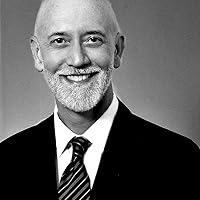
Ethan Bernstein is the Edward W. Conard Associate Professor of Business Administration in the Organizational Behavior unit at the Harvard Business School, where he teaches the Developing Yourself as a Leader and Managing Human Capital courses. He spent five years at The Boston Consulting Group in Toronto and Tokyo and two years in executive positions at the Consumer Financial Protection Bureau in Washington DC, including Chief Strategy Officer and Deputy Assistant Director of Mortgage Markets. He currently serves as a board member of Protocol Labs and ModuleQ. Originally from Los Angeles, he earned his AB in Economics at Amherst College and his doctorate in management at Harvard, where he also received a JD/MBA.
TBA come back to this if I ever go back to corporate etc
Main Notes: - when you accept a job, you’re actually hiring that company. You’re making a choice about how to spend your time and what you’ll accept in return - Making compromises can feel good when you know exactly why you’re making them. - No job ticks every box - be ready to help shape roles to fit what you need
Other Notes: - Standard career advice can feel mechanical, missing what really matters for your growth. - Most of those billion people who switch jobs every year regret something about their move. It makes sense when you consider that traditional career advice with its focus on basic ideas like climbing ladders or chasing bigger titles and salaries is missing the mark. - Looking deeper at thousands of job switchers shows four main types of progress people want. Some need to escape difficult situations or jobs with no future. Others want more control over their schedule and life outside work. A third group tries to match their skills better with what companies value. And the last group looks for new challenges after hitting certain goals. - Working with someone you trust can help you see what really made you change jobs. Look past simple reasons such as money or commute time to find what pushed you away from old jobs and pulled you toward new ones. (* cough * toxic overworking and drinking culture and everything else) - Looking at your past career moves sets up the next two steps: understanding what gives you energy and what skills you bring to the table. - She found that working with people from different backgrounds lit her up, while office drama left her tired. She loved learning new things but got bored with tasks she’d done before. Making this kind of energy map showed her patterns she hadn’t seen. - career balance sheet. Your skills, background, and training work like assets that can grow or shrink in value. You need to know which parts of your skill set are becoming more valuable and which might need updates. - Do you want to build on what motivates you now, or change it completely? And do you want to use your current skills, or try something new? This creates four different paths. Some people need to start fresh with both – they’re trying to “Get Out.” Others want to keep using their skills but change how they spend their time – they’re working to “Regain Control.” Some want to keep what makes them tick but need their skills valued differently – they’re aiming to “Regain Alignment.” And some want to build on everything that’s working – they’re ready to “Take the Next Step.” - Each came with different trade-offs. A staff job meant steady money but less choice in topics. Freelancing offered freedom but less security.
There is nothing new that these authors share here in terms of career transition but they’ve come up with a somewhat fresh framework that incorporates all the normal career transition steps that all good career books share.
Ethan Bernstein is a professor of business administration at Harvard Business School, Michael Horn is a cofounder of the Clayton Christensen Institute and previous co-author with the late Christensen, and Bob Moesta is a fellow a the Clayton Christensen Institute. These three authors teamed up for 2024's Job Moves, a how-to manual for people looking to switch jobs or industries. They identify 4 "quests" of job seekers:
Get Out - people in toxic work situations who want a new job -- any job Regain Control - people whose sense of balance and autonomy is thrown off by their current jobs and are seeking new jobs where they have more control Regain Alignment - people who feel their skills aren't valued and respected in their current role, and looking to find a new job where they and their skills are respected Take the Next Step - people who've reached a professional or personal milestone and are looking for a new role (often a diagonal promotion) to reflect that
The authors present a variety of exercises potential job seekers can work through to identify which of the four aforementioned "quests" they're on (through analyzing factors that are pushing one away from their current role as well as pulling one toward a new role), developing job prototype templates, conducting informational interviews with people in interesting jobs, and developing a personal elevator pitch to sell prospective employers on one's candidacy. Many of these resources can be accessed by sellinginputting an email on the book's website.
Overall, an interesting read with exercises that could be helpful for those who feel miscast in their current roles/industries and who are looking to change industries. This book is probably less useful for people who plan to stay within their industry and general job role and focus their job search on internal maneuvering and interviewing with competitors.
My statistics: Book 122 for 2025 Book 2048 cumulatively
The book opens by addressing a universal truth: a billion people switch jobs annually, yet most regret some aspect of their decision. Traditional career advice often falls short, focusing on external metrics like titles or salaries while ignoring the deeper factors driving real progress. The authors propose a nine-step process, rooted in research, that enables individuals to navigate career transitions with purpose and precision. This framework emphasizes aligning personal growth, values, and skills with professional goals.
The journey begins with a self-audit of past career moves. By examining why you left previous roles and what drew you to new ones, you can identify patterns that reveal underlying motivations. For example, some seek to escape unsatisfactory situations, while others yearn for autonomy, skill alignment, or new challenges. Understanding these drivers lays a foundation for intentional decision-making. The case of Alex, a digital project manager faced with relocating due to his company’s restructuring, illustrates this. His analysis revealed that his true priorities were flexibility and autonomy, not just avoiding relocation.
Next, the authors introduce the concept of mapping your energy and evaluating your skills. By identifying tasks and environments that energize or drain you, you gain clarity on what sustains your enthusiasm. Clara, a lab manager turned physical therapy assistant, realized she thrived on collaboration and learning, while routine tasks bored her. Combining this energy map with a “career balance sheet” of your skills allows you to see which abilities are valuable, need updating, or align with market demands. For example, Avery, who transitioned from coding to product management, assessed her technical expertise, leadership potential, and industry knowledge to chart a path forward.
With this understanding, the next steps involve defining your career goals and envisioning potential futures. The authors outline four pathways based on whether you want to maintain or change your energy sources and skills: escaping, regaining control, realigning, or advancing. Clara’s analysis placed her in the “regain alignment” category—she wanted to leverage her research background while maintaining flexibility. By brainstorming and prototyping different scenarios, such as becoming a climbing instructor or science writer, she tested these ideas through conversations and research. This exploratory phase revealed unexpected insights, like the administrative-heavy reality of a National Geographic role she initially found appealing.
Once viable options are identified, the authors emphasize filtering these choices through your priorities and testing them against the job market. This involves a realistic assessment of trade-offs and aligning opportunities with personal values. Clara’s enthusiasm for teaching climbing diminished when she realized it wouldn’t challenge her intellectually. On the other hand, science writing emerged as a strong contender, aligning with her skills and energy drivers. Networking and informational interviews helped clarify job descriptions and daily responsibilities, ensuring that her choices matched her expectations.
The final stages focus on crafting a narrative that connects your past experiences with your desired future. Like a compelling story, your career trajectory should highlight pivotal moments that demonstrate growth and purpose. Alex used this approach to secure a customized role that aligned with his goals, presenting his needs and strengths as a win-win for himself and his employer. This step also involves refining your “personal cheat sheet” to articulate what success looks like for you and how potential employers can support it.
The authors advocate for proactive negotiation and flexibility when pursuing new roles. Job descriptions should be seen as starting points rather than rigid frameworks. Clara’s research into science writing revealed varying interpretations of the same title, allowing her to target roles that aligned with her preferences. Additionally, the authors encourage shaping roles to fit your needs. For instance, one software developer negotiated a four-day workweek by demonstrating how it enhanced her productivity.
The book concludes by reinforcing the value of this systematic approach. By reflecting on past choices, identifying energy drivers and skills, defining goals, prototyping futures, and crafting a compelling story, you can make informed career moves that prioritize meaningful progress over superficial advancement. This process not only reduces regret but also aligns your professional life with your personal values and aspirations.
In summary, "Job Moves" offers a thoughtful roadmap for navigating career transitions. By combining introspection, strategic planning, and real-world testing, the nine-step framework empowers readers to design careers that fulfill their potential and enrich their lives. Through practical examples and actionable insights, the authors demonstrate that better choices lead to better careers—and ultimately, a better life.
An estimated 1 billion people switch jobs annually, worldwide. More than 98 million Americans left their jobs over a 2-year period, sparking the "Great Resignation."
Employers DON'T actually hold most of the cards, and if you're feeling frustrated in the job you have, "Bitchin's not switchin"(as the book says!) but there are steps you can take to avoid that frustration by taking a look at what makes you tick and crafting a career story to help you envision your ideal day, and craft a personal elevator pitch of what you alone can offer. Kind of a more detailed, more introspective take on the USP you can begin to brand yourself with.
Far too many people (nearly 60 %) remain frozen in jobs they "quietly quit." Doesn't that mean far too many people are clocking in to a job but mentally staying unchecked... that can be dangerous for both the consumer at worst, and unpleasant at its best. No one likes "work" but fortunately this book (a quick read, I might add.), and this accompanying website the authors founded, may help us regain some passion (and maybe an autonomous feeling) for yes, even when we still have to take orders from a boss, to get a paycheck.
"The final word is yours. You're the one hiring your next job. Our exercises and activities are just meant to deepen your awareness of your priorities and build your confidence that you know what you truly want as much as you march through the job-switching process."
You're the one hiring your next job.
Written by 3 authors-men who know a lot about business, and story(marketing), and career building, this book Job Moves takes you on a 9- step journey of how to gain clarity as to where you'll be most happy, er... content, in a career.
This was a very helpful companion as I go through my own job search. This book walks the reader step-by-step through how to analyze what you want in your next job and consider your non-negotiables and trade-offs. You analyze past job experiences in the hopes of not making the same mistakes in your next job. All of the activities and graphics were very helpful and I'll keep working through them.
At times, I had a hard time that what they were arguing for with autonomy over your next job was so realistic, especially in this economy. Things like "hiring your employer," and potentially changing industries according to the prototype you most align with - those are all easier said than done, and it's easy to feel like you "have" to fit a mold in order to be employed. There also is a lot more advice on what to do before you start applying, and less advice for applying and interviewing. The last section is more for mangers and mentors to help others get jobs, and I understand why it's there, but I think it's not as relevant to the majority of people picking this up.
The big test will be to see if their advice actually pays off in helping me make my next move.
This book was actually useful in helping you in concrete ways to discover the right job for you. I didn't fully engage in the exercises, but even just knowing your quest, pushes and pulls is incredibly helpful. I also like thinking about your energy drivers and drainers (I've done this before), and assets and capabilities in the context of each job. I've moved around a lot and the story I tell people when I give them my career history is very - I tried this and I didn't like it, I got bored, and in some instances a really crap boss, etc. I still haven't found my forever home, but I do understand myself better - my values and how I like to work. I read a lot of these business self-help books, and with a lot I like the concept but know they don't work in the real world. This one does, because it's a tool box, not a philosophy. And it's more about "how to find the right jobin a sea of possibilities" instead of some ideal pedestal job that doesn't actually exist.
I’ve changed jobs before, of course, but I haven’t always been in a position to really think through those moves before. This book gave me a lot to think about! I’ve never considered reflecting on my last job change to guide me through the next one. Making a job prototype makes a lot of sense. Naming the situations or mindsets that are pulling me toward another job and the ones pushing me away from my current job: that’s also another wise step. I read this on Kindle, so I had some trouble seeing the diagrams and tables, and the sheer amount of appendices threw off my “percent finished” marker. I’ll be thinking about the principles from this book for a while. I had to check it out from the library twice to finish it, so I just might have a good candidate for a Christmas gift card buy.
Through Lenny's newsletter, I listened to the podcast by Bob Moesta, who is one of the co-authors of this book. I was intrigued by this alternative approach for people looking for jobs, and also for employers and managers to think about it. Reason enough to dive in more, and I would recommend it to everyone serious enough to explore their new job. Just applying online and shooting out a CV is not sufficient and will not increase your happiness. I believe the approach, as explained in the book, works way better. I am certain more HR professionals will adopt some of these tools too, I will be at the forefront!
If you want to start a job search but feel stuck or overwhelmed, READ THIS BOOK! It takes you through a structured and clear process that helps you understand what would truly make you happy and meet your needs and then how to connect your needs and skills to the job market. Each chapter includes an exercise with complimentary templates on the website. Before even finishing the book, after completing some of the exercises and updating my LinkedIn and resume accordingly, I had several recruiters reach out about jobs that fit the bill.
Probably the best book I’ve read on career/jobs. Refreshing take on the material - analyzing from a new perspective, taking into account your past experiences, what energizes vs drains you, and the pushes and pulls that lead you to change jobs. I said I was only going to read fun books for the rest of the year but this was a timely exception. A lot of the info can be found on the job moves website, found out my current paths are pretty even on regain control and get out! 💁♀️
Most information is known for a seasoned professional but I like how they knit everything together as step by step approach. It was a quick read and exercises helped to mentally prepare for change.
Worth a read but don’t bother to read every page and line, one can skim through some pages or topics.
Job Moves offers amazing insights into career development.
I really appreciate the framework of quests, and exercise on identifying and leveraging one's assets and liabilities in terms of skills and capabilities.
The book provides a clear and practical approach to navigating career transitions effectively.
This book is a rare gem! It is one of the few books I've read on career and job transitions that breaks the topic down to a level of granularity that almost makes me uncomfortable and, consequently, ensures my learning. I went through this during a recent job move that I'm still experiencing within my company, and I must say that it worked wonders!
Heard the author on Lenny’s Podcast and thought it was great—some novel thinking about the different reasons people change jobs and how to think through career options in a structured and disciplined way. Figured I would pick up the book to learn more…turns out, a one-hour podcast is about how much material there is. Ended up skimming the second half; anyway, the Lenny’s Podcast episode is good!
Key Ideas from the book: * Job seekers should focus on what gives them energy and direction and what capabilities they want to develop. * There is no perfect or dream job that fulfills every dimension. A good job move is about smart tradeoffs. * Prototyping your future helps you learn before you leap.
Not life changing but does offer some interesting insights. Learned more about the employers perspective than I anticipated but that’s a good thing. If I switch jobs, I’ll know my “opponent” sort of speak. If I’m ever the employer I’ll have a bit of knowledge about how to navigate hiring and retaining employee as well. Not one I’d beg anyone else to read.
Job moves - 9 steps Fev 2025 ✅ -HIRING YOUR EMPLOYER -60% of people have quietly quit, frozen in jobs they don’t want -career progression today is different from stereotype -take time - to not repeat unconstructive behavior -bitching aint switching -pushes x pulls -jobcation
+Podcast for Lennys - Jobcation The moment you get comfortable doing nothing is when you can find out who you are
Quite the playbook for job switching, though you have to be acutely aware that the time in reflection will be longer than the process by which you look to make the change. So start now and keep it updated.
Anyone looking for their next job will find in this book an essential tool for understanding the “quest” they are on and for charting a clear path forward.
Boring prose, made me drowsy, written by 3 authors needing to merge summarize, maybe they used AI. Tread the same waters as HTYC, not much new for me in terms of career switching, never really addressed domain knowledge resistance. Touch on reaching out to people to test roles but very superficial compared to HTYC on next steps, hmmm, interesting that I seem to prefer and rank HTYC higher than this. There is an online questionnaire to assess what type of career changer you are out of 3 types, but the questions or choices are not sufficiently differentiated for me, so ended up with 4 choices equally ranked, did not add up to 100% and not helpful. Took some snaps of interesting sentences but not much of consequence here for me.