For fans of dungeon crawls and dice rolls—and anyone wanting to know more about them—Side Quest is a stand-alone graphic novel history of roleplaying games (RPGs), from ancient games to those played today, with personal stories from creators throughout!
With a meld of history, fantasy, and memoir, Side Quest: A Visual History of Roleplaying Games gives existing fans of tabletop roleplaying games (TTRPGs) insight into the history of the medium—and provides a gateway for anyone new to the phenomenon.
The creators, Steenz and Samuel Sattin, narrate the book, switching between personal stories about their RPG experiences and concrete information that reveals the fascinating and often little-known history of these games. (Did you know that H. G. Wells created an RPG in the early 1900s? You will soon, along with so much more!)
This is an inviting introduction to what TTRPGs are, why they matter, and how readers can get involved. And like any popular guide to arcana, this book is geared toward an audience of gamers, non-gamers, and general readers alike. Equal parts enlightening, adventurous, and approachable, this appealing graphic nonfiction book is one that everyone can enjoy!
Samuel Sattin is an American writer. His books include the multi-volume Unico series for Scholastic Graphix, Buzzing, Side Quest, The Silent End, and (as co-author) both A Kids Guide to Anime and Manga and The Essential Anime Guide: 50 Iconic Films, Standout Series, and Cult Masterpieces. He has also adapted the Academy Award-nominated films WolfWalkers, Song of the Sea, and The Secret of Kells to the graphic novel format. He graduated with an MFA in comics from the California College of the Arts and works as a studio writer for Schulz Creative Associates, aka Snoopy Central. Samuel resides with his wife in Northern California, and travels frequently to Japan.
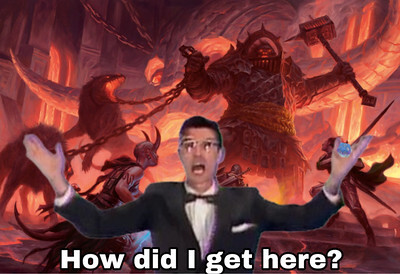
You may find yourself adventuring through a scary dungeon, and you may find yourself faced with a large awful monster, and you may find yourself wishing you'd packed more bread and hard cheese, and you may ask yourself…well… HOW DID I GET HERE? While you may have to ask your GM how you got to that particular dungeon, graphic novel team Samuel Sattin and Eisner award winning illustrator Steenz take us on a heroic quest across the history of tabletop role playing games in Side Quest: A Visual History of Roleplaying Games, all without the need of a d20 to follow along. Moving from early mystic roots of dice usage and interactive theater to the modern era of Dungeons & Dragons, video games and more, this is a well researched yet blissfully accessible and engaging graphic novel full of side quests into personal anecdotes, game developers and more along the way. Enjoyable for any age and for readers anything from a love of gaming to just a general interest in misadventuring and improv, Side Quests is as informative as it is fun. This winter I am running a few library programs playing indie tabletop games and figured I should probably have some background on the genre and Side Quests was a perfect choice. For the uninitiated, Tabletop Role Playing Games (or TTRPGs) are ‘games that require improv, statistics, and community’ and are, at their heart, interactive storytelling with a game aspect that allows for both creativity and chance. Some major ones include Dungeons & Dragons, Pathfinder, Warhammer, Call of the Cthulhu and I personally have recently gotten into exploring a lot of the more writing-based indie games you can find on places like itch.io (for my program this week we are playing A Perfect Rock and Exquisite Biome which you can check out in the links). Sattin and Steenz serve as as our Virgil Dungeon Masters guiding us through the history of TTRPGs and look at early influences of role playing, a term coined in Jacob L Moreno’s psychotherapy action method of psychodrama, a theory he developed after having founded an improvisational theater group in the 1920s. The go back to Ancient Rome for their staging of epic naval battles for entertainment called the naumachia or the Kriegsspiel— a form of wargamming organized by the 19th Century Prussian Army— and how that lineage can connect to cosplaying and live-action-role-playing (or the military-based wargames conducted in the 1960s by the RAND Corporation, a think-tank sponsored by the US Air Force). There is also the Italian theater of Commedia Dell’arte which ‘offered a safe, controlled environment for audience participants to affect the outcome of stories and for actors to improvise accordingly.’ Add some dice and some narratives and you can see the trajectory. I was fascinated to learn that H.G. Wells wrote a set of rules for playing with toy soldiers and published as Little Wars in 1913. I also enjoyed seeing how the worlds of J.R.R. Tolkien inspired many early RPGs (not just Led Zeppelin songs!). There is some really interesting history on early forms such as Tony Bath’s Conan-based game Hyboria or Paul Stanbury’s game Coventry which people played out similar to Live-Action-Role-Playing (LARPing) but came to an end when, after having to establish “guardians” to seek out misbehaving players, one played set off a bomb in another players yard (which was probably a critical role). It then moves on to the modern era of games.
I enjoyed that the authors took time to discuss issues of racism, homophobia and other social ills that made their way into the gaming world instead of sweeping that aside and then make sure to highlight game developers that have fought for a more inclusive community. In TTRPGs, community is a key element and ensuring everyone has the chance to roll the dice is a really important goal to strive for. This was a rather fun book that also seems geared for the enjoyment of anyone and everyone, which I also greatly appreciated. Side Quest is fun, educational and certainly entertaining as well.
A brief but engaging history of role playing games, which dips into some of the most ancient forms of recorded human gaming and the diverse development of war games, courtroom games, and board games which directly proceeded the creation Dungeons and Dragons in 1974. I should have guessed that D&D wasn't the first game that Gary Gygax or Dave Arneson created, and that it borrowed many mechanics, rules, and aesthetics of previous games but remixed into a more potently successful package. The back matter includes a short playable adventure!
3.75 stars, this was a fun history and timeline - jam packed with info, but really interesting historical research on the roots of roleplaying games. a well-researched read with fun graphics to supplement.
This had some interesting things in that I didn't know about early RPGs, such as Coventry and Jury Call, but on the whole it felt chaotic and unstructured, and kept getting sidetracked.
For a book about role-playing, there was far too much about other types of games such as chess, the Game of Life, or miniature wargaming, as well as other forms of entertainment such as gladiatorial combat, puppet shows, and so on. The history was interspersed with comments about how to roleplay and personal anecdotes, which would have been more useful if they'd been all in a section of their own. And all this was peppered with comments about how pretty much everyone involved in the development of RPGs was a misogynistic, homophobic, cis white male, from Lovecraft and Robert E. Howard to Tolkien and Gygax. Which is, to some extent, true, but it rapidly became repetitive, preachy and tedious.
I'm really not sure who this is aimed at. On the one hand, it's super simplistic in some places, so it feels like it's written for pre-teens. Then it suddenly dives into topics such as psychodrama and gestalt theory, which will probably make no sense to them at all. I guess the short answer is that this wasn't for me. Others will probably get much more out of it.
Side Quest is a thorough history of rpgs told in graphic novel format and if you’re looking to research the rise of ttrpgs this is where it’s at. The book includes a glossary of terms, a short rpg and bibliography.
For me, I kind of lost interest in the middle. Side Quest forgot to engage the storytelling aspect except from the historical storytelling. I think the people who are into this style of history-book will love Side Quest. I gave bonus points for the artwork throughout.
Sort of felt like reading a Wikipedia page turned graphic novel, but I like that they added a few mini memoir elements from the experiences of the authors. I learned a lot! A great big picture history of games and specifically RPGs.
Harper Collins Children's Books provided an early galley for review.
I've been playing these kinds of games since I was in high school, so much of this was a nostalgic look at a hobby I very much enjoy. Still, there was a large amount of history relating to the precursor elements that came together to form what today's players consider a role-playing game.
The book is a fun primer for those new to table-top RPGs. Coming from the children's book division, this appears to be marketed towards kids and teens. The concepts and history is rather rich, so kids might get bored by it. The vocabulary is clearly more on the teen and up level. The artwork however harkens back to the pages of the Sunday funnies with a simple style and bright colors. It even includes a 5th Edition Dungeons and Dragons scenario in the back for players to try out. All together, that made for an informative and entertaining read.
The authors unveil the history of role-playing games, but they maybe get a bit lost in the weeds. Whole sections relate the histories of various theatrical methods, as these were technically the original role-players, making up a story on the fly. Sure, sure, but like... maybe more stuff about D&D?
We get to that, of course, as well as the fascinating history of war gaming in the 19th and 20th centuries. All told, there's plenty of stuff in Side Quest to keep you interested, and the narrators have a fun time weaving their own experiences into the story.
It's also one of those hyper-inclusive reads that awkwardly reminds you in the midst of the history of TTRPGs that North America was stolen from the native peoples and that a whole host of historical figures are now considered bad, bad racists and sexists. Not not true, but also maybe not pertinent? Sore thumb and all that.
Cute, yet shockingly in-depth in its presentation of the various histories - the sociological, the psychological, the political, among others - that came together to form Role-Playing Games as we know it. It's also warm and inclusive in the way it beckons readers into doing a little role-play themselves, outlining the benefits thereof and ultimately painting role-play as a powerful tool for building connection and community. A beautiful book all-around.
I loved the way this graphic broke down the history of TTRPG and the story it told of that history. While I was aware of some of the more modern and obvious history/historical events that were tied to TTRPG I didn’t realize the extent of how many little events through all of time played a part of what would turn in TTRPG and D&D. I thought the art was really easy to follow and it lended itself to the formatting very well.
I received this book as an Arc from NetGalley for review.
I think that this book is well written and researched. It's creative, the graphic's are amazing and you can tell that the author's have a passion for the subject. Since I have no prior knowledge on this topic I wish that I would have read the glossary first. I think that I would have understood the topic better and would have enjoyed the book more if I had the same passion and some background knowledge on the subject matter that the authors do.
This wasn't bad, I did appreciate it was broken down into chapters. It did also feel a bit tedious of a read though. Possibly good for people already into TTRPGs and wanting to know history, but not as ideal for those who are outside it or just starting to get into it.
This history of role-playing games was actually more thorough than I expected. I kind of thought it would be just about D&D, but it started all the way back to ancient times, following Roman re-enactments and Mayan games.
Very well-drawn and expansive in scope. Highly recommended for anyone interested in game history, not just D&D.
This was an absolute treat! I didn't expect it to go into the history of gaming in total, but it provided a fantastic base for the understanding of the full history of RPGs!
For fans of Dungeons and Dragons, this is a stand alone graphic novel of the history of Table Top Role Playing Games.
. Here's the thing, I'm quite interested in playing Dungeons and Dragons. I think it will be fun and a good way to try something new. But this graphic novel is not for me.
It was fascinating to go through the history but it got so bland for me as I kept reading. The art reminds me of the classic sunday newspaper comics section that it gave nostalgia and it was perfect for the theme of D&D. However, it took me awhile to realize what the yellow and gray box speech bubble was, and there was even dialogue outside the box. The continuity was a bit all over the place for me... They navigate through the time using a Delorean which I thought was cute, but there were parts where they jump through time without it that left me confused.
Personally, I think a graphic hovel wasn't the best media to elaborate all of this.
What I do appreciate is the personal stories the authors/artists shared within the graphic novel. They were relatable and it was fun to learn how they started.
Overall, story was alright, art was nostalgic, history was fascinating, but for me, it didn't blend as well together.
I really wanted to like this one, but it just didn’t hit the mark for me. As someone who’s mildly into RPGs, I was hoping for something more engaging and immersive. The book definitely has its moments, and there’s no shortage of information. If you're a hardcore fan, you’ll probably appreciate the depth, but for me, it quickly became overwhelming.
The mix of history, personal stories from creators, and fantasy elements seemed promising at first. I even enjoyed some of the artwork by Steenz. But as the book went on, I found myself getting lost in the details, and not in a good way. There’s just a lot of information crammed into this book, some of it really interesting, but a lot of it felt like filler. By the time I reached the last 10%, I was so burnt out that I skimmed through the rest. It was tough to keep going when the book was trying so hard to make history and memoir feel fun but ended up feeling more like a textbook at times.
If you’re a die-hard RPG fan who’s looking for a thorough exploration, you might find value here. But for me, the balance between entertainment and information just wasn’t there. It ended up feeling like a bit of a slog, and I wish it had been a bit more focused or better paced.
Informative, fun graphic novel for teens about the history of table-top role-playing games, from imaginative play and chess to war games, LARPing, and D&D.
The book does well in covering how games, especially TTRPGs, connect us to the real world, let us try out new things, simulates real life, can be a lot like group therapy (but isn’t official therapy), are used to have fun and instruct, and evolve. All the information was presented in a clear, nerdy fun way (very appealing to D&D fans) without dragging on - I wasn't bored in the slightest! There is a lot of text per page though, so I feel like I focused a lot more on reading the words rather than being able to appreciate the graphics since there were so many words per page. Good mix of factual information and personal anecdotes written and displayed. The graphics were good - solid bright colors and a comic-y style art. I also feel like there wasn't a lot of Asian representation or ability representation, though there was a lot of white and Black representation, and some mentions of autism. There was a lot of acknowledgment of TTRPG spaces becoming and still needing to become more diverse (neurodivergent, non-cis, non-white, sexual orientation friendly, gender friendly, etc.).
Starts off with a D&D game, then the two narrators (a Black woman named Steenz and a white man named Sam) break the wall and introduce themselves. They share the basics about TTRPGS (definition, materials, players) and briefly their personal story about how they got into imaginative games. Then they take the reader through the history of games (200 BCE Han China puppets, 6th cen India for chaturanga which turns into chess, Mesoamerica’s 750 BCE patolli), and war games in particular (Germany with Johann Christian Ludwig Hellwig and Kriegspiel, HG Wells with Little Wars, and Axis & Allies and how that connects to people learning more about WWII, Italy with Roman Naumachias where naval battles were reenacted and people died). The two narrators also take us through the importance of community participation (Italy with Commedia Dell’arte) in games and the history of roleplaying/paychodrama therapy. It continues to America’s first board games, like the Travelers’ Tour Through the United States (mentioning the stolen land from indigenous peoples) and The Mansion of Happiness, while showing what board games often taught in America (The Pope and The Pagan - religious values). Games that had a roleplaying element include Mr. Ree!: The Fireside Detective, the Jury Box, and Diplomacy. The narrators note the modern games they’ve evolved into like Mafia and Werewolf. Readers learn about Coventry, the Siege of Bodenburg, Conan the Barbarian, Elric of Melnibone, Chainmail, The Blackmoor Campaign, Tolkien's works influencing games, and the partnership between Gygax and Arneson to create D&D. The narrators also cover how D&D has evolved briefly, and LARPing, emphasizing that there is space for everyone in TTRPGs, as some types focus more on storytelling, stats, roleplaying, etc. Love the full-spread diagram of the timeline of imaginative play. Backend contains a short playable adventure, glossary, and bibliography.
No cursing or sex.
“TTRPGS aren’t competitive in the way checkers, chess, or many other tabletop games are, but they do require investing emotional currency, and game play can bleed into everyday life. They can be testing grounds for gaining new skills, simulating new identities, or even building and executing personal goals.” (61)
"Because players have agency, storytelling becomes communal, where everyone can share in how it plays out." (122)
"Storytelling is one of the fundamental parts of what makes us human. Since time immemorial, stories have helped us understand what we are. And as time goes by, games will evolve with us. But they'll always be more than just a game." (173)
This entire review has been hidden because of spoilers.
+ It ends up being an interesting history of RPGs (the non video-game kind), with a special emphasis on Dungeons and Dragons. + Bright, colourful, positive, progressive and diverse-minded + Somewhat inspirational for those curious about tabletop roleplaying games, DnD and associated things + Comes with its own mini-DnD 5e adventure and a useful glossary ... - It is a bit boring and/or too technical at times - I'm not a huge fan of the art style overall - Some panels don't really match the text - It could have used more editing and some cuts - The audience is unclear. At first I thought it would be great for teens who had never heard of such things, but it becomes enough of a slog to probably only interest older teens with decent reading experience who are already quite interested in DnD
I was hoping this would be the next Pinball: A Graphic History of the Silver Ball*, and while it didn’t quite live up to that standard in non-fiction graphic novels (NFGNs? Anyöne?), it was its own charming thing. I’ve never seen a coäuthored book so delightfully of two minds—Steenz dœsn’t like TTRPGs all that much, while providing a not unrelated backstory of a Black woman in a world where she dœs not align with the cliché, while Samuel Sattin dœs fit the stereötype while still staying open to new ideas. My son and I read the book with my reading for Sattin and him reading for Steenz, and this made it obviöus how certain sections were more one author’s voice than another.
We enjoyed the early history and the connexions to aspects of culture that are not typically seen as role-playing, but as it gets closer to the advent of D+D, the book starts to get bogged down in the details. Another issue was the book was unclear whether it was written for someöne new to the world of D+D (the alignment system is very carefully explained, when even I, who’s never rolled a D-20 outside of a game of Scategories, have absorbed much about this thru living on the Internet) or whether it’s letting you know the hidden history for people who know a lot about it (D+D just sort of happens in the book, instead of beïng a landmark event in the narrative—oddly sorta reminded me of how The Life and Times of Scrooge McDuck would tell the story right up to a major even in Scrooge’s life and then leave off because Carl Barks had already told the story.
And then, there was quite a nice ending with some modern research about ways D+D is good for your body and soul and an open invitation to enjoy RPGs in your own way, whatever that means for you (but not videö games, which I think are never mentioned?). I’d definitely be curiöus how someöne more familiär with RPGs and TTRPGs would feel about this presentation.
I am not the proper person to write this review. I hate playing games. Why? Well, this book told me. It said that society tells us that pretend play is something only kids should do, but games allow adults to engage in it. When I was a child, I was given tiny household implements like irons and Bissell brooms. Games were a waste of time, but I was allowed to sew, which is my version of gaming.
I'm "game adjacent". My children LOVE games, and there were at least two different RISK sets in my house at some point. My students are always so sure that I can teach them Dungeons & Dragons. My college roommate routinely had friends over playing war games for something like fourteen hours at a time. I fed them and made everyone call their girlfriends. I support games. Just do not make me play!
This epiphany does help me understand that when people love games, whether it's board games, role playing games, or video games, the emotions must be as equally ingrained in them. For game lovers, especially, Dungeons and Dragons aficionados, this is a must-have, complete history of Table Top Role Playing Games in the way that Brian "Box" Brown's The He-Man Effect is the best history of children's television I've ever read. Fans of Boyce's Dungeons and Drama should just buy a case of these to have on hand to give as gifts to everyone they know.
The book itself is so packed with information about every facet of gaming. It talks about the influence of mythology and storytelling on the process of gaming, discusses a variety of games from various cultures, draws historic parallels between war and game strategy (with a side mention of the warlike competition of sports!), and mentions so many different game innovators from history that I just couldn't keep track of all of them. I can see this being a huge boon to a gaming obsessed kid who wants to do a history project on the 1950s game Diplomacy or Gary Gygax and Dave Arneson creating Dungeons & Dragons in 1974.
The authors are characters in the book, and their insights into how games affective them personally are a great touch. This reminded me a bit of the History Comics, in that there were five new interesting facts on every page! This is an absolutely essential purchase for any middle school and high school library. There are always students who become interested in games at these ages, and crave all the information they can find on them.
This excellent graphic novel introduction to the history of TTRPGs (tabletop role-playing games) has been created by two aficionados with totally different but complementary interests. Sattin (a White man) is the professor/writer, chief historian, and tabletop game aficionado while Steenz (nonbinary and Black) contributes the artwork, an interest in the craft side of the story, and their background with LARP games. By inserting themselves directly into the action as storytellers, Sattin and Steenz’s respectful banter becomes part of the fun and will help even middle grade readers power through some of the book’s denser sections. Presenting Dungeons and Dragons and its many offshoots as a continuation of humans’ ancient engagement in storytelling, the pair pilot a Delorean-like time machine into the past to visit ancient China, Rome, early modern Europe and India, and the early 20th century to look at various ancestors of TTRPGs. Clear and bright cartoonish artwork anchors the narrative, offering visual clarification in this occasionally text-heavy discourse. Having only the vaguest familiarity with this subject, I found their presentation and arguments fascinating and very clear and applaud their efforts to be inclusive and even occasionally critical of their passion’s history. The book dives deep into myriad influences, including the grisly Roman reenactments of naumachie, the Italian tradition of commedia dell’arte, the 19th century emergence of tabletop wargames, and the invention of psychodrama by Jacob Moreno in the early 20th century. Side Quest opens with a table of contents that divides the book into 6 distinct sections (that mimic D & D play) and backmatter includes a playable adventure, a glossary of terms, and an extensive bibliography. Link to complete review: https://ysbookreviews.wordpress.com/2...
This was a slog to get through. That’s the best way I can describe this graphic novel. Took me weeks to read and it’s only like 150 pages.
The synopsis makes it seem like the book is going to be a history of tabletop RPGs, but it’s more of a history of games and storytelling. Which is fine, but not really something I am super interested in. The history went back literally thousands of years to some of the first games ever invented; a good 4/5 of the book is spent on this boring journey through games as a concept.
By the time we get to D&D, the book is basically over.
The book is interspersed with memoir like anecdotes of the author’s experiences roleplaying, and only some of them worked. I liked the stories about one of the authors playing Teenage Mutant Ninja Turtles in his backyard sort of leading him to TTRPGs. But some of the other stories were distracting and honestly just annoying. There were like 3 separate parts where Steenz is describing how they don’t like TTRPGs and prefer other forms of roleplaying. And how it’s just as valid to sit and watch or just paint miniatures. And I’m like…why should I care? Why is it so important to describe the individual gaming preferences of one of the authors ad nauseam?
I’m also pretty far left politically and thought that a lot of the discussions on diversity felt inauthentic.
Overall, this is a pretty lame graphic novel that I think really suffers from being advertised as something it isn’t.
Thank you so much to Harper360YA for providing me with an arc in exchange of an honest review.
Side Quest is an informative and historical adventure into Tabletop Roleplaying Games (TTRPGs) and the world of imaginative play.
I love that this is a graphic novel which helps to fully immerse you visually into the story. It was bright and colourful and captivating, really helping to kick your imagination into gear.
Both of the main narrators worked really well together to present the story and I thought both voices combined wonderfully.
This is included far more history than I was initially expecting, but I really appreciated such an in-depth look. I didn’t know a lot or really any of the further back history behind imaginative play and how we experience TTRPGs today, it was super interesting!
I particularly enjoyed Part Five “Magic In The Modern World”.
I feel this would not only be appreciated by TTRPG newbies but also just as much by seasoned players.
This graphic novel was such a lovely experience. I would definitely be interested in more graphic novels voiced by this duo, perhaps a full on beginner guide of how to get fully involved in TTRPGs.
An absolute must read for any self proclaimed ttrpg nerd. There are so many fun facts in here, and histories related to ttrpgs I never new existed or never thought to make a connection from. While anyone who is new to ttrpgs would also enjoy this book, it may be daunting for those unfamiliar the gaming references and terminology in the book (although the authors do their best to explain those along the way, mostly succeeding). At the end of the day, the emphasis on games being more than just games sticks out the most. Some of my favorite fun facts:
Dice in games reflecting a history of perceived divine favor. This “divine favor” may even translate to modern d&d players insisting they have “bad dice” after a few bad rolls or calling upon the “dice gods” to bless them with a critical hit!
The term “sandbox” referring to open worlds is in references to the fact that actual sandboxes were used in early forms of wargaming to more easily shape terrain.
The history of psychodrama coining the term “roleplaying”.
On the one hand, cool subject, and even cooler to have BIPOC creators tackling it. I also really liked that the idea behind this book isn't to be a comprehensive history -- it is as advertised, a side-quest, a short exploration. I also like that they value both players and makers -- lots of different kinds of participation. And they call out problematic behaviors/attitudes/explicit racism and sexism that has been present in the past.
On the other hand, it's not particularly linear or fast-paced, so I had to decide I really wanted to read it -- it didn't grab me as a narrative. I also struggled in the earlier parts with trying to figure out who this book is for. It reads more like a primer for people unfamiliar with role playing games, but then also does a deep dive into the history of a really specific topic, so I found myself wondering who it would appeal to. Not bad, just puzzling.




![Profile Image for s.penkevich [hiatus-will return-miss you all].](https://i.gr-assets.com/images/S/compressed.photo.goodreads.com/users/1735525095i/6431467._UX200_CR0,11,200,200_.jpg)