

What do you think?

Mohawk
From the Pulitzer Prize-winning author of Empire Falls comes a wonderfully written novel about a small town in New York whose citizens have fallen on hard times. "Immensely readable and sympathetic.... Mr. Russo has an instinctive gift for capturing the rhythms of small-town life." —The New York TimesMohawk, New York, is one of those small towns that lie almost entirely on the wrong side of the tracks. Dallas Younger, a star athlete in high school, now drifts from tavern to poker game, losing money, and, inevitably, another set of false teeth. His ex-wife, Anne, is stuck in a losing battle with her mother over the care of her sick father. And their son, Randall, is deliberately neglecting his school work—because in a place like Mohawk it doesn't pay to be too smart.In Mohawk, Russo explores these lives with profound compassion and flint-hard wit. Out of derailed ambitions and old loves, secret hatreds and communal myths, he has created a richly plotted, densely populated, and wonderfully written novel that captures every nuance of America's backyard.Look for Richard Russo's new book, Somebody's Fool, coming soon.
428 pages, Kindle Edition
First published January 1, 1986
About the author
Richard Russo
58 books5,058 followersRICHARD RUSSO is the author of seven previous novels; two collections of stories; and Elsewhere, a memoir. In 2002 he received the Pulitzer Prize for Empire Falls, which like Nobody’s Fool was adapted to film, in a multiple-award-winning HBO miniseries.
Ratings & Reviews
Friends & Following
Create a free account to discover what your friends think of this book!
Community Reviews
Displaying 1 - 30 of 459 reviews

May 25, 2019
My sixth Russo. Mohawk was his first novel, 1986, and the story goes back to the days of the Vietnam War and the draft. With two murders and a suicide, it may be his darkest novel.
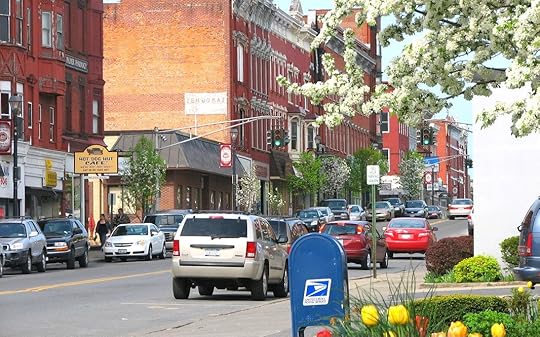
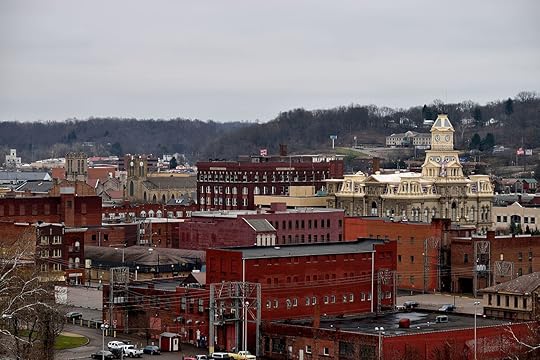
Like most of Russo’s novels, we have a dying small town in the northeast which lies mostly on the wrong side of the tracks. Most of the inhabitants we meet are seriously flawed folks, blue- and pink-collar workers, living on the economic margin. There’s also the environmental theme of cancers caused by the factories - in this case pollution dumped from leather tanneries. I think I like Russo in part because he writes of the type of places I’ve spent most of my life in – New Bedford and Fall River, Mass. and Zanesville, Ohio. Russo himself grew up in a town like this, Johnstown, NY and lives part of the year in another, Waterville, Maine.
His novels are also about movers and stayers: those who are content to stay in town (or are trapped there) and those who can’t wait to get out. There are also those parents who want their kids to get out of town: Don’t marry your high school sweetheart; Go away to college; Leave. In this case, unlike, say his books Empire Falls and Bridge of Sighs, it’s not a mother who wants her son to get out, but a father who wants his bright, beautiful daughter to look for greener pastures. I’ve repeated a section about movers and stayers that I’ve included in my reviews of other Russo books below.

Our characters include two female cousins who married two brothers. Unfortunately one woman marries the wrong man – she’s been in love with her cousin’s husband all her life. We have a diner operator and a nasty cop who has a love-hate relationship with his older brother. A woman who can’t connect with her mother or father or son her whole life. There's a piston-head, a bookie, guys who steal from the leather factory. There’s a severely handicapped man who is basically the ‘village idiot’ and a mystery about how he was born normal but got that way.
Russo writes with sympathy for these folks and with wit.
Passages I liked;
“If unfortunates like Billy Gaffney were summarily institutionalized, she told her father, than half of Mohawk County will end up behind bars. Father agreed, having always believed that half of Mohawk County belonged behind bars.”
“Harry Saunders looks around Mohawk Grill and considers that life has changed, an idea that occurred to him only recently and has given him little comfort. Indeed he has always embraced the opposite philosophy, or rather, it had embraced him.”
“On the Sabbath, Dallas’s two-room apartment, small and cramped and none too clean, always seemed to him small and cramped and none too clean.”
“She wasn’t much of a talker anyway, or even a listener. Maybe that was why Randall enjoyed talking to her. She seldom responded to anything he said; and if she had any reaction at all, it was frequently puzzlement, as if she hadn’t any idea where such odd notions came from.”
“People sometimes get in the habit of being loyal to a mistake. They can devote their whole lives to it.”
A local man gets interviewed on TV stations and …”offered a lucrative contract with an Albany advertising firm to promote a new line of hunting-ware. He hadn’t hunted once in his life, but according to the agency his carriage and rugged face ‘reeked’ of the woods they’d never been in either.”
A good read and I enjoyed the story although I still like Empire Falls best, which won the 2002 Pulitzer.
Here’s the stuff about movers and stayers from my Empire Falls review:
To me, a major theme of this book is what it would be like to have stayed in your hometown. As a geographer I enjoy reading and thinking about this theme. There are Movers and Stayers and even research studies about how these folks are different – we all know both types. A recent Pew Research study http://assets.pewresearch.org/wp-cont...
found that “movers” tend to be college educated. They move for jobs and once they move out of their hometown they are likely to move again in search of better employment and greener pastures. The “stayers,” about 37% of American adults who still live in or around the town they were born in, stay for family ties. The Midwest has the highest proportion of stayers; the West the least; East and South are in the middle.
Richard Russo is one of my favorite authors. I liked Empire Falls best, his Pulitzer Prize winner. Here are links to his books I have reviewed: I listed them in order by GR ratings. (Ratings as of 11/11/2025.)
Everybody’s Fool 4.12
Straight Man 4.00
Empire Falls 3.95
Mohawk 3.87 (This review)
Bridge of Sighs 3.82
The Whore’s Child and Other Stories 3.8
Chances Are 3.70
That Old Cape Magic 3.36
Photos from top:
Johnstown, NY from johnstown.ny.gov
Waterville, ME from thomasstorage.blob
Zanesville, OH from wikipedia
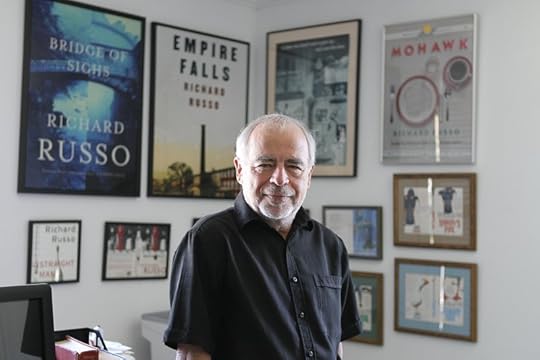
The author, from wikipedia
[Edited 8/27/23]
Like most of Russo’s novels, we have a dying small town in the northeast which lies mostly on the wrong side of the tracks. Most of the inhabitants we meet are seriously flawed folks, blue- and pink-collar workers, living on the economic margin. There’s also the environmental theme of cancers caused by the factories - in this case pollution dumped from leather tanneries. I think I like Russo in part because he writes of the type of places I’ve spent most of my life in – New Bedford and Fall River, Mass. and Zanesville, Ohio. Russo himself grew up in a town like this, Johnstown, NY and lives part of the year in another, Waterville, Maine.
His novels are also about movers and stayers: those who are content to stay in town (or are trapped there) and those who can’t wait to get out. There are also those parents who want their kids to get out of town: Don’t marry your high school sweetheart; Go away to college; Leave. In this case, unlike, say his books Empire Falls and Bridge of Sighs, it’s not a mother who wants her son to get out, but a father who wants his bright, beautiful daughter to look for greener pastures. I’ve repeated a section about movers and stayers that I’ve included in my reviews of other Russo books below.
Our characters include two female cousins who married two brothers. Unfortunately one woman marries the wrong man – she’s been in love with her cousin’s husband all her life. We have a diner operator and a nasty cop who has a love-hate relationship with his older brother. A woman who can’t connect with her mother or father or son her whole life. There's a piston-head, a bookie, guys who steal from the leather factory. There’s a severely handicapped man who is basically the ‘village idiot’ and a mystery about how he was born normal but got that way.
Russo writes with sympathy for these folks and with wit.
Passages I liked;
“If unfortunates like Billy Gaffney were summarily institutionalized, she told her father, than half of Mohawk County will end up behind bars. Father agreed, having always believed that half of Mohawk County belonged behind bars.”
“Harry Saunders looks around Mohawk Grill and considers that life has changed, an idea that occurred to him only recently and has given him little comfort. Indeed he has always embraced the opposite philosophy, or rather, it had embraced him.”
“On the Sabbath, Dallas’s two-room apartment, small and cramped and none too clean, always seemed to him small and cramped and none too clean.”
“She wasn’t much of a talker anyway, or even a listener. Maybe that was why Randall enjoyed talking to her. She seldom responded to anything he said; and if she had any reaction at all, it was frequently puzzlement, as if she hadn’t any idea where such odd notions came from.”
“People sometimes get in the habit of being loyal to a mistake. They can devote their whole lives to it.”
A local man gets interviewed on TV stations and …”offered a lucrative contract with an Albany advertising firm to promote a new line of hunting-ware. He hadn’t hunted once in his life, but according to the agency his carriage and rugged face ‘reeked’ of the woods they’d never been in either.”
A good read and I enjoyed the story although I still like Empire Falls best, which won the 2002 Pulitzer.
Here’s the stuff about movers and stayers from my Empire Falls review:
To me, a major theme of this book is what it would be like to have stayed in your hometown. As a geographer I enjoy reading and thinking about this theme. There are Movers and Stayers and even research studies about how these folks are different – we all know both types. A recent Pew Research study http://assets.pewresearch.org/wp-cont...
found that “movers” tend to be college educated. They move for jobs and once they move out of their hometown they are likely to move again in search of better employment and greener pastures. The “stayers,” about 37% of American adults who still live in or around the town they were born in, stay for family ties. The Midwest has the highest proportion of stayers; the West the least; East and South are in the middle.
Richard Russo is one of my favorite authors. I liked Empire Falls best, his Pulitzer Prize winner. Here are links to his books I have reviewed: I listed them in order by GR ratings. (Ratings as of 11/11/2025.)
Everybody’s Fool 4.12
Straight Man 4.00
Empire Falls 3.95
Mohawk 3.87 (This review)
Bridge of Sighs 3.82
The Whore’s Child and Other Stories 3.8
Chances Are 3.70
That Old Cape Magic 3.36
Photos from top:
Johnstown, NY from johnstown.ny.gov
Waterville, ME from thomasstorage.blob
Zanesville, OH from wikipedia
The author, from wikipedia
[Edited 8/27/23]

December 30, 2015

Richard Russo, born in 1949, from upstate New York, is one of American's foremost living novelists. After Mohawk, his first novel, Russo went on to author seven other novels, including The Risk Pool, Empire Falls, Nobody's Fool, and Straight Man.
Compelling portrait of small town USA, Richard Russo's small town is located in the state of New York during the year 1970 and features the interlinking lives of seven main characters, men and women, young and old, but in many ways the year could range from 1915 to 2015 and the locale could be any of the fifty states since there is an undeniable sameness about what it means to grow up, live, and, if you do not leave, grow old and die in a small town. Here are snapshots from the novel, snapshots easily recognized by anyone who has ever lived in a small town:
Mrs. Grouse and Anne, her thirty-five year old daughter, find old Mather Grouse collapsed on the living room floor. Mrs. Grouse demands nothing to be done but call an ambulance. Anne defies her mother and gets her father breathing, thus saving his life. One of Anne’s friends, a guy named Dan, tells her, “You’re old enough to know better than to disobey your mother. Just who did you think you were, saving your old man’s life after you’d been expressly forbidden to?”
Randall is extremely intelligent and learns rapidly, qualities much appreciated at the private school he attended prior to coming to the small town of Mohawk. But once enrolled in Mohawk High School, everyone snickered and sneered. Randall quickly learned what he had to do to be accepted by his classmates: occasionally flub up and play dumb. As Richard Russo writes: “Perfection rankled just about everyone, including the teachers, whereas mediocrity made people feel comfortable.”

At the very center of small town USA - the high school football team
Old Mather Grouse has been afflicted with serious health issues these last few years revolving around his lungs and breathing. Mather listens to his wife’s tuneless humming and when the sound becomes very faint and he knows she is at the other end of their house, he pulls out a loose board above the cellar window and removes a plastic bag he’d hidden with some Camels and matches. Mather then puts on his windbreaker and goes out for a solitary walk – the high point of his day.
Henry is the owner of the Mohawk Grill on Main Street. He is the one man in town who befriends Wild Bill Gaffney, who never uses the front door but always enters by the door at the rear in the alley. Although Richard Russo doesn’t have the objective narrator or any of the Mohawk residents use the well-worn term, it is quite clear Wild Bill is what is referred to traditionally as the village idiot. And, perhaps predictably, Wild Bill Gaffney is a key player in the unfolding drama for the novel’s central characters.
The gloomiest times in a small town can be holidays, especially Thanksgiving and Christmas. There is one telling scene on Thanksgiving Day when we read: “Then Dallas borrowed fifty from Harry and joined the poker game upstairs. The other players were family men who’s seen enough of their families and grown depressed by the sight of the turkey carcass.” Ah, when all else fails, at least there is the reliable second-floor hideout where you can drink whiskey and do some illegal gambling.
One of the most heart-wrenching parts of the novel is where old Mather Grouse reflects on the future of his bright, beautiful daughter: “What if, despite her great gifts, she also ended up trapped? Would she pity some poor boy and marry him, set up house in some rundown second floor flat to wait patiently for him to come home from the corner bar, their meager meal sitting idly on the back burner? In another year would she be pregnant beneath her flowing graduation robes?” I’m quite sure this reflection has been repeated thousands of times by small town fathers and mothers as they pondered the future of their small town sons and daughters, particularly if those sons and daughters exhibit potential that will quickly be snuffed out if they never leave their small town.
Here are two of my favorite quotes about small towns:
“In small towns, news travels at the speed of boredom.”
― Carlos Ruiz Zafón
“People fear anyone who differs from what is considered normal, and in a small town the idea of normal can be as narrow as the streets.” -- Elizabeth Chandler
Lastly, here is a micro fiction of mine published years ago:
SMALL TOWN MENTALITY
From watching their Fourth of July parade and going to their county fair you wouldn’t ever guess this small town is home to such sordid, twisted, sadistic minds.
A few outsiders think it starts when kids bob for apples. The adults hold their heads underwater until their little fingers turn blue and clutch at the air.
Although, some say it begins at home, at night, behind closed doors, when every light in town is required to be put out.

American author Richard Russo

November 12, 2021
Having read all his other books, Mohawk bears similarity to several though far less engaging. Russo has the folksy tone necessary to tell small town stories, and this one bears the hallmarks of the Pulitzer winner, Empire Falls, though the over use of back story dampens the pace. Focused on the Mather family, we meet an array of characters including Wild Bill who hangs out at the Mohawk Grill for handouts. Russo always interjects humor with characters like these to offset themes of loss, redemption and discovery. Being that this is one of if not his first, it's delightful to see how his skill evolved over time. That said, "Nobody's Fool" and "Straight Man" remain the favorites though I've enjoyed every one of them at varying degrees. Worth reading if you seek an introduction to his style but far from his best work.

July 12, 2019
Mohawk is only my second Richard Russo novel. It felt familiar though, as it's very similar to Everybody's Fool with its myriad of characters, small-town setting and domesticity.
It gave me that feeling you get when coming across an old friend you lost contact with, but when you meet again the spark reignites as you had never been apart.
The characters are as varied as they come - a diner owner, retired men and their wives, a beautiful woman who married the wrong guy and who is in love with her cousin's husband; a policemen, and a multitude of many other characters. They're all very realistically depicted. Richard Russo has a knack for explaining people's actions and motivations in a non-judgemental way.
I'll be reading more Russo.
It gave me that feeling you get when coming across an old friend you lost contact with, but when you meet again the spark reignites as you had never been apart.
The characters are as varied as they come - a diner owner, retired men and their wives, a beautiful woman who married the wrong guy and who is in love with her cousin's husband; a policemen, and a multitude of many other characters. They're all very realistically depicted. Richard Russo has a knack for explaining people's actions and motivations in a non-judgemental way.
I'll be reading more Russo.

April 20, 2018
Richard Russo is really good at writing about everyday American life, and I loved his “Empire Falls”. The same goes for this book which is set in Mohawk, a town in America where everyone seems to know each other in some way or another. Russo zooms in on the characters among whom are Harry working in a grill, Anne living at home with her parents together with her son as well as Dallas, a riotous man who doesn’t seem to be able to get his life together.
However, this one wasn’t amongst my favourites of Russo’s because of the climax which seemed weak to me. The characters did things that I didn’t quite get, and that led to consequences that didn’t really interest me.
I will say that this book was overall an enjoyable read that I would recommend. Especially if you’re like me and like to read about everyday Americans and everyday living. It just didn’t quite live up to my expectations when it comes to the final resolution.
However, this one wasn’t amongst my favourites of Russo’s because of the climax which seemed weak to me. The characters did things that I didn’t quite get, and that led to consequences that didn’t really interest me.
I will say that this book was overall an enjoyable read that I would recommend. Especially if you’re like me and like to read about everyday Americans and everyday living. It just didn’t quite live up to my expectations when it comes to the final resolution.

July 19, 2023
But Faith, like a jackal, feeds among the tombs, and even--- Herman Melville, Moby Dick
from these dead doubts she gathers her most vital hope.
While Richard Russo has long been one of my favorite contemporary novelist, somehow I have missed reading his first novel, Mohawk. Mohawk is a small decaying mill-town in upstate New York that has fallen on hard times. And it seems its citizens have fallen on hard times, too. This is essentially the story of two families, the Grouse family and the Gaffney family and how their lives have intersected over the years, sometimes in dramatic fashion. This is a tightly plotted, compelling portrait of small town life in the United States, taking place in 1970 with Vietnam and the draft in full swing. There is also the realization that the town has been poisoned for years after a long awaited, federally funded study linking the high incidence of cancer and leukemia in Mohawk County to the toxic waste and chemicals that have been dumped into the nearby Mohawk River by the local leather tanneries and mills.
All in all, this is one of the darkest novels that I have read by Richard Russo. And it confirmed once again why I prefer life in the big city. Although, Russo has long been lauded as an author who has an uncanny ability to reflect the rhythms of small town life and that of its people.
"And what Dallas knew all about was Mohawk, 'a backcountry prophet too unselfconcious to guess his words and attitudes were a ringing indictment of his world.'"

August 24, 2013
I'm working my way through Richard Russo's novels. In Mohawk, he never ceases to amaze me with the depth, the humor and the honesty of his work. 4★

July 2, 2013
I always enjoy reading the debut novels of authors whose later works I really enjoy, and this one was no different. In terms of enjoyability, it's nowhere near the level of pure brilliance of Empire Falls, the comedy of Straight Man or the eerie drama of Bridge of Sighs, but when you've read as much Russo as I have (this is my 6th novel of his), it's interesting to see where some of these other works come from. Some of those standard Russo trademarks are there, the dying industrial town, the local greasy spoon, the wonderfully quirky characters who tie together in all sorts of unexpected ways, but it doesn't all come together in the same way.
I definitely found myself missing the wonderful protagonists found in his other novels, as his viewpoints flip all around in this novel.
For any Russo fan, this is a must-read, but if you're new to the man's writing, I'd suggest starting with the aforementioned works before heading here.
I definitely found myself missing the wonderful protagonists found in his other novels, as his viewpoints flip all around in this novel.
For any Russo fan, this is a must-read, but if you're new to the man's writing, I'd suggest starting with the aforementioned works before heading here.

October 8, 2008
This was Russo's first book and it shows. Richard Russo is one of the best authors that I have run across in my short stint of a life. His narrative has a high-caliber voice that seeks the nostalgia within the reader and steadily draws it out. He's got a knack for craft that most contemporary authors are lacking. His stories offer a steady structure and a very unique as well as entertaining balancing act of numerous characters.
With that said, I think Mohawk is the weakest of the novels. There are too many characters in this story, which causes a sense of, not only confusion, but also a kind of depreciation for those characters who are supposed to be the center of attention.
This isn't to say that the main characters are not fleshed out or interesting because they are; however, it is to say that the plethora of people in the book tends to become an assault on the reader's memory rather than an introduction to people they'd like to know.
Secondary characters in this novel, on the other hand, lack the very thing of which Russo is king: voice. In his other works that I've read The Risk Pool, Empire Falls, Straight Man, and The Whore's Child(A short story collection) even the secondary characters are powerful and serve a purpose. Mohawk just carries a lot of extra weight in this department and it does this at the sacrifice of distracting from the more important characters.
It's still a wonderful read. It tugged at my heart to watch the abuse of the town's local retarded character, Wild Bill, who is constantly beaten up by the high school boys and is wrongly accused in most situations he finds himself in. The love stories are full of frustrating and endearing entanglements. And, finally, the town, Mohawk, is an essential character in itself.
This is a book worth reading only after you've read Russo's better stories. I strongly recommend The Risk Pool then Mohawk. I feel fortunate that I have the luxury of picking and choosing from his greatest works instead of having to wait for each one to come out.
With that said, I think Mohawk is the weakest of the novels. There are too many characters in this story, which causes a sense of, not only confusion, but also a kind of depreciation for those characters who are supposed to be the center of attention.
This isn't to say that the main characters are not fleshed out or interesting because they are; however, it is to say that the plethora of people in the book tends to become an assault on the reader's memory rather than an introduction to people they'd like to know.
Secondary characters in this novel, on the other hand, lack the very thing of which Russo is king: voice. In his other works that I've read The Risk Pool, Empire Falls, Straight Man, and The Whore's Child(A short story collection) even the secondary characters are powerful and serve a purpose. Mohawk just carries a lot of extra weight in this department and it does this at the sacrifice of distracting from the more important characters.
It's still a wonderful read. It tugged at my heart to watch the abuse of the town's local retarded character, Wild Bill, who is constantly beaten up by the high school boys and is wrongly accused in most situations he finds himself in. The love stories are full of frustrating and endearing entanglements. And, finally, the town, Mohawk, is an essential character in itself.
This is a book worth reading only after you've read Russo's better stories. I strongly recommend The Risk Pool then Mohawk. I feel fortunate that I have the luxury of picking and choosing from his greatest works instead of having to wait for each one to come out.

January 18, 2008
This is one of Russo's earlier novels. It's a little slow moving and less interesting than more recent works. I know I did enjoy it, though I can't recall too much of the plot now. I read it after reading Empire Falls, and as I recall, the two books had a lot of similarity as far as place and plot and character interaction.
Russo's always got some good words of wisdom tucked into his novels. Here's a tidbit I copied from Mohawk:
"Attempts to make life do what it has resisted doing in the past are mostly futile."
Wish my mom could learn that lesson.
Russo's always got some good words of wisdom tucked into his novels. Here's a tidbit I copied from Mohawk:
"Attempts to make life do what it has resisted doing in the past are mostly futile."
Wish my mom could learn that lesson.

December 16, 2008
Straight Man is one of my favorite novels of all time, so when I saw that Russo had also written a novel set in a small town in central New York, I had to buy it immediately. I've finally maneuvered free-time for reading into my schedule---what a pleasure it was! Seeing that I live right next to "Mohawk, New York," the town in which the novel is set, I felt even more connected to the characters as names of all of the surrounding areas of my life kept coming up (Even though there isn't a Mohawk County).
Russo has a way of describing deep and sensitive characters and plot events with levity. It's pure enjoyment to read, and at the same time gives valuable vicarious life experience. I just want to say I love Mather Grouse and how could anyone even tolerate the obnoxious sisters Milly and Mrs. Grouse--but you love them anyway! I saw all of the insufferable flaws of half a dozen people in my life in these characters, but their Mohawkian fictional equivalents are nonetheless lovable. So I feel that I can face, say, my ex (another Dallas Younger), with a bit more tolerance at this point.
Mather Grouse hits home when he tells his daughter that "People sometimes get in the habit of being loyal to a mistake. They can devote their whole lives to it." Adelle has tried to tell me as much, but Mather seemed to be more credible, I suppose. I have this quote on an index card and I tossed it carelessly into my disorganized desk so that I can find it when fate allows.
I'm reminded why I love reading so much, and I'm inspired to read "She's Come Undone" again--I'm missing a female character that I can really relate to. I've been reading too many stories with male protagonists lately.
Enjoy! I HIGHLY recommend this book, especially to locals!
Russo has a way of describing deep and sensitive characters and plot events with levity. It's pure enjoyment to read, and at the same time gives valuable vicarious life experience. I just want to say I love Mather Grouse and how could anyone even tolerate the obnoxious sisters Milly and Mrs. Grouse--but you love them anyway! I saw all of the insufferable flaws of half a dozen people in my life in these characters, but their Mohawkian fictional equivalents are nonetheless lovable. So I feel that I can face, say, my ex (another Dallas Younger), with a bit more tolerance at this point.
Mather Grouse hits home when he tells his daughter that "People sometimes get in the habit of being loyal to a mistake. They can devote their whole lives to it." Adelle has tried to tell me as much, but Mather seemed to be more credible, I suppose. I have this quote on an index card and I tossed it carelessly into my disorganized desk so that I can find it when fate allows.
I'm reminded why I love reading so much, and I'm inspired to read "She's Come Undone" again--I'm missing a female character that I can really relate to. I've been reading too many stories with male protagonists lately.
Enjoy! I HIGHLY recommend this book, especially to locals!
September 9, 2012
I am completely blown away by how much I loved this book, and I love all of his books! My favorites are his new ones – Straight Man, Empire Falls, Bridge of Sighs – and I have found that I move backwards though his works it is easy to see his themes developing from the beginning, but I didn’t think the stories were as masterfully woven. I thought Nobody’s Fool and Risk Pool were good, stuffed full of Russo’s worldview, but they were trying too hard to be funny, or quirky, or something… both built around aging hooligans, refusing to compromise, walking disasters but lovable fools all the while. Mohawk reminds me a lot of Empire Falls, more than anything. It doesn’t really seem that there is ONE main character. It is a portrait, an overview of a town, and gives a wide variety of principles their equal time and focus in weaving everything together.
If you are familiar with his other work, you’ll definitely notice the familiarity of his source material. Another small down decaying, more crazy old people with exasperated 40 year old sons and daughters trying to care for them, a couple school-age kids wondering if they can escape, a goober cop no one respects, a grill cook/owner who acts as the “center” of town, poker games and gambling, tanneries and/or companies that may or may not pollute the river in town yet everyone needs the job, generational conflicts dating back to Grandfather days effecting the grandson. It’s funny because in some ways it seems like so much material over laps – the grill here could be the grill in Empire Falls, the flat where Dallas lives upstairs could be where the father in The Risk Pool lives, the poker game in Nobody’s Fool could be the exact same as the poker games here – but the way Russo develops the plot, weaves through the details, he really makes each story his own. You notice the similar ideas in each book, but it’s a different story, a different focus, like telling a story about St. Johns and then maybe a story about Alma, a story about Ovid-Elsie – similar, small towns, but still different and unique.
What was really amazing with this story was the way Russo develops 5-6 different plotlines, involving all characters, young and old, and ends up bringing them all together in the end, a climax that lasts nearly 50 pages as he attempts to combine and resolve all conflicts. The variety of characters gives all readers a focal point of view. He even saves many of the revelations for the final quarter of the book, slowly giving away one nugget of backstory at a time. The novel is so character driven, yet the suspense and page-turning tension never lets up; you have no idea what will happen with these characters and you find yourself really pulling for them, hoping that everything will turn out ok.
Like I said with the last Russo book I read, he just makes you feel so happy and sad to be alive. Everything is portrayed so realistically, sugar-coating nothing. His “loveable losers” struggle like the best of us, deal with the fallout of setbacks and past events in ways we don’t even realize we do ourselves, yet underneath there is such a current of empathy, of feeling, of love for his characters. These are human beings, and this is humanity, in all its pain, glory, conflict, success, desire, as time inevitably moves forward and we all attempt to keep afloat.
If you are familiar with his other work, you’ll definitely notice the familiarity of his source material. Another small down decaying, more crazy old people with exasperated 40 year old sons and daughters trying to care for them, a couple school-age kids wondering if they can escape, a goober cop no one respects, a grill cook/owner who acts as the “center” of town, poker games and gambling, tanneries and/or companies that may or may not pollute the river in town yet everyone needs the job, generational conflicts dating back to Grandfather days effecting the grandson. It’s funny because in some ways it seems like so much material over laps – the grill here could be the grill in Empire Falls, the flat where Dallas lives upstairs could be where the father in The Risk Pool lives, the poker game in Nobody’s Fool could be the exact same as the poker games here – but the way Russo develops the plot, weaves through the details, he really makes each story his own. You notice the similar ideas in each book, but it’s a different story, a different focus, like telling a story about St. Johns and then maybe a story about Alma, a story about Ovid-Elsie – similar, small towns, but still different and unique.
What was really amazing with this story was the way Russo develops 5-6 different plotlines, involving all characters, young and old, and ends up bringing them all together in the end, a climax that lasts nearly 50 pages as he attempts to combine and resolve all conflicts. The variety of characters gives all readers a focal point of view. He even saves many of the revelations for the final quarter of the book, slowly giving away one nugget of backstory at a time. The novel is so character driven, yet the suspense and page-turning tension never lets up; you have no idea what will happen with these characters and you find yourself really pulling for them, hoping that everything will turn out ok.
Like I said with the last Russo book I read, he just makes you feel so happy and sad to be alive. Everything is portrayed so realistically, sugar-coating nothing. His “loveable losers” struggle like the best of us, deal with the fallout of setbacks and past events in ways we don’t even realize we do ourselves, yet underneath there is such a current of empathy, of feeling, of love for his characters. These are human beings, and this is humanity, in all its pain, glory, conflict, success, desire, as time inevitably moves forward and we all attempt to keep afloat.
June 30, 2012
Harry who runs the 'Mohawk Grill' restaurant has a calender which is out of date by a year.This is because "... whoever gave the calendar the year before didn't give him a new one this year. The months are the same and Harry doesn't mind being a few days off". This in a nutshell symbolizes the characters in Richard Russo's debut novel 'Mohawk', a slice of small town America. In fact this mentality is symptomatic of many characters in Russo's works, a mindset where people are just waiting for something to happen instead of initiating it. They may dislike the life in their town, feel suffocated by it, but they would rather suffer silently or crib about it rather than doing something about it.
Mohawk a fictional town is decaying, it's not yet a ghost town (like the one's in Juan Rulfo's works) but it will soon get there. The tannery industry that provided jobs to the townsmen is dying out and with it the entire town economy and indeed the town itself. The basic theme of the novel is one which is explored in his later works too, but in this debut work Russo has tried a more sprawling canvas. If he has concentrated on a few characters in his later works, here he has tried to cram in many characters, attempting to give each one them their own individuality. There is 'Anne' a divorced mother who is living with her parents in what can only politely be termed as a claustrophobic atmosphere. Oh, she is and has been in love with her cousin's husband 'Dan' for many years now, who also reciprocates it. It is a largely unconsummated affair (with rare sexual trysts). 'Dallas Younger' Anne's ex-husband is going through life as in a pot induced daze, bumping into the myriad issues that life brings up from time to time, not knowing why such things keep happening to him. For instance, when he goes to the laundry he most often misplaces his shirts and comes back with shirts of another person, the result being that he is mostly wearing another' shirts. There is also 'Randall' their son, 'Wild Bill' a mentally challenged young man, Anne's sick father, her cribbing mother.
With such a motley crew of characters one would expect the novel of very engaging and indeed it starts off in such a manner, but sadly soon degenerates into a show-off, manipulative one. Now, all art is in some way manipulative in that the artist tries to make the reader/viewer/listener get into a mindset that he has planned. The issue arises when it becomes too obvious and the flow of the novel seems to be forced. That's what happens here and you can sense Russo trying very hard to impress us. In an attempt to define his characters clearly he overdoes it, the result being that most characters are almost saying to you "look at me, I am not a fictional character, I am a blood and flesh one, so I am a great character". After sometime you get tired of all the (un)subtle hints dropped in passing about the characters which are probably meant to add layers to them. Like Russo tries so hard to impress upon us the gravity of the hidden affair between Anne and Dan, their frustration at being apart even though they love each other, but it doesn't impact us much. To digress a bit, a similar theme of is handled much better by Russo himself in his
'Bridge Of Sighs', where he gives us so many subtle layers which are open to our interpretation. What we feel here though is that Anne and Dan better stop cribbing, grow up and get on with their lives. Actually this is a cruel feeling given what they have gone through, but Russo is to be blamed for making us unsympathetic towards these characters which surely deserve our sympathy. There is also a supposedly mysterious sub-plot involving Anne's father which promises much but doesn't result in anything other than a convoluted trigger to the events that happen before the end. Oh yes, I should also mention the events that happen on a stormy night before the end. Of course there is no rule that a character shouldn't have his/her epiphanies or that things shouldn't come to a head on a stormy night, but when you see multiple strands coming to head on single night, it just seems to be convenient way for the author to tie up every thing.
Ironically, the novel is saved from being a disaster by the very characters on which Russo doesn't spend too much time, a clear indication that the adages 'less is more' and 'don't tell but show' do work. There are a lot of small moments which lift the novel from the morass of forced sentimentality it is mired in. There is a mention in passing (a couple of paragraphs) about Dallas's younger brother 'Dan' who passed away of cancer when he was just 30 and his daughter was one. When he came to know about his terminal illness, Dan got a big loan and bought purchases for nearly 20 years for his daughter. Consider this, a young father in the prime of his life suddenly comes to know that he has very little time to live. What else can we expect in such a situation. That's why buys presents for all the birthdays, Christmases, thanksgiving on which he would not be present. This in itself could be developed into an excellent short story. There is also the moment at the end where Dallas meets his brother's wife 'Lorraine' at the hospital. What happens then is one of the truly goosebumps raising moments that I have read in recent years. I am not one given to easy sentimentality and what Dallas does could be seen as selfish/idiotic/crazy and also as a manifestation of the hidden human spirit at the same time. It's an ambiguous moment, but one which affects us in a way that the other forced moments in the novel do not.
I have mentioned Dallas multiple times now and it is for a reason. He is the character with whom we empathize the most. He is a cad, compulsive drinker, gambler, a person who tries to do the correct thing but most often ends up totally screwing it up, even if he didn't want too. Like he could start for a lunch with his ex-wife and son, but end up in a gambling den or he could remember his niece's birthday in the middle of the night and go to wish her.He is like a kid in many ways, looking wide eyed at the things that happened, not understanding how they happened and that he actually had a part to play in them. But with all this, he comes across as the most honestly crafted character in the entire novel. Russo doesn't try to impose him on his and due to that he is the one we can relate to most. The things that Russo keeps in shadows are ultimately the one that capture our attention. His friendship with Benny is one such. Friends from youth, Benny now owns a automobile workshop where Dallas works. It's difficult to pin down what works between the two. Both of them have been in a terrible fight when young, but never seem to bring it up now. Benny puts with Dallas carousing around without coming to work. Of course Dallas is skilled worker and Benny also likes to join Dallas in raising hell in the bars and gambling dens. But is that the only reason why he puts up with Dallas? The refreshing thing is that there is no declaration of undying friendship or any such thing. It's just 2 guys who are very comfortable with each other, enjoying each other's company and friendship. I would personally love to know more about Dallas and his life. And of course, as in his other works Russo captures perfectly the rhythms of small town life, the bar where people gather to gossip as much as to eat, the aspirations of the characters, their stoic acceptance of their lot in life etc.
Those these things salvage the novel to a great extent ultimately it remains only a fair enough read, a novel which suffers from the author's over enthusiasm in impressing his readers, maybe due to the fact that it was his first novel. Whatever the reason, it is definitively not a patch on his later works. Read it if you have read his other works and want to complete his oeuvre. Others read the other novels/short stories. This one can wait.
Mohawk a fictional town is decaying, it's not yet a ghost town (like the one's in Juan Rulfo's works) but it will soon get there. The tannery industry that provided jobs to the townsmen is dying out and with it the entire town economy and indeed the town itself. The basic theme of the novel is one which is explored in his later works too, but in this debut work Russo has tried a more sprawling canvas. If he has concentrated on a few characters in his later works, here he has tried to cram in many characters, attempting to give each one them their own individuality. There is 'Anne' a divorced mother who is living with her parents in what can only politely be termed as a claustrophobic atmosphere. Oh, she is and has been in love with her cousin's husband 'Dan' for many years now, who also reciprocates it. It is a largely unconsummated affair (with rare sexual trysts). 'Dallas Younger' Anne's ex-husband is going through life as in a pot induced daze, bumping into the myriad issues that life brings up from time to time, not knowing why such things keep happening to him. For instance, when he goes to the laundry he most often misplaces his shirts and comes back with shirts of another person, the result being that he is mostly wearing another' shirts. There is also 'Randall' their son, 'Wild Bill' a mentally challenged young man, Anne's sick father, her cribbing mother.
With such a motley crew of characters one would expect the novel of very engaging and indeed it starts off in such a manner, but sadly soon degenerates into a show-off, manipulative one. Now, all art is in some way manipulative in that the artist tries to make the reader/viewer/listener get into a mindset that he has planned. The issue arises when it becomes too obvious and the flow of the novel seems to be forced. That's what happens here and you can sense Russo trying very hard to impress us. In an attempt to define his characters clearly he overdoes it, the result being that most characters are almost saying to you "look at me, I am not a fictional character, I am a blood and flesh one, so I am a great character". After sometime you get tired of all the (un)subtle hints dropped in passing about the characters which are probably meant to add layers to them. Like Russo tries so hard to impress upon us the gravity of the hidden affair between Anne and Dan, their frustration at being apart even though they love each other, but it doesn't impact us much. To digress a bit, a similar theme of is handled much better by Russo himself in his
'Bridge Of Sighs', where he gives us so many subtle layers which are open to our interpretation. What we feel here though is that Anne and Dan better stop cribbing, grow up and get on with their lives. Actually this is a cruel feeling given what they have gone through, but Russo is to be blamed for making us unsympathetic towards these characters which surely deserve our sympathy. There is also a supposedly mysterious sub-plot involving Anne's father which promises much but doesn't result in anything other than a convoluted trigger to the events that happen before the end. Oh yes, I should also mention the events that happen on a stormy night before the end. Of course there is no rule that a character shouldn't have his/her epiphanies or that things shouldn't come to a head on a stormy night, but when you see multiple strands coming to head on single night, it just seems to be convenient way for the author to tie up every thing.
Ironically, the novel is saved from being a disaster by the very characters on which Russo doesn't spend too much time, a clear indication that the adages 'less is more' and 'don't tell but show' do work. There are a lot of small moments which lift the novel from the morass of forced sentimentality it is mired in. There is a mention in passing (a couple of paragraphs) about Dallas's younger brother 'Dan' who passed away of cancer when he was just 30 and his daughter was one. When he came to know about his terminal illness, Dan got a big loan and bought purchases for nearly 20 years for his daughter. Consider this, a young father in the prime of his life suddenly comes to know that he has very little time to live. What else can we expect in such a situation. That's why buys presents for all the birthdays, Christmases, thanksgiving on which he would not be present. This in itself could be developed into an excellent short story. There is also the moment at the end where Dallas meets his brother's wife 'Lorraine' at the hospital. What happens then is one of the truly goosebumps raising moments that I have read in recent years. I am not one given to easy sentimentality and what Dallas does could be seen as selfish/idiotic/crazy and also as a manifestation of the hidden human spirit at the same time. It's an ambiguous moment, but one which affects us in a way that the other forced moments in the novel do not.
I have mentioned Dallas multiple times now and it is for a reason. He is the character with whom we empathize the most. He is a cad, compulsive drinker, gambler, a person who tries to do the correct thing but most often ends up totally screwing it up, even if he didn't want too. Like he could start for a lunch with his ex-wife and son, but end up in a gambling den or he could remember his niece's birthday in the middle of the night and go to wish her.He is like a kid in many ways, looking wide eyed at the things that happened, not understanding how they happened and that he actually had a part to play in them. But with all this, he comes across as the most honestly crafted character in the entire novel. Russo doesn't try to impose him on his and due to that he is the one we can relate to most. The things that Russo keeps in shadows are ultimately the one that capture our attention. His friendship with Benny is one such. Friends from youth, Benny now owns a automobile workshop where Dallas works. It's difficult to pin down what works between the two. Both of them have been in a terrible fight when young, but never seem to bring it up now. Benny puts with Dallas carousing around without coming to work. Of course Dallas is skilled worker and Benny also likes to join Dallas in raising hell in the bars and gambling dens. But is that the only reason why he puts up with Dallas? The refreshing thing is that there is no declaration of undying friendship or any such thing. It's just 2 guys who are very comfortable with each other, enjoying each other's company and friendship. I would personally love to know more about Dallas and his life. And of course, as in his other works Russo captures perfectly the rhythms of small town life, the bar where people gather to gossip as much as to eat, the aspirations of the characters, their stoic acceptance of their lot in life etc.
Those these things salvage the novel to a great extent ultimately it remains only a fair enough read, a novel which suffers from the author's over enthusiasm in impressing his readers, maybe due to the fact that it was his first novel. Whatever the reason, it is definitively not a patch on his later works. Read it if you have read his other works and want to complete his oeuvre. Others read the other novels/short stories. This one can wait.

March 9, 2011
I want to give this 5 stars because I enjoyed reading it that much. However, it seemed to be missing that something extra I want a 5-star book to have. Russo reflects on his characters, even when his characters are not especially introspective. I like that. The plot was a bit forced though, or convenient perhaps - probably because this was Russo's debut. He had a very strong theme in the early going and seemed to lose the strength of it about three-quarters through. It's hard to fault him for that and his later novels certainly make up for it.
Russo's trademark humor was evident in this debut. The setting is small town, his characters working class males, mostly, who stumble through life not quite understanding why they don't understand the world around them. A conversation between a couple of minor characters:
Russo's trademark humor was evident in this debut. The setting is small town, his characters working class males, mostly, who stumble through life not quite understanding why they don't understand the world around them. A conversation between a couple of minor characters:
"I didn't know you ever were married."There are quiet, often wise characters, too, though they may be hapless and thought little of by the others.
"Just twice. Not lately."
"What happened?"
"Don't know. Something."
A man with eight grades' worth of education himself, Mather Grouse had spent the better part of his adult life doing what he called "improving his mind." His readings were eclectic, if wholly undisciplined, and by the time he was thirty, he knew a great deal without even beginning to satisfy his curiosity or discover its source. And he knew too that while he had read more than a great many educated men, the fact remained that they were educated and he was not.Although my best reading has come long past thirty, I related to this. Not everyone with an education does all they can with it, and some of us without find a way to bridge the gap.

July 4, 2013
This very readable first novel is a great place for the Russo novice to start. If you've already read Russo's later novels, "Mohawk" may seem to be a "pilot" episode. Russo is a chronicler of the darker side of America, especially the towns that once were full of people who were able to make a living. In a go-go era of skyrocketing real estate and money everywhere, the wealth in this country is not equally distributed and those towns you pass by on the highways all have stories of their own. Russo brings these stories into focus and makes them impossible to avoid.
Russo sets the two parts of "Mohawk" in 1966 and 1972 but doesn't play up the era too much except for a few scattered references and the appearance of a draft dodger. The lives of the characters are so real and so well portrayed that it's hard to not keep turning pages, long after you should be asleep. Russo never offers the easy answer to any of his character's lives. In Russo's novel, people die when they shouldn't and others live far too long; there's no explanation why this is and looking for an answer can prove fruitless.
Read "Mohawk" and then move on to the rest of Russo's writings and see how a great writer develops his craft.
Even with this first novel, I'll be damned if I can begin to comprehend how a genius novelist is able to do what he does. I've FINALLY gotten around to reading "Mohawk", after marveling at "Nobody's Fool" and "The Risk Pool" and "Empire Falls" and "Straight Man." Readers: here is one of the greatest living American authors. Do yourself a BIG favor, read Richard Russo.
Russo sets the two parts of "Mohawk" in 1966 and 1972 but doesn't play up the era too much except for a few scattered references and the appearance of a draft dodger. The lives of the characters are so real and so well portrayed that it's hard to not keep turning pages, long after you should be asleep. Russo never offers the easy answer to any of his character's lives. In Russo's novel, people die when they shouldn't and others live far too long; there's no explanation why this is and looking for an answer can prove fruitless.
Read "Mohawk" and then move on to the rest of Russo's writings and see how a great writer develops his craft.
Even with this first novel, I'll be damned if I can begin to comprehend how a genius novelist is able to do what he does. I've FINALLY gotten around to reading "Mohawk", after marveling at "Nobody's Fool" and "The Risk Pool" and "Empire Falls" and "Straight Man." Readers: here is one of the greatest living American authors. Do yourself a BIG favor, read Richard Russo.

September 29, 2017
I am sad when a Richard Russo book ends. I could keep reading about his characters forever. This was his debut novel written in 1986. Russo is truly one of the great American writers, his stories about small town America are so warm and real.

August 12, 2019
This is Russo's debut and his engaging style, was all ready firmly in place. He handles small town life like very few writers can. One of my favorite authors.

December 27, 2023
Bereits 1986 im Original erschienen, nun im Dumont Verlag auf Deutsch erhältlich – der Debüt-Roman des Pulitzer Preisträgers Richard Russo – „Mohawk“….
Wie in all seinen Romanen schildert Russo den amerikanischen Provinz-Alltag in seiner ganzen Trostlosigkeit. „Mohawk“ spielt in den späten 60ern, das Leben ist für jeden Einwohner der Stadt Mohawk ein fortwährender Kampf. Im Grunde ist dies ein Roman über unglückliche Menschen, über ungelebte Träume, über den alltäglichen Kampf ums Überleben.
Russos Protagonisten in „Mohawk“ leben ein trostloses Leben ohne Hoffnung, ohne Aussicht, dieser Tristesse zu entkommen. Die vielen kleinen Geschichten um den Niedergang dieser Stadt, um ungeliebte Lieben und ungelebte Leben, lassen schon viel erahnen von den späteren grossen und kraftvollen Werken wie etwa „Diese gottverdammten Träume“, „Diese alte Sehnsucht“, „Ein grundzufriedener Mann“ oder „Ein Mann der Tat“. „Mohawk“ ist ein typisches Erstlingswerk mit vielen tollen Ansätzen, hat jedoch noch nicht die ganz grosse Klasse der nachfolgenden Romane – lesenswert ist es dennoch.
Wie in all seinen Romanen schildert Russo den amerikanischen Provinz-Alltag in seiner ganzen Trostlosigkeit. „Mohawk“ spielt in den späten 60ern, das Leben ist für jeden Einwohner der Stadt Mohawk ein fortwährender Kampf. Im Grunde ist dies ein Roman über unglückliche Menschen, über ungelebte Träume, über den alltäglichen Kampf ums Überleben.
Russos Protagonisten in „Mohawk“ leben ein trostloses Leben ohne Hoffnung, ohne Aussicht, dieser Tristesse zu entkommen. Die vielen kleinen Geschichten um den Niedergang dieser Stadt, um ungeliebte Lieben und ungelebte Leben, lassen schon viel erahnen von den späteren grossen und kraftvollen Werken wie etwa „Diese gottverdammten Träume“, „Diese alte Sehnsucht“, „Ein grundzufriedener Mann“ oder „Ein Mann der Tat“. „Mohawk“ ist ein typisches Erstlingswerk mit vielen tollen Ansätzen, hat jedoch noch nicht die ganz grosse Klasse der nachfolgenden Romane – lesenswert ist es dennoch.
March 31, 2013
I fell in love with the works of Richard Russo when I read his Pulitzer Prize winning "Empire Falls". Since then, I've read most of what he has written; and to varying degrees loved it all. My favorites, in addition to Empire, are "Nobody's Fool", and a book I recently read called "Mohawk". Mohawk is the first book Russo ever wrote. If you know Russo at all, you know that his books read like a bluesy Bruce Springsteen song. They tend to be about a small blue collar town where the town's main employer has been polluting the air and water for years, and is edging ever closer to bankruptcy. And as the employer goes (in Mohawk the employer is a tannery) so goes the town. Russo examines the lives of the people who stay in such a dying town. Why do they stay? What is the story of their Glory Days, and how do they cope with the loss of those days? And is the tannery a villain for sucking the townspeople dry, and leaving them with nothing but a poison river, or a hero for giving many years of a break-even economy to an otherwise destitute townspeople? Mohawk was a very enjoyable and thought provoking book.

September 19, 2026
This story is about the locals living in a small town in Mohawk, New York. I grew up in a small town and each and every person knows everything about your personal relationships, everyday life and personal business. They sure know how to gossip and spread rumors.
Harry owns a grill where the locals meet.
Anne is the prettiest girl in town, lives with her parents, her son Randall and Dallas who can’t hold down a steady job.
The local sheriff Gaffney, didn’t like this character at all.
The characters did things I didn’t quite understand and led to consequences that I didn’t understand.
Harry owns a grill where the locals meet.
Anne is the prettiest girl in town, lives with her parents, her son Randall and Dallas who can’t hold down a steady job.
The local sheriff Gaffney, didn’t like this character at all.
The characters did things I didn’t quite understand and led to consequences that I didn’t understand.

July 25, 2016
Sometimes I wonder why I don't read Richard Russo all day, every day. He makes it look so easy, the sense of place, the flawed, human characters, the driving plot where in many ways nothing happens yet you keep turning the pages. If you like small-town novels, read this immediately. If you don't like small-town novels, read this to see what you're missing.
June 21, 2019
Like Kent Haruf, Richard Russo writes of small town America with engaging and quirky characters. He has a good command of detail that places you in the scene and is a masterful story teller.

Did Not Finish
January 29, 2026After reading Russo's North Bath trilogy, I decided to binge his work from the beginning.
If you’ve ever dreamed of writing a book but fear you don’t have what it takes and will never be published, take heart and READ THIS BOOK!
Soap operas are called that because early daytime radio and television advertisers’ primary audience were housewives—who else to pitch soaps, detergents, and cleaning products to? And, bless their hearts, the mundanity of daily existence in service of people who couldn’t be bothered deserved a little operatic melodrama.
But this was more like the husbands of said housewives being assigned people-watching court-level stenography at a detergent conference where the keynote speaker sounds like Steven Wright pitching, well, detergent, but is decidedly not Steven Wright, and not only is it the only way to keep their jobs, but the payout is the last bottle of scotch on earth and lifetime tickets to every Super Bowl game with first affair dibs on their favorite cheerleader for finding the most interesting character in the crowd to report on accurately in minute detail.
The joke being the conference never ends and the speaker never stops his monotone drone about detergent and no one even has a mohawk—god forbid anyone be interesting. They’re all a bunch of identical schmucks (Russo’s seemingly signature species) in identical suits staring glassy-eyed into the nothingness of their lives who never speak and never move a muscle.
Congratulations, you’ve read Mohawk.
Everyone has to start somewhere, and Mohawk successfully made it through the entire publishing process.
Now go write and pitch that book!
DNF at 128/317.
If you’ve ever dreamed of writing a book but fear you don’t have what it takes and will never be published, take heart and READ THIS BOOK!
Soap operas are called that because early daytime radio and television advertisers’ primary audience were housewives—who else to pitch soaps, detergents, and cleaning products to? And, bless their hearts, the mundanity of daily existence in service of people who couldn’t be bothered deserved a little operatic melodrama.
But this was more like the husbands of said housewives being assigned people-watching court-level stenography at a detergent conference where the keynote speaker sounds like Steven Wright pitching, well, detergent, but is decidedly not Steven Wright, and not only is it the only way to keep their jobs, but the payout is the last bottle of scotch on earth and lifetime tickets to every Super Bowl game with first affair dibs on their favorite cheerleader for finding the most interesting character in the crowd to report on accurately in minute detail.
The joke being the conference never ends and the speaker never stops his monotone drone about detergent and no one even has a mohawk—god forbid anyone be interesting. They’re all a bunch of identical schmucks (Russo’s seemingly signature species) in identical suits staring glassy-eyed into the nothingness of their lives who never speak and never move a muscle.
Congratulations, you’ve read Mohawk.
Everyone has to start somewhere, and Mohawk successfully made it through the entire publishing process.
Now go write and pitch that book!
DNF at 128/317.

April 8, 2022
The author’s debut novel. An engaging, sometimes humorous novel set in Mohawk, an upstate New York mill town in decline. The novel features two families, the Grouses and the Gaffneys. Mather Grouse and Rory Gaffney are long time enemies. There is good plot momentum with an eventful ending!
Readers new to Richard Russo should firstly read the highly recommended ‘Empire Falls’ or ‘Nobody’s Fool’. Russo fans should find this book a satisfying reading experience.
This book was first published in 1986.
Readers new to Richard Russo should firstly read the highly recommended ‘Empire Falls’ or ‘Nobody’s Fool’. Russo fans should find this book a satisfying reading experience.
This book was first published in 1986.
October 5, 2020
Richard Russo’s books tend to a familiar pattern. Decaying upstate New York town with the gravitational pull of a black hole and where dreams die. A cast of characters consisting of the good guy, the bad guy and of course the utterly feckless but probably good guy and strong women who endure.
It is wonderfully done compassionate and moving throughout. Mohawk is darker than most of his books but as enjoyable and touching as them all.
It is wonderfully done compassionate and moving throughout. Mohawk is darker than most of his books but as enjoyable and touching as them all.

July 5, 2025
I loved the small town setting, but didn't love the bad language (especially the "r" word) or the many crass comments. The overall story was ok.
May 1, 2020
This book takes place in an upstate New York town which is dying as are many of the characters. The time is over a period of six years. The story begins at the Mohawk Grill and ends at the Mohawk Grill.
This is Richard Russo's first book. I read "Empire Falls" and the "Bridge of Sighs", "Empire Falls" won the Pulitzer Prize and is in a way something like this novel. I found this book at a library sale. The reason I bought this book is because a lady I know talked about how enjoyable and funny Russo's books are. The book is interesting, a good read, never boring. The characters and the setting is well told. Richard Russo and Kent Haruf are among the best at writing about blue collar lives and towns.
Harry is the owner of the Mohawk Grill. He looks out for a strange man, Wild Bill, who wanders around the town, dirty, unkempt. Harry gives Wild Bill food, shelter. At one time, it is said that Wild Bill was a regular teenager. Noone knows what happened in his life to make him a homeless outcast.
There are two elderly sisters, the oldest, eighty, the youngest, sixty five. From a large family of daughters, the middle four are deceased. Milly lives with her daughter and son-in-law in a wealthy home. Mrs Grouse lives with her husband, Mather, a good old New England name, her divorced daughter, Anne, her grandson, Randall. Her house is modest and small.
Anne is a beautiful woman, her cousin, Diane Wood, is several years older. Anne's ex-husband is a clown, never working, drinking too much. he does so many foolish things, that is irritating to read about, not funny. These characters all do drink a good bit. Anne has always been in love with Dan, her cousin's husband. Dan loves his wife, his mother-in-law is irritating. Anne marries Dallas Younger, young and stupid. It didn't last long.
Mather Grouse is so different than the men working in the tanning mills which are closing down. His only bad habit is smoking. He worked at his job, liked cold beer, had only one, did not become friends and cohorts with any of his co-workers, did his job well, is so quiet.
When the old hospital was under demolition, people stood around watching one exciting event in this town.
There are so many interesting characters, so many interesting places, so blue collar. Stealing from the tannery by some, a bookie coming around taking cash from those who hoped to do well. So many rough, tough, uneducated characters.
Russo brings up the closing of the tanneries for polluting Cayuga Creek. This was popular news about pollution in this part of the country several years ago.
This is Richard Russo's first book. I read "Empire Falls" and the "Bridge of Sighs", "Empire Falls" won the Pulitzer Prize and is in a way something like this novel. I found this book at a library sale. The reason I bought this book is because a lady I know talked about how enjoyable and funny Russo's books are. The book is interesting, a good read, never boring. The characters and the setting is well told. Richard Russo and Kent Haruf are among the best at writing about blue collar lives and towns.
Harry is the owner of the Mohawk Grill. He looks out for a strange man, Wild Bill, who wanders around the town, dirty, unkempt. Harry gives Wild Bill food, shelter. At one time, it is said that Wild Bill was a regular teenager. Noone knows what happened in his life to make him a homeless outcast.
There are two elderly sisters, the oldest, eighty, the youngest, sixty five. From a large family of daughters, the middle four are deceased. Milly lives with her daughter and son-in-law in a wealthy home. Mrs Grouse lives with her husband, Mather, a good old New England name, her divorced daughter, Anne, her grandson, Randall. Her house is modest and small.
Anne is a beautiful woman, her cousin, Diane Wood, is several years older. Anne's ex-husband is a clown, never working, drinking too much. he does so many foolish things, that is irritating to read about, not funny. These characters all do drink a good bit. Anne has always been in love with Dan, her cousin's husband. Dan loves his wife, his mother-in-law is irritating. Anne marries Dallas Younger, young and stupid. It didn't last long.
Mather Grouse is so different than the men working in the tanning mills which are closing down. His only bad habit is smoking. He worked at his job, liked cold beer, had only one, did not become friends and cohorts with any of his co-workers, did his job well, is so quiet.
When the old hospital was under demolition, people stood around watching one exciting event in this town.
There are so many interesting characters, so many interesting places, so blue collar. Stealing from the tannery by some, a bookie coming around taking cash from those who hoped to do well. So many rough, tough, uneducated characters.
Russo brings up the closing of the tanneries for polluting Cayuga Creek. This was popular news about pollution in this part of the country several years ago.

September 19, 2013
So this is my third or fourth Russo and not my favorite. It did not surprise me to discover that it is his first novel, as some pieces were too overt and convenient for my liking.
This novel again deals with the politics and relationships in a small northeastern town (this time in New York). There are similarities to Empire Falls (father/daughter relationships, central diner characters) as well as to Nobody's Fool (I had a hard time thinking of Dallas as distinct from Sully). Instead of find this repetition boring, I enjoy the familiarity that is found in the covers of Russo's books. Part of the repetition and his worship of the mundane is what makes his writing great.
Occasionally, I found the language to be a bit over the top: "Diana had majored in circumspection and graduated at the head of the class" was one sentence that made me cringe for example. The conversation between Rory and BG just before Rory is shot was similarly too overt and contrived. In fact, the plot was so contrived in the end (especially since Harry's new wife turned out to be none other than Rory's sister-in-law) as to almost make me want to reduce my rating to 3 star. Everything just tied together too well and in a way that I don't remember finding in his later novels.
I was also annoyed at the repetition in the second part. It seemed like Russo had written it first (almost) and so rather than just continue on with the story, there were several chapters at the beginning of the second part in which he reintroduced main characters as if we had forgotten who they were in the twenty intervening pages since they had last been mentioned.
There were several good comments on the state of human emotions and relationships:
"She was one of the few people who seemed to know that he had feelings to hurt. They weren't, he had to admit, regular and predictable like other people's feelings; they came and went in ways that Dallas himself didn't being to comprehend."
"Perfection rankled just about everyone, including the teachers, whereas mediocrity made people feel comfortable."
"But it was change he longed for, and he often thought that in an ideal world people would change their personalities every decade or so, possibly learning something to boot."
Overall it is a good read (as Russo reliably tends to be) and is for me almost a "comfort book". Easy, compelling, thoughtful and entertaining.
This novel again deals with the politics and relationships in a small northeastern town (this time in New York). There are similarities to Empire Falls (father/daughter relationships, central diner characters) as well as to Nobody's Fool (I had a hard time thinking of Dallas as distinct from Sully). Instead of find this repetition boring, I enjoy the familiarity that is found in the covers of Russo's books. Part of the repetition and his worship of the mundane is what makes his writing great.
Occasionally, I found the language to be a bit over the top: "Diana had majored in circumspection and graduated at the head of the class" was one sentence that made me cringe for example. The conversation between Rory and BG just before Rory is shot was similarly too overt and contrived. In fact, the plot was so contrived in the end (especially since Harry's new wife turned out to be none other than Rory's sister-in-law) as to almost make me want to reduce my rating to 3 star. Everything just tied together too well and in a way that I don't remember finding in his later novels.
I was also annoyed at the repetition in the second part. It seemed like Russo had written it first (almost) and so rather than just continue on with the story, there were several chapters at the beginning of the second part in which he reintroduced main characters as if we had forgotten who they were in the twenty intervening pages since they had last been mentioned.
There were several good comments on the state of human emotions and relationships:
"She was one of the few people who seemed to know that he had feelings to hurt. They weren't, he had to admit, regular and predictable like other people's feelings; they came and went in ways that Dallas himself didn't being to comprehend."
"Perfection rankled just about everyone, including the teachers, whereas mediocrity made people feel comfortable."
"But it was change he longed for, and he often thought that in an ideal world people would change their personalities every decade or so, possibly learning something to boot."
Overall it is a good read (as Russo reliably tends to be) and is for me almost a "comfort book". Easy, compelling, thoughtful and entertaining.
April 1, 2020
This is Richard Russo's debut novel back in 1986. The characters were well developed and give you a glimpse into small town life in America. Russo does a wonderful job of shedding light on the brilliance of what Belle from "Beauty and the Beast" would call the provincial life. Each word leaves the page in a very gritty and industrial tone that the town Mohawk exemplifies. You can feel the desperation but definitely the hope that shines through. It is definitely an enjoyable read.

August 21, 2019
Apparently this is Russo’s first novel, which I didn’t know until after I finished it. You’d never know this was his first effort as this reads like it was written by a veteran writer. There’s a lot to like here, setting, fascinating characters, interesting conflicts, and multiple intertwined plots. I think one of the things I like most about Russo is his use of setting to create conflict. Like many of his stories we are once again in a dying town that has clearly seen better days. In this case its set during the Vietnam era as factories are shuddering and business is rough. I also really enjoy how Russo gives us a glimpse into the life of the town and characters without setup, it’s as if we are just thrown into an ongoing story as opposed to a bunch of set up, we get to learn as we go. I really enjoyed Russo’s novel Empire Falls and this reminds me a lot of it. While Empire Falls is clearly more pulled together and refined, that’s expected of a later work, but it still shows a lot of the grit that I’m seeing in this novel. At first this book has almost too many characters to keep track of but it soon comes together and becomes much less confusing. We have characters that are young and old, of both sexes, and from different lots in life, all resulting in a story that contains murder, infidelity and redemption, which results in one very good novel.
Displaying 1 - 30 of 459 reviews