3★
“‘I’ve seen the way she comes on to him—I just can’t stand it. You know—what really s**ts me is how you spend years working on yourself to get rid of all that stupid eyelash-fluttering and giggling, and then just when you think you’re getting somewhere, you find out that guys still like women who do that sort of thing. I watch ‘em fall for it, every time.’”
Yep. The more things change, the more they are the same (which sounds prettier in French, but doesn’t everything?) I’m sure there were cavewomen who were bemoaning the fact that some pretty girls in the clan weren’t pulling their weight and the men rushed to help poor little them.
I love Helen Garner’s writing. I did not love this. Had I read it when it was first published in 1977, I might have been more impressed with her first novel. I found it true to life - such as Nora’s life was - but repetitive.
Nora has a little girl, Gracie, and they live in a share house with another mother with a small child and assorted friends who drift in and out. While Garner admits that much of it is autobiographical (it never occurred to me that it wasn’t!), I imagine it was a lot harder to fit their activities in around children who were too small to leave alone. And I don’t think they did. I think they took turns being in charge of kids, but it’s very seldom mentioned.
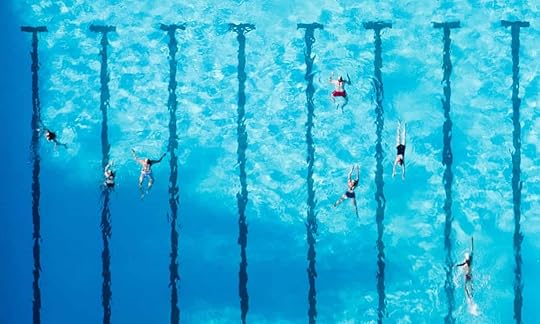
The story opens at the Fitzroy Baths. Martin, Nora’s current fella, who is “teetering on the dizzy edge of smack” says he’s going back to ‘the others’ at Disaster Bay (National Park), why don’t Nora and Javo, who happens to be sitting with them, go with him? Okay, says Nora.
“So, afterwards, it is possible to see the beginning of things, the point at which you had already plunged in, while at the time you thought you were only testing the water with your toe.”
So off they go, driving at first and then trekking through the bush to the spot the others are camping and waiting for the food Martin was supposed to have gone to get. He forgot. People seem to forget to eat, and again, I started wondering what was happening with the little kids.
It’s that kind of story. Nora falls for Javo and his “violent blue eyes”, and Javo falls for her and there’s lots of lazy, drug-addled, sometimes explicit love-making (and it is love for them while it’s happening), but we’re not always sure if Gracie is in her bunk bed in another room or if she’s camped on Nora’s floor, as she often does.
Javo is a hard-core junkie. Sweet, caring but addicted to heroin and thinking almost exclusively of his next score. Nora uses coke and whatever else is araound, but mostly she talks and thinks about Javo, even when she’s flirting with the other guys.
“People like Javo need people like me, steadier, to circle round for a while; and from my centre, held there by children’s needs, I stare longingly towards his rootlessness.”
This is one of the few times she seems to blame her daughter for tying her down. She was married once, didn’t like it, and dreams of making a life with Javo.
I was reminded of a cartoon I saw when I was a teen of two teen-aged girls talking, and one criticises her friend’s thoughtless boyfriend. The friend says “Sure, I know he’s taking advantage of me. But at least he chose ME to take advantage of.”
That’s Nora. Likes to think she has a good life but is not really very comfortable in her own skin.
This is studied as a classic of its time, now, but I was bored with those people back in the day, and reading about them is still boring to me. Nora keeps switching from fitting in to standing out. Loving everyone, being hurt by everyone, visiting her staid family in the country, taking off at a moment’s notice to “holiday” with friends.
If it hadn’t been Garner and it hadn’t been a famous book, I think I’d have quit because I didn’t care what happened.
The stars are for her writing, which was wonderful even here.