

What do you think?
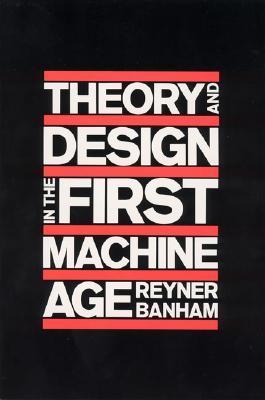
Theory and Design in the First Machine Age
First published in 1960, Theory and Design in the First Machine Age has become required reading in numerous courses on the history of modern architecture and is widely regarded as one of the definitive books on the modern movement. It has influenced a generation of students and critics interested in the formation of attitudes, themes, and forms which were characteristic of artists and architects working primarily in Europe between 1900 and 1930 under the compulsion of new technological developments in the first machine age.
338 pages, Paperback
First published May 3, 1960
About the author
Reyner Banham
44 books49 followersPeter Reyner Banham (1922-1988) was a prolific architectural critic and writer best known for his 1960 theoretical treatise "Theory and Design in the First Machine Age", and his 1971 book "Los Angeles: The Architecture of Four Ecologies" in which he categorized the Angelean experience into four ecological models (Surfurbia, Foothills, The Plains of Id, and Autopia) and explored the distinct architectural cultures of each ecology.
He was based in London, moving to the USA from 1976. He studied under Anthony Blunt, then Siegfried Giedion and Nikolaus Pevsner. Pevsner invited him to study the history of modern architecture, giving up his work Pioneers of the Modern Movement. In Theory and Design in the First Machine Age (1960), Banham cut across Pevsner's main theories, linking modernism to built structures where the 'functionalism' was actually subject to formal strictures. He wrote a Guide to Modern Architecture (1962, later titled Age of the Masters, a Personal View of Modern Architecture).
He had connections with the Independent Group, the This is Tomorrow show of 1956 (the birth of pop art) and the thinking of the Smithsons, and of James Stirling, on the new brutalism (which he documented in The New Brutalism, 1955). He predicted a "second age" of the machine and mass consumption. The Architecture of Well-Tempered Environment (1969) follows Giedion's Mechanization Takes Command (1948), putting the development of technologies (electricity, air conditioning) even ahead of the classic account of structures. This was the area found absorbing in the 1960s by Cedric Price, Peter Cook and the Archigram group.
Green thinking (Los Angeles, the Architecture of Four Ecologies, 1971) and then the oil shock of 1973 affected him. The 'postmodern' was for him unease, and he evolved as the conscience of post-war British architecture. He broke with the utopian and technical formality. Scenes in America Deserta (1982) and A Concrete Atlantis (1986) talk of open spaces and his anticipation of a 'modern' future.
As a Professor, Banham taught at the University of London, the State University of New York (SUNY) Buffalo, and the University of California, Santa Cruz. He also was the Sheldon H. Solow Professor of the History of Architecture at the Institute of Fine Arts, New York University. He also starred in the short documentary Reyner Banham loves Los Angeles.
Banham said that he learned to drive so he could read Los Angeles in the original.
He was based in London, moving to the USA from 1976. He studied under Anthony Blunt, then Siegfried Giedion and Nikolaus Pevsner. Pevsner invited him to study the history of modern architecture, giving up his work Pioneers of the Modern Movement. In Theory and Design in the First Machine Age (1960), Banham cut across Pevsner's main theories, linking modernism to built structures where the 'functionalism' was actually subject to formal strictures. He wrote a Guide to Modern Architecture (1962, later titled Age of the Masters, a Personal View of Modern Architecture).
He had connections with the Independent Group, the This is Tomorrow show of 1956 (the birth of pop art) and the thinking of the Smithsons, and of James Stirling, on the new brutalism (which he documented in The New Brutalism, 1955). He predicted a "second age" of the machine and mass consumption. The Architecture of Well-Tempered Environment (1969) follows Giedion's Mechanization Takes Command (1948), putting the development of technologies (electricity, air conditioning) even ahead of the classic account of structures. This was the area found absorbing in the 1960s by Cedric Price, Peter Cook and the Archigram group.
Green thinking (Los Angeles, the Architecture of Four Ecologies, 1971) and then the oil shock of 1973 affected him. The 'postmodern' was for him unease, and he evolved as the conscience of post-war British architecture. He broke with the utopian and technical formality. Scenes in America Deserta (1982) and A Concrete Atlantis (1986) talk of open spaces and his anticipation of a 'modern' future.
As a Professor, Banham taught at the University of London, the State University of New York (SUNY) Buffalo, and the University of California, Santa Cruz. He also was the Sheldon H. Solow Professor of the History of Architecture at the Institute of Fine Arts, New York University. He also starred in the short documentary Reyner Banham loves Los Angeles.
Banham said that he learned to drive so he could read Los Angeles in the original.
Ratings & Reviews
Friends & Following
Create a free account to discover what your friends think of this book!
Community Reviews
Displaying 1 - 16 of 16 reviews

October 11, 2013
Well worth reading, if only to understand why Banham wrote:
“It may well be that what we have hitherto
understood as architecture, and what we are
beginning to understand of technology, are
incompatible disciplines. The architect who
proposes to run with technology knows now
that he will be in fast company, and that in
order to keep up he may have to discard his
whole cultural load, including the professional
garments by which he is recognized as an
architect. If, on the other hand, he decides not
to do this, he may find that a technological
culture has decided to go on without him."
“It may well be that what we have hitherto
understood as architecture, and what we are
beginning to understand of technology, are
incompatible disciplines. The architect who
proposes to run with technology knows now
that he will be in fast company, and that in
order to keep up he may have to discard his
whole cultural load, including the professional
garments by which he is recognized as an
architect. If, on the other hand, he decides not
to do this, he may find that a technological
culture has decided to go on without him."

January 16, 2011
This is the bible on the roots of modern design and architecture. The chapter on Futurism is perhaps the greatest, and most aware, bit of Art history there is, whilst his analysis of the Bauhaus and the importance of both De Stijl and Productivism in making that such a successful school is most important in debunking some of the flawed perceptions there are about the design movement. Banham is one of the great post-WW2 minds who literally changed the face of British art & design.

August 20, 2020
A couple of months ago, I finished reading Simon Sadler’s book on Archigram; an architectural “pop” movement that became very influential during the sixties. Quite often throughout the book, Sadler mentions historian Reyner Banham’s close connections with the Archigram group and his almost advocacy and interest in the relationship between architecture and technology- the Archigram way. This piece of information, along with snippets of Banham’s writing quoted in Sadler’s book, has been a good enough incentive for me to decide to read the cool critic’s “Design and Theory in the First Machine Age”. Reading Banham’s treatise on Modern Architecture with something of an understanding of his later passionate involvement with technology-oriented architecture, has also been interesting especially when getting to his final thoughts on whether Modern Architecture really made the best use of technology as it boasted.
Written in the late fifties, Banham’s book excels at giving a detailed answer to the very complicated question of how Modern Architecture came to existence. The book’s approach to history is part of what makes it important; it doesn’t create a chronological history of the Modern movement, but rather builds up the story of the architectural discourse that led up to the point in history when Modernism was iconized. And by “discourse” I mean the inner dynamics of the architectural profession in Europe at the end of the 19th century and up until the late twenties: literature written by various architects, influential architectural magazines and exhibitions, and the relationship between profession and academia. This focus on discourse, on cities and architectural circles that ran through them and eventually changed their cultural and visual atmosphere is also what makes this an enjoyable, well-structured book.
In the final chapters, an interesting analysis is made of why Le Corbusier’s Villa Savoye and Mies’s Barcelona Pavilion are among the most celebrated works of Modern Architecture. The analysis attempts to go beyond the physicality of both structures and to explain the intertwined, modern, international set of ideas they represent while contrasting this apparent celebration of a technological Zeitgeist architecture with Buckminster Fuller’s more advanced version of a technology based architecture. The critique there is evident though not harsh, as is Banham’s critique -also at the end of the book- of Siegfried Gideon’s attempts at writing the history of Modern Architecture, which makes for an interesting debate.
The only thing I thought missing in this book is a detailed chapter on Wright. In fact, America is rather marginal in Banham’s accounts, despite the recurring mentions of Wright and his influence on European architects especially Berlage, who in turn inspired the Dutch De Stijl. The author might have had his reasons for not including the USA in his research, but I believe a reference to the book's geographical scope could have been helpful. This put aside, I would say that this is among my favorite reads of the year.
Written in the late fifties, Banham’s book excels at giving a detailed answer to the very complicated question of how Modern Architecture came to existence. The book’s approach to history is part of what makes it important; it doesn’t create a chronological history of the Modern movement, but rather builds up the story of the architectural discourse that led up to the point in history when Modernism was iconized. And by “discourse” I mean the inner dynamics of the architectural profession in Europe at the end of the 19th century and up until the late twenties: literature written by various architects, influential architectural magazines and exhibitions, and the relationship between profession and academia. This focus on discourse, on cities and architectural circles that ran through them and eventually changed their cultural and visual atmosphere is also what makes this an enjoyable, well-structured book.
In the final chapters, an interesting analysis is made of why Le Corbusier’s Villa Savoye and Mies’s Barcelona Pavilion are among the most celebrated works of Modern Architecture. The analysis attempts to go beyond the physicality of both structures and to explain the intertwined, modern, international set of ideas they represent while contrasting this apparent celebration of a technological Zeitgeist architecture with Buckminster Fuller’s more advanced version of a technology based architecture. The critique there is evident though not harsh, as is Banham’s critique -also at the end of the book- of Siegfried Gideon’s attempts at writing the history of Modern Architecture, which makes for an interesting debate.
The only thing I thought missing in this book is a detailed chapter on Wright. In fact, America is rather marginal in Banham’s accounts, despite the recurring mentions of Wright and his influence on European architects especially Berlage, who in turn inspired the Dutch De Stijl. The author might have had his reasons for not including the USA in his research, but I believe a reference to the book's geographical scope could have been helpful. This put aside, I would say that this is among my favorite reads of the year.

March 25, 2014
Great book with a surprise ending if you can believe it.
September 26, 2024
Deeply researched; more a history of ideas of architecture than a history of architecture per se. While Banham does illustrate some plans and projects by his subjects, the focus is always on published literature and conferences - the words that architects use to theorise and justify their practice.
While Banham admires and appreciates the International Style, the major point in this book is that it was the characteristic style of a time, which already in 1960 he believed to be past. The "First Machine Age" in the title is the age of the automobile, the importance of which (to architecture at least) he believed to have been superseded by new domestic conveniences and advancements in building technology.
There is something of merit in this distinction, but there's also a Fullerian quixotic utopianism. In 2024 we are past the Jet Age and the Space Age and into the Information Age and entering a new era of omnipresent unlimited computing power, and the impact of all this extraordinary technological development on mass architecture is that we are screwing WiFi-capable light bulbs into sockets in buildings that are basically Modern in conception and character. The automobile remains unrivaled as the single technology that overwhelmingly dictates our built environment.
While Banham admires and appreciates the International Style, the major point in this book is that it was the characteristic style of a time, which already in 1960 he believed to be past. The "First Machine Age" in the title is the age of the automobile, the importance of which (to architecture at least) he believed to have been superseded by new domestic conveniences and advancements in building technology.
There is something of merit in this distinction, but there's also a Fullerian quixotic utopianism. In 2024 we are past the Jet Age and the Space Age and into the Information Age and entering a new era of omnipresent unlimited computing power, and the impact of all this extraordinary technological development on mass architecture is that we are screwing WiFi-capable light bulbs into sockets in buildings that are basically Modern in conception and character. The automobile remains unrivaled as the single technology that overwhelmingly dictates our built environment.

April 5, 2020
Uma análise do desenvolvimento da arquitetura moderna dos anos 30, baseado em suas origens acadêmicas, futuristas, cubistas e elementaristas. O livro busca desmontar o mito do funcionalismo e racionalismo da arquitetura moderna, já que a mesma não incorpora a tecnologia plenamente em suas obras e deriva sua estética da forma como os produtos da primeira era da máquina se apresentavam em um curto período de tempo (carros, aviões e transatlânticos dos anos 10 e 20). Leitura fundamental, porém faz falta uma maior quantidade de ilustrações. Na ausência destas, o livro as vezes se torna árido.
December 7, 2018
It's an okay read. I'd stay a must if you're into the design but please research each movement and time as you read. It'll give you better context.
The lack of worldview is why this really isn't the true theory of design. Just a foot in. Its missing the Japanese modernism and the Edo period. At the same time, its missing the Ottoman and near east art movements.
Overall the book is about the theory and design in the west during the first machine age. A good read nonetheless.
The lack of worldview is why this really isn't the true theory of design. Just a foot in. Its missing the Japanese modernism and the Edo period. At the same time, its missing the Ottoman and near east art movements.
Overall the book is about the theory and design in the west during the first machine age. A good read nonetheless.

May 21, 2017
Was very late to come through this book to see its Very much what I needed.. Would only recommend running through biographies of Garnier and parret and other key Architects of the passing 150 years BEFORE reading through the pages of this book.. Very amusing chapter on futurism! Unique writing style..

January 5, 2022
Illuminating on early 20th century art, design and architecture, especially De Stjil and Bauhaus. Dense with references so keep Google handy.

August 1, 2010
While not a personal choice, I see a little why professors would want their students to read this all encompassing (except for Alvar Aalto) history of modern architecture. The beginning of this text does read like a bickering genealogy of the masters of modernism, sort of like the begats in the bible. I found it very hard to follow until I got to people who's names I recognized. A little like Homer's Odyssey, it has a ton of people mentioned without much background information on any. It would be extremely useful to have a list of people in chronological birth order with a one line description of who they were and what they did. While I had seen some of August Perret's work in Paris and could connect with that section, I didn't start to appreciate the book until Banham gets to Adolf Loos. There are nice sections of illustrations, but because they are printed separately from the pages of text on different paper, it is difficult to connect them with the text despite being a worthy pursuit. Some buildings and paintings of interest are not illustrated and the book could benefit from more pictures.
August 3, 2011
A lot of people have an adverse reaction to this because it was a textbook for an architecture history course. I read it of my own free will, and found it to be both dense and penetrating. I've read Banham's work before, and this is his least engaging book, but it's scope is grander and it ultimately betrays the preoccupations that would captivate Banham for the remainder of his academic career, mainly technology's relation to architecture and modernism's bases in Futurism.

Read
September 28, 2015An enlightening guide to the febrile, manifesto-mad notions of early 20th Century architecture, and how they were implemented in our current built environment. While, as an enthusiast for modernist art and architecture, I didn't get too much new information, I found Banham to be a charming guide to the ideas of Bauhaus, De Stijl, Italian futurism, etc. Great primer for anyone with an arts background on how ideas were expressed architecturally.

April 2, 2007
Banham's writing is very lucid and enthusiastic, but he takes more of a contrarian approach than Pevsner. Good secondary source material if you're looking for another perspective on John Ruskin et. al.
January 15, 2009
One of my favorite books. Banham was brilliant.

April 13, 2013
A wonderful journey through the evolution of modern architecture.

June 11, 2015
This book was a bit challenging as I am not in the field of architecture. That being said, it was interesting to gain some valuable insights and ideas regarding creative work.
Displaying 1 - 16 of 16 reviews