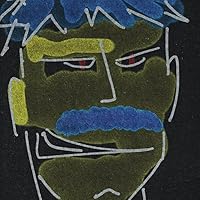
For many Americans, the Constitution is their spirit animal, which protects and guides them. Never mind that how we are ruled bears very little resemblance to the actual Constitution, or that the Regime pays no attention whatsoever to it, except as an inconvenient speed bump on their way to imposing complete Left dominance. Conservatives nonetheless eagerly chain themselves to the dead Constitution, even as its weight drags them under the waves while their enemies laugh. Auron MacIntyre here corrects this corrosive fantasy, writing a work of both political theory and practice, outlining how we are now held in the grip of what he calls the Total State, something most definitely not found in the Constitution.
This is actually an optimistic book, even if it does not appear to be one if you glance at the cover and title. MacIntyre, a popular writer and commentator who has risen to prominence on the Right in the past few years, in his own accounting once was blind but now he sees. It used to be said (incorrectly in retrospect, given the poison they injected into America) that a neoconservative was a liberal who had been mugged by reality. Such muggings by reality still take place, but they drive the affected individual into what is broadly called the Right—that group of people who see reality as it is. They are the awake, though not the woke, and MacIntyre wrote this book to open more eyes. It’s a successful effort, which ties many threads together in a punchy synthesis. Most of all it is a primer in understanding how we are ruled today—which means, whether the author intends it or not, it is also a primer in revolt against that rule.
America, to be sure, did not begin as a tyranny, much less the tyranny it is today. It was a golden experiment by a virtuous people, arguably poisoned at its inception by the so-called Enlightenment, but still, what resulted was one of the greatest nations ever seen on the Earth. Why, then, as we look around us today, is nothing as it should be, and as we were promised it both was and would be? We must turn to substantive analysis to understand, which is what MacIntyre offers, channeling many of the great political thinkers of the past hundred years, reweaving them for application to the present moment.
MacIntyre begins with a brief introduction narrating his own story, though this is not a book about him. His awakening came, as it did for so many others, during the Wuhan Plague, even if the ground had been richly prepared by bathing in the endless torrents of lies spewed forth by the Regime earlier, during Donald Trump’s first term. That awakening was on two levels, however. The first was grasping that controlling public perception had become everything in modern America, and truth was, quite literally, entirely irrelevant to our rulers. The second, deeper awakening was that the endlessly-heard claim that the Enlightenment had led to governments of reason, by the people, for the people, was ludicrous. Instead, it had led to an expansion of state power “to unprecedented levels, all while assuring the people that they live in an era of freedom unlike any that’s ever been experienced.” This is the Total State in a nutshell. The Constitution is dead; mourn it all you wish, but it is not rising from the grave, so you are wasting your time, and more importantly, your energies.
Not so long ago, as MacIntyre notes, this now-obvious truth seemed insane, or at best, the claim of cranks churning out mimeographed newsletters. I was a fully-fledged adult in the late 1990s, and as MacIntyre crisply outlines, at that time it seemed like America had permanently successfully balanced liberty with order. Certainly there was much in America that was undesirable, but those seemed like political problems, which could be solved by political organization under our benevolent, democratic ruling class. We had arrived at, as we were infamously and didactically lectured (though they now lie and say they did not say it), the end of history. Mass manipulation of public opinion did exist, but was not, or did not seem, all-pervasive. And the internet appeared as if it would alleviate the problems with central control of information, and lead to a new flourishing of the popular will, requiring the ruling classes to rule with the people’s needs in the forefront of their minds.
But it was all a mirage. Our elites ensured that the new technologies were instead used to require that everyone have an opinion, but that those opinions stayed within approved bounds, on pain of punishment through the new tools of control. Social opprobrium, online extinction, and the destruction of one’s livelihood became the price of not expressing the correct opinions, or, worse, expressing the wrong opinions. Unthinking and instant compliance became the price of admission to Gaetano Mosca’s elite—roughly twenty percent of any nation’s population, what may be called the ruling class, whose members make up both the leaders and foot soldiers of the Total State.
In this project of controlling the population to maintain power for the elite, “The dissemination of the narrative becomes the primary goal of each and every media outlet.” But today, no ham-handed central coordination by the equivalent of Gosplan, the Soviet coordinating body, is required. Those in the ruling class know what good people all think, and act in unison to reinforce that message and demand compliance. In a sense, what the elite believes are religious values (though as I have noted before, leftism is in no way a religion, even if it substitutes for many people for a religion, offering meaning in exchange for compliance). We are, therefore, today governed by a “decentralized atheistic theocracy,” with a clear set of absolutely required moral assumptions. The Floyd Riots and their associated demands for politico-religious groveling are the best recent example, but every day offers innumerable similar examples.
How did we get here, though, and why is where we are not obvious to everyone? After all, many still think this analysis is crazy, at the same time that from one day to the next they change their opinions on many matters as directed, most notably in recent days about the mental capacity of “President” Biden. MacIntyre begins by discussing, citing Bertrand de Jouvenal and others, the myth that prior to the modern era, power was centralized. Even in supposedly absolutist monarchies, this was very far from the case, because innumerable powerful social spheres and intermediary institutions sharply limited the power of the central government. But those desiring the Total State saw to it that all of those, from extended families to churches to local organizations of many types, each requiring personal commitment, have now been collapsed or destroyed. The state has seized their powers, “centralizing all duties and loyalties,” while assuring us that we are now liberated.
And in a way we are—for most of us, our freedom of action is greater, so long as we comply with the ever-expanding dictates of the state. (Ryszard Legutko, in his seminal The Demon in Democracy, aptly called this “coercion to freedom.”). The modern American state can and does demand vastly more from its citizens than any other state in history, “yet so long as this is done while freeing the individual from traditional social obligations, not only do its citizens not feel oppressed, they see themselves as liberated.” As Jouvenal said, this ends “in each man’s absolute freedom from every family and social authority, a freedom the price of which is complete submission to the state.” All are equal—that is, equally abased before the state. Society is atomized, except in its centralized control by the state. The state’s actions during the fake pandemic of the Wuhan Plague demonstrated this system in full flower. All individual freedoms were destroyed overnight. Our supposed system of individual rights and Constitutional government was no barrier at all; America was no different in practice than China, which makes no bones about its government being supreme over the people.
We then turn to the main target of this book (though I am not sure MacIntyre would agree it is the main target). Americans are constantly told that the Constitution is a unique document, derived from deep analysis of past problems in government, and one which solves those problems. If that is true, why has the Total State blossomed in all its rotten glory? MacIntyre describes Constitution-worship as something that “appeals to our modern sensibilities.” It makes us feel clever; it purports to put us in charge of our own destiny. We like to think that it, not men, will guard us forever from the dark forces that seek to harm us. Of course, anyone paying attention knows that the Constitution died a long time ago—at the latest, ninety years ago. What we are ruled by is some ever-changing bastard version of that document, filtered through human weakness, modern propaganda, the madness of crowds, Left ideology, feminization, and general lassitude.
MacIntyre points out that Mosca, in 1939, already identified America as having become an oligarchy operated by bureaucrats. The standard response is “America has checks and balances which prevent such a result, that’s genius!”, citing Montesquieu. But as MacIntyre observes, checks and balances are second-order representations of different social forces and spheres, not primary mechanisms that can exist in the abstract. Mass democracy destroyed these social forces and spheres, and made only one social force relevant—public opinion. Aristocratic and regional powers thereby lost the very high degree of control they had under the original Constitution. “Control of information and manipulation of public perception were now the only necessary levers of power.” (Only later does MacIntyre turn to Carl Schmitt, but his critique in the 1920s of parliamentarianism revolved in part around this point.) Power over “mass media, mass education, and mass bureaucracy” becomes all that matters, and the only group that can do that is “monied and managerial interests,” not traditional aristocratic and regional powers, who have been stripped of all influence.
What resulted is an oligarchy, as those interests accrued all power to themselves. Separation of powers is today a myth, because all branches of government derive their power from public opinion, which is manipulated by our puppet masters. Nor did the Bill of Rights prevent this result—as Joseph de Maistre noted, laws are downstream of what a people believes, what their character and culture is, and if they can be brought to believe something different, if their character and culture can be changed, laws are irrelevant. “How can any moral truth be self-evident unless the people who are observing it share the same value system?” Proceduralism, which is all that the Bill of Rights is, is the death of real law, but it wears law as a skin suit.
We next turn to an analysis of why classical liberalism, another favorite of “muh Constitution” so-called conservatives, did not save America from the cancer of the Total State, but rather helped to birth it. Here MacIntyre relies heavily on Schmitt (of whom I am a great admirer). He pointed out that liberalism tried to obviate the friend/enemy distinction by reducing areas of competition and conflict—that is to say, by collapsing all social spheres into the state, which necessarily expands to monstrous proportion, as we have already seen. Worse, this is not an actual tradeoff; it is impossible to eliminate the friend/enemy distinction. Instead, the state “seeks to become the only entity with the authority to define the terms of the friend/enemy distinction for an ever-expanding ideological empire. Those who serve to strengthen the power of the state are friends, while those who seek to compete with it or restrain it are the enemy.” State neutrality, and neutral institutions, are a myth. Every group has an ethos, and because all intermediary institutions have been destroyed in the Total State, all that matters for politics, and for the friend/enemy distinction, is the ethos to which those who make up the state are loyal, an ethos necessarily derived from “interests, groups, and moral visions.“ No domain may any longer be neutral with respect to politics. All that classical liberalism, rebranded as “liberal democracy,” succeeds at doing is diffusing responsibility. Sovereign indeed is he who decides the exception, but no one individual can be located as sovereign, despite that exceptions are continuously decided and imposed on the populace. We are then endlessly told this dispersed tyranny, in which we have no actual voice, is “our sacred democracy.”
MacIntyre is careful to note that while the term “total state” conjures up past totalitarianisms, or George Orwell’s 1984, we live in a different type of total state—one with a “decentralized consensus-manufacturing apparatus.” This apparatus, aptly named the Cathedral by Curtis Yarvin, rules in part by terror, not by killing people but by choking off their livelihoods and social existence (the former was, of course, also the main control mechanism of Communism after the 1950s). The source of the totalitarian commands is necessarily more opaque; process replaces individuals as the face of power. A pretense of popular sovereignty is retained, while power is held by a shadowy group of public and private organizations, from the NSA to the New York Times to Harvard University (all of whom always agree on everything, giving the lie to the silly “marketplace of ideas“ so beloved of classical liberals).
This is, in the words of Vilfredo Pareto and Niccolò Machiavelli, a government of clever foxes, not of forceful lions. MacIntyre again uses the Wuhan Plague as the most recent exemplar of the ability to “exercise totalitarianism without accountability,” which in that case was greatly helped by modern technology. Such technology “not only allows these essential classes to remain propagandized and locked down for an extended period of time, [but also] facilitates the large-scale management of dissent.” Force, as used in Canada against the Freedom Convoy, is a last resort to dissent; it shatters the illusion. “The slower, more methodical approach of foxes proved to be more flexible and resilient than the aggressive application of centralized control by lions.”
To be sure, as was recognized by both Pareto and Machiavelli, government by foxes is self-limiting. It reaches the point of diminishing, then negative, returns—never more obvious than when force, the province of lions, becomes necessary. This includes both domestically and outside the state; no better modern example exists than the Regime’s total failure, over twenty years and trillions of dollars, in Afghanistan. Therefore, foxes depend on perennial material surplus, with which to buy their way out of trouble. But like any Ponzi scheme, this cannot go on forever.
Government by foxes was also the origin of the managerial elite, the preeminent technical governance mechanism of the Total State. Mass society, if it did not demand managerialism, certainly brought it forth. And its prophet was James Burnham, with whom every informed person on the Right is familiar today (although as I have written, I think his vision was incomplete in many ways). Managerialism leads to the further homogenization and centralization of society, and the blurring of the boundaries between government and corporate power. Mass consumerism, the acquisition of personal meaning through the consumption of goods, is necessarily beneficial to the managerial elite, further dissolving the bounds between corporation and state. The path to “success” becomes more and more exclusively through joining the managerial elite by climbing our new cursus honorum, required tertiary education that is wholly controlled by the Cathedral, and which indoctrinates ideologically as a precondition for advancement. The cult of so-called experts spreads its strangling tentacles everywhere. All this is directed toward compliance of the populace with the dictates of the elite—its aim is, simply put, to engineer subjects for the Total State.
“The Total State seeks to maximize efficiency and stability by exerting control in every domain of life within its ever-expanding borders. . . . The state must actively seek to shape the public and private lives of its citizens in order to homogenize influences that could introduce variance and instability.” Such shaping takes place at many levels and at many loci of control. But the bedrock opponent of the Total State, the power of which cannot be tolerated, is the family, as C. S. Lewis long ago presciently identified in The Abolition of Man. This is why destruction of the family has always been the first and most important goal of the Total State, followed closely by eliminating the ability of the non-elite citizenry to own hard property, especially housing and land, or to obtain sustenance other than through a salary which allows control. The middle class, whose members are outside the governing and non-governing elite, must be destroyed, at least to the extent membership marks independence rather than an income bracket. The middle class is now therefore effectively defined as “being able to afford subscriptions to Netflix, Hulu, and HBO Max,” a focus which offers the double benefit of “relentlessly produc[ing] thinly-veiled propaganda for their consumers, manufacturing the illusion of limitless options while drowning the watcher in an ocean of cultural hegemony.” Naturally, borders and the idea of nations are anathema to the Total State. It would not be total otherwise. Cultural uniformity must be indefinitely extended in order to ensure control, even though that goal is impossible and self-defeating, as we see in the cascading failure of so-called liberal democracy around the world.
The perceptive reader is quick to see that . . . . [Review completes as first comment.]